How to Estimate a Daily Treat Allowance for Your Dog or Cat
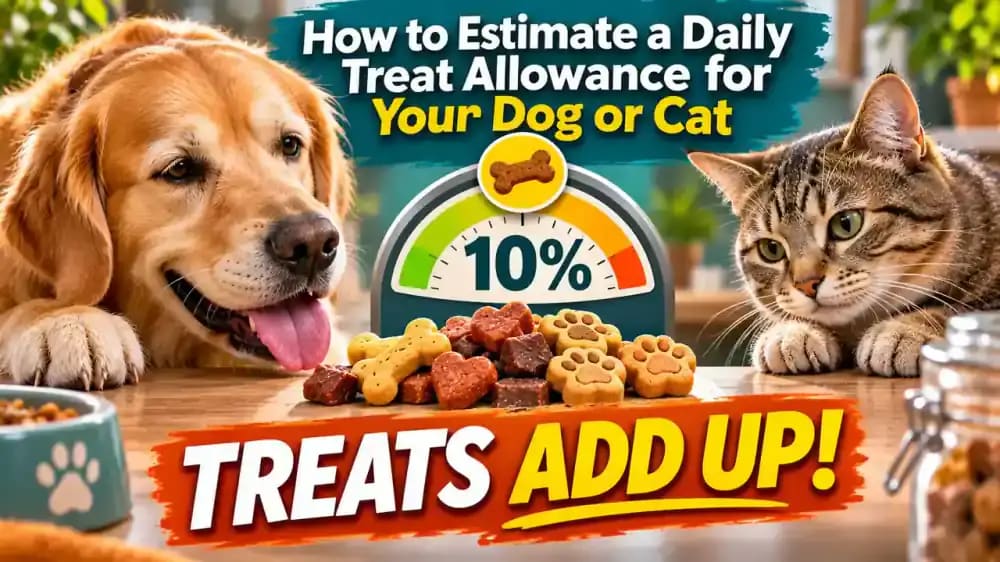
A few small treats can add up to more calories than you realize. Learn how to calculate a daily treat allowance for your dog or cat, read treat labels, and keep rewards within a veterinarian-approved calorie budget.
What you’ll need
Tap to tick things off before you start.
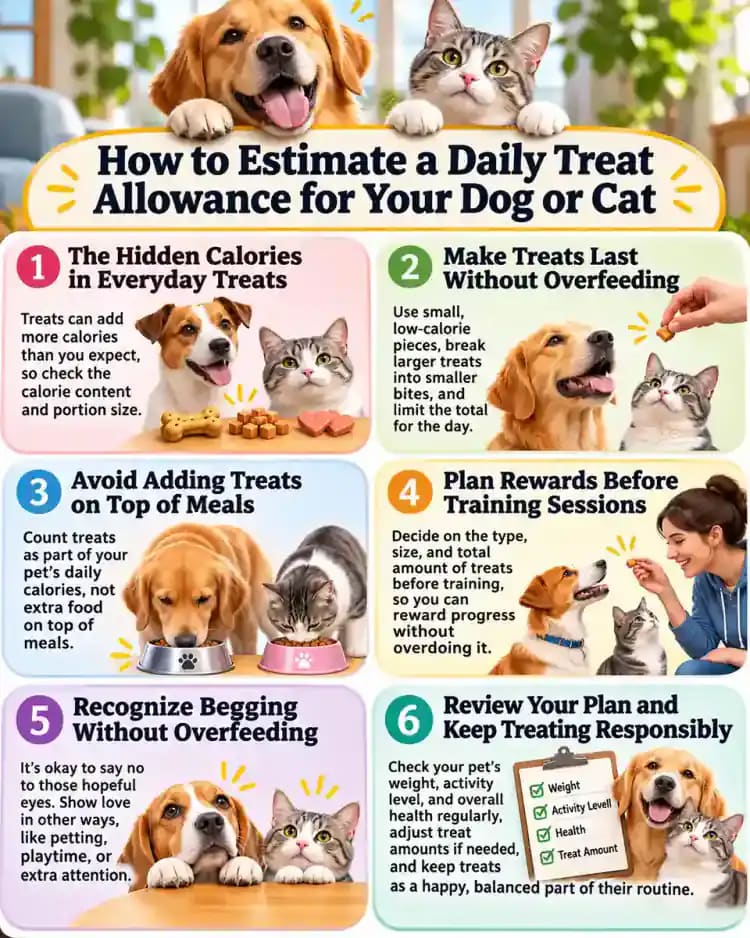
The Hidden Calories in Everyday Treats
Pay attention to every edible reward your dog or cat receives throughout the day. A biscuit after breakfast, several training snacks, and an evening treat can add up quickly. Ask everyone in your household to record what they give your pet, including portion sizes, so small rewards do not become overlooked sources of calories.

Establish Your Pet's Calorie Budget
Ask your veterinarian to establish your pet's daily calorie target based on weight, body condition, age, activity level, and health. This number includes meals and treats combined. As a general guideline, reserve no more than 10% of the total for treats and at least 90% for complete and balanced food. Some pets require stricter limits.

Calculate a Dog's Daily Treat Calories
Suppose your veterinarian establishes a daily target of 600 kcal for your dog. Multiply 600 by 0.10 to calculate a maximum treat allowance of 60 kcal. Subtract that amount from the daily target, leaving 540 kcal for complete and balanced meals. Remember that 60 kcal is an upper limit, not an amount your dog must receive.

Convert Calories Into Individual Treats
Find the calorie statement on your treat package and check whether it lists kcal per piece or serving. If one biscuit contains 15 kcal and your daily allowance is 60 kcal, divide 60 by 15. The result is four whole biscuits maximum. If calories are listed only by weight, request per-piece information from the manufacturer.

Apply the Same Method to Cats
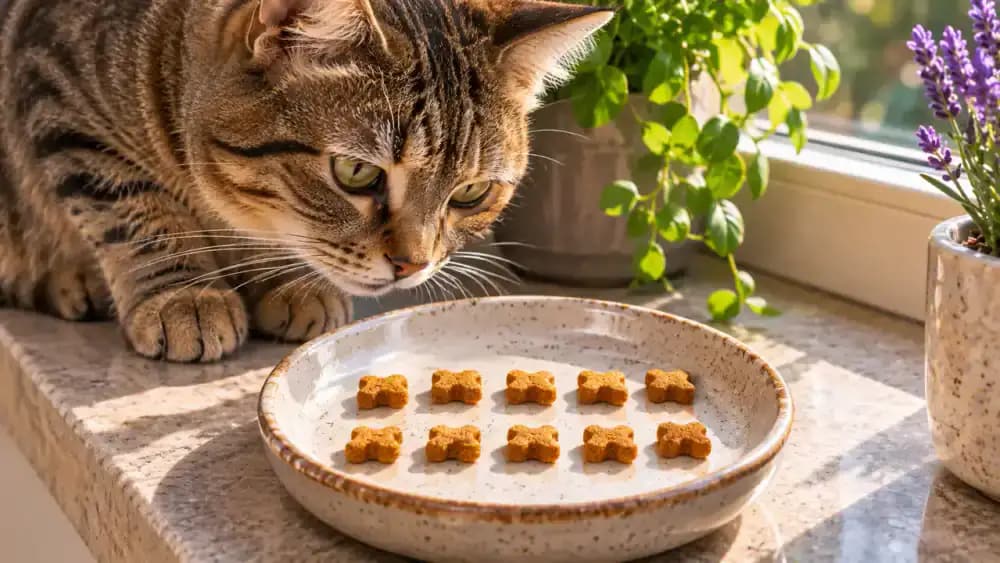
Use your cat's own veterinarian-established calorie target rather than copying a dog's allowance. For example, a cat needing 200 kcal daily has a maximum treat budget of 20 kcal under the 10% guideline. If each crunchy treat contains 2 kcal, divide 20 by 2 to get ten individual treats. Count each piece, not handfuls.
Make Treats Last Without Overfeeding
Stretch your pet's daily allowance by breaking suitable soft treats into smaller pieces or setting aside measured kibble from regular meals for training. Count dental chews, table scraps, and rewards from visitors toward the same calorie budget. Use a shared household log or preportioned treat container so everyone knows how many rewards remain available.

Know When Your Pet Needs Stricter Limits
Treat allowances are maximum limits, not daily goals. Pets managing weight or following specialized feeding plans may need fewer treats or different reward options. Diabetes, pancreatitis, food allergies, and prescription diets can require additional precautions. Consult your veterinarian before changing meal portions or treat choices, particularly when your pet already follows a medically supervised nutrition plan.

Your Simple Daily Treat Formula
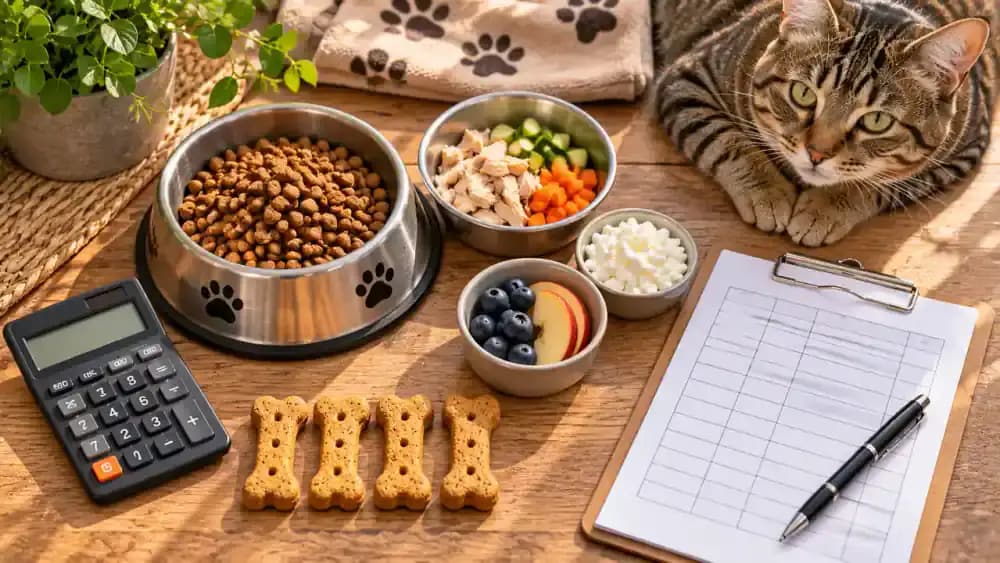
Calculate your maximum daily treat calories by multiplying your veterinarian-established calorie target by 0.10. Then divide that allowance by the calories per treat and round down to whole pieces. For example, 600 x 0.10 = 60 kcal, and 60 divided by 15 = 4 treats. Track every reward and review feeding adjustments with your veterinarian.
Why Treat Size Can Be Misleading
Compare calorie information rather than judging treats by appearance. Two biscuits of nearly identical size can contain very different calories because of their ingredients, moisture levels, and density. Check each product's calorie statement and confirm the serving size. Descriptions such as natural or premium do not establish calorie content or guarantee that a treat fits your pet's budget.

Measure Treats When Labels Are Unclear
When a label lists calories by weight instead of per piece, weigh the actual serving on a kitchen scale. For example, if treats contain 300 kcal per 100 grams, a 20-gram portion provides 60 kcal: 20 x 300 divided by 100. Use accurate label information, and contact the manufacturer if the calorie content or serving definition remains unclear.

Combine Calories From Different Rewards
Add together the calories from every type of reward your pet receives. For example, a 5 kcal training nibble, a 12 kcal dental chew, and an 8 kcal snack total 25 kcal. Subtract this combined amount from your pet's daily treat allowance. Do not create separate calorie budgets for different products, activities, or family members.

Avoid Adding Treats on Top of Meals
Keep treats within your pet's established daily calorie target instead of adding them to unchanged meal portions. Extra rewards can push total intake above the recommended amount. If meal adjustments are necessary, ask your veterinarian how to preserve adequate nutrition while accounting for treats. This is particularly important when managing weight or following a prescribed feeding plan.

Choose Better Treats for Your Calorie Budget
Choose treats with clearly stated calories per serving and sizes appropriate for your pet. Lower-calorie options can make frequent rewards easier to manage. Some dogs can enjoy small amounts of plain carrot or cucumber, but not every human food is safe for pets. Check ingredients carefully, introduce unfamiliar foods gradually, and select species-appropriate rewards for cats.

Reward Your Pet Without Using Food
Try nonfood rewards to reinforce good behavior without using any of your pet's calorie allowance. Offer your dog a favorite toy, a brief game of tug, or enthusiastic praise. For cats, experiment with feather wands, interactive play, or gentle attention. Observe which activities your pet enjoys and use those experiences as positive reinforcement.

Monitor Results and Adjust When Necessary
Track your pet's weight and body condition over several weeks to evaluate whether the feeding plan remains appropriate. Weigh your pet consistently, record results, and discuss unexpected changes with your veterinarian. Age, activity, health, and medications can affect calorie requirements. Revisit the daily target and treat allowance whenever your veterinarian recommends adjusting the feeding plan.

Build a Sustainable Daily Treat Routine
Keep approved treats in one labeled container and maintain a shared household feeding schedule. Before offering another reward, check how many treat calories remain for the day. Agree on consistent rules with everyone who feeds your pet. A simple routine helps prevent accidental overfeeding while preserving opportunities for affection, play, training, and enjoyable rewards.
Account for Food Your Pet Gets Elsewhere
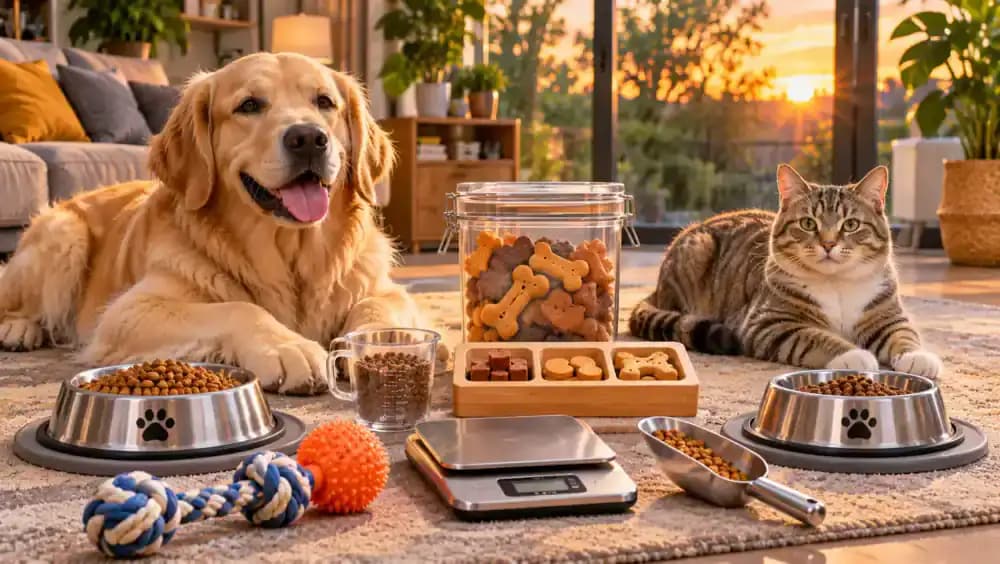
Watch for food your pet may receive outside your usual feeding routine. Dogs sometimes eat leftovers from another animal's bowl, while outdoor cats may accept snacks from neighbors. These unrecorded calories can undermine an otherwise accurate allowance. Monitor access to additional food, communicate with other caregivers, and discuss unexplained appetite or weight changes with your veterinarian.
Plan Rewards Before Training Sessions
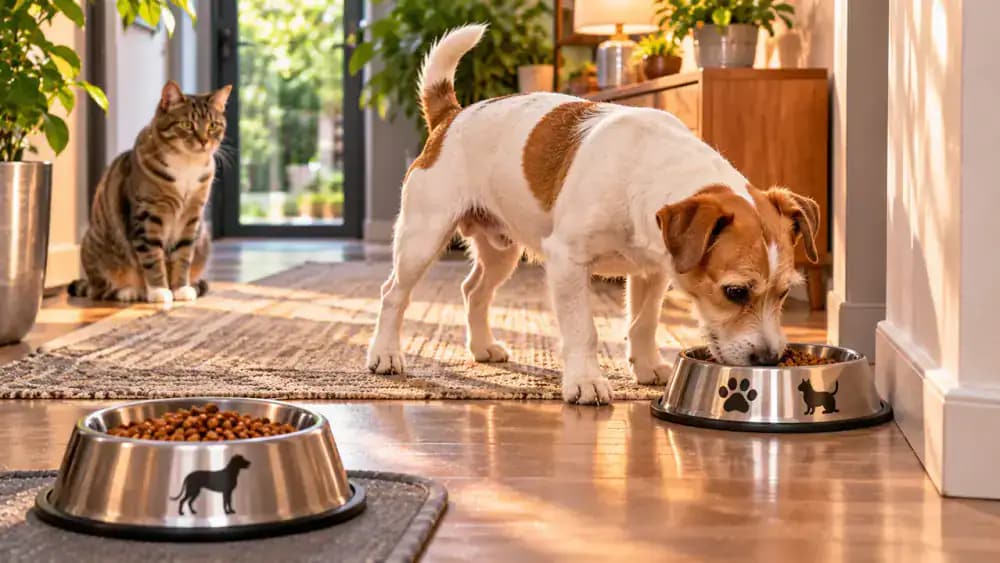
Measure your training treat allowance before starting each session instead of repeatedly reaching into an unrestricted bag. Place the planned quantity in a treat pouch and divide suitable rewards into small pieces. Use them consistently to reinforce desired behaviors, keeping track of calories as you go. When the portion is finished, switch to nonfood rewards or end the session.

Understand Specialized Treat Products
Count calories from dental, calming, joint support, and nutritional treats just like ordinary snacks. Read each product's calorie declaration, ingredients, serving instructions, and safety warnings before use. Specialized products may contain ingredients unsuitable for certain diets or medications. Ask your veterinarian whether a particular product is appropriate for your pet, especially when ongoing treatment or dietary restrictions are involved.

Match Reward Value to Training Difficulty
Choose rewards according to the difficulty of the behavior and what motivates your pet. Use tiny pieces of familiar treats for simple commands, reserving more desirable flavors for challenging exercises or distracting environments. Higher-value rewards do not need to be larger. Check their calorie content, use the smallest effective portion, and count everything toward the daily allowance.

Prepare Treat Portions for Trips and Walks
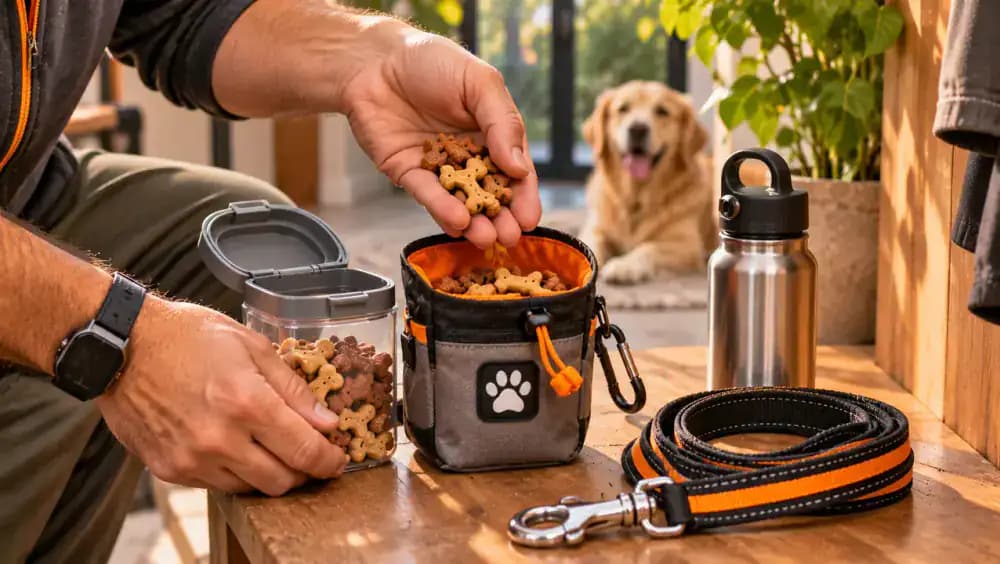
Measure your pet's treat portion before leaving home for walks, travel, or appointments. Pack the planned quantity in a small reusable pouch instead of carrying an entire bag. Keep track of rewards offered during outings, including those provided by other people. Record these calories afterward so your household knows how much of the daily allowance remains.
Understand the Limits of Calorie Estimates
Treat calorie values are useful estimates, not perfectly precise measurements. Package numbers may be rounded, individual pieces can vary in weight, and your pet's activity level may change between days. Focus on consistent portion tracking and longer-term weight trends rather than worrying about tiny differences. Review meaningful changes in body condition or feeding needs with your veterinarian.
Put Your Daily Treat Plan Into Action
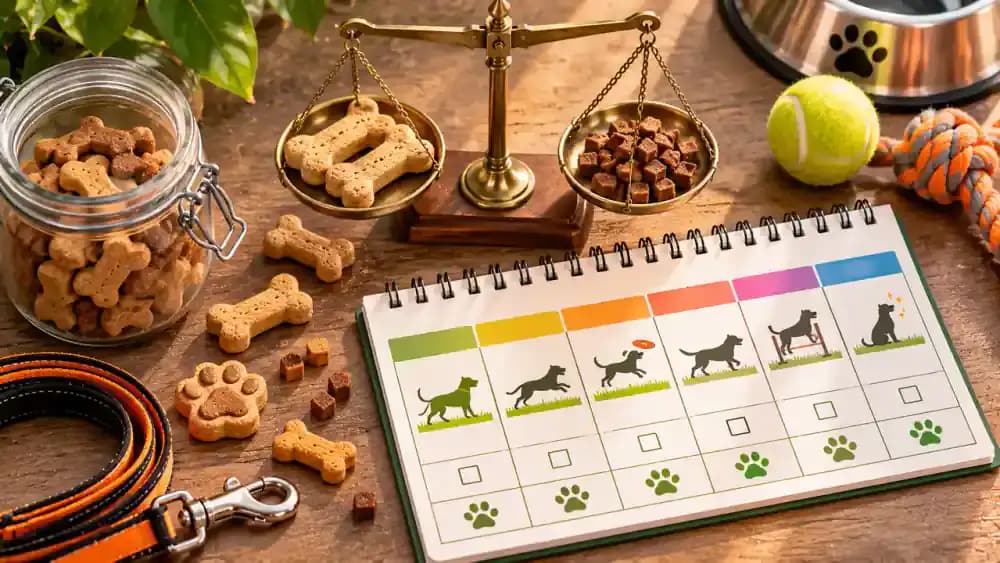
Write down your pet's veterinarian-established calorie target, calculate 10% of that number, and check the calories in your chosen treats. Divide the allowance by calories per treat and round down to whole pieces. Post the resulting limit where everyone can see it, record each reward, and revisit meal portions with veterinary guidance when necessary.

Recognize Begging Without Overfeeding
Avoid automatically offering extra treats whenever your pet begs. Some dogs and cats learn that repeated requests lead to food, even when their daily calorie needs are met. Respond consistently with attention, interactive play, or scheduled meals instead. If your pet seems persistently hungry or shows unexpected changes in appetite, consult your veterinarian before increasing portions.

Adapt Rewards to Your Pet's Life Stage
Adjust treat choices as your pet grows and ages. Puppies and kittens need nutrition that supports development, while adult pets require appropriate maintenance diets. Older animals may benefit from softer rewards or gentler activities suited to their abilities. Choose safe textures and portions, and ask your veterinarian to reassess calorie targets and feeding plans as nutritional needs change.

Choose Treat Sizes That Reduce Choking Risks
Select treats with sizes and textures appropriate for your pet's mouth, chewing ability, and eating habits. Large, hard, or awkwardly shaped pieces can increase choking risks, especially for animals that swallow food quickly. Supervise chewing, avoid cooked bones and other hazardous materials, and consult your veterinarian when you are uncertain whether a particular treat is safe.

Manage Treat Allowances in Multi-Pet Homes
Calculate a separate treat allowance for every pet using their individual veterinarian-established daily calorie targets. A large dog, small dog, and cat should not share one calorie budget. Store their measured treats in clearly labeled containers and distribute rewards in designated feeding areas. Monitor interactions to prevent food stealing, especially when one animal follows a restricted diet.

Store Treats Safely to Maintain Quality
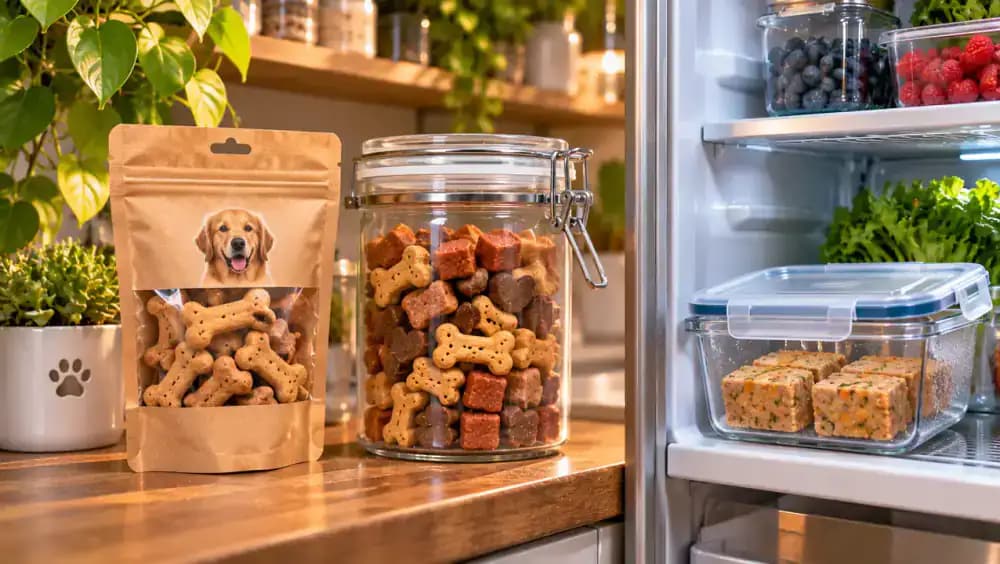
Follow package instructions for storing treats, including refrigeration requirements and recommended use after opening. Reseal containers securely and keep shelf-stable products in a cool, dry location away from heat, moisture, and pets. Check packaging regularly and discard treats showing mold, unusual odors, or signs of spoilage. Accurate calorie tracking matters only when the food remains safe to offer.
Build Positive Habits Around Food Rewards
Offer treats intentionally to reinforce behaviors you want to encourage rather than automatically responding to begging or repeated vocalizations. Reward your pet for settling calmly, following a familiar cue, or completing a training exercise. Use praise, gentle brushing, play, and companionship as additional rewards. Consistent expectations help maintain positive interactions without making every moment of attention dependent on food.

Review Your Plan and Keep Treating Responsibly
After a couple of weeks, review your treat records, portion sizes, and household consistency. Check whether rewards stayed within the planned allowance and note any changes in your pet's weight, appetite, or behavior. Share concerns with your veterinarian and adjust feeding decisions with professional guidance. A sustainable routine balances appropriate nutrition, enjoyable rewards, and regular monitoring.

Your dog gets a biscuit after the morning walk, a few training rewards before lunch, and another treat when you sit down for dinner. Meanwhile, your cat enjoys a crunchy snack after breakfast, a couple of treats during playtime, and something extra before bed. None of these rewards seems particularly large, but their calories can accumulate surprisingly quickly.
That's why establishing a daily treat allowance is a practical way to reward your pet without unintentionally replacing essential nutrition with snacks.
Veterinary nutrition guidance generally recommends that treats account for no more than 10% of your pet's total daily calorie intake. The remaining 90% or more should come from nutritionally complete and balanced food appropriate for your pet. This guideline applies to dogs and cats, although their calorie requirements and treat sizes can be very different.
For example, if your veterinarian has established that your dog needs 600 calories per day, the maximum daily treat budget would be 60 calories. That leaves 540 calories for complete and balanced meals. If each treat contains 15 calories, four treats would use the entire allowance.
The calculation is straightforward, but accurate tracking matters. Dental chews, table scraps, training rewards, and other edible extras all count. The 10% limit is a ceiling, not a target you must reach, and some pets need stricter limits.
This guide explains how to calculate a sensible allowance, check treat packaging, and avoid common calorie-counting mistakes.
Where people go wrong
Treating the 10% Guideline as an Extra Calorie Allowance. The 10% guideline is part of your pet's total daily calorie intake, not an additional amount on top of regular meals. For a dog with a veterinarian-established target of 600 kcal per day, a full 60 kcal treat allowance leaves 540 kcal for complete and balanced food. Adding 60 kcal of treats without accounting for meals could exceed the daily target.
Forgetting to Count Small Training Rewards. Tiny training treats seem harmless individually, but repeated rewards can consume the daily allowance quickly. Ten treats containing 6 kcal each already add up to 60 kcal. Keep a running count during training sessions, and consider breaking suitable treats into smaller pieces. A smaller reward can still reinforce a behavior without contributing as many calories.
Ignoring Calories in Dental Chews and Table Scraps. Dental chews, leftover meat, cheese, and bites shared from your plate can contribute substantial calories. These extras belong in the same daily treat budget as packaged biscuits and training snacks. Check calorie information whenever available, and avoid assuming human food is safe for pets. Some common foods are toxic to dogs or cats.
Assuming Every Treat Has the Same Calorie Content. Treat calories vary by brand, recipe, size, and moisture content. A small crunchy biscuit and a dense soft chew may contain very different amounts of energy. Read the package's calorie statement rather than estimating from appearance. If calories are listed per serving or by weight, confirm the serving size before calculating how many pieces fit your pet's allowance.
Using a Generic Calorie Target Instead of Veterinary Guidance. Two dogs of the same weight can have different calorie requirements because of age, activity, body condition, reproductive status, and health. Cats also have highly individual needs. Avoid choosing an arbitrary daily calorie target from a chart and treating it as exact. Ask your veterinarian to establish an appropriate intake before applying the 10% calculation.
Reducing Regular Food Without Checking Nutritional Balance. Cutting meal portions to make room for treats may seem mathematically reasonable, but excessive reductions can compromise essential nutrient intake. Complete and balanced pet foods are formulated around specific feeding requirements, while most treats are not. Keep treats limited and discuss meaningful meal adjustments with your veterinarian, particularly if your pet follows a therapeutic or weight management diet.
Failing to Coordinate Treats Across the Household. One person offers a breakfast treat, another rewards good behavior, and someone else shares a snack after dinner. Without communication, the pet may receive several separate allowances in one day. Use a shared treat container or simple tracking sheet so everyone knows how many calories remain. Count rewards from visitors and pet sitters too.
Questions people ask
Start with the daily calorie target established by your veterinarian. Multiply that number by 0.10 to find the maximum calories generally available for treats. For example, 600 kcal multiplied by 0.10 equals 60 kcal. If each treat contains 15 kcal, divide 60 by 15 to get a maximum of four treats. Count all edible extras toward that total.
Fixed it?
Get one guide like this every Thursday.