How to Create a Safe Play Tunnel Adventure for Your Cat
Turn an ordinary cat tunnel into an exciting indoor adventure that encourages natural hunting, exploration, and physical activity while keeping your cat comfortable, confident, and safe.
What you’ll need
Tap to tick things off before you start.
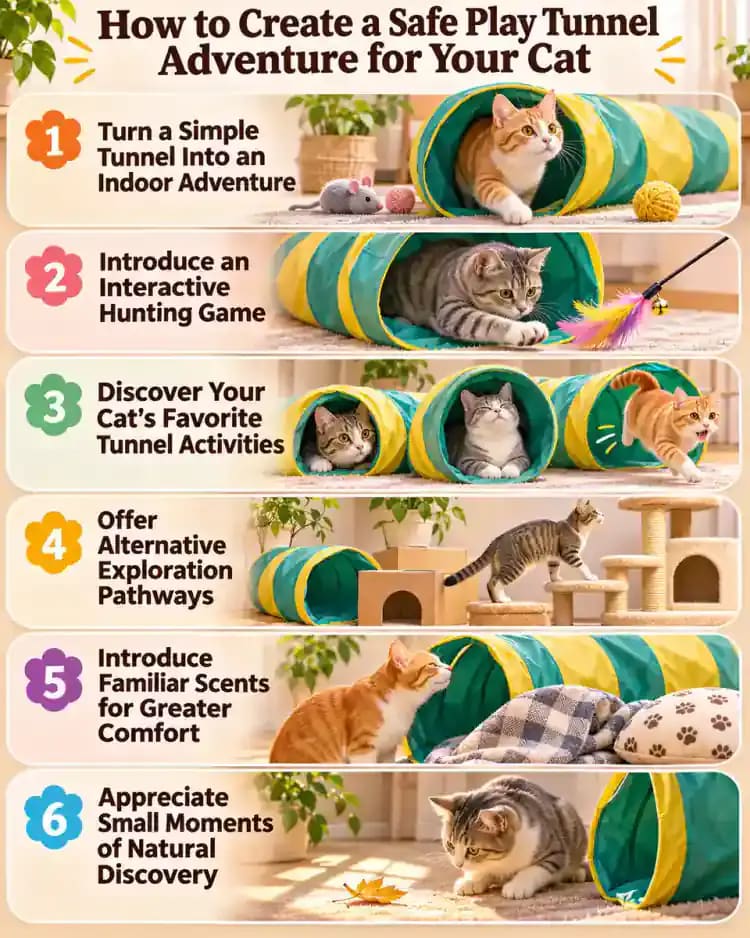
Turn a Simple Tunnel Into an Indoor Adventure
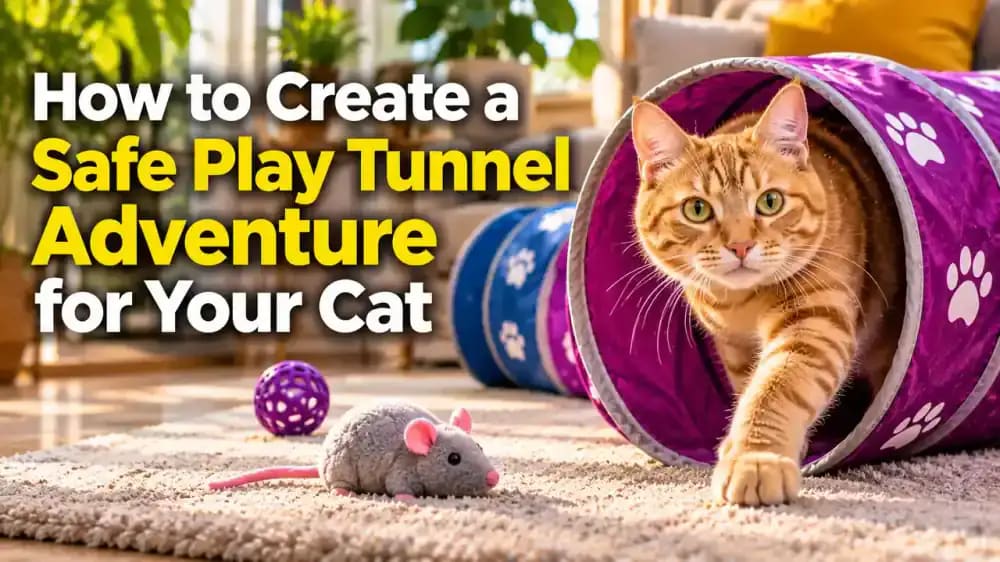
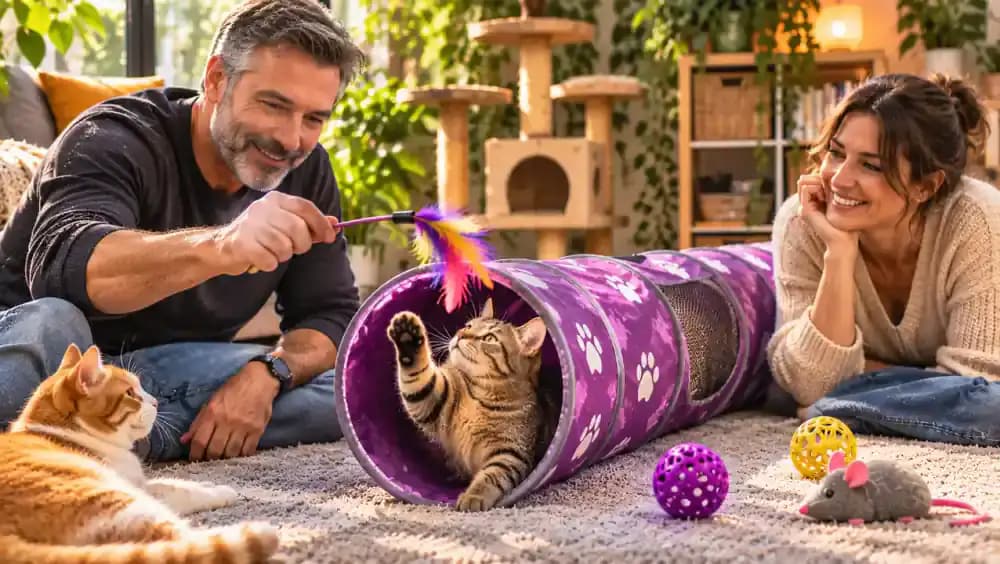
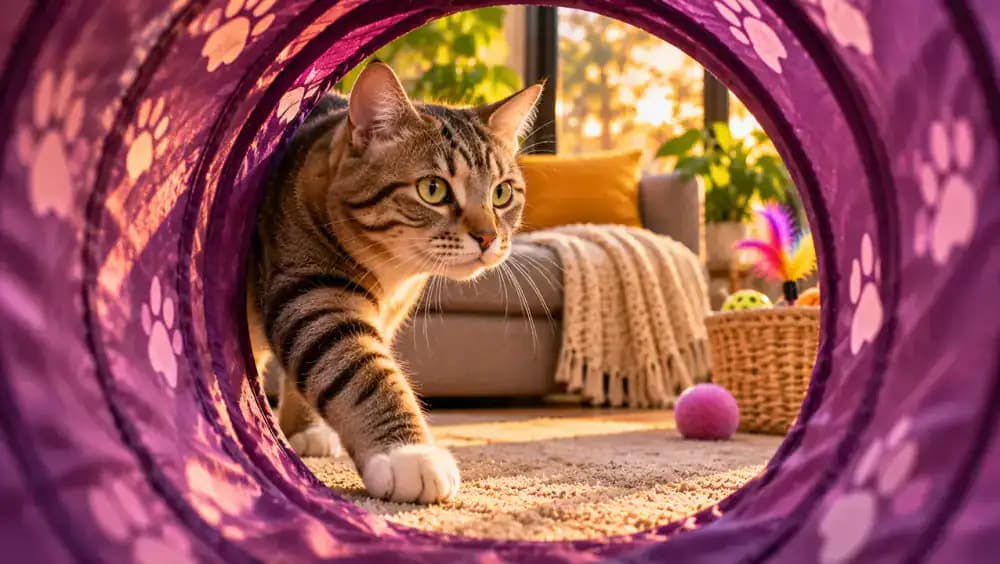
Introduce a colorful fabric tunnel as a dedicated space for exploration, hiding, and interactive play. Allow your cat to investigate both openings and discover how the tunnel connects different areas of the room. Incorporating this simple accessory into everyday activities encourages physical movement, mental stimulation, and natural hunting behaviors without requiring extensive equipment.
Encourage Natural Hunting and Exploration
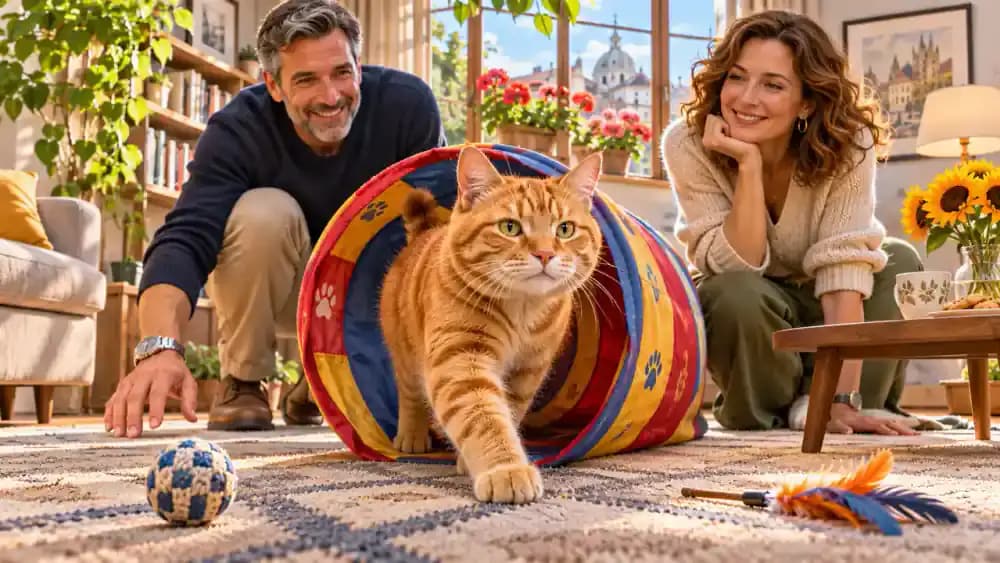
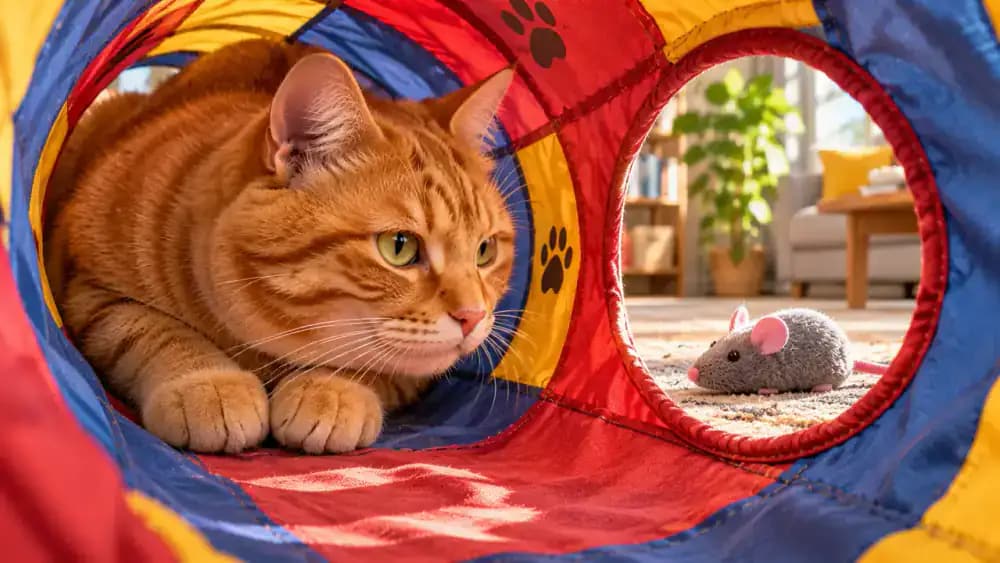
Use the tunnel to encourage natural behaviors such as crouching, stalking, hiding, and observing movement. Gently move a familiar toy across the floor near an opening, allowing your cat to watch from inside. Keep movements unpredictable but gentle, giving your cat opportunities to investigate, pursue, and retreat whenever it chooses.
Choose a Spacious and Durable Play Tunnel
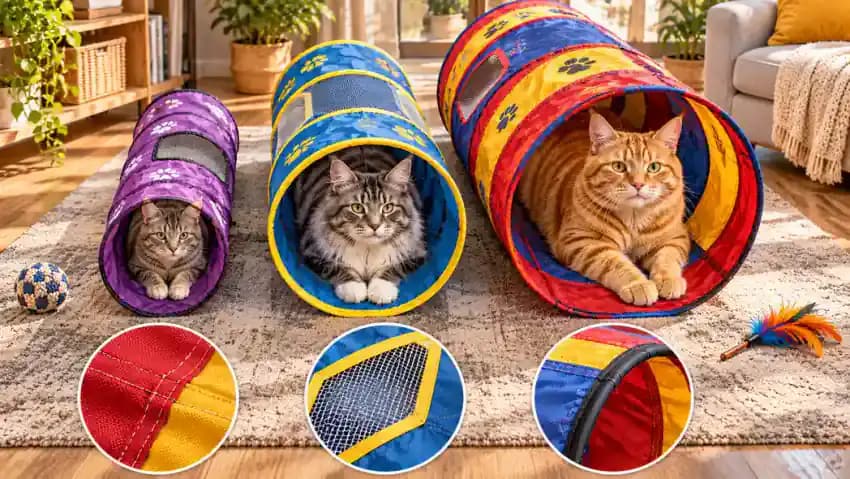
Select a tunnel with openings wide enough for your cat to pass through comfortably without squeezing. Look for durable fabric, reinforced seams, breathable construction, and securely enclosed support structures. Check that the tunnel maintains its shape during normal movement. Reject products with exposed wires, torn fabric, loose decorations, or small detachable parts.
Prepare a Safe and Spacious Play Area
Position the tunnel on a level, nonslip surface in a quiet area with plenty of surrounding space. Keep every opening unobstructed so your cat can enter and exit freely. Remove nearby electrical cords, fragile objects, and unstable furniture. Avoid staircases, heaters, and busy doorways where sudden movement could create unnecessary risks.
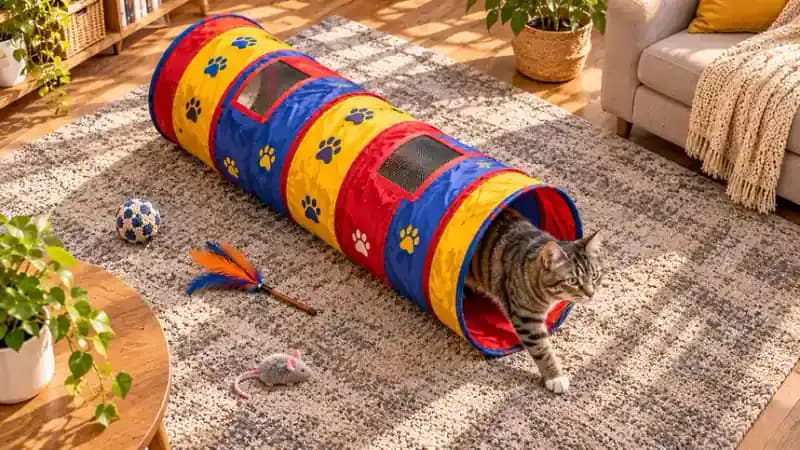
Let Your Cat Explore at Its Own Pace
Sit quietly near the tunnel and allow your cat to approach independently. Place a small treat or familiar toy near the entrance to encourage voluntary investigation. Gradually position rewards farther inside as your cat becomes comfortable. Never push your cat into the tunnel, block its retreat, or insist on participation when it shows hesitation.
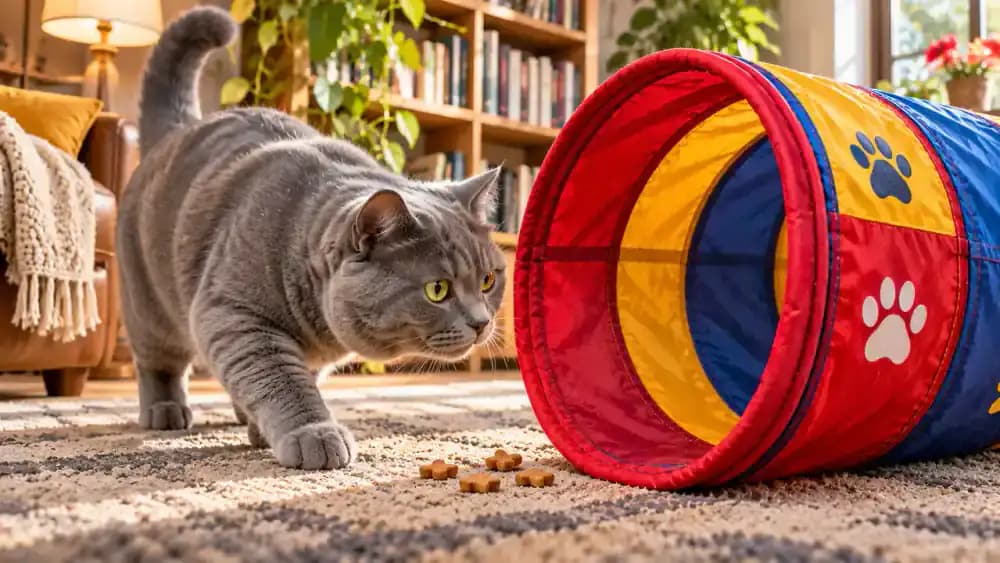
Introduce an Interactive Hunting Game
Once your cat confidently explores the tunnel, move a feather wand slowly past one of its openings. Allow your cat to observe, stalk, and pounce without rushing the interaction. Let your cat catch the toy regularly to maintain engagement. Keep dangling attachments under your direct control and store the wand securely after play.
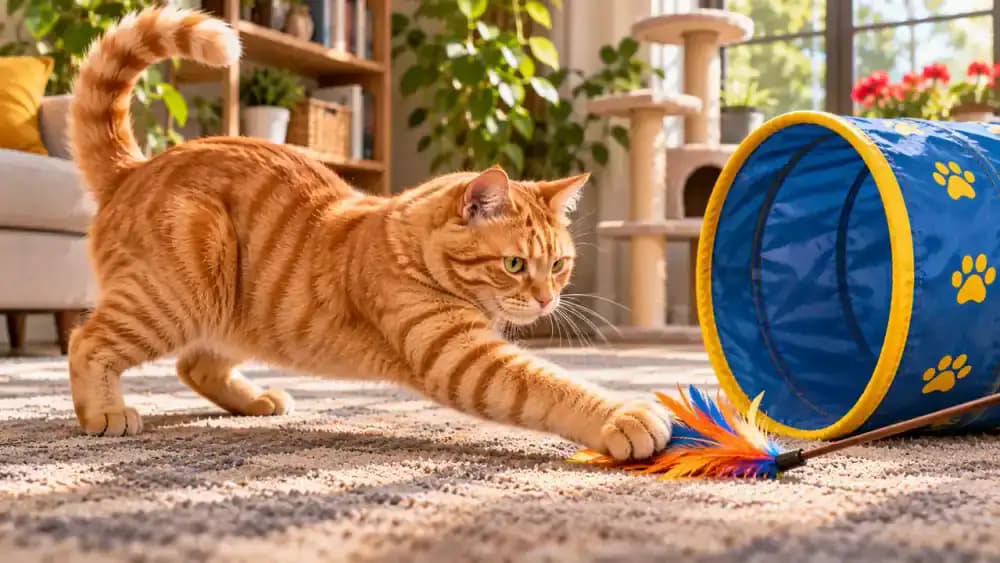
Build a Varied Exploration Route
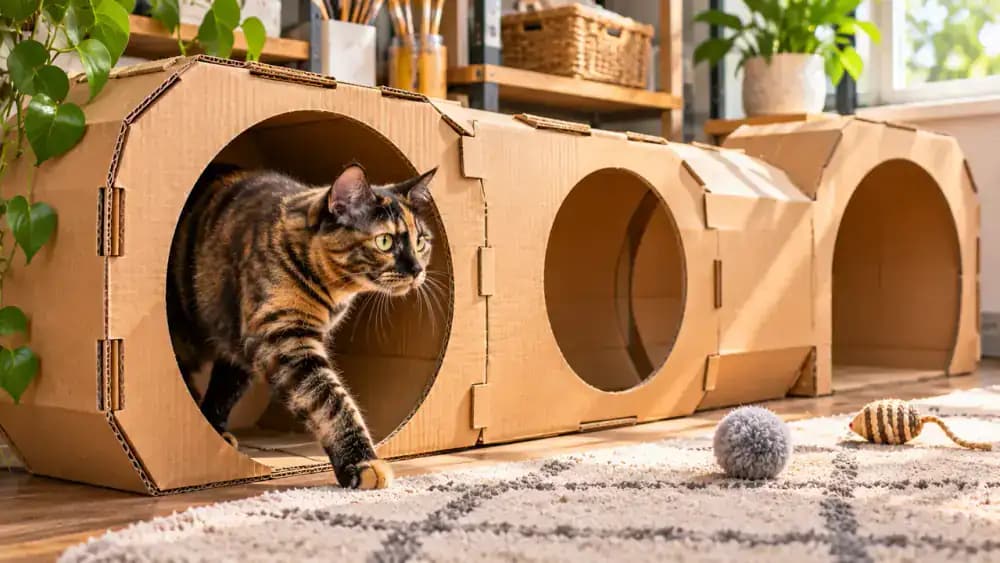
Create variety by securely connecting compatible tunnel sections or placing an open cardboard box beside the existing tunnel. Distribute familiar toys throughout the area to encourage investigation. Introduce changes gradually and maintain unobstructed exits throughout the route. Choose shorter, simpler configurations for older cats or those with limited mobility or confidence.
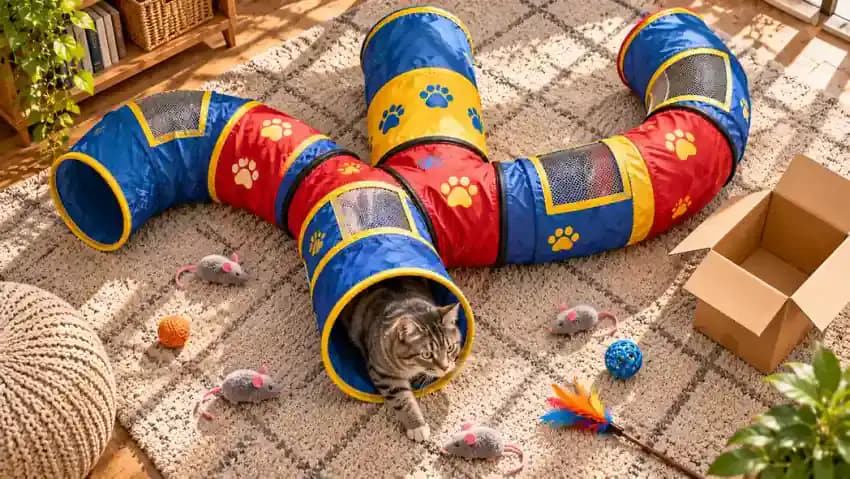
Recognize When Your Cat Needs a Break
Observe your cat's body language throughout every play session. Flattened ears, tense posture, repeated retreating, or sudden agitation may indicate discomfort or overstimulation. Stop moving toys immediately and allow your cat to leave without interference. Provide a quiet resting area nearby, and resume activities only when your cat voluntarily shows renewed interest.

Create a Kibble Discovery Trail
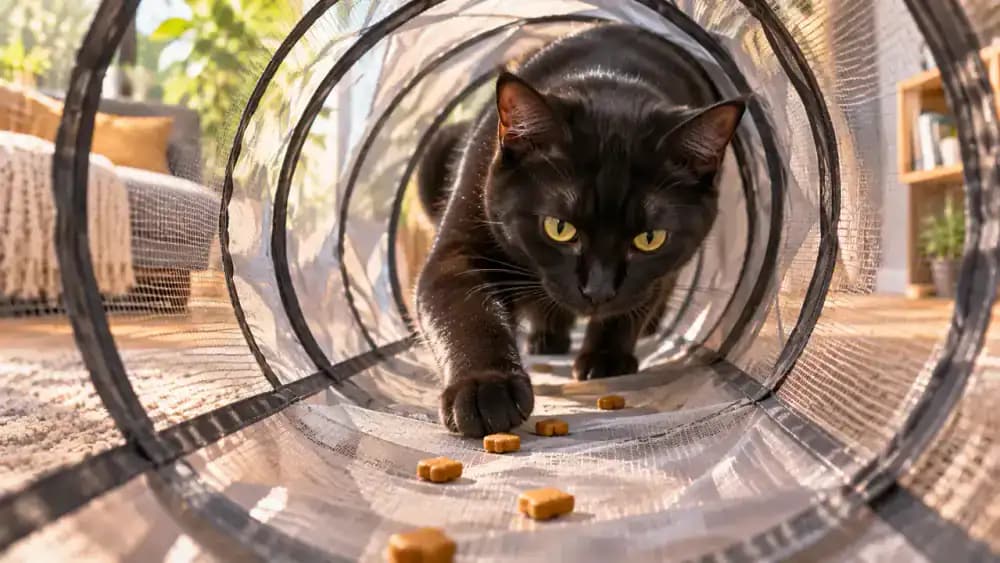
Transform the tunnel into a gentle foraging activity by placing individual pieces of your cat's regular kibble at accessible points along the interior. Encourage independent sniffing and searching rather than fast chasing. Deduct the kibble from your cat's normal daily food allowance, and remove uneaten pieces after the activity to keep the tunnel clean.
Play Gentle Hide and Seek With Familiar Toys
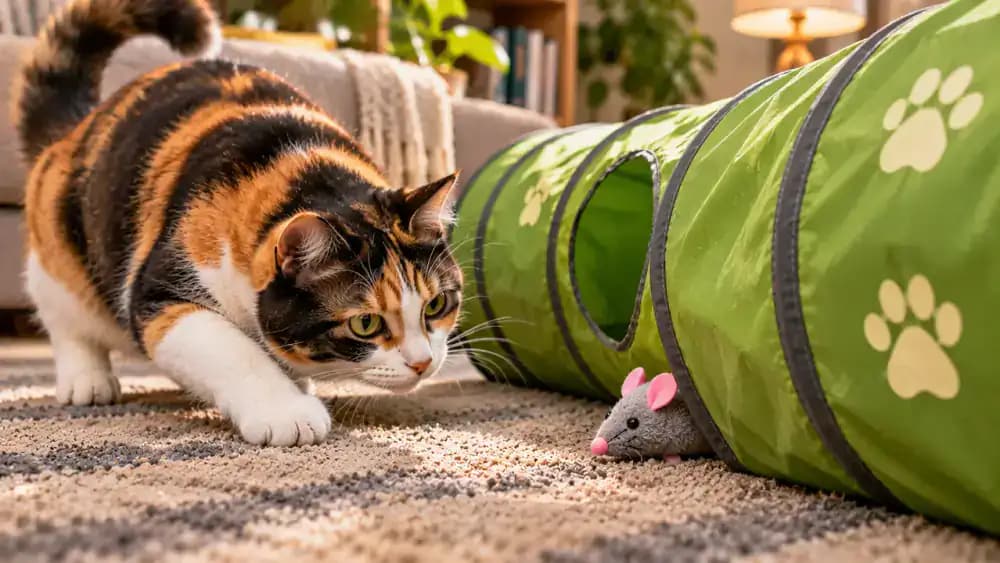
Sit beside the tunnel and slowly reveal a favorite plush toy from behind its outer edge. Allow your cat to notice the movement, investigate, and approach the toy independently. Alternate between partially hiding and revealing the toy to maintain curiosity. Avoid sudden movements, loud noises, or unexpected contact that could frighten your cat.
Provide Fair Play Opportunities for Multiple Cats
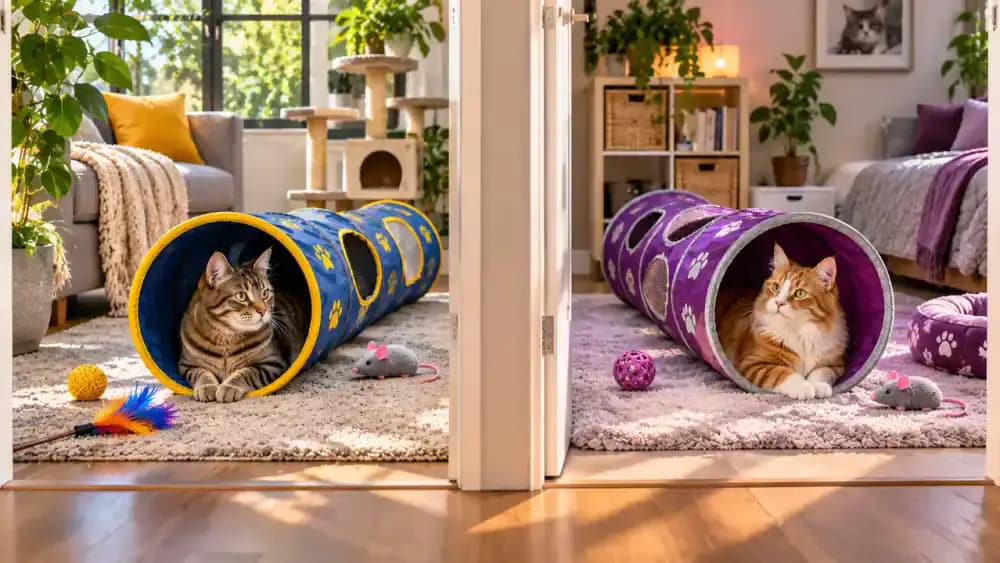
Observe how your cats interact around shared tunnels, paying attention to guarded entrances, unwanted chasing, and competition for toys. Provide separate tunnels or individual play sessions if one cat consistently prevents another from participating. Keep escape routes accessible and allow each cat to explore independently without pressure, interference, or competition from other household pets.
Discover Your Cat's Favorite Tunnel Activities
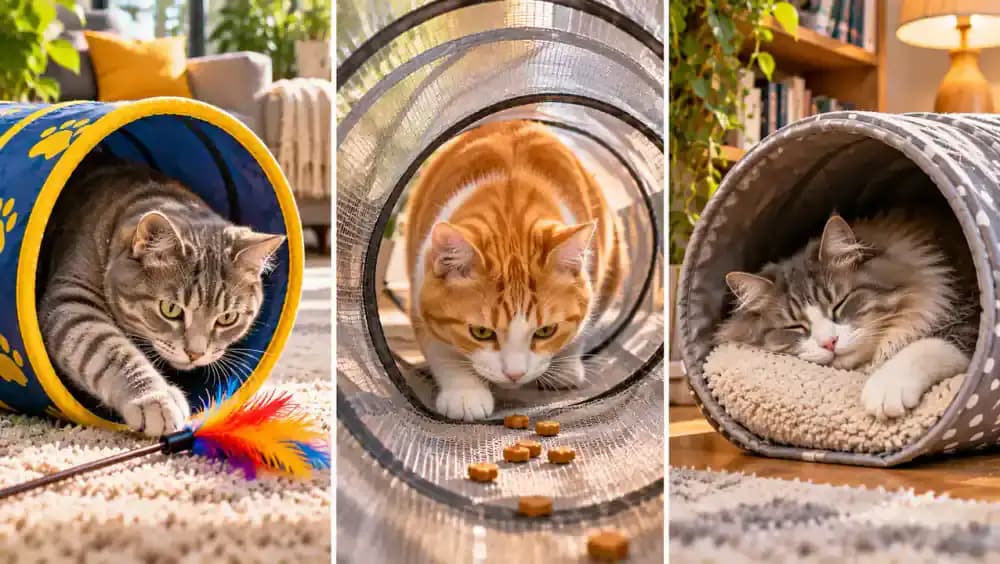
Experiment with different activities to discover what consistently captures your cat's attention. Offer opportunities for toy tracking, food searching, and relaxed observation from inside the tunnel. Notice which activities your cat voluntarily returns to and prioritize those experiences. Avoid purchasing unnecessary accessories when familiar toys and simple arrangements already provide enjoyable enrichment.
Clean the Tunnel Regularly
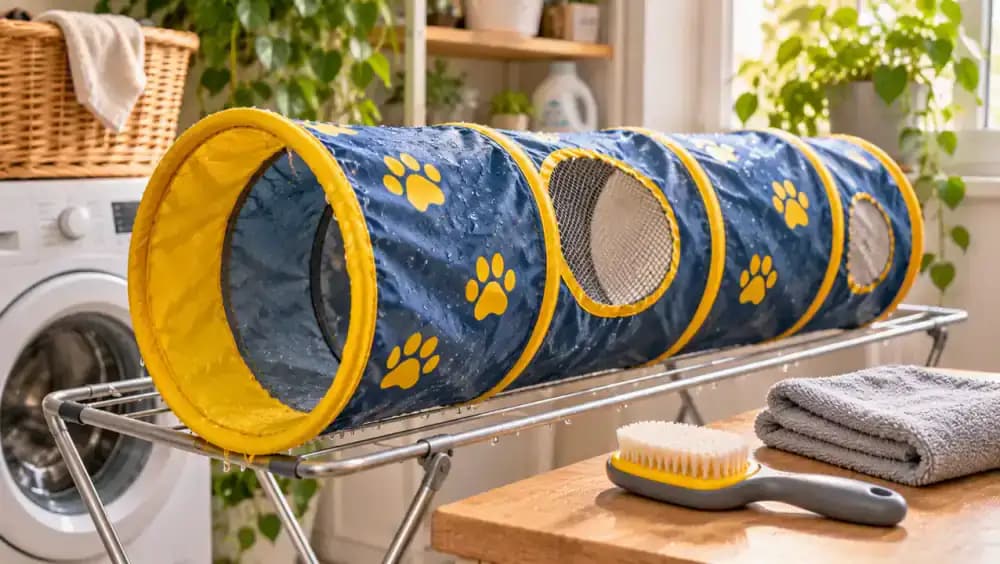
Remove accumulated fur, dust, and food crumbs using a soft brush or cleaning cloth appropriate for the tunnel material. Follow the manufacturer's cleaning instructions and select products suitable for use around cats. Avoid strongly scented sprays and harsh chemical residues. Allow all fabric and interior surfaces to dry completely before returning the tunnel to use.
Inspect the Tunnel Before Every Play Session
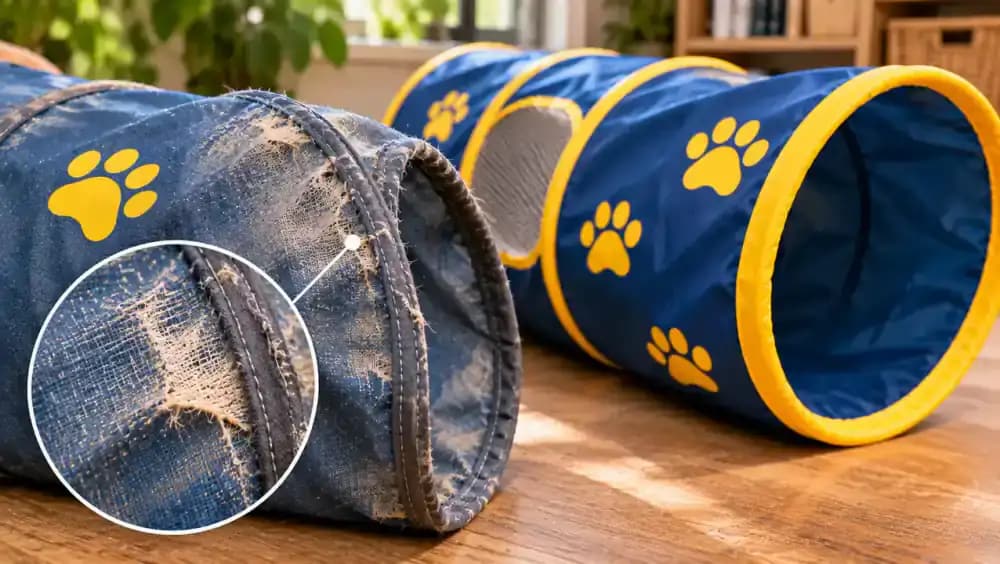
Examine the tunnel before each play session, focusing on seams, support coverings, and areas frequently scratched or bitten. Look for weakened fabric, exposed wires, loose threads, and changes in structural stability. Remove damaged equipment immediately rather than allowing continued use. Replace the tunnel whenever its protective materials or structural integrity become unreliable.
Establish a Flexible Daily Play Routine
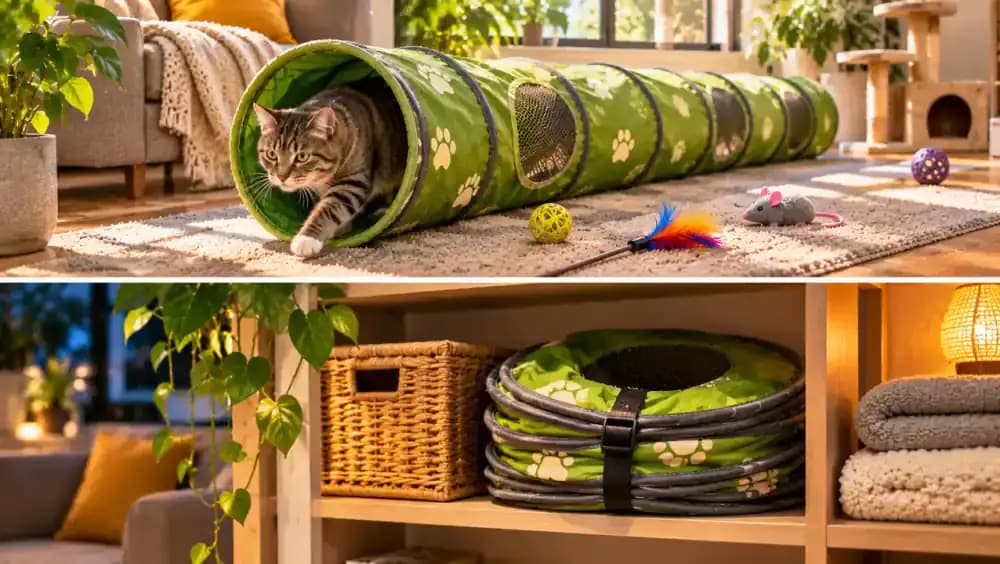
Offer supervised tunnel activities during periods when your cat naturally becomes alert and playful, such as early morning or evening. Keep sessions flexible and respect your cat's feeding, resting, and activity preferences. Occasionally fold and store the tunnel between sessions to maintain novelty. Encourage consistent opportunities for enrichment without making participation an obligation.
Measure Success Through Voluntary Participation
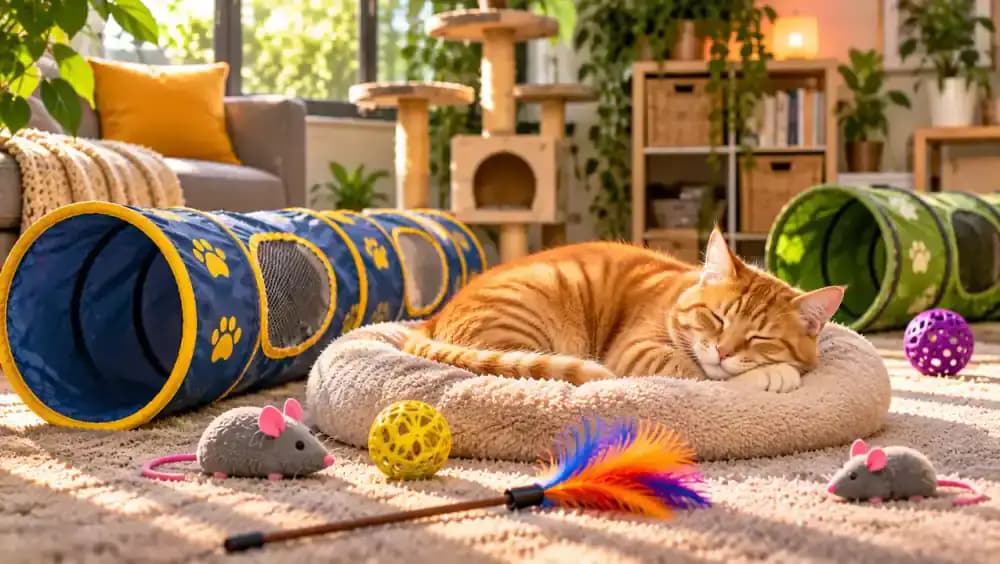
Evaluate your tunnel setup by observing whether your cat returns voluntarily, explores comfortably, and appears relaxed after playing. Keep familiar activities available and avoid adding unnecessary complexity. Allow your cat to finish each session independently and rest nearby whenever desired. Prioritize consistent enjoyment and comfortable exploration over the number of activities completed.
Choose Materials That Suit Your Cat's Senses
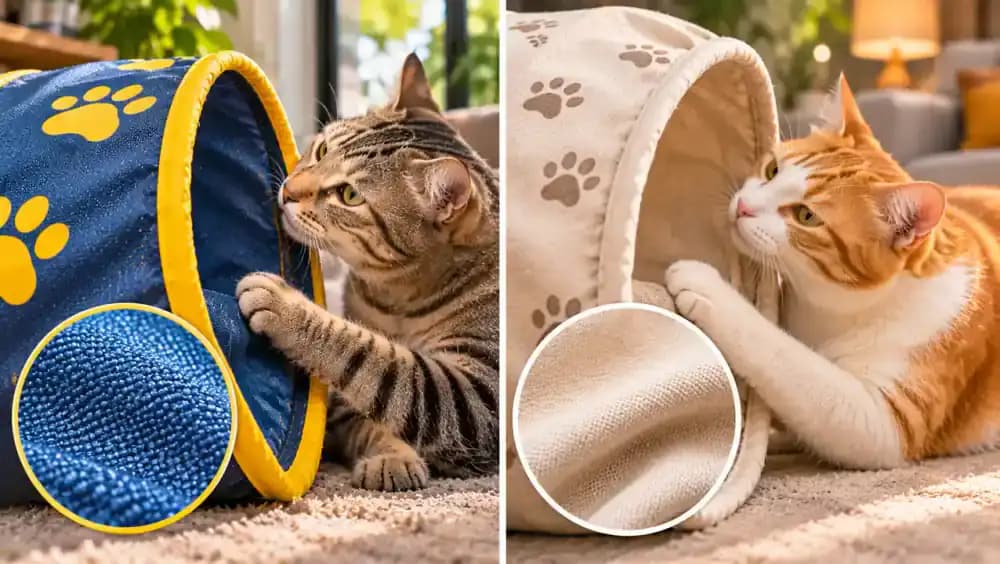
Pay attention to how your cat responds to different tunnel fabrics, textures, sounds, and odors. Crinkling materials may attract some cats while discouraging others. Choose quieter fabrics if your cat repeatedly avoids noisy tunnels. Allow new products to air out in a well-ventilated area before introducing them, and avoid masking odors with scented sprays.
Offer Alternative Exploration Pathways
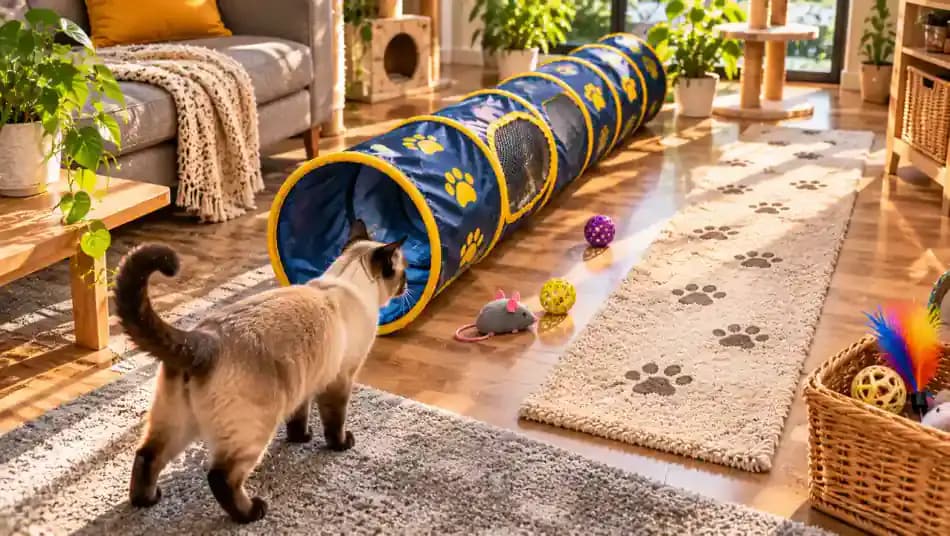
Position the tunnel alongside an unobstructed open pathway leading toward the same destination. Allow your cat to decide whether to explore the enclosed route or walk around it. Keep both pathways accessible and free from obstacles. Offering simple choices encourages independent exploration without creating pressure to complete a particular route or activity.
Introduce Gentle Sound-Based Games
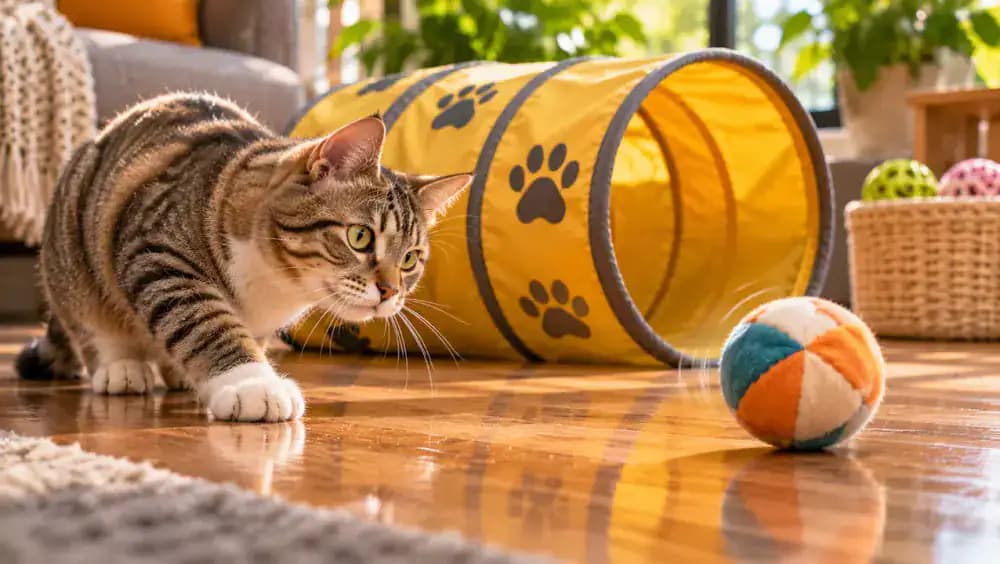
Roll a lightweight fabric ball across the floor beside the tunnel and allow your cat to investigate its movement and sound. Select appropriately sized toys that produce soft noises without detachable components. Avoid electronic alarms, loud rattles, or sudden sounds. Stop the activity if your cat retreats or appears uncomfortable with the noise.
Create a Relaxing Tunnel Observation Point
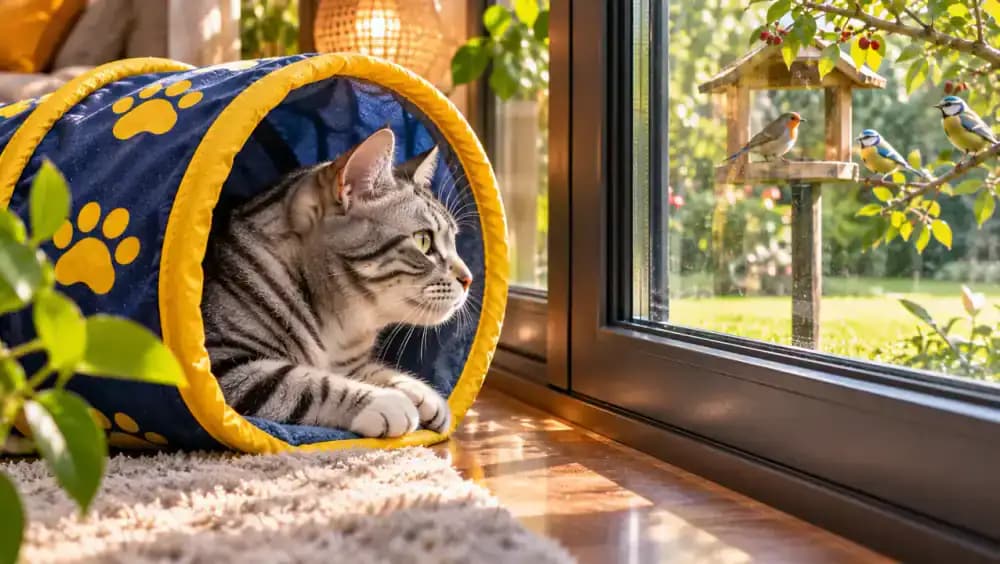
Place a stable tunnel near a securely closed window overlooking an interesting outdoor area. Keep its openings accessible and ensure the location remains comfortably shaded and free from blind cords. Allow your cat to settle near the entrance and observe outdoor activity independently. This arrangement provides quiet enrichment without requiring active chasing or constant interaction.
Teach Children to Participate Safely
Supervise children during tunnel activities and demonstrate how to move toys slowly and gently. Establish clear rules against shouting, shaking the tunnel, blocking openings, or climbing inside equipment designed for cats. Encourage children to remain outside the tunnel and respect the cat's personal space. End the interaction whenever the cat chooses to withdraw.
Monitor Changes in Your Cat's Play Behavior
Observe your cat's usual movement, balance, energy levels, and willingness to participate in familiar tunnel activities. Record unexpected behavioral changes, including when they began and how frequently they occur. Pay attention to accompanying changes in appetite or sleeping patterns. Contact your veterinarian if these differences persist or your cat shows signs of discomfort.

Strengthen Your Bond Through Shared Exploration
Use tunnel activities as opportunities to build trust through patient, positive interactions. Sit near an accessible opening and allow your cat to approach your outstretched hand voluntarily. Offer gentle affection if your cat welcomes it. Focus on comfortable shared experiences rather than completing challenges, encouraging faster movement, or achieving specific performance goals.
Introduce Familiar Scents for Greater Comfort
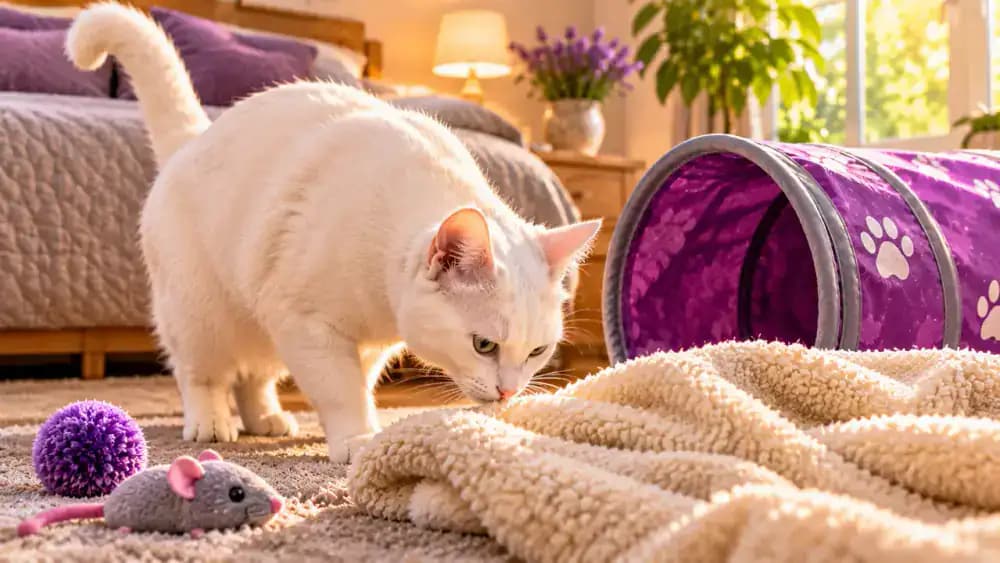
Place a small blanket your cat regularly uses beside the entrance of a newly introduced tunnel. Familiar household scents may help unfamiliar equipment feel more approachable. Keep the blanket clear of the opening and allow independent investigation. Avoid applying perfumes, essential oils, artificial fragrances, or strongly scented products to the tunnel or blanket.
Redirect Unwanted Ambush Behavior
Watch for repeated pouncing at passing feet or other household pets from inside the tunnel. Redirect your cat's attention toward an appropriate moving toy before unwanted contact occurs. Relocate the tunnel away from busy walkways and frequently used doorways. Establish a dedicated play corner where supervised hunting games can occur without disrupting household activity.

Create a Safe Homemade Cardboard Tunnel
Select a sturdy cardboard box and cut generously sized openings into opposite sides before allowing your cat nearby. Remove staples, packaging straps, loose adhesive, and unnecessary attachments. Smooth rough edges and check that the structure remains stable during exploration. Keep the cardboard dry and replace it whenever scratching or moisture weakens its construction.
Coordinate Active Play With Feeding Times
Schedule energetic tunnel games shortly before your cat's regular mealtime rather than immediately after eating. Allow your cat to stalk, chase, and catch an appropriate toy before offering its measured meal. Follow the activity with an opportunity for uninterrupted rest. This routine encourages natural hunting behaviors without introducing unnecessary food or additional calories.
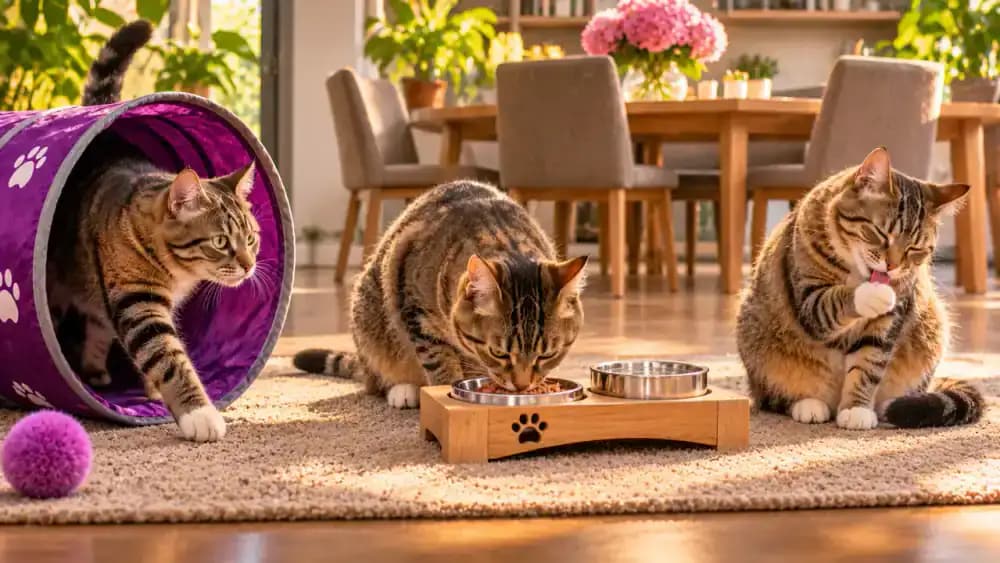
Adapt Tunnel Adventures for Small Apartments
Choose a compact, collapsible tunnel that fits comfortably within an underused corner of your apartment. Maintain clear entrances, adequate ventilation, and sufficient space for safe movement. Avoid blocking doorways or essential household pathways. Fold and store the tunnel when supervised play ends, allowing the room to serve its usual purpose without sacrificing enrichment opportunities.
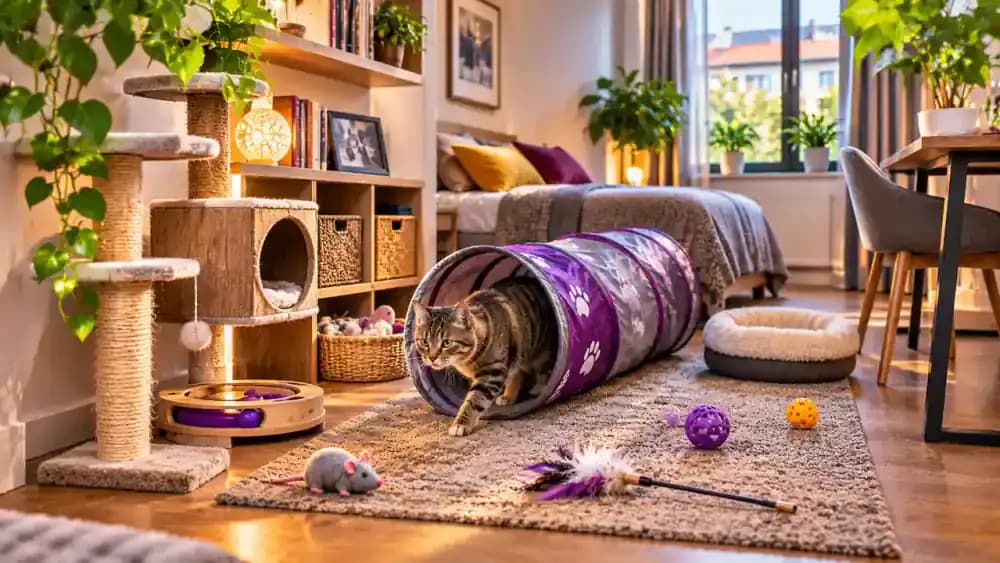
Unfold Spring-Supported Tunnels Safely
Keep your cat outside the setup area when releasing the storage straps of a spring-supported tunnel. Follow the manufacturer's instructions and maintain control of the structure as it expands. Check that all support rings are securely covered and the tunnel is fully extended. Allow your cat to approach only after setup is complete.
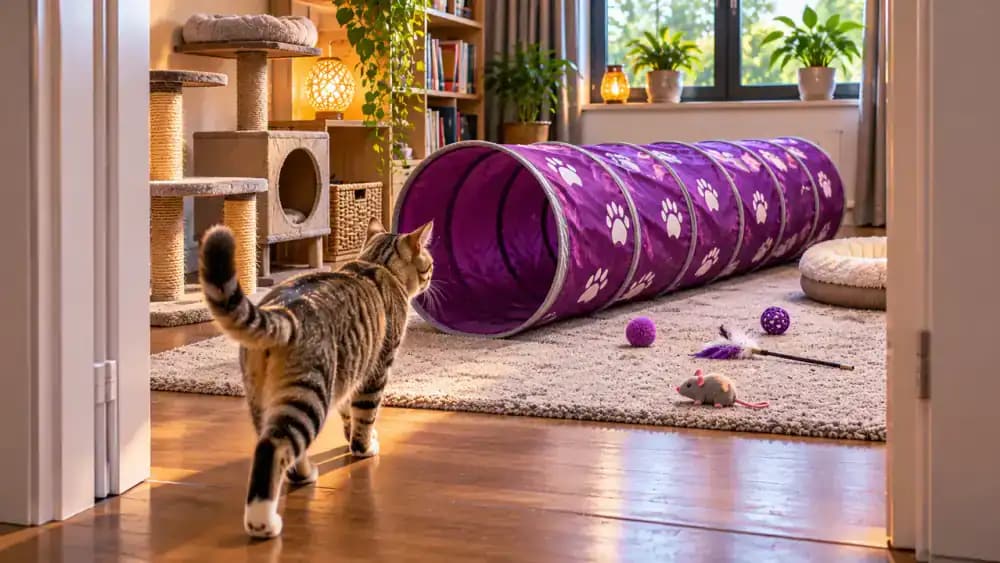
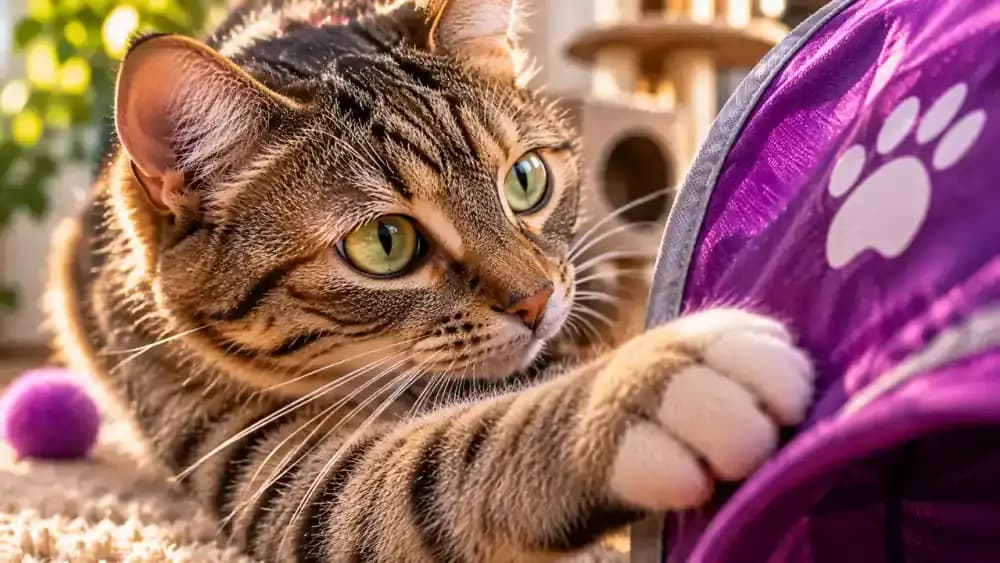
Appreciate Small Moments of Natural Discovery
Observe subtle signs of engagement, such as forward-facing whiskers, attentive eyes, gentle sniffing, or exploratory paw movements. Allow these quiet investigations to continue without interrupting them with additional toys or encouragement. Remember that rewarding enrichment does not require vigorous chasing or complicated activities. Let your cat determine what makes each tunnel adventure enjoyable.
A colorful play tunnel appears on the living room floor, and your curious cat immediately notices something different. With cautious footsteps, twitching whiskers, and an investigative sniff, your cat approaches the entrance, deciding whether this unfamiliar object deserves further exploration. What looks like a simple accessory can become an exciting source of daily enrichment.
A safe cat play tunnel provides opportunities for cats to express natural behaviors such as stalking, hiding, exploring, chasing, and pouncing. These activities can encourage physical movement, provide mental stimulation, and introduce variety into an indoor environment. Tunnels can also offer opportunities for positive interaction between cats and their owners through gentle, supervised games.
However, creating an enjoyable tunnel adventure requires more than purchasing a colorful tunnel and placing it on the floor. The tunnel should have suitable dimensions, stable construction, breathable materials, and accessible exits. Its surroundings should be free from electrical cords, unstable furniture, and other potential hazards.
Your cat should always control how and when exploration happens. Familiar toys, small treats, and patient encouragement can make the experience more inviting without creating unnecessary pressure. Some cats investigate immediately, while others need several days to become comfortable.
By combining thoughtful placement, engaging activities, regular safety inspections, and respect for your cat's individual preferences, you can create a rewarding play environment that encourages confident exploration and makes everyday indoor life more interesting.
Where people go wrong
Choosing a Tunnel That Is Too Small. A tunnel that restricts movement can make exploration uncomfortable and discourage your cat from entering. Avoid selecting a tunnel based solely on appearance or price. Consider your cat's body size, mobility, and ability to turn or move freely. Larger cats and cats with limited mobility may benefit from wider, shorter tunnel designs.
Forcing Your Cat Inside. Picking up your cat and placing it inside the tunnel can create an unpleasant association with the play environment. Never block an exit or physically prevent your cat from leaving. Allow exploration to happen voluntarily, using familiar toys or small treats as gentle encouragement. Patience is more effective than pressure when introducing unfamiliar objects.
Placing the Tunnel Near Household Hazards. Positioning a tunnel near electrical cords, heaters, staircases, fragile decorations, or unstable furniture introduces unnecessary risks. Cats may exit quickly during energetic play without paying attention to their surroundings. Choose an open area with sufficient clearance around every entrance and exit, and make sure nearby objects cannot fall or interfere with movement.
Ignoring Loose or Damaged Materials. Repeated scratching, biting, and vigorous play can damage tunnel fabric, seams, and internal support structures. Loose threads, exposed wire, detachable decorations, and torn material may create entanglement or ingestion hazards. Inspect the tunnel regularly and remove it from use immediately when damage compromises its safety. Replace damaged products when a reliable repair is not possible.
Blocking Tunnel Entrances and Exits. Placing furniture, cushions, or toys against tunnel openings can restrict escape routes and make your cat feel trapped. Every usable entrance and exit should remain accessible throughout play. This is particularly important in households with multiple cats, where another animal may unintentionally block an opening. Avoid configurations that prevent easy movement or retreat.
Encouraging Excessively Intense Play. Continuous chasing, sudden loud noises, and repeated surprise attacks with toys can make tunnel activities overwhelming. Watch for flattened ears, vigorous tail movement, repeated retreating, or attempts to hide elsewhere. Keep games gentle and allow regular breaks. End the session whenever your cat appears uncomfortable, loses interest, or chooses to leave the play area.
Leaving String-Based Toys Inside the Tunnel. Wand toys, ribbons, elastic cords, and other string-based accessories can become dangerous when left accessible without supervision. Cats may chew, swallow, or become entangled in these materials. Use these toys only during interactive play, then store them securely. Check the tunnel after each session to ensure no loose accessories or damaged toy components remain.
Overlooking Individual Play Preferences. Not every cat enjoys enclosed spaces, noisy fabrics, or fast-moving toys. Assuming that all cats should respond enthusiastically to the same tunnel setup can lead to unnecessary frustration. Observe your cat's preferences and adjust the environment accordingly. A shorter tunnel, quieter location, wider opening, or alternative enrichment activity may provide a more enjoyable experience.
Questions people ask
Play tunnels can provide valuable enrichment for indoor cats by encouraging exploration, hiding, stalking, chasing, and physical movement. They also introduce variety into familiar surroundings and create opportunities for interactive play. Their benefits depend on appropriate construction, safe placement, and voluntary participation. A tunnel should complement other enrichment activities rather than replace them entirely.
Fixed it?
Get one guide like this every Thursday.