How to Create a Pet-Safe Laundry Routine
Keep your pets safer around laundry products and appliances with practical tips for detergent storage, washing pet bedding, and preventing common laundry room hazards.
What you’ll need
Tap to tick things off before you start.
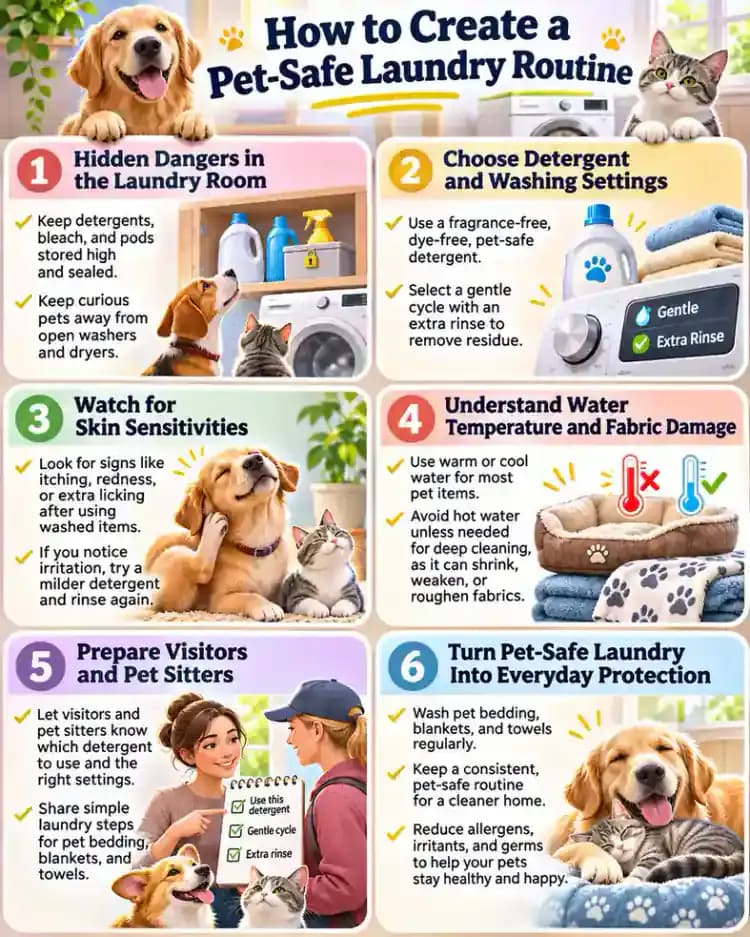
Hidden Dangers in the Laundry Room
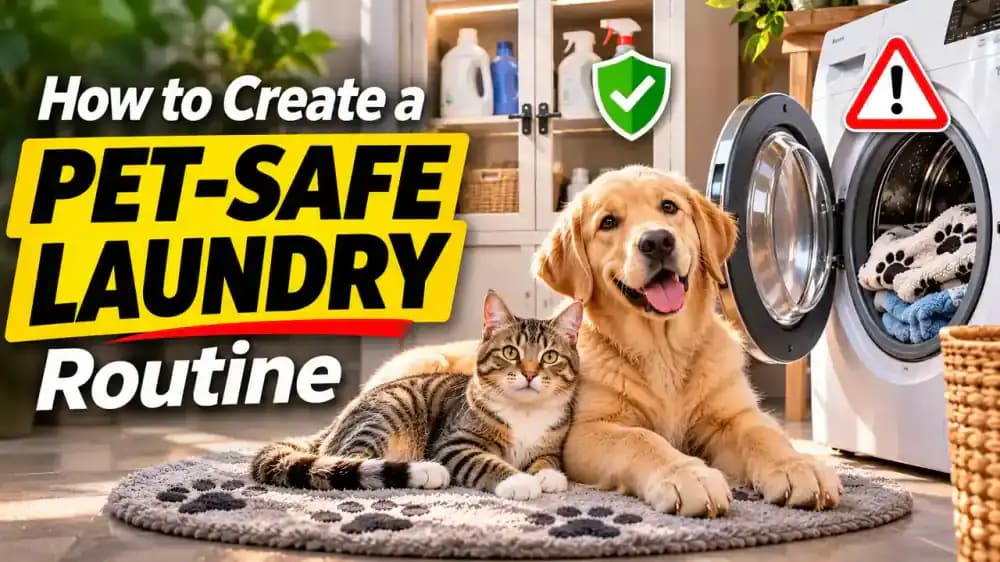
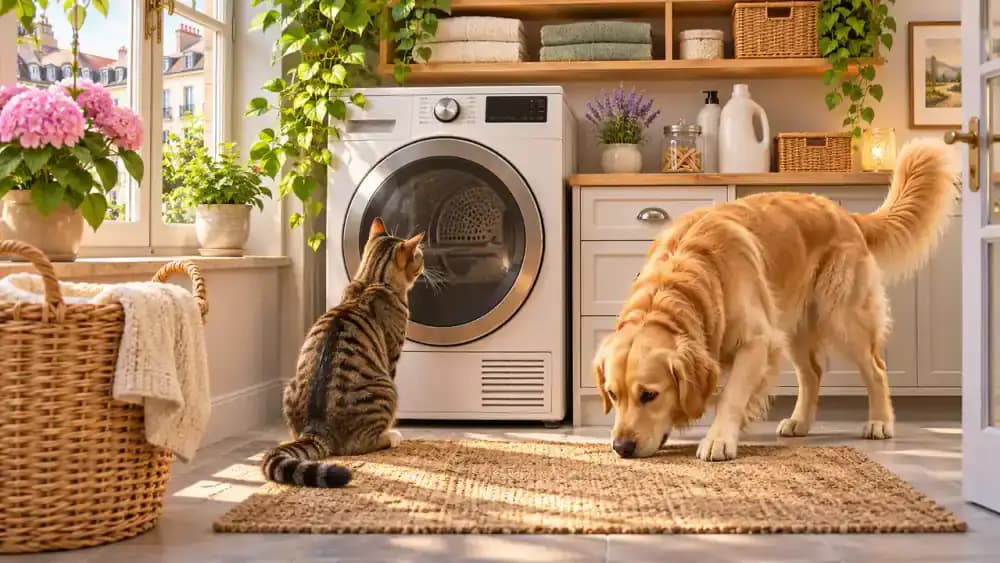
Before starting laundry, look around the room from your pet's perspective. Cats may explore open dryer drums, while puppies investigate detergent containers and unfamiliar scents. Identify accessible chemicals, open appliances, and tempting objects before beginning your chores. Keep pets away from potential hazards and establish consistent safety habits that protect them throughout laundry day.
Understand Dangerous Laundry Products
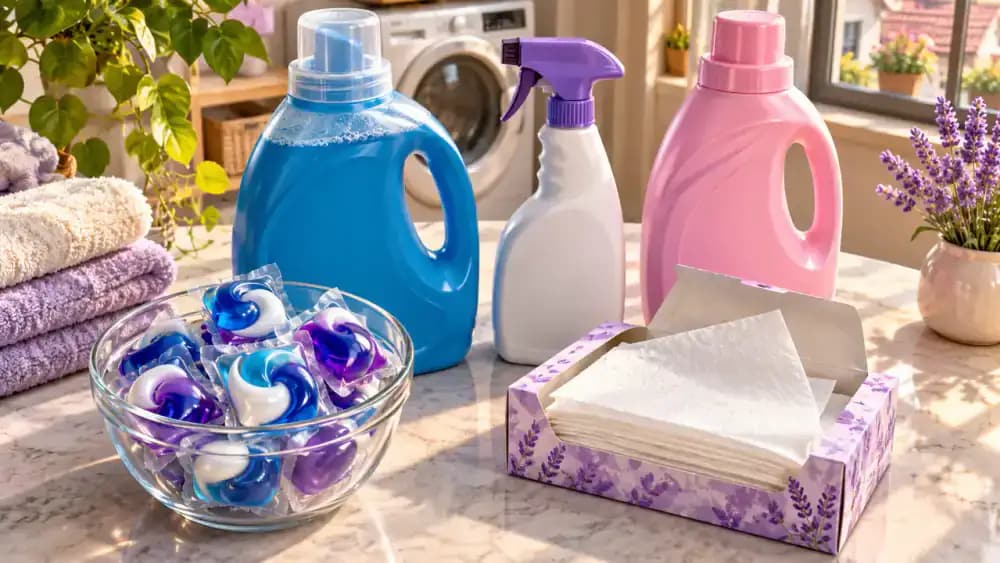
Identify laundry products that could harm pets if swallowed or improperly handled. Concentrated detergent pods can rupture when bitten, while liquid detergents, stain removers, and fabric softeners may cause harmful exposures. Dryer sheets also pose risks when chewed or swallowed. Keep products in their original, clearly labeled containers and follow all manufacturer safety warnings.
Secure Products and Prevent Exposure
Store all detergents, pods, dryer sheets, and stain removers in a securely latched cabinet that pets cannot access. Close containers immediately after measuring each dose, and never leave chemicals unattended. If a spill occurs, remove pets from the area, read the product's cleanup instructions, and clean the affected surface thoroughly before allowing animals back inside.

Check Appliances Before Every Cycle
Inspect the washer and dryer drums before loading laundry, paying particular attention to hidden corners where a curious cat might rest. Check both appliances again immediately before starting a cycle. Keep appliance doors closed between loads, and restrict pets from the laundry room while machines operate. Never start an appliance without confirming that its drum is empty of animals.

Sort and Prepare Pet Textiles
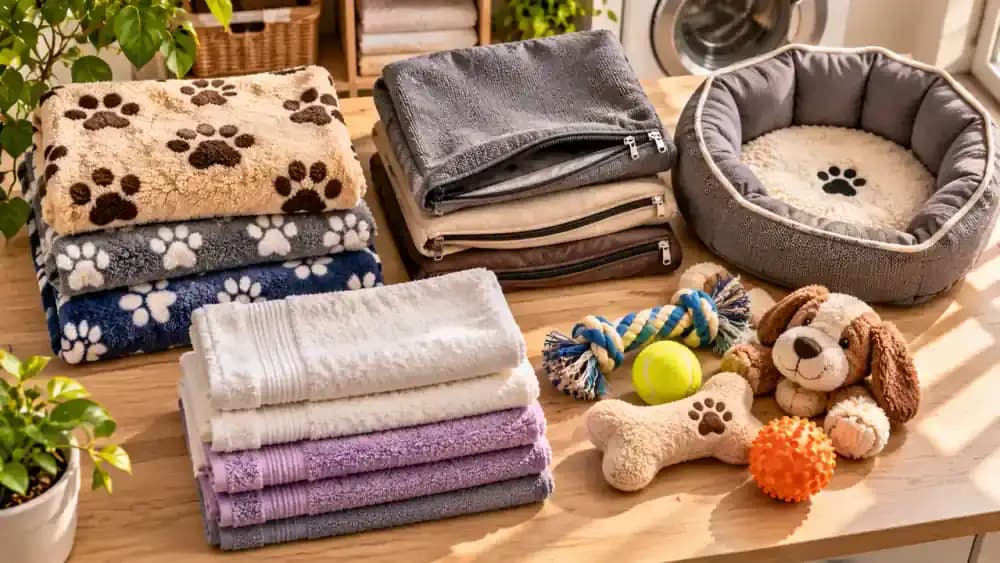
Gather pet blankets, towels, removable bedding covers, and washable fabric toys. Separate heavily soiled items from regular clothing when practical, and shake loose pet hair outdoors. Examine each item's care label for approved washing temperatures and drying methods. Set aside foam inserts, delicate toys, or other materials that require special cleaning instead of machine washing.
Choose Detergent and Washing Settings
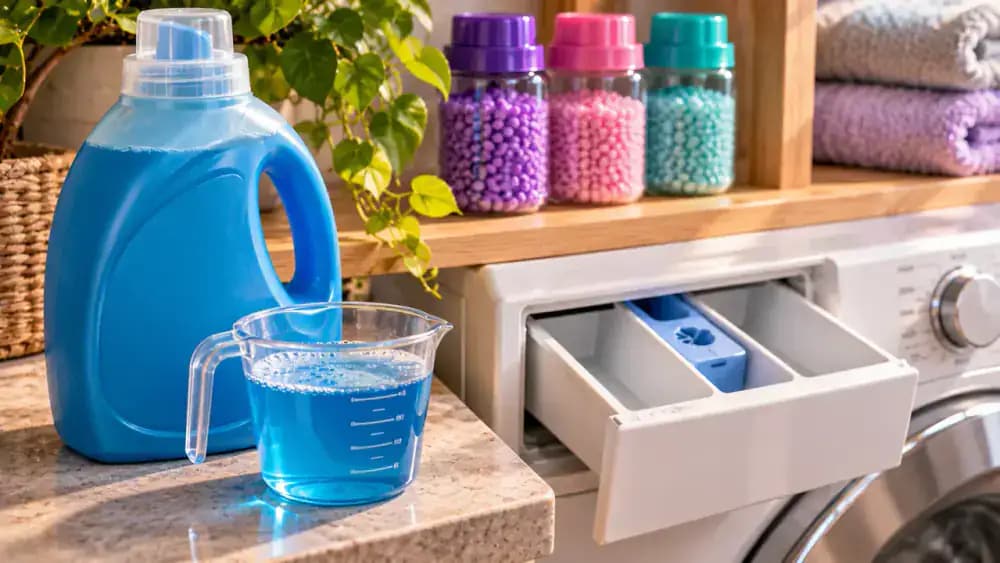
Choose a detergent appropriate for your pet's bedding, considering fragrance-free options to minimize unnecessary scent exposure. Measure the recommended amount according to the product instructions, machine requirements, and load size. Avoid unnecessary scent boosters and fabric softeners. Check each textile's care label before selecting the correct water temperature and wash cycle.
Rinse Thoroughly and Dry Completely
After washing, inspect pet bedding for visible suds, detergent residue, or unusually strong fragrances. Run an additional rinse cycle if necessary and permitted by the care label. Dry fabrics completely using approved methods, checking thick padding and seams for trapped moisture. Return bedding to your pet's sleeping area only when it is clean and thoroughly dry.

Respond to Accidents and Build Safe Habits
If your pet may have swallowed laundry detergent or chewed a dryer sheet, contact a veterinarian or animal poison service immediately. Keep the product packaging available for identification, and never induce vomiting without professional instructions. Reinforce four essential habits: secure chemicals, inspect appliance drums, follow textile care labels, and prevent unsupervised laundry room access.

Store Dirty Pet Laundry Safely
Keep dirty pet blankets, towels, and bedding in a sturdy hamper with a secure lid that curious animals cannot easily open. Position it in a dry area away from food preparation surfaces. Remove loose strings or forgotten objects when handling laundry. Wash wet or contaminated textiles promptly rather than leaving them bundled inside the hamper.

Remove Pet Hair and Maintain Appliances
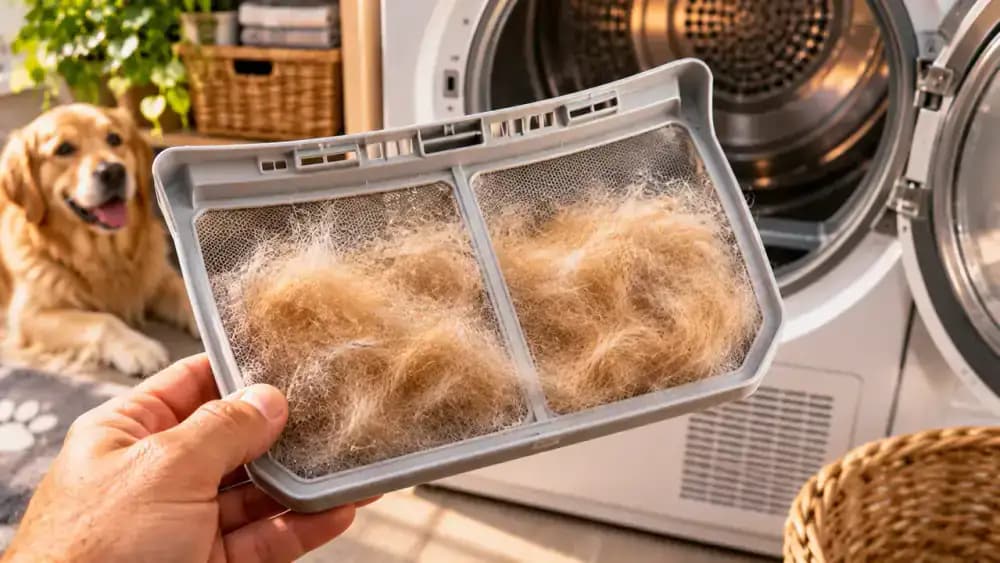
Remove accumulated pet hair from the dryer's lint filter after every load, and inspect washing machine door seals for trapped fur. Follow the appliance manual when cleaning filters, seals, or other components. Keep dryer airflow unobstructed and arrange recommended vent maintenance. Regular cleaning supports efficient performance and helps reduce overheating and fire hazards.
Handle Heavily Soiled Bedding Correctly
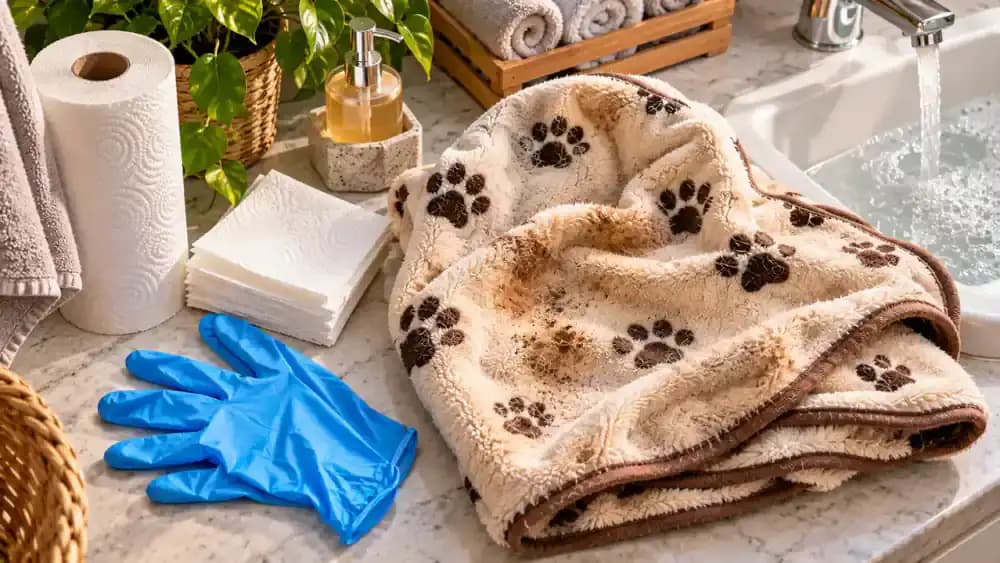
When pet bedding contains feces, vomit, or bodily fluids, wear disposable gloves and carefully remove solid waste before washing. Follow fabric care instructions and applicable public health guidance for contaminated textiles. Dispose of waste securely, clean and disinfect affected hard surfaces using appropriate products, and wash your hands thoroughly after handling soiled materials.
Watch for Skin Sensitivities
Observe your pet after introducing freshly washed bedding or changing laundry products. If scratching or skin irritation develops, record when it started and which products were used. Do not assume detergent is responsible, since several conditions can cause similar symptoms. Consult your veterinarian about persistent itching, redness, or other concerning skin changes.

Inspect Washable Pet Toys
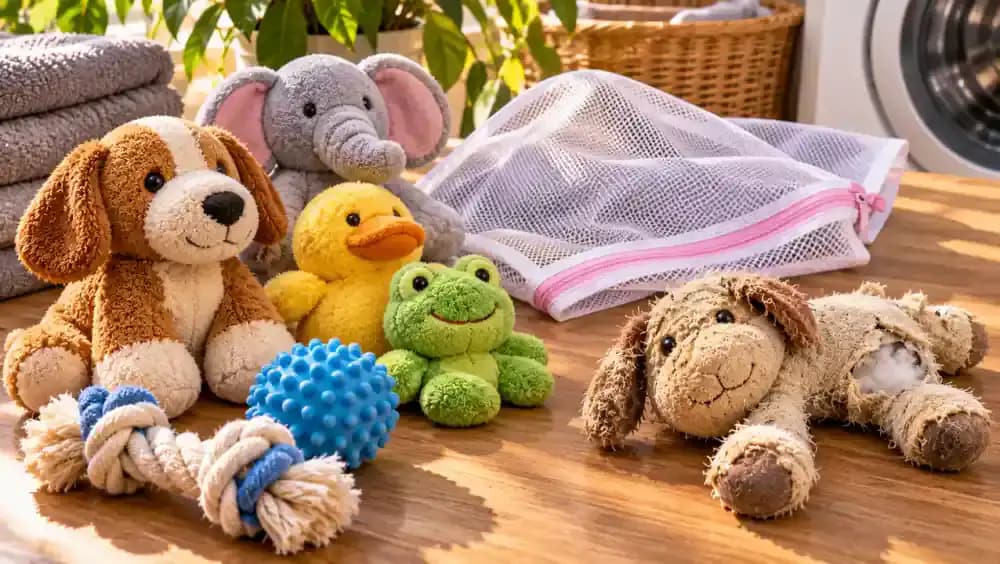
Examine fabric pet toys before adding them to the laundry. Check care labels, seams, stuffing, squeakers, batteries, and attached decorations for potential hazards. Wash only toys approved for machine cleaning, using a mesh laundry bag when appropriate. Set aside damaged toys with exposed components, and repair them safely or discard them before further use.
Stay Safe in Shared Laundry Facilities
Before washing pet bedding in a shared laundry room, inspect the washer and dryer drums for leftover detergent, visible residue, and forgotten dryer sheets. Remove loose items safely and follow facility cleaning rules. Keep pets at home rather than exposing them to unfamiliar chemicals, operating machinery, and potentially stressful noise in communal laundry areas.

Create a Household Laundry System
Establish simple laundry safety rules that everyone in your household understands. Assign responsibility for washing pet bedding, storing detergents, inspecting appliances, and putting clean textiles away. Teach children to stay clear of laundry chemicals and operating machines. Display a visible safety checklist without obstructing appliance controls, ventilation, or access to emergency equipment.

Make Pet-Safe Laundry a Lasting Habit
Keep your pet-safe laundry routine simple enough to follow every week. Secure cleaning products, inspect appliances, wash bedding correctly, and maintain a comfortable sleeping area. Review your precautions whenever you introduce new detergents, appliances, or pets. Consistent habits matter more than perfection and help create a safer, cleaner home for your animals.

Inspect Hidden Areas Around Laundry Appliances
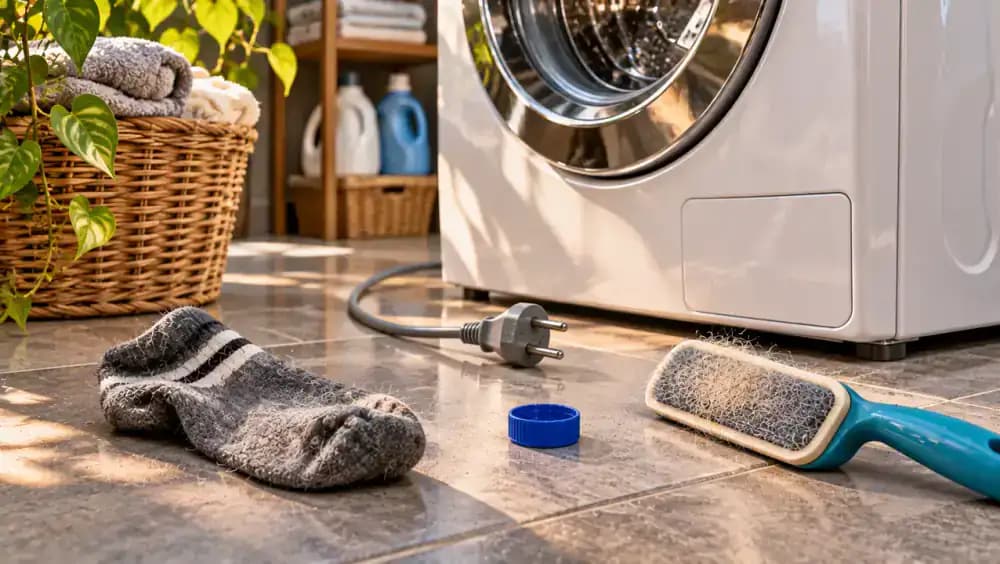
Regularly inspect accessible spaces beside and behind laundry appliances where socks, packaging, and detergent caps may accumulate. Use a flashlight and suitable cleaning tools to remove debris without moving heavy equipment unsafely. Disconnect power when appropriate and follow manufacturer precautions. If you notice damaged electrical cords or suspicious wiring, avoid touching them and contact a qualified professional.
Understand Water Temperature and Fabric Damage
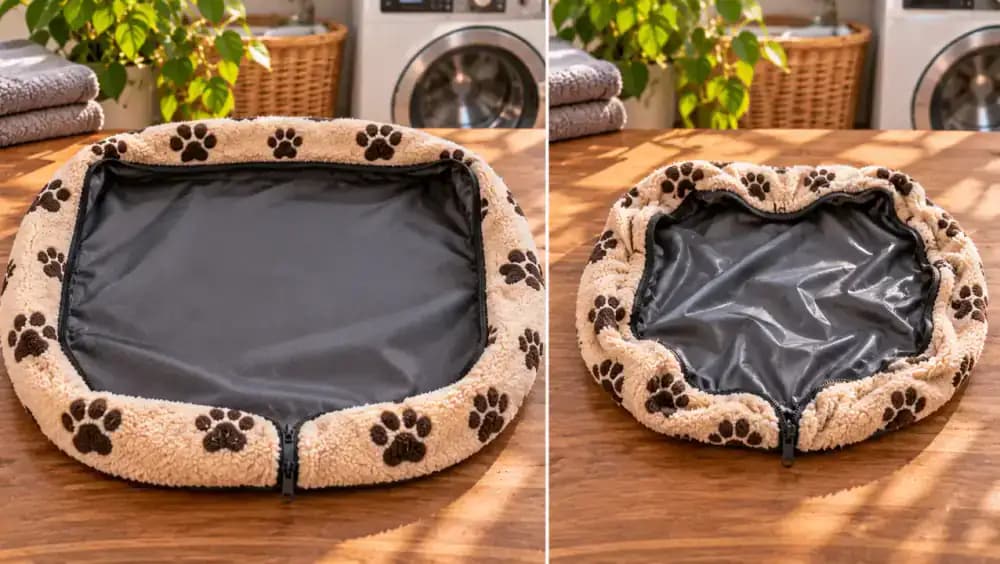
Choose washing temperatures according to each pet textile's care label rather than automatically selecting hot water. Excessive heat can shrink fabrics, damage waterproof backing, or weaken specialized fillings. Cold water may suit everyday loads, while heavily contaminated bedding may require different instructions. Replace items that cannot be cleaned adequately without damaging their materials.
Clean Collars and Fabric Accessories Safely
Inspect collars, harnesses, and fabric accessories before cleaning, paying attention to buckles, reflective materials, stitching, and electronic attachments. Remove trackers or electronic components according to manufacturer instructions. Handwash accessories when recommended, using an appropriate cleaning product and thorough rinsing. Check hardware for damage and allow everything to dry completely before returning accessories to your pet.

Store Clean Pet Bedding Properly
Store freshly washed pet blankets and spare bedding in a clean, dry cupboard or breathable storage container away from chemicals and moisture. Avoid scented sachets or loose accessories that pets might chew. Rotate stored items regularly, and inspect blankets for dampness, pests, or unusual odors before use. Ensure everything remains completely dry during storage.

Adjust Laundry Frequency to Your Pet
Adjust your pet's laundry schedule based on individual needs rather than a rigid calendar. Cats with clean sleeping areas may need fewer washes, while puppies, senior dogs, and pets with incontinence may require frequent bedding changes. Check for dirt, moisture, and odors regularly. Consult your veterinarian if medical needs affect your pet's hygiene routine.

Evaluate Changes in Laundry Products
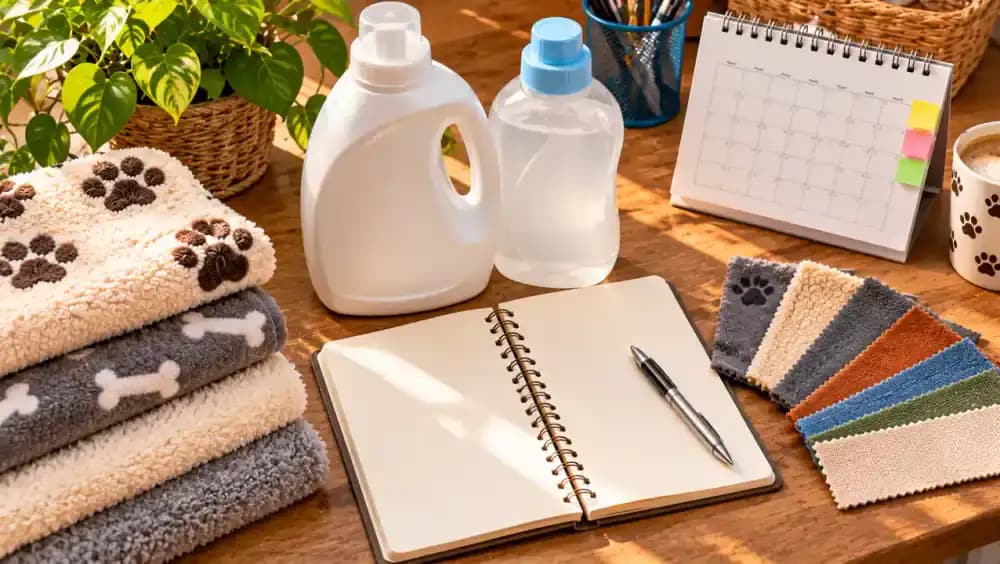
When switching detergents or other laundry products, introduce one change at a time and record which pet textiles were washed with it. Note product names, washing dates, and any changes in your pet's comfort. Avoid assuming laundry products cause every skin reaction. If irritation persists, discontinue the suspected product and consult your veterinarian.
Keep Your Pet-Safe Routine Consistent
Set a recurring reminder to inspect laundry supplies, refresh washable pet bedding, and review household safety precautions. Keep veterinary and animal poison service contact information accessible to everyone caring for your pets. Check that storage cabinets remain secure and appliances are properly maintained. Consistent, manageable habits help protect pets without making everyday laundry unnecessarily complicated.

Prepare Visitors and Pet Sitters
Explain your laundry room safety rules to pet sitters, visiting relatives, and temporary caregivers. Show them where detergents are securely stored, which doors must remain closed, and how to keep pets away from operating appliances. Provide a short written checklist and emergency contact information. Clear instructions help prevent accidental exposure when someone else manages household chores.

Prevent Accidents During Laundry Transfers
Place laundry baskets on stable surfaces where pets cannot easily tip them over. Keep dangling handles, loose socks, and small garments away from curious animals. Avoid stacking baskets or laundry piles in hallways and doorways. Before carrying a load, check that your path is clear and pets are safely positioned away from moving baskets.

Keep Pets Away From Stain Pretreatments
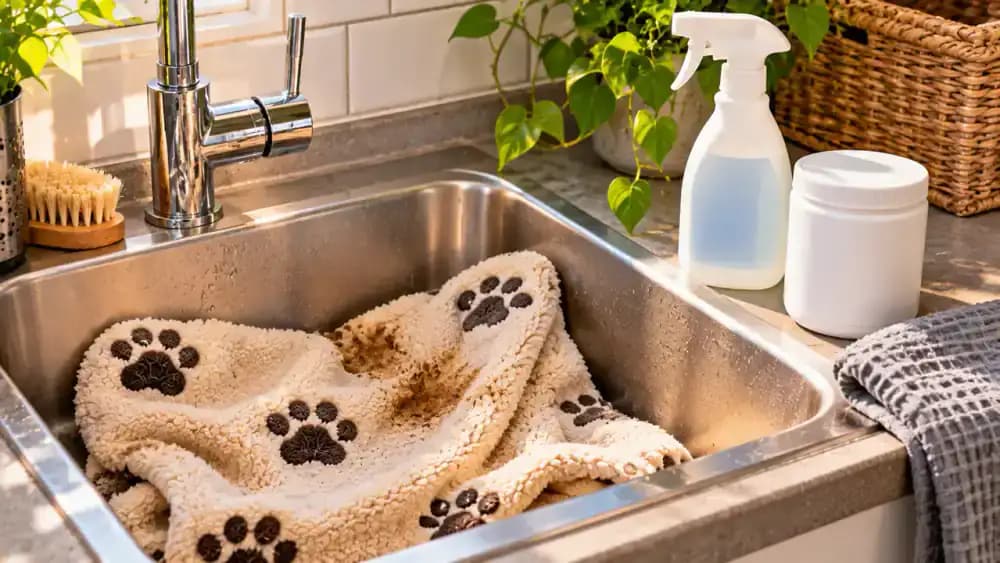
Apply stain removers to pet blankets only in an area your animals cannot access, such as a restricted utility sink. Follow the product's instructions for application, waiting time, and washing. Never leave treated fabrics soaking on the floor or within licking distance. Keep pets away until the treatment is complete and the fabric has been thoroughly washed.
Help Noise-Sensitive Pets Feel Secure
Pay attention to how your pet responds to washing machine spin cycles, dryer sounds, and appliance alerts. If the noise causes uneasiness, provide a quiet resting space away from the laundry room. Include familiar bedding or toys for comfort, and avoid forcing your pet near operating machines. Keep the laundry room door closed during each cycle.

Maintain Laundry Safety While Traveling
When arriving at a vacation rental or unfamiliar home, inspect the laundry area before allowing your pet to explore. Look for accessible detergents, open appliance doors, and unsecured cleaning supplies. Restrict access to hazardous areas and review unfamiliar product labels carefully. Before washing travel bedding, check the machine instructions and the fabric's recommended cleaning requirements.

Choose Bedding Designed for Easy Cleaning
When purchasing replacement pet bedding, prioritize practical cleaning features alongside your pet's comfort. Look for removable, machine-washable covers, durable stitching, and clearly labeled care instructions. Check whether foam inserts require separate cleaning and whether replacement covers are available. Choosing bedding that is easy to maintain makes regular washing simpler and reduces the temptation to skip necessary cleaning.

Turn Pet-Safe Laundry Into Everyday Protection
Before every laundry session, confirm that cleaning products are securely stored, pets cannot access hazardous chemicals, and appliance drums are empty. Follow fabric care labels, measure detergent correctly, and return only clean, completely dry bedding to your animals. Share these precautions with household members and caregivers to maintain a consistently safer laundry environment.

Your cat wanders into the laundry room, curious about the open dryer. A few feet away, your puppy sniffs a colorful detergent container sitting beside the washing machine. Neither situation looks particularly alarming, but everyday laundry spaces can contain hazards that pet owners easily overlook.
Concentrated detergents, laundry pods, dryer sheets, and stain removers can be harmful when swallowed or improperly handled. Open appliance doors, spilled cleaning products, and unattended laundry baskets can create additional risks for curious animals. Fortunately, creating a pet-safe laundry routine doesn't require expensive equipment or a complete laundry room makeover.
The biggest improvements come from a few consistent habits: securing laundry supplies, checking appliances before every cycle, supervising pets around the laundry area, and choosing appropriate washing practices for pet belongings.
Keeping pet blankets, bedding, towels, and washable toys clean also supports a more comfortable living environment. Following fabric care labels, measuring detergent correctly, rinsing appropriately, and drying items thoroughly can help prevent irritating residue, lingering moisture, and unwanted odors.
This guide covers practical precautions you can incorporate into your regular household routine, whether you share your home with a mischievous kitten, an energetic puppy, or an older pet. You'll also learn which common laundry mistakes to avoid and when a potential chemical exposure requires immediate veterinary guidance.
The goal is simple: clean laundry, safer pets, and fewer preventable household hazards.
Where people go wrong
Leaving Laundry Pods or Detergent Within Reach. Laundry pods and concentrated detergents can attract curious pets because of their packaging, scent, or texture. Biting into a pod may release concentrated cleaning chemicals directly into an animal's mouth. Never leave these products on countertops, washing machines, or accessible shelves. Keep them in their original containers inside securely closed, pet-inaccessible storage.
Forgetting to Check Washer and Dryer Drums. Cats and other small pets may explore open appliance drums, especially when warm laundry is nearby. Starting a cycle without checking inside can have devastating consequences. Inspect the entire drum before loading and again before starting the machine. Keep doors closed when appliances are not being loaded or unloaded, and prevent pets from entering the laundry room during operation.
Using More Detergent Than Necessary. Adding extra detergent does not automatically make pet bedding cleaner. Excess product can be difficult to rinse completely from thick blankets, padded beds, and absorbent fabrics. Residue may create unnecessary contact with cleaning ingredients. Follow the detergent label and machine instructions, avoid overloading the washer, and use an additional rinse when appropriate for the fabric and wash conditions.
Adding Unnecessary Fragrance Boosters and Fabric Softeners. Strongly scented laundry additives are not essential for keeping pet bedding clean. Fragrance boosters, fabric softeners, and dryer sheets introduce additional ingredients that some pets may find irritating, especially when residue remains on frequently used fabrics. Avoid unnecessary additives on pet belongings, follow product warnings, and never allow animals to chew or swallow dryer sheets.
Washing Pet Bedding Without Checking Care Labels. Pet beds, blankets, and washable toys can contain different fabrics, fillings, fasteners, and decorative components. Washing everything on the hottest setting may damage materials or leave bulky items inadequately cleaned. Read care labels, remove detachable covers when instructed, and select suitable wash and drying settings. Do not machine-wash items that the manufacturer identifies as unsuitable.
Putting Damp Bedding Back Into Pet Sleeping Areas. Thick bedding and stuffed fabric toys may feel dry on the outside while retaining moisture inside. Returning damp items to a sleeping area can encourage unpleasant odors and microbial growth. Check seams, padding, corners, and inner layers before reuse. Follow the care label's drying instructions and allow additional drying time when needed.
Leaving Spills, Used Dryer Sheets, or Open Containers Unattended. A small detergent spill or discarded dryer sheet may seem harmless during a busy laundry day. However, pets can lick contaminated surfaces or investigate loose laundry products. Restrict pet access, promptly clean spills according to the product's safety instructions, and dispose of used materials securely. Store containers immediately after use rather than leaving them beside the machine.
Attempting Home Remedies After Suspected Chemical Ingestion. Trying to induce vomiting or giving milk, oils, or other household remedies after a pet swallows laundry chemicals can make the situation more dangerous. Do not wait for symptoms to appear. Contact a veterinarian or animal poison service immediately, follow their instructions, and have the product packaging available to help identify the substance involved.
Questions people ask
Choose a detergent appropriate for the fabric and washing machine, and follow its label instructions. A fragrance-free detergent without unnecessary additives can be a practical choice for frequently washed pet bedding. No detergent is completely harmless if swallowed. Store every product securely, measure carefully, and make sure bedding is appropriately rinsed before returning it to your pet.
Fixed it?
Get one guide like this every Thursday.