How to Correct Credit Report Errors: 30 Steps to Fix Inaccurate Information
Learn how to correct credit report errors for free. Follow 30 practical steps to review your reports, gather evidence, dispute inaccurate information, track deadlines, and protect your credit history.

What you’ll need
Tap to tick things off before you start.
1. Understand Why Credit Report Accuracy Matters
Your credit report records information about your borrowing history, payment activity, balances, and account status. Lenders may use this information when evaluating applications.
An incorrect late payment could make your history appear less reliable. A loan that does not belong to you could distort your outstanding obligations.
Start by identifying the facts, not guessing about your credit score. A reporting mistake does not automatically change every credit score, and correcting one does not guarantee loan approval or a specific interest rate. The immediate objective is an accurate credit file.

2. Know What a Credit Report Contains
A credit report is different from a credit score. Your report contains underlying information, while a scoring model uses selected information to calculate a numerical assessment of credit risk.
Reports can include identifying details, account histories, payment records, collections, and credit inquiries. They do not necessarily contain identical information.
Knowing this distinction prevents an important mistake: disputing a score instead of identifying incorrect information. If a score appears unexpectedly low, examine the report entries that may be contributing to it. Accurate but unfavorable information generally cannot be removed merely through a dispute.

3. Identify the Three Nationwide Credit Bureaus
The three nationwide credit reporting companies are Equifax, Experian, and TransUnion. Each maintains its own consumer credit files using information received from participating businesses and other permitted sources.
Not every lender reports to every bureau. Consequently, an incorrect account might appear on one report, two reports, or all three.
An investigation submitted to Experian does not necessarily correct an independent error at TransUnion. Treat each report as a separate record requiring review. This becomes particularly important when the same inaccurate balance or payment history appears across multiple files.

4. Obtain Your Credit Reports for Free
Visit AnnualCreditReport.com, the federally authorized website for requesting free credit reports from the three nationwide bureaus.
Federal law guarantees at least one free report annually from each nationwide bureau, and additional free online access may be available. Check the official website for current frequency and eligibility.
Request all three reports, save them securely, and note their issue dates. Obtaining your own credit report does not hurt your credit score.
Avoid confusing free credit reports with paid credit monitoring subscriptions. You do not need a paid subscription to begin correcting inaccuracies.

5. Understand Your Rights Under the FCRA
The Fair Credit Reporting Act provides consumers with a framework for disputing inaccurate or incomplete reporting information.
Credit reporting agencies generally must conduct reasonable investigations of properly submitted disputes without charging consumers. Companies that furnish disputed information also have investigation and correction duties under applicable circumstances.
The law does not require a bureau to delete accurate information simply because a consumer requests deletion. It also permits an agency to decline an investigation when it reasonably determines that a dispute is frivolous or irrelevant, subject to notice requirements.
The Federal Reserve Board provides additional background on these statutory responsibilities.

6. Understand Who Supplies Credit Information
A furnisher is an organization that provides information to a credit reporting company. Common examples include banks, credit card issuers, auto lenders, student loan servicers, and certain collection agencies.
Suppose a lender incorrectly reports a payment as late. The bureau displays the record, but the lender may control the underlying payment information.
This division matters because the source of an error can continue sending inaccurate updates. Identifying the responsible furnisher helps you address the original record rather than concentrating exclusively on its appearance in your credit report.

7. Plan to Dispute Errors With Both Parties
The Consumer Financial Protection Bureau recommends disputing inaccurate information with both the relevant credit reporting company and the furnisher responsible for reporting it.
The bureau can investigate the entry appearing in your report. A direct furnisher dispute gives the company responsible for the underlying information an opportunity to examine its records.
For example, if an auto lender incorrectly reports an outstanding balance, identify every bureau displaying it and contact the lender through its designated dispute channel.
Submitting both disputes is a recommended approach, not a guarantee that an entry will be removed. Each party must evaluate the available information under the applicable rules.

8. Create a Secure Dispute Tracking System
Before contacting anyone, create a dedicated folder for credit report documents and correspondence.
Use separate subfolders for each bureau, with additional folders for creditors or collection agencies. Maintain a basic tracking table recording the disputed item, submission date, delivery confirmation, response deadline, and outcome.
Store account information securely, especially documents containing sensitive personal identifiers. Avoid sending full Social Security numbers through ordinary email.
A documented process helps prevent duplicated correspondence, missed deadlines, and uncertainty about which organization received particular evidence.

9. Recognize When an Error Needs Attention
Prioritize entries that could materially misrepresent your finances: accounts that are not yours, inaccurate payment histories, incorrect balances, and collection accounts reported improperly.
Some identity details also warrant closer review. An unfamiliar address might reflect outdated information, a legitimate historical address, a mixed file, or potential fraud.
Do not assume every unfamiliar entry is incorrect. Credit reports may contain older addresses or abbreviated account names.
Compare suspicious items against records you recognize. The purpose of the investigation is to establish whether the reported information is accurate, complete, and attributable to you.

10. Review Every Report Line by Line
Begin with personal information and continue through account balances, payment histories, collections, and inquiries.
Compare the report's account status with your own records. Watch for loans listed as open after closure, payments marked late incorrectly, and balances that do not reflect the relevant reporting date.
Remember that ordinary reporting delays are not automatically errors. A recent payment may not appear until the lender's next reporting cycle.
Review all three reports independently. Note each discrepancy before submitting disputes so you can describe the issue precisely.

11. Identify the Most Common Reporting Errors
Frequent dispute categories include incorrect identifying information, accounts belonging to another person, duplicate obligations, erroneous late payments, incorrect balances, and inaccurate account status.
Also examine whether a closed account is shown incorrectly as currently open and whether a collection entry misstates its status or amount.
Be cautious with duplicates. An original creditor and a collection agency may sometimes both appear legitimately, depending on how the debt is reported. Two entries alone do not prove double counting.
For each suspected mistake, record what the report says and what your supporting evidence establishes.

12. Gather Documents That Support Your Claim
Evidence should directly address the disputed fact. A payment dispute may require a bank transaction record, receipt, or payment confirmation. An incorrect balance may require an account statement showing the relevant date and amount.
Account closure letters, creditor correspondence, and settlement confirmations can also be useful.
Provide relevant copies rather than enormous collections of unrelated records. A focused explanation paired with credible documentation makes your claim easier to evaluate.
Importantly, a consumer does not always need documentary proof for a dispute to deserve investigation. Reporting companies generally cannot impose unreasonable documentation requirements as a condition of investigating a properly submitted dispute.

13. Match Each Error to Specific Evidence
Build a direct relationship between the disputed entry and its supporting documents.
For an incorrectly reported late payment, compare the payment due date, transaction date, processing date, and applicable account terms. A transaction initiated on time is not necessarily credited on that same date.
For an account allegedly belonging to someone else, identify the unfamiliar account and explain why you dispute ownership.
Avoid vague claims such as simply saying the information looks wrong. State the precise factual disagreement, identify the account, and provide whatever relevant information you have available.

14. Mark the Incorrect Entries Clearly
Highlight or circle each disputed entry on a copy of the relevant credit report.
Record the bureau name, furnisher name, account number as displayed, reporting date, and exact information being challenged.
When an account number is partially masked, use the visible digits and other identifying information without exposing unnecessary personal data.
If several unrelated errors appear, organize them into separate, clearly labeled explanations. This helps prevent one issue from being confused with another.
Keep an untouched copy of the original report so you can compare it with the investigation results later.

15. Verify Balances and Account Closure Records
A closed account does not necessarily disappear from your credit report. Accurate account history can remain after closure.
The issue is whether the reported status, dates, balances, and payment history are correct.
For example, if a credit card was paid in full and subsequently closed, examine the lender's final statement and closure confirmation. Compare those records with the bureau's reported balance and status.
Also check the reporting date. A balance recorded before your final payment might represent an earlier legitimate snapshot.
Dispute the inaccurate field rather than demanding deletion of an otherwise accurate account.

16. Prepare a Clear Credit Bureau Dispute Letter
A mailed dispute letter should identify you and clearly explain the problem. Include your full name, mailing address, telephone number, and credit report confirmation number when available.
Identify the reporting company and the disputed account. Include sufficient information for the bureau to locate the entry.
A practical opening is: 'I am disputing inaccurate information on my credit report concerning the account identified below.'
Then describe the issue and attach relevant copies.
The CFPB provides dispute letter guidance and a sample. You may also use an official online dispute channel instead of mailing a letter.

17. Explain the Error and Requested Correction
Describe the error with enough detail for an investigator to understand your position.
For example: 'The account is reported with a past-due balance, but my records show that the balance was paid in full on the stated date. Please investigate and correct the inaccurate balance and payment status.'
Specify whether you seek correction, removal of an item that does not belong to you, or another appropriate update.
Avoid unsupported accusations and emotional language. A factual, concise letter supported by relevant documentation is more practical than an aggressive demand for immediate deletion.

18. Attach Copies and Protect Original Records
Include a copy of the report portion containing the disputed item. Highlight the relevant entry and attach copies of supporting records.
Never mail original documents. Originals can be difficult or impossible to replace if a package is lost.
If a document contains unrelated financial or personal information, consider redacting details not needed to investigate the claim while preserving information necessary for identification and verification.
Make a complete duplicate of the submission before sending it. That duplicate becomes your reference if the bureau asks follow-up questions or the dispute requires escalation.

19. Submit the Dispute Through an Official Channel
The nationwide bureaus accept disputes through official channels, including online systems and mail. Available telephone options vary.
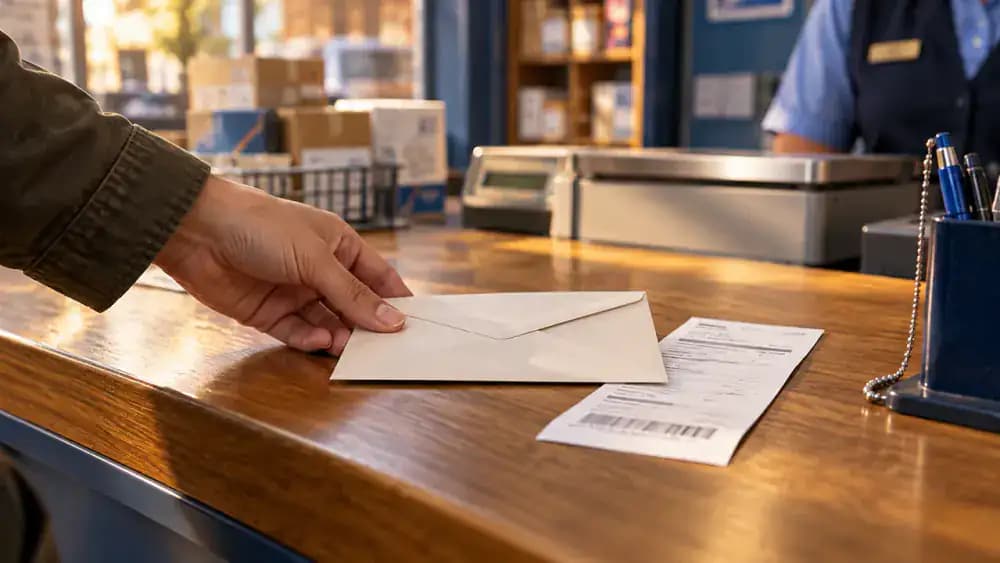
For mailed disputes, the CFPB recommends considering certified mail with a return receipt so you have documentation of delivery.
Certified mail is not legally required for every consumer dispute. Online submission can be convenient and may provide electronic confirmation.
Use the current dispute instructions published by Equifax, Experian, or TransUnion.
Do not rely on an outdated mailing address obtained from an unrelated website.

20. Record When the Dispute Was Received
Keep the certified mail tracking record, delivery confirmation, or electronic dispute confirmation.
The bureau's receipt date matters because statutory investigation deadlines generally run from when it receives the dispute, not when you prepare your letter.
Record separate receipt dates for each bureau and furnisher. Their investigation clocks may begin on different days.
A simple tracking record should include the recipient, date submitted, date received, disputed item, and expected response period.
Do not assume that an online submission timestamp or postal mailing date always establishes the same receipt date used for a statutory deadline.
21. Understand What Happens After Submission
After receiving a sufficiently specific dispute, a credit reporting company generally must conduct a reasonable reinvestigation of the disputed information.
This may involve reviewing your evidence, examining its records, and communicating with the furnisher.
The bureau is not supposed to reject a legitimate dispute simply because the consumer lacks a particular proprietary form. However, disputes reasonably classified as frivolous or irrelevant may be handled differently under the law.
Investigation does not mean automatic acceptance of your claim. The reporting company must evaluate the available information and communicate the outcome within applicable deadlines.
22. Track the 30-Day and 45-Day Investigation Rules
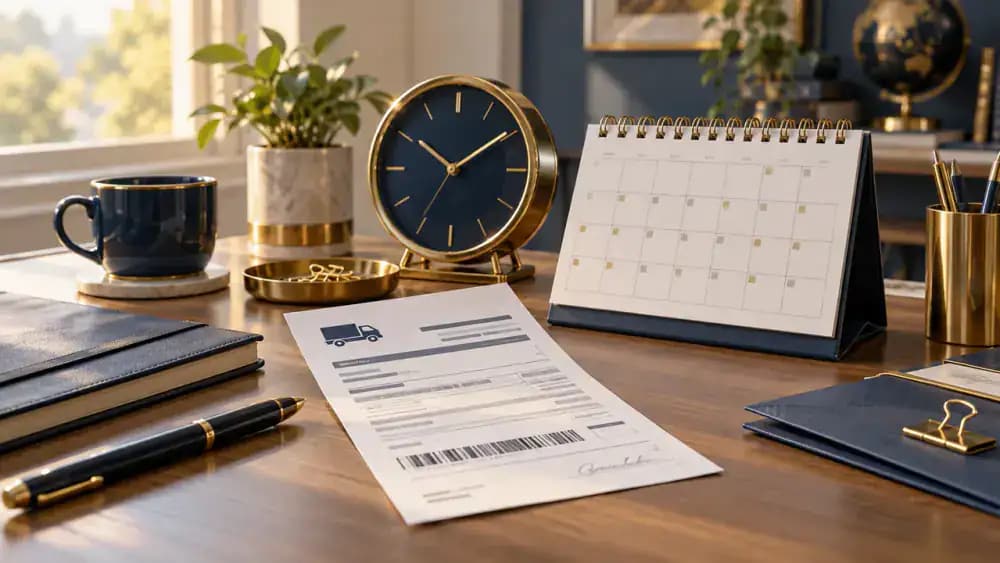
Under the FCRA, a nationwide credit reporting company generally has 30 calendar days after receiving a dispute to complete its reinvestigation.
Certain circumstances allow up to 45 days. For example, the period may extend when relevant additional information is submitted during the original investigation. A dispute submitted after receiving a free annual report can also fall under a 45-day period.
The bureau generally must notify you of its results within five business days after completing the investigation.
The CFPB explains these deadlines.
Missing a statutory deadline can trigger legal obligations concerning deletion or modification, but it does not guarantee that every disputed item permanently disappears.

23. Understand How the Bureau Notifies Furnishers
When a bureau receives a dispute subject to reinvestigation, the FCRA generally requires it to notify the relevant furnisher within five business days and provide the relevant information received from the consumer.
This notification gives the furnisher an opportunity to examine its underlying records.
The five-business-day rule concerns the bureau's notification to the furnisher. It is not the deadline for completing the entire investigation.
If you also submitted a direct dispute to the furnisher, retain that correspondence separately. The direct dispute and the bureau-initiated notification have distinct procedural requirements.

24. Understand the Furnisher's Investigation Duties
A furnisher receiving a qualifying dispute through a credit bureau generally must investigate, review the relevant information supplied, report its findings, and take required corrective action.
Furnishers also have duties for qualifying disputes submitted directly by consumers, subject to applicable exceptions and procedures.
A bank might review payment posting records, while an auto lender might examine the loan ledger and account status.
A furnisher may determine the information is accurate. In that case, the dispute can remain unresolved unless further evidence or another available process establishes an error.
Providing a clear factual explanation makes it easier to evaluate the result.

25. Check Whether the Information Was Corrected or Deleted
If an investigation establishes that information is inaccurate, incomplete, or cannot be verified, the reporting company generally must delete or modify the disputed information as required by law.
When a furnisher determines that previously reported information needs correction, it must communicate required updates to the reporting companies to which it supplied that information.
A correction might change a late payment status, update a balance, or remove an account that belongs to another consumer.
Do not assume every bureau has already updated its file. Obtain fresh reports and confirm that each relevant entry accurately reflects the investigation outcome.

26. Review the Written Investigation Results
The bureau must provide the investigation results and, when the dispute changes your report, a free updated credit report.
Compare the outcome with your original dispute. Did the bureau correct the particular field you identified? Was the item deleted? Did the company instead verify the disputed information?
Keep the result notice and updated report in your records. This documentation can be valuable if the same error returns or another bureau continues displaying it.
A result labeled verified does not automatically prove the information is correct. It indicates the outcome of that investigation and may justify closer review of the evidence.

27. Respond When an Error Remains Unresolved
If the investigation does not resolve the problem, examine the stated result and identify what evidence was overlooked or remains unavailable.
You may submit additional relevant information, request information about the investigation procedure, or ask the bureau to include a brief dispute statement in your file.
You may also submit a complaint to the Consumer Financial Protection Bureau. For complaints about inaccurate or incomplete reporting, the CFPB generally requires you to dispute with the reporting company first and wait until that dispute is no longer pending or 45 days have elapsed.
A dispute statement records your disagreement but does not itself correct the underlying entry.

28. Audit Your Dispute Records
Before closing your case, verify that your dispute file contains the original reports, submitted explanations, supporting evidence, delivery confirmations, and investigation responses.
Check whether every identified bureau received the appropriate dispute and whether you addressed the relevant furnisher.
Note any outstanding issues and their current status. An organized tracking record reduces the chance that an unresolved error will be forgotten.
If you later consult legal aid or another qualified professional, this documentation can help them understand the history without reconstructing every communication from scratch.

29. Monitor Reports for Returning Errors
After a correction, review your reports periodically to verify that the inaccurate information has not returned.
Pay particular attention to accounts that continue receiving monthly updates from furnishers. If an old error reappears, preserve the earlier correction notice and the new report showing the renewed problem.
Check reports before major credit applications when practical. Early detection gives you more opportunity to address problems before financing decisions.
You may also consider free account alerts or credit monitoring options, but a paid monitoring service is not necessary to review or dispute inaccurate information.

30. Build Credit Report Checks Into Your Financial Routine
An accurate credit file requires occasional attention, particularly after moving, closing an account, paying off a loan, or resolving a billing problem.
A practical routine is to review reports periodically, save important creditor confirmations, investigate unfamiliar entries, and preserve proof of corrections.
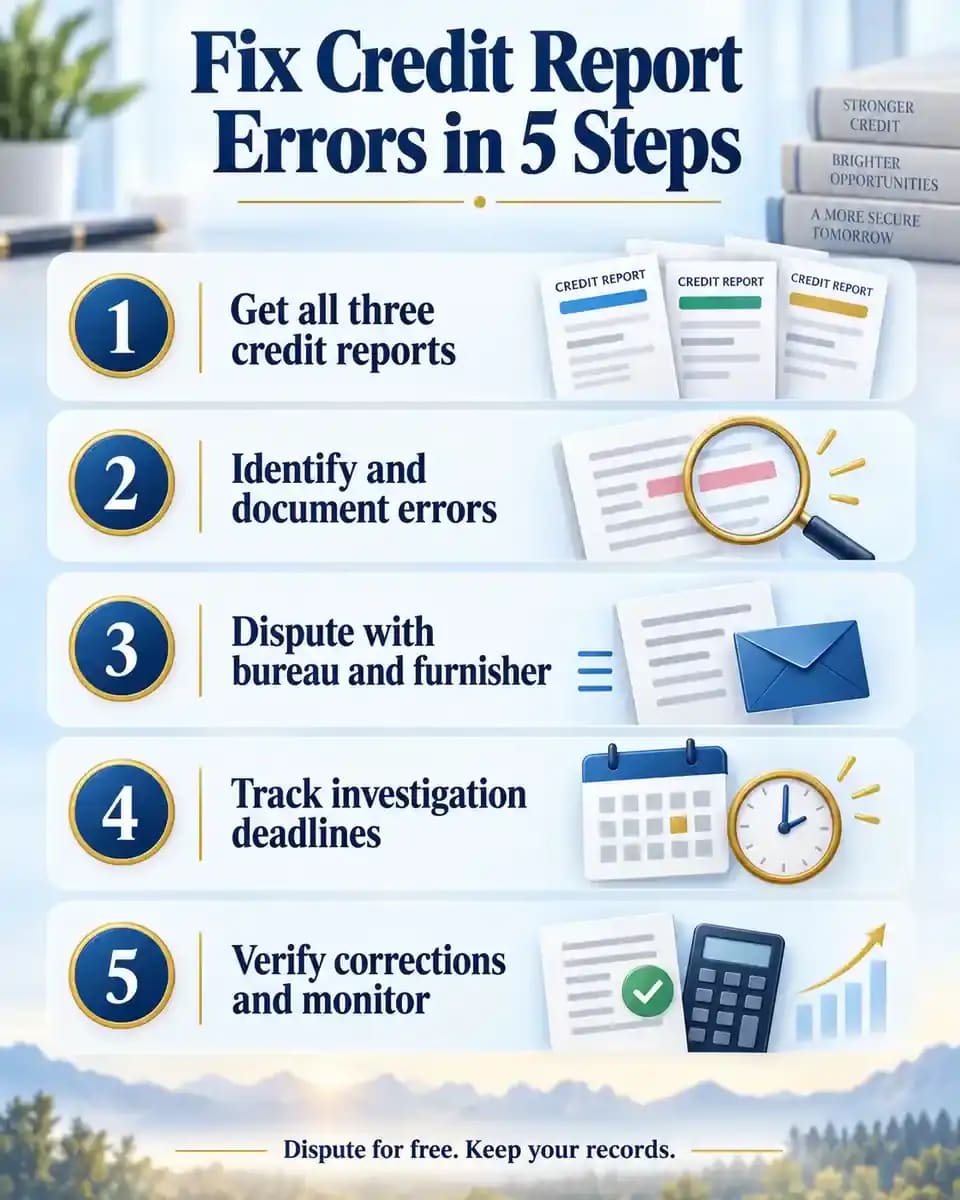
Remember the central process: obtain the reports, identify inaccuracies, document the facts, dispute with the appropriate bureau and furnisher, then verify the outcome.
Correcting inaccurate information is not the same as erasing legitimate financial history. The goal is a report that fairly reflects what actually happened, helping lenders evaluate your financial record using more reliable information.

An inaccurate credit report can create financial problems before you even know an error exists. A payment incorrectly marked late, a loan that belongs to someone else, or a balance reported incorrectly may influence a lender's decision when you apply for a credit card, mortgage, or auto loan.
Fortunately, you can dispute inaccurate credit report information for free. The Fair Credit Reporting Act, commonly called the FCRA, establishes important rights concerning the accuracy, fairness, and privacy of consumer reporting information.
The process is more manageable when you know whom to contact, what evidence to provide, and how long an investigation should take. You do not need to purchase credit repair services or hire a company to submit an ordinary dispute.
This guide explains how to correct credit report errors in 30 practical steps, from obtaining your reports to reviewing the investigation results. It follows guidance from the Consumer Financial Protection Bureau and the Federal Reserve Board's FCRA examination materials.
Important distinction: A credit report dispute is designed to correct inaccurate, incomplete, or unverifiable information. It does not provide a legitimate shortcut for removing accurate negative information simply because that information lowers your credit score.
This article provides general financial and consumer education, not individualized financial or legal advice.
Where people go wrong
Paying Someone to Perform a Free Dispute. Credit bureaus must investigate qualifying disputes without charging you. Paid credit repair services cannot guarantee the removal of accurate negative information. Use official channels before considering paid assistance.
Checking Only One Credit Bureau. Different lenders report to different companies. Reviewing only one credit report can leave inaccuracies undiscovered elsewhere. Compare reports from Equifax, Experian, and TransUnion.
Submitting Vague Dispute Explanations. A statement that an account is simply wrong may lack enough information for an effective investigation. Identify the disputed account, the specific inaccuracy, and the correction requested.
Sending Original Financial Documents. Original payment receipts, account closure confirmations, and other financial records may be difficult to replace. Submit copies and retain the originals securely.
Assuming Every Negative Entry Is an Error. Accurate late payments, collections, and other negative information can remain on reports for applicable reporting periods. A dispute is not a legitimate way to erase accurate history.
Ignoring the Furnisher. Disputing only with a bureau may leave the original data source unaddressed. The CFPB recommends contacting both the reporting company and the relevant furnisher when correcting inaccurate information.
Misunderstanding Investigation Deadlines. The ordinary bureau reinvestigation period is 30 calendar days, with 45-day periods permitted in specified circumstances. Keep receipt dates and distinguish investigation deadlines from notice deadlines.
Assuming a Dispute Guarantees a Higher Credit Score. Correcting an error does not necessarily increase a score. The outcome depends on the information corrected, the scoring model, and the rest of the consumer's credit history.
Failing to Review the Updated Report. A successful dispute response does not remove the need for verification. Check whether the correct field changed and whether other relevant bureaus have updated their files.
Questions people ask
Obtain your credit reports, identify the inaccurate entry, gather relevant documentation, and submit a dispute to the bureau reporting the error. The CFPB also recommends disputing with the company that furnished the information. Review the investigation results and confirm any correction.
Fixed it?
Get one guide like this every Thursday.