How to Control Dog and Cat Hair Around the Home
A practical room-by-room approach to controlling everyday dog and cat hair with better grooming, targeted cleaning, washable surfaces, laundry habits, and a simple repeatable routine.

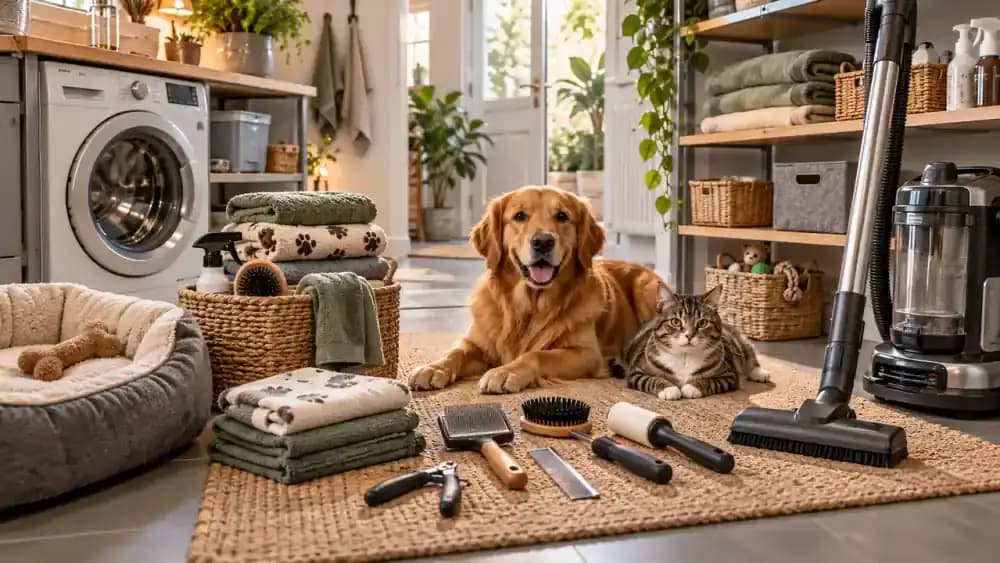
What you’ll need
Tap to tick things off before you start.
Treat Pet Hair as a Daily Maintenance Job
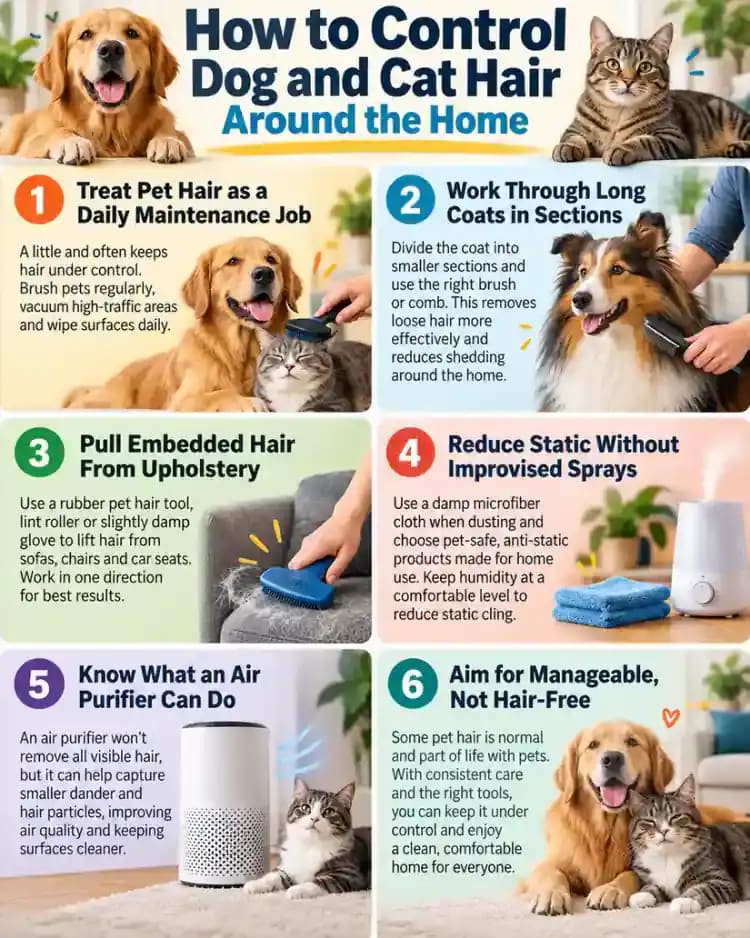
Dogs and cats shed continuously, although the amount varies with coat type, breed, season, health, and indoor conditions. Instead of waiting for fur to become a major mess, remove a little every day. Frequent grooming and quick cleaning keep hair from accumulating on rugs, furniture, bedding, clothing, and car seats.

Find the Main Hair Hotspots
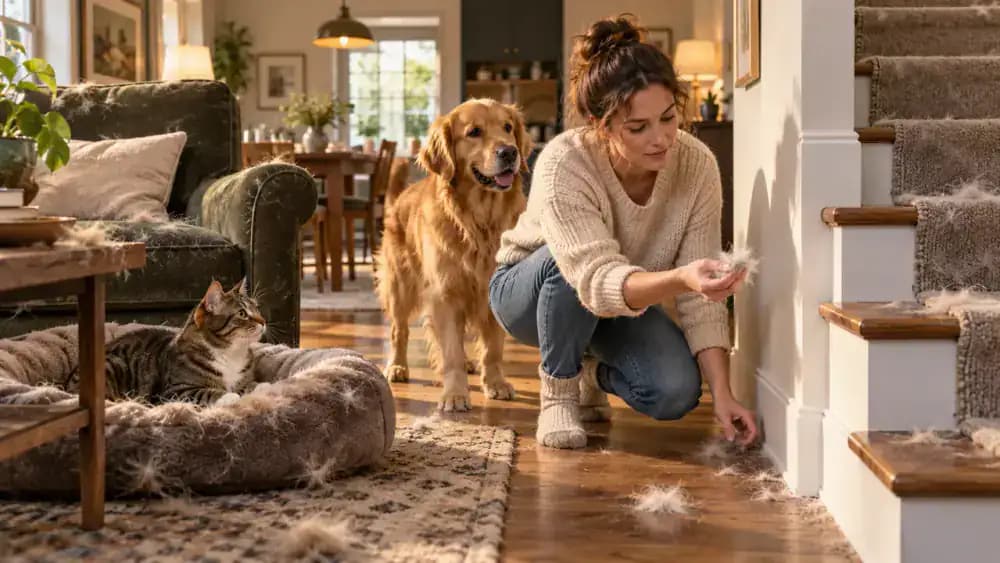
Walk through your home and identify where fur actually collects. Check baseboards, stair edges, pet beds, dining-chair legs, favorite furniture, and other places your pets regularly use. Concentrating daily cleaning on these high-shedding zones saves time compared with vacuuming every room equally, whether it needs attention or not.
Brush Loose Hair Before It Falls
Regular brushing captures loose coat before it lands around the house. Groom your pet somewhere calm and familiar, using gentle strokes and short sessions. Select a brush appropriate for the coat instead of assuming one tool fits every animal. Stop if you notice irritation, discomfort, or unusual sensitivity during grooming.

Use Gentle Tools on Short Coats
For short-haired pets, try a rubber grooming mitt or soft bristle brush that lifts loose surface hair without aggressive pulling. Brush in the direction the coat grows and keep pressure light. These tools work especially well for regular maintenance when you are removing everyday shedding rather than trying to strip a dense undercoat.

Handle Dense Undercoats Carefully
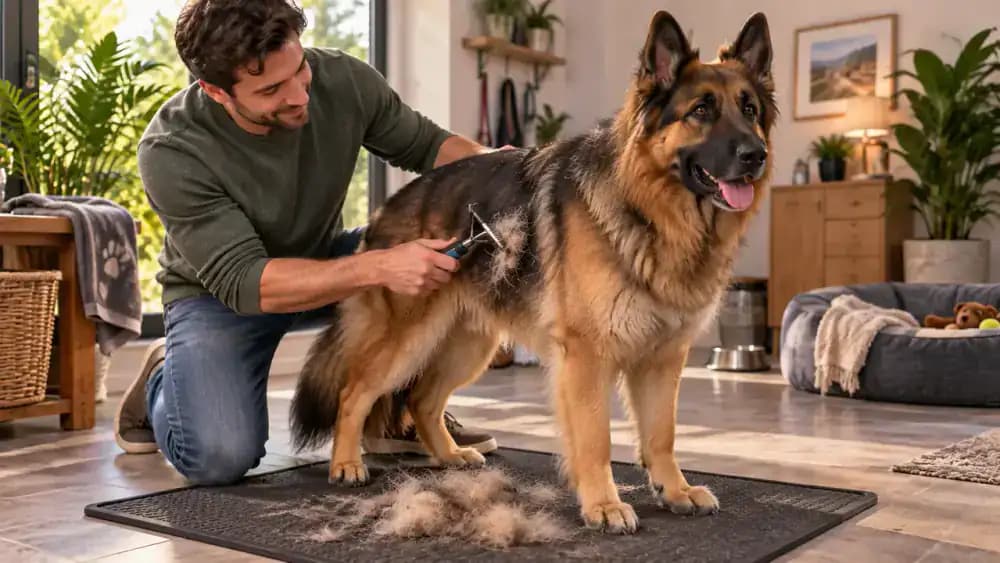
Double-coated dogs and some dense-coated cats may need an undercoat rake or de-shedding tool. Use slow, shallow passes instead of repeated hard scraping. Excessive pressure or overuse can irritate skin or damage healthy coat. If you are uncertain which tool is appropriate, ask a professional groomer or veterinarian for guidance.
Work Through Long Coats in Sections
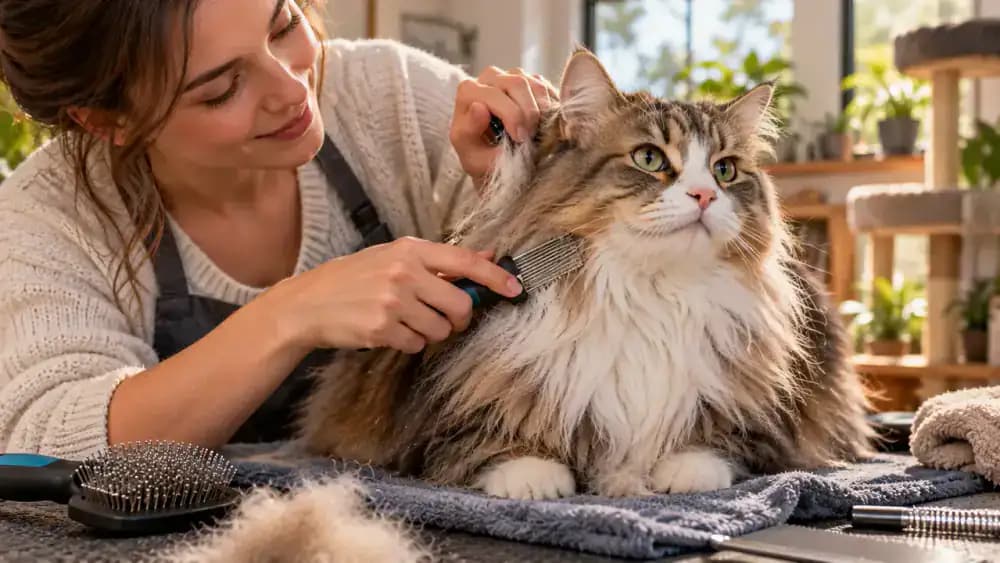
Long-haired pets need regular detangling because mats can trap loose hair and pull on the skin. Separate the coat into small sections, support the hair near the skin, and work gently upward from the ends. Pay extra attention behind the ears, under the legs, around collars, and other friction-prone areas.
Keep Brushing Sessions Short and Positive
Make grooming easy enough that your pet will tolerate it regularly. Let them investigate the brush, reward calm behavior, and finish before restlessness turns into resistance. A brief two-minute daily session can be more practical than one long weekly struggle. Consistency matters more than completing an ambitious grooming session every time.

Groom Where Cleanup Is Simple
When conditions allow, brush pets outdoors or in a space with easy-to-clean surfaces, such as a tiled entryway, bathroom, balcony, or covered patio. Avoid windy weather that scatters fur. Keep pets safely secured around traffic, gates, and elevated spaces, then collect the loose hair and clean the area afterward.

Vacuum the Routes Your Pet Uses Most
Focus frequent vacuuming on the paths between sleeping spots, feeding areas, favorite windows, and furniture. Move the vacuum slowly so airflow has time to lift embedded fur. On carpets and rugs, make passes in more than one direction to loosen hair that has settled between fibers rather than remaining on the surface.
Match Vacuum Attachments to the Surface
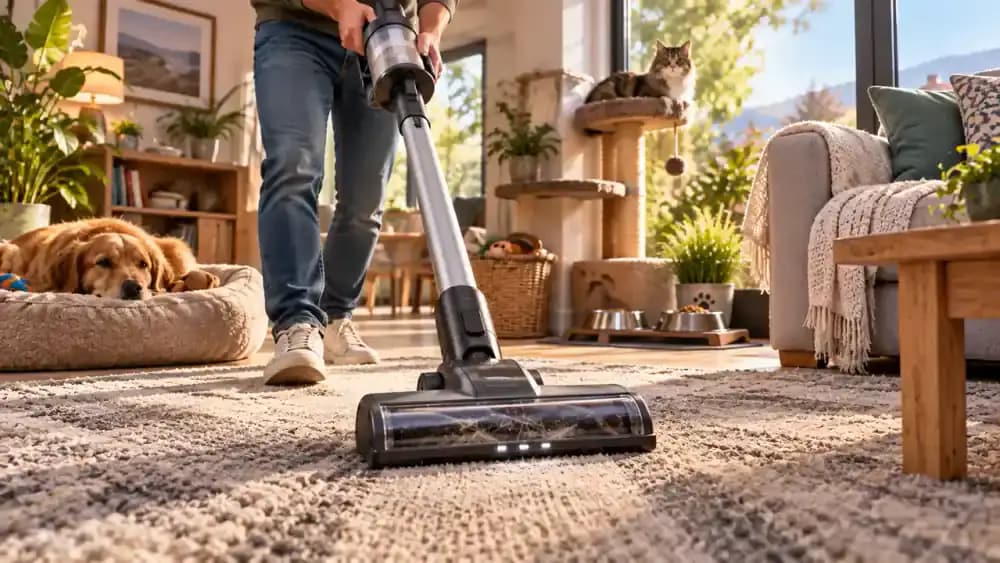
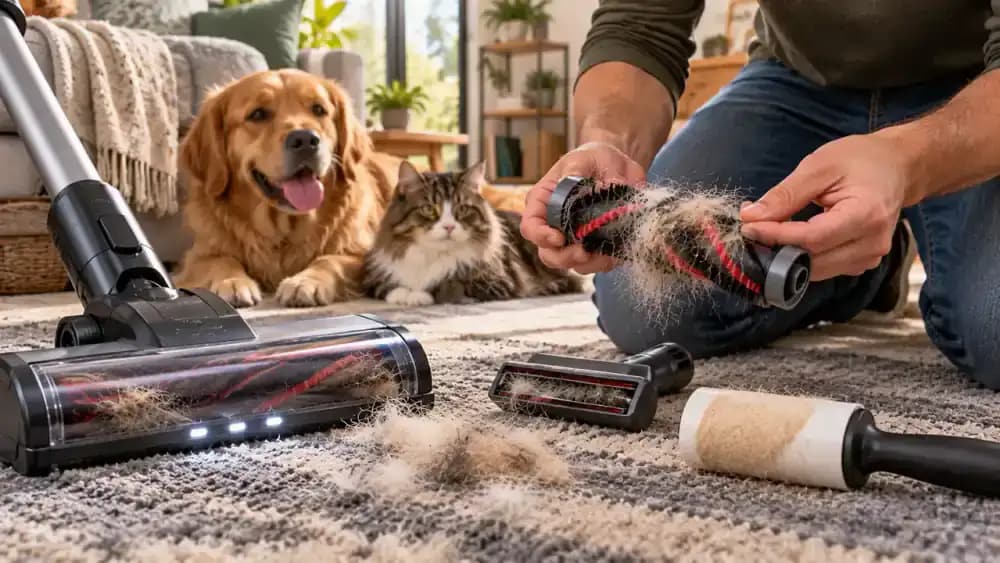
Powered brush rolls can help lift hair from carpets and rugs, while upholstery tools are better for sofas and chairs. Inspect rollers for wrapped hair and clean filters regularly. A clogged roller or packed filter reduces airflow and pickup performance, even when the vacuum still sounds as though it is operating normally.
Use Microfiber on Hard Floors
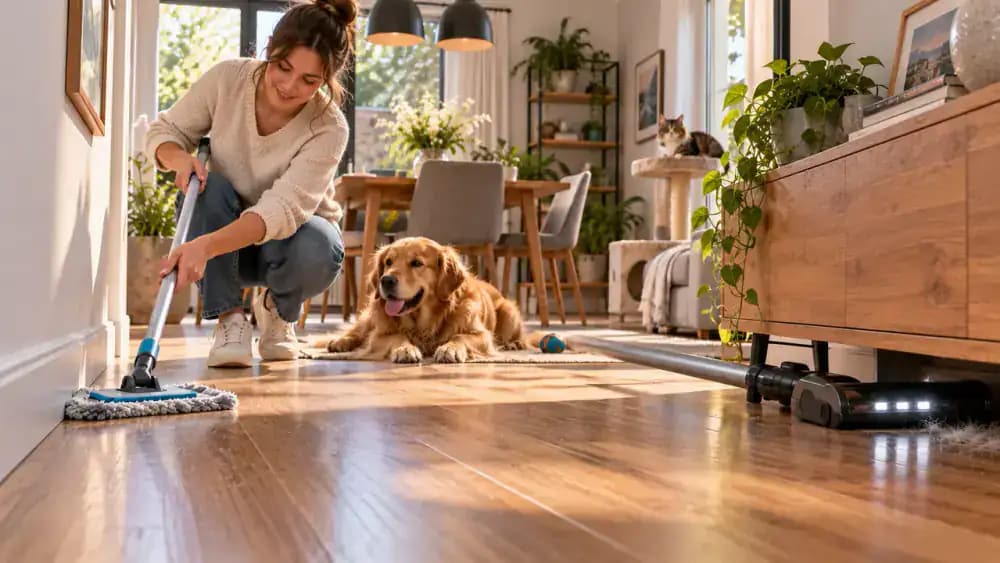
For hardwood, tile, and other hard floors, a vacuum or microfiber dust mop usually controls lightweight fur better than a dry broom. Start around walls and furniture edges, then work inward. Reach beneath cabinets, tables, and furniture legs where air movement can push loose hair into small concentrated piles.
Pull Embedded Hair From Upholstery
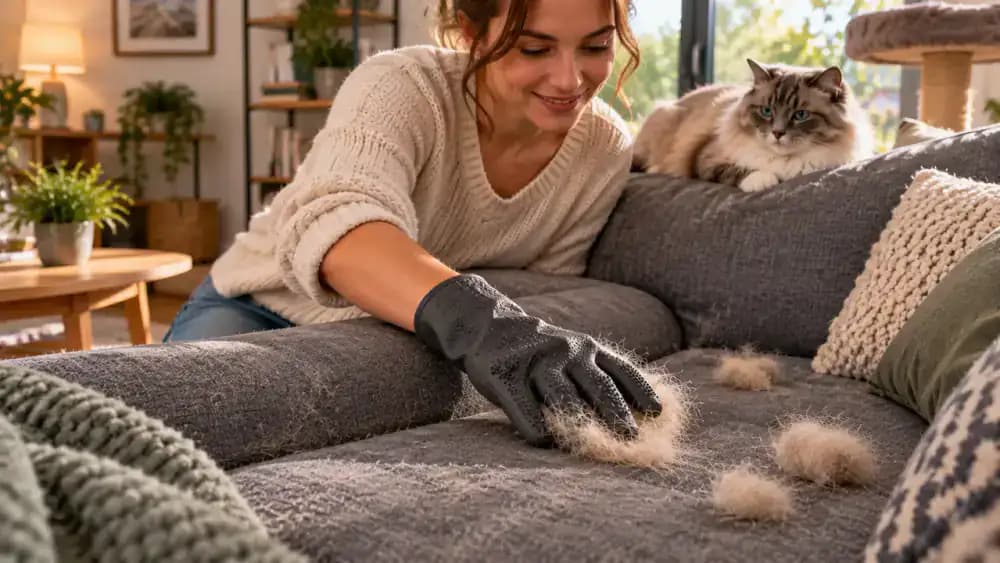
Vacuum fabric furniture first, then tackle remaining hair with a slightly damp rubber glove or clean squeegee. Move in one direction using light pressure so fur gathers into manageable clumps. Test delicate fabrics before adding moisture or friction, and avoid soaking cushions. Pick up the loosened clumps when you finish.
Remove Excess Hair Before Washing
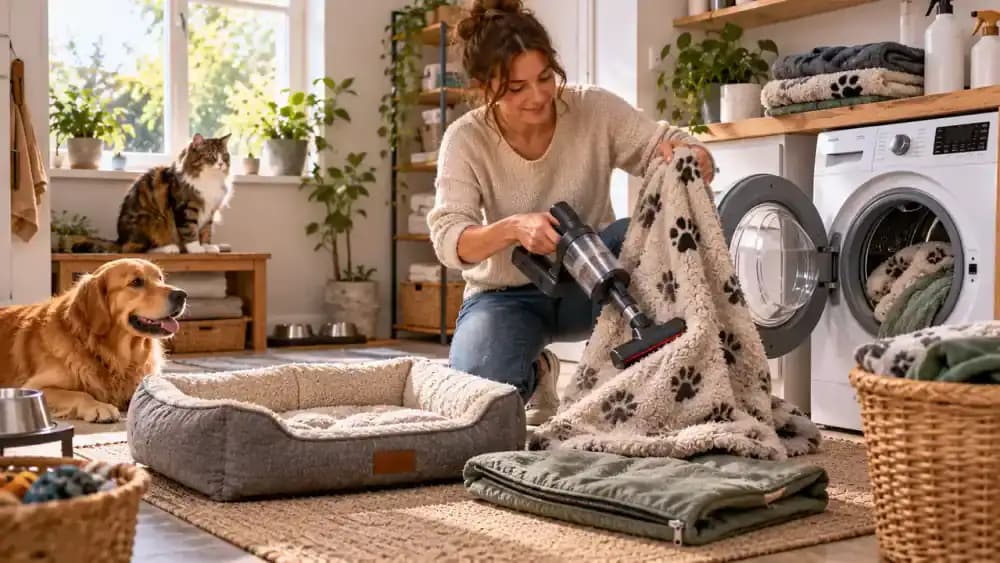
Wash pet blankets, removable throws, and washable covers regularly, but remove loose fur before they enter the machine. Shake them outdoors when appropriate or vacuum the surface first. Follow the care label and avoid overfilling the washer so water, detergent, and fabric movement can carry loosened hair away effectively.
Clean Hair Out of the Washer
After washing heavily furred fabrics, inspect the washer drum, door gasket, and accessible filter or lint areas. Wipe away trapped hair instead of leaving it behind for the next cycle. This small maintenance step reduces the chance of pet fur transferring onto clean clothes, sheets, towels, and other household laundry.
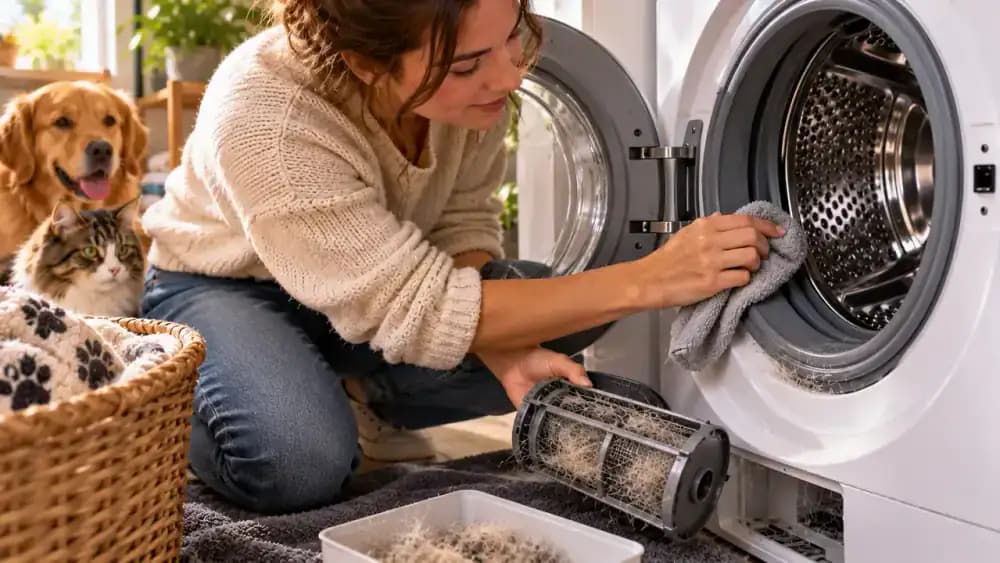
Let Dryer Tumbling Release Loose Fur
A dryer can remove a substantial amount of remaining hair from washable fabrics when the care label allows machine drying. Clean the lint screen before and after every cycle. Do not assume higher heat removes more fur. The tumbling action does much of the work, while excessive heat may damage certain materials.

Place Lint Rollers Where You Need Them
Keep lint rollers close to the places where last-minute fur cleanup happens. Useful spots include the front door, bedroom, and car. For larger surfaces, reusable rollers or washable rubber hair removers can reduce disposable waste. Convenient placement makes quick touchups on clothing, cushions, lampshades, and car seats easier to maintain.

Trap Hair on Shelves and Smooth Furniture
Wipe smooth furniture, shelving, and media stands with a clean, slightly damp microfiber cloth. Fold it into quarters and switch to a clean section as each side fills with hair and dust. Use very little moisture around electronics or unfinished wood. The objective is trapping loose particles rather than smearing them.

Reduce Static Without Improvised Sprays
Fine pet hair often clings strongly to synthetic materials because of static. Comfortable indoor humidity may reduce static, but avoid making the home excessively humid. For clothing, use a fabric brush or lint roller instead of improvised chemical treatments. Follow garment-care instructions whenever you are dealing with delicate or specialty fabrics.

Treat Pet Beds as Major Hair Zones
Pet beds collect large amounts of fur, so washable covers make routine cleaning much easier. Vacuum the bed between washes and clean the surrounding floor at the same time. If the bed contains removable inserts, check their care instructions too. Keeping this concentrated resting area clean helps limit nearby hair buildup.
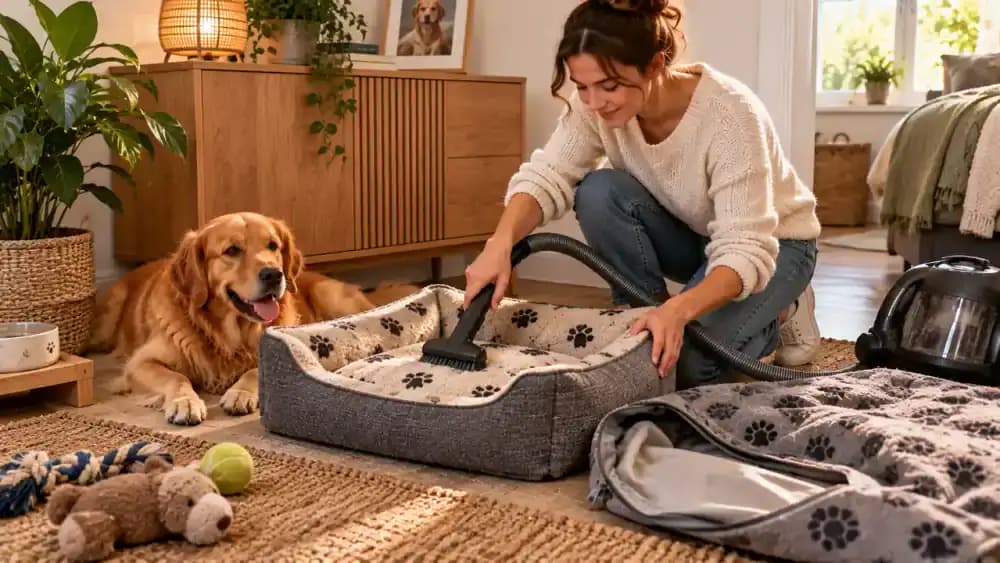
Cover Favorite Furniture With Washable Throws
If your pet always chooses the same couch or chair, cover that section with a washable throw. The throw will not reduce shedding, but it creates a removable layer that is far easier to clean than an entire sofa. Choose material that releases hair readily instead of trapping it inside deeply textured fibers.

Create a Bedroom Hair Strategy
When pets sleep on the bed, place a washable top blanket over your regular bedding and keep up with brushing. Vacuum around the bed frame where fur settles. If you want cleaner pillows and sheets, provide a comfortable designated sleeping spot nearby and reinforce its use consistently with routine and rewards.

Keep Clean Clothes Away From Resting Areas
Store clean clothing away from the places where pets lounge. Close wardrobe doors, consider hampers with lids, and avoid leaving dark garments on upholstered furniture. Before going out, inspect clothing under bright light and use a lint roller. Fine pale hairs become easier to see when the fabric is well illuminated.

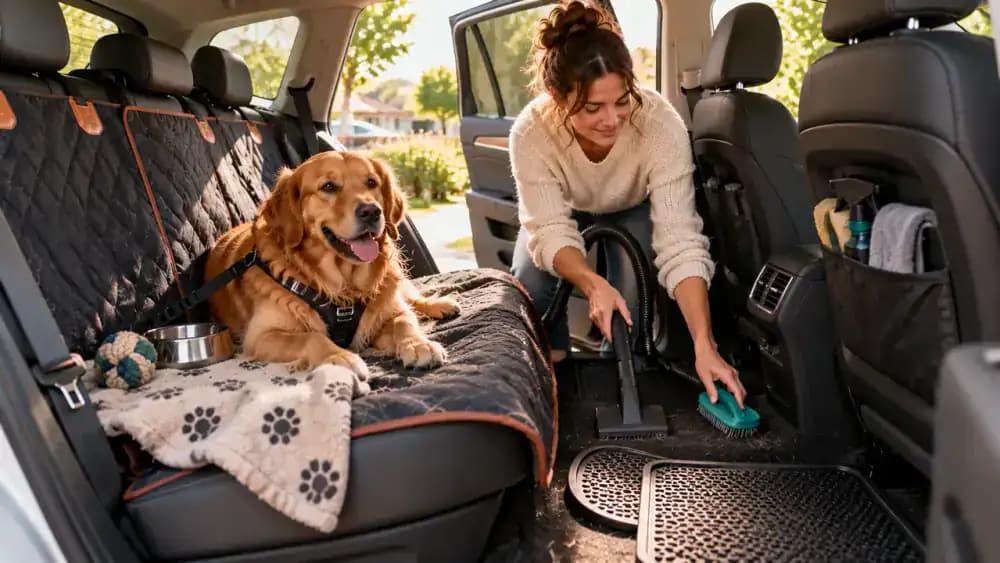
Clean the Car With the Same System
If your pet rides in the car, protect the seat with a washable cover and vacuum upholstery seams, mats, and carpeting. Wipe hard surfaces with microfiber, and use a rubber brush for embedded carpet hair. Secure pets appropriately during travel, and remove loose cleaning equipment before anyone gets back on the road.
Know What an Air Purifier Can Do
An air purifier may capture some airborne dander and very fine particles, but it cannot replace grooming or surface cleaning. Choose a purifier sized for the room and maintain its filters as directed. Because most visible hair settles quickly, regular vacuuming, laundering, and brushing remain the primary tools for controlling household fur.
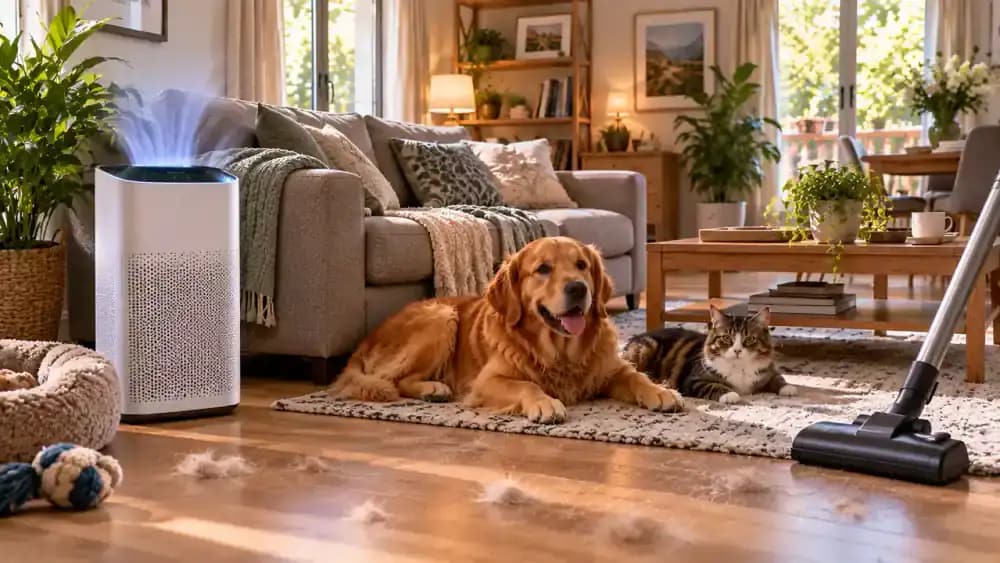
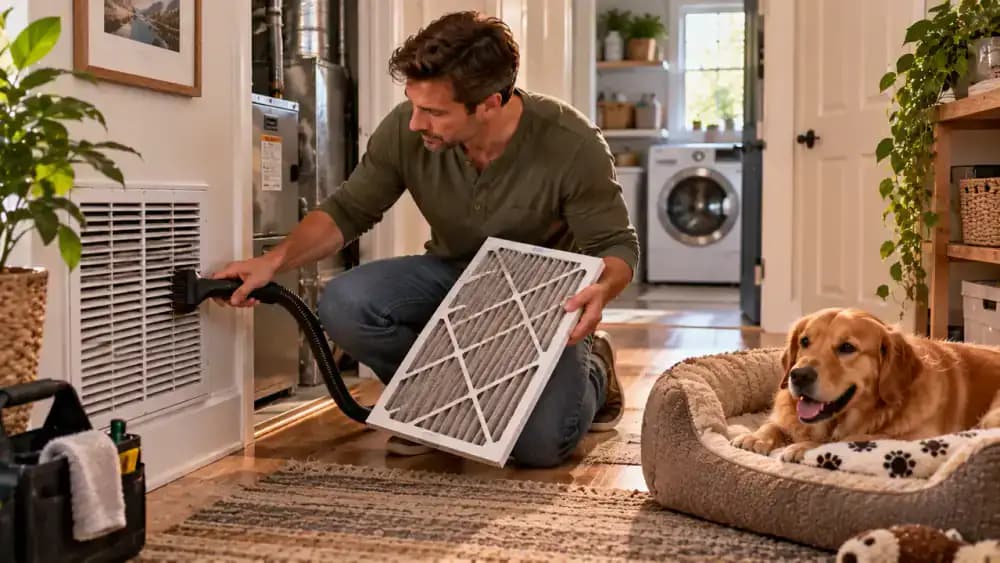
Keep Vents and HVAC Filters Clean
Lightweight hair can move through rooms with heating and cooling airflow. Vacuum accessible vent covers and return grilles, and replace HVAC filters according to your system manufacturer's schedule. Keep pet beds and furniture from blocking vents. Cleaner airflow paths reduce recirculated dust, although they cannot prevent normal shedding on their own.
Watch for Sudden or Unusual Hair Loss
Normal shedding varies, but sudden heavy hair loss, bald patches, inflamed skin, frequent scratching, or excessive licking should not be treated as a housekeeping problem. Many different issues can contribute to these changes. Contact a veterinarian promptly when shedding changes sharply or your pet's skin looks abnormal instead of simply cleaning more.

Support Skin and Coat With Balanced Nutrition
Good nutrition supports normal skin and coat health, but no single food can stop ordinary shedding. Feed a complete and balanced diet appropriate for your pet's life stage and provide fresh water. Avoid casually adding oils or supplements, since unnecessary nutrients may be inappropriate. Ask your veterinarian before starting any supplement.

Bathe Only as Appropriate for the Pet
Bathing can loosen dead hair, particularly in dogs, but appropriate frequency depends on coat, skin, lifestyle, and professional advice. Use pet-specific shampoo and rinse thoroughly rather than using human shampoo. Cats generally need much less routine bathing unless a veterinarian or groomer recommends it. Brush the coat afterward when appropriate.

Turn Hair Control Into a Schedule
Create a routine simple enough to follow consistently. You might brush daily, vacuum high-use pet areas every one or two days, wash blankets weekly, and deep-clean upholstery monthly. Adjust the frequency to your household and shedding level. Preventing gradual accumulation requires far less work than recovering after several neglected weeks.
Aim for Manageable, Not Hair-Free
Healthy dogs and cats naturally shed, so a completely hair-free home is not a realistic target. Focus instead on capturing loose coat early, cleaning the areas where fur accumulates, protecting washable surfaces, and noticing unusual skin changes. With consistent maintenance, floors, clothing, furniture, bedding, and cars become much easier to manage.

Pet hair becomes much easier to manage when you control it before it spreads throughout the home. Instead of relying on an occasional marathon cleaning session, combine regular brushing with focused vacuuming, washable covers, sensible laundry habits, and quick daily touchups. The best routine depends on your pet's coat, favorite resting areas, and how heavily they shed. The goal is not to eliminate every strand of fur, but to keep normal shedding from building up on floors, furniture, clothing, bedding, and car interiors.
Where people go wrong
Waiting for a weekly cleaning marathon. Small daily grooming and cleaning tasks prevent the heavy buildup that makes pet hair much harder to remove later.
Using the wrong grooming tool. Short coats, dense undercoats, and long coats have different needs. Aggressive or inappropriate tools can irritate skin or damage healthy coat.
Vacuuming too quickly. Slow passes and appropriate attachments give the vacuum more opportunity to lift hair from rugs, furniture, seams, and carpeting.
Putting heavily furred fabrics straight into the washer. Shake or vacuum excess hair first so less fur enters the machine and transfers to later laundry.
Ignoring pet beds and favorite furniture. These concentrated resting areas can hold large amounts of hair and continually redistribute it into surrounding rooms.
Treating abnormal hair loss as a cleaning problem. Sudden heavy shedding, bald areas, irritated skin, frequent scratching, or excessive licking warrants veterinary attention rather than more aggressive grooming.
Questions people ask
Regular brushing combined with frequent cleaning of the specific areas your pet uses most is the most practical approach. Removing loose coat before it falls reduces how much reaches furniture, floors, bedding, and clothing.
Fixed it?
Get one guide like this every Thursday.