How to Clean Your Dog's Paws After Outdoor Walks
Muddy paws, rainy walks, and winter road salt don't have to mean dirty floors or irritated paw pads. Learn how to clean your dog's paws gently, inspect them for problems, and build a quick, stress-free routine after every outdoor adventure.
What you’ll need
Tap to tick things off before you start.
Muddy Paws, Messy Floors
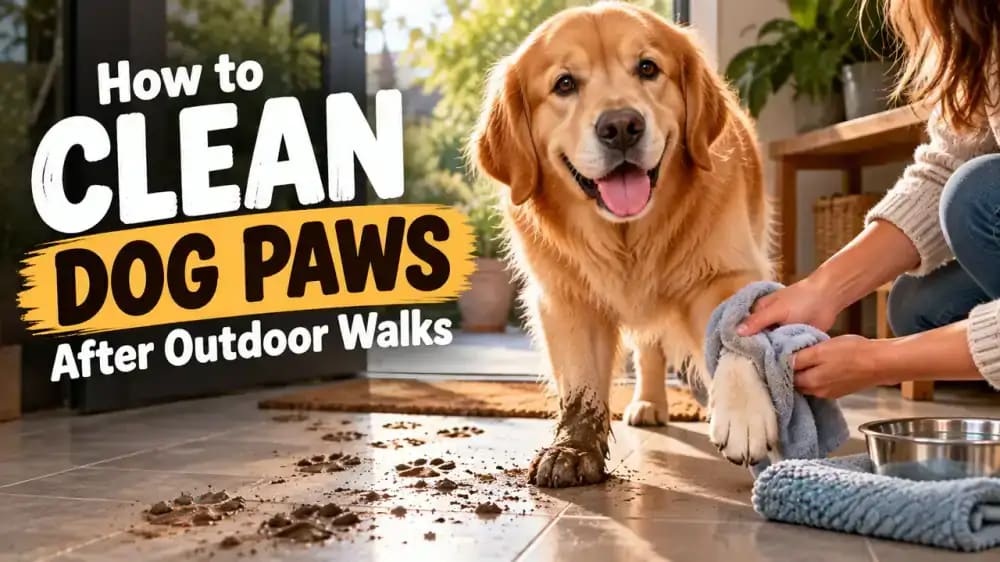
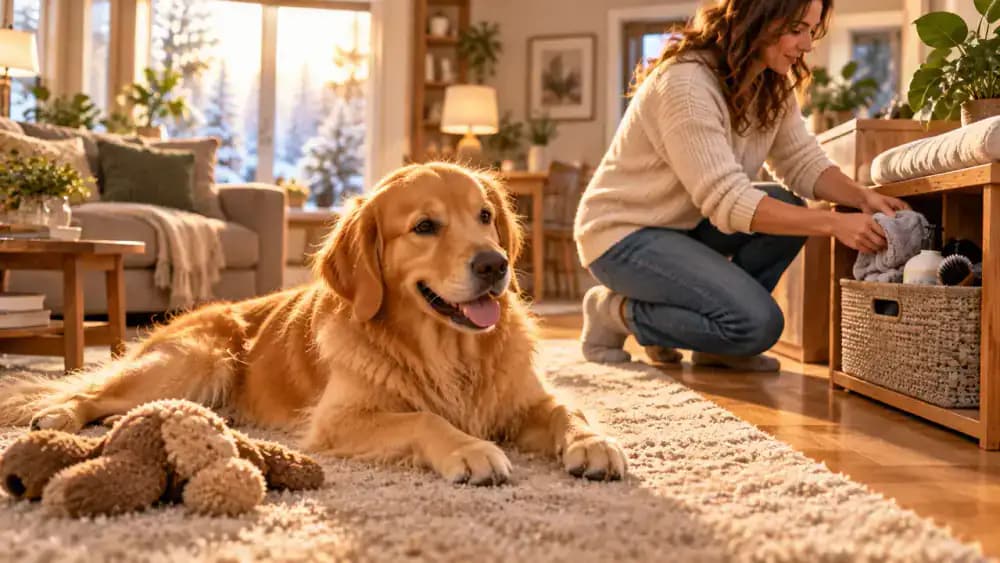
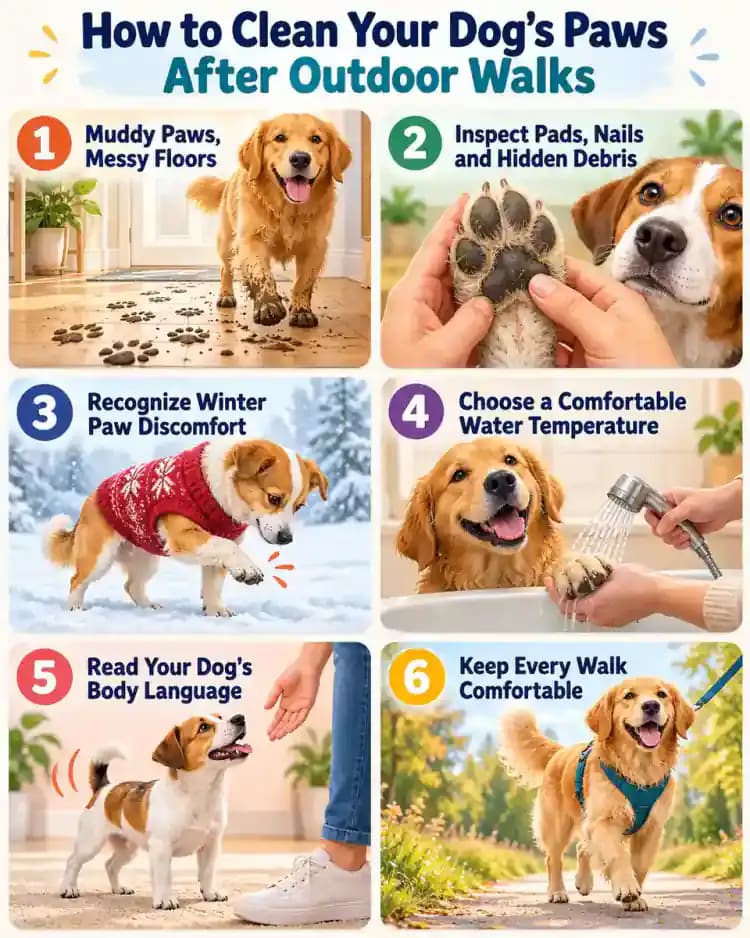
After a rainy walk, your dog may race indoors, leaving muddy footprints across the floor. Beyond the mess, outdoor adventures can leave grit, pollen, and debris clinging to paw pads and fur. Check your dog's paws at the entrance after each walk, and clean them as needed before that outdoor dirt spreads throughout your home.
Build a Paw-Cleaning Station
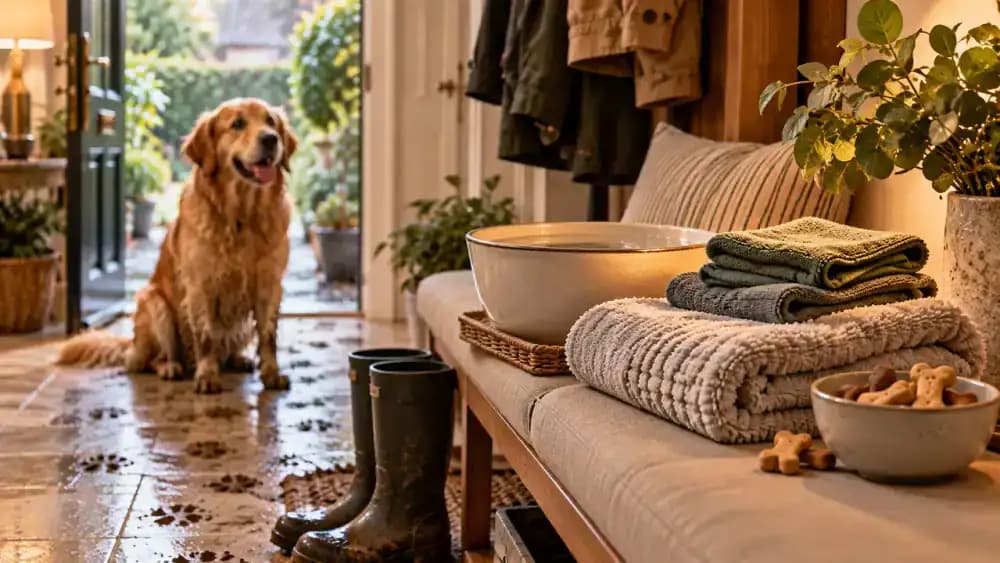
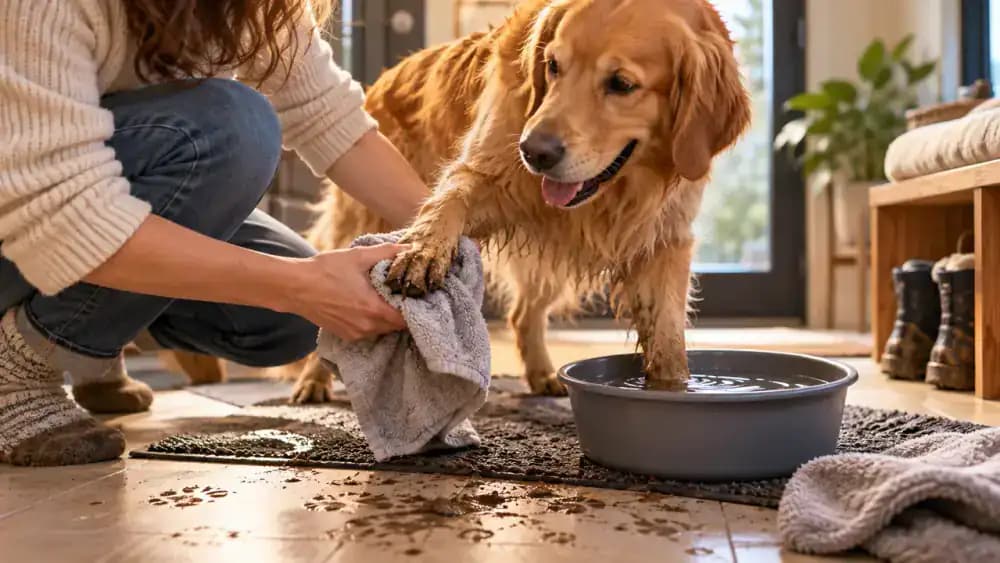
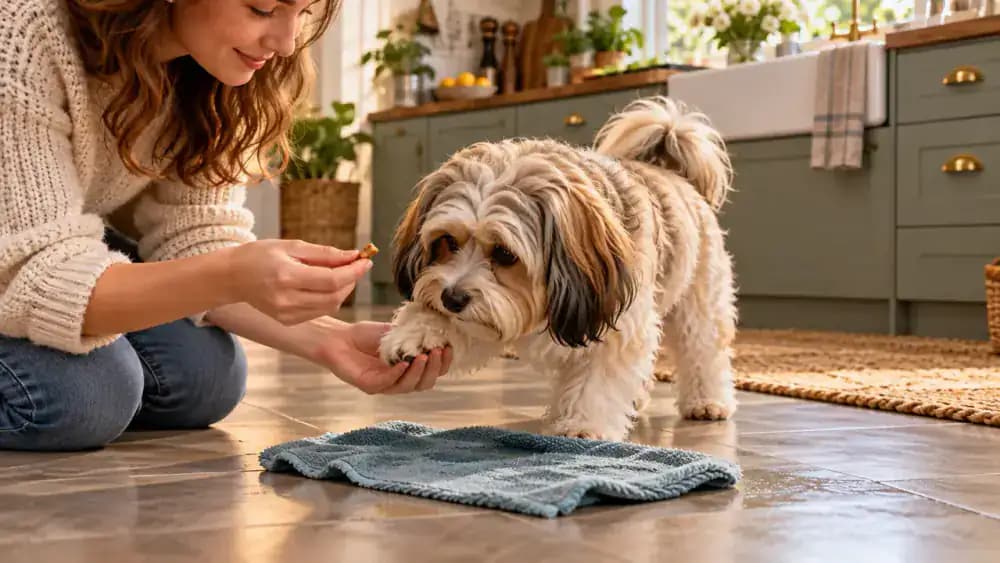
Create a dedicated paw-cleaning station near your front door to make cleanup quick and convenient. Keep a shallow bowl of lukewarm water, soft microfiber cloths, an absorbent towel, and a few dog treats within reach. Arrange everything on a nearby bench or shelf so you can clean muddy paws immediately without searching for supplies.
Help Your Dog Feel Comfortable
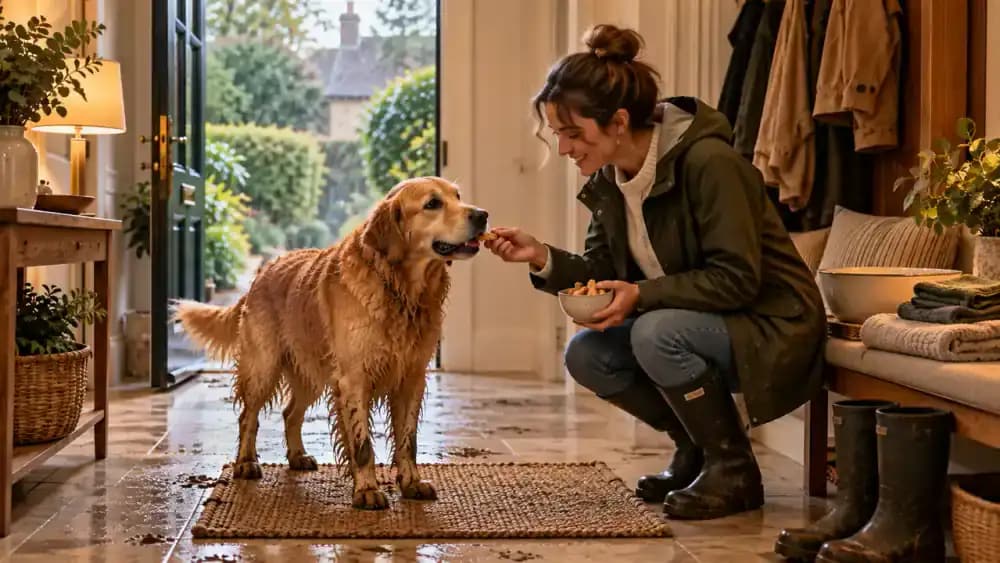
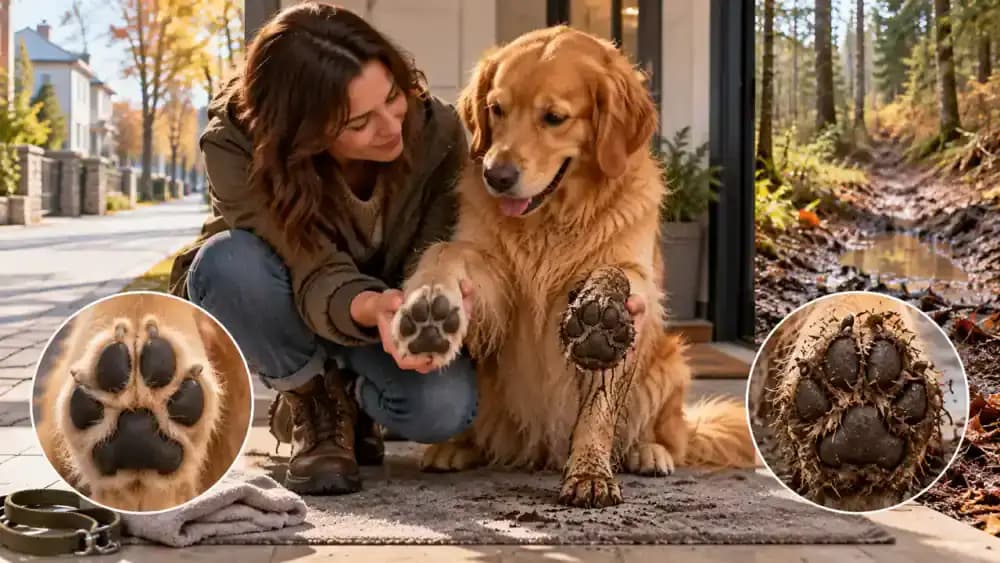
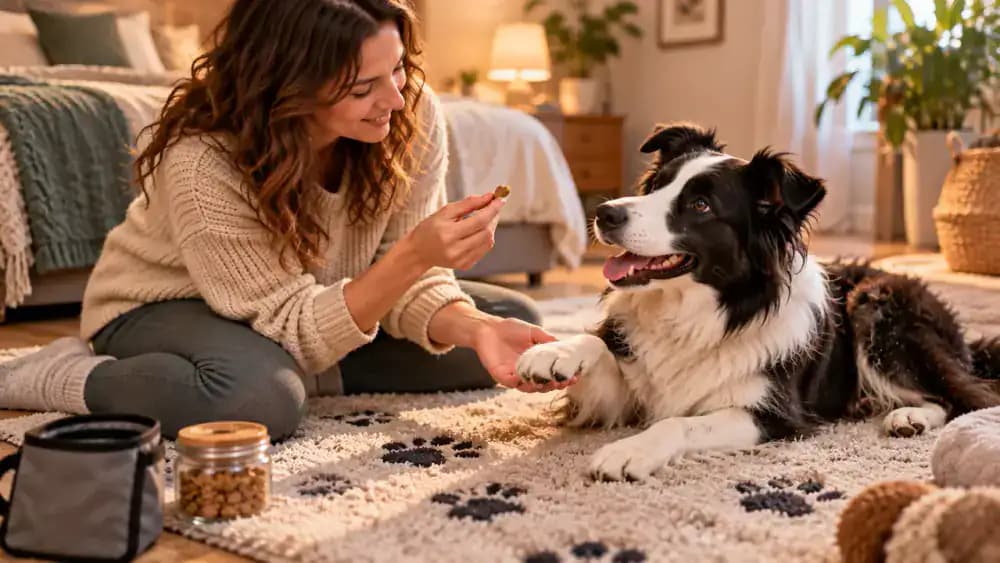
Invite your dog to stand on a non-slip mat near the doorway. Reward calm behavior with a small treat, then gently touch one leg before lifting a paw. Support the paw without squeezing or pulling. If your dog withdraws, release it and try again slowly. Patient, positive handling helps make paw cleaning a comfortable routine.
Wipe Light Dirt, Rinse Heavy Mud
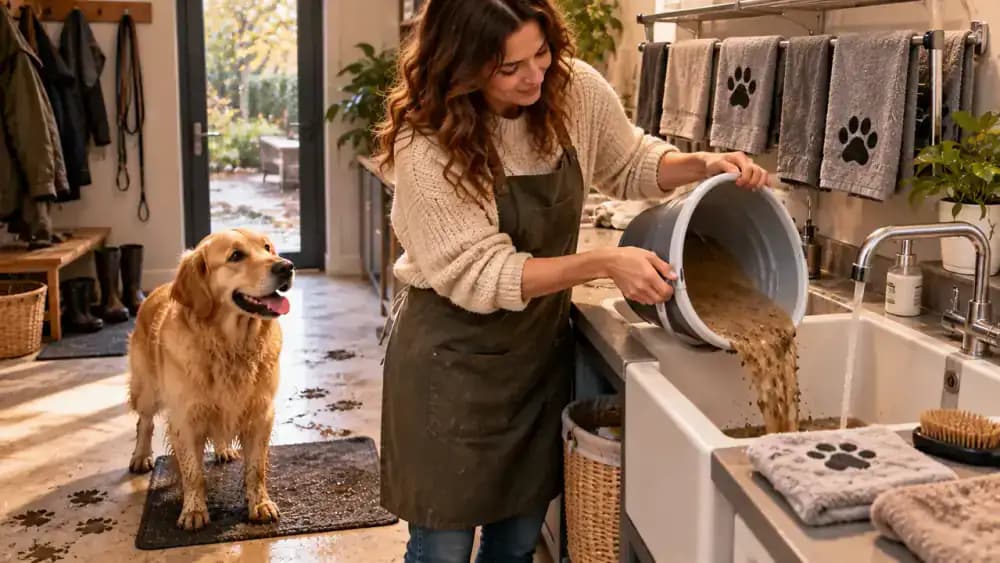
Examine each paw to choose the gentlest cleaning method. For light dust, dampen a soft microfiber cloth with water and carefully wipe the pads and surrounding fur. For heavy mud, lower the paw into shallow lukewarm water and gently loosen stubborn dirt with your fingers. Avoid vigorous scrubbing, which can irritate sensitive skin.
Clean Between the Toes and Remove Road Salt
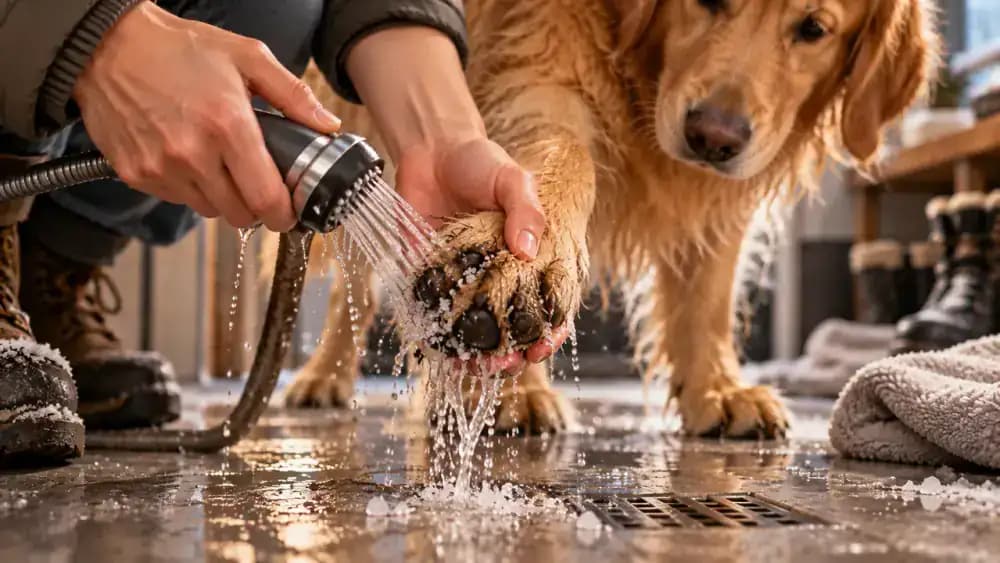
Gently separate your dog's toes to check for trapped grit, mud, or small debris. During winter, rinse paws with clean lukewarm water to remove road salt and de-icing chemicals, paying attention to the spaces between the pads. Avoid harsh soaps and heavily scented wipes. Pat the paws dry afterward, especially between the toes, to prevent lingering moisture.
Inspect Pads, Nails and Hidden Debris
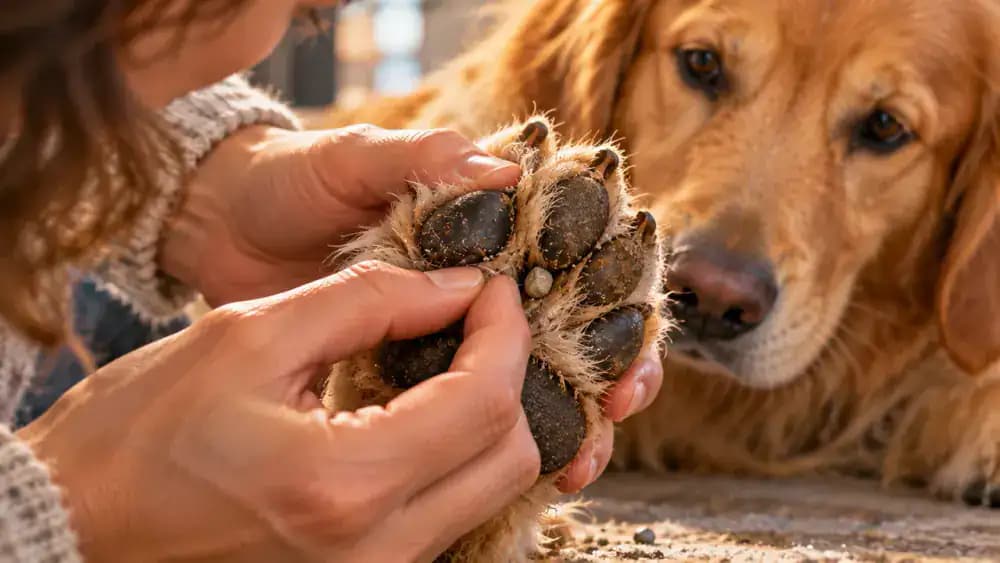
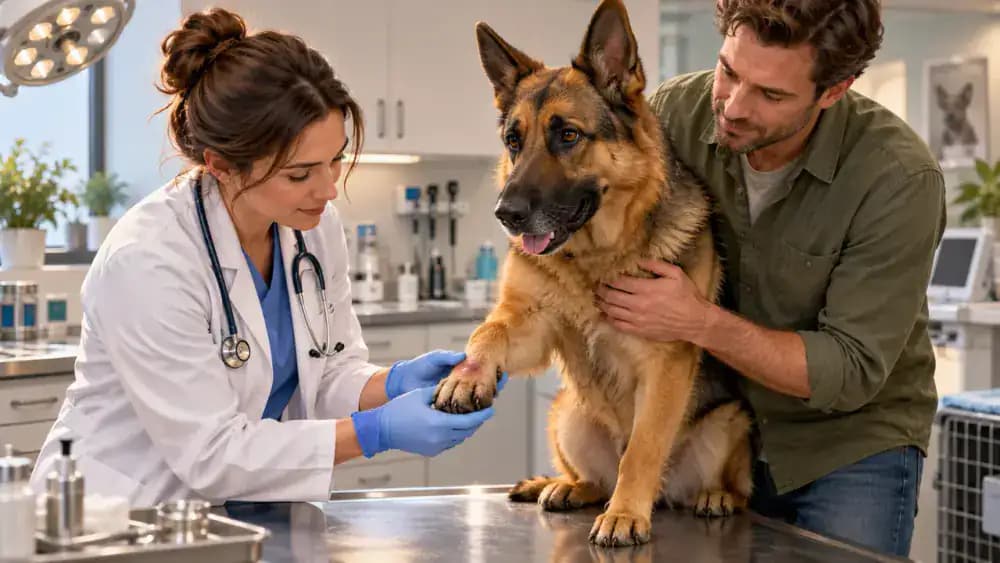
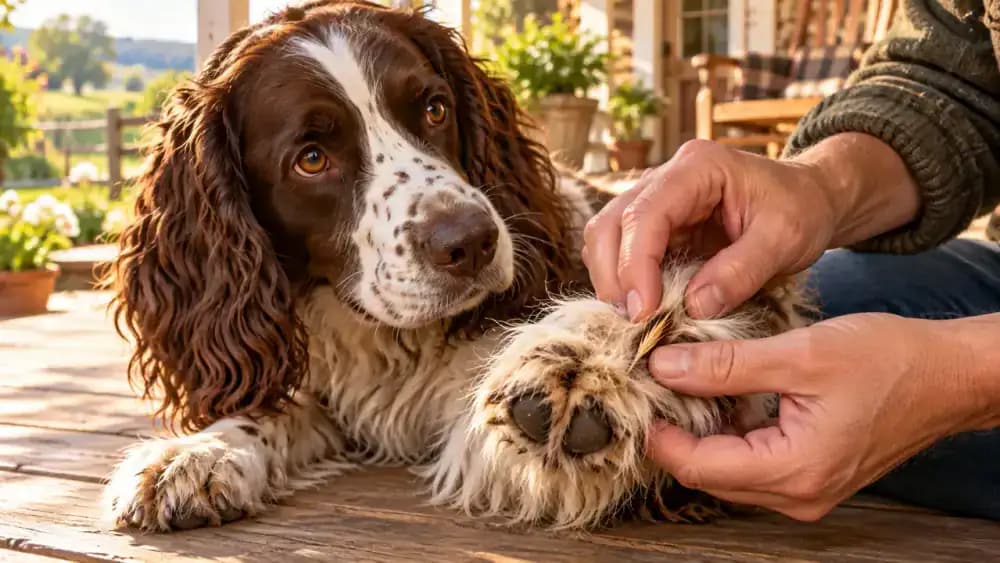
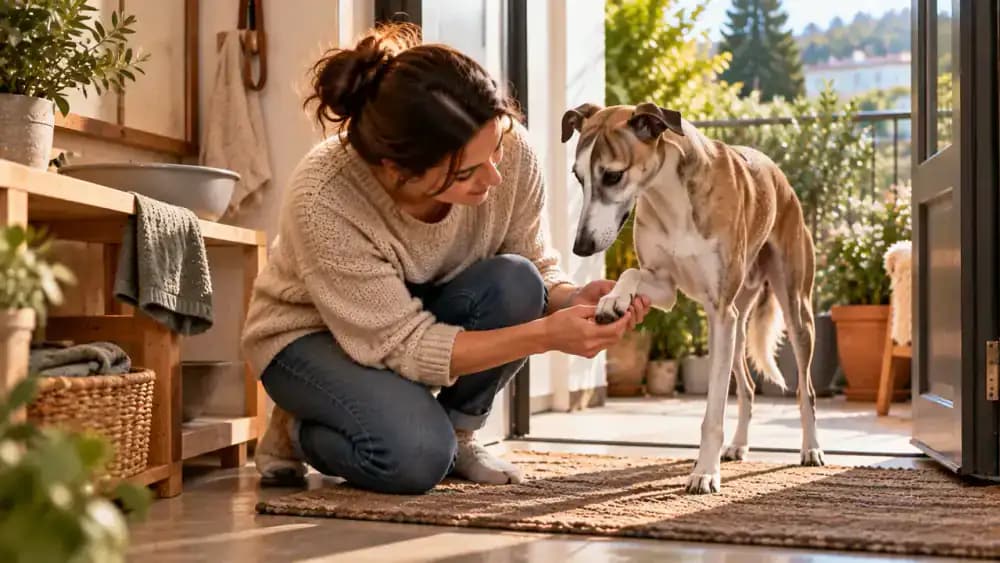
Once your dog's paws are clean, inspect each one carefully. Check the pads for cracks, cuts, or redness, and examine the nails and spaces between the toes. Gently part the fur to look for trapped pebbles, thorns, or other debris. Watch for flinching or discomfort, and avoid pulling out anything deeply embedded.
Dry Every Paw Thoroughly
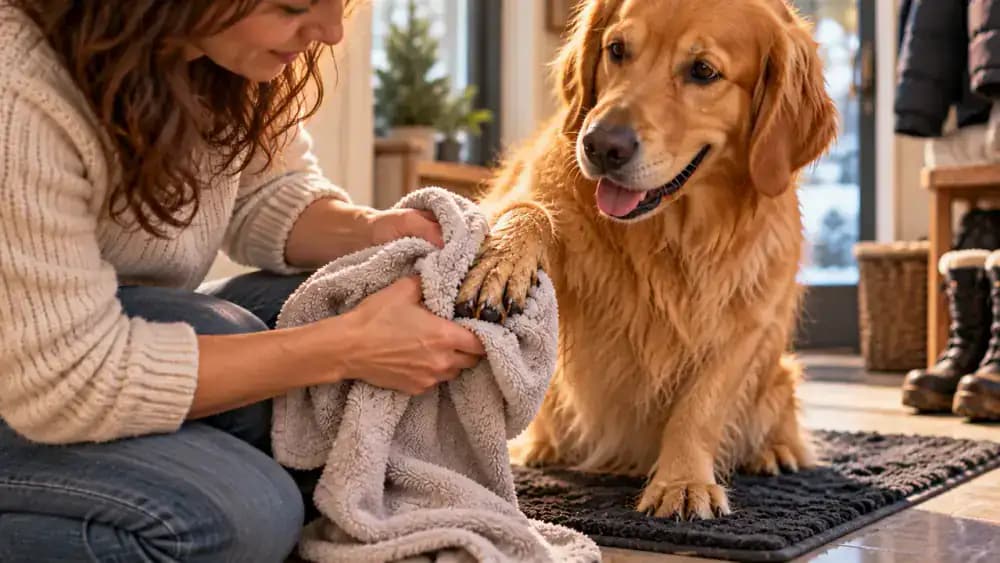
After cleaning, wrap each paw in a soft, absorbent towel and gently pat away excess moisture. Pay special attention to the spaces between the toes, where water can remain trapped. Keep your movements slow and comfortable, offering praise or a small treat for cooperation. If your dog shows discomfort, pause and check the paw before continuing.
Make Paw Care a Daily Habit
Once your dog's paws are clean and dry, observe how they walk and behave. Persistent licking, limping, swelling, or a painful wound deserves veterinary attention rather than repeated washing. Otherwise, put your supplies away and let your dog relax. A consistent, gentle routine after walks helps keep your home cleaner and makes paw care more familiar.
Match Cleaning to Each Walk
Not every walk requires the same level of cleaning. After a short stroll on dry pavement, a gentle wipe may be enough. Muddy trails or wet grass may call for a thorough rinse and careful drying. Examine each paw before choosing your method, focusing on removing dirt and irritants without unnecessary scrubbing that could aggravate healthy skin.
Check Long Fur Around the Paws
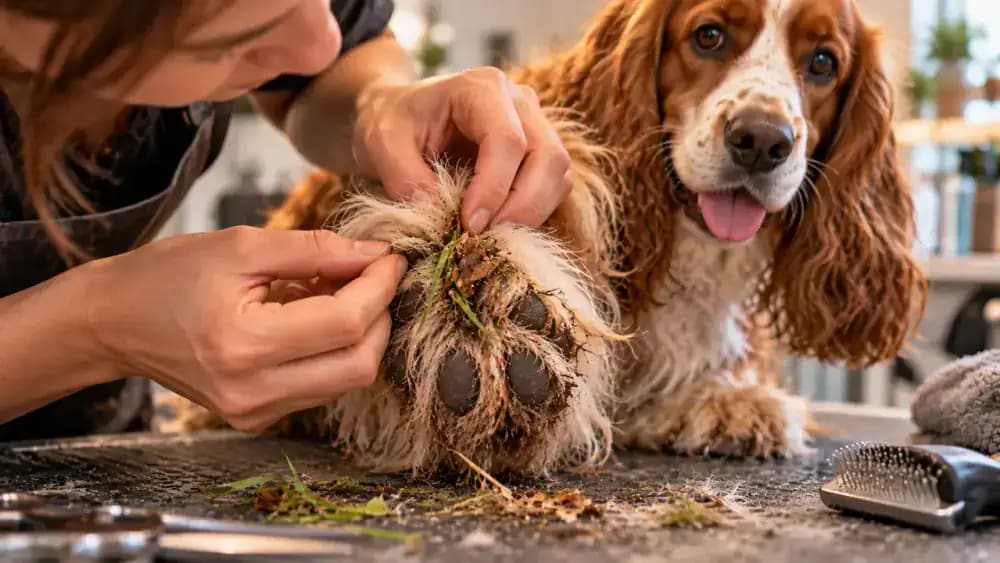
Dogs with long fur around their paws may collect leaves, grass, mud, and grit more easily. Gently separate the hair around each pad and remove loose debris without tugging. If excess fur regularly traps dirt, ask a professional groomer about safe trimming. Avoid cutting between the toes yourself, since delicate skin can be difficult to see beneath thick fur.
Be Careful After Rainy Walks
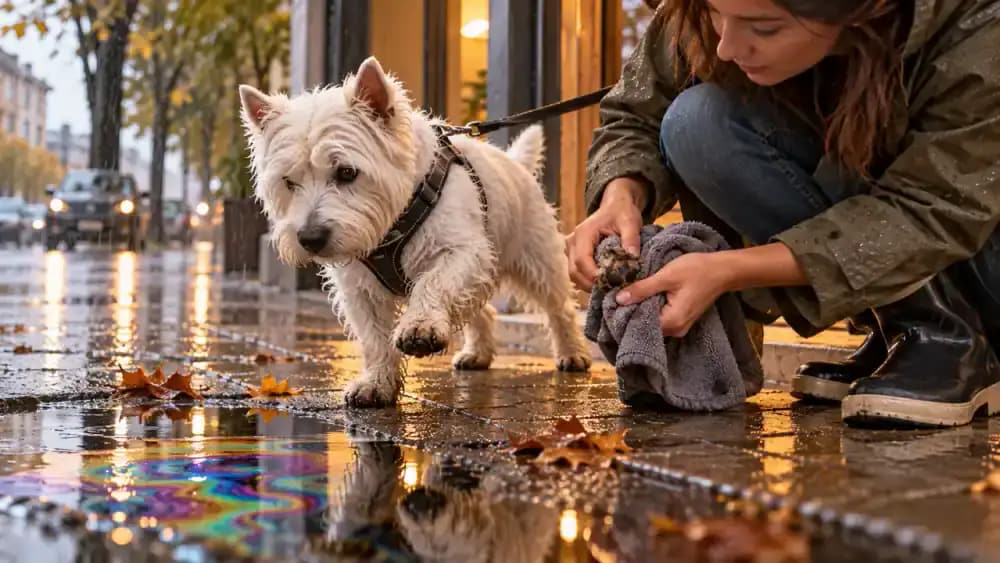
After a rainy walk, check your dog's paws before deciding how much cleaning they need. Clean rainwater and light surface dirt may require only a gentle rinse and thorough drying. However, puddles can contain oil, chemicals, or other contaminants. Inspect paws carefully after walking through standing water, especially near roads, parking lots, or busy sidewalks.
Recognize Winter Paw Discomfort
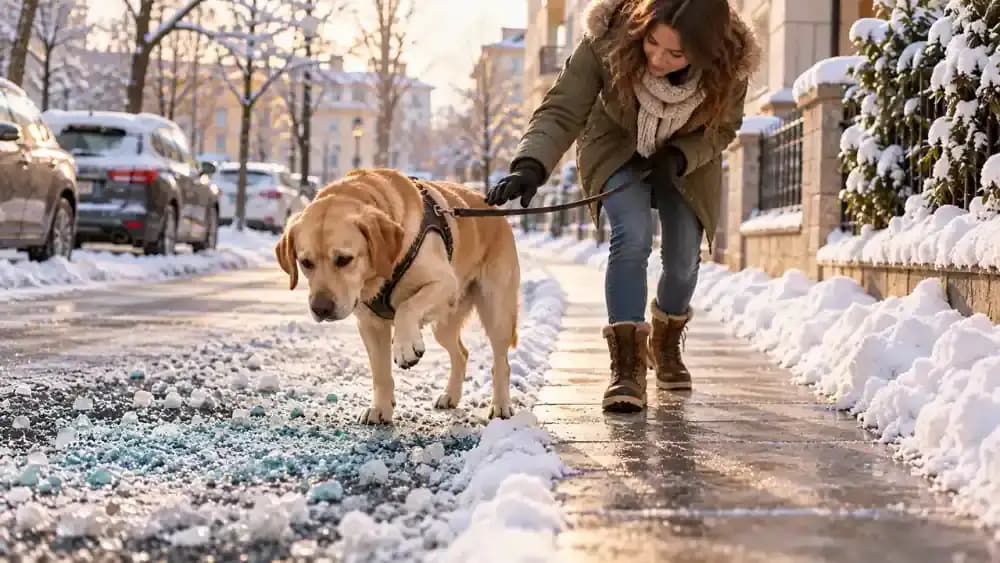
Winter sidewalks can expose your dog's paws to ice, rough surfaces, and de-icing chemicals. Watch for sudden paw lifting, limping, or hesitation to continue walking. Move to a safer, untreated path whenever possible. Once home, gently rinse away salt and other residues with lukewarm water, then dry thoroughly. Contact your veterinarian if discomfort persists.
Teach Dogs to Accept Paw Handling
Help your dog become comfortable with paw cleaning through short, positive training sessions. Begin by gently touching the shoulder, then gradually work toward the lower leg and paw. Reward calm behavior with treats and praise. Never forcefully hold a struggling paw. Practice in a quiet environment, allowing your dog to build trust and confidence at a comfortable pace.
Keep Cleaning Supplies Hygienic
Clean paw-care supplies are essential for maintaining a hygienic routine. Replace muddy rinse water frequently, especially when cleaning multiple paws, and use clean sections of a towel to avoid transferring dirt. Machine-wash reusable cloths according to their care instructions and dry them completely before storage. Regularly rinse and clean basins, brushes, and other tools used after walks.
Know When to Call Your Veterinarian
Routine cleaning is not enough when your dog shows signs of a serious paw injury. Deep cuts, significant swelling, uncontrolled bleeding, or refusal to put weight on a paw require prompt veterinary attention. Stop scrubbing the affected area and prevent further contamination. Keep your dog comfortable and limit unnecessary movement while arranging professional care. Never delay treatment to continue cleaning.
Make Every Return Home Easier
Before heading out, return your paw-cleaning bowl, soft cloth, and absorbent towel to a convenient spot near the entrance. Having everything ready saves time when you come home with wet or dusty paws. Keep each cleaning session gentle, check for anything unusual, and reward your dog for cooperating with the routine.

Pay Attention to Walking Surfaces
Different walking surfaces can affect your dog's paws even when they appear clean. Rough gravel, sharp twigs, and hot pavement deserve extra attention. Watch for limping, hesitation, or changes in how your dog places a foot. If something seems uncomfortable, pause somewhere safe and examine the paw gently without forcing movement.
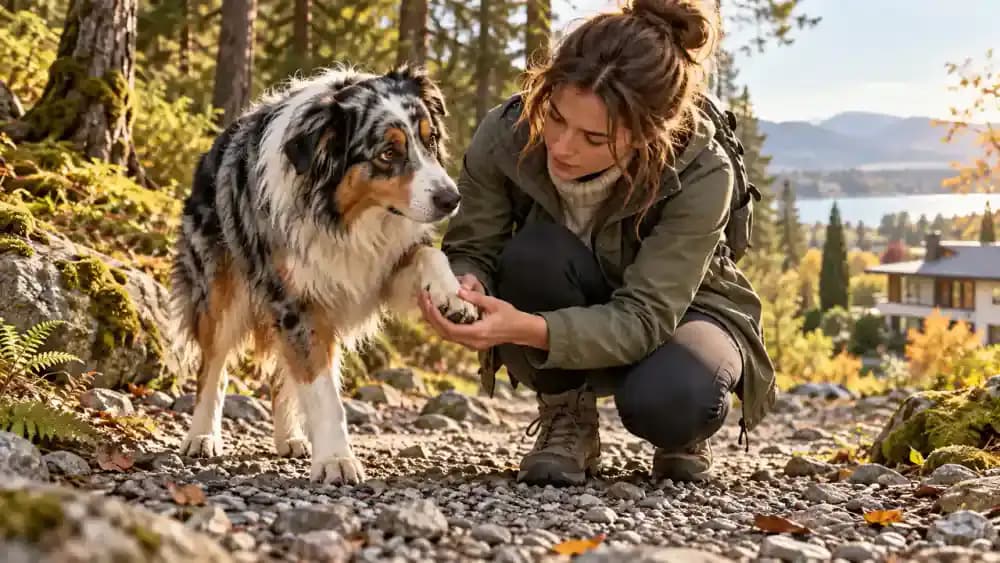
Choose a Comfortable Water Temperature
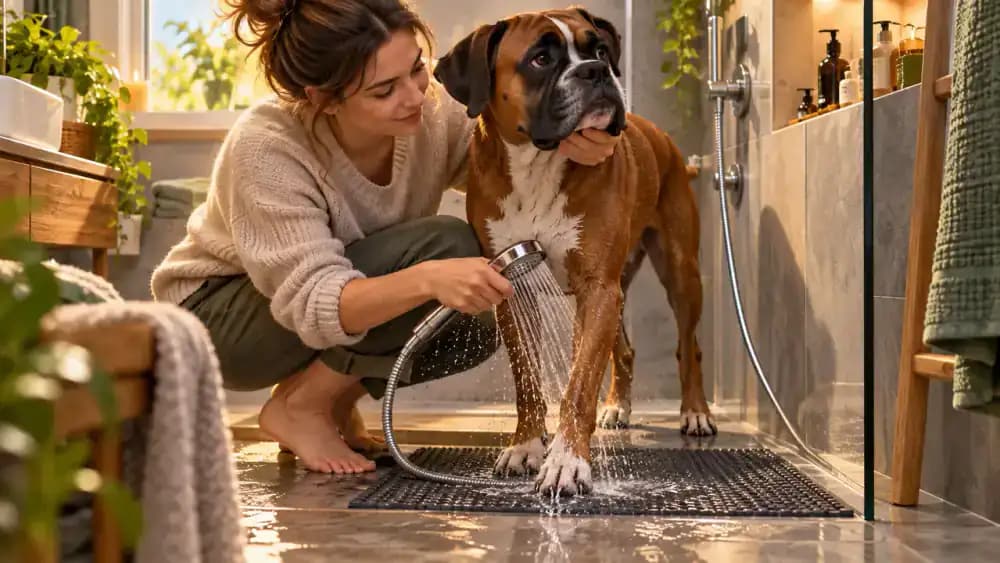
Use comfortably lukewarm water when rinsing your dog's paws, especially if the feet seem sensitive. Test the temperature against the inside of your wrist before beginning. Avoid hot water and strong water pressure. If your dog pulls away, pause and adjust your technique. A stable, nonslip surface can also make cleaning feel safer.
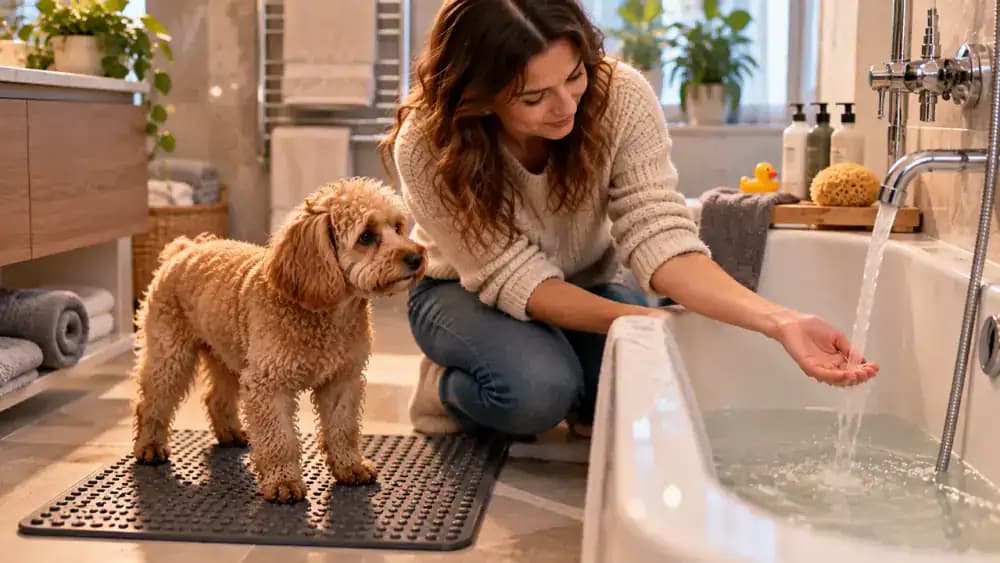
Handle Sticky Substances Safely
Sticky substances such as tree sap, chewing gum, or unidentified residue require more caution than ordinary mud. Avoid scraping, pulling at tangled fur, or applying household solvents. Prevent your dog from licking the affected area. Contact your veterinarian about unknown or potentially harmful substances, and consult a professional groomer for stubborn, harmless residue.
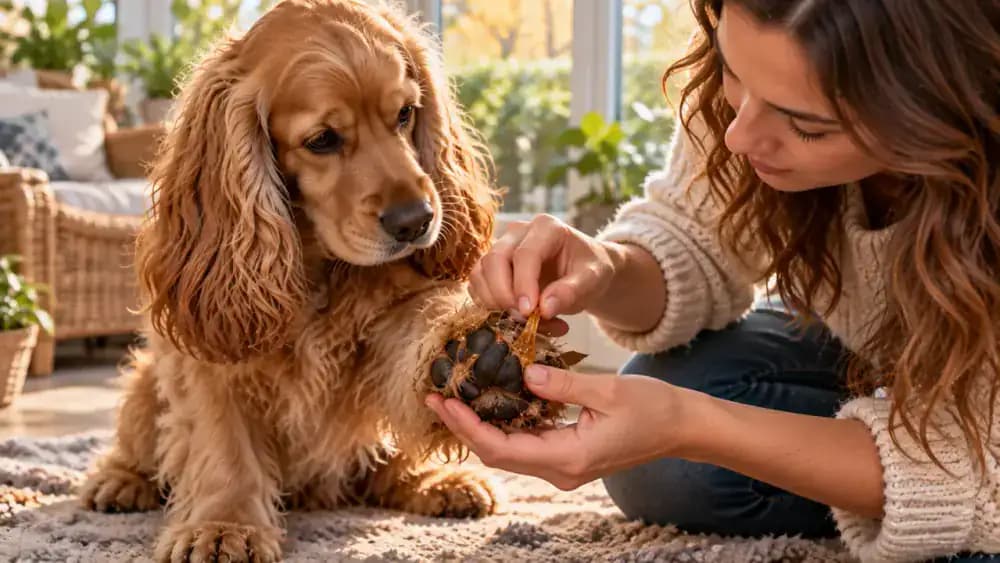
Watch for Seasonal Skin Reactions
Seasonal conditions can leave different irritants around your dog's toes. Spring pollen, damp autumn leaves, and fine trail grit may cling to paw fur. Check for recurring redness or sensitivity after walks, and record the routes and conditions involved. Share repeated patterns with your veterinarian rather than responding with more frequent or aggressive washing.
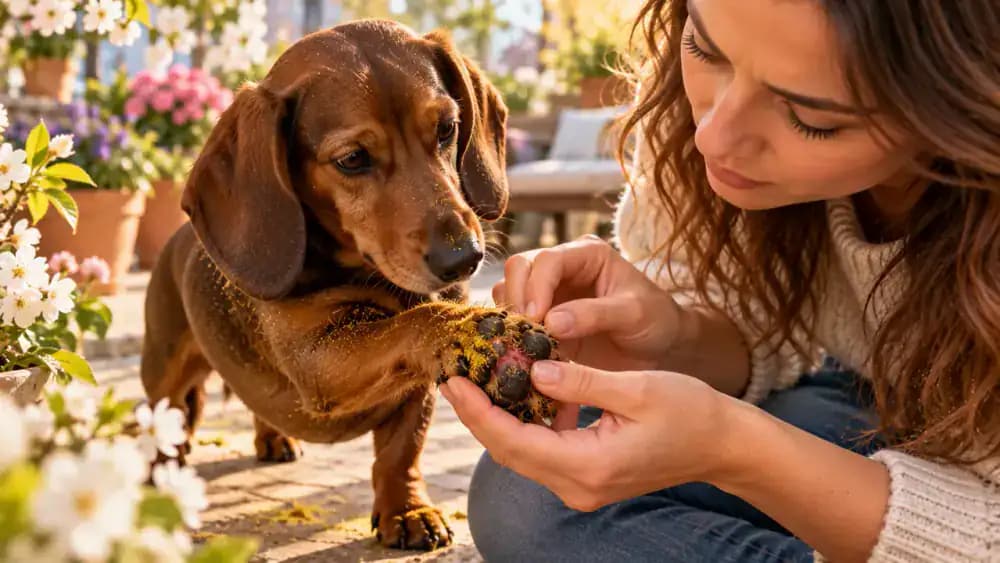
Adapt Paw Care for Older Dogs
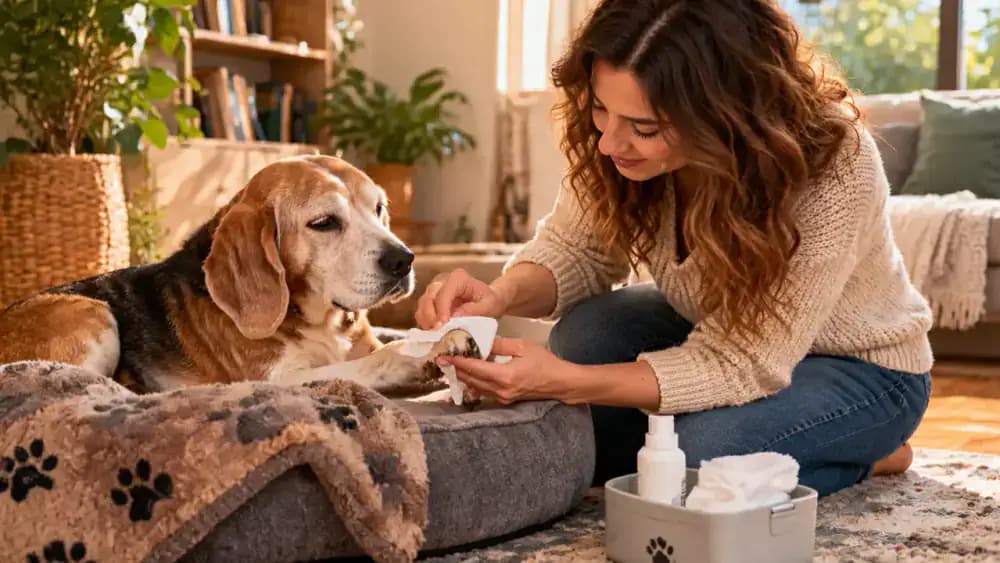
Older dogs, puppies, and dogs with limited mobility may find standing through a full paw cleaning uncomfortable. Let your dog rest on a stable, padded surface while you work. Bring a soft, damp cloth to each paw instead of lifting the legs unnecessarily. Support the feet naturally, take frequent breaks, and avoid forcing uncomfortable positions.
Keep Paws Dry Before Using Boots
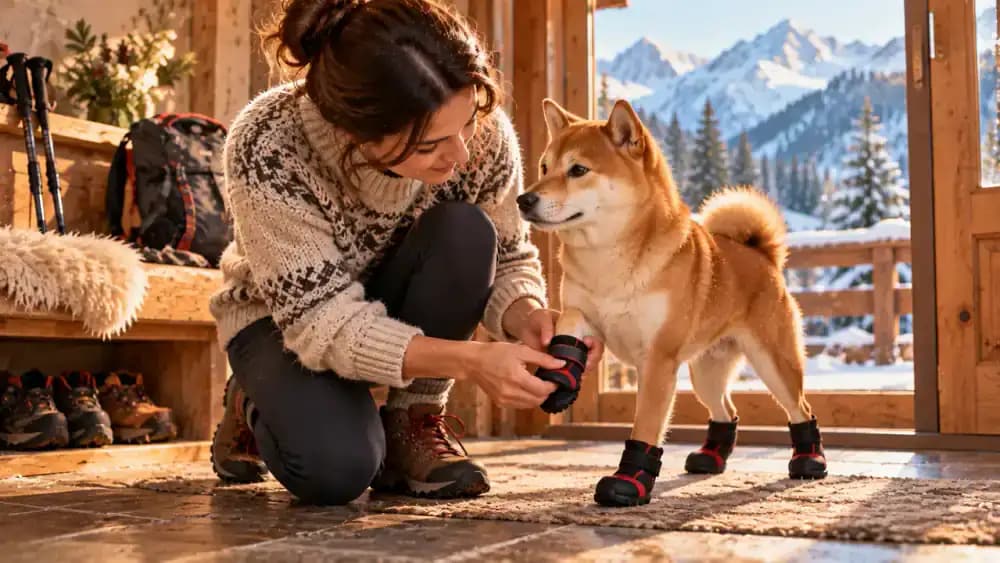
Always make sure your dog's paws are completely dry before putting on protective boots. Pay particular attention to the spaces between the toes, where moisture can remain trapped. Choose boots that fit securely without squeezing or rubbing, and remove them once indoors. After every outing, inspect the skin and paw pads for irritation or debris.
Let Gentle Paw Care Become Second Nature
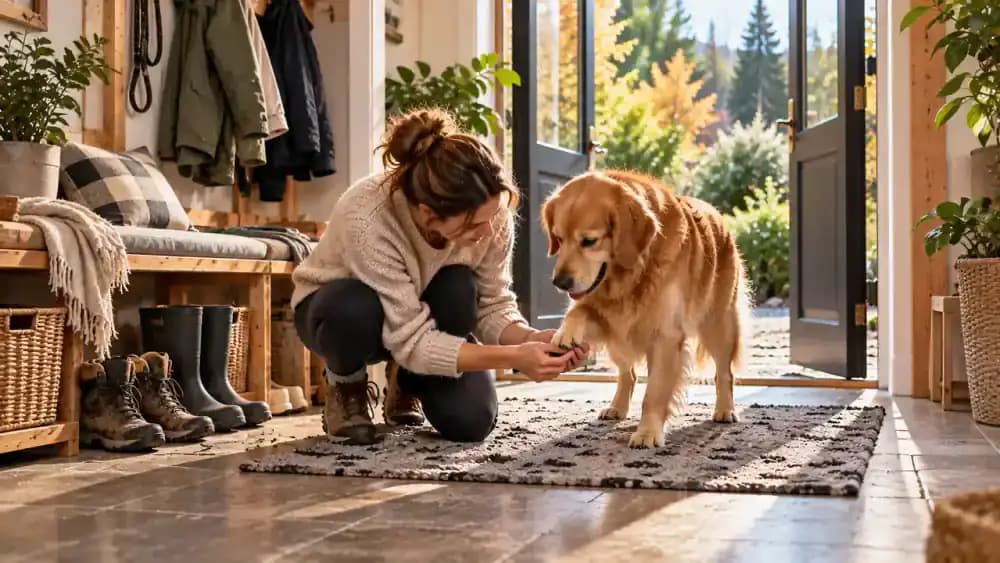
A consistent paw care routine can become a natural part of returning home from walks. Encourage your dog to pause on a familiar entrance mat for a quick inspection. Clean only what needs attention, using a gentle touch and positive reinforcement. With patience and repetition, the process becomes easier, helping both of you enjoy everyday outings.
Read Your Dog's Body Language
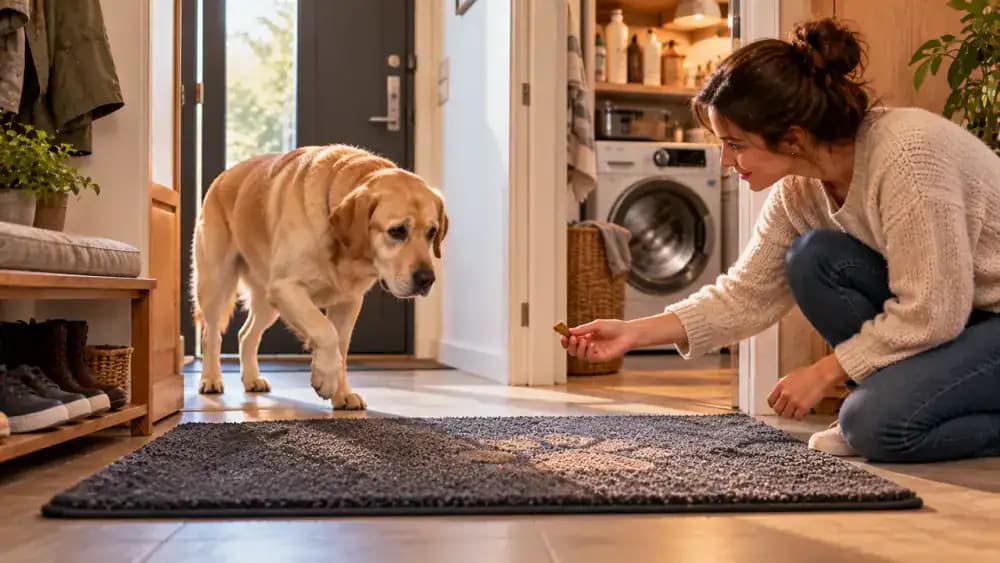
Your dog's behavior can reveal whether paw cleaning feels comfortable. Look for loose posture, natural movement, and a willingness to approach the cleaning area. If your dog hesitates or moves away, give it space and offer a small reward for approaching voluntarily. Reduce distractions, introduce unfamiliar sounds gradually, and prioritize confidence over completing the routine quickly.
Introduce Water Gradually
If your dog dislikes wet paws, introduce moisture in small, positive steps. Start by dampening a soft cloth with lukewarm water and allowing your dog to sniff it. Briefly touch one paw, then offer a treat and praise. Gradually extend contact as your dog becomes comfortable. Stop when your dog shows discomfort, and try again later.
Look Out for Grass Seeds
After walks through fields or tall grass, check between your dog's toes and around any long paw fur for trapped grass seeds. These pointed seeds can sometimes work into the skin. If you notice swelling, persistent licking, or discomfort, contact your veterinarian. Never dig into the skin to remove an embedded seed.
Respond Safely to Unknown Residues
Sidewalks and lawns may contain fertilizers, cleaning products, or other unknown substances. If your dog steps in suspicious residue, prevent licking and promptly rinse the affected paws with plenty of lukewarm water. Avoid applying household cleaners or attempting chemical neutralization. Contact your veterinarian or an animal poison control service for guidance, especially if unusual symptoms appear.
Avoid Unnecessary Paw Washing
Not every walk requires a full paw wash. When sidewalks are dry and your dog's feet look clean, a quick inspection is usually sufficient. Save water rinses for visible dirt, mud, or possible irritants. Excessive washing can contribute to dryness, while trapped moisture may irritate skin. Keep your routine practical and comfortable.
Watch for Changes After Cleaning
Pay attention to your dog's behavior once paw cleaning is finished. Repeated licking, favoring one foot, or changes in walking may indicate something needs attention. Compare all four paws for visible differences and note when the behavior begins. If it persists, worsens, or causes discomfort, share your observations with your veterinarian.

Keep Every Walk Comfortable
A successful paw-care routine should feel simple for both you and your dog. Keep a clean towel, soft cloth, and other essentials near the entrance. Adjust cleaning to the weather and walking conditions, and check for changes regularly. With consistency and gentle handling, coming home becomes a peaceful transition into rest and relaxation.

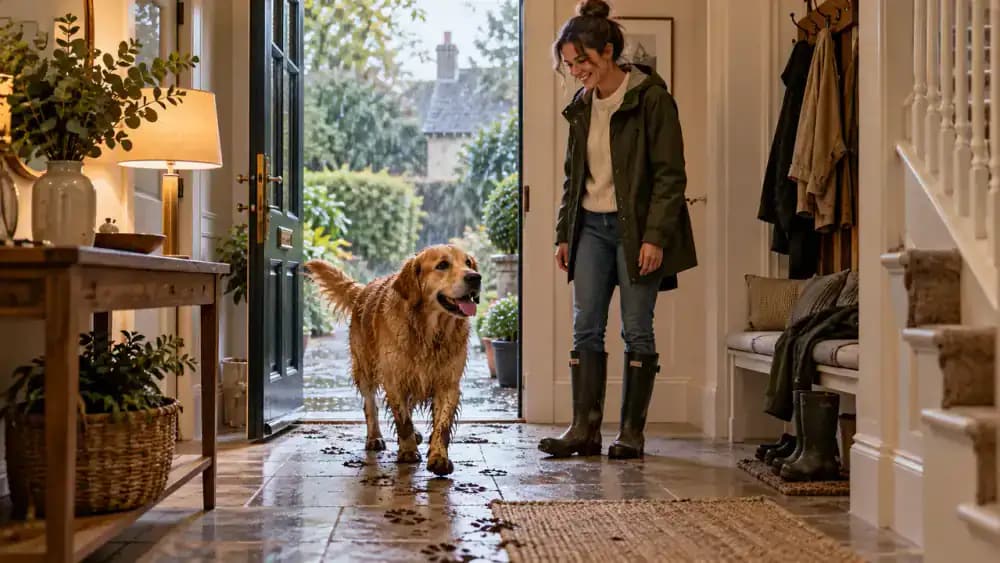
Your dog bursts through the front door after a rainy afternoon walk, tail wagging and excitement running high. Unfortunately, those happy paws are leaving a trail of muddy prints across your freshly cleaned hallway floor. Sound familiar?
Outdoor adventures are great for your dog's physical and mental well-being, but they also expose sensitive paw pads to dirt, grit, moisture, road salt, and other potentially irritating substances. Knowing how to clean your dog's paws after walks helps protect their feet while keeping your home cleaner.
The good news? You don't need expensive grooming equipment or a complicated routine. A simple paw-cleaning station near your entrance, stocked with a shallow bowl of lukewarm water, soft cloths, an absorbent towel, and a few small treats, can make the process quick and comfortable.
The key is knowing when a gentle wipe is enough, when muddy paws need rinsing, and why drying between the toes matters just as much as removing visible dirt. You'll also want to recognize warning signs that call for veterinary attention rather than more cleaning.
With patience, positive reinforcement, and a consistent approach, most routine paw cleanups can take just a couple of minutes. Your dog gets to enjoy every puddle and grassy trail, and you get fewer muddy footprints waiting at home.
Where people go wrong
Using Hot Water or Harsh Cleaning Products. Hot water, household cleaners, strongly scented wipes, and harsh soaps can irritate a dog's sensitive paw pads. Some products may also leave residues that dogs ingest when licking their feet. Use plain lukewarm water whenever possible. If additional cleaning is necessary, choose a product specifically formulated for dogs and follow its instructions carefully.
Scrubbing Muddy Paws Too Aggressively. Trying to remove stubborn mud with vigorous rubbing can irritate paw pads and the delicate skin between the toes. Instead, soften dried dirt with lukewarm water and gently lift it away using a soft cloth. If debris is tangled in the fur, work slowly without pulling. Cleaning should never cause your dog pain or distress.
Forgetting to Dry Between the Toes. A quick wipe across the bottom of each paw can leave moisture trapped between the toes, especially in dogs with thick or long paw fur. Prolonged dampness may contribute to skin irritation and create conditions favorable to microbial overgrowth. After rinsing, gently separate the toes and pat the surrounding fur and skin dry with an absorbent towel.
Overlooking Winter Road Salt and De-Icing Residue. Winter sidewalks can leave salt and chemical de-icing residue on your dog's paws, even when they appear relatively clean. These substances may irritate the skin, and your dog may swallow residue while licking. After walks on treated surfaces, promptly rinse the paws with clean lukewarm water, check between the toes, and dry thoroughly.
Ignoring Small Cuts, Cracks, or Trapped Debris. Mud can conceal tiny stones, plant material, splinters, or injuries around the paw pads and nails. Cleaning without checking these areas can leave uncomfortable debris unnoticed. Take a few seconds to inspect each paw under good lighting. Do not dig into embedded objects or attempt to treat deep wounds yourself; contact your veterinarian for appropriate care.
Forcing a Nervous Dog to Cooperate. Grabbing a paw suddenly, restraining a frightened dog, or continuing when the dog struggles can make future cleaning sessions more stressful. Introduce paw handling gradually, reward small signs of cooperation, and keep sessions short. Let your dog stand comfortably on a non-slip surface. If handling causes pain or severe distress, stop and seek professional guidance.
Washing Paws More Often Than Necessary. Not every walk requires a full paw wash. Repeated exposure to cleansers, prolonged soaking, and unnecessary scrubbing may dry or irritate sensitive skin. For lightly dusty paws, a damp cloth is usually sufficient. Reserve thorough rinsing for significant mud, salt, or other removable residue, and always dry the paws afterward. Seek veterinary advice if irritation persists.
Questions people ask
Checking your dog's paws after every walk is a useful habit, but a full wash is not always necessary. A quick wipe with a damp cloth is usually enough for light dirt. Muddy paws and paws exposed to road salt or de-icing products benefit from rinsing. Avoid excessive washing, and dry the feet whenever they become wet.
Fixed it?
Get one guide like this every Thursday.