How to Cat-Proof Your Home Room by Room
Make your home safer for a curious indoor cat with a practical room-by-room checklist covering windows, cords, plants, kitchen hazards, laundry appliances, storage areas, and more.

What you’ll need
Tap to tick things off before you start.
Start With a Cat-Level Survey
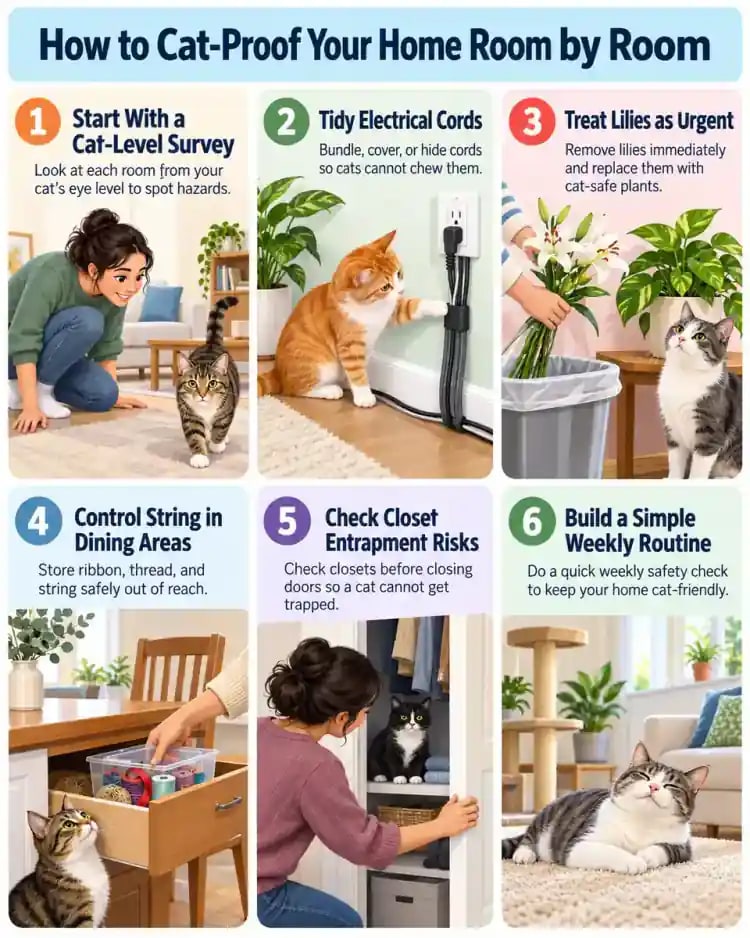
Begin by looking at your home the way your cat might. Cats do not recognize rooms as fixed zones with sensible boundaries. They see possible climbing routes, warm surfaces, narrow gaps, hiding places, moving cords, cabinet tops, and objects worth investigating. Walk through the home from several perspectives, including floor level, countertop height, and the tops of furniture. Look behind sofas, beside cabinets, under chairs, and around shelves. This first survey gives you a better picture of what your cat can actually reach and helps you find hazards before curiosity turns them into a problem.

Secure Entry Doors
The main entrance deserves early attention because an open door can quickly become an escape route. Watch what your cat normally does when someone arrives. Some cats wait near the threshold, some hide directly behind the door, and others rush toward outside movement. Create a routine before opening the door for deliveries, guests, or maintenance workers. An interior barrier or temporarily closed room can provide extra separation when needed. The goal is to make door opening predictable so everyone in the household knows where the cat should be before the entrance is opened.

Check Window Screens
Windows are natural observation areas for indoor cats, especially when birds, insects, or outdoor movement appear. Inspect each screen closely instead of assuming it is secure because it looks intact from across the room. Check for torn mesh, loose corners, bent frames, or attachments that have weakened. A secure screen should remain stable if a cat leans against it. Pay the same attention to upper-floor windows because height does not make an unsecured screen safe. Repeat the inspection periodically, since screens and frames can shift or become damaged over time.

Limit Tilted Window Access
Partially open and inward-tilted windows can create narrowing, wedge-shaped spaces that are unsuitable for a cat to enter. If your windows tilt inward from the top, use suitable guards or keep them closed when your cat is unsupervised. Think carefully about any opening that becomes narrower toward the bottom or side, particularly around the cat's neck, chest, or abdomen. Ventilation should not depend on leaving an unsafe gap available. Review every window style in the home because different mechanisms can create different access points even when the opening appears small.

Manage Balcony Access
Treat a balcony with the same caution you give an open window. A cat may chase an insect, squeeze through railings, climb furniture, or misjudge a jump. If your cat is allowed onto a balcony, use secure screening, cat-safe netting, or another purpose-built enclosure appropriate to the space. Also look at the furniture arrangement. Chairs, shelves, tables, and planters can become launch points if placed close to an open railing or neighboring structure. A safer balcony still gives the cat opportunities to observe and relax without relying on the cat to judge every edge correctly.

Tidy Electrical Cords
Move into the living room and inspect the cables behind televisions, lamps, speakers, computers, and charging stations. Cats vary widely in how much interest they show in electrical cords, but loose cables can become especially tempting when they swing or move. Route exposed cords through protective covers or sleeves, remove damaged cables from use, and reduce long dangling sections wherever practical. Look underneath furniture as well as behind it. Good cord management does not require hiding every cable, but it should reduce chewable, pawable, or moving sections that invite repeated attention.

Secure Blind Cords
Blind and curtain cords can create loops or hanging sections that attract batting and chewing. Shorten them where possible or secure them with safety devices that keep long loops inaccessible. Do not stop at the cords you can immediately see. Check behind curtains, drapes, and furniture because cats often explore exactly where these cords disappear from human view. After cleaning or rearranging a window area, verify that the cords have not been left hanging lower than usual. Adding this check to a regular room inspection makes it easier to catch changes before they become a recurring attraction.

Anchor Tall Furniture
Cats often climb by moving from one level of furniture to another, and a fast chase can put more force on shelving than expected. Check tall bookcases, narrow cabinets, freestanding shelves, and other furniture that could wobble or tip. Anchor suitable pieces securely to the wall and avoid creating unstable, top-heavy arrangements. Do not overload high shelves with objects that can shift. Once furniture is positioned, test it for movement rather than assuming its weight is enough to keep it stable. Cat-proofing should account for climbing and jumping instead of depending on the cat to stay at floor level.

Remove Small Swallowable Objects
Coffee tables, side tables, desks, and floors tend to collect small items that a curious cat can bat, chew, or carry away. Pay particular attention to hair ties, rubber bands, thread, earrings, foam pieces, and tiny toy parts. Move these items into closed containers instead of relying on an open bowl or tray. Inspect chewable objects periodically for missing pieces, especially after active play. A useful rule during your walkthrough is to notice anything small enough to disappear under furniture or into a cat's mouth and decide whether it really needs to remain accessible.

Choose Toys Carefully
Review your cat's toys with the same attention you give household objects. Toys should suit your cat's size, chewing habits, and play style. Look closely at feather wands, bells, strings, stuffed toys, and attached decorations for loose components or damage. String-based toys are best put away after interactive play rather than left available without supervision. Rotate durable toys to keep play interesting while limiting constant access to items that can unravel. Regular inspection is especially useful because a toy that was secure when purchased can change after repeated chewing, pulling, and enthusiastic play.

Inspect Houseplants
Houseplants can make a room more pleasant, but their safety cannot be judged by appearance alone. Before bringing a plant into a cat household, identify the exact species and confirm whether it is considered safe for cats. Generic descriptions such as tropical plant are not specific enough for this decision. If you already have a plant you cannot confidently identify, keep it away from the cat until you know what it is. Recheck new plants brought in as gifts as well. Cats may chew leaves, dig in pots, or investigate plants that previously seemed uninteresting.

Treat Lilies as Urgent
Give lilies special attention during your plant check. Several true lily and daylily species are highly dangerous to cats, and exposure may occur through plant material, pollen, or vase water. The safest approach is to keep these flowers out of cat households entirely rather than trying to place them on a higher table or shelf. If you think your cat may have been exposed, contact a veterinarian or emergency veterinary clinic promptly. Do not wait for visible problems before seeking specific professional guidance about a suspected exposure.

Control Kitchen Counter Hazards
Kitchen safety depends heavily on routine because the hazards change every time you prepare food. Keep knives, skewers, hot pans, and scraps away from counter edges, particularly if your cat jumps onto work surfaces. Do not leave a hot stovetop unattended when the cat can reach it. After cooking, clear utensils, handles, residues, and tempting scraps instead of leaving the kitchen in an in-between state. A quick reset after each meal can be more effective than expecting one permanent arrangement to handle every cooking situation. Make the cleared counter part of your normal cleanup routine.

Cover Hot Cooking Surfaces
A burner can remain hazardous after cooking has ended. Glass, metal, and cookware may stay hot even when the heat source is switched off. If your cat investigates the stove because of cooking smells, block access while the surface cools. Keep hot cookware centered rather than close to an edge where it is easier to reach. An induction cooktop may reduce some risks, but the cookware itself and residual heat can still require attention. Build cooling time into your kitchen routine so the stove is not treated as safe the moment cooking stops.

Lock Away Cleaning Products
Check the cabinet below the sink and any other location where cleaners, dishwasher products, sprays, or concentrated chemicals are stored. Keep them behind doors your cat cannot nose or paw open. A secure latch can help with cabinets that do not stay reliably closed. When using a product, follow its label directions, keep the cat out of the immediate work area, and clean spills promptly. Do not assume a pleasant smell means a product is suitable around pets. Storage and cleanup habits matter because these products may be moved frequently during normal household chores.

Secure Trash and Recycling
Kitchen trash can be unusually attractive because it combines food smells with bags, wrappers, string, bones, sharp lids, and packaging. Use a stable trash container with a secure lid if your cat investigates bins. Check recycling as well. Rinse containers that still carry food residue and use a closed bin for items that could be pulled out, chewed, or knocked over. Avoid leaving full trash or recycling bags on the floor, where claws can open them quickly. A simple change in container design can make the entire kitchen less rewarding for a determined scavenger.

Check Human Foods
Review how human food is stored and where used plates are left. Chocolate, alcohol, caffeine, onions, garlic, grapes, raisins, and foods containing xylitol should be kept securely away from cats. Do not assume that a cat licking a plate or cooking bowl is harmless simply because the quantity seems small. Clear food promptly after meals and keep ingredients behind closed storage when practical. If you are uncertain about a particular food exposure, contact a veterinarian for guidance based on the specific food involved rather than guessing about whether it is safe.

Control String in Dining Areas
Dining rooms often become temporary craft, gift-wrapping, or decorating spaces, which means ribbon, twine, gift ties, and decorative string can appear unexpectedly. These materials move in ways that easily attract a playful cat. Keep them in drawers or closed containers when they are not being actively used, and pick up trimmed pieces immediately. Increase your attention during birthdays, holidays, and wrapping sessions because loose materials can multiply quickly. At the end of the activity, scan the floor and chair legs for pieces that may have fallen out of sight.

Make Bathrooms Less Tempting
Bathrooms pack many small household hazards into a limited area. Store medications, razors, dental floss, cotton swabs, and hair accessories inside closed cabinets or drawers. If your cat drinks from the toilet, keep the lid down, especially when cleaning products have been used. After grooming, inspect the floor and countertop for dropped hair ties, floss, cotton swabs, or other small items that can instantly become toys. Because bathrooms are cleaned and rearranged frequently, it is useful to reset the room each time instead of assuming yesterday's safe setup is still intact.

Store Medicines Securely
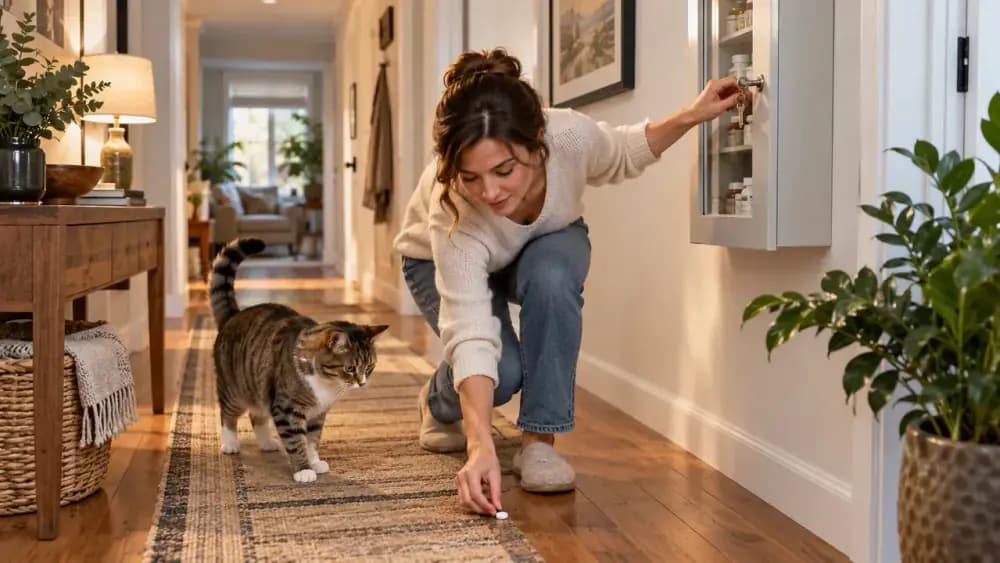
Both human and veterinary medicines should be stored where a cat cannot chew packaging, knock containers down, or lick residue. Use a closed cabinet or drawer and keep medication separate from food when possible. Whenever you take or dispense medicine, check the surrounding floor for dropped tablets or capsules before leaving the area. If you suspect your cat swallowed medication, contact a veterinarian promptly and have the product name and strength available. Secure storage matters even for products your cat has ignored in the past because a loose bottle can become interesting when it rolls or falls.
Handle Laundry Appliances Carefully
Laundry appliances can create appealing hiding places, especially when they are dark, enclosed, or warm. Before loading clothes, shutting a door, or starting a cycle, look inside the washer and dryer every time. Do not rely on memory about where the cat was a few minutes earlier. Keep detergents and concentrated laundry products secured, and clean spills promptly. If your cat enjoys sleeping near warm laundry, make the machine check a household rule so everyone follows the same routine. Consistency matters most because laundry rooms are used by different people at different times.

Manage Laundry Strings
Laundry creates a second group of hazards beyond the machines themselves. Drawstrings, bra straps, loose threads, socks, and dryer sheets can all attract play. Use a closed hamper when possible and remove loose string from damaged clothing instead of leaving it dangling. Store dryer sheets and concentrated laundry products where the cat cannot reach them before or after use. When folding clothing, notice anything that has frayed or separated during washing. A tidy laundry routine reduces the number of small, moving, chewable items that are left around the room between loads.

Protect Bedroom Nightstands
Nightstands are small but often hold exactly the kinds of objects a cat can knock down or carry away. Before going to bed, place medications, earplugs, jewelry, and other swallowable items into a drawer. Route charging cables so they do not hang over the edge and move when touched. Remove breakable objects if your cat regularly jumps onto the nightstand during the night. This quick bedtime reset is especially useful because people tend to place temporary items beside the bed without thinking of them as part of the room's normal setup.

Check Closet Entrapment Risks
Closets appeal to cats because they combine darkness, quiet, elevated shelves, and many places to hide. Before shutting a closet door, check behind hanging clothes, on shelves, and near the floor to make sure your cat did not slip inside. Secure plastic garment bags, dangling belts, and loose cords. Keep boxes stable and avoid putting heavy objects where they could be knocked down by a climbing cat. Treat closets as active spaces rather than passive storage because opening them can create new access to shelves and objects that are normally unavailable.

Secure Garage and Utility Areas
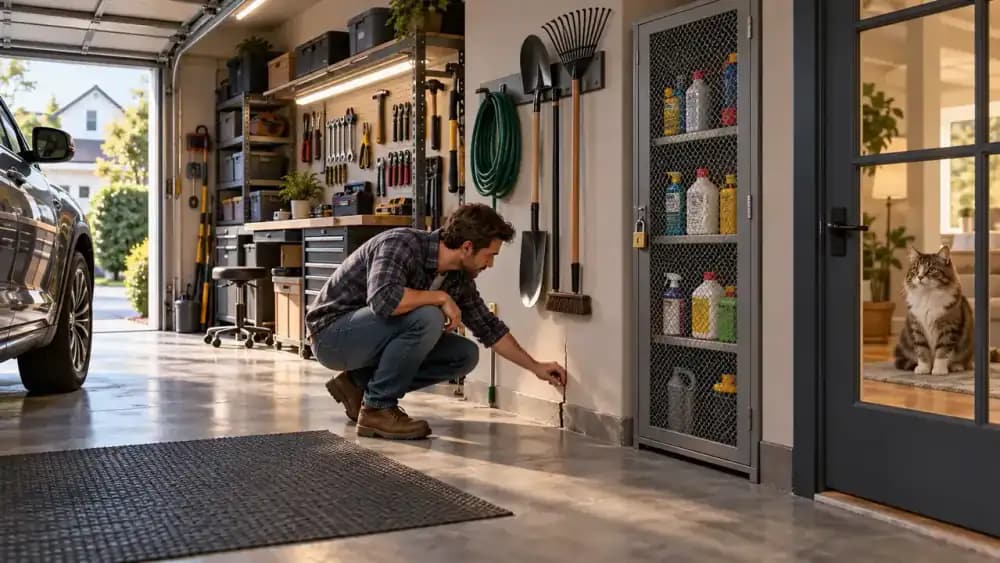
Garages, basements, and utility areas may contain hazards that are uncommon in the rest of the home. Antifreeze, pesticides, fuels, adhesives, automotive fluids, and sharp tools should be sealed and stored where a cat cannot access them. Keep the cat away while repairs or chemical products are being used. Inspect gaps around doors, vents, pipes, walls, and storage racks because these areas can lead into hidden spaces. A garage that looks organized at standing height may still contain narrow openings or low-level access points that become obvious only when viewed from the cat's perspective.
Inspect Storage Boxes
An empty cardboard box can be excellent enrichment, but first confirm that it is actually empty and safe. Remove staples, packing straps, tape loops, silica packets, broken plastic, and other packaging before offering a box for play. In storage rooms, keep stacks stable and avoid balancing heavy containers where climbing could cause them to fall. Remember that boxes can change purpose quickly in a household, moving from shipping container to storage to play space. Take a moment to inspect each one before deciding that it is suitable for your cat to explore.

Block Dangerous Gaps
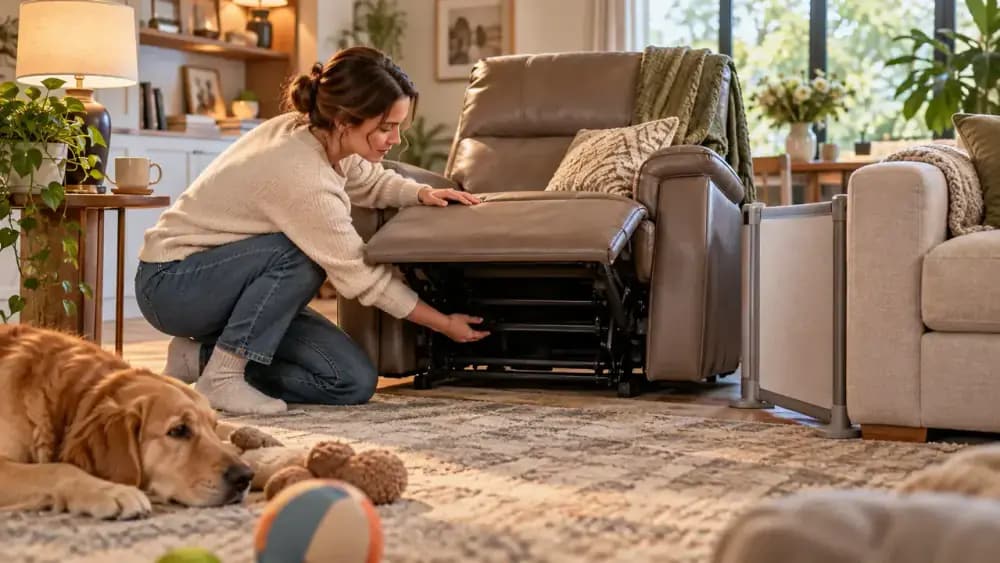
Cats can fit into surprisingly narrow spaces behind refrigerators, cabinets, recliners, and built-in furniture. Inspect these gaps for exposed wiring, sharp edges, moving mechanisms, or areas where a cat could become trapped. If a gap is unsuitable, block it with a secure barrier rather than relying on repeated verbal discouragement. Reclining chairs deserve particular attention because a cat may hide underneath where the moving mechanism is difficult to see. Check beneath a recliner before operating it if your cat uses that area as a hiding place.
Create Safe High Places
A cat-proof home should still allow normal climbing, observing, scratching, and retreating. Instead of trying to remove every elevated destination, provide stable alternatives such as a cat tree, wall perch, scratching area, or secure window seat that suits your cat's mobility. Position these options away from fragile objects, unsafe windows, kitchen counters, and other places where a jump could create a new hazard. When the home offers good legal climbing locations, there is less reason for every cabinet, shelf, or unstable object to become the most interesting place in the room.

Recheck After Household Changes
Cat-proofing is not a one-time project because the environment changes. Visitors may leave a door open, a delivery may bring packing straps and boxes, renovations may expose tools or cords, and holidays may add ribbons, plants, and temporary decorations. New furniture can also create different climbing routes or hidden gaps. Recheck the relevant rooms whenever something changes. Kittens and newly adopted cats deserve particularly close observation because their habits and climbing abilities may be different from what you expect. A previously ignored area can become interesting as the cat becomes more confident.

Build a Simple Weekly Routine
Finish by turning the walkthrough into a routine you can realistically maintain. Once a week, scan the home for loose screens, new cord problems, changed plants, small objects, damaged toys, open cabinets, appliance access, and storage hazards. Replace or remove worn toys and fix new gaps when you notice them. The goal is not to create a perfectly empty house. It is to keep ordinary curiosity pointed toward safer options. A short weekly check also makes cat-proofing easier because you are correcting small changes as they appear instead of repeating a complete overhaul later.

Cat-proofing is not about turning your home into an empty, restricted space. It is about recognizing how a cat actually uses that space. A curious indoor cat may treat a windowsill as an observation deck, a cabinet as a climbing destination, a loose cord as moving prey, a warm dryer as a hiding place, and an ordinary cardboard box as an invitation to explore. That difference in perspective is why effective cat-proofing works best room by room. Instead of trying to eliminate normal feline behavior, you reduce hazards while providing safer ways to climb, perch, play, scratch, hide, and investigate. The following walkthrough starts at the entrance and continues through the rooms and storage areas where common household hazards can appear. Many of the most useful changes are simple habits: checking a screen, closing a cabinet, putting string away after play, looking inside a dryer, clearing a nightstand, or scanning a room after guests leave. Once the initial walkthrough is complete, a short weekly inspection can help catch new risks created by deliveries, furniture changes, holidays, cleaning, repairs, and everyday clutter.
Where people go wrong
Assuming height makes a window safe. An upper-floor window still needs a secure screen. Inspect the mesh, frame, corners, and attachments rather than relying on the location.
Leaving string toys out all day. Put string-based toys away after interactive play and inspect toys regularly for unraveling or loose components.
Trying to remove every climbing opportunity. Cat-proofing should include safe, stable places to climb, perch, observe, scratch, and retreat.
Forgetting temporary hazards. Deliveries, visitors, wrapping sessions, repairs, holidays, and new furniture can create risks that were not present during the original walkthrough.
Trusting an unidentified houseplant. Identify the exact plant species before deciding it is safe. A generic plant label or appearance is not enough.
Ignoring hidden cords and gaps. Check behind curtains, furniture, appliances, cabinets, and recliners because cats frequently investigate areas people rarely see.
Skipping washer and dryer checks. Look inside laundry appliances every time before loading, closing, or starting them, even when you think you know where the cat is.
Treating cat-proofing as a one-time job. A home changes constantly, so repeat a short safety scan each week and after significant household changes.
Questions people ask
Start with a cat-level walkthrough. Look at the home from floor level, countertop height, and the tops of furniture so you can identify climbing routes, cords, gaps, small objects, plants, and other things your cat can actually reach.
Fixed it?
Get one guide like this every Thursday.