How to Build a Simple Indoor Obstacle Course for Your Dog
Turn a rainy day into an indoor adventure with a DIY dog obstacle course made from everyday household items. Learn how to create three simple, safe obstacles that keep your dog moving, thinking, and having fun.
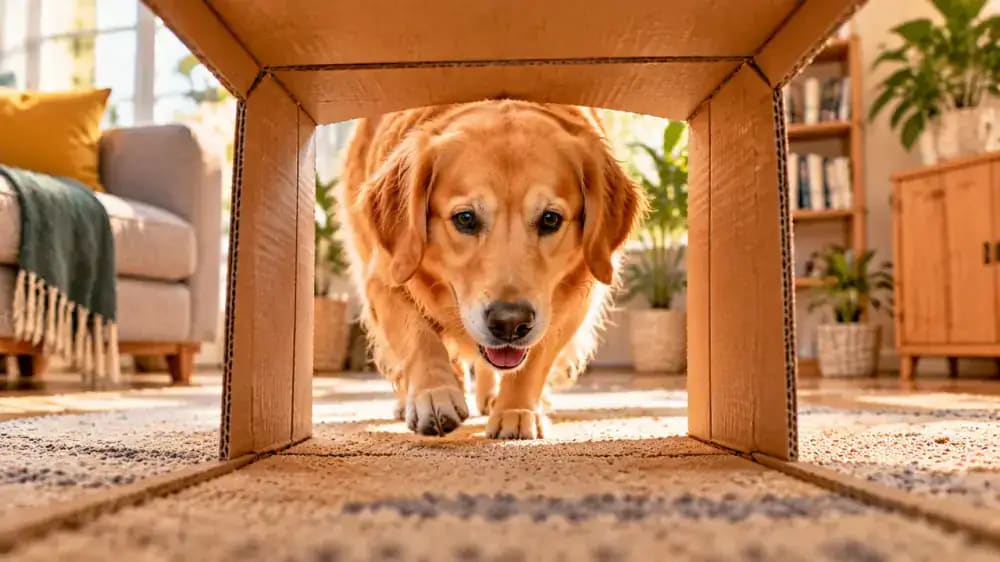
What you’ll need
Tap to tick things off before you start.
Turn a Rainy Day Into an Adventure
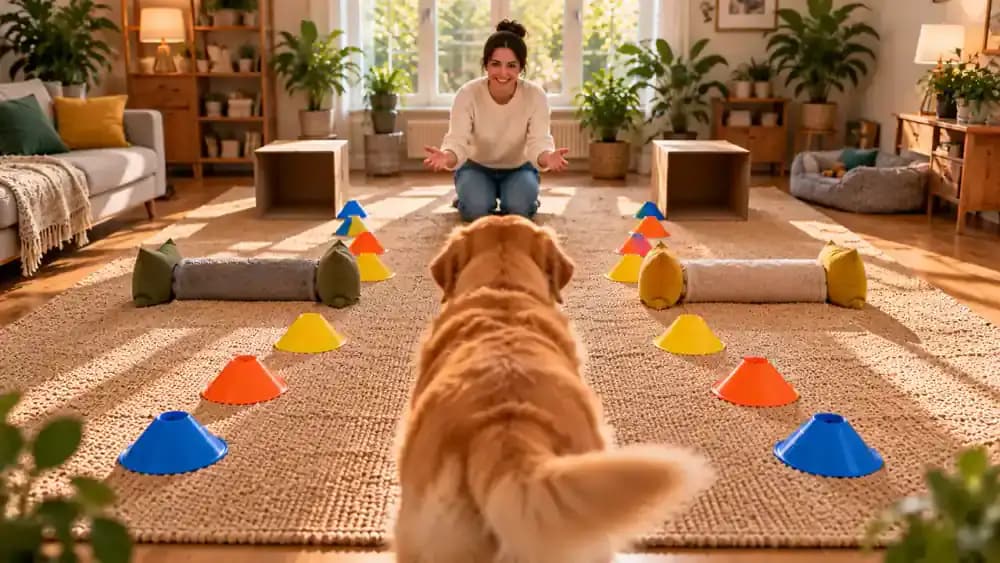
When rainy weather keeps your dog indoors, turn an open part of your living room into a simple obstacle course. Choose an area where your dog can move comfortably without bumping into furniture. Focus on gentle movement, mental stimulation, and exploring new challenges together rather than speed, complicated tricks, or perfect performance.
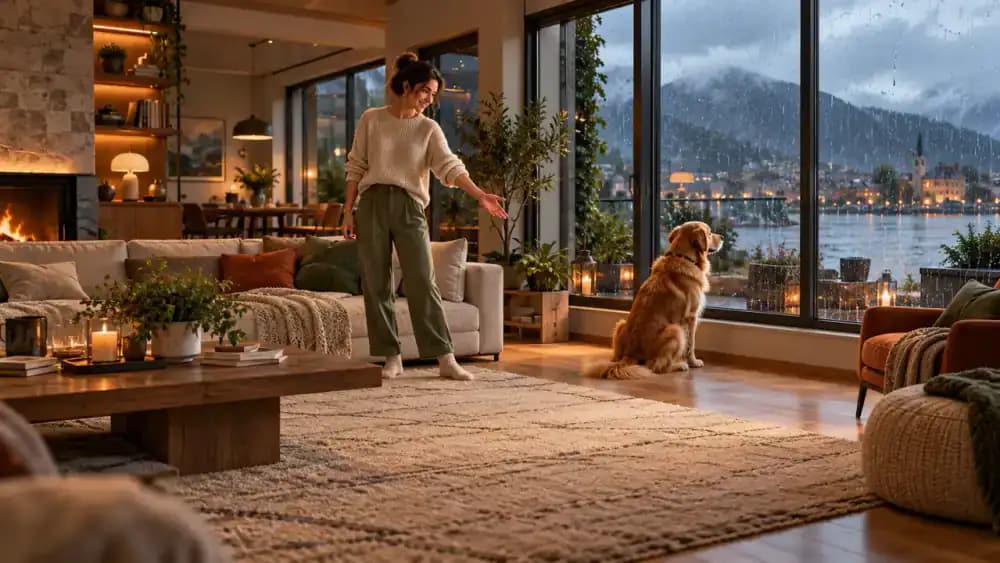
Gather Supplies and Prepare the Space
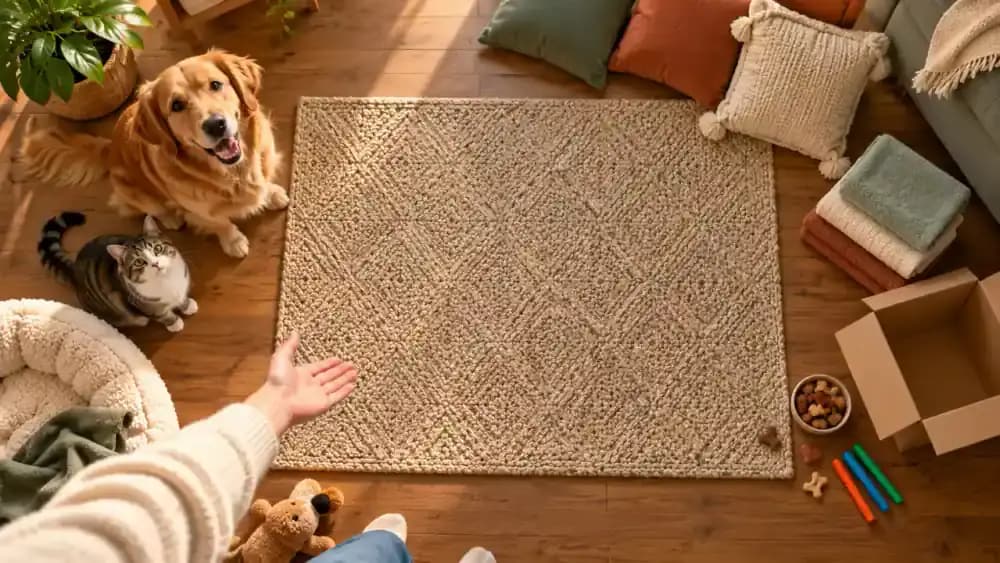
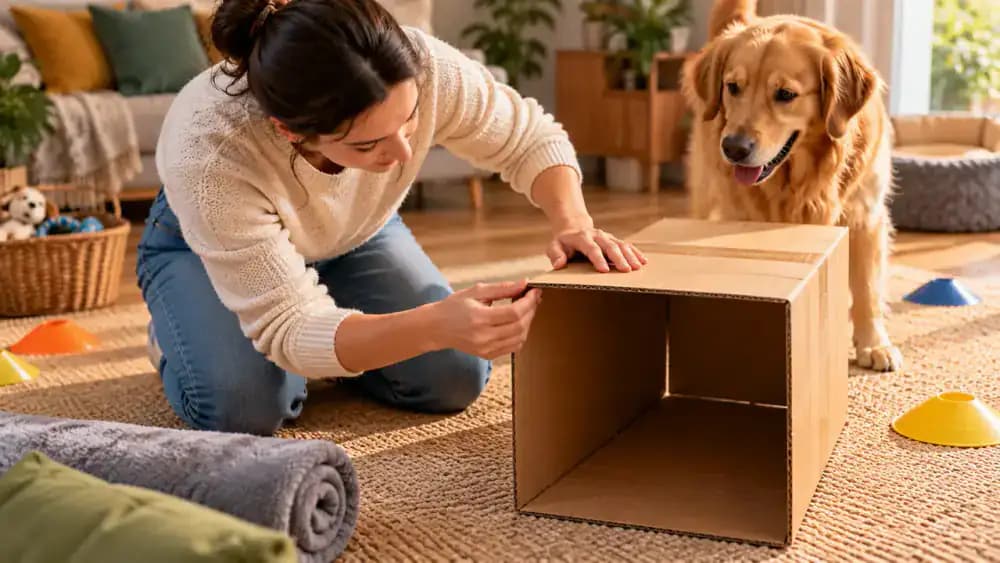
Gather firm cushions, small towels, stable plastic markers, a large cardboard box, and bite-sized training treats. Remove loose electrical cords, fragile decorations, and clutter from your chosen area. Place a flat, non-slip rug or mat on the floor to provide secure footing. Leave enough room between obstacles for comfortable walking and turning.
Build Three Beginner-Friendly Obstacles
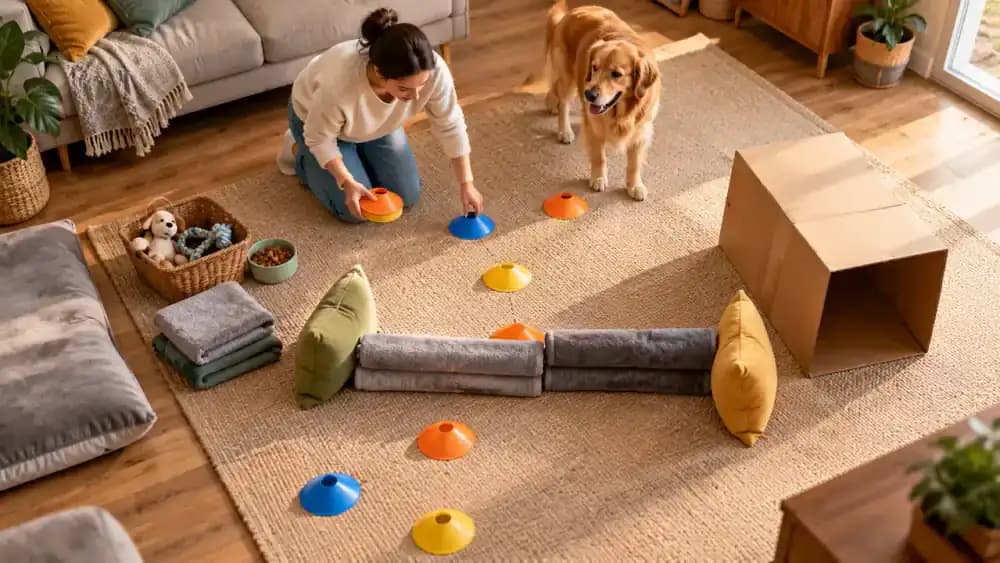
Arrange three widely spaced markers in a gentle zigzag to create a weaving station. Lay a loosely rolled towel across the rug for a very low step-over challenge. Open both ends of a large, sturdy cardboard box to make a roomy tunnel. Separate the stations generously and keep every obstacle suitable for walking rather than jumping.
Check Every Obstacle for Safety
Before your dog enters the course, gently nudge each marker to check its stability and confirm the towel stays in place. Inspect the cardboard tunnel for staples, sharp edges, loose tape, or collapsing sides. Make sure all openings allow unrestricted movement. Remove or adjust anything slippery, unstable, cramped, or potentially hazardous before beginning.
Teach the First Movement With Rewards
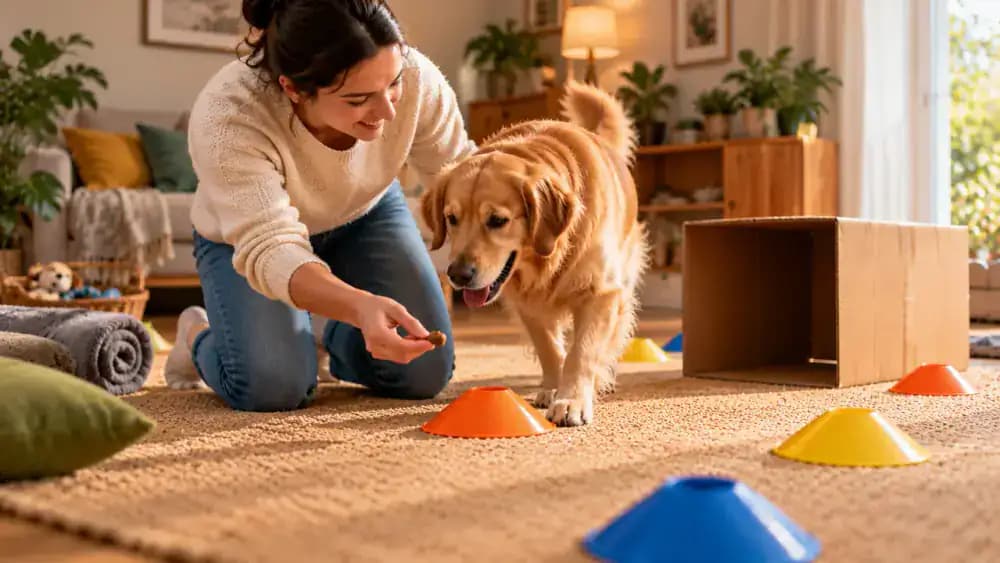
Start with one weaving marker while your dog is relaxed and attentive. Hold a small treat near their nose and slowly guide them around the object. Say a simple cue such as 'weave,' then immediately reward the movement with praise and a treat. Repeat in the opposite direction. If your dog hesitates, widen the path instead of pulling.
Introduce New Stations and Connect Them
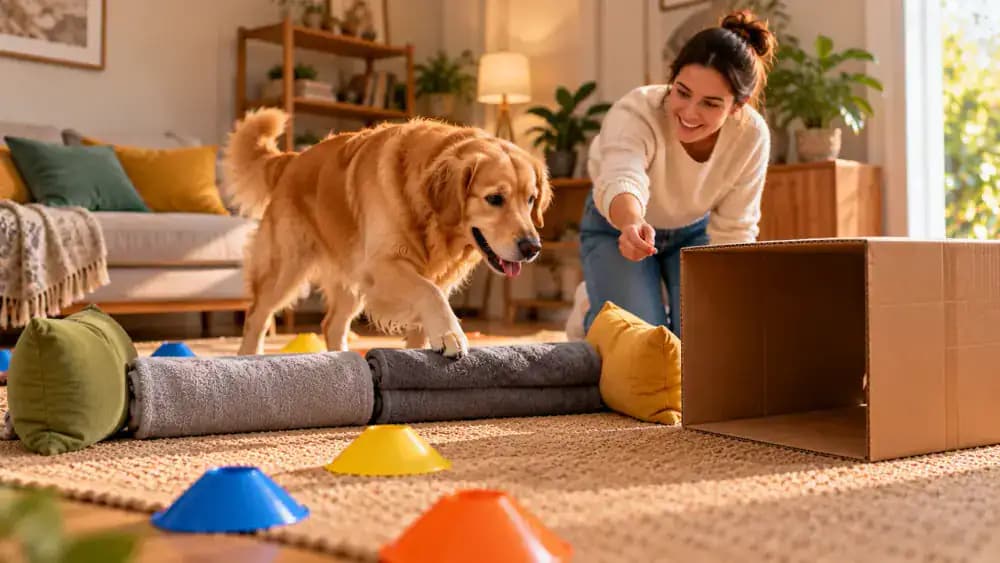
Once your dog understands weaving, introduce the towel barrier and cardboard tunnel separately. Reward a comfortable step over the towel, then let your dog sniff and explore the tunnel without pressure. Encourage voluntary movement with treats and praise. When each obstacle feels familiar, connect two stations, then all three, keeping the pace relaxed.
Adapt the Course to Your Dog
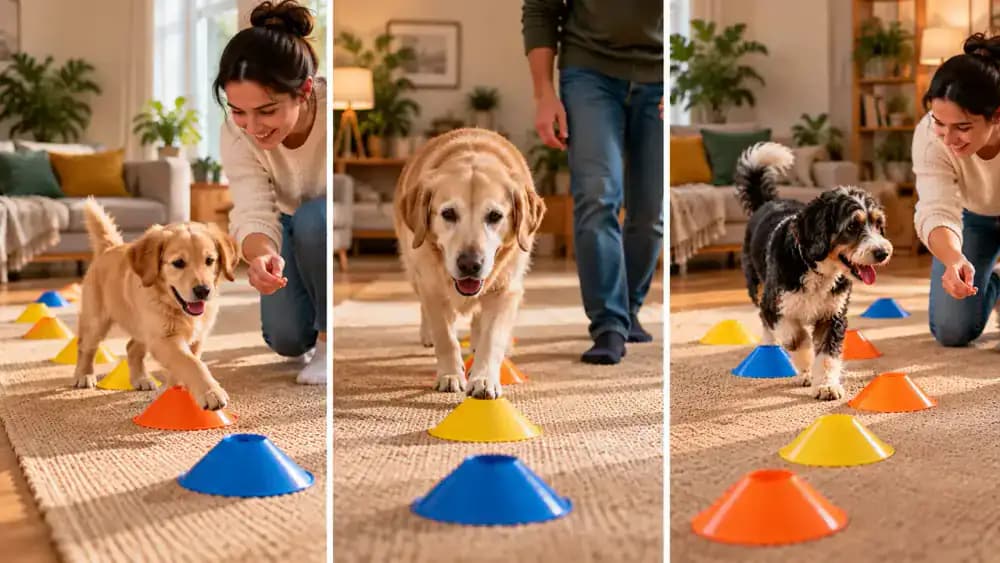
Adjust every obstacle to match your dog's age, size, confidence, and mobility. Puppies benefit from gentle walking activities, while senior dogs may prefer wider turns and flat pathways. Avoid jumping or movements that cause discomfort. Watch for slipping, hesitation, or fatigue, and simplify the course immediately. Consult your veterinarian if mobility limitations make activities uncertain.
Celebrate Success and Keep It Fun
Invite your dog to explore the completed mini-course at a comfortable pace, offering treats and gentle praise for each successful attempt. Celebrate curiosity and participation rather than speed or perfection. Keep sessions short, provide breaks, and finish while your dog remains interested. Put away the equipment afterward and let your dog rest comfortably before another playful session.
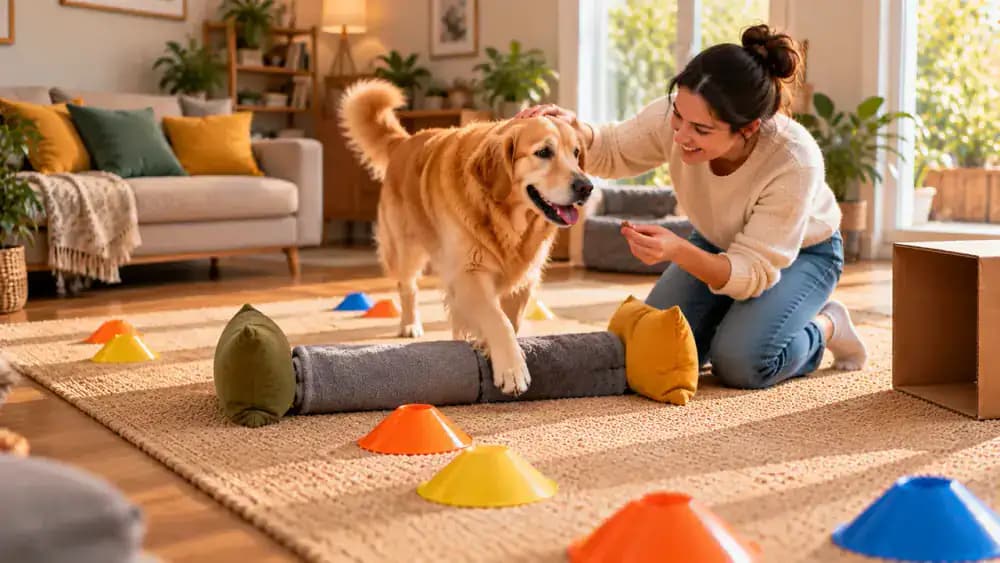
Encourage Curiosity Before Training
Before your next training session, let your dog explore the obstacle area without commands or expectations. Scatter a few small treats around a stable weaving marker and allow plenty of time for sniffing. Sit quietly nearby and reward voluntary interest. Notice which objects attract your dog's attention, then use those preferences to shape future activities.
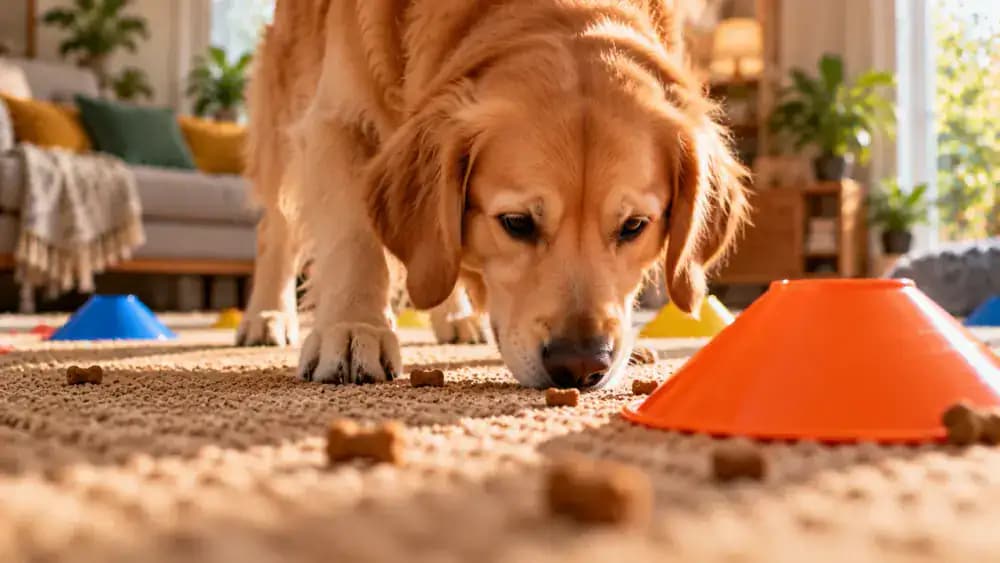
Change the Weaving Challenge Gradually
Once your dog comfortably follows the weaving path, adjust the spacing between markers to introduce a gentle new challenge. Begin with wide gaps, then move one marker slightly closer to create a more deliberate turn. Watch your dog's footing and confidence throughout. If movement becomes awkward or hesitant, restore the wider spacing and reward comfortable walking.
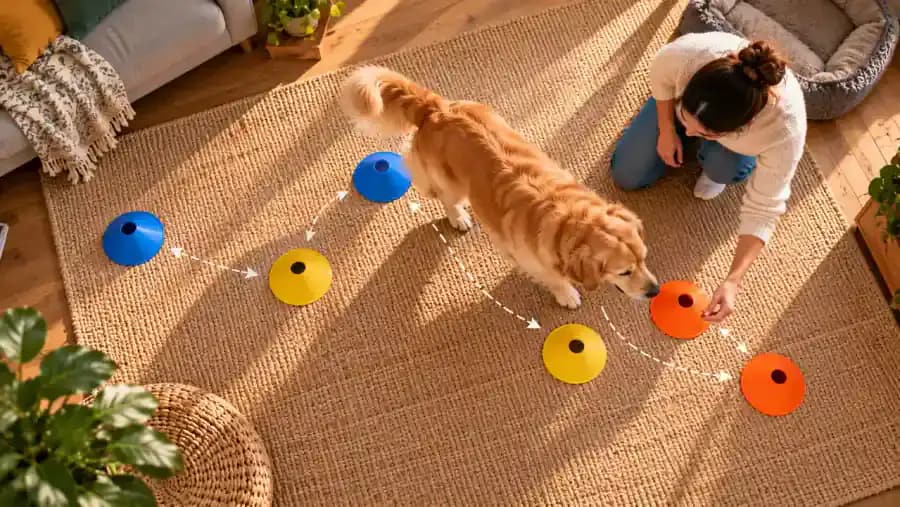
Add Simple Verbal Cues
Turn familiar obstacles into a gentle listening game by introducing one clear verbal cue. Stand beside a weaving marker, say 'around' once, and guide your dog with a treat if needed. Reward the completed movement immediately with praise or a small treat. Use the same word consistently, allowing your dog time to respond without repeating commands.
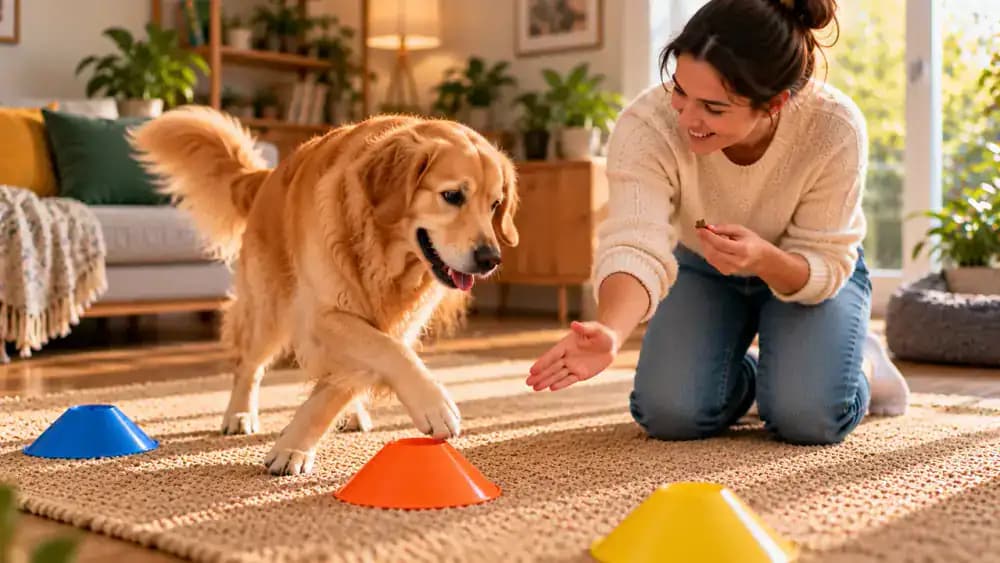
Give Your Dog a Choice
Create two clear, equally safe routes around stable floor markers, with both paths leading to the same reward location. Invite your dog forward and let them decide which direction to take without guiding every movement. Stay still as they explore, then offer praise and a treat when they arrive. Keep both routes open, comfortable, and accessible.
Introduce a Simple Scent Search
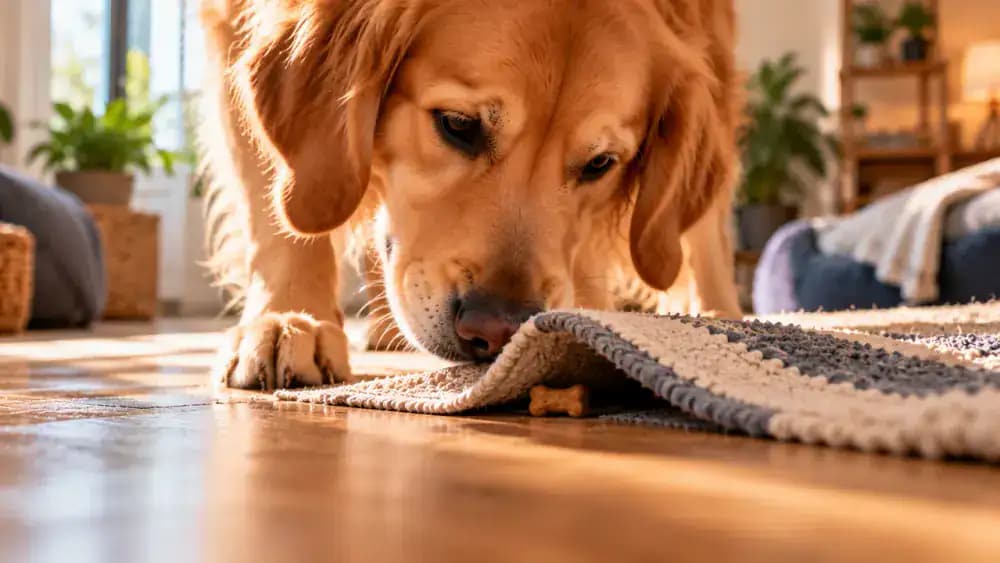
Add a gentle scent activity in a separate, uncluttered area away from the obstacle course. Place a small treat beneath the loose edge of a flat towel, leaving it easy to uncover. Allow your dog to sniff and discover the reward independently. Avoid giving constant directions, and keep the search away from moving obstacles to prevent distracted footing.
Learn to Read Your Dog's Signals
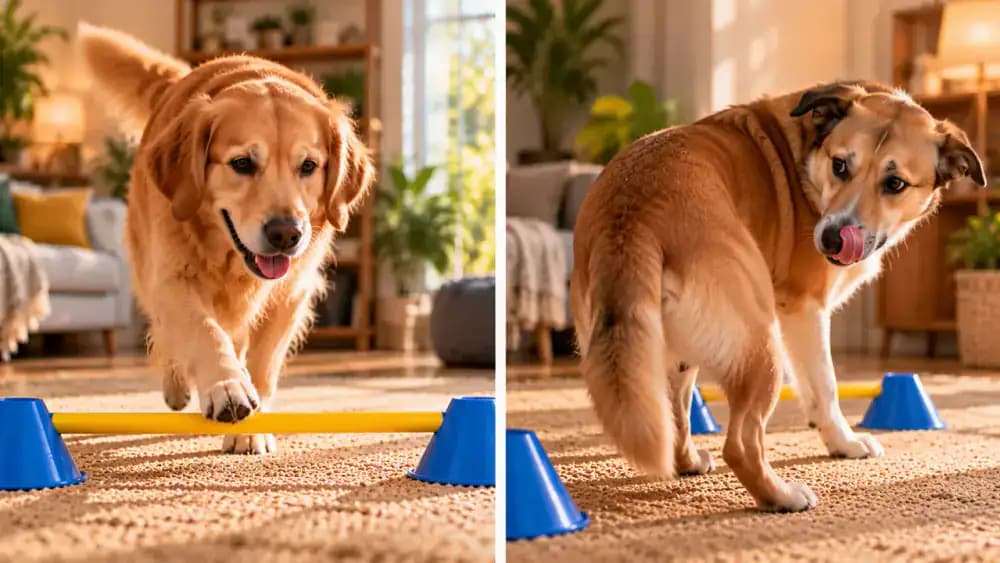
Watch your dog's body language throughout every activity. Relaxed movement, voluntary approaches, and returning willingly can indicate interest. Turning away, freezing, lip licking, or repeated hesitation may suggest discomfort or uncertainty. If you notice these behaviors, pause and offer space. Simplify or remove the obstacle, and allow a quiet break instead of encouraging further attempts.
Keep Each Session Fresh
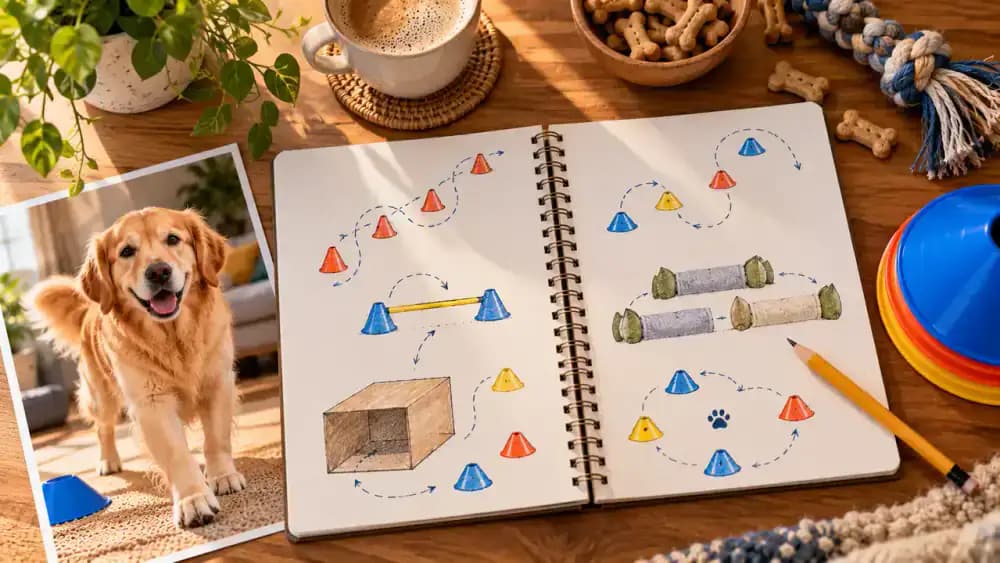
Vary your dog's indoor enrichment activities without making every session more difficult. Practice a couple of gentle weaving turns one day, explore the cardboard tunnel entrance another day, and enjoy a simple walking path later. Record brief observations about which activities your dog approaches willingly. Use those notes to plan future sessions around comfort, confidence, and enjoyment.
Make Enrichment Part of Everyday Life
Use your indoor dog obstacle course as one part of a balanced daily routine that includes rest, outdoor walks when appropriate, sniffing opportunities, and relaxed companionship. After each session, store equipment in a closed cabinet beyond your dog's reach. On the next rainy afternoon, bring out one familiar obstacle and enjoy a short, comfortable activity together.
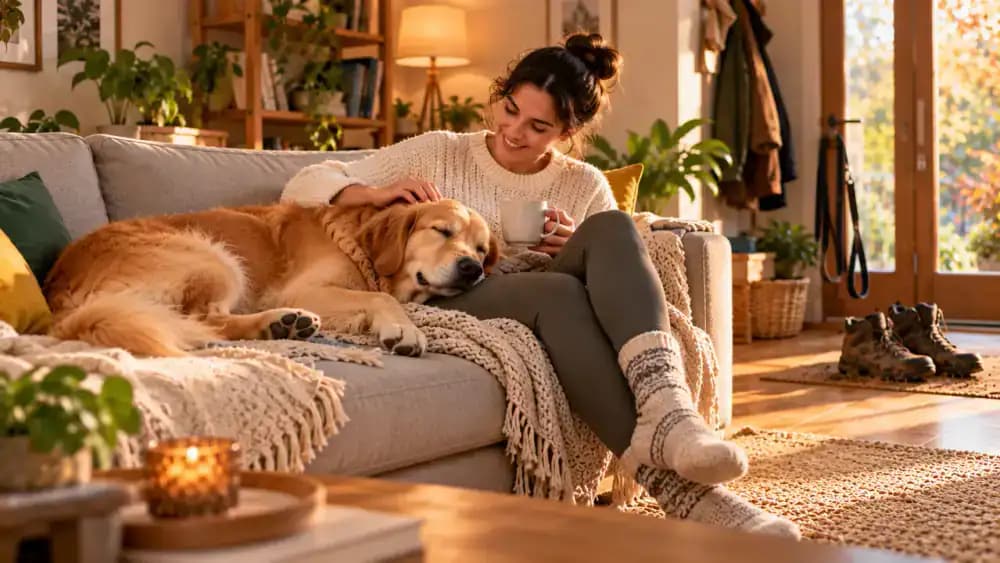
Practice Calm Starts and Stops
Invite your dog toward a familiar marker on a non-slip mat, then use a gentle hand signal to encourage a comfortable pause. Reward relaxed standing before inviting another short movement. Alternate walking and stopping without rushing or demanding stillness. These natural breaks help keep the activity manageable and give your dog opportunities to show whether they want to continue.
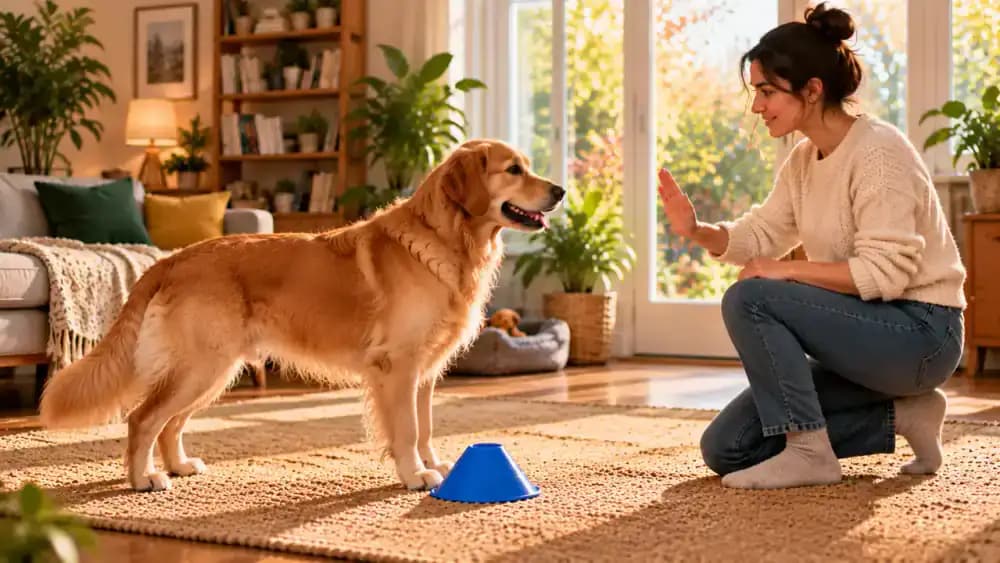
Use Smart Reward Placement
After your dog completes a gentle turn around a marker, place a small treat on a clear section of the rug away from the equipment. Allow your dog to find the reward calmly before returning to the starting area. Vary reward placement occasionally while keeping treats visible and accessible. Avoid tossing food near obstacles, where excited movement could cause slipping.
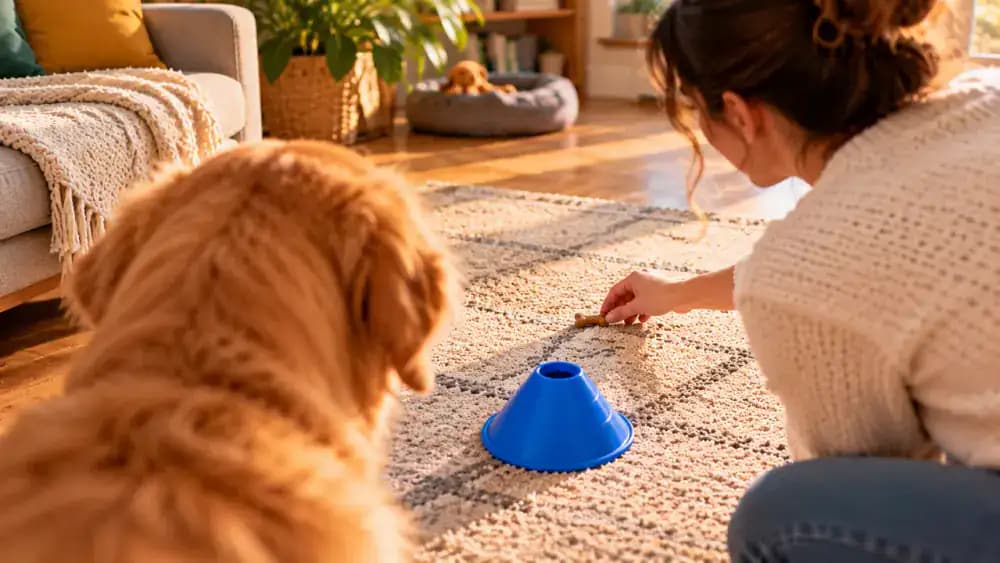
Build Confidence With Small Changes
Once your dog understands a familiar obstacle, practice giving the same cue from a slightly different position. Begin standing beside the marker, then take one small step backward while keeping your directions clear. Reward partial attempts and comfortable movement. If your dog hesitates, return to your original position and offer gentle guidance before trying another small adjustment.
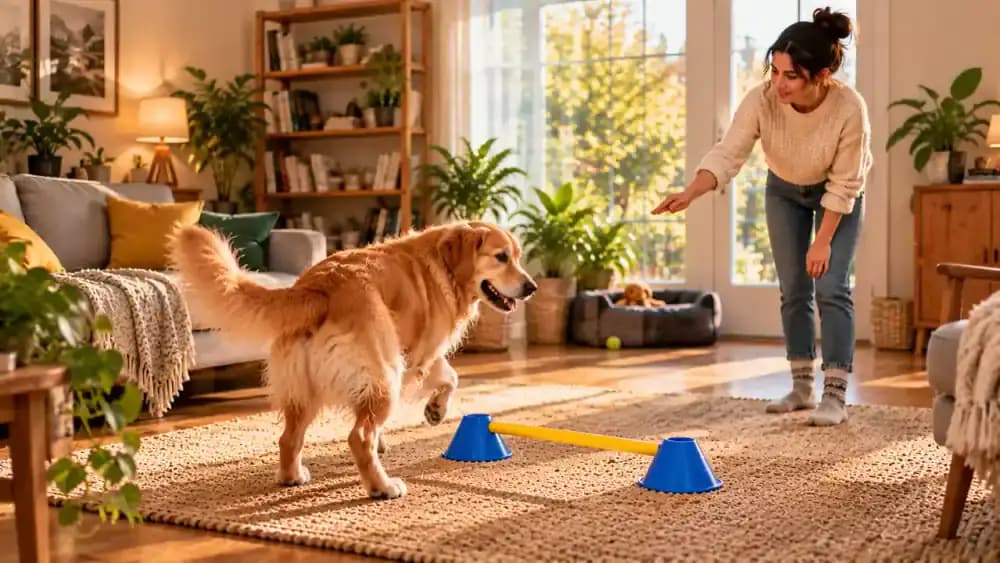
Introduce Different Textures and Sounds
Introduce new household materials separately before including them in your dog's obstacle course. Gently handle a lightweight fabric square, lay it flat, and allow your dog to investigate voluntarily. Present a sturdy, open cardboard box without moving it toward them. Reward calm curiosity and avoid sudden noises, unstable props, or forced contact. Exploring unfamiliar materials can be enriching without crossing obstacles.
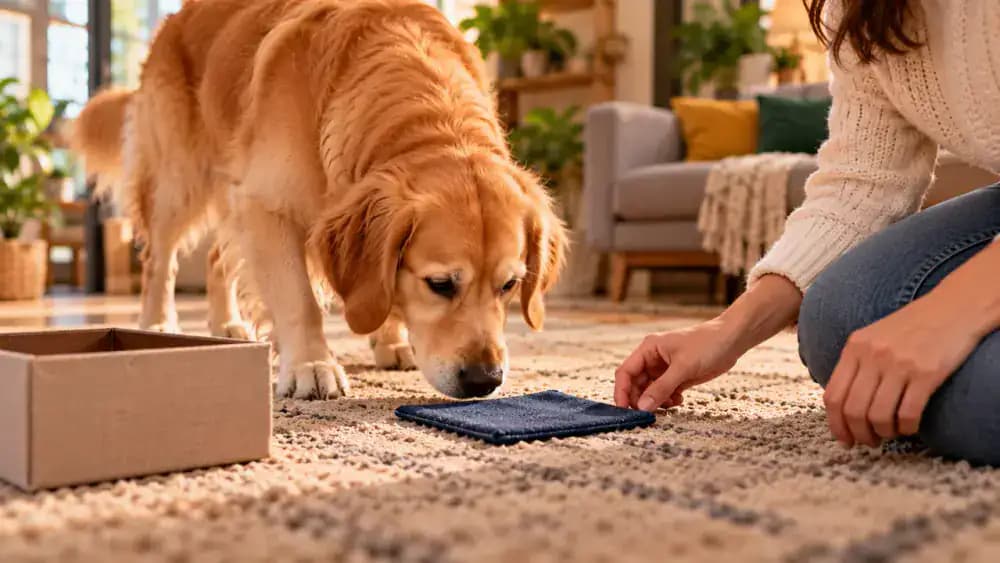
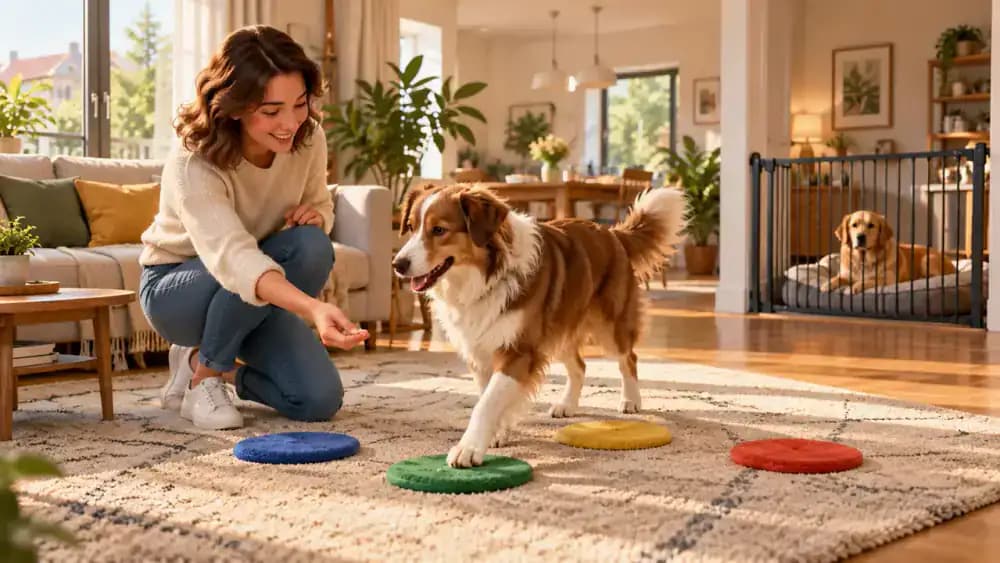
Manage Training With Multiple Dogs
If you have multiple dogs, schedule separate obstacle course sessions to prevent crowding, distractions, and competition for treats. Keep the waiting dog comfortable in another room or behind a secure gate with a resting area. Supervise each dog individually and adjust obstacle spacing and difficulty to their abilities. Switch dogs only after the training area is clear.
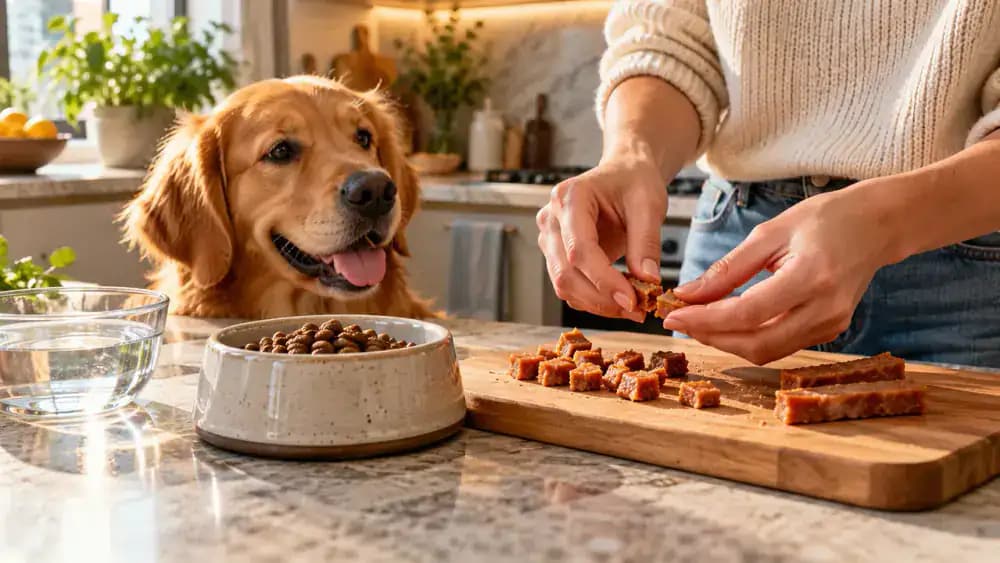
Keep Rewards Small and Appropriate
Prepare a small portion of suitable training treats before starting your dog's obstacle course. Break soft treats into tiny, easy-to-chew pieces, or use regular kibble if your dog enjoys it. Include all training rewards in your dog's daily food allowance to avoid overfeeding. Keep fresh water nearby and allow comfortable breaks between activities.
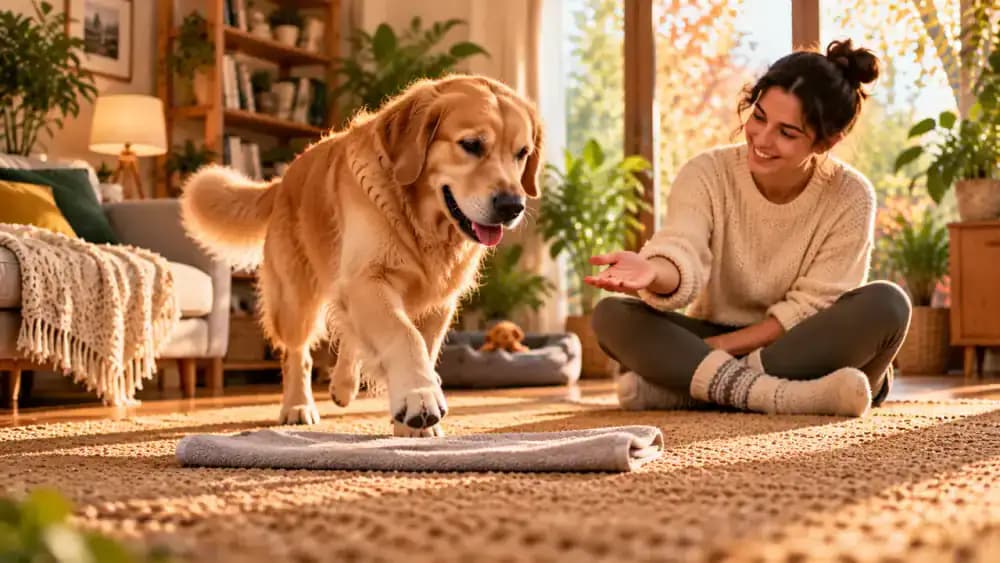
Make Every Small Success Count
Focus on enjoyable participation rather than completing every obstacle. Place a flat towel on a non-slip surface and invite your dog to approach or step across it voluntarily. Reward even a single comfortable movement with gentle praise or a treat. If your dog seems content, finish the activity there. Small, positive experiences help keep future sessions inviting.
Set One Achievable Goal
Choose one simple, realistic goal before each training session, such as having your dog calmly approach a familiar marker. Set out only the equipment needed and invite your dog to investigate without pressure. Reward voluntary interest and comfortable movement. Once your dog achieves the goal, consider ending the session positively instead of immediately introducing another challenge.
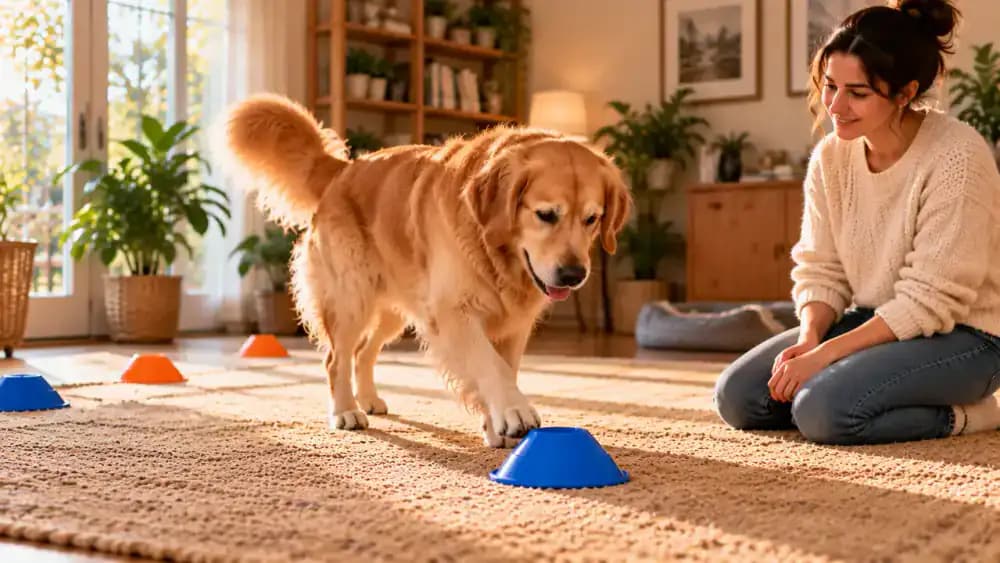
Try Reversing a Familiar Route
Add variety by reversing the direction of a familiar weaving route. Keep three stable markers widely spaced on a non-slip surface, then approach the course from its opposite end. Show your dog the new starting point and invite them forward with a familiar cue or treat. Allow extra time for exploration and maintain generous space around every turn.
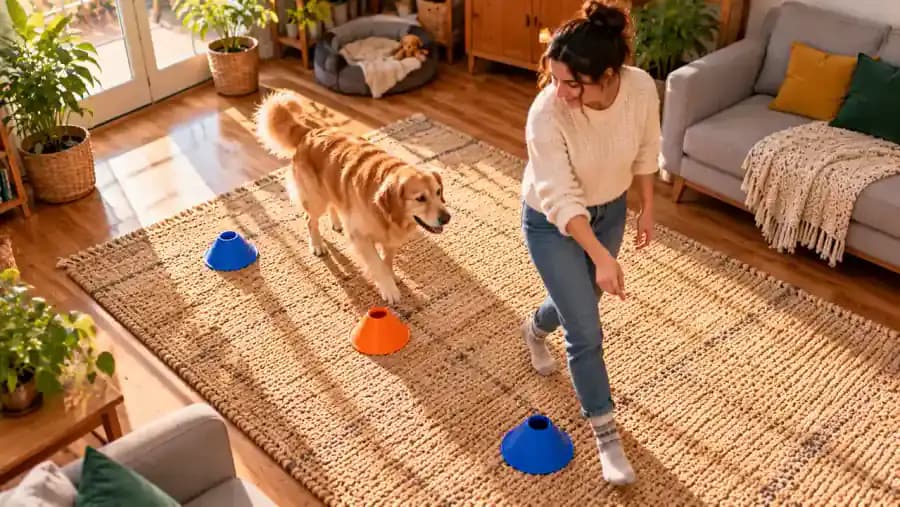
Improve Your Body Language
Pay attention to how your movements affect your dog during obstacle training. Avoid leaning over them, blocking their path, or reaching suddenly toward their face. Instead, stand slightly sideways, keep your hands relaxed, and leave a clear exit. Use calm, predictable gestures to guide movement, allowing your dog to navigate each obstacle comfortably without feeling crowded.
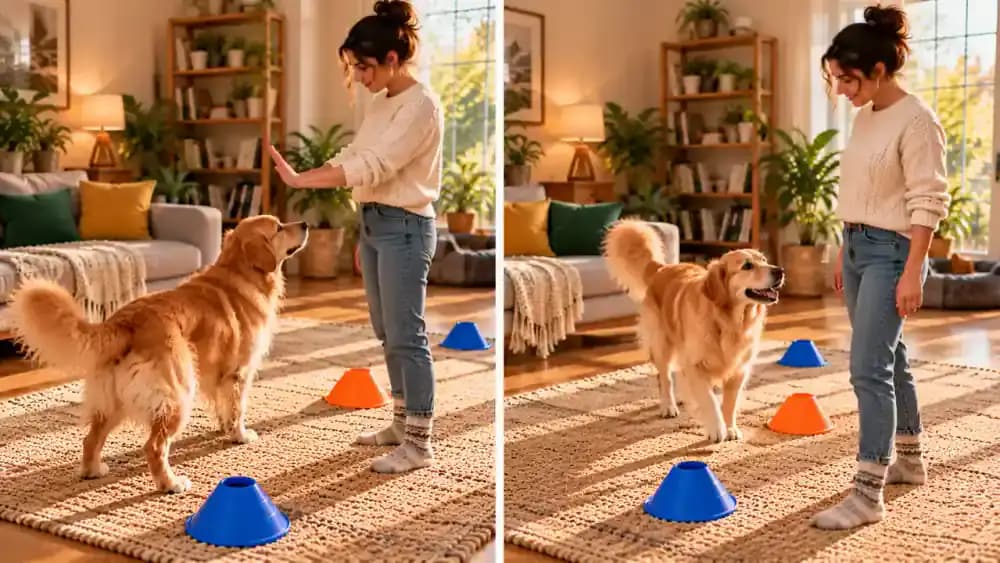
Make Tunnel Training Less Intimidating
If your dog hesitates near a long cardboard tunnel, replace it with a shorter, wider box that provides a clear view through both ends. For an easier alternative, create an uncovered passage between two stable markers. Allow your dog to investigate voluntarily and reward comfortable exploration. Increase tunnel length only when your dog consistently enters without hesitation.
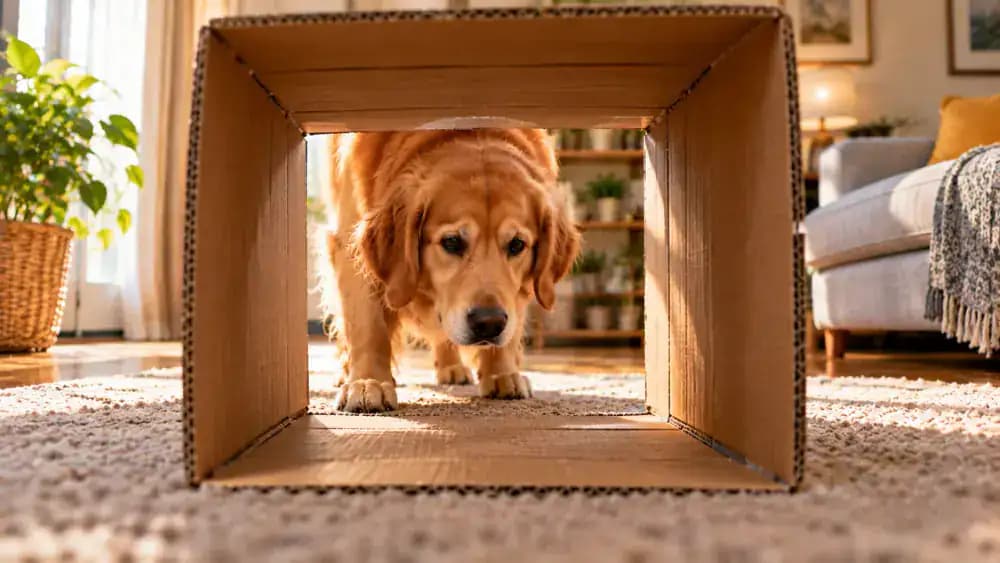
Avoid Risky Furniture Obstacles
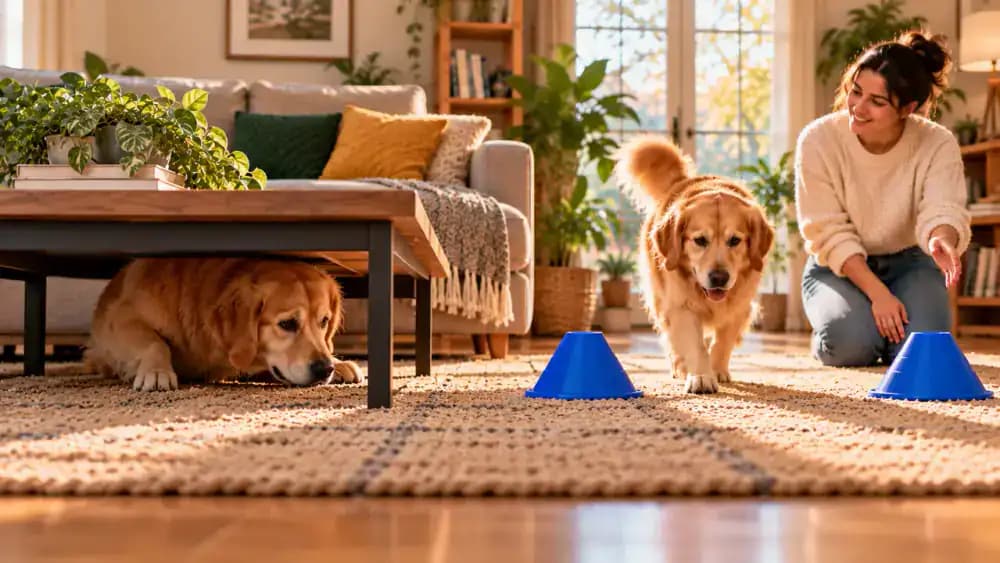
Avoid creating obstacles beneath heavy chairs, coffee tables, or furniture with sharp corners and limited clearance. These spaces may force your dog to crouch, squeeze, or move awkwardly. Instead, position two lightweight, stable foam markers far apart on a non-slip rug. Encourage your dog to walk naturally between them and reward calm participation without requiring uncomfortable movements.
Maintain and Store Your Equipment
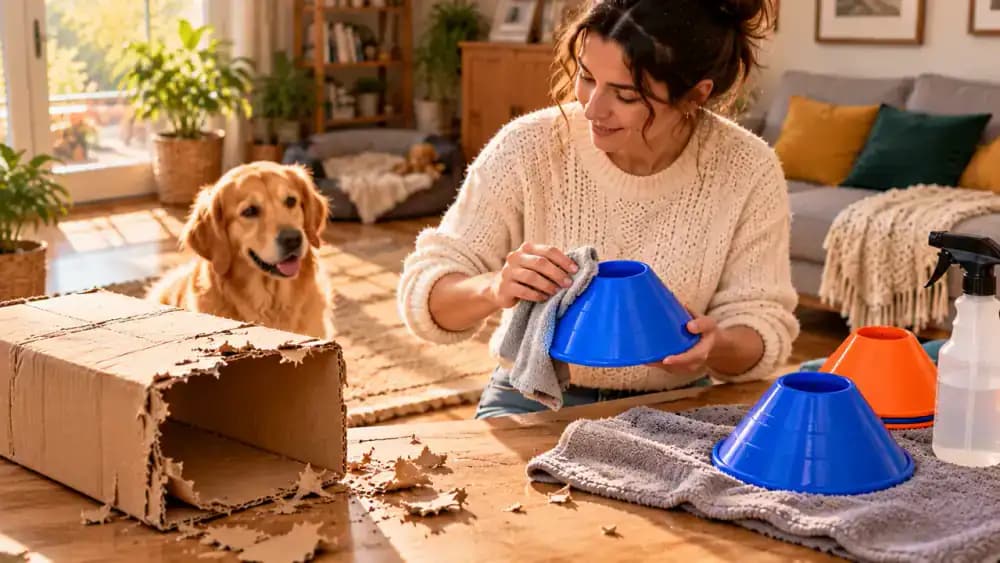
After each obstacle course session, inspect your supplies for torn cardboard, damaged foam, loose pieces, or damp fabric. Recycle unsafe cardboard, replace damaged materials, and wash or dry reusable items as appropriate. Wipe plastic markers clean and allow everything to dry completely. Store the equipment in a closed container beyond your dog's reach to prevent unsupervised chewing or play.
Create More Happy Indoor Adventures
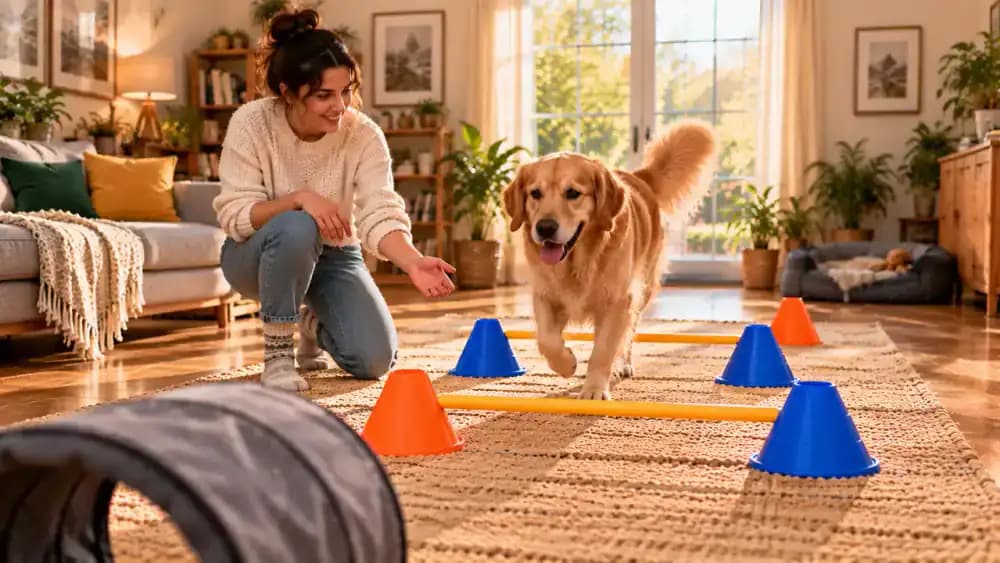
Keep future indoor obstacle courses simple, safe, and enjoyable by choosing non-slip surfaces, low challenges, and plenty of space. Encourage voluntary participation with calm guidance and small rewards, adjusting activities whenever your dog's needs change. Even a short course can provide meaningful enrichment. Celebrate comfortable movement, respect breaks, and enjoy discovering your dog's favorite homemade obstacles together.
Your dog is sitting by the window, watching raindrops slide down the glass. The usual walk is on hold, the toys have lost their appeal, and that familiar restless pacing has started. Sound familiar? Rainy days don't have to mean another afternoon of boredom for your four-legged friend.
A DIY indoor dog obstacle course can turn an ordinary living room into an engaging space for gentle exercise, mental stimulation, and bonding. Best of all, you don't need professional agility equipment or an expensive collection of pet toys. A few cushions, rolled towels, sturdy household objects, and a large cardboard box can become a miniature adventure course in minutes.
The idea is simple: create three easy challenges that encourage your dog to weave around objects, step over a low barrier, and walk through a wide tunnel. With positive reinforcement, patience, and plenty of praise, your dog can explore each obstacle at a comfortable pace.
Safety comes before speed. Choose a clear floor area with non-slip footing, secure every obstacle, and avoid anything that could tip, collapse, or restrict movement. Keep challenges low and optional, especially for puppies, senior dogs, or dogs with mobility limitations.
Whether your dog is energetic, curious, or a little cautious, this indoor enrichment activity offers a flexible way to make staying inside more enjoyable. The goal isn't a perfect performance. It's a happy, comfortable dog having fun with you.
Where people go wrong
Setting Up Obstacles on Slippery Flooring. Smooth tile and hardwood can make even a simple indoor dog obstacle course risky when a dog turns or changes direction. Sliding paws may lead to falls or uncomfortable movements. Place flat, non-slip mats under the activity area and test each surface before inviting your dog to participate. Remove rugs that bunch, curl, or move underfoot.
Making Obstacles Too High or Too Narrow. A course designed for athletic dogs may be unsuitable for beginners, small breeds, puppies, or senior pets. Tall barriers and narrow passages can encourage awkward movements or unwanted jumping. Keep the step-over obstacle at floor level or only slightly raised, space weaving markers widely, and ensure the tunnel allows comfortable standing, turning, and walking without squeezing.
Using Unstable Household Items. Lightweight furniture, stacked cushions, and poorly supported cardboard can tip or collapse when bumped. Before beginning, gently test every station for movement, loose pieces, sharp edges, and potential trapping hazards. Avoid glass, heavy objects, and anything that could fall onto your dog. Replace unstable materials rather than assuming your dog will carefully avoid touching them.
Pushing a Hesitant Dog Through an Obstacle. Pulling on a leash, nudging from behind, or forcing a dog into a tunnel can turn a playful activity into a stressful experience. Instead, allow your dog to investigate voluntarily. Use a treat or favorite toy to encourage exploration, reward small attempts, and provide an open route away. Skipping an obstacle is always acceptable.
Connecting All Three Stations Too Quickly. Asking your dog to weave, step over a barrier, and enter a tunnel immediately can create confusion, especially during the first session. Introduce each obstacle separately and reward comfortable participation before combining activities. Start with one marker or a single easy movement. Add another station only when your dog seems relaxed, interested, and ready to continue.
Overlooking Signs That Your Dog Needs a Break. Repeated attempts can become tiring or frustrating, even when the obstacles seem simple. Watch for slowing down, turning away, repeated avoidance, excessive panting, or a loss of interest. Pause the session and offer water and rest. Never treat reluctance as disobedience. Short, enjoyable practice is more valuable than completing a predetermined number of repetitions.
Using the Same Course for Every Dog. Age, body size, confidence, and mobility all affect which challenges are appropriate. Puppies, senior dogs, and dogs with movement limitations may benefit from walking around widely spaced markers instead of stepping over barriers or entering tunnels. Adjust the layout to the individual dog, and ask your veterinarian about suitable activities when physical limitations or discomfort are concerns.
Questions people ask
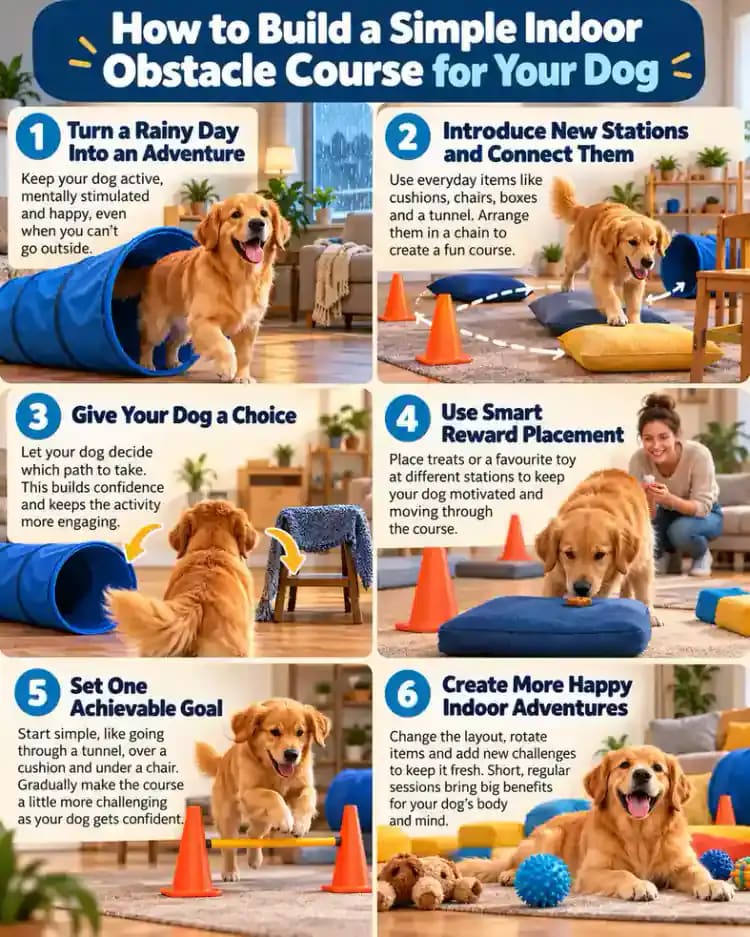
You can create an indoor dog obstacle course with cushions, rolled towels, stable household markers, and a large cardboard box. Arrange three simple stations: widely spaced objects for weaving, a very low towel barrier for stepping over, and a wide cardboard tunnel. Set everything on non-slip flooring, check for hazards, and introduce each activity separately using treats and praise.
Fixed it?
Get one guide like this every Thursday.