How Medical Debt Affects Your Credit Report
Medical debt can influence credit reports and financial decisions. Learn how collections work, what changes credit bureaus made, and how consumers can review and protect their records.

What you’ll need
Tap to tick things off before you start.
Medical Debt Overview
This section introduces medical debt as a financial issue that can affect how information appears on a credit report. It explains why unpaid medical bills create concern for many consumers and establishes the connection between healthcare expenses and credit reporting systems. The focus is on providing context for the topic, showing why medical debt deserves attention, and preparing readers to understand the broader financial implications discussed throughout the guide.

The Scale of the Problem
This section examines the national scope of medical debt using statistics from the Consumer Financial Protection Bureau. It highlights that millions of Americans have medical bills appearing in collections and explains the overall financial weight represented by these balances. The focus is on demonstrating that medical debt is a widespread issue rather than an isolated experience, helping readers understand the size of the challenge across the United States.

What This Guide Covers
This section outlines the main areas explored in the article, including how medical debt moves through reporting systems, voluntary changes made by credit bureaus, regulatory developments, and record verification. The goal is to give readers a clear roadmap of the topics ahead without examining each issue in detail yet. It establishes the structure of the guide and explains the key questions the article will address.

Medical Debt Across America
This section focuses on research from the Consumer Financial Protection Bureau about medical debt appearing in consumer credit profiles. It explains the agency's examination of how medical collections affect households and why the topic has received regulatory attention. The emphasis is on research findings and the broader financial system, showing how medical debt reporting has become an important issue for policymakers and consumers.

Millions With Collections
This section explores the number of Americans with medical bills in collections and the total value of outstanding medical debt reported by the CFPB. It focuses on the measurable scale of collection accounts and explains why these figures demonstrate a significant consumer finance challenge. The section uses national statistics to show the volume of affected credit profiles without moving into individual consequences or solutions.

A Household Challenge
This section explains how medical debt represents a broader household financial challenge affecting millions of families. It focuses on the burden created when unexpected healthcare costs become part of personal finances and discusses why medical debt is different from many other types of borrowing. The purpose is to describe the consumer experience and the widespread nature of the problem without yet focusing on credit outcomes.

Credit Consequences
This section examines how medical debt reported on credit files may influence financial opportunities such as access to housing or lending. It explains why credit reports are reviewed by different organizations and why reported medical collections can become an important consideration in financial decisions. The focus is on the relationship between credit information and access to financial products, not on personal financial recommendations.

Tracking Medical Bills
This section explains how medical bills can move through different stages before appearing in credit reporting systems. It introduces the roles of healthcare providers, collection agencies, and the nationwide credit reporting companies Equifax, Experian, and TransUnion. The focus is on the reporting process and how medical debt information is recorded, providing readers with a clearer understanding of the system behind credit reports.

Why Reporting Matters
This section discusses why the reporting of medical debt matters for consumers and the financial system. It focuses on the connection between credit information and access to financial opportunities, while explaining why regulators have examined the accuracy and usefulness of medical debt data. The section highlights the importance of understanding reporting practices and how they shape the way financial information is evaluated.

Medical Bill Journey
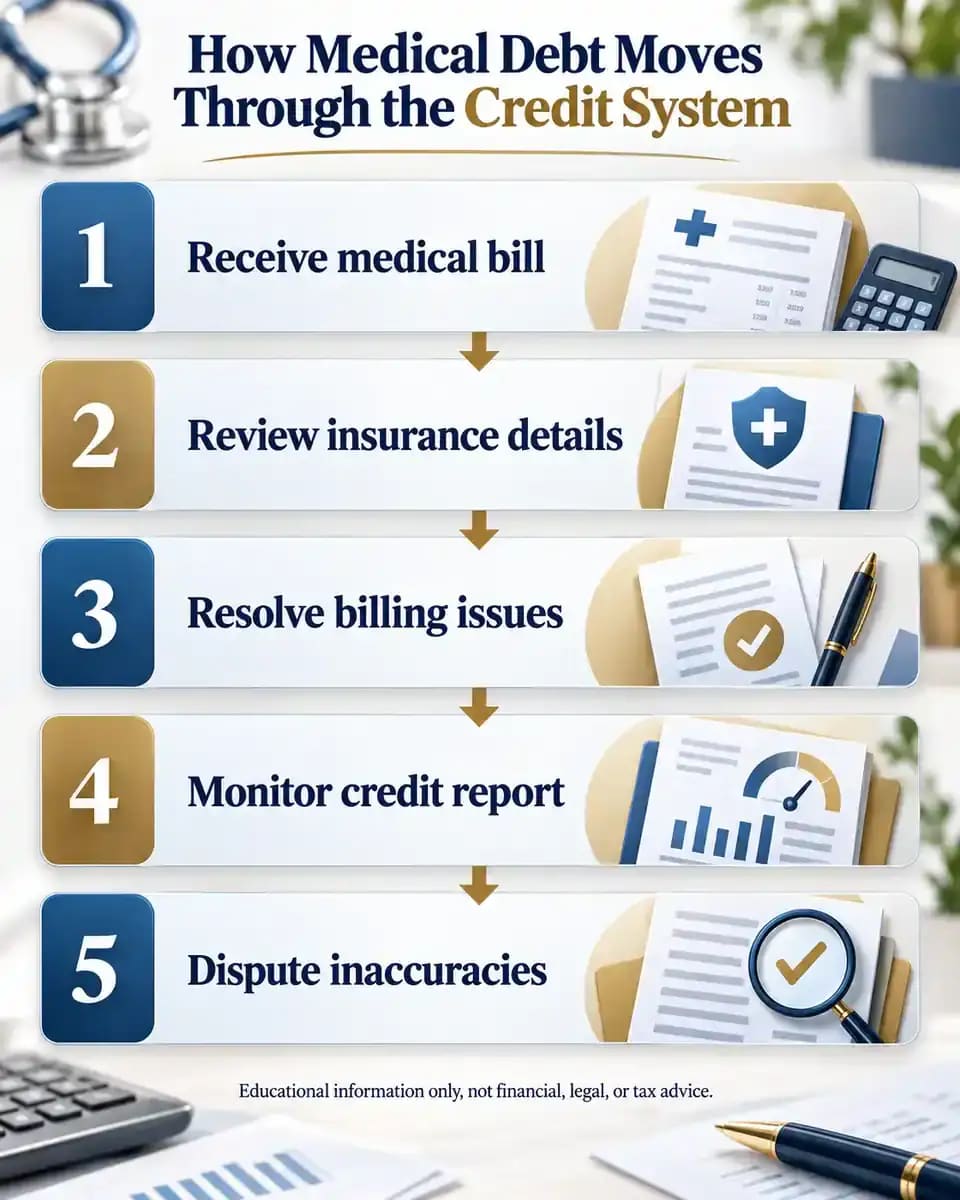
This section describes the lifecycle of a medical bill from the initial healthcare service through possible collection activity and credit reporting. It explains the sequence of events that can lead to a medical debt record being transferred between organizations. The focus is on the complete journey of the bill and how each stage connects within the broader consumer credit reporting process.

Collection Agencies
This section explains how unpaid medical bills can move from healthcare providers to collection agencies and eventually enter the credit reporting system. It focuses on the transfer or sale of medical debt, the role of collectors, and how companies such as Equifax, Experian, and TransUnion may receive information about collection accounts. The goal is to clarify the debt lifecycle without assuming every unpaid bill follows the same path.

Changing Credit Rules
This section examines how the medical debt credit reporting environment has changed in recent years. It covers voluntary industry updates announced by the major credit reporting companies and explains why medical debt reporting practices have received increased attention. The discussion highlights how evolving policies affect the way medical collections are handled while referencing broader research from the Consumer Financial Protection Bureau about consumer credit records.

One Year Waiting Period
This section focuses on the extended waiting period before certain unpaid medical collections can appear on credit reports. It explains the transition from the previous 180-day period to a full year and why this timeframe was introduced. The purpose is to show how additional time may allow consumers, providers, and insurers to address billing questions before a collection account affects a credit profile.

Resolving Billing Issues
This section describes the practical process of reviewing and addressing medical billing problems before they become larger credit issues. It covers checking statements, comparing information with insurance records, and communicating with providers or collectors when discrepancies appear. The focus is on consumer awareness and record accuracy, while emphasizing that billing disputes can involve multiple parties and require careful documentation throughout the process.

Protection Window
This section explains the purpose of the protection period created by updated medical debt reporting practices. It focuses on the opportunity for consumers to respond before collection information is reflected on credit reports. The discussion explores how medical billing often involves delays, insurance reviews, and administrative steps, making additional time an important part of the modern credit reporting process.

Credit Bureau Changes
This section reviews voluntary policy changes made by Equifax, Experian, and TransUnion regarding medical collections. It explains how these organizations adjusted their approach to certain medical debt information and why these changes represent a shift in credit reporting practices. The section connects these updates with ongoing discussions about fairness, accuracy, and the role medical information should play in consumer credit evaluations.

Resolved Debt Removal
This section explains the policy that resolved medical collection accounts should no longer remain on consumer credit reports under voluntary credit bureau changes. It focuses on the difference between unresolved collections and debts that have been addressed. The section describes how removal of resolved medical collections changes the credit reporting landscape and provides context for why this policy adjustment matters to consumers.

Path Forward
This section looks at the broader process of moving forward after medical debt challenges. It focuses on understanding available reporting protections, maintaining accurate records, and monitoring credit information over time. The discussion connects current consumer actions with the larger changes in medical debt reporting while noting that educational information does not replace personalized financial, legal, or tax guidance.

Five Hundred Dollar Threshold
This section explains the voluntary threshold that removes medical bills below 500 dollars from credit reports under current credit bureau policies. It explores why smaller medical debts can result from billing confusion or administrative issues and how this threshold changes their impact on credit files. The section focuses on the reporting rule itself and avoids making assumptions about individual financial circumstances.

Smaller Bills
This section examines how smaller medical bills are treated differently under updated reporting practices. It focuses on the removal of qualifying debts below the established threshold and the potential effect on consumer credit records. The discussion places this change within the wider effort by credit reporting companies to refine medical debt policies and improve how certain healthcare-related obligations appear in credit systems.

Remaining Challenges
This section examines why medical debt remains a significant issue even after voluntary changes by credit reporting companies. It focuses on the continuing presence of large amounts of medical collections in the credit system and explains why previous protections have not completely eliminated the problem. The discussion highlights the remaining gap between industry improvements and the broader challenge of managing medical debt records.

Federal Proposal
This section introduces the Consumer Financial Protection Bureau's proposed approach to changing how medical debt is handled in credit reporting. It explains the purpose behind the federal proposal and why regulators are examining whether medical information should influence lending decisions. The focus is on the potential shift from voluntary industry practices toward broader regulatory action affecting the relationship between medical debt and credit reports.

Proposed Reporting Limits
This section explores the specific reporting restrictions included in the CFPB proposal. It focuses on limiting the ability of credit reporting companies to share medical debt information with lenders and preventing medical details from being used in lending decisions. The explanation covers the intended purpose of these limits and how they could change the role medical debt plays within the credit evaluation process.

Debt Predictability
This section explains the research behind concerns about medical debt as a credit risk indicator. It focuses on the CFPB's findings that medical debt may provide less predictive value than traditional forms of debt. The discussion compares the purpose of credit analysis with the unique circumstances surrounding medical bills, emphasizing why regulators are questioning whether these records accurately measure repayment behavior.

Medical Versus Traditional Debt
This section compares medical debt with other common forms of consumer debt such as credit cards, auto loans, and mortgages. It focuses on the differences between voluntary borrowing decisions and unexpected healthcare expenses. The goal is to explain why medical debt may represent different financial circumstances than traditional debt and why this distinction matters in credit reporting discussions.

Fairer Credit Evaluation
This section discusses the possible impact of changing medical debt reporting practices on consumers and financial institutions. It focuses on the concept of creating a more accurate credit evaluation system by separating healthcare events from general repayment behavior. The section explains how proposed changes could influence future assessments of creditworthiness without making predictions about individual financial outcomes.

Consumer Protection Steps
This section provides practical information about actions consumers can take while current medical debt reporting rules remain in place. It focuses on understanding available protections, reviewing records, and maintaining awareness of credit report information. The discussion emphasizes organized consumer participation and explains why keeping track of medical debt details can help identify potential issues within financial records.

Verify Your Bills
This section focuses on checking medical bills for accuracy before accepting reported information. It explains the importance of reviewing charges, comparing documents, and identifying possible billing mistakes or processing problems. The discussion highlights common sources of confusion in medical billing and describes why careful verification is an important part of maintaining accurate credit information related to healthcare expenses.

Dispute Errors
This section explains the process of challenging incorrect medical debt information. It focuses on contacting relevant parties, including healthcare providers, debt collectors, and credit reporting companies when errors appear. The discussion describes the importance of submitting clear information and maintaining records throughout the correction process. It presents disputes as a method for improving accuracy in consumer credit files.

Current Medical Debt Rules
This section reviews the current protections affecting medical debt on credit reports. It focuses on existing voluntary changes from Equifax, Experian, and TransUnion, including removal of resolved medical collections and limits on smaller medical debts. The discussion also summarizes how consumers can understand the present reporting environment while proposed federal changes continue through the regulatory process.

Medical debt is one of the most significant financial challenges facing many households in the United States. Unlike many other forms of debt, medical bills are often unexpected and can result from emergencies, illness, or complicated insurance processes rather than everyday spending decisions. Understanding how these bills interact with credit reports can help consumers make informed decisions about reviewing their records and responding to errors.
According to research from the Consumer Financial Protection Bureau, millions of Americans have experienced medical debt appearing in credit reporting systems. As of June 2024, approximately 15 million Americans had medical bills in collections connected to about 49 billion dollars in outstanding medical debt. These numbers show that medical collections are not a rare financial problem but a widespread issue affecting households across the country.
This guide explains how medical bills move from healthcare providers to collection agencies, how Equifax, Experian, and TransUnion changed their voluntary reporting practices, and why federal regulators have examined additional protections. It also covers practical steps consumers can take to check their records, identify possible mistakes, and understand available options.
The information provided is educational and does not replace professional financial, legal, or tax guidance. Medical billing systems can be complicated, and individual situations may require advice from qualified professionals. By learning how the system works, consumers can better understand their credit reports and take appropriate steps to maintain accurate financial records.
Where people go wrong
Ignoring medical bills. Some consumers assume medical bills will disappear automatically, but unpaid balances may continue through collection processes. Ignoring notices can make it harder to identify errors, communicate with providers, and understand available options.
Not checking billing accuracy. Medical billing can involve insurance adjustments, coding issues, and administrative mistakes. Failing to compare bills with insurance records may allow incorrect charges or duplicate amounts to remain unresolved for longer periods.
Assuming every medical collection is reported. Credit reporting rules for medical debt have changed. Consumers should understand current industry practices and review their own credit reports rather than relying on outdated assumptions about how all medical bills appear.
Failing to document conversations. Without records of calls, emails, and agreements, consumers may struggle to track progress when resolving billing disputes. Keeping organized documentation creates a clearer history of communications with providers and collectors.
Waiting too long to review reports. Regular credit report reviews can help identify inaccurate information earlier. Delaying reviews may allow mistakes to remain unnoticed and can make resolving reporting issues more complicated.
Questions people ask
Medical debt can appear on credit reports under certain circumstances, particularly when unpaid bills move into collections. However, credit reporting practices have changed in recent years, including voluntary policies from major credit reporting companies that provide additional protections for many consumers.
Fixed it?
Get one guide like this every Thursday.