Demystifying the Home Appraisal: How Property Valuations Affect Your Mortgage
A home appraisal can change how much your lender will finance and whether your purchase closes on time. Learn how valuations work, what happens when an appraisal is low, and how to protect your options.

What you’ll need
Tap to tick things off before you start.
What Is a Home Appraisal?
A home appraisal is a written, independent opinion of a property's market value prepared by a qualified real estate appraiser. Mortgage lenders commonly require this assessment when financing a purchase or refinancing an existing loan. Its purpose is to establish whether the property provides sufficient collateral for the requested borrowing. Unlike an asking price or seller's estimate, an appraisal uses property characteristics and market evidence to support a professional valuation.

Who Performs the Appraisal?
A home appraisal is conducted by a state-licensed or certified real estate appraiser who is expected to remain independent of the buyer, seller, and lender's financial interests. The appraiser's responsibility is to produce an objective valuation rather than justify the agreed purchase price. This separation helps protect the integrity of mortgage lending by ensuring that property values are assessed using professional standards, relevant evidence, and independent judgment.

What Determines a Home's Value?
Several characteristics influence a home's appraised value. These include living area, bedroom and bathroom counts, lot size, construction quality, overall condition, and permanent improvements. Location also matters because neighborhood characteristics and local market activity influence what buyers are willing to pay. Appraisers consider these factors together rather than assigning value based on renovation spending alone. A costly kitchen upgrade, for example, does not automatically increase market value by its full price.

How Appraisals Affect Mortgage Approval
Mortgage lenders use the appraised value to assess the property securing their loan. This valuation becomes an important part of underwriting because the home serves as collateral if the borrower cannot repay the mortgage. A valuation below the agreed purchase price can affect the amount a lender is prepared to finance. Consequently, even borrowers with strong credit and sufficient income may face additional financing requirements when the property value does not support the requested loan.

Understanding Loan-to-Value Ratios
The loan-to-value ratio, commonly called LTV, compares the mortgage amount with the property's value used by the lender. For example, a $240,000 mortgage against a $300,000 property represents an 80% LTV. If the appraisal instead comes in at $280,000, the same loan represents approximately 85.7% LTV. A higher ratio can affect lending limits, mortgage insurance requirements, and available loan terms, depending on the mortgage program.

What Happens During an Appraisal?
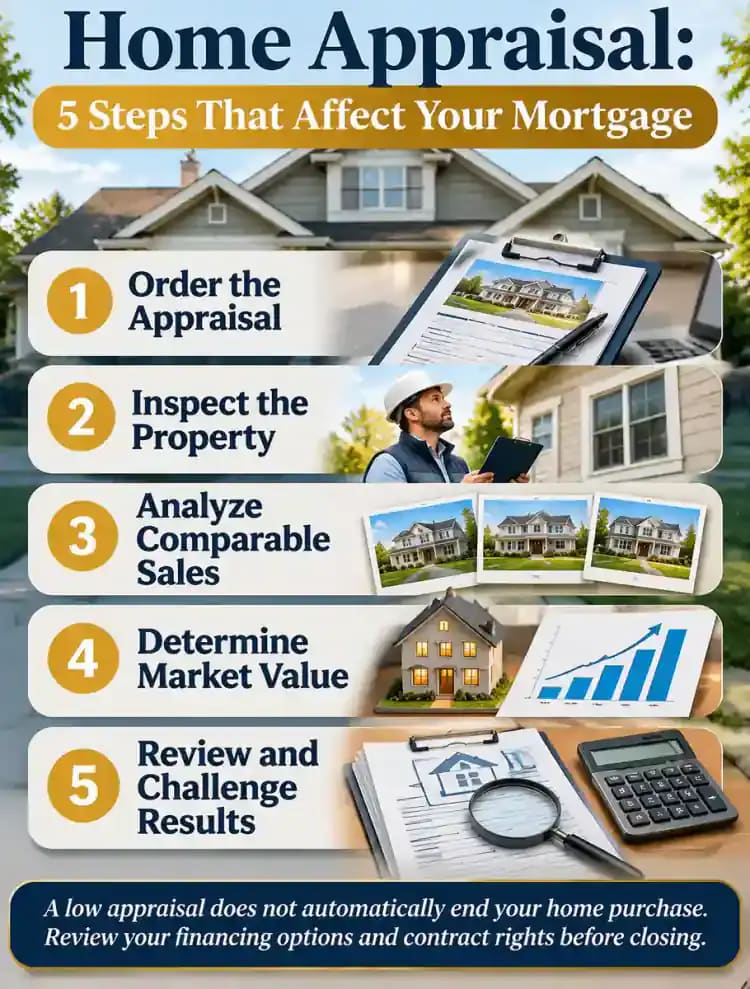
After receiving the assignment, the appraiser typically schedules a property visit. During the inspection, they measure relevant areas, photograph the interior and exterior, and document the home's physical characteristics. They may examine visible conditions involving the roof, foundation, heating, cooling, and other major systems. Obvious defects, safety concerns, and deferred maintenance can also be recorded. This information helps establish an accurate description of the property for the valuation report.

Comparable Sales and the Final Report
Physical inspection is only part of the valuation process. Appraisers also research recently sold properties that resemble the home being evaluated. These comparable sales, often called comps, provide evidence of actual market transactions. Adjustments account for differences such as square footage, property condition, age, lot size, and additional features. The appraiser combines this research with inspection findings to prepare a written report explaining the analysis and final opinion of value.

Your Appraisal Rights and Closing Deadlines
Federal Regulation B, administered by the Consumer Financial Protection Bureau (CFPB), provides important appraisal disclosure protections for covered mortgage applications. Generally, creditors must provide copies of appraisals and other written valuations promptly upon completion or at least three business days before closing, whichever comes first. Lenders may charge a reasonable fee for obtaining an appraisal, but cannot charge borrowers simply for providing the required copy. Review your report before signing final loan documents.

How to Challenge a Low Appraisal
If an appraisal appears inaccurate, borrowers can ask their lender about a reconsideration of value. Start by identifying specific factual problems, such as incorrect square footage, missing renovations, or unsuitable comparable sales. Supporting evidence may include property records, renovation invoices, and recent closed sales. Submit the information through the lender's established process. The lender may request an appraiser review, but a reconsideration does not guarantee that the valuation will change.

Your Options When an Appraisal Comes in Low
When an appraisal falls below the agreed purchase price, buyers generally have several possible paths. They may negotiate a lower price with the seller, contribute additional cash toward the purchase, or explore alternative financing if available. A purchase agreement with an applicable appraisal contingency may also provide termination rights. The outcome depends on the contract, lender requirements, and seller's willingness to negotiate. Review these factors before committing additional funds or changing the agreement.

How Long Does a Home Appraisal Take?
A home appraisal can take anywhere from a few days to several weeks, depending on the property and local market conditions. Scheduling the inspection, researching comparable sales, and preparing the written report all contribute to the timeline. Larger, unusual, or complex properties may require additional research. Appraiser availability and seasonal demand can also affect turnaround times. Ask your mortgage lender when the appraisal is expected and whether any scheduling issues have arisen.

Why Appraisal Delays Can Affect Closing
An appraisal delay can create problems when mortgage approval and closing depend on receiving the final report. Missed inspection appointments, incomplete property records, limited appraiser availability, or additional research requests can slow the process. Underwriters may need the completed valuation before clearing outstanding loan conditions. If delivery falls behind schedule, other closing arrangements may also need adjustment. Maintaining communication with your lender and real estate agent helps everyone understand outstanding requirements and timing.

What to Review in Your Appraisal Report
When your appraisal report arrives, review the property description carefully. Check the reported square footage, bedroom and bathroom counts, lot details, and documented improvements against what you know about the home. Examine the comparable properties and adjustments used to support the valuation. Look for missing information, inconsistent descriptions, or obvious factual mistakes. Pay particular attention to the final opinion of value and any conditions or assumptions that could influence the lender's underwriting decision.

Common Reasons an Appraisal Comes in Low
A home appraisal may fall below the agreed purchase price for several reasons. Recent market declines, limited comparable sales, or differences between a property and nearby homes can influence the result. Visible maintenance problems and inaccurate public property records may also affect the analysis. Another common issue is confusing asking prices with completed sales. A seller's listing price reflects an asking amount, while closed transactions provide stronger evidence of what buyers actually paid.

How Home Improvements Influence Appraised Value
Renovations can influence an appraisal, but their cost does not automatically translate into an equivalent increase in property value. Appraisers consider the quality, permanence, condition, and market relevance of improvements. Updated kitchens, remodeled bathrooms, new roofing, and additional living space may contribute to buyer appeal. However, highly personalized finishes or expensive upgrades may provide limited additional value in a particular neighborhood. Keep renovation invoices, permits, and documentation available to establish what work was completed.

Can You Request a Second Appraisal?
A second appraisal may be considered when a lender identifies a legitimate need for another independent valuation. However, requesting a reconsideration of value is different from ordering a new appraisal. A reconsideration asks the original appraiser to review specific evidence or factual concerns. A second appraisal involves another valuation assignment and may require additional payment. Whether either option is available depends on lender policies, loan program requirements, and the circumstances surrounding the original report.

Can a Low Appraisal Affect Your Mortgage Rate?
A lower appraisal does not automatically increase your mortgage interest rate, but it can change the loan-to-value ratio used in underwriting. Depending on the lender and mortgage program, a higher LTV may affect pricing adjustments, mortgage insurance requirements, or available financing options. These changes can influence the overall borrowing cost even when the advertised interest rate remains unchanged. Ask your lender to explain how the revised valuation affects the loan estimate and any applicable insurance costs.

Appraisals for Refinancing and Home Equity Loans
Property valuations also matter when homeowners refinance or apply for home equity financing. During refinancing, the lender may use an appraisal or another accepted valuation method to assess the property's current value and calculate the new loan-to-value ratio. Home equity loans and lines of credit similarly depend on available equity, existing mortgage balances, and lender limits. A higher valuation does not guarantee additional borrowing capacity, because income, credit history, debt obligations, and program requirements remain important.

How to Prepare Your Home for an Appraisal
Preparing for an appraisal starts with making the property accessible and providing accurate information. Ensure the appraiser can reach relevant rooms, garages, and exterior areas. Organize records documenting renovations, permits, additions, and other permanent improvements. Check that basic property details are accurate and address obvious maintenance concerns where practical. A clean, accessible home makes inspection easier, but cosmetic staging cannot guarantee a higher valuation. The appraiser must ultimately follow independent professional standards.

Making Informed Decisions Before Closing
Before closing, bring together the appraisal findings, updated loan terms, and relevant purchase agreement provisions. Confirm with your lender whether the valuation satisfies underwriting requirements and whether any financing conditions remain outstanding. If the appraisal creates a problem, understand the available contractual options and the financial consequences of each alternative. Keep communication documented and pay attention to deadlines. The goal is to understand the transaction fully before signing final documents or committing additional funds.

Understanding Appraisal Waivers
An appraisal waiver allows an eligible mortgage transaction to proceed without a traditional property appraisal. Lenders may rely on automated underwriting systems, existing property data, or other approved valuation methods to determine whether an inspection is necessary. Waivers are not available for every borrower or property. Loan characteristics, property records, transaction details, and program requirements influence eligibility. Even when a waiver is offered, borrowers should understand what valuation information the lender is using.

Desktop and Drive-By Appraisals Explained
Not every appraisal requires an appraiser to inspect the entire interior of a property. A desktop appraisal relies on available property records, photographs, market information, and other documentation without a traditional site visit. A drive-by appraisal generally involves an exterior observation from the street. These methods can reduce inspection requirements, but they may provide less direct information about interior condition, renovations, or hidden defects. Lenders determine which valuation methods meet their requirements.

What Is an Automated Valuation Model?
An automated valuation model, commonly called an AVM, uses mathematical algorithms and available property data to estimate real estate values. Inputs may include recent transactions, property characteristics, tax records, and local market trends. Unlike a traditional appraisal, an AVM does not necessarily involve a professional visiting the property. Its accuracy depends heavily on data quality, market activity, and the availability of comparable transactions. Lenders may use these estimates alongside other valuation methods.

How Market Conditions Influence Appraisals
Local housing market conditions can influence the value an appraiser assigns to a property. Interest rates affect buyer purchasing power, while housing inventory and competition influence negotiated sale prices. In a rapidly changing market, older comparable transactions may provide less useful evidence of current conditions. Appraisers consider available market data and relevant trends when forming their opinions. This explains why similar properties can receive different valuations depending on location and the timing of their sales.

Appraisal Differences Between New and Older Homes
New construction and older homes present different valuation considerations. Newly built properties may have modern systems, updated building standards, and builder warranties, but limited comparable sales can complicate valuation. Older homes may offer established neighborhood appeal, distinctive architecture, and larger lots, while deferred maintenance or outdated systems can affect marketability. Appraisers consider actual condition, construction quality, functional features, and relevant comparable properties rather than assuming that newer construction automatically deserves a higher value.

How Location and Neighborhood Affect Home Value
A property's location can significantly influence its market value. Appraisers examine neighborhood characteristics, nearby amenities, transportation access, and the surrounding housing market. Parks, schools, employment centers, and commercial services may influence buyer demand, while zoning restrictions and nearby land uses can affect property appeal. Environmental conditions and neighborhood development also matter. These factors help explain why two physically similar homes can receive substantially different appraisals when they are located in different communities.

Can an Appraisal Be Higher Than the Purchase Price?
An appraisal can come in higher than the agreed purchase price, suggesting that the transaction price is below the appraiser's estimated market value. However, this difference does not automatically create spendable equity or increase the mortgage amount. Lenders still apply their underwriting rules, loan limits, and required down payment calculations. The purchase price remains important when determining transaction costs and financing. A favorable valuation is useful information, but it should not be confused with guaranteed future appreciation.

Understanding Appraisal Bias and Consumer Protections
Appraisal independence is essential to maintaining confidence in residential property valuations. Bias can arise when professional judgments are influenced by unsupported assumptions, inaccurate information, or inappropriate pressure. Federal fair housing protections and professional appraisal standards are intended to promote objective treatment and reliable valuation practices. Borrowers who identify concerning statements or unexplained inconsistencies can raise them with their lender and ask about available complaint procedures. Documenting specific concerns helps distinguish evidence-based issues from simple disagreement over value.

Choosing the Right Professional for Appraisal Concerns
Different appraisal concerns require different professional expertise. Your mortgage lender can explain underwriting requirements, valuation procedures, and available reconsideration channels. A real estate agent can help identify relevant comparable sales and transaction considerations. A licensed appraiser can explain valuation methodology and professional standards, while a real estate attorney can clarify contract language and applicable legal rights. Understanding these roles helps direct questions to the appropriate professional instead of relying on assumptions or informal opinions.

Final Home Appraisal Checklist for Buyers
Before completing your mortgage transaction, organize the information needed to understand your appraisal and its financing implications. Confirm that you have received the required valuation documents, reviewed the property details, and identified any factual concerns. Check outstanding lender conditions, relevant disclosure deadlines, and applicable purchase agreement provisions. Keep supporting documentation and communication records together. A structured final review helps you understand the transaction, identify unresolved questions, and avoid overlooking important requirements before closing.

Buying a home involves more than agreeing on a price with the seller. Before approving your mortgage, a lender generally needs an independent assessment of the property's market value. This process, known as a home appraisal, helps the lender determine whether the property provides sufficient collateral for the amount you want to borrow.
An appraisal can significantly affect your financing, especially when the estimated value is lower than your agreed purchase price. For example, imagine agreeing to buy a home for $300,000, only to receive an appraisal of $280,000. If your lender bases its loan calculation on the lower value, you may need to contribute additional cash, negotiate a lower purchase price, or reconsider the transaction.
Understanding how appraisals work before reaching closing can help you avoid unexpected financial pressure. A licensed appraiser evaluates factors such as the property's size, condition, location, permanent improvements, and recent comparable sales. The resulting report provides a professional opinion of market value, not a guarantee of what the property will sell for.
You also have important consumer protections. Federal regulations generally require lenders to provide copies of appraisals and other written valuations promptly upon completion or at least three business days before closing, whichever comes first. You can review the report, identify factual errors, and request a reconsideration of value through your lender.
This guide explains what appraisers examine, how valuations influence mortgage approval, what your rights are, and how to respond if an appraisal comes in lower than expected. Knowing your options can help you make better financial decisions before signing your final loan documents.
Where people go wrong
Assuming the purchase price determines the loan amount. A lender may calculate its maximum financing using the lower of the purchase price or appraised value. If the appraisal is lower, your expected down payment may no longer be sufficient, leaving an additional cash requirement.
Ignoring the appraisal contingency. An appraisal contingency may give you contractual options if the valuation falls short. Overlooking its wording, deadlines, or waiver can weaken your ability to renegotiate or terminate the purchase without losing earnest money.
Treating the appraisal as a property inspection. An appraisal primarily estimates market value for lending purposes. It is not a substitute for a comprehensive home inspection, which evaluates defects and maintenance concerns that could lead to expensive repairs.
Failing to check the report for factual errors. Incorrect square footage, missing renovations, inaccurate bedroom counts, or unsuitable comparable sales can affect the valuation. Review the report carefully rather than assuming every property detail and calculation is correct.
Expecting a reconsideration to guarantee a higher value. A reconsideration of value requires credible supporting evidence, not simply disagreement with the result. The lender may forward your information for review, but the appraiser can retain the original valuation.
Assuming the seller must cover the appraisal gap. A low appraisal does not automatically require the seller to reduce the price. Any revised purchase price depends on negotiation, market conditions, and the terms of your purchase agreement.
Waiting until closing to review the appraisal. Delaying your review can leave little time to identify errors, submit supporting sales data, or negotiate alternatives. Ask your lender for the report as soon as it becomes available and review it promptly.
Questions people ask
A home appraisal is an independent professional opinion of a property's market value. Mortgage lenders use it to evaluate the property securing the loan and assess lending risk. The appraisal helps determine whether the requested mortgage amount is supported by the property's estimated value.
Fixed it?
Get one guide like this every Thursday.