Engine Overheating? What to Do When the Temperature Warning Comes On
A rising temperature gauge, dashboard warning, or steam from under the hood can signal serious engine trouble. Learn how to pull over safely, avoid dangerous cooling-system hazards, recognize visible warning signs, and get professional help before costly damage occurs.
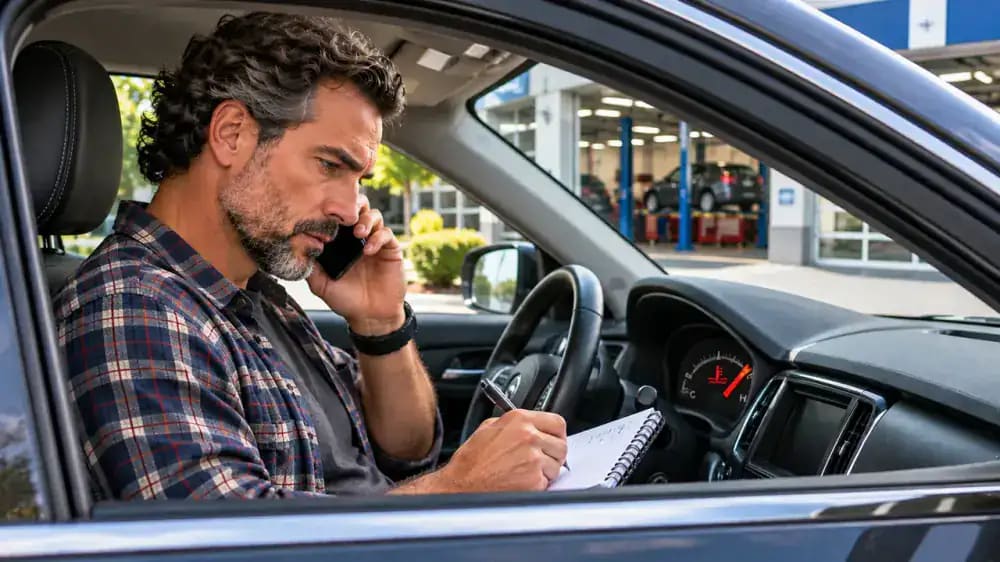
What you’ll need
Tap to tick things off before you start.
Recognize the Engine Overheating Warning Signs
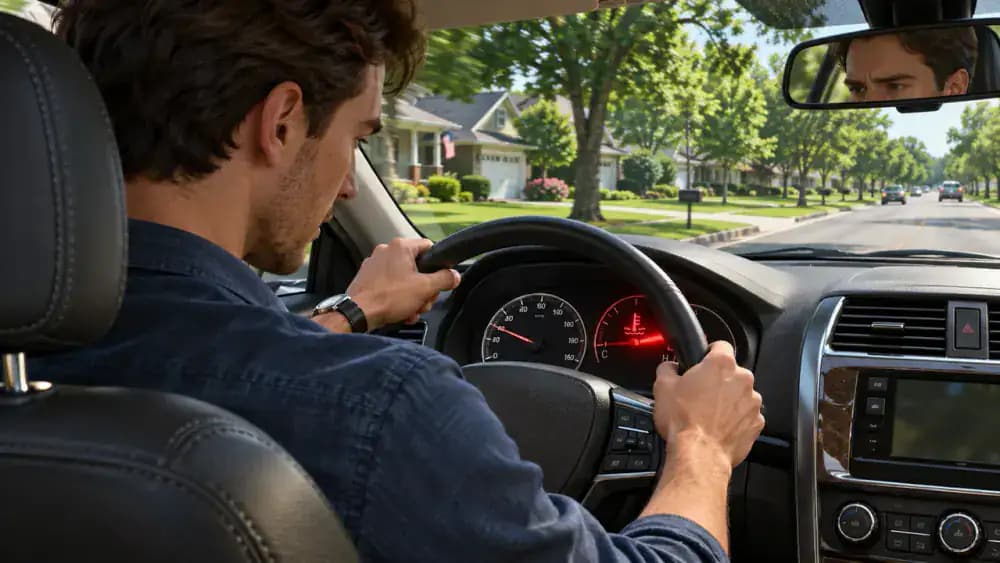
Check your dashboard for a temperature gauge climbing toward the red H zone or an illuminated red coolant temperature warning symbol. As shown in the illustration, light steam may also appear near the hood while you're driving. Pay attention to unusual hot or sweet smells, too. Warning displays vary by vehicle, so familiarize yourself with yours. Keep your attention on traffic and look for a safe place to pull over immediately.
Understand What Your Temperature Gauge Is Telling You
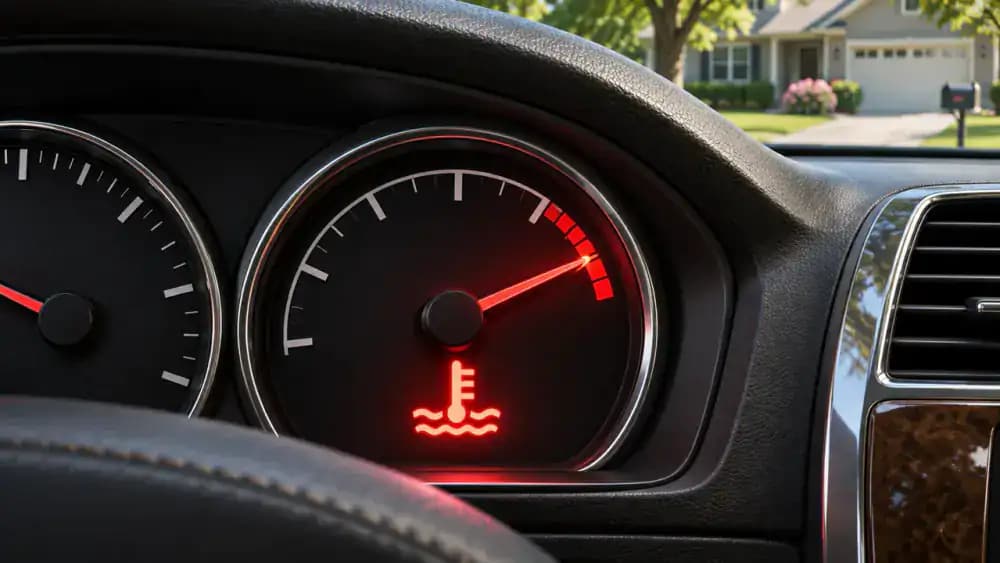
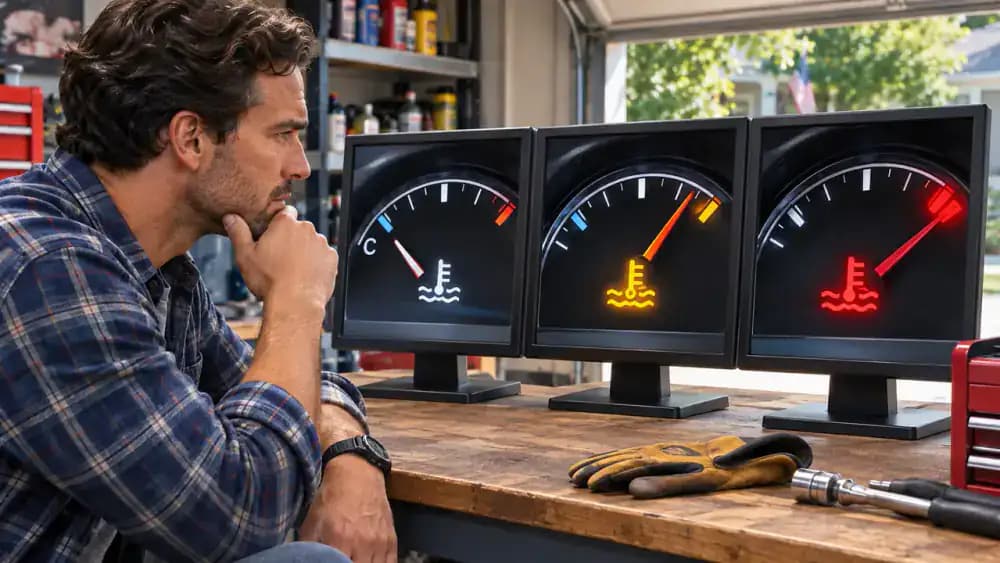
Look at the coolant temperature gauge and identify the normal operating range between C (cold) and H (hot). In the illustration, the needle approaches the red zone near H, while a separate red coolant temperature warning symbol appears on the display. Some vehicles use warning lights instead of traditional gauges. If either indicates overheating, take it seriously and find a safe place to stop immediately. Check your owner's manual for vehicle-specific symbols.
Identify Steam and Unusual Engine Odors
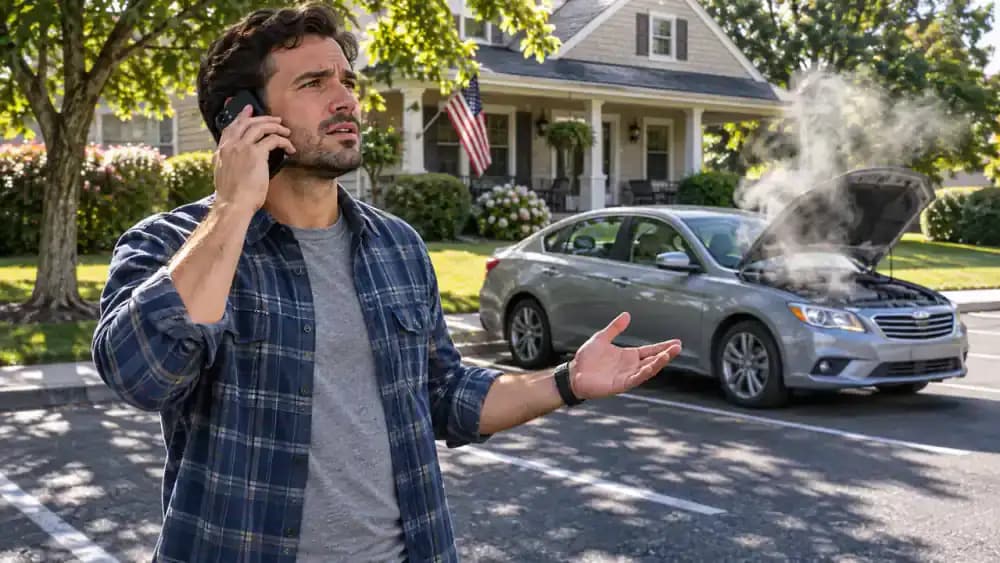
Look for white steam escaping around the hood, a sweet smell that may indicate leaking coolant, or an unusual hot odor. As illustrated, the vehicle is safely parked with the engine off while the driver calls for roadside assistance from a distance. Never approach escaping steam, open the hood, or touch hot components. These warning signs may appear separately, so do not wait for multiple symptoms before taking action.
Check How Your Vehicle Displays Overheating Alerts
Compare the three dashboard examples shown: a traditional temperature gauge with its needle in the red zone, a digital overheating message, and a red coolant temperature symbol without a gauge. Your vehicle may use any of these warning systems. Consult the owner's manual to identify the exact indicators for your make and model. If an overheating alert appears while driving, find a safe place to stop and shut off the engine.
Act Quickly to Prevent Serious Engine Damage
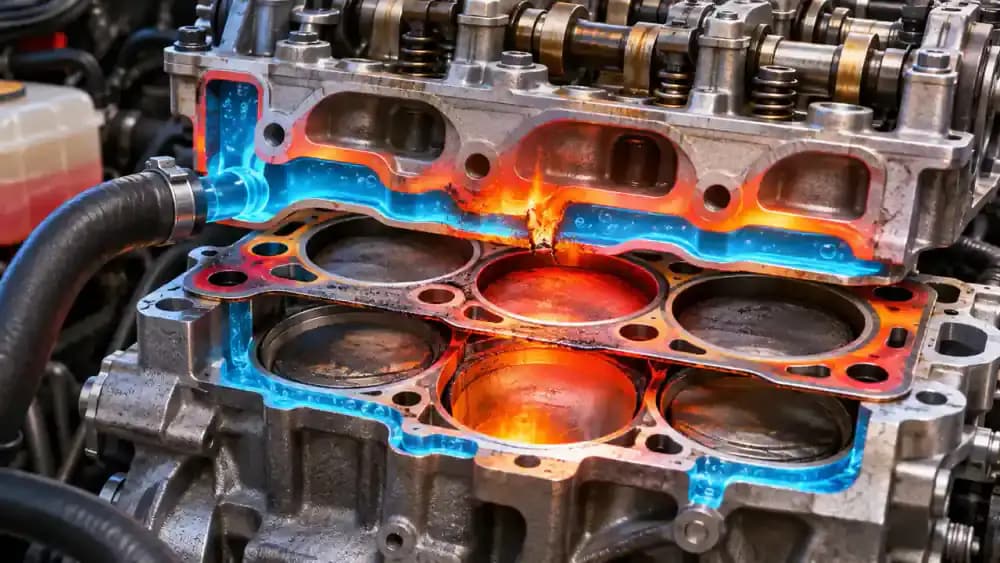
Excessive engine heat can damage critical components, including the cylinder head gasket and surrounding metal surfaces. The illustration highlights these vulnerable areas with red and orange thermal shading, showing where overheating may cause costly problems. A dashboard warning cannot reveal how serious the damage is, so never assume the engine is fine. Pull over safely, shift into Park, engage the parking brake, turn off the engine, and arrange towing.
Signal and Pull Into a Safe Stopping Area
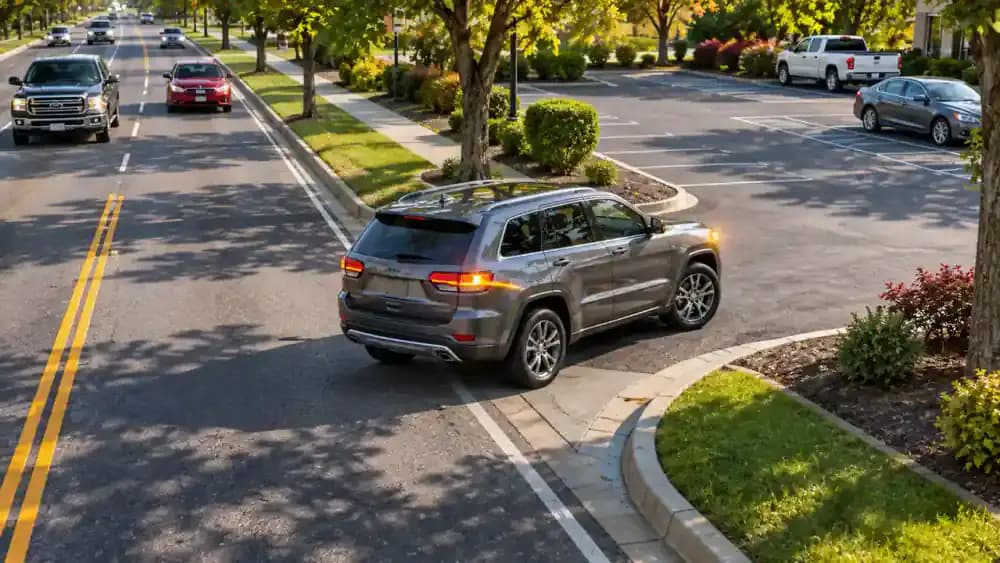
Check your mirrors, activate your turn signal, and carefully move toward a nearby parking lot or another secure stopping area. The illustration shows a blue SUV signaling right and approaching a parking lot entrance while maintaining a safe distance from other vehicles and pedestrians. Avoid sudden braking or abrupt lane changes. Focus on stopping as soon as safely possible rather than trying to reach your original destination.
Secure Your Vehicle and Shut Off the Engine
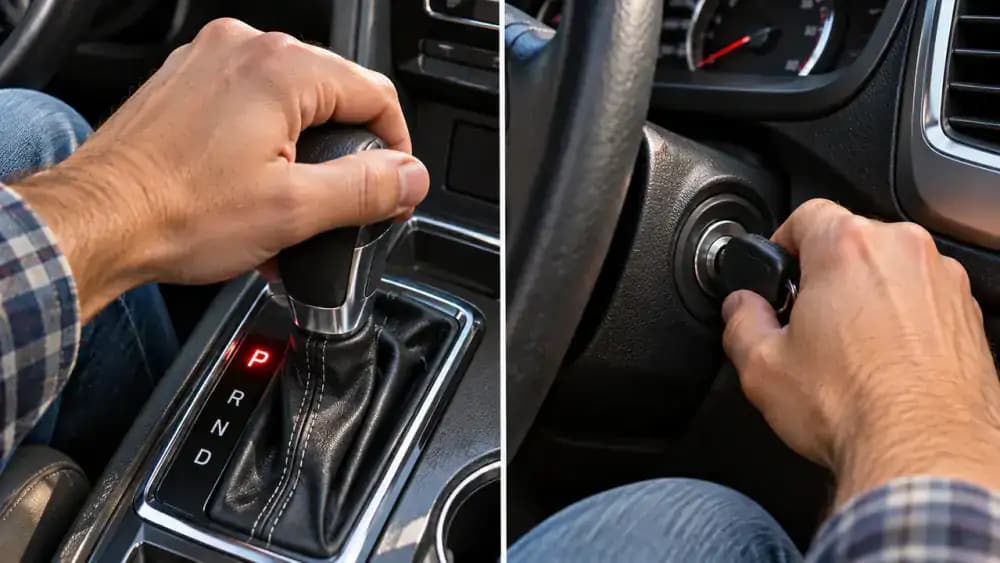
Once you've reached a secure parking space, bring the vehicle to a complete stop while keeping your foot firmly on the brake pedal. As illustrated, shift the automatic transmission into Park, engage the electronic parking brake, and press the start-stop button to switch off the engine. Leaving the engine running can worsen overheating. Stay alert to your surroundings, keep the hood closed, and never approach escaping steam.
Handle Overheating When There Is No Safe Place to Stop
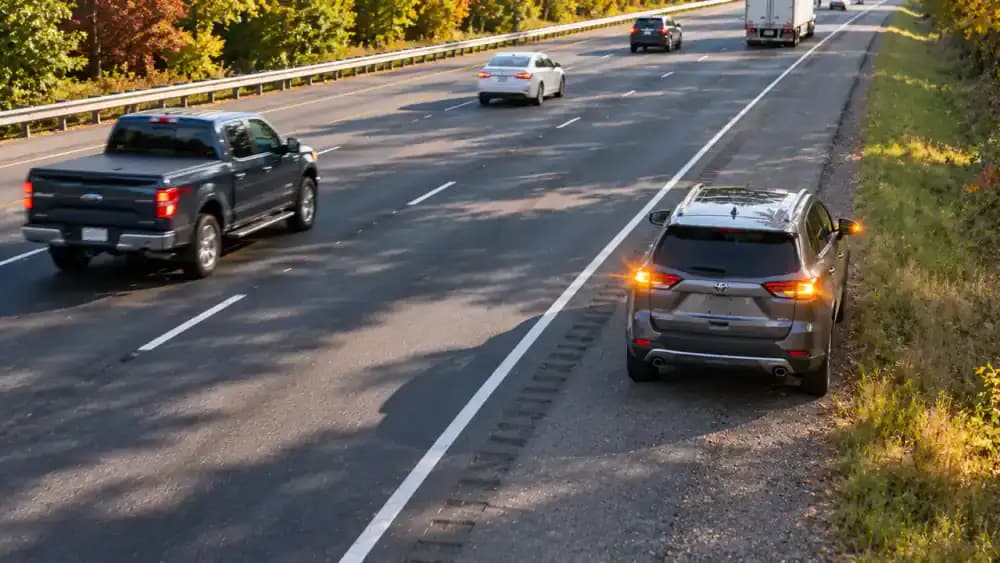
If your engine overheats on a busy highway, avoid sudden braking or dangerous lane changes. Reduce speed carefully and look for a safe shoulder or exit. The illustration shows a white crossover stopped beyond the solid shoulder line with its hazard lights flashing. Once safely stopped, turn off the engine and avoid exposure to moving traffic. Remain inside if safer, and contact roadside assistance or emergency services as appropriate.
Call Roadside Assistance and Request a Tow
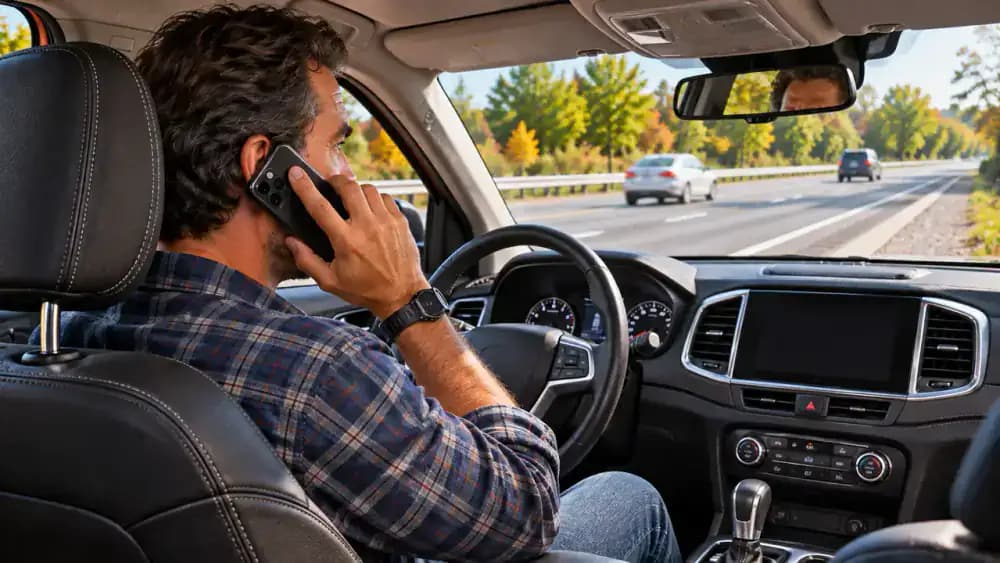
From a safe location, call roadside assistance and explain that your engine has overheated. As illustrated, the driver remains seated inside the stopped vehicle while providing a highway exit number and location details by phone. Tell the dispatcher your vehicle's make, model, color, and overheating symptoms. Mention any steam or visible leaks. Keep clear of traffic and hot components, and request towing rather than attempting to drive.
Keep Hot Radiator and Coolant Reservoir Caps Closed
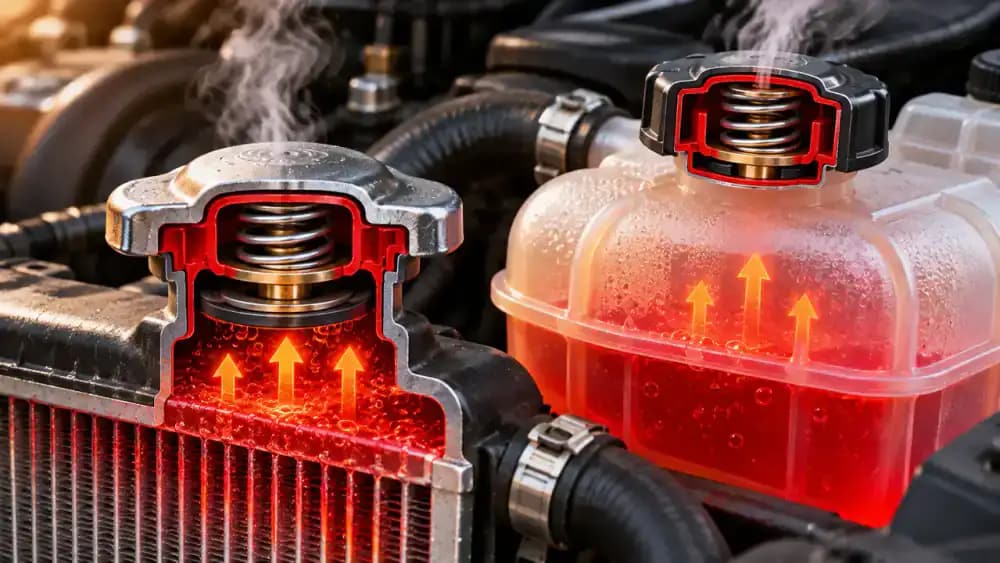
Leave the radiator cap and pressurized coolant reservoir cap completely untouched while the engine is hot. The illustration highlights both caps and shows how heated coolant can remain under pressure even after the engine is switched off. Loosening either cap can release scalding coolant and steam, causing severe burns. Do not attempt to relieve pressure or inspect the cooling system yourself. Wait for professional assistance and arrange towing.
Keep Your Distance From Escaping Steam and Hot Engine Parts
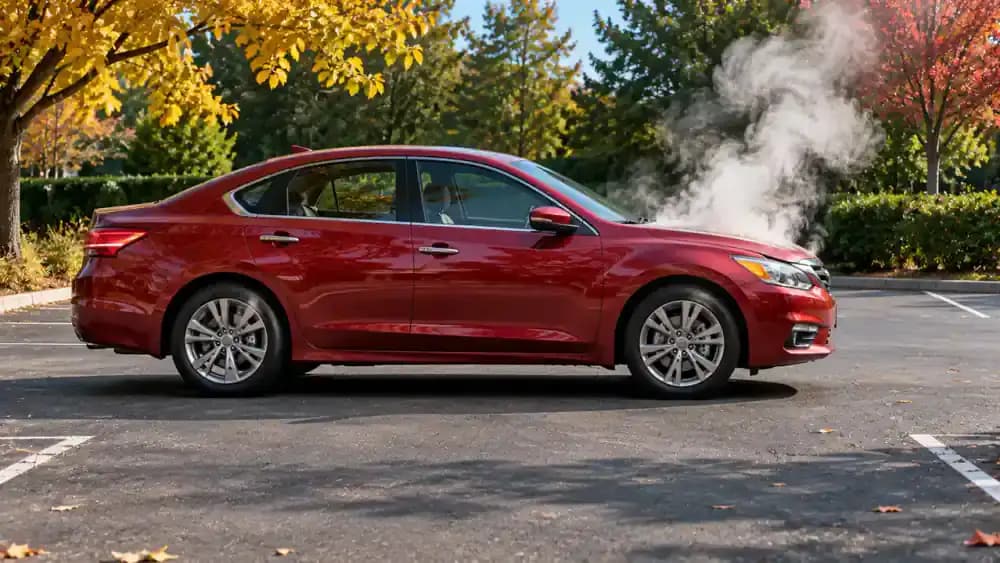
Stay away from the front of the vehicle if steam is escaping around the hood. The illustration shows a stationary red car with its hood closed, while thermal shading highlights potentially dangerous heat around the engine compartment and nearby metal surfaces. Steam can cause serious burns, and engine parts may remain hot after shutdown. Never lift the hood, reach toward a leak, or attempt an inspection. Keep passengers away and wait for roadside professionals.
Wait Until the Engine and Cooling System Are Completely Cool
Keep the engine off and allow the cooling system to cool completely before considering any visual observations. The illustration shows a parked sedan with its hood closed while the owner waits safely nearby. Cooling can take well over an hour, depending on the vehicle and conditions. Do not assume the system is safe because steam disappears or the dashboard gauge drops. Leave uncertain conditions and any inspection to roadside professionals.
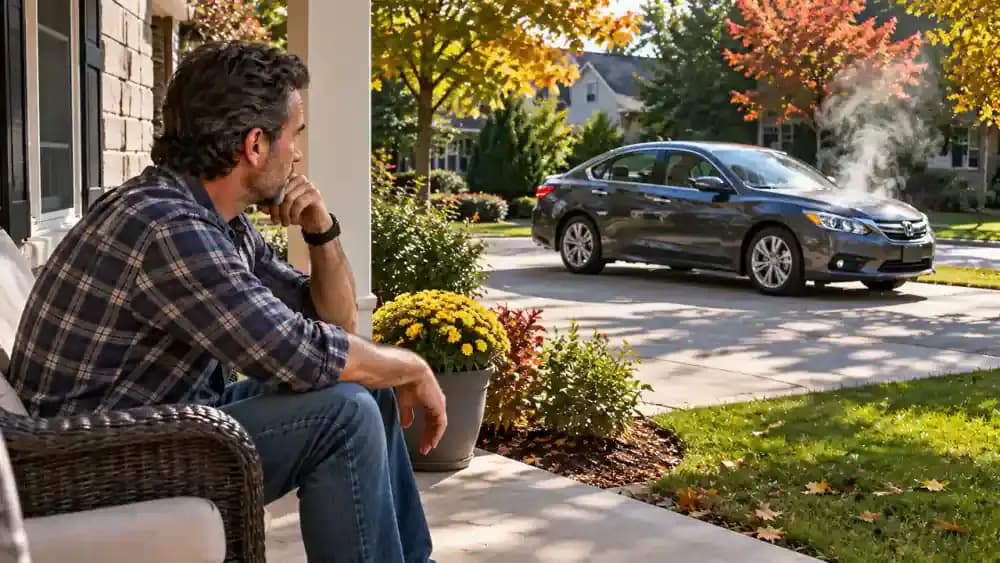
Check for Visible Coolant Puddles From a Safe Distance
After the engine and cooling system have cooled completely, look for fresh puddles beneath or near the front of your parked vehicle. The illustration shows an orange-colored puddle near the front passenger-side wheel, observed from several feet away. Coolant can be green, orange, pink, or other colors. Never touch the liquid, crawl underneath the vehicle, or assume a puddle confirms the cause of overheating. Report your observations to the mechanic.
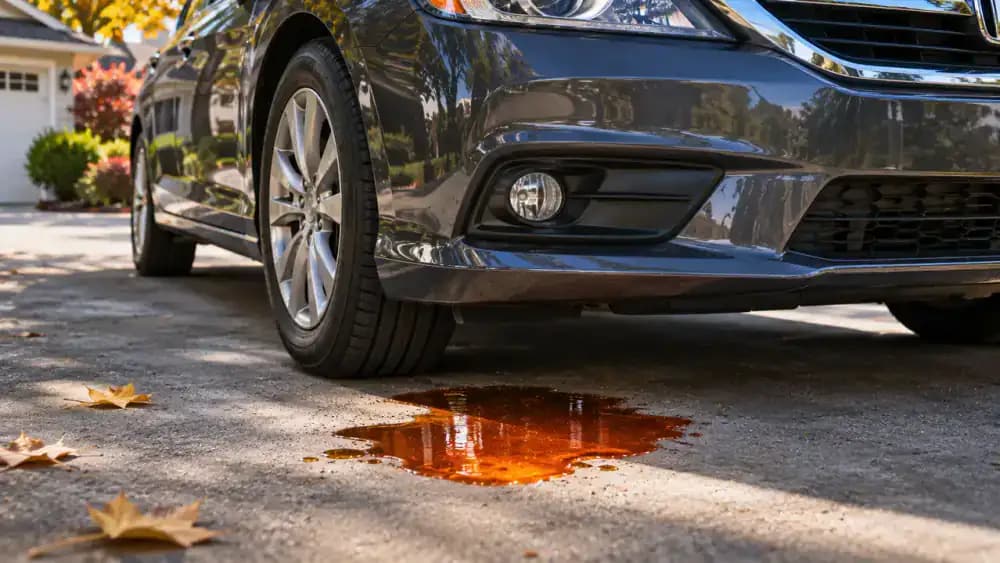
Read the Coolant Reservoir Level Without Removing the Cap
After the engine and cooling system have cooled completely, check the coolant level only if the translucent reservoir is safely visible. The illustration shows pink coolant below the molded MIN marking, with the MAX marking above it and the pressure cap securely closed. Compare the visible level with these markings without touching anything. Never remove the cap or reach past hot components. A low level suggests a possible problem but does not confirm its cause.
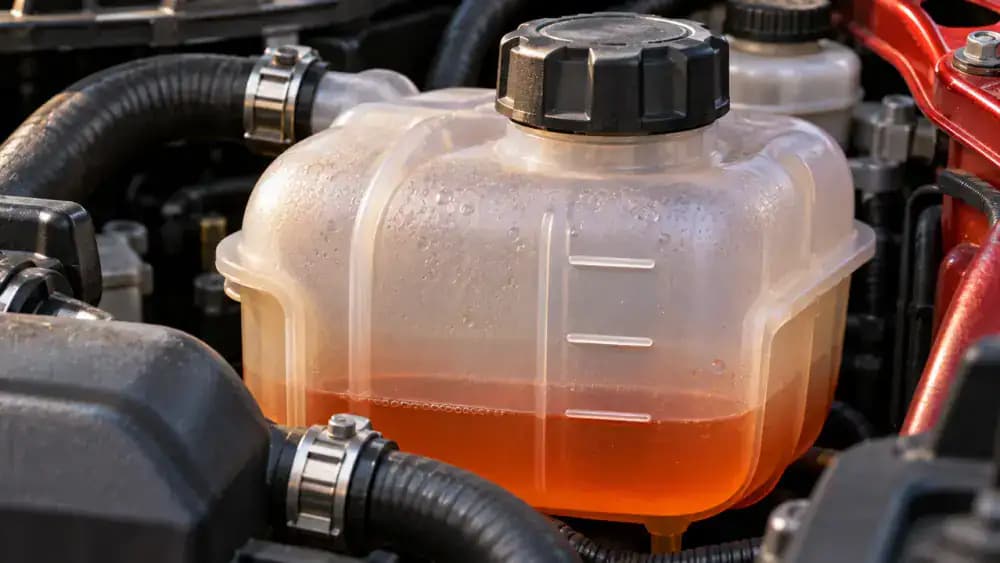
Do Not Assume a Normal Coolant Level Means the Engine Is Safe
A coolant level between the MIN and MAX markings does not rule out overheating. The illustration shows a cooling-system diagram highlighting the radiator fan, thermostat, water pump, and coolant reservoir as components involved in temperature regulation. Problems with these parts may not be visible during a roadside check. Do not restart the engine, add coolant as a quick fix, or guess at the cause. Arrange towing and professional diagnosis instead.
Have Your Overheated Vehicle Towed to a Repair Shop
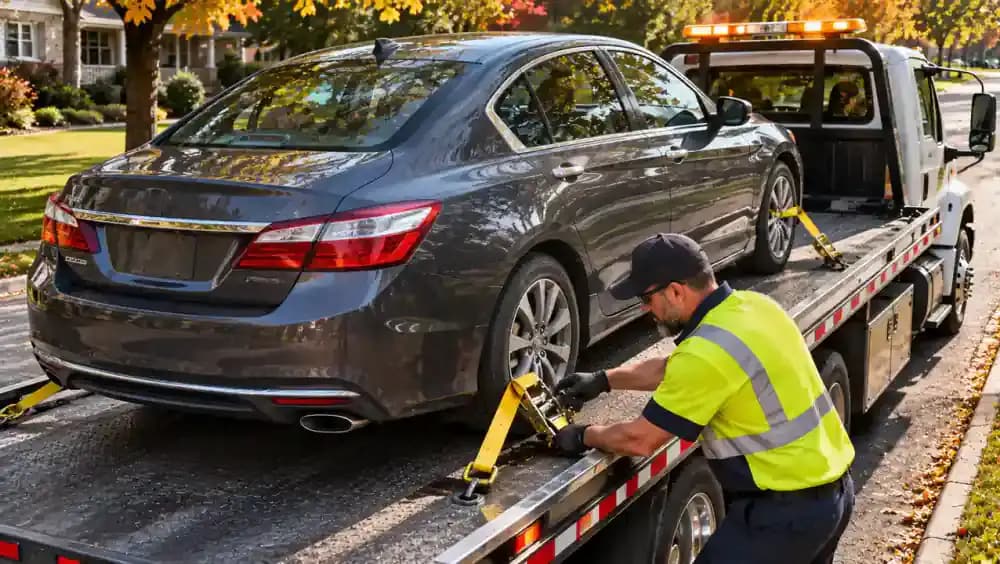
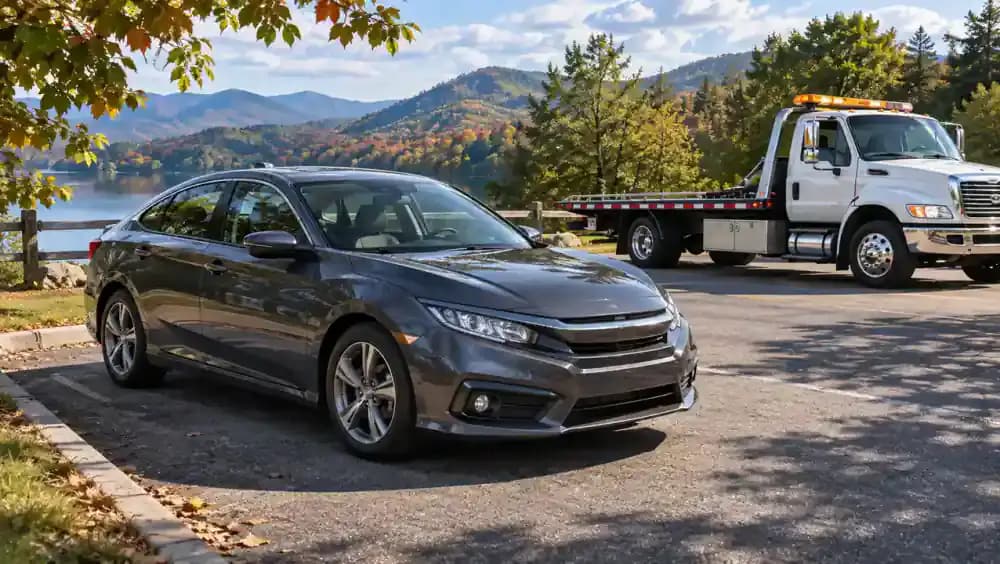
Arrange for a tow truck to transport your vehicle to a qualified mechanic instead of attempting to drive it. The illustration shows a dark blue sedan secured on a flatbed tow truck while the owner waits safely away from the loading area. Even after the engine cools and the warning disappears, overheating can happen again. Tell the towing dispatcher about the temperature warning and request transport to a repair facility.
Record the Overheating Symptoms Before Visiting the Mechanic
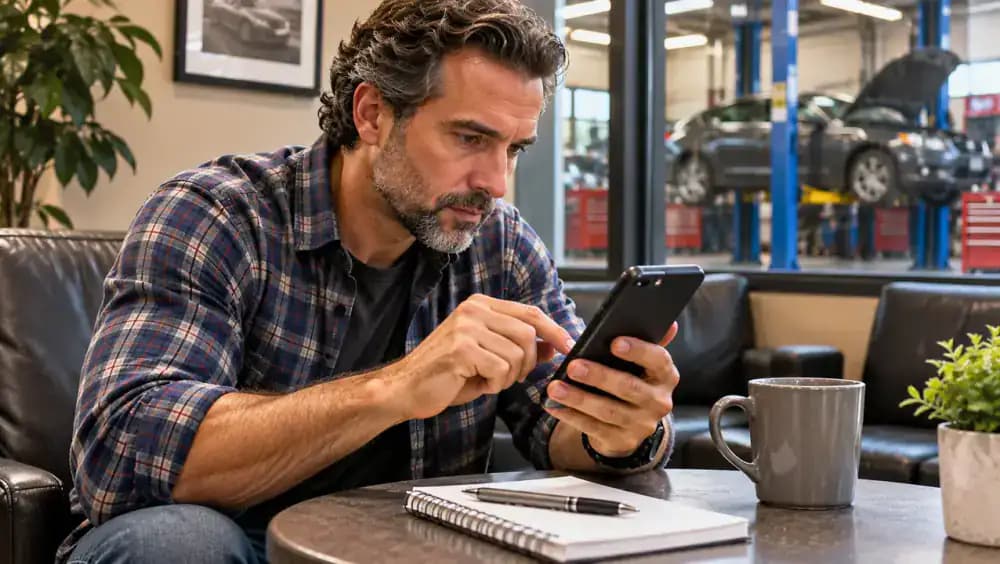
Use your phone or a notebook to record exactly what happened before the engine overheated. The illustration shows a checklist covering the temperature warning, gauge reading, visible steam, unusual smells, traffic conditions, and air conditioning use. Include whether you were climbing a hill or sitting in traffic when the warning appeared. Write down your vehicle's year, make, and model. These details help the mechanic investigate without requiring you to inspect the engine.
Explain the Overheating Symptoms to Your Mechanic
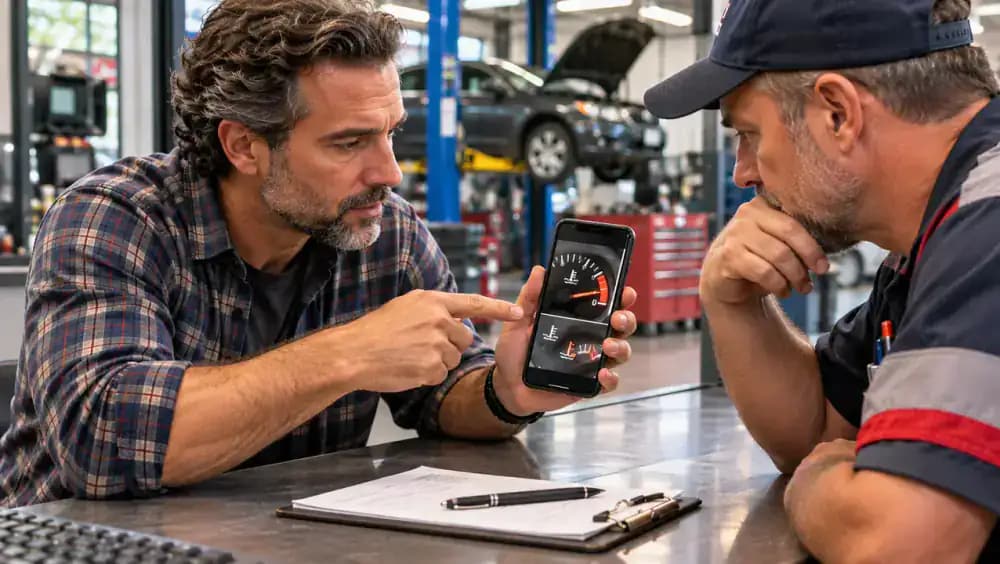
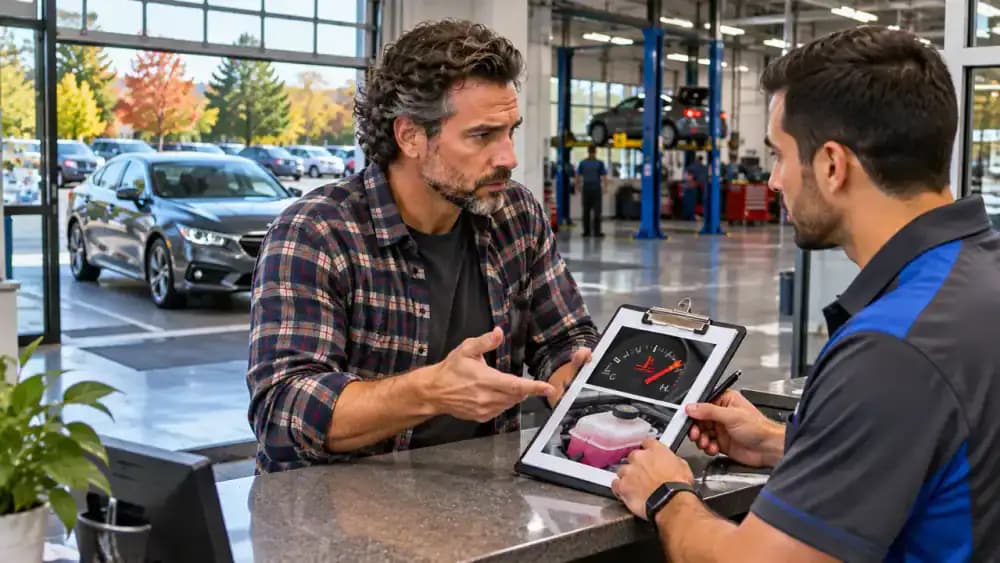
Present your symptom notes to the mechanic and explain what happened before you stopped driving. The illustration shows a vehicle owner sharing a dashboard warning photo and written observations with a technician at the repair shop. Mention any visible coolant puddles, steam, unusual smells, and driving conditions. Only share photographs captured safely after stopping. Ask for a cooling-system diagnosis and a repair estimate before authorizing work or replacing parts.
Know What Your Mechanic Should Inspect
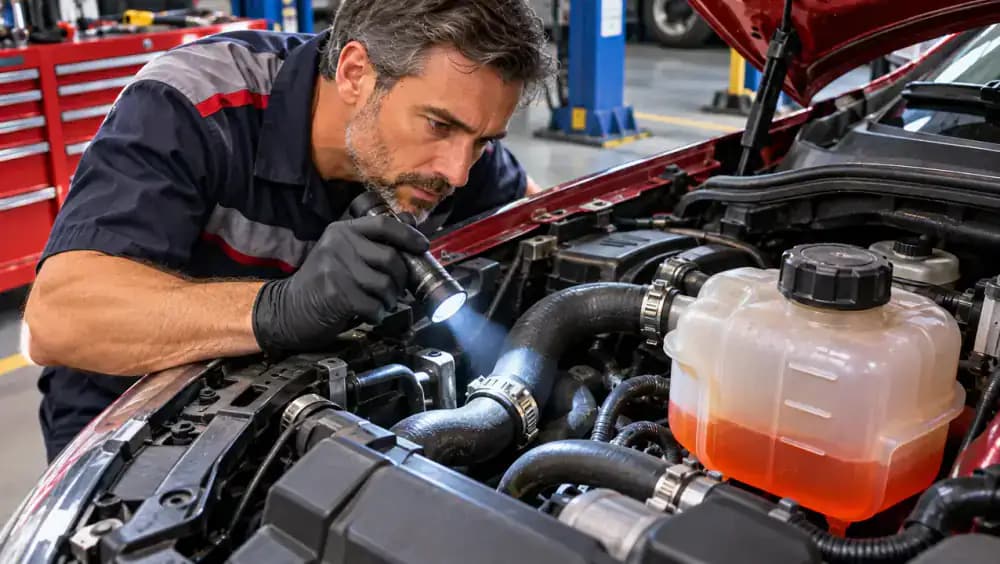
Ask your mechanic to investigate the cooling system before recommending replacement parts. The illustration shows a technician examining radiator hoses and connections on a completely cooled vehicle, with an inspection checklist covering leaks, hoses, thermostat function, and radiator fan operation. Some diagnostic checks require specialized equipment. Request an explanation of the findings and how they support the proposed repair. Keep the vehicle out of service until the overheating problem is resolved.
Review the Diagnosis and Written Repair Estimate
Before authorizing repairs, ask the mechanic to explain what caused the overheating and which diagnostic findings support that conclusion. The illustration shows a service advisor reviewing a written estimate with separate sections for diagnostic charges, replacement parts, and labor. Check each cost and ask whether the engine needs evaluation for additional heat damage. Request clarification of any uncertain findings, and confirm what must be repaired before the vehicle can safely return to service.
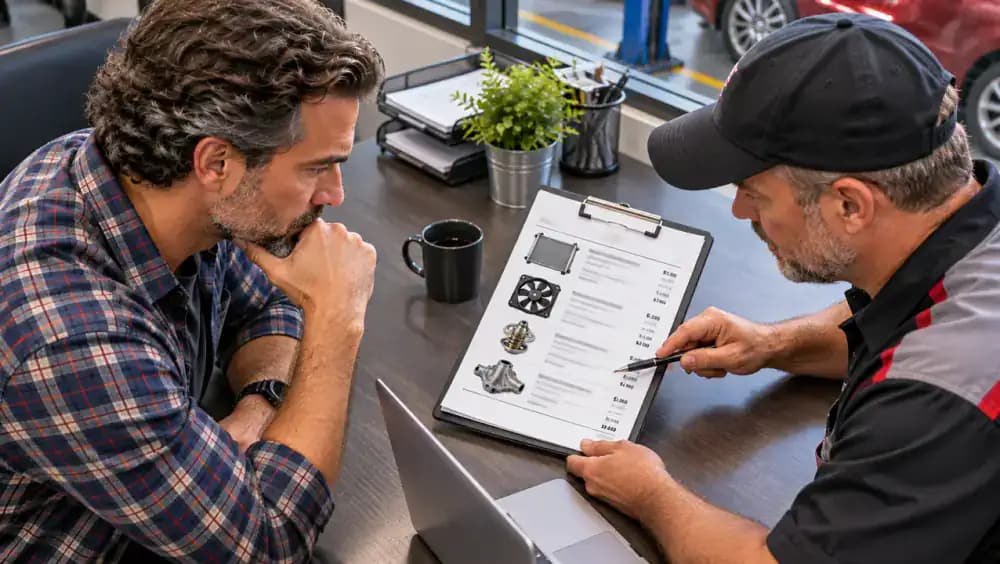
Verify the Overheating Problem Is Fixed Before Driving
Before taking your vehicle back, ask the repair shop how it confirmed the overheating problem was resolved. The illustration shows a technician reviewing a post-repair checklist covering cooling-system operation, remaining leaks, engine temperature behavior, and dashboard warnings. Request a written service report documenting the repairs and verification results. Ask about any recommended follow-up inspections. Do not drive the vehicle until the shop confirms it is safe to return to the road.
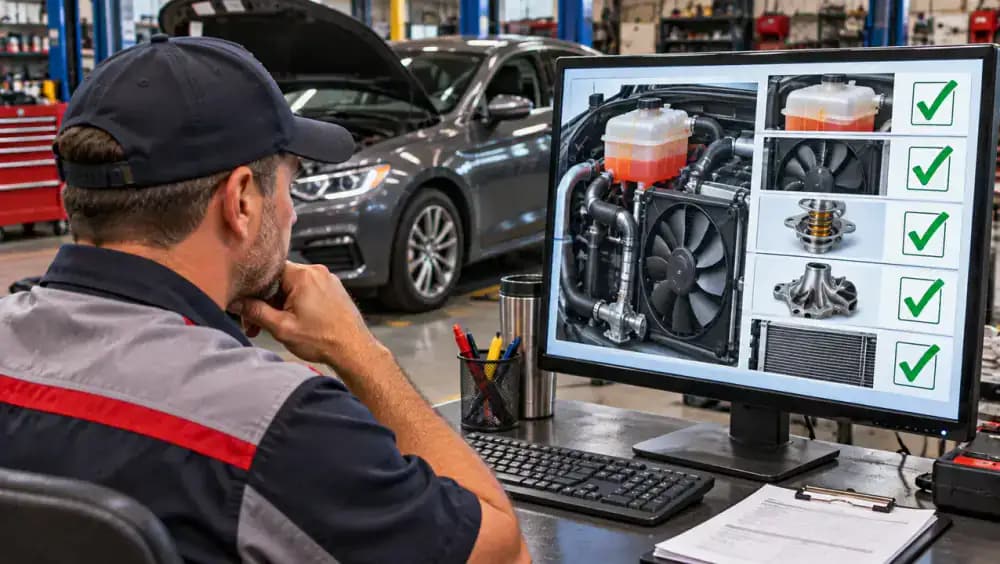
Organize Your Repair Records and Schedule Follow-Up Service
After the shop confirms your vehicle is safe, save the repair invoice, diagnostic findings, and recommended follow-up dates. The illustration shows an owner organizing these documents in a vehicle records folder and updating a digital maintenance log. Record which parts were replaced, what inspections were completed, and whether coolant service was performed. These details help track recurring problems. If another overheating warning appears, stop safely and arrange towing again.

Schedule Cooling-System Inspections Before Problems Develop
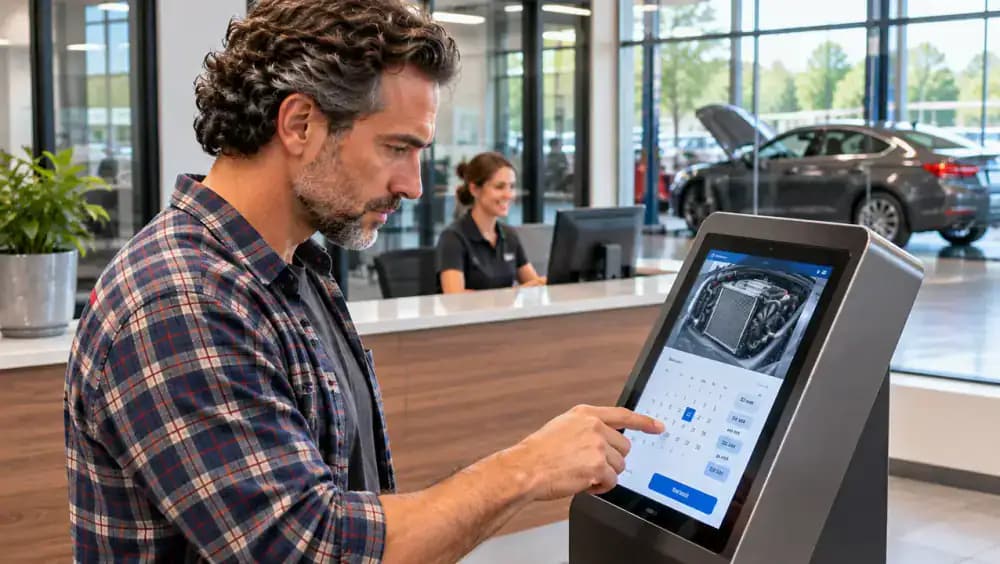
Check your owner's manual for the recommended cooling-system maintenance schedule, then book routine inspections with a qualified service shop. The illustration shows a customer scheduling an appointment for coolant condition, radiator hoses, and cooling-system connections. Coolant replacement intervals depend on the vehicle and coolant type, so follow manufacturer guidance rather than a generic schedule. Ask the technician to identify aging hoses, leaks, or other developing problems during regular service visits.
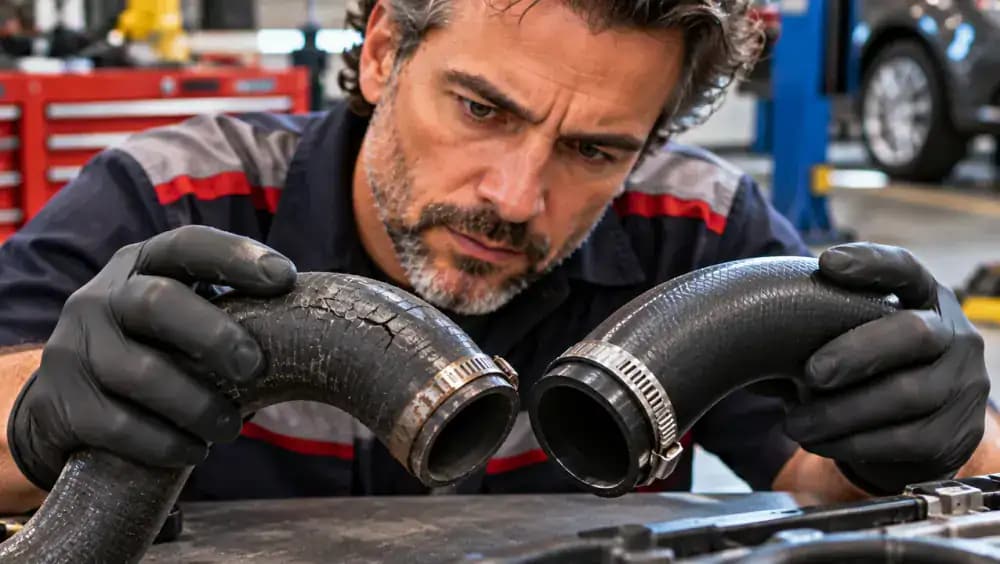
Have Aging Radiator Hoses and Connections Checked
During scheduled maintenance, ask a qualified technician to inspect radiator hoses and connections for cracks, swelling, aging, and coolant seepage. The illustration compares a healthy hose with cracked and swollen examples, while a technician examines a disconnected sample using a flashlight. These problems can develop before a dashboard warning appears. Have damaged components evaluated for replacement. Never squeeze hoses, touch connections, or investigate leaks while the engine is hot.
Choose Manufacturer-Approved Coolant and Service Intervals
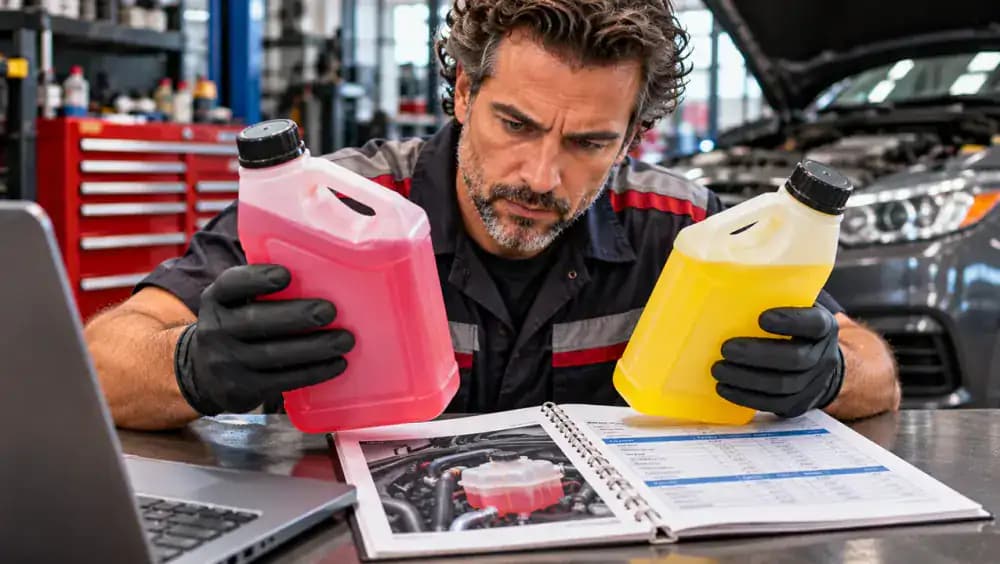
Check your owner's manual for the required coolant specification and recommended replacement interval. The illustration shows a service professional comparing sealed coolant containers with a manufacturer's specification chart. Coolants have different formulations, so never choose one based on color alone or mix products without confirming compatibility. Ask your mechanic to verify the correct coolant and review previous service records. Never open a hot cooling system to add fluid.
Take Early Engine Temperature Changes Seriously
Watch for temperature readings higher than usual, recurring coolant loss, or unfamiliar sweet smells, even when no warning light appears. The illustration shows a driver reviewing a previous gauge reading and maintenance reminder while scheduling a professional inspection from a parked vehicle. Report these changes before they become more serious. If an overheating warning appears, stop safely, turn off the engine, and arrange towing rather than continuing to drive.

Prepare Your Roadside Emergency Contacts Before Traveling
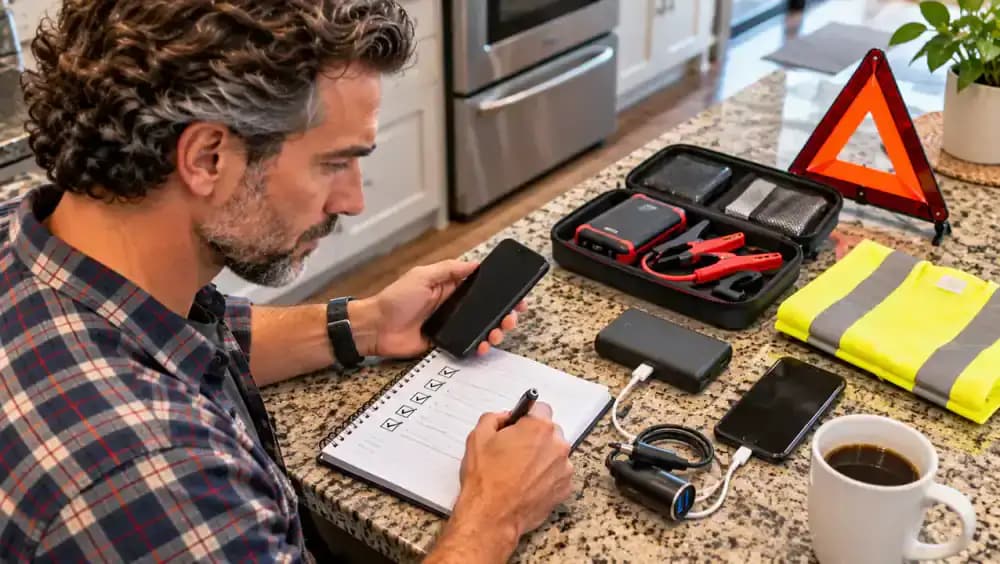
Before your next trip, save your roadside assistance number, verify your towing coverage, and make sure your phone is charged. The illustration shows a driver organizing emergency contacts, insurance information, vehicle registration, and a phone charging cable. Keep these details accessible so you can request help quickly if overheating occurs. Knowing your vehicle's make, model, and location will also help the dispatcher arrange appropriate towing assistance.
Follow the Safe Response When Your Engine Overheats
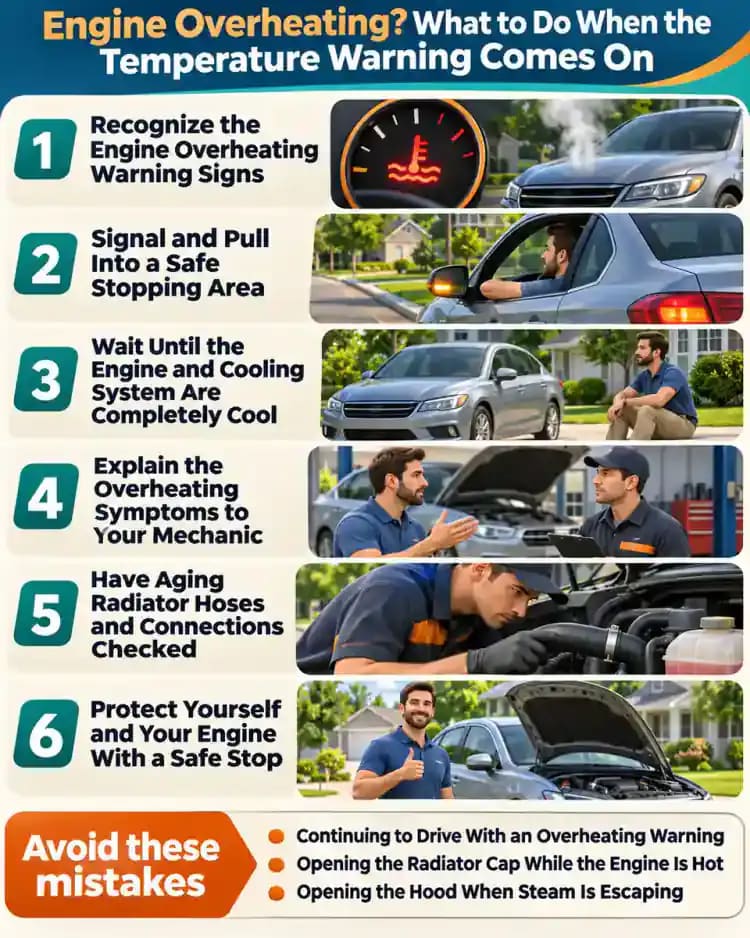
Remember the essential actions shown in the six-panel illustration: recognize the temperature warning, signal toward a safe stopping area, shift into Park, engage the parking brake, and turn off the engine. Keep the hood closed and stay away from steam, hot components, and pressurized coolant. Contact roadside assistance and arrange towing to a qualified mechanic. Never continue driving, even if the temperature warning disappears after stopping.
Keep the Engine Off Even After It Cools Down
Do not restart your vehicle simply because the temperature gauge has returned to normal or steam is no longer visible. The illustration shows a black sedan parked with its engine off while the driver waits for an approaching tow truck. Cooling does not fix the underlying mechanical problem, and driving again could cause further damage. Keep the ignition off, confirm your towing arrangements, and wait for professional diagnosis before driving.

Protect Yourself and Your Engine With a Safe Stop
When overheating is suspected, pull over safely, engage the parking brake, and shut off the engine. The illustration shows a silver sedan secured on a flatbed tow truck while its owner shares overheating symptoms with a service advisor. Keep clear of steam, hot components, and pressurized coolant. Arrange professional diagnosis before driving again. For future trips, follow manufacturer maintenance recommendations and never ignore an overheating warning, even for a short distance.
You're driving through traffic when you notice the temperature gauge climbing toward the red zone. A warning light appears on your dashboard, and moments later, steam starts escaping from beneath the hood. Your first instinct might be to keep driving until you reach home or a nearby repair shop, but that decision could turn a manageable cooling-system problem into severe engine damage. An overheating engine needs immediate attention, and knowing how to respond can protect both you and your vehicle.
The safest response is to signal, pull over somewhere secure as soon as conditions allow, shift into Park, engage the parking brake, and turn off the engine. Never open a hot radiator cap or pressurized coolant reservoir, touch escaping coolant, or approach steam and hot engine components. You don't need to open the hood when steam is present. This guide explains how to recognize overheating warnings, make a safe roadside stop, identify visible signs after the engine has completely cooled, and arrange towing and professional inspection without taking unnecessary risks.
Where people go wrong
Continuing to Drive With an Overheating Warning. Trying to reach home or the nearest repair shop while the temperature gauge is in the red can cause severe engine damage. Even a short distance may make the problem worse. Pull over safely, turn off the engine, and arrange towing instead of continuing your trip.
Opening the Radiator Cap While the Engine Is Hot. A hot cooling system can contain pressurized coolant capable of causing serious burns if released suddenly. Never remove the radiator cap or open a pressurized coolant reservoir while the engine is hot. Keep your hands away from escaping coolant, steam, and heated engine components.
Opening the Hood When Steam Is Escaping. Seeing steam rise from beneath the hood may tempt you to investigate immediately. However, opening the hood can expose you to hot vapor and engine components. Stay clear of the steam, leave the hood closed, and allow the vehicle to cool completely before considering any visual observations.
Assuming the Problem Is Fixed Once the Engine Cools. A lower temperature reading after stopping does not mean the underlying problem has disappeared. Visible coolant puddles or a low reservoir level may suggest trouble, but neither confirms the cause. Arrange towing and tell your mechanic about warning lights, steam, unusual smells, and driving conditions.
Questions people ask
Signal and pull over to a secure location as soon as traffic conditions allow. Shift into Park, engage the parking brake, and turn off the engine. Avoid touching hot components or opening the hood if steam is escaping. Arrange roadside assistance and towing rather than attempting to continue driving.
Fixed it?
Get one guide like this every Thursday.