Deductions vs. Credits: The Core Difference in Your Tax Bill
Learn how tax deductions and tax credits affect your federal tax bill differently, why credits often have greater direct value, and how understanding both can improve tax planning decisions.

What you’ll need
Tap to tick things off before you start.
Tax Confusion Explained
This section introduces why many taxpayers find the difference between tax deductions and tax credits confusing when estimating their final tax bill. It focuses on the common misunderstanding that both tools reduce taxes but operate differently within the federal tax system. The discussion establishes the need for a clear framework before exploring how each mechanism affects taxable income and tax liability, without analyzing the detailed calculation methods yet.

Federal Tax Basics
This section explains the broader federal tax system context and how income taxes fit into government operations in the United States. It references USA.gov as a source for general federal tax information and introduces the role of the IRS in providing taxpayer resources. The focus remains on understanding the environment where deductions and credits exist rather than explaining their individual mechanics or financial impact. This section prepares readers for the filing process ahead.

Preparing Tax Returns
This section describes the process of preparing annual tax returns and the types of information taxpayers encounter during filing. It focuses on organizing forms, records, and financial details while showing why tax terminology can become challenging. The discussion highlights the role of accurate preparation and official resources from organizations such as the IRS. It does not yet compare deductions and credits directly but establishes the filing context.

Two Important Tools
This section introduces tax deductions and tax credits as two important mechanisms used within the tax system. It explains that both can reduce a taxpayer's overall tax burden while emphasizing that they function through different stages of calculation. The IRS recognizes both deductions and credits as important tax provisions. The focus is on introducing these concepts without yet exploring the detailed mathematical differences between them.

Avoiding Tax Errors
This section explains why understanding deductions and credits matters when reviewing tax information and estimating potential outcomes. It focuses on preventing confusion that may lead to mistakes in understanding a final tax bill or possible refund. The discussion connects accurate knowledge with better financial awareness while emphasizing that official IRS and USA.gov resources can help taxpayers understand available options and current requirements.

Tax Calculation Mechanics
This section explains the basic framework behind how tax calculations are organized and where different tax tools appear in the process. It focuses on the relationship between income, taxable income, and tax liability without going deeply into individual deduction or credit rules. The goal is to provide a clear structural view of the calculation process so later sections can explain the specific effects of each mechanism.

Understanding Tax Terms
This section clarifies common tax terminology that can make federal tax information difficult to follow. It focuses on creating a simple vocabulary foundation for understanding deductions, credits, taxable income, and tax liability. The explanation prepares readers to recognize how these terms relate to one another. It does not yet provide a detailed comparison but instead removes confusion around the language used throughout tax discussions.

Household Budget Impact
This section connects tax concepts with everyday household financial planning and explains why understanding tax mechanisms has practical importance. It focuses on how awareness of tax structure can help people better understand financial decisions made throughout the year. The discussion highlights the relationship between tax knowledge and budgeting without providing personal recommendations. It frames taxes as one factor affecting overall household financial planning.

How Deductions Work
This section defines tax deductions and introduces their primary purpose within the federal tax system. It explains that deductions reduce the amount of income subject to taxation by lowering taxable income. The IRS provides information about available deductions for individuals and businesses. The focus remains on understanding the basic function of deductions before examining how their value changes based on tax rates and circumstances.

Lowering Taxable Income
This section explains the mechanics of how deductions lower taxable income by subtracting permitted amounts from gross income. It focuses on the calculation step where the taxable base is reduced before tax liability is determined. The discussion describes the role of deductions in the overall process without comparing them directly with credits. It establishes the foundation needed for understanding the different impact of tax reduction methods.

No Dollar For Dollar Reduction
This section explains why tax deductions do not remove the same amount from a final tax bill. A deduction reduces taxable income rather than directly reducing taxes owed. The actual benefit depends on the rate applied to that reduced income. The IRS explains that deductions lower taxable income, which changes the calculation base before tax liability is determined. Understanding this distinction helps taxpayers evaluate the true impact of deductions.

Tax Bracket Connection
This section focuses on the relationship between deductions and marginal tax rates. A taxpayer's bracket determines the percentage of tax avoided on the deducted amount. Because different portions of income can be taxed at different rates, the same deduction can create different savings outcomes for different taxpayers. This connection between taxable income and tax rates is central to understanding how deductions function within the federal tax system.

Higher Bracket Effect
This section explores why deductions can have a larger tax impact for people in higher tax brackets. When taxable income is reduced, the deduction removes income that may have been subject to a higher marginal rate. The result is a greater tax reduction compared with the same deduction used by someone with a lower applicable rate. This demonstrates why deduction benefits are not identical across all taxpayers.

Lower Bracket Effect
This section explains why deductions generally create smaller savings for taxpayers in lower brackets. Since the deducted income would have been taxed at a lower marginal rate, the reduction in tax liability is also smaller. The concept shows that deductions are percentage-based benefits rather than fixed dollar reductions. Comparing different brackets helps clarify why the value of one deduction varies between households.

Checking Eligibility
This section covers the importance of reviewing whether specific deductions apply under current tax rules. Available deductions may depend on income levels, filing situations, and qualifying expenses. The IRS provides guidance on deductions and eligibility requirements, while USA.gov offers general federal tax resources. Careful review of available information helps taxpayers understand which deductions may influence taxable income before completing their returns.

How Tax Credits Work
This section introduces tax credits as a different mechanism from deductions. A tax credit reduces the amount of tax owed after the tax liability has been calculated. Unlike deductions, credits are applied directly against the final tax amount. The IRS describes credits as tools that can reduce tax liability for eligible taxpayers. Understanding this process explains why credits often have a more direct financial effect.

Direct Tax Reduction
This section explains the mathematical process of applying a tax credit. After income, deductions, and tax calculations are completed, the credit amount is subtracted from the resulting tax liability. This dollar-for-dollar reduction makes the effect easier to understand compared with deductions. The focus is on the timing and placement of credits within the overall tax calculation process.

Credit Value
This section compares the strength of credits with deductions of the same dollar amount. A credit generally provides its full stated value because it directly lowers the tax owed. A deduction only reduces taxable income, making its value dependent on tax rates. This difference explains why credits are often viewed as more powerful tools within the tax system when comparing equal dollar amounts.

Credit Categories
This section explains the two major categories of tax credits: refundable and nonrefundable. Refundable credits may provide a refund if the credit exceeds the remaining tax liability, while nonrefundable credits have different limits. The IRS provides information about available credits and their requirements. Understanding these categories helps explain why some credits can affect refunds while others only reduce taxes owed.

Nonrefundable Credits
This section focuses on how nonrefundable credits are limited by the amount of tax owed. These credits can reduce a tax liability to zero, but any unused portion generally cannot create an additional refund. Understanding this limitation helps distinguish nonrefundable credits from refundable ones. Taxpayers should review current IRS guidance because credit rules and eligibility requirements can change over time.

Refundable Credits
This section explains how refundable credits may produce a payment when the credit amount exceeds remaining tax liability. It focuses on the refund mechanism and how it differs from credits that cannot generate excess payments. The IRS provides guidance on available refundable credits and their requirements. The discussion will clarify why these credits can affect the final result of a tax return without describing individual taxpayer situations or outcomes.

Credit Rules
This section explains the factors that determine eligibility for specific tax credits. It focuses on requirements such as qualifying conditions, income thresholds, and applicable rules that influence whether a credit may be available. The IRS offers resources to help taxpayers understand these requirements. The goal is to show why reviewing credit rules carefully is important before considering how credits may affect a tax calculation.

Comparing Both Options
This section compares deductions and credits by examining their different financial effects within the tax system. It focuses on how each tool changes the final calculation and why their benefits are measured differently. Deductions affect taxable income, while credits affect the calculated tax amount. The comparison helps explain why understanding both mechanisms is essential for following the overall tax process.

Calculation Order
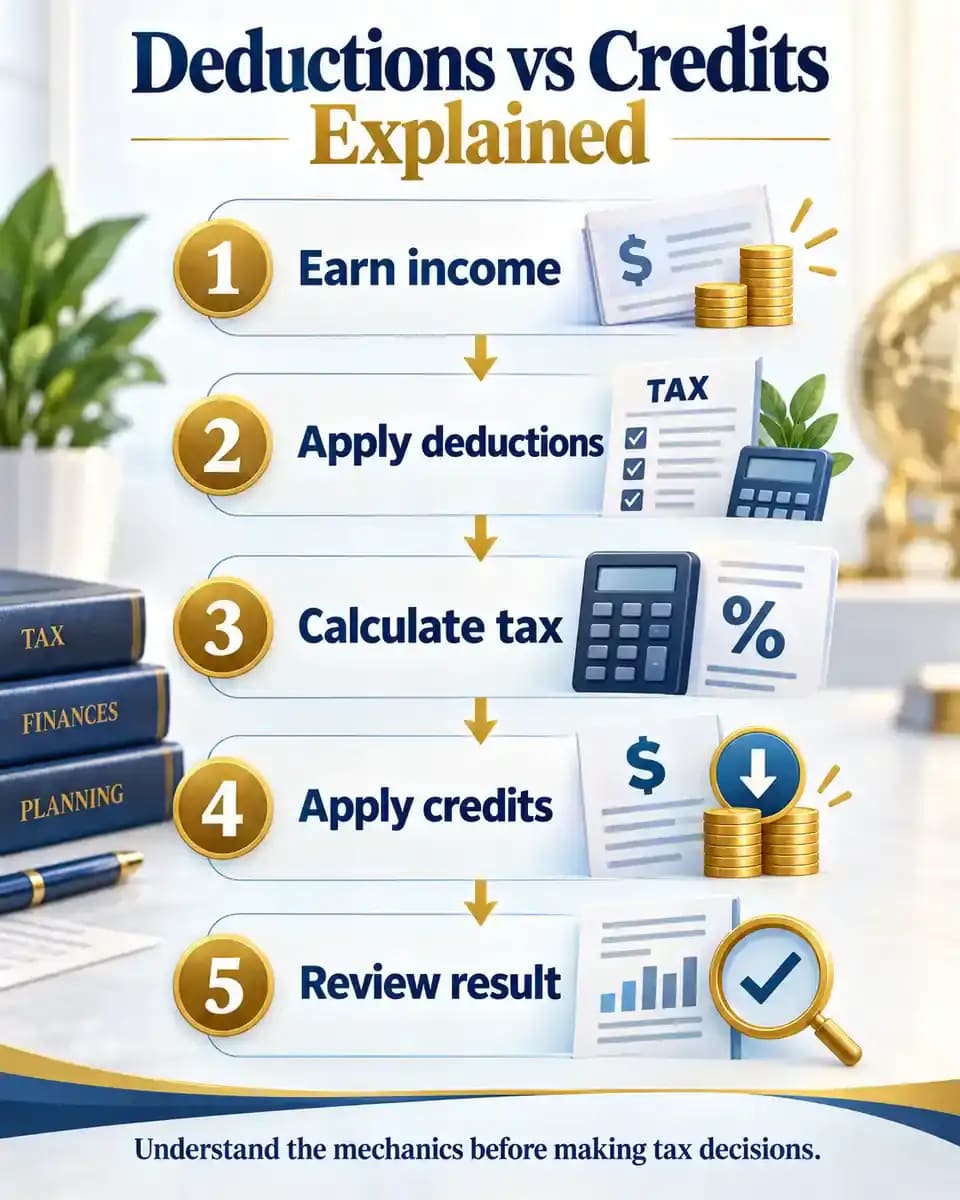
This section explains where deductions and credits appear in the sequence of a tax calculation. It focuses on the order in which taxable income is determined and tax reductions are applied. Deductions generally influence the income figure used for calculation, while credits are considered after tax liability is established. This structure helps viewers understand the flow from income to final tax results.

Why Credits Often Win
This section explains why tax credits often provide stronger direct value compared with deductions of the same amount. It focuses on the dollar-for-dollar reduction created by credits and the percentage-based effect associated with deductions. The discussion highlights the mathematical difference between the two tools while recognizing that both are important components of the federal tax system described by the IRS.

Planning Ahead
This section connects tax knowledge with general financial preparation throughout the year. It focuses on how understanding deductions and credits can help people better anticipate possible tax effects when making financial decisions. The discussion emphasizes awareness of tax concepts rather than personal recommendations. Learning how these tools work can improve understanding of how yearly financial activity may interact with federal tax calculations.

Complementary Tools
This section explains how deductions and credits work together as separate tools within the tax system. It focuses on their different functions and why taxpayers should understand both rather than viewing them as alternatives. USA.gov and the IRS provide information about federal taxes and related resources. The discussion shows how these mechanisms can jointly influence the overall tax calculation process.

Estimating Outcomes
This section explains how understanding deductions and credits supports more accurate tax forecasting. It focuses on how changes in income, deductions, and credits can move through the calculation process and influence possible results. The goal is to demonstrate the value of understanding the mathematics behind taxes. It does not provide predictions or individualized estimates for any specific taxpayer situation.

Making Better Decisions
This section explains how knowledge of tax deductions and credits can support more informed financial choices. It focuses on evaluating available information, understanding tax terminology, and recognizing the importance of accurate research. The discussion encourages awareness of how tax tools operate while noting that rules and eligibility requirements vary. Better understanding can help people approach tax topics with greater confidence.

Using Reliable Resources
This section explains why official resources are important when researching tax deductions and credits. It focuses on using trusted organizations such as the IRS and USA.gov for current federal tax information and guidance. The discussion highlights the complexity of tax rules and the importance of verifying information. Reliable sources help taxpayers better understand available concepts without replacing professional advice.

Many taxpayers find tax season confusing because similar terms can have very different effects on the final amount they owe. Two of the most important concepts to understand are tax deductions and tax credits. Both can reduce your overall tax burden, but they work at completely different stages of the tax calculation process.
A tax deduction lowers the amount of income that is subject to taxation. Instead of reducing your tax bill directly, it reduces your taxable income before the tax calculation happens. The value of that reduction depends on your tax bracket because the savings are connected to the rate applied to the reduced income.
A tax credit works differently. It is applied after your tax liability has been calculated and reduces the amount you owe directly. Because credits reduce the final tax amount dollar for dollar, they often provide a stronger financial impact than deductions of the same size.
Understanding this difference helps you better evaluate financial decisions, estimate possible tax outcomes, and recognize why certain tax benefits may have different values for different taxpayers. The Internal Revenue Service provides official information about available deductions and credits, while USA.gov offers additional federal tax resources. Tax rules change over time, and eligibility depends on individual circumstances, income levels, and current regulations. This guide explains the core mechanics so you can better understand the language used when discussing taxes.
Where people go wrong
Confusing deductions with credits. Many taxpayers assume both options reduce their tax bill in the same way. A deduction lowers taxable income while a credit directly lowers tax owed, creating different financial results.
Ignoring tax bracket impact. A deduction does not have the same value for every taxpayer. The benefit depends on the marginal tax rate applied to the reduced income amount during the calculation process.
Missing available credits. Some taxpayers focus only on deductions and overlook credits that may directly reduce their tax liability. Understanding both categories helps create a more complete view of possible tax benefits.
Assuming all credits work equally. Tax credits can have different rules, including whether they are refundable or nonrefundable. The treatment of a credit can affect whether unused amounts may provide additional refund value.
Using outdated information. Tax laws and eligibility requirements can change over time. Relying on old information may lead to incorrect expectations about available deductions, credits, or filing requirements.
Questions people ask
A tax deduction reduces the amount of income that is subject to taxation, while a tax credit reduces your calculated tax liability directly. Because credits are applied later in the tax process, their dollar value is usually more direct.
Fixed it?
Get one guide like this every Thursday.