The Lifecycle of a Disputed Credit Report Item: Steps and Timelines
Learn what happens after you dispute a credit report error, from filing your claim to the bureau's investigation, lender verification, and final decision. Understand the 30- to 45-day timeline, your rights, and what to do if an error remains.

What you’ll need
Tap to tick things off before you start.
How to Identify Errors on Your Credit Report
Start by reviewing your credit reports from Equifax, Experian, and TransUnion, available through AnnualCreditReport.com. Compare personal details, account ownership, balances, payment histories, and account statuses against your records. Look for unfamiliar accounts, payments incorrectly marked late, duplicate entries, or debts that do not belong to you. An unfamiliar entry is not automatically fraudulent, so examine the details carefully. Because bureaus may receive different information, an error could appear on one report but not another.

Your Rights Under the Fair Credit Reporting Act
The Fair Credit Reporting Act establishes federal protections governing the accuracy and investigation of consumer credit information. You have the right to dispute information you believe is inaccurate or incomplete without paying a dispute fee. Credit reporting agencies must generally conduct reasonable investigations, while companies supplying disputed data have separate verification responsibilities. The Consumer Financial Protection Bureau explains these protections and provides educational resources. Importantly, federal law does not require removal of accurate negative information simply because you challenge it.

Where and How to File a Credit Report Dispute
Credit bureaus generally accept disputes through official online portals, postal mail, and telephone channels. Online filing offers convenience and electronic tracking, while mailing provides a physical submission record. Telephone disputes may be useful for straightforward issues, although documenting conversations requires additional care. Submit your claim to each bureau displaying the suspected error. You can also dispute information directly with the bank, lender, or other reporting company. The CFPB recommends contacting both the bureau and the information provider.

How to Prepare Evidence and Document Your Dispute
A useful dispute identifies the specific account, describes the suspected error, and states the correction requested. Supporting evidence might include payment confirmations, account statements, billing records, or correspondence with a creditor. Submit copies rather than original documents and retain a complete record of your claim. For mailed disputes, certified mail with return receipt can establish delivery. For online submissions, save confirmation numbers and uploaded files. Clear documentation helps investigators understand the issue and provides a reliable reference if questions arise.

Credit Report Dispute Timeline: 30 vs. 45 Days
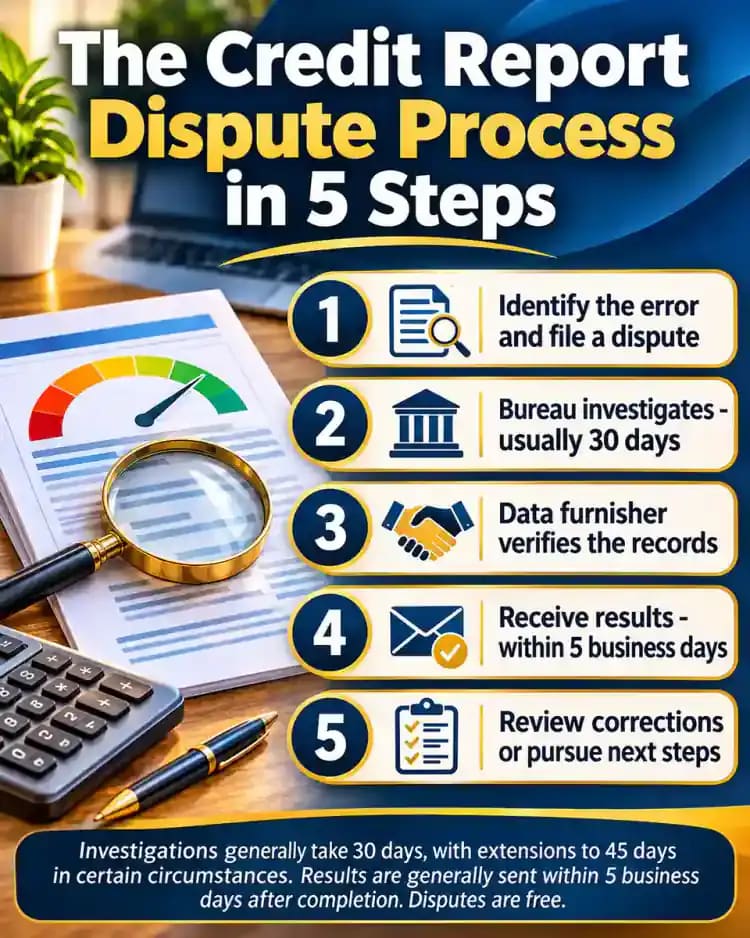
The standard credit bureau investigation period is generally 30 days from receipt of a dispute. Certain circumstances permit additional time, including qualifying disputes involving free annual credit reports. Providing relevant new information during the initial investigation can also extend the deadline by up to 15 days, generally making the maximum 45 days. According to the Consumer Financial Protection Bureau, these timelines are statutory requirements rather than guaranteed completion dates for every situation. Record the receipt date when calculating your expected investigation window.

What Happens During the Credit Bureau Investigation
After receiving a dispute, the credit bureau reviews the challenged information and generally forwards relevant details to the company that supplied it. The bureau must conduct a reasonable reinvestigation rather than automatically accepting the existing record. However, it may decline disputes considered frivolous or irrelevant, including substantially repetitive claims without meaningful new information. In that situation, the bureau generally must notify the consumer within five business days and explain its determination. A disagreement alone does not make a dispute frivolous.

How Data Furnishers Verify and Correct Information
The business that supplies account information to credit bureaus is called a data furnisher. Common examples include banks, credit card issuers, and loan servicers. When notified of a qualifying dispute, the furnisher must investigate, examine relevant information, and report its findings. If information is inaccurate, incomplete, or cannot be verified, applicable rules require appropriate correction, deletion, or blocking. Furnishers that correct previously reported inaccuracies generally must notify other nationwide bureaus to which they supplied the information.

Receiving Your Dispute Results and Updated Credit Report
After completing its investigation, the credit bureau generally must provide written results within five business days. Possible outcomes include correcting information, deleting an unverifiable entry, or maintaining information determined to be accurate. If the investigation changes your credit file, the bureau must provide a free updated report. This additional report does not replace your regular free report entitlement. Examine the affected account carefully to determine whether the reported details now match the investigation outcome and your underlying financial records.

Notifying Previous Credit Report Recipients
Correcting a credit report does not necessarily inform everyone who previously received inaccurate information. Under the Fair Credit Reporting Act, consumers can request notification of corrections or deletions to qualifying recipients who obtained their reports during the preceding six months. For reports obtained for employment purposes, the applicable period extends to two years. The credit bureau handles these notifications upon request, subject to statutory requirements. This option may matter when previously reported errors affected recent lending, rental, or employment decisions.

What to Do If Your Credit Report Dispute Is Denied
An unsuccessful dispute does not necessarily end your options. Review the bureau's explanation and consider whether additional evidence addresses the disputed finding. You may request a statement of dispute in your credit file, although this does not change the underlying information or guarantee a better credit score. The Consumer Financial Protection Bureau also accepts eligible credit reporting complaints, subject to its submission requirements. Persistent inaccuracies, identity theft, or significant financial harm may justify consulting a qualified consumer protection attorney.

How Credit Report Errors Affect Financial Decisions
Inaccurate credit information can influence decisions that extend beyond borrowing money. Lenders may use credit reports to assess loan eligibility, interest rates, and credit limits. Landlords may review permitted credit information when evaluating rental applications, while certain employers and insurers may use consumer reports under applicable legal restrictions. An incorrectly reported delinquency or outstanding debt could create an unfavorable impression of financial reliability. The actual impact depends on the information involved and how each organization evaluates it.

Disputing an Account You Do Not Recognize
An unfamiliar account may result from a reporting mistake, a creditor name you do not recognize, or potential identity theft. First, examine the account details and determine whether the reporting company operates under another business name. If the account genuinely appears unauthorized, a credit reporting dispute may be appropriate. The Federal Trade Commission also provides identity theft recovery resources at IdentityTheft.gov. Depending on the circumstances, fraud alerts, credit freezes, and direct contact with affected financial institutions may provide additional protection.

What Happens When a Dispute Is Marked Frivolous
A credit bureau may classify a dispute as frivolous or irrelevant when it lacks sufficient identifying information, substantially repeats a previously investigated claim without meaningful new evidence, or otherwise meets statutory exceptions. Under the Fair Credit Reporting Act, the bureau generally must notify you within five business days of making that determination. The notice should explain the reasons and identify information needed to investigate when applicable. A properly supported disagreement is not automatically frivolous simply because the bureau previously rejected it.

Can Accurate Negative Information Be Removed?
A credit report dispute challenges information that is inaccurate, incomplete, or cannot be verified. It is not a mechanism for automatically removing legitimate negative records. Accurate late payments, defaults, and collection accounts may remain until applicable reporting periods expire, often seven years for many negative items. Certain bankruptcies can remain longer. The Consumer Financial Protection Bureau cautions that accurate information generally cannot be removed simply because it is unfavorable. Companies promising guaranteed deletion of legitimate negative entries deserve particular skepticism.

How Disputes Can Affect Your Credit Score
Filing a credit report dispute does not directly reduce your credit score. However, the information being disputed and any resulting changes can influence scoring calculations. Correcting an inaccurate late payment or balance may improve a score, while other changes could have little effect. Some scoring models temporarily treat certain disputed account information differently during an investigation. Because credit scores depend on multiple factors and different scoring models, no specific increase or decrease can be guaranteed following a dispute.

How to Track an Active Credit Report Dispute
An organized tracking system makes an active dispute easier to manage. Record the submission date, confirmation number, disputed account, and communication channel. Save acknowledgment messages, postal delivery confirmations, and copies of correspondence in one secure location. Credit bureaus may provide online status updates, although the available information varies. Check for requests requiring additional documentation and record each response date. Avoid repeatedly opening identical disputes solely to obtain updates, since duplicate submissions can complicate tracking without improving the investigation.

What to Do When a Credit Bureau Misses a Deadline
If an investigation appears overdue, first confirm when the bureau received the dispute and whether a lawful extension applies. Preserve submission confirmations, delivery records, and subsequent communications. Contact the bureau through its official customer service channel to request clarification about the investigation status. The Consumer Financial Protection Bureau provides complaint procedures for unresolved credit reporting problems. A missed deadline does not necessarily cause automatic deletion of the disputed item, and potential legal remedies depend on the specific circumstances.

Can a Deleted Credit Report Item Reappear?
A previously deleted credit report item can sometimes reappear if the information is subsequently verified as complete and accurate. Under the Fair Credit Reporting Act, reinsertion following deletion through a dispute investigation generally requires certification from the information furnisher. The credit bureau must also notify the consumer within five business days after reinsertion. If an item returns, compare its details with the earlier investigation results. An unsupported or inaccurate reappearance may provide grounds for another dispute or further review.

When to Seek Professional Help With Credit Reporting Errors
Some credit reporting problems involve complications beyond an ordinary administrative correction. Persistent inaccuracies despite documented disputes, identity theft involving multiple accounts, substantial financial losses, or suspected violations of the Fair Credit Reporting Act may warrant professional evaluation. A qualified consumer protection attorney can assess applicable rights, evidence, deadlines, and potential remedies. The Consumer Financial Protection Bureau offers educational information about dispute procedures. Professional assistance does not guarantee a particular result, and legitimate providers should explain their services and fees clearly.

How to Keep Your Credit Reports Accurate Long-Term
Maintaining accurate credit reports requires periodic attention even after a successful correction. Review reports from all three nationwide bureaus regularly through AnnualCreditReport.com and compare account information with current financial records. Store important statements securely, retain documentation of resolved disputes, and investigate unfamiliar activity promptly. Account alerts and reputable monitoring services can help identify changes between reviews. Consistent monitoring cannot prevent every reporting mistake, but it can help detect inaccuracies earlier and reduce the likelihood that unresolved errors remain unnoticed.

How Credit Report Disputes Differ From Creditor Complaints
A credit report dispute challenges information appearing in a consumer credit file, while a creditor complaint addresses problems with an account or financial service. For example, questioning an incorrectly reported balance is different from requesting a refund for an unauthorized service fee. The Consumer Financial Protection Bureau explains that consumers can dispute reporting inaccuracies with credit bureaus and information furnishers. An ordinary customer service complaint does not necessarily initiate the formal investigation requirements established under federal credit reporting law.

Understanding Dispute Investigation Status Updates
Credit bureaus may display different status indicators while processing disputes. A pending status generally means the investigation remains open, while verified often indicates that the information provider confirmed the disputed details. Modified suggests an account entry changed, and deleted indicates removal from the credit file. Exact terminology varies between reporting agencies and online platforms. Preliminary status updates should not be confused with official investigation results. The final notification provides the authoritative explanation of what the bureau determined and changed.

How to Dispute Incorrect Late Payments
An incorrectly reported late payment can result from posting delays, payment processing mistakes, or inaccurate delinquency dates. Compare the reported payment status with billing statements, transaction confirmations, and bank records. Pay particular attention to the contractual due date, actual payment date, and whether the account was reported 30, 60, or 90 days delinquent. A payment made after its due date is not necessarily reportable as 30 days late. Clear evidence helps distinguish reporting errors from legitimate payment history.

Correcting Inaccurate Account Balances and Credit Limits
Credit reports may display balances that differ from current banking applications because lenders typically report account information periodically rather than continuously. A recently completed payment might not appear until the next reporting cycle. To identify a genuine error, compare the reported balance, credit limit, and reporting date with statements covering the same period. Look for duplicated charges, incorrect limits, or amounts that do not match historical records. Distinguishing delayed updates from inaccurate reporting prevents unnecessary disputes over otherwise valid information.

Disputing Incorrect Collection Accounts
Collection account inaccuracies may involve debts belonging to someone else, duplicated collection entries, incorrect balances, or misleading delinquency dates. A debt sold or transferred between collectors can create multiple records that require careful examination. Credit reporting disputes challenge the accuracy of information appearing in consumer reports. Debt validation, by contrast, involves separate rights concerning collection notices and verification requests under debt collection law. The Consumer Financial Protection Bureau provides resources explaining both processes and their different requirements.

Fixing Mixed Credit Files and Identity Information Errors
A mixed credit file occurs when information belonging to different consumers becomes incorrectly associated with one person's report. Similar names, shared addresses, family relationships, or incorrectly matched identifying details can contribute to these mistakes. The resulting file may contain unfamiliar accounts, inaccurate addresses, or another person's payment history. Correcting the problem requires identifying which entries belong to someone else and providing sufficient information to distinguish the affected consumers. Accurate identification helps prevent the same matching error from recurring.

Disputing Unauthorized Credit Inquiries
Hard credit inquiries generally occur when a lender checks a consumer report for a credit application or another permissible purpose. An unfamiliar inquiry is not automatically unauthorized because lender names sometimes differ from recognizable brands. Review recent applications, financing requests, and account activity before challenging an entry. If an inquiry appears genuinely unauthorized, relevant evidence may include application records and correspondence with the requesting company. Soft inquiries generally do not affect credit scores and follow different visibility rules.

How Credit Report Disputes Work During a Mortgage Application
An active credit report dispute can complicate mortgage underwriting because lenders need reliable information about outstanding obligations and payment history. Some mortgage programs apply specific requirements to disputed accounts, potentially affecting how those accounts are evaluated. Removing a dispute notation or resolving an investigation may become part of the lending process, depending on program rules. Homebuyers can discuss existing disputes with their mortgage loan officer before making changes. The appropriate timing depends on underwriting requirements and the disputed information.

How Long Corrected Information Takes to Appear
Completing a credit dispute investigation does not guarantee that every financial platform will immediately display the corrected information. The credit bureau may update its underlying file before third-party credit monitoring services refresh their data. Lenders also follow separate reporting schedules for subsequent account updates. Consequently, a corrected entry may appear at different times across consumer dashboards and reports. Compare the official updated bureau report with later monitoring results before assuming that a completed correction has failed.

Credit Report Dispute Process: Final Action Checklist
An effective credit report dispute process follows a documented sequence: identify the inaccurate entry, gather supporting records, submit a clear explanation, and preserve confirmation details. Monitor the applicable investigation deadline and review the official response when it arrives. If information changes, compare the corrected report with the original disputed entry. Retain correspondence, supporting evidence, and final results in a secure location. This organized approach helps establish what occurred during the investigation and supports informed follow-up if necessary.

Finding an error on your credit report can be frustrating, especially when you are applying for a mortgage, financing a car, or trying to qualify for an apartment. An incorrect late payment, unfamiliar account, or inaccurate balance could affect how lenders evaluate your creditworthiness. Fortunately, federal law gives you the right to challenge information you believe is inaccurate or incomplete.
The credit report dispute process is more than submitting a correction request. It follows a structured investigation under the Fair Credit Reporting Act (FCRA), involving the credit reporting company and, in many cases, the business that originally supplied the information. Understanding who investigates your dispute, how long each stage takes, and what happens after a decision can help you protect your financial records.
You can dispute inaccurate information with Equifax, Experian, and TransUnion at no cost. You can also contact the lender or other company responsible for reporting the information. Supporting documents, such as account statements, payment confirmations, and lender correspondence, can strengthen your dispute and help investigators understand the specific problem.
Most credit bureau investigations must be completed within 30 days, although certain circumstances allow up to 45 days. After the investigation, you should receive the results and, if changes were made, a free updated credit report.
This guide explains the dispute lifecycle, the responsibilities of credit bureaus and information furnishers, important deadlines, and the options available when an error remains unresolved. It also highlights practical mistakes to avoid so you can document your claim and evaluate the outcome effectively.
Where people go wrong
Disputing an Error Without Explaining It. Simply stating that an account is incorrect may not give investigators enough information to identify the problem. Specify the disputed entry, explain what is inaccurate, provide relevant facts, and clearly request a correction or deletion.
Submitting a Dispute Without Supporting Evidence. Although supporting documents are not always required, failing to include available evidence can weaken a dispute. Attach copies of relevant statements, payment records, or correspondence that directly support your explanation and help investigators verify the facts.
Assuming One Dispute Covers All Three Credit Bureaus. Equifax, Experian, and TransUnion maintain separate credit files. Disputing an error with one bureau does not automatically initiate investigations at the others. Check all three reports and submit separate disputes wherever the inaccurate information appears.
Failing to Keep Proof of Submission. Without a confirmation number, mailing receipt, or saved correspondence, establishing when your dispute was received can become difficult. Keep records of submission dates and responses, especially when monitoring the investigation deadline or escalating an unresolved issue.
Misunderstanding the Investigation Deadline. The standard investigation period is generally 30 days, but certain disputes can take up to 45 days. The clock typically starts when the bureau receives your dispute, not when you discover the error or mail your letter.
Repeatedly Filing the Same Dispute Without New Information. Submitting identical disputes without meaningful new evidence may lead a credit bureau to classify a claim as frivolous or irrelevant. Review the previous investigation results and identify additional documentation or a specific investigative problem before resubmitting.
Assuming a Completed Investigation Means the Error Was Removed. A completed dispute does not guarantee correction or deletion. The bureau may determine that the information is accurate. Read the written results carefully, inspect any updated report, and confirm that the disputed information was actually changed.
Paying a Credit Repair Company for a Free Dispute. You can dispute inaccurate credit report information yourself without paying a company. Credit repair services cannot guarantee legitimate negative information will disappear. Avoid businesses promising instant deletions or demanding payment before performing the services they promise.
Questions people ask
Credit bureaus generally have 30 days after receiving a dispute to complete their investigation. Certain circumstances allow up to 45 days, including when qualifying additional information is submitted during the investigation. The bureau generally must notify you of the results within five business days after completing its investigation.
Fixed it?
Get one guide like this every Thursday.