How to Create a Safer Garden for Dogs and Cats
Create a pet-friendly garden by checking fences, identifying potentially harmful plants, securing garden chemicals, and designing safe outdoor spaces for dogs and cats.
What you’ll need
Tap to tick things off before you start.
Start With a Garden Safety Check
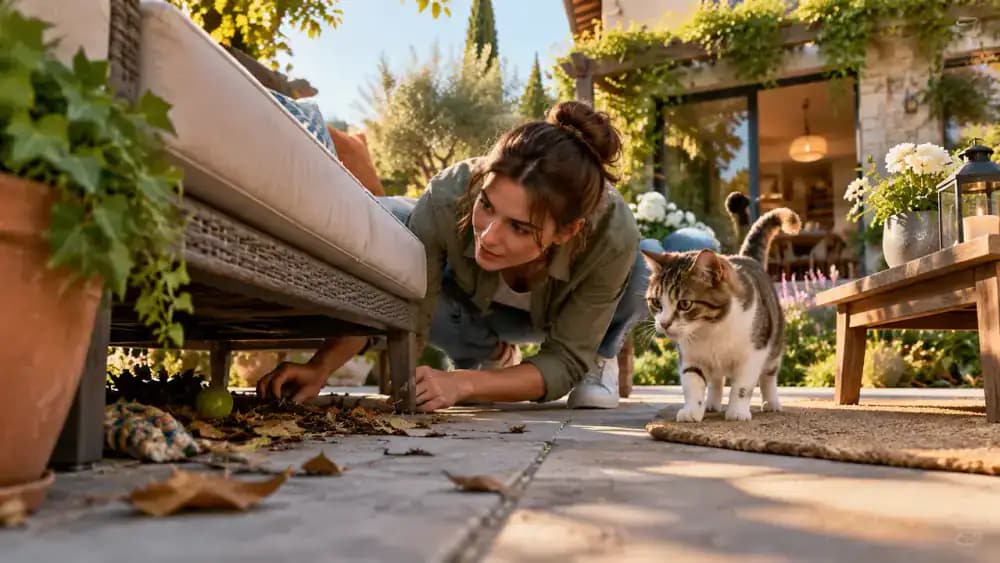
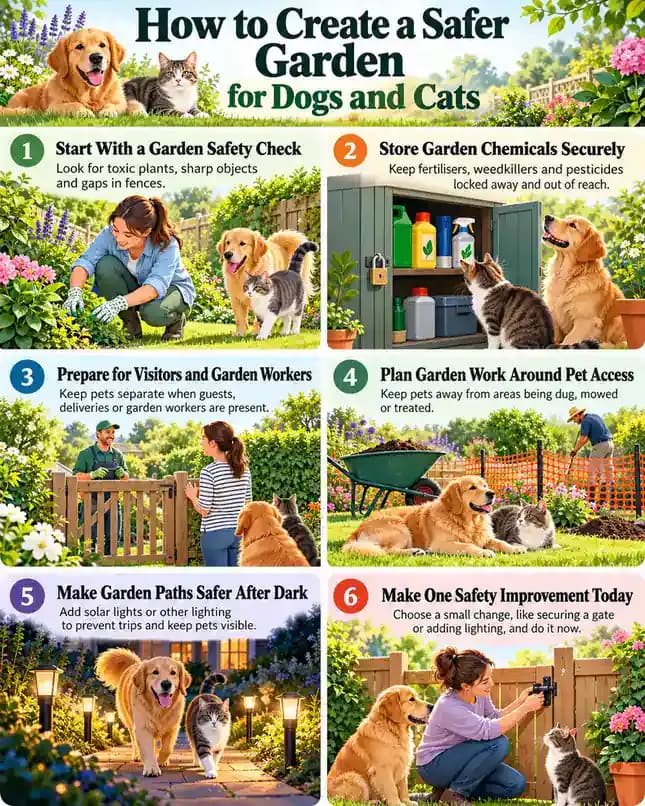
Before letting your dog or cat explore, walk through the garden and inspect it from your pet's perspective. Crouch down to spot cluttered corners, narrow gaps, open storage areas, and spaces beneath outdoor furniture. Look for anything your pet might chew, swallow, climb into, or become trapped behind, and note concerns before outdoor access begins.
Secure Fences and Gates
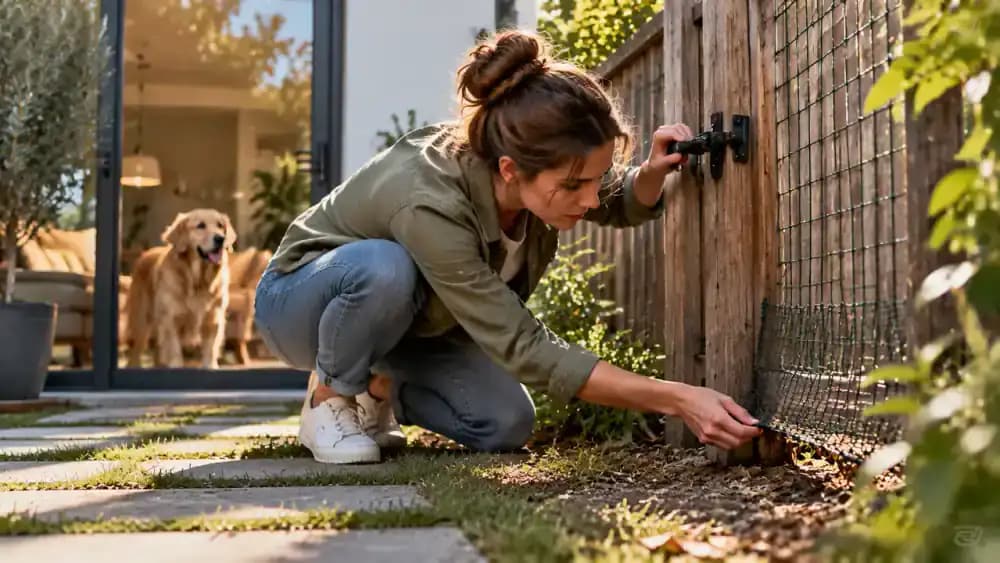
Walk the entire garden boundary and inspect wooden panels, wire mesh, gate hinges, and latches for damage or loose fittings. Check carefully for gaps beneath fences and gates where pets might squeeze through or dig their way out. Repair weak points, secure reliable latches, and reassess vulnerable areas after storms or outdoor maintenance.
Identify Every Unfamiliar Plant
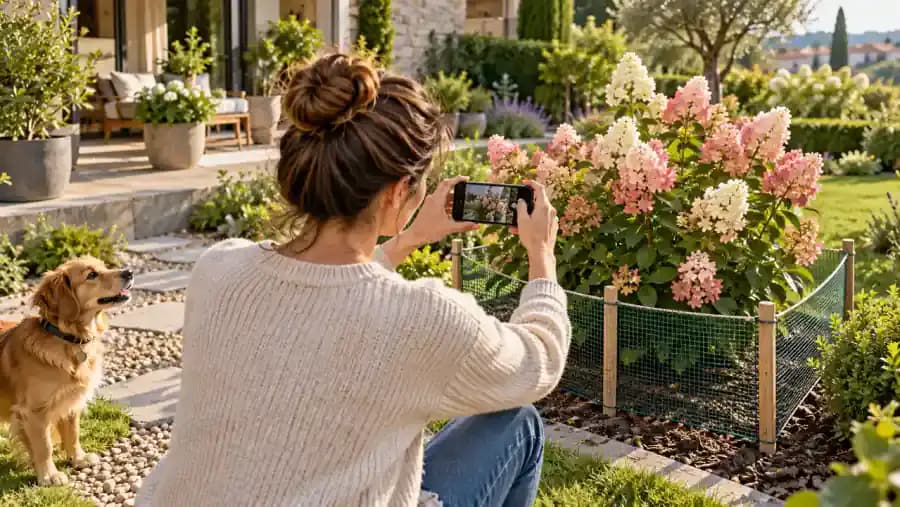
Check every unfamiliar flower, shrub, and ground cover before allowing pets near it. Photograph leaves and flowers, identify the plant using a reliable reference, and verify its safety for both dogs and cats through a veterinary resource. Keep pets away from unidentified plants until their risks are clear, using a secure temporary barrier when necessary.
Check the Ground for Plant Debris
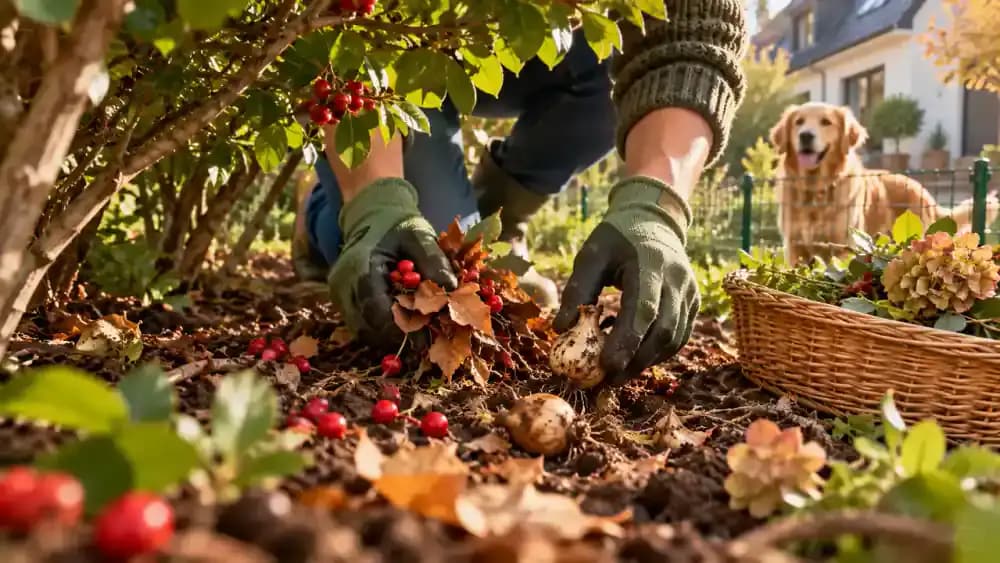
Inspect paths, lawns, and the ground beneath hedges for fallen leaves, berries, seeds, bulbs, and fresh plant clippings. Some plant material can be harmful if chewed or swallowed, so remove unidentified debris promptly using suitable gardening gloves. Place waste in an appropriate container and keep pets away from uncertain plants until their identity and safety are verified.
Remove Dangerous Garden Materials
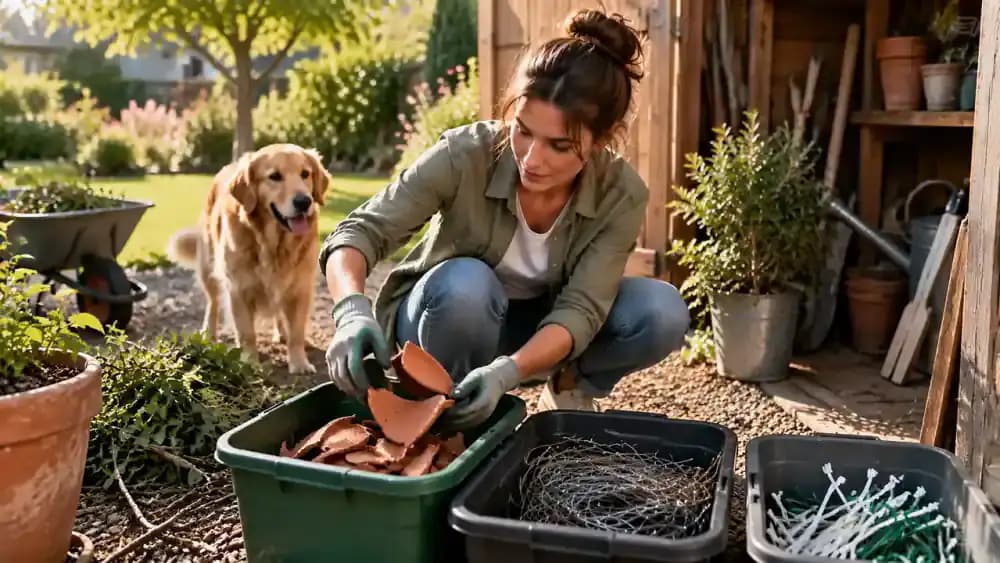
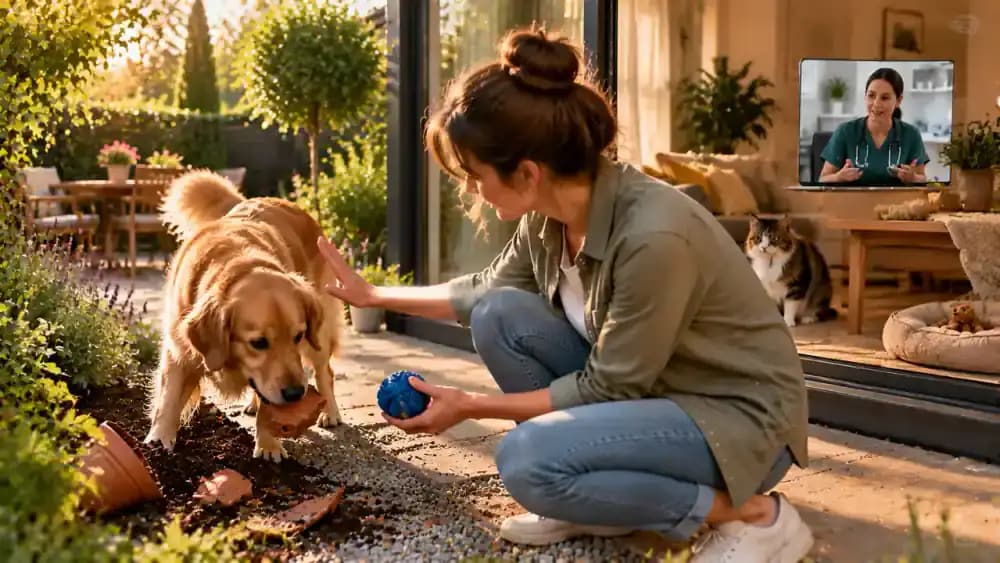
Clear the garden of sharp wire, broken pots, loose plastic ties, discarded tools, and small objects that pets could chew or swallow. Wear suitable protective gloves while collecting debris and place it in appropriate containers for safe disposal. Check beneath benches and behind planters, then return tools to a closed storage area after every gardening session.
Store Garden Chemicals Securely
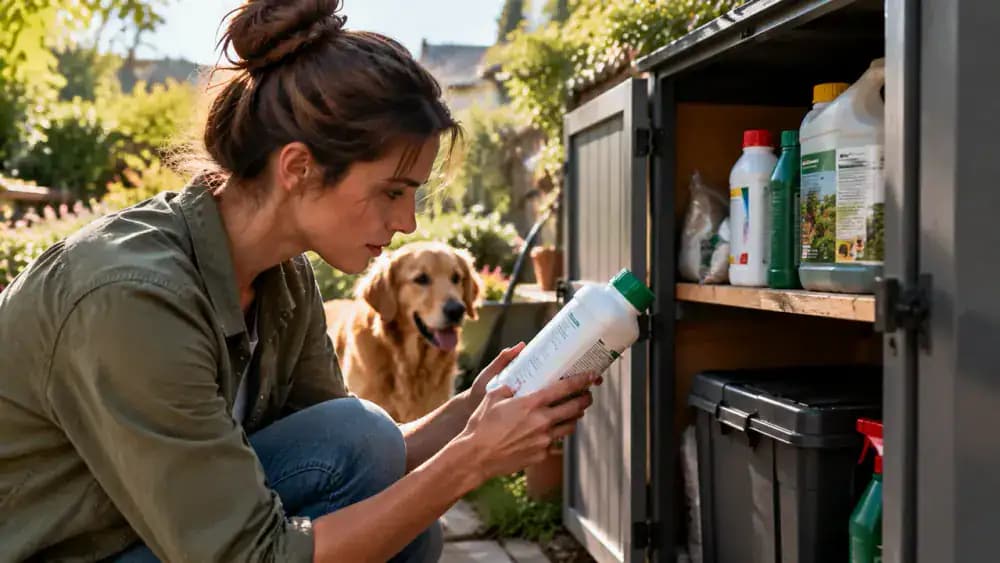
Keep fertilizers, pesticides, weed killers, fuels, and other garden treatments in their original, clearly labeled containers. Store them upright in a locked cabinet or secure area that pets cannot access. Read each product label carefully and follow instructions for application, disposal, and when animals may safely return to treated areas. Never assume a dry surface is automatically safe.
Create Outdoor Areas for Each Pet
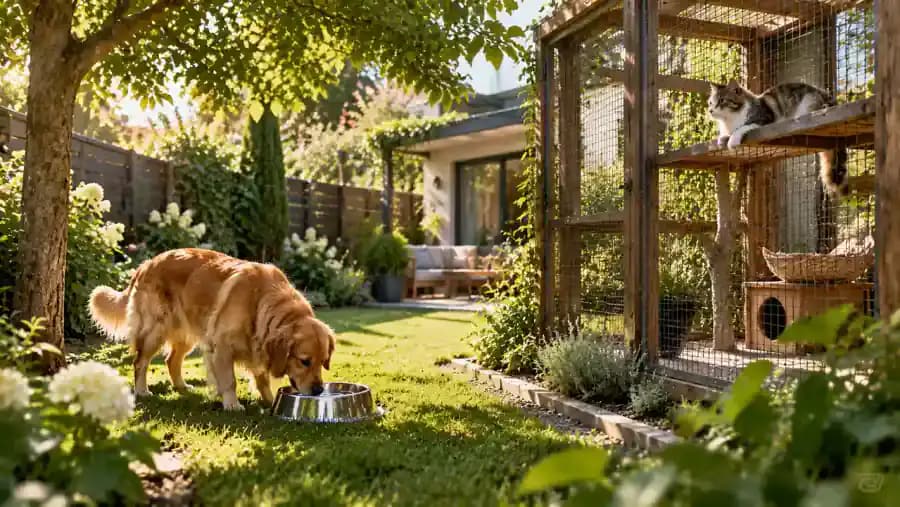
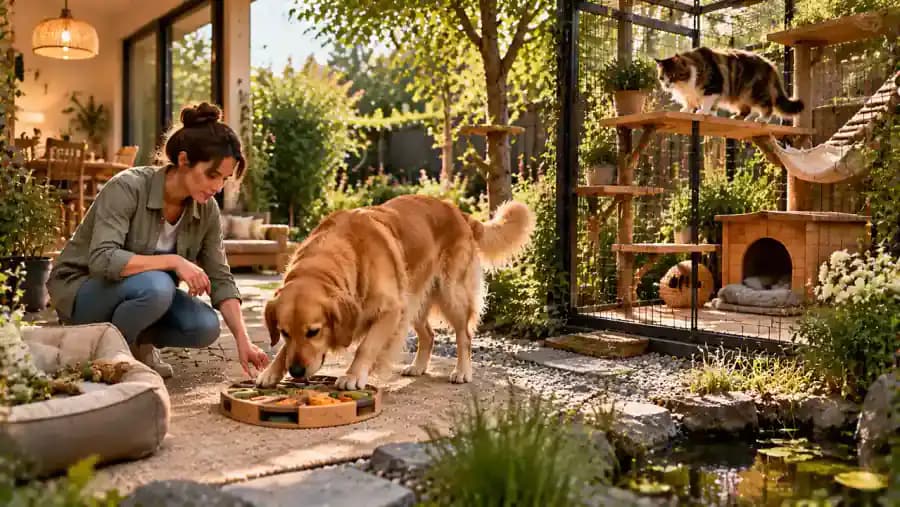
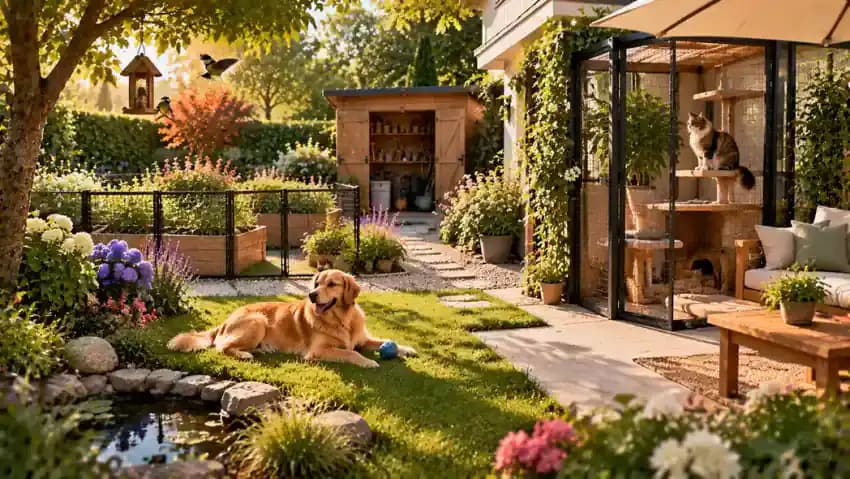
Arrange outdoor spaces around your pets' individual needs and behaviors. Give dogs a secure area for supervised exploration, with shade and fresh drinking water nearby. For cats, consider a fully enclosed outdoor run with sturdy climbing shelves and sheltered resting spots. Check barriers regularly, observe how each pet uses the space, and adjust access when needed.
Build a Repeatable Safety Routine
Make garden safety part of your regular routine by checking gates, scanning flower beds, removing fallen plant material, and securing tools and chemicals before outdoor time. Repeat these checks after gardening work or other changes to the space. If you suspect contact with a potentially toxic plant or chemical, contact a veterinarian promptly rather than waiting for signs of illness.
Recheck the Garden After Bad Weather
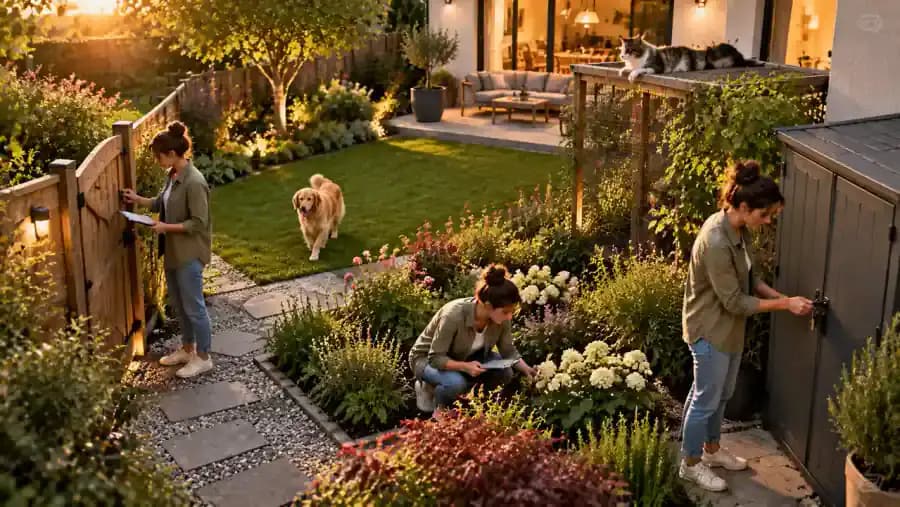
Inspect your garden after heavy rain, strong winds, or severe weather before allowing pets outside. Look for fallen branches, loose fence panels, damaged garden edging, scattered debris, and standing water. Check paths, shelters, and favorite resting spots, then clear or repair hazards before reopening the area. Keep pets indoors until you have confirmed their outdoor space is secure.
Keep Drinking Water and Water Features Safe
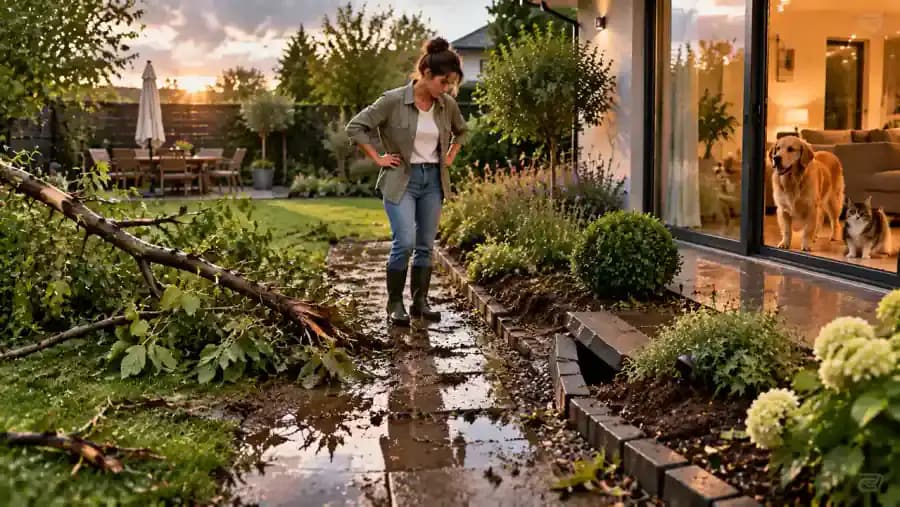
Provide fresh drinking water in a clean bowl placed in a shaded spot, and refresh it regularly throughout the day. Check decorative ponds and other water features for slippery edges, unexpected depth, or uncertain water quality. Use suitable barriers where needed and supervise pets around open water. Do not let animals drink from standing water when its contents are unknown.
Protect Paws From Unsafe Surfaces
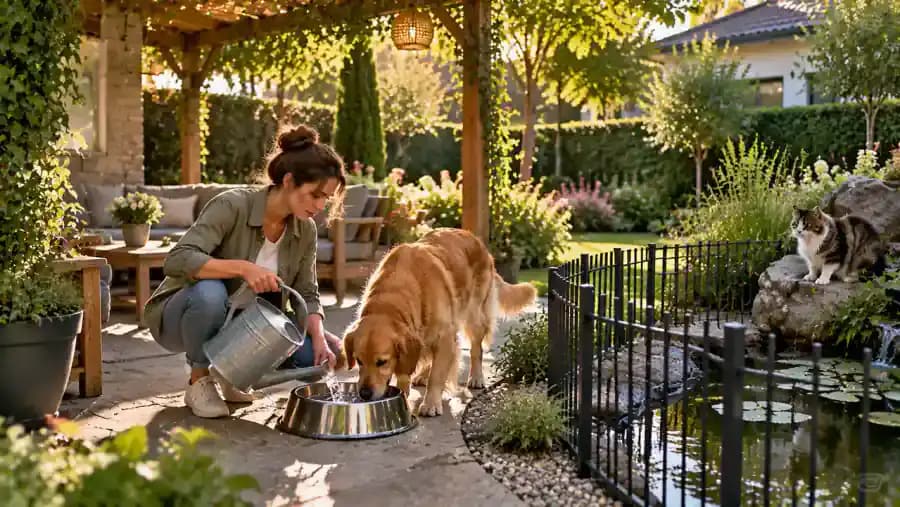
Check the paths and surfaces your pets use most often, especially during hot weather. Sun-heated paving can become uncomfortable or dangerous for paws, while rough gravel, splintered decking, and unstable steps may cause injuries. Provide shaded routes, stable ramps where needed, and comfortable resting spots. Check surface temperatures carefully and offer cooler alternatives whenever conditions are uncertain.
Prepare for Visitors and Garden Workers
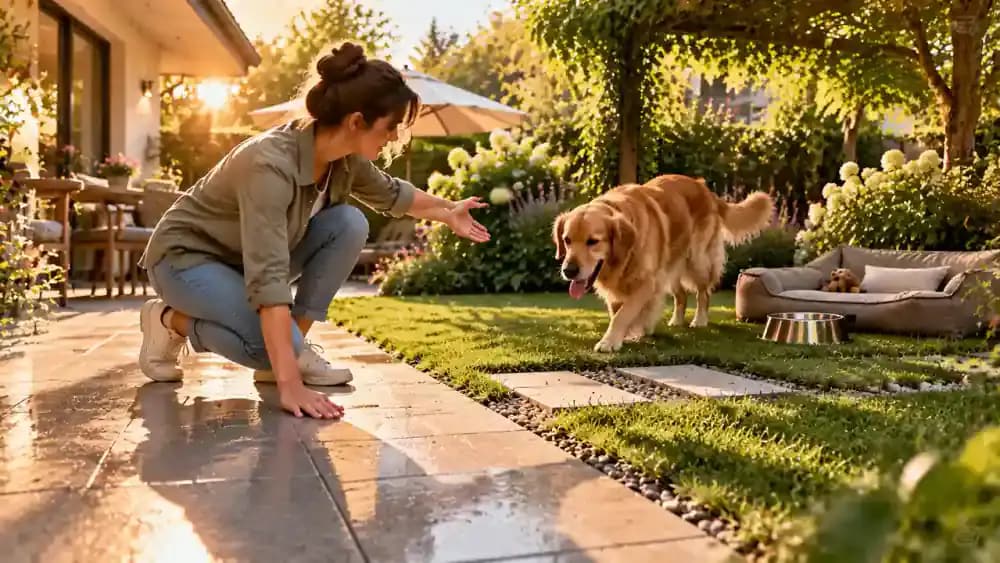
Plan for deliveries, visitors, and garden maintenance before anyone opens an outside gate. Move pets indoors or behind a separate secure barrier, and explain your garden safety rules to everyone involved. Ask workers to report chemical spills, damaged fittings, open gates, or unfamiliar materials. Inspect the area and confirm it is safe before allowing pets outside again.
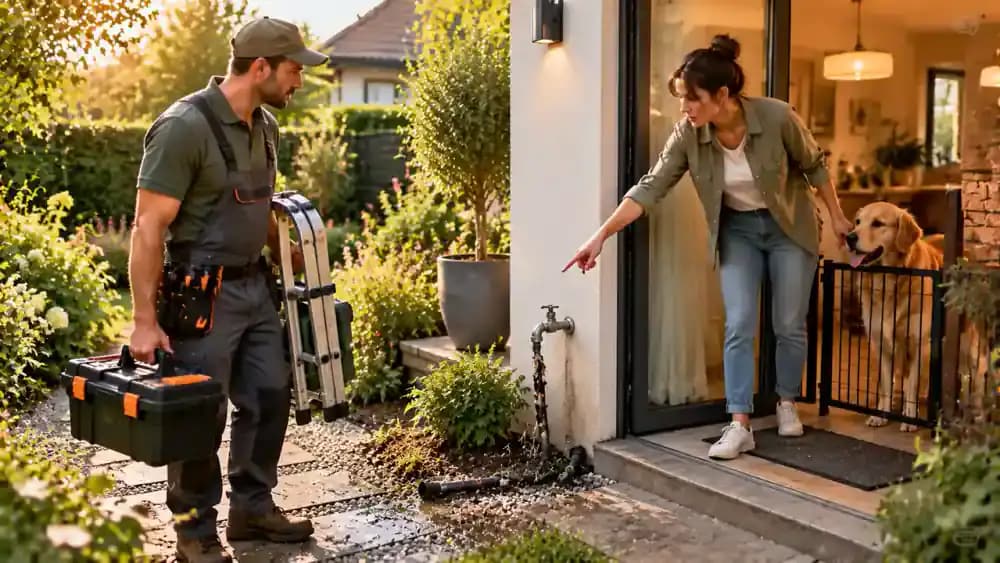
Make Safe Outdoor Time Enriching
A safer garden should offer enjoyable activities as well as protection from hazards. Supervise dogs using sturdy enrichment toys or pet-safe scent games, and provide cats with stable climbing shelves, sheltered hiding places, and secure views outdoors. Choose equipment suited to each animal, rotate activities to maintain interest, and store small toys, strings, and food rewards safely after playtime.
Recognize When Your Pet Needs Help
Watch how your pets behave while exploring the garden. Persistent chewing, repeated escape attempts, or sudden changes in behavior are reasons to reassess the environment and consider whether professional advice is needed. Calmly redirect unsafe activities and end outdoor access if necessary. If exposure to a potentially harmful substance is suspected or concerning symptoms appear, contact a veterinarian promptly.
Create a Shared Household Safety Plan
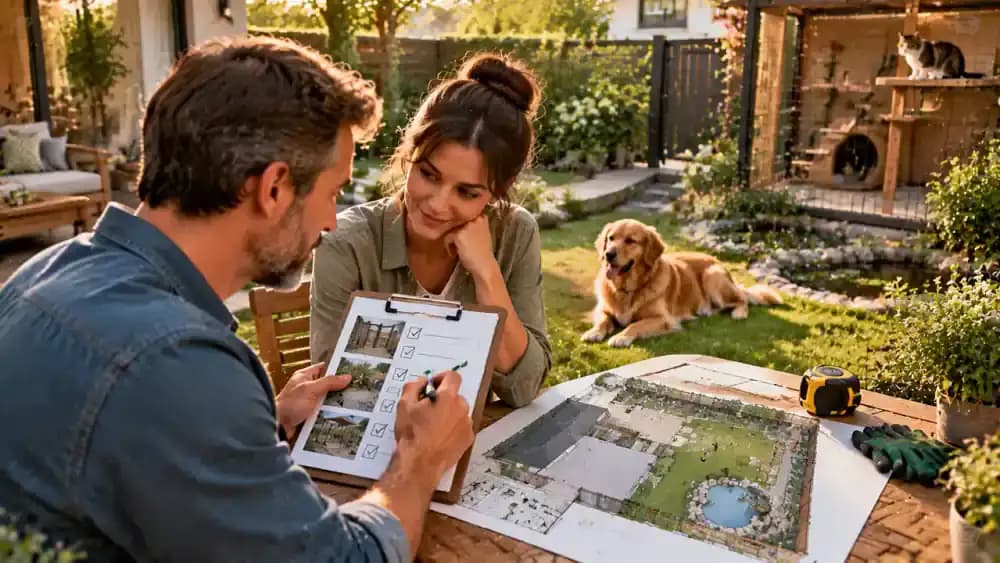
Make garden safety easy for everyone to maintain by keeping a checklist near the garden entrance. Record approved outdoor areas for each pet, outstanding repairs, unfamiliar plants awaiting identification, and any product restrictions. Review the plan with family members so everyone follows the same precautions. Update the checklist whenever the garden changes or a new hazard is discovered.
Keep Improving Your Pet-Safe Garden
A pet-safe garden needs regular attention as plants grow, seasons change, and your animals develop new habits. Revisit fences, resting areas, plant beds, and outdoor enclosures throughout the year, making adjustments whenever new risks appear. Continue supervising pets appropriately and seek reliable veterinary advice when a hazard is uncertain. Consistent care helps outdoor time remain comfortable and enjoyable.
Choose Garden Plants With Care
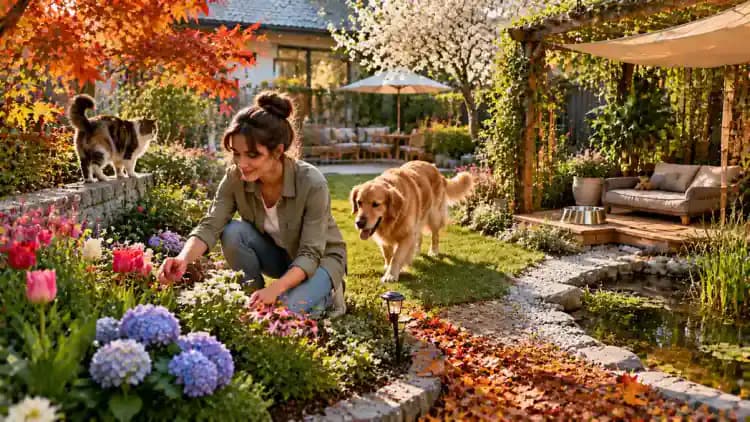
Make plant safety part of every gardening purchase. Before bringing home a flower, shrub, or climbing plant, verify its exact identity and check reliable veterinary references for risks to dogs and cats. Keep nursery labels for future reference and avoid relying on common names alone. When a plant's safety remains uncertain, choose a verified alternative or keep it inaccessible.
Plan Garden Work Around Pet Access
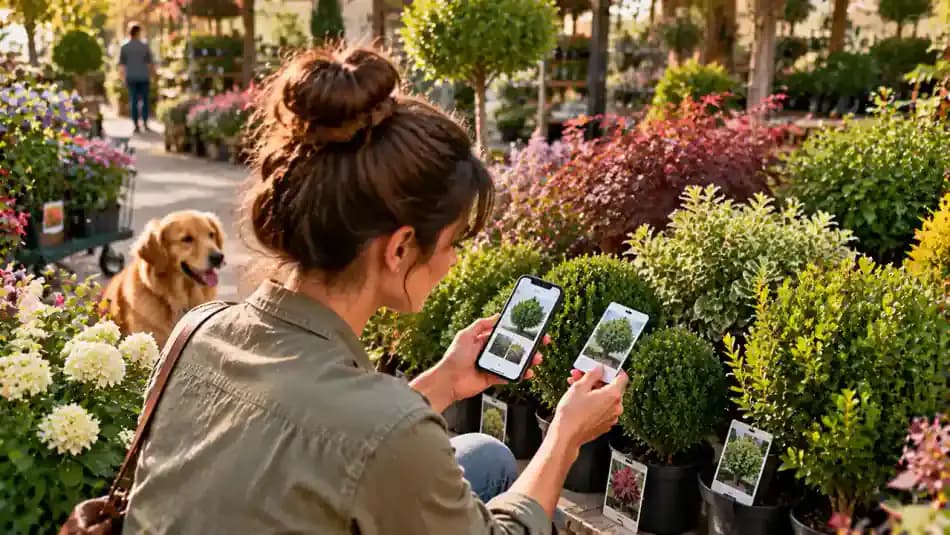
Before digging, pruning, spreading mulch, or applying garden treatments, move pets to a separate secure area. Establish a clear work zone and keep tools, debris, and materials out of reach throughout the job. Once maintenance is complete, collect clippings, secure equipment, and follow all product-specific restrictions before reopening the garden. Planning ahead helps prevent accidental exposure and escape opportunities.
Use Mulch and Soil Thoughtfully
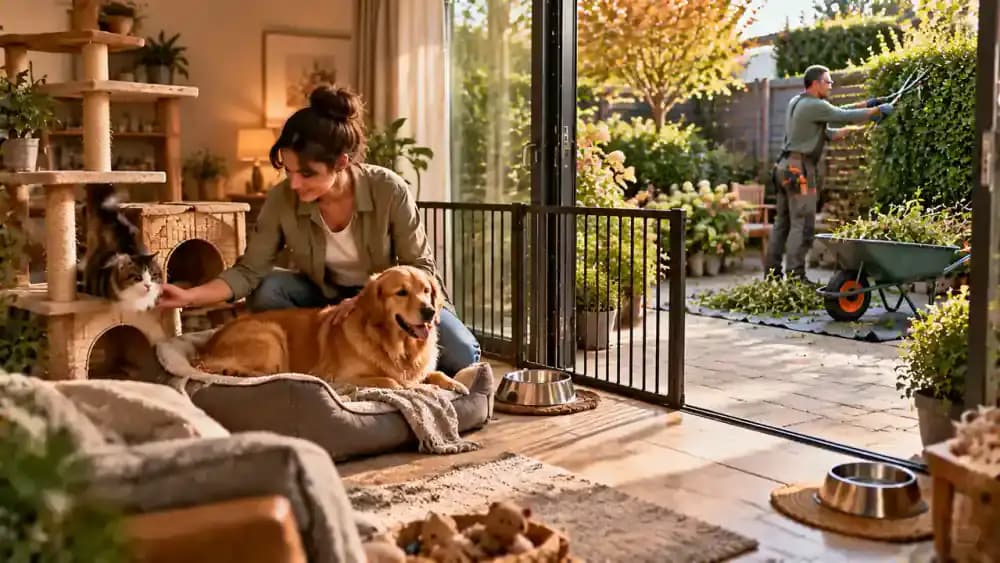
Check the ingredients and intended use of mulch, compost, and soil amendments before spreading them where pets roam. Some materials can cause harm if swallowed, depending on their composition and the amount consumed. Read packaging carefully, discourage digging or chewing in newly prepared beds, and use sturdy barriers when needed. Ask a veterinarian for guidance if your pet may have ingested an unfamiliar material.
Prevent Unwanted Digging and Chewing
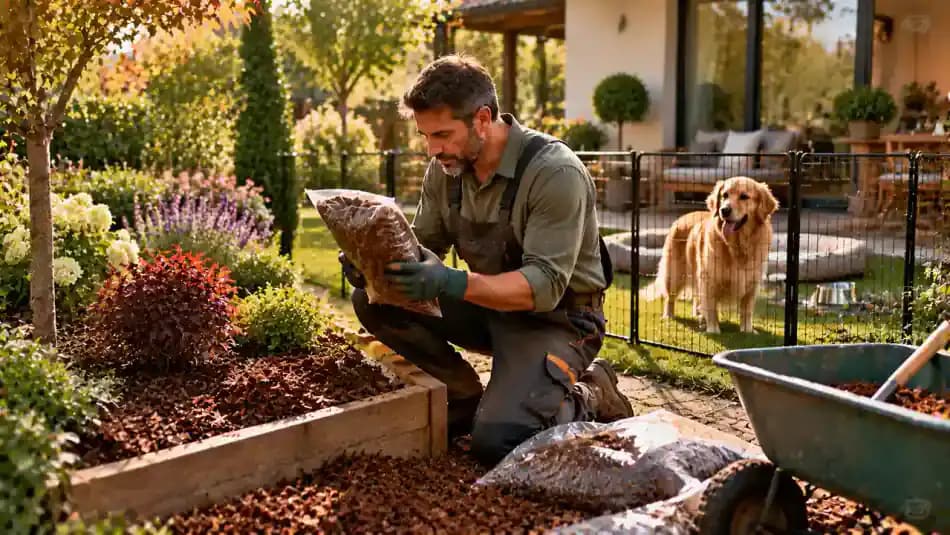
Help pets make safer choices by providing appropriate outlets for digging, chewing, and scratching. Redirect a dog away from flower beds toward a designated digging area or suitable enrichment toy, and give cats stable scratching posts and engaging spaces. Reward desirable behavior consistently and supervise outdoor activities. If unwanted behavior persists, consider environmental changes and seek professional guidance when needed.
Make Boundaries Visible and Consistent
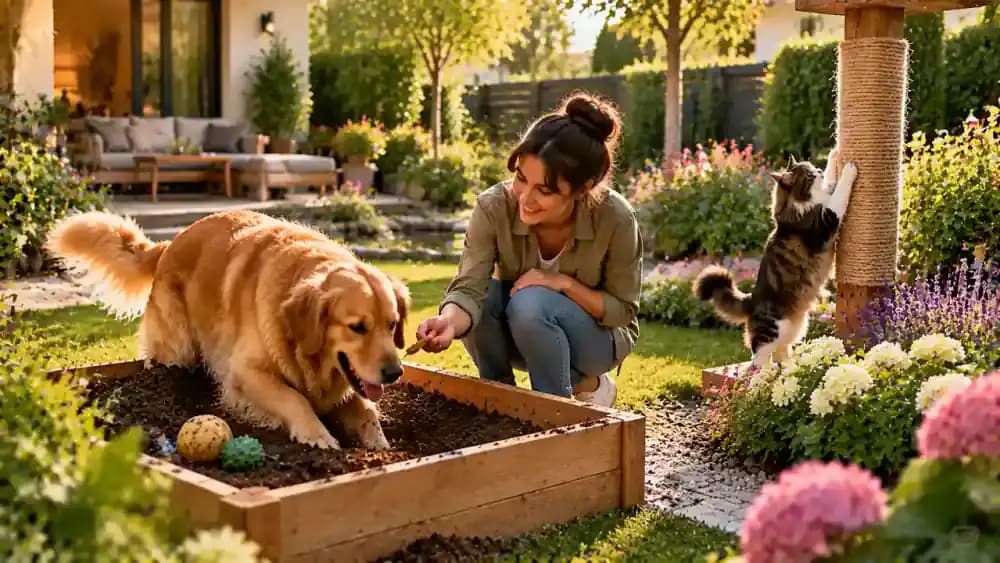
Help your pets understand where they can safely explore by creating clear, consistent garden zones. Use sturdy barriers to separate walking paths, resting areas, and protected planting beds, and keep gates securely latched. Introduce each area gradually while supervising your animals. If a barrier can be climbed, pushed aside, or squeezed through, replace or reinforce it before allowing access.

Prepare for Unexpected Pet Escapes
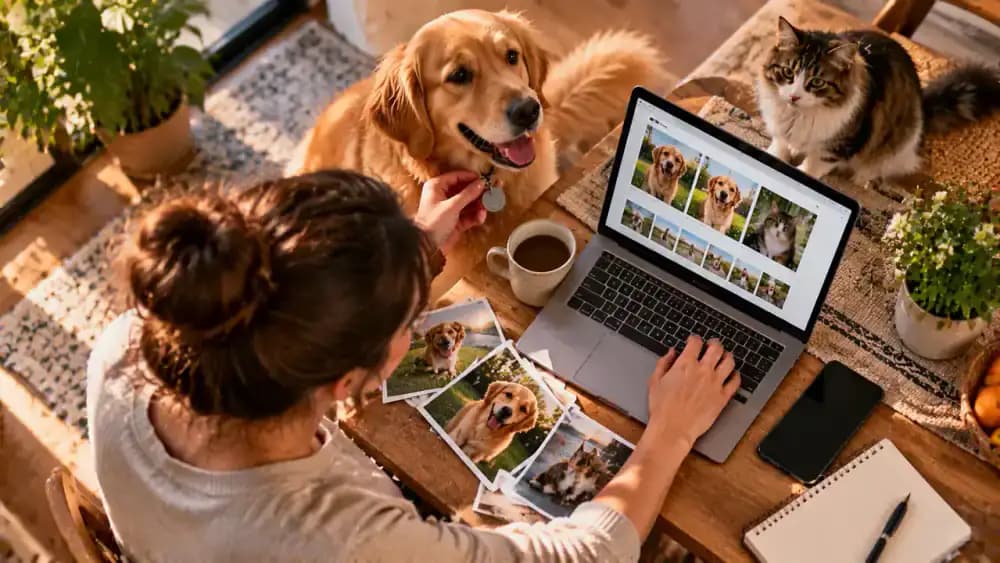
Even a carefully secured garden cannot eliminate every possibility of escape, so prepare an identification plan for each pet. Keep recent photographs, identification details, and current microchip registration information accessible. Check that collars and identification tags fit securely and remain appropriate for your animals. Agree on whom to contact and which nearby areas to search if a pet goes missing.
Enjoy the Garden With Greater Confidence
A safer garden combines secure boundaries, verified plant choices, careful chemical storage, appropriate enrichment, and regular inspections. Build these habits into your routine rather than trying to change everything at once. Start with the most important hazards, then make improvements as time and resources allow. With thoughtful preparation and supervision suited to each animal, outdoor time can become more comfortable and enjoyable.
Make Garden Paths Safer After Dark
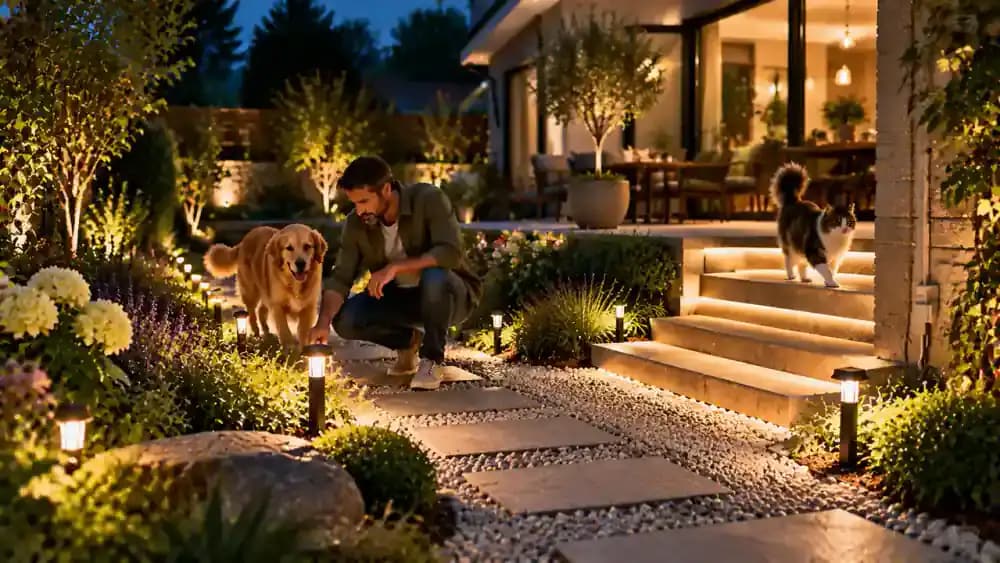
Check paths, steps, and entrances after sunset to ensure pets can move through familiar areas without encountering hidden obstacles. Install suitable outdoor lighting where visibility is poor, and secure fixtures and cables to prevent chewing or tripping hazards. Inspect walkways regularly for loose paving or clutter. If you cannot supervise outdoor activity safely in dim conditions, keep pets indoors.
Manage Garden Wildlife Carefully
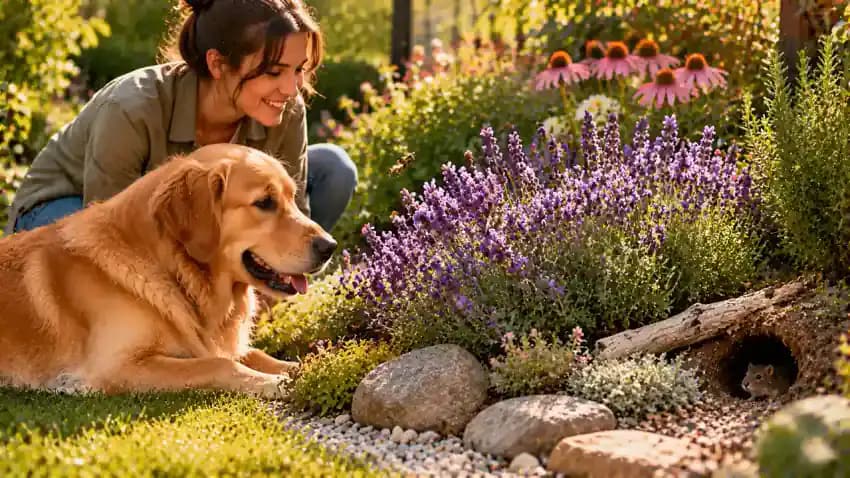
Garden wildlife can attract curious pets, but chasing insects or investigating burrows may create avoidable risks. Supervise animals around bees, wasps, rodents, and other wildlife, and discourage them from disturbing nests or hiding places. Choose pest control methods carefully, follow product instructions, and secure traps or treated areas against pet access. Contact a veterinarian if an encounter causes injury or concerning symptoms.
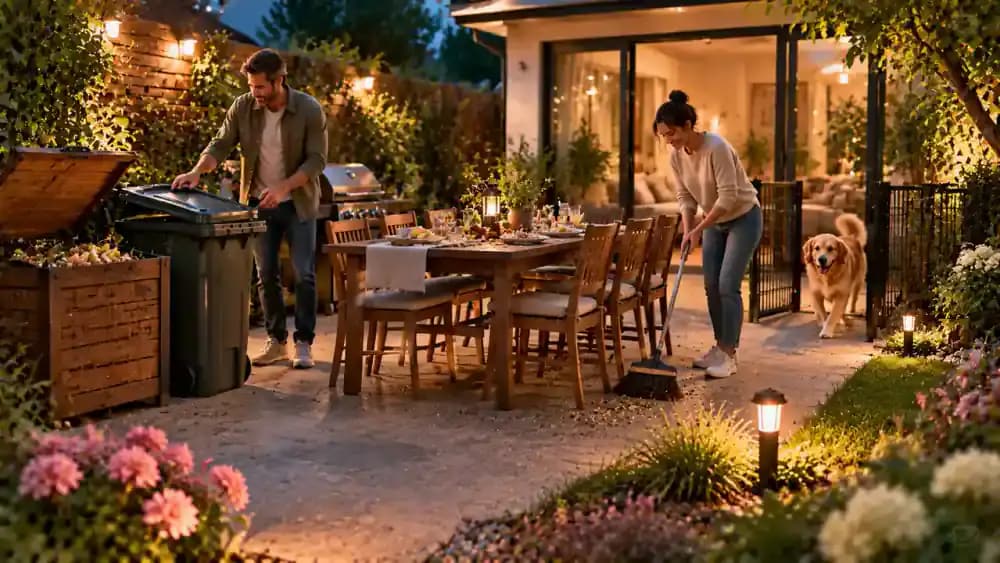
Keep Food Waste Out of Reach
After outdoor meals or barbecues, clear away food scraps before pets return to the area. Place leftovers in a securely closed rubbish container, fasten compost bin lids, and never leave bones or discarded food within reach. Some human foods can be toxic to dogs and cats, while spoiled waste may cause illness. Sweep beneath tables and check nearby shrubs for crumbs.
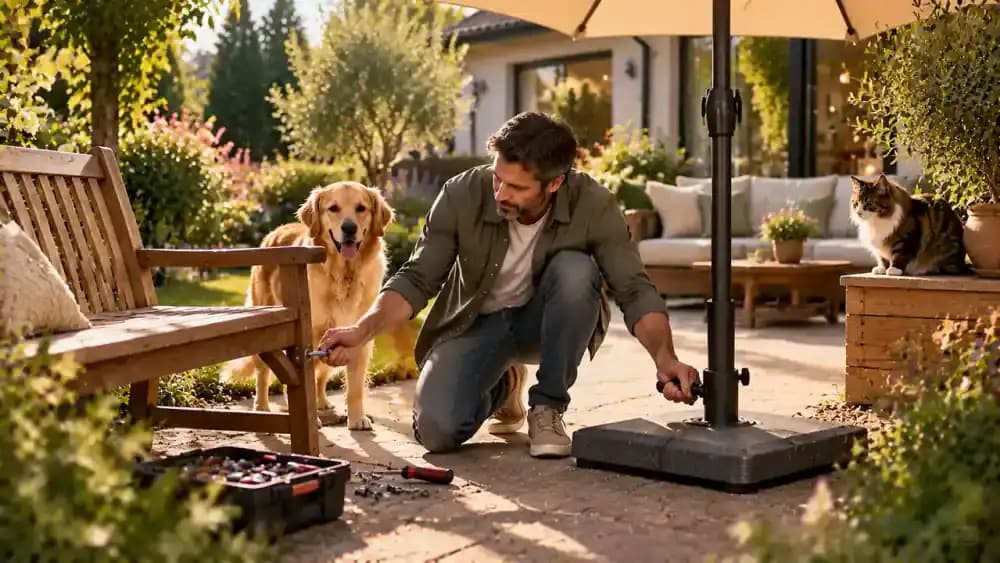
Check Outdoor Furniture for Stability
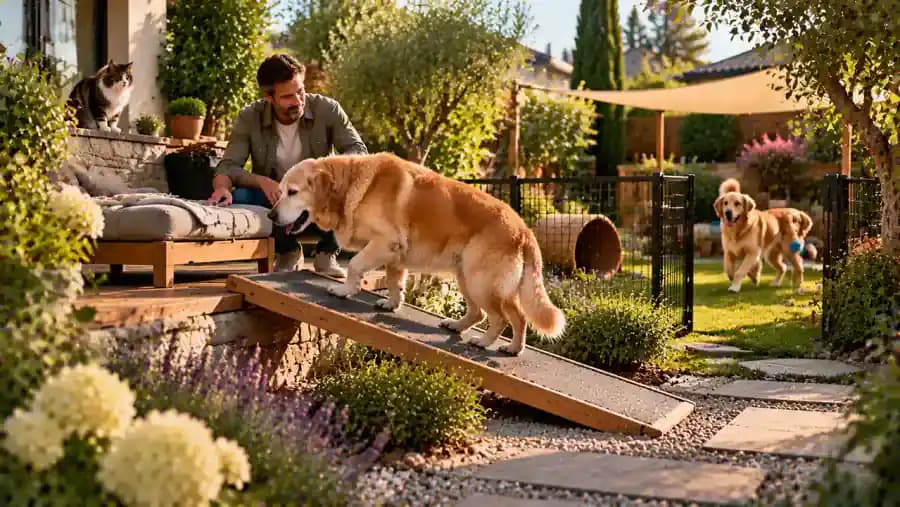
Inspect garden benches, chairs, parasols, ramps, and raised platforms to make sure they remain stable during everyday use. Tighten loose bolts, secure lightweight furniture that could tip over, and check ramps for gaps where paws might become trapped. Store folding chairs and collapsible equipment safely when not in use, and repeat these checks after moving furniture or severe weather.
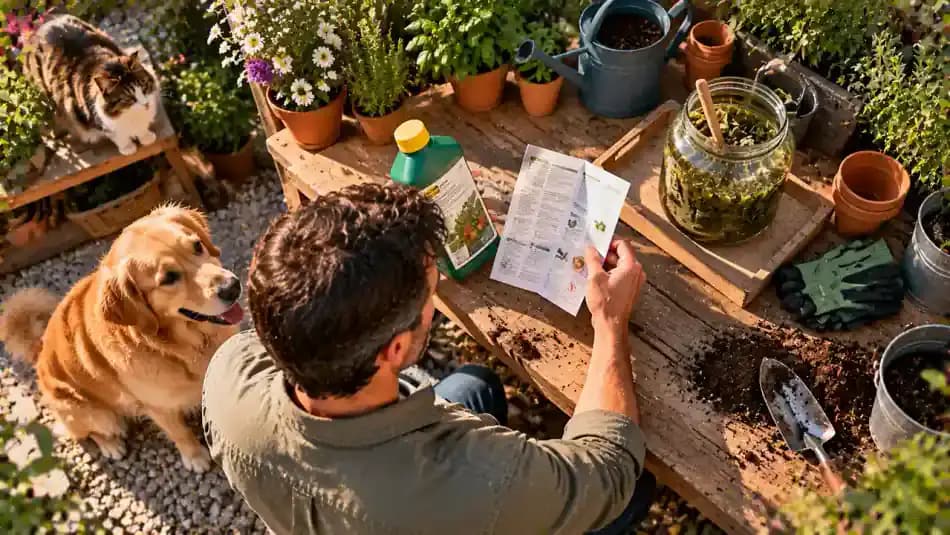
Question Natural Garden Treatments
Read ingredient lists and safety instructions before using any garden treatment, including products marketed as natural or homemade. Natural ingredients are not automatically harmless to dogs and cats, and concentrated mixtures may create additional risks. Keep unverified products away from pets, follow label precautions, and consult a qualified gardening professional or veterinarian when you need help evaluating a treatment's suitability.
Adapt the Garden to Changing Needs
Review your garden layout as your pets' mobility, confidence, and activity levels change. Older animals or pets with limited mobility may benefit from gentle ramps, shorter paths, and easily accessible resting areas. More energetic pets may need secure boundaries and structured enrichment. Observe how each animal navigates the space, then adjust surfaces, barriers, and activities to suit individual needs.
Make One Safety Improvement Today
Before your next outdoor session, walk through the garden from your pet's perspective and choose one practical improvement to make today. Repair a loose gate, identify an unfamiliar plant, secure a garden product, or clear overlooked debris. Keep using your checklist and ask qualified professionals when concerns arise. Small, consistent changes can help make outdoor time safer and more enjoyable.
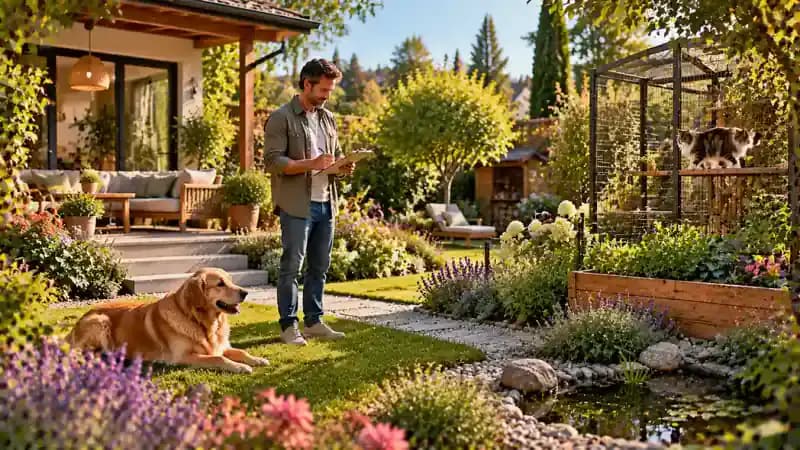
Imagine a beautiful backyard where your dog happily explores the grass, follows interesting scents, and enjoys the sunshine while your cat watches from a sheltered, comfortable spot. A well-planned garden can offer both pets fresh air, enrichment, and a place to relax. However, even an attractive, carefully maintained outdoor space can contain overlooked hazards that put curious animals at risk.
A loose fence board, an unlatched gate, an unidentified plant, or an improperly stored garden product can turn a peaceful afternoon into a stressful situation. Dogs may chew unfamiliar plants or investigate garden debris, while cats may squeeze through narrow gaps, climb boundaries, or explore secluded corners. Their different behaviors mean that a garden designed for one pet may not automatically be safe for another.
The most reliable starting point is to inspect the environment before allowing pets to explore freely. Look beyond the obvious hazards and consider how your animals move, climb, dig, chew, and investigate their surroundings. Check boundaries, identify plants, clear potentially dangerous debris, and store fertilizers, pesticides, weed killers, and other chemicals securely according to their labels.
You can also make outdoor time more manageable by creating supervised areas, providing shade and fresh water, and using suitable barriers where necessary. Regular inspections help you spot problems as seasons change and plants grow. With thoughtful preparation and veterinary guidance whenever a hazard is uncertain, you can make your garden a more secure, comfortable, and enjoyable space for the animals you love.
Where people go wrong
Assuming a fenced garden is automatically secure. A fence can look sturdy while still allowing a determined dog to dig underneath, a cat to climb over, or a small pet to squeeze through a narrow opening. Inspect the entire boundary, including corners, damaged panels, drains, and spaces beneath gates. Check latches regularly and choose repairs or barriers that match your pets' individual abilities.
Choosing plants based on appearance alone. Attractive flowers, shrubs, and ornamental plants are not necessarily safe for pets. Some can cause serious harm if chewed or swallowed, and cats and dogs may have different exposure risks. Identify plants by their correct names before introducing them to your garden, verify their safety using reputable veterinary resources, and remove or securely isolate plants that pose a concern.
Leaving garden chemicals within reach. Fertilizers, pesticides, herbicides, slug treatments, and other garden products can pose risks through ingestion, skin contact, or exposure to treated surfaces. Store products in their original containers in secure locations, follow label directions, and observe any stated restrictions on pet access. Never assume a product is safe simply because it is marketed as natural, organic, or environmentally friendly.
Ignoring small pieces of garden debris. Broken pots, sharp wire, discarded plant labels, fallen fruit, seed pods, mushrooms, and compost scraps can create hazards that are easy to overlook. Curious pets may chew, swallow, or investigate items while exploring. Inspect lawns, flower beds, and secluded corners regularly, remove unfamiliar or potentially dangerous material, and seek veterinary advice if you suspect your pet has swallowed something hazardous.
Using the same outdoor setup for every pet. Dogs and cats have different ways of navigating outdoor spaces, and individual animals vary in size, mobility, curiosity, and escape behavior. A low barrier that contains one dog may not deter another, while a cat may climb a fence that appears secure. Assess each pet separately and use suitable enclosures, barriers, and supervised access rather than relying on a single solution.
Allowing unsupervised exploration too soon. Even after a garden has been inspected, conditions can change as plants grow, gates are opened, deliveries arrive, and maintenance products are used. Allowing pets unrestricted access before checking these changes can expose them to preventable hazards. Supervise outdoor time according to each animal's needs, establish clear access rules, and repeat inspections after gardening work or significant weather.
Assuming a product is harmless once applied. A garden treatment may leave residues on foliage, grass, soil, or other surfaces, and some products require a specific drying or waiting period before animals can return. Read the complete label and follow its pet-access restrictions rather than relying on appearance or smell. If directions are unclear, contact the manufacturer or veterinarian before allowing your pets back into the treated area.
Questions people ask
Start by inspecting fences, gates, gaps, garden beds, and storage areas. Identify plants, remove potentially dangerous debris, and secure chemicals and tools. Check for standing water, sharp objects, and areas where pets could become trapped or escape. Consider your animals' individual habits and abilities, and consult a veterinarian or reputable animal poison-control resource whenever you cannot confidently identify a potential hazard.
Fixed it?
Get one guide like this every Thursday.