COBRA vs. Marketplace: How to Choose Health Insurance After Job Loss
Lost your job and need health insurance? Compare COBRA and Marketplace plans by monthly premiums, deductibles, subsidies, doctor networks, and enrollment deadlines to find coverage that fits your health needs and budget.

What you’ll need
Tap to tick things off before you start.
What Happens to Health Insurance When You Lose Your Job?
Losing your job can also mean losing employer-sponsored health insurance, but coverage does not necessarily end on your final working day. Some employers maintain benefits through the end of the month, while others terminate coverage sooner. Confirm the actual termination date with your benefits administrator. A coverage gap can leave you responsible for unexpected medical bills. Common replacement options include COBRA continuation coverage, Affordable Care Act Marketplace plans, Medicaid, or coverage through a spouse's employer.

How COBRA Continuation Coverage Works
The Consolidated Omnibus Budget Reconciliation Act allows eligible employees and family members to temporarily continue employer-sponsored group health coverage after qualifying events. These include voluntary resignation, most involuntary terminations, and reductions in working hours. According to the U.S. Department of Labor, federal COBRA generally applies to group plans maintained by employers with at least 20 employees. Spouses and dependent children may also qualify. Job loss typically provides up to 18 months of continuation coverage, with certain exceptions.

How Much Does COBRA Health Insurance Cost?
COBRA premiums can be substantially higher than previous payroll deductions because employers generally stop contributing toward coverage. Federal COBRA plans may charge up to 102% of the total premium, including a 2% administrative fee. For example, if your employer's group plan costs $800 monthly, COBRA could cost $816. Previously, you might have paid only $200 while your employer covered $600. Request the actual continuation premium because coverage tiers, employer arrangements, and plan costs vary.

How Marketplace Health Insurance Works After Job Loss
The Affordable Care Act Marketplace offers individual and family health insurance plans from participating private insurers. Eligibility generally requires living in the United States, meeting citizenship or lawful presence requirements, and not being incarcerated. ACA-compliant Marketplace plans cannot deny coverage or increase premiums because of pre-existing medical conditions. Plans are commonly organized into Bronze, Silver, Gold, and Platinum categories reflecting cost-sharing differences. USA.gov directs consumers to HealthCare.gov or their state's official Marketplace to explore available coverage.

Marketplace Subsidies and Income Eligibility
Marketplace premium tax credits can reduce monthly insurance payments for eligible households. Eligibility depends on projected annual household income, family size, access to other qualifying coverage, and applicable federal rules. Unemployment compensation generally counts toward household income, alongside wages and other relevant earnings. Applicants estimate their full-year income rather than simply reporting their current monthly earnings. Advance premium tax credits are reconciled when filing a federal tax return, potentially resulting in additional credits or repayment obligations.

COBRA vs. Marketplace: Comparing Total Healthcare Costs
A meaningful COBRA vs Marketplace comparison considers more than monthly premiums. Add expected premiums for the coverage period, anticipated deductible payments, copayments, and coinsurance. Also examine each plan's annual out-of-pocket maximum, which limits covered in-network cost-sharing but generally excludes premiums. For example, a plan saving $250 monthly could still cost more overall if frequent medical services face higher deductibles. Compare scenarios involving routine care, moderate treatment, and unexpectedly expensive medical needs.

Doctors, Prescriptions, and Deductible Continuity
COBRA generally continues the existing employer health plan, preserving its provider network, prescription formulary, and accumulated deductible spending within the applicable benefit period. Marketplace coverage may involve different doctors, hospitals, medication tiers, or specialist referral requirements. Switching plans typically means starting under a new deductible. For someone receiving ongoing treatment, these differences can be significant. Verify provider participation and medication coverage directly with insurers, because networks and formularies can change even within existing plans.

Enrollment Deadlines and Switching Rules
Losing qualifying employer-sponsored coverage generally creates a 60-day Marketplace special enrollment period. Federal COBRA separately provides at least 60 days to elect continuation coverage, calculated under specific coverage-loss and notice rules. COBRA can generally apply retroactively when elected and paid for within required deadlines, while Marketplace effective dates follow different rules. Voluntarily canceling COBRA usually does not trigger another Marketplace enrollment opportunity. Confirm dates carefully before assuming you can switch between coverage options whenever convenient.

How to Compare and Enroll in the Right Plan
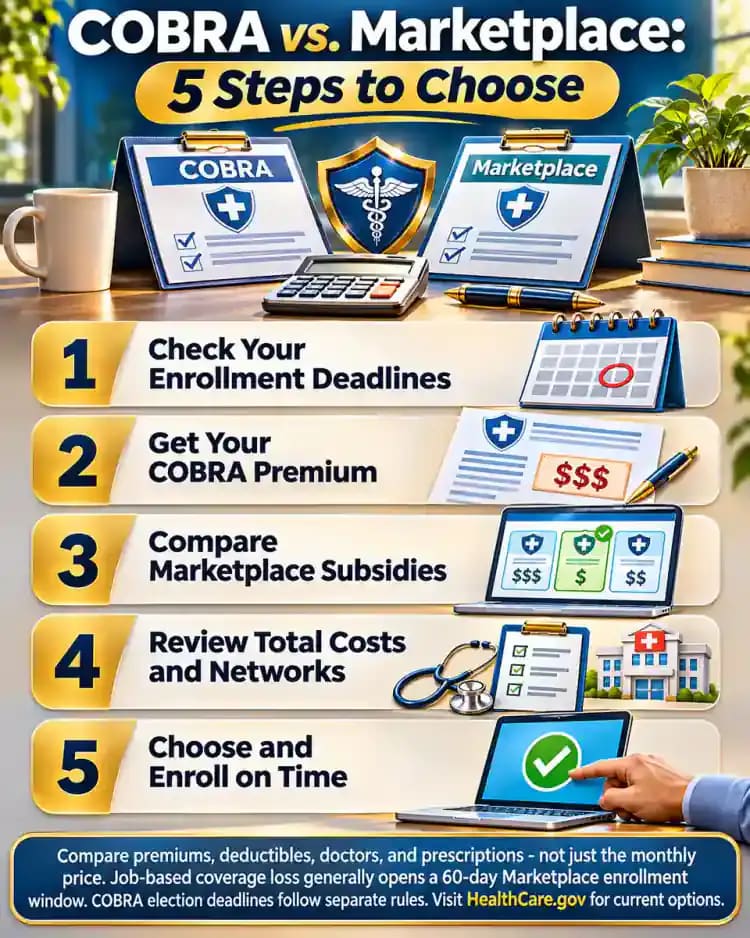
Begin by collecting your coverage termination notice, COBRA election materials, current plan summary, prescription list, and expected household income. Request the exact COBRA premium from your plan administrator. Next, use HealthCare.gov or your state's official Marketplace to review available plans and estimated financial assistance. Compare plan documents using consistent assumptions about medical spending. Once you select coverage, complete the required enrollment process, follow payment instructions, and retain confirmation numbers and records of communications.

Which Option Is Better for Your Situation?
The better choice depends on household finances and healthcare priorities. Someone facing unemployment with limited savings may find an eligible subsidized Marketplace plan more affordable. A person undergoing complex treatment might value COBRA's continuity despite higher premiums. Families should consider each member's healthcare requirements, while people expecting substantial medical expenses should evaluate potential financial exposure. Neither option is universally superior. The strongest decision balances affordable payments, necessary medical access, coverage reliability, and realistic household spending expectations.

How Long Can You Keep COBRA Coverage?
Federal COBRA typically provides 18 months of continuation coverage after job loss or reduced working hours. According to the U.S. Department of Labor, certain qualifying events can extend coverage to 29 or 36 months, depending on disability determinations and family circumstances. Coverage may end earlier if premiums are not paid, the employer stops maintaining a group health plan, or other termination conditions apply. Review your election notice for the applicable maximum coverage period and termination rules.

What If Your Former Employer Is Too Small for COBRA?
Federal COBRA generally does not cover group health plans maintained by employers with fewer than 20 employees. However, many states have continuation coverage laws, sometimes called mini-COBRA, that provide protections for workers at smaller businesses. Eligibility, coverage duration, and premium requirements differ by state. State insurance departments can explain available protections. Workers without continuation rights can also investigate ACA Marketplace coverage or other qualifying insurance arrangements. Employer size alone does not determine every available coverage option.

Medicaid and CHIP: Other Coverage Options After Job Loss
Medicaid and the Children's Health Insurance Program, or CHIP, provide additional coverage possibilities for eligible households. Medicaid eligibility depends on factors including income, household circumstances, and state rules. CHIP helps qualifying children obtain coverage when family income exceeds Medicaid limits but private insurance remains difficult to afford. Applications are generally accepted year-round rather than during limited enrollment periods. HealthCare.gov can screen applicants for potential eligibility and direct them toward appropriate state programs for further evaluation.

Can Family Members Choose Different Insurance Plans?
Family members do not necessarily have to select identical replacement insurance arrangements. Under federal COBRA, eligible spouses and dependent children generally have independent election rights, even when the former employee declines continuation coverage. Some family members might retain COBRA while others enroll in qualifying Marketplace plans. Coverage choices can affect household premiums and financial assistance eligibility. Each person's healthcare requirements, eligibility, and available plans matter. Compare individual coverage arrangements before assuming one family policy is automatically preferable.

Understanding COBRA Retroactive Coverage and Payments
COBRA continuation coverage generally applies retroactively to the date qualifying employer coverage ended when properly elected and paid. Federal rules provide at least 45 days after election for the initial premium payment, followed by specific ongoing payment requirements. Medical claims incurred during the intervening period may initially appear uninsured until coverage is activated. Once payment and enrollment are processed, eligible claims can generally be submitted for reconsideration. Retaining receipts and communicating with the plan administrator helps document covered expenses.

What Happens When Your Income Changes Again?
Marketplace financial assistance depends partly on projected annual household income, so returning to work or receiving unexpected earnings can change eligibility. HealthCare.gov encourages enrollees to report income and household changes promptly. Updated estimates may increase or decrease advance premium tax credits applied to monthly premiums. If assistance exceeds the final eligible amount, tax reconciliation may create repayment obligations under applicable rules. Maintaining accurate income information helps reduce unexpected financial differences when filing the annual federal tax return.

How New Employer Insurance Affects Your Options
Starting a new job can introduce another employer-sponsored health insurance option. Eligibility may begin immediately or after a permitted waiting period, depending on the employer's plan. Becoming covered under another group health plan can affect COBRA continuation rights under applicable conditions. Eligibility for affordable employer coverage meeting minimum value standards can also restrict Marketplace premium tax credits. Compare the new employer's enrollment requirements, benefit start date, and plan conditions before changing existing insurance arrangements.

How to Avoid a Gap in Health Insurance Coverage
Avoiding an insurance gap requires coordinating the final day of existing coverage with the effective date of replacement coverage. Enrollment approval does not always mean benefits begin immediately. Confirm the start date directly with the insurer and determine whether an initial premium payment is required for activation. For scheduled appointments or prescription refills, verify coverage before receiving services. Keep written confirmation of effective dates, and contact the insurer promptly if coverage information appears inconsistent.

Where to Get Free Health Insurance Enrollment Help
Several official resources provide free assistance with health insurance questions and enrollment. HealthCare.gov offers application support and access to trained Marketplace assisters and navigators. State-based Marketplaces may provide their own assistance programs. State insurance departments can answer questions about insurance regulations and continuation protections. Former employer benefits administrators can clarify group plan provisions and COBRA notices. The U.S. Department of Labor also publishes COBRA guidance explaining federal continuation rights and employer responsibilities.

Final Health Insurance Checklist After Job Loss
Before relying on replacement insurance, verify that the selected plan has accepted your enrollment and recorded the correct covered family members. Confirm the first premium payment, effective coverage date, and available identification cards or digital membership details. Save election notices, payment receipts, plan summaries, and enrollment confirmations in one accessible location. Check that your healthcare provider can verify active benefits before your first appointment. These administrative checks help prevent avoidable billing confusion and coverage disputes.

COBRA vs. Marketplace: Which Is Better for Short-Term Coverage?
When unemployment is expected to last only a few weeks or months, the anticipated coverage period becomes an important consideration. COBRA may offer convenient continuity until new employment begins, although its premiums can be expensive. Marketplace coverage might provide lower monthly payments, particularly with financial assistance. However, starting a new plan for a brief period can introduce administrative complexity. Compare the projected total cost over your expected unemployment period while allowing for uncertainty about your return-to-work date.

How Marketplace Metal Tiers Affect Your Costs
Marketplace plans are commonly classified as Bronze, Silver, Gold, or Platinum based on how covered healthcare costs are shared. Bronze plans generally feature lower premiums but higher out-of-pocket expenses, while Gold and Platinum plans typically require higher premiums and less cost-sharing. Silver plans fall between these categories. Metal tiers describe actuarial value, not medical care quality. Actual deductibles and copayments vary between insurers. Comparing plan documents helps reveal whether a particular tier matches anticipated healthcare usage.

Why Silver Plans May Offer Extra Savings
Eligible Marketplace shoppers may qualify for cost-sharing reductions that decrease deductibles, copayments, coinsurance, and out-of-pocket maximums. These additional savings are generally available only when qualifying applicants enroll in a Silver plan. Eligibility depends primarily on household income and other program requirements. Unlike premium tax credits, cost-sharing reductions lower expenses when receiving covered medical services. HealthCare.gov identifies available savings during enrollment. For eligible households, a Silver plan can offer better financial protection than its standard benefits suggest.

HMO, PPO, and EPO Plans: Understanding Network Rules
Health insurance network structures determine how members access participating healthcare providers. Health Maintenance Organization plans, or HMOs, commonly emphasize coordinated in-network care and may require specialist referrals. Preferred Provider Organization plans, or PPOs, generally offer greater flexibility, including some out-of-network benefits at higher costs. Exclusive Provider Organization plans, or EPOs, typically restrict nonemergency coverage to participating providers. Specific rules vary by policy. Review referral requirements, provider directories, and out-of-network exclusions before comparing network flexibility.

What If You Need Surgery or Expensive Treatment Soon?
Upcoming surgery, specialist procedures, or expensive ongoing treatment can make insurance transitions particularly consequential. A new policy may require fresh prior authorization, different participating facilities, or confirmation that a treatment meets coverage requirements. Existing authorizations do not necessarily transfer between insurers. Unexpected network changes can also affect costs. Before changing coverage, compare the treatment requirements of each plan and ask insurers how scheduled services would be handled. Written coverage information can help clarify potential financial exposure.

Can You Use an HSA With COBRA or Marketplace Insurance?
A Health Savings Account, or HSA, allows eligible individuals to set aside money for qualified medical expenses with favorable federal tax treatment. Existing HSA funds generally remain available after leaving a job, regardless of whether new coverage qualifies for contributions. However, making additional contributions requires meeting current HSA eligibility rules, including coverage under a qualifying high-deductible health plan and restrictions on other coverage. Neither COBRA nor Marketplace enrollment automatically establishes eligibility. IRS guidance explains applicable contribution requirements.

Can Severance Benefits Help Pay for COBRA?
Some employers offer temporary health insurance assistance as part of severance packages. Arrangements may include paying COBRA premiums directly, reimbursing eligible expenses, or covering part of the premium for a defined period. These benefits are not guaranteed and depend on the employment agreement or employer policy. A subsidy may expire before COBRA eligibility ends, leaving the former employee responsible for subsequent payments. Review written severance terms carefully, including payment responsibilities, duration, and circumstances that terminate assistance.

How Marriage or a Spouse's Employer Plan Changes Your Options
Losing employer-sponsored insurance may create a special enrollment opportunity under a spouse's workplace health plan. Federal rules generally require requesting enrollment within 30 days after qualifying coverage loss, although certain circumstances allow different periods. Marriage itself can also trigger special enrollment rights. Employer plans may charge additional premiums for dependents or impose specific eligibility conditions. Compare the spouse's available family coverage with other alternatives, considering employer contributions, dependent premiums, and the requirements for adding household members.

What to Do if Your COBRA Election Notice Never Arrives
Eligible individuals should receive a COBRA election notice explaining continuation rights and enrollment procedures. If the notice does not arrive, contact the former employer's benefits department or group plan administrator to confirm the mailing address and notification status. Document telephone conversations, emails, and requests for replacement materials. Notice obligations and timing depend on federal requirements and the qualifying event. The U.S. Department of Labor's Employee Benefits Security Administration provides assistance with questions about federal COBRA rights and potential notice problems.

How to Handle Denied Claims During an Insurance Transition
Medical claims can be denied during coverage transitions because of incorrect effective dates, delayed enrollment updates, or billing information errors. Start by reviewing the insurer's explanation of benefits and comparing it with enrollment records. Contact the insurance company and healthcare provider to identify discrepancies and request corrections when appropriate. If the denial remains unresolved, insurers generally provide internal appeals procedures, with external review available for certain decisions. Preserve correspondence, medical bills, payment confirmations, and applicable appeal deadlines.

Losing your job can mean losing your employer-sponsored health insurance at the same time your household income becomes uncertain. If you need replacement coverage, two important options are COBRA continuation insurance and an Affordable Care Act (ACA) Marketplace plan. Understanding how they differ can help you avoid unnecessary expenses, protect access to medical care, and prevent gaps in coverage.
COBRA generally allows eligible workers and their families to temporarily continue their existing employer-sponsored health plan after qualifying events, including job loss or reduced working hours. The advantage is continuity: you can usually keep your doctors, covered medications, and progress toward your current plan's deductible. The disadvantage is cost. Without your employer's contribution, you may pay up to 102% of the full plan premium.
Marketplace insurance works differently. You select an individual or family plan, potentially qualifying for premium tax credits based on your projected annual household income and other eligibility factors. A Marketplace plan might offer lower monthly premiums, but its deductible, covered medications, and provider network could differ significantly from your previous insurance.
Timing also matters. Losing qualifying job-based coverage generally triggers a 60-day Marketplace special enrollment period. COBRA has separate election rules, and voluntarily ending COBRA usually does not create another Marketplace enrollment opportunity.
The smartest approach is to compare total expected healthcare spending rather than premiums alone. Gather your COBRA notice, estimate your household income, review available Marketplace plans, and verify that your doctors and prescriptions are covered. This guide explains what to check before committing to either option.
Where people go wrong
Comparing Monthly Premiums Only. A cheaper monthly premium does not automatically mean cheaper healthcare. Compare deductibles, copayments, coinsurance, prescription costs, and out-of-pocket maximums. Estimate what you might spend during the remaining coverage year under both options before deciding.
Missing Enrollment Deadlines. Waiting too long can eliminate important coverage options. Marketplace special enrollment generally lasts 60 days after losing qualifying job-based coverage, while COBRA follows separate election deadlines. Record both deadlines immediately and confirm your effective coverage dates.
Assuming COBRA Costs Your Old Payroll Deduction. Your previous paycheck deduction probably represented only part of the insurance premium. Under COBRA, you may pay the entire employer and employee portions plus a 2% administrative fee. Request the actual monthly amount before comparing plans.
Ignoring Existing Deductible Progress. Switching plans can reset deductible and out-of-pocket spending progress. If you have already paid substantial medical expenses this year, maintaining COBRA could preserve valuable progress. Compare your remaining deductible obligations before assuming a Marketplace plan saves money.
Failing to Verify Doctors and Prescriptions. Marketplace plans can have different provider networks, referral requirements, and prescription formularies. Before enrolling, verify your doctors, hospitals, and medications with the insurer. An inexpensive plan could become costly if essential care is out of network.
Underestimating Annual Household Income. Marketplace premium tax credits depend partly on projected annual household income, not simply your current unemployment status. Include applicable unemployment compensation and other expected income. Incorrect estimates can affect eligibility and create unexpected tax reconciliation obligations.
Assuming You Can Drop COBRA and Switch Anytime. Voluntarily ending COBRA generally does not trigger a new Marketplace special enrollment period. You may need to wait for annual open enrollment or another qualifying event. Understand switching rules before electing or canceling coverage.
Questions people ask
Marketplace insurance may be cheaper if you qualify for premium tax credits, while COBRA often requires paying the full employer-sponsored premium plus an administrative fee. However, premiums alone do not determine the better value. Compare deductibles, out-of-pocket limits, prescription costs, and expected medical expenses before choosing.
Fixed it?
Get one guide like this every Thursday.