How to Clean Quartz Countertops Without Dulling Them
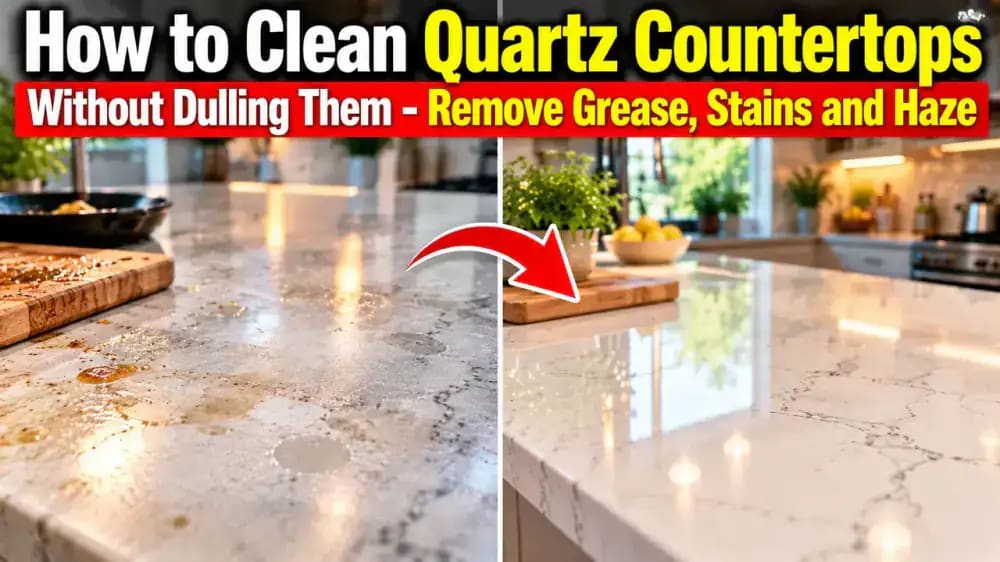
Grease, dried food, sticky residue, and cloudy streaks can leave quartz countertops looking dull. Learn how to clean engineered quartz safely with mild dish soap, warm water, and microfiber cloths while protecting its finish.
What you’ll need
Tap to tick things off before you start.
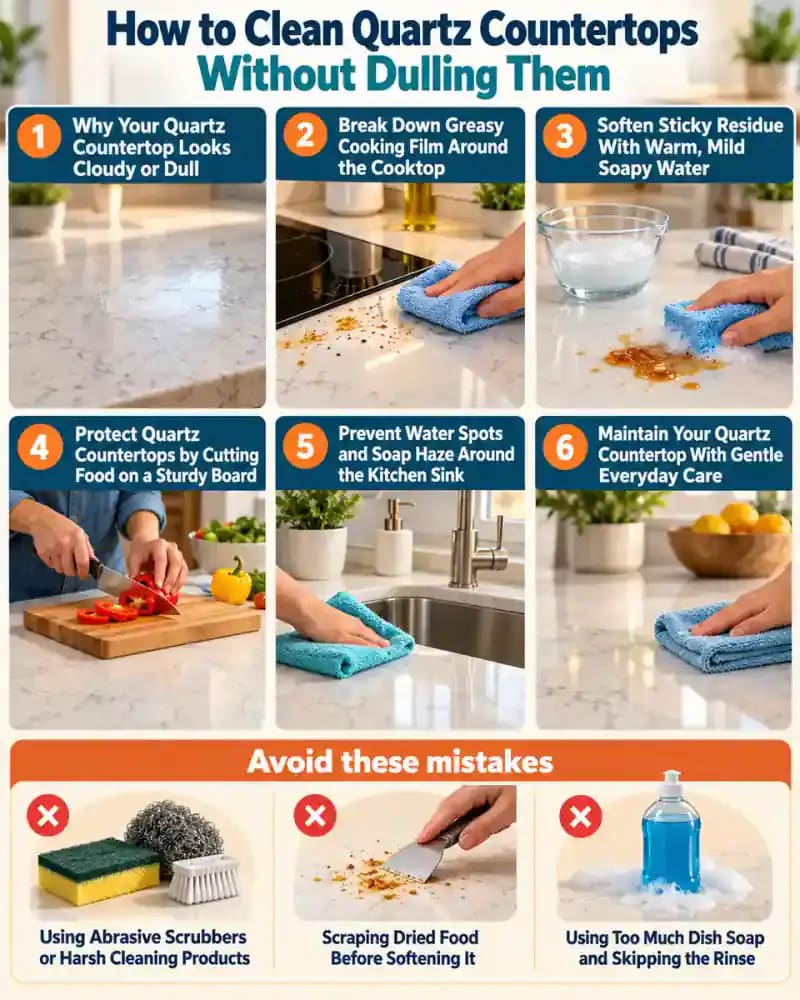
Why Your Quartz Countertop Looks Cloudy or Dull
Look closely at your countertop under natural light, preferably from an angle that reveals surface reflections. Greasy fingerprints near the cooktop, dried sauce beside dishes, and cloudy wiping streaks can become easier to spot. Move plates and other items aside to check for hidden buildup. Identifying these problem areas before cleaning helps you focus on removing residue gently instead of scrubbing the entire surface unnecessarily or reaching for harsh cleaners.
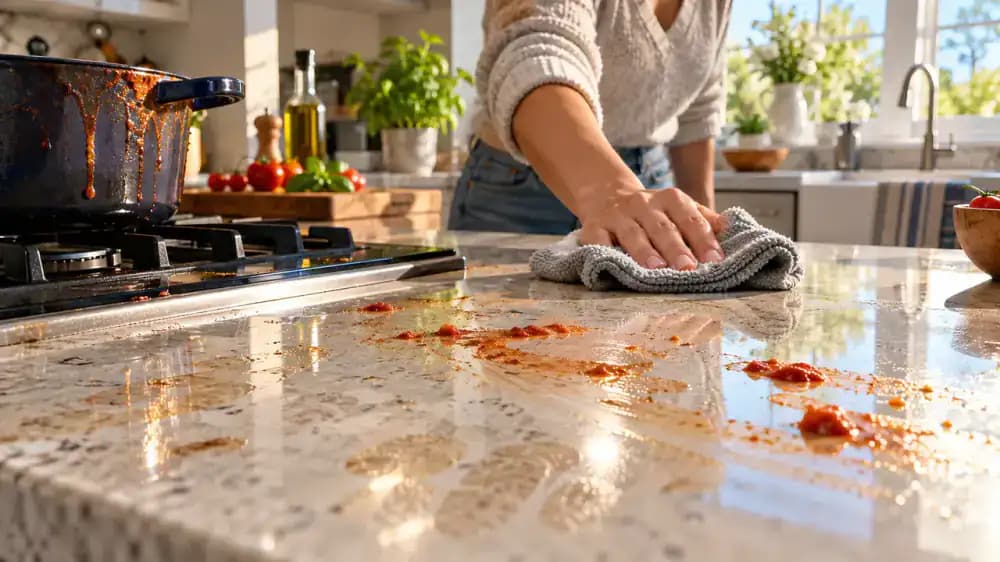
Clear the Countertop and Choose Quartz-Safe Cleaning Supplies
Remove cutting boards, mugs, and utensils so you can reach the entire countertop. Use a dry microfiber cloth to gently sweep loose crumbs into your hand without scrubbing. Arrange a bowl of warm water, mild dish soap, two clean microfiber cloths, and a nonabrasive plastic scraper near the sink. Before applying anything, review the manufacturer's care instructions to confirm which cleaning products are safe for your specific engineered quartz surface.
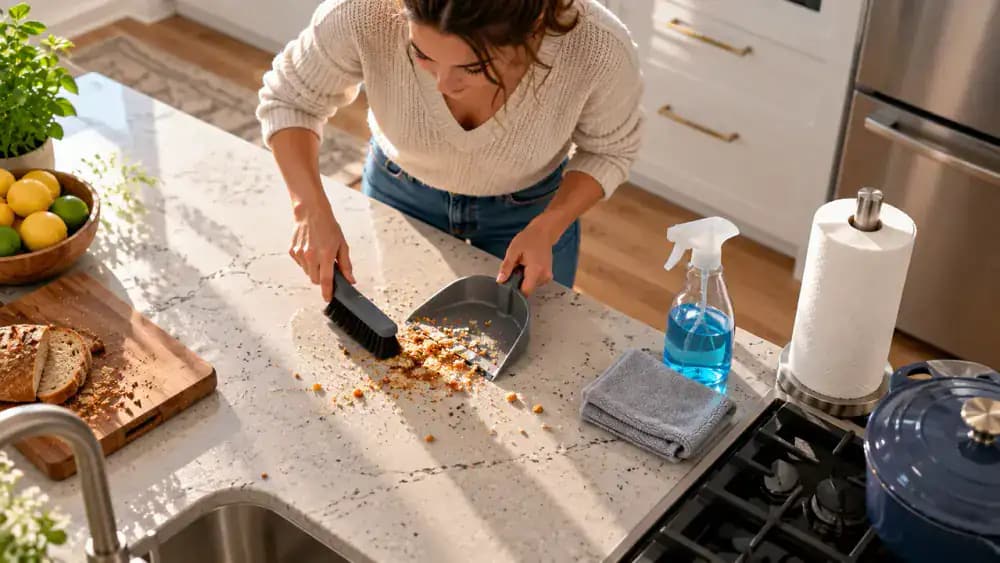
Loosen Dried Food Before Gently Scraping It Away
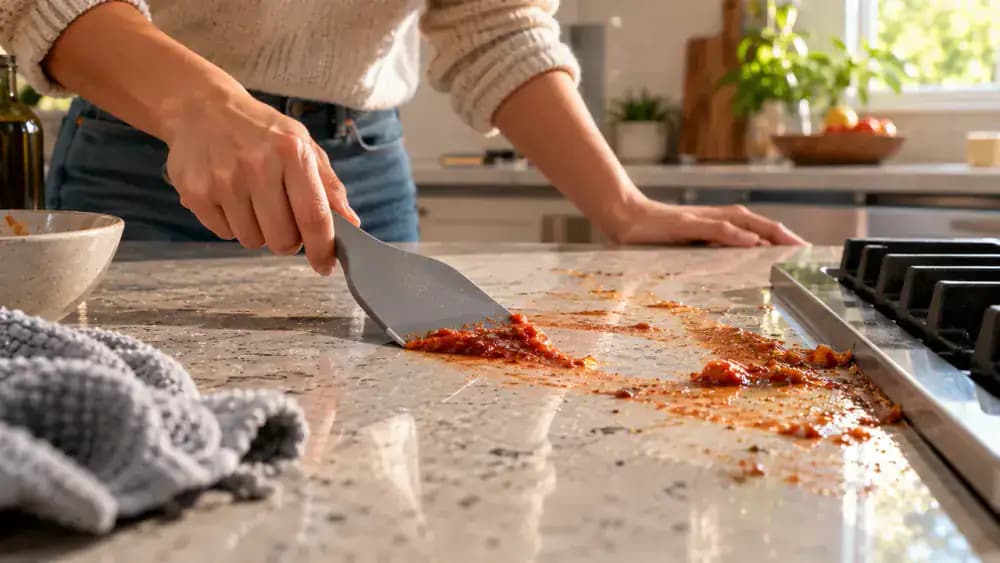
Place a clean microfiber cloth dampened with warm water directly over the dried food and let it sit for several minutes. Once the residue softens, lift the cloth and carefully slide a nonabrasive plastic scraper underneath the buildup, keeping the blade nearly flat against the quartz. Apply minimal pressure and work slowly. Wipe away loosened particles with the damp cloth, repeating the soaking process if stubborn residue remains attached.
Mix Mild Dish Soap and Warm Water for Everyday Cleaning
Measure 2 cups of warm water and pour them into a small bowl. Add three drops of mild dish soap, then stir gently until mixed without creating excessive suds. Dip a clean microfiber cloth into the solution and wring out the excess water until the cloth feels damp but does not drip. Keep the mixture nearby for wiping everyday spills, fingerprints, and light residue without aggressive scrubbing.

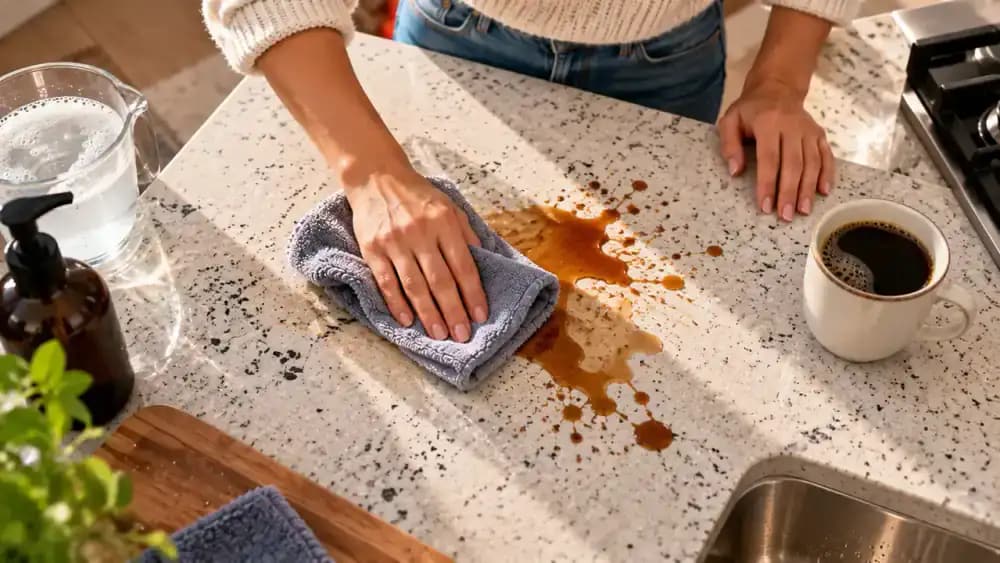
Remove Coffee Spills With Gentle, Overlapping Strokes
Place the damp microfiber cloth against the outer edge of the coffee spill and wipe toward the center using smooth, overlapping strokes. Apply light, even pressure to lift the residue without scrubbing aggressively. As the coffee transfers onto the fabric, refold the cloth to expose a clean section and continue wiping. Work across the affected area until the visible spill disappears, leaving any remaining moisture for the rinsing and drying steps.
Break Down Greasy Cooking Film Around the Cooktop
Dip a clean microfiber cloth into the mild dish soap solution and wring it out thoroughly. Gently spread the moisture across greasy fingerprints and cooking film near the cooktop, allowing brief contact to loosen the buildup. Wipe with smooth, overlapping strokes using light pressure. Refold the cloth to expose a clean section and repeat as needed. If stubborn grease remains, consider a manufacturer-approved quartz cleaner rather than scrubbing harder.
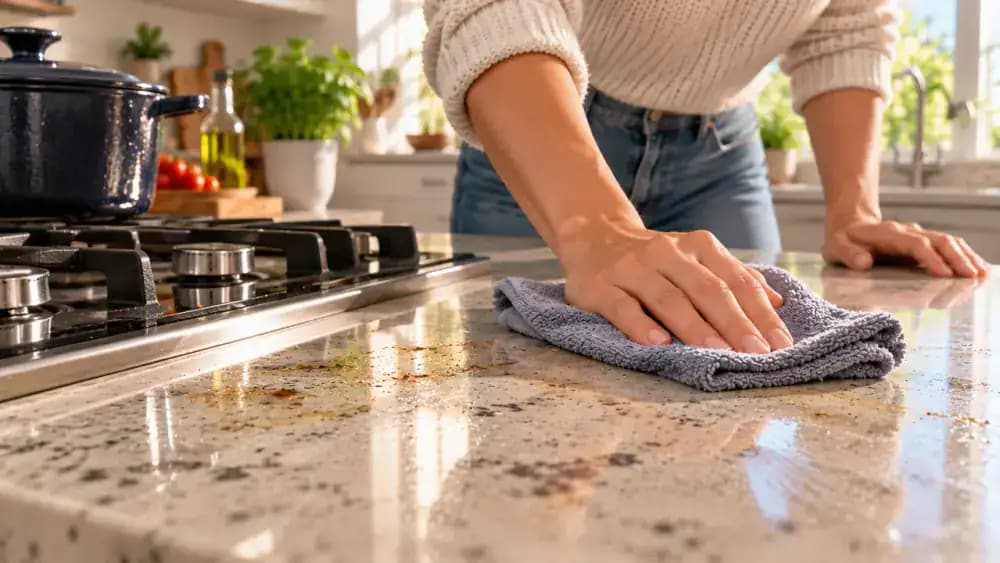
Inspect Remaining Grease and Choose a Quartz-Safe Cleaner
Examine the countertop beside the cooktop under angled natural light to spot any remaining greasy patches. Refold your damp microfiber cloth to expose a clean section, then make another gentle wiping pass using the mild soap solution. If a faint greasy mark persists, stop rather than applying more pressure. Check your countertop manufacturer's care instructions and select a cleaner specifically approved for engineered quartz before attempting further removal.

Remove Stubborn Grease With an Approved Quartz Cleaner
Check the cleaner's label and your countertop manufacturer's care instructions to confirm compatibility before applying anything. If directed, add a small amount of the approved cleaner to a clean, folded microfiber cloth. Gently wipe the remaining greasy patch using slow, controlled strokes and light pressure. Follow the product's recommended contact time, never mix cleaning products, and avoid excessive application. Leave the treated area ready for rinsing and drying.
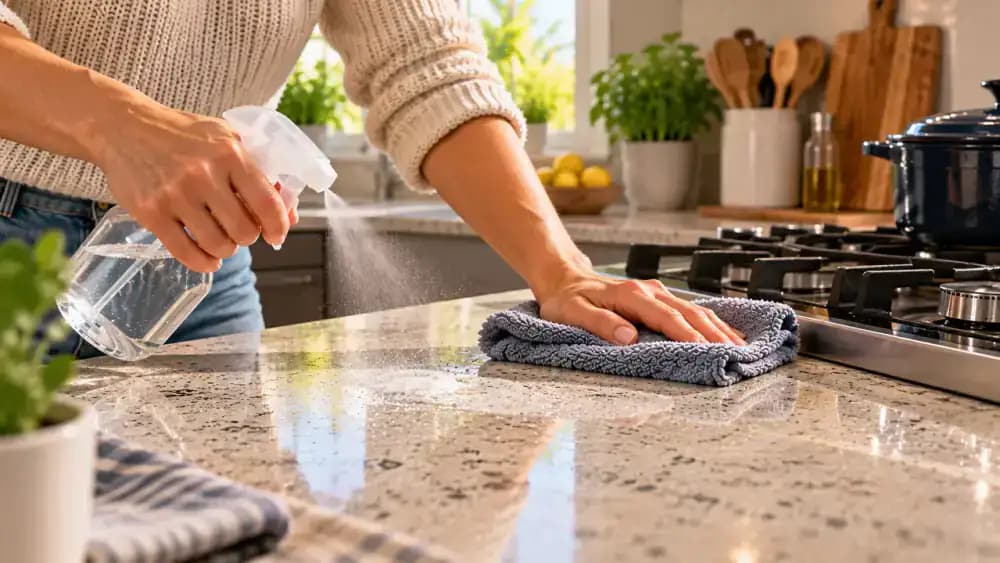
Rinse Away Soap and Cleaner Residue to Prevent Cloudy Haze
Dampen a fresh microfiber cloth with clean, warm water, then wring it out over the sink until it stops dripping. Gently wipe the recently cleaned quartz using straight, overlapping strokes to remove leftover soap and cleaner residue. Rinse the cloth under running water, wring it out again, and repeat until no visible residue remains. Pay extra attention to areas near the cooktop where cleaning products may have accumulated.
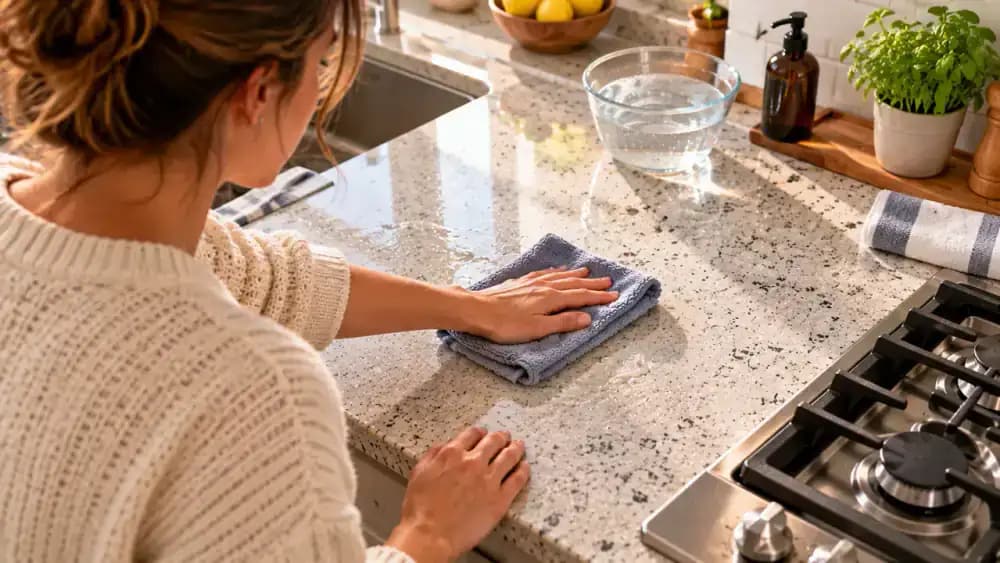
Dry the Quartz Countertop Completely to Prevent Streaks
Pick up a fresh, completely dry microfiber cloth and fold it into a flat square. Gently wipe the rinsed countertop using long, smooth, overlapping strokes, working from the center toward the edges. Pay special attention to the narrow areas beside the cooktop and corners near the backsplash where moisture can linger. Refold the cloth to expose a dry section, then make another gentle pass until the surface is completely dry.

Check the Dry Quartz for Lingering Haze, Grease, and Sticky Spots
Examine the completely dry countertop under natural kitchen light, moving along the surface to view it from different angles. Look for faint cloudy patches near the backsplash, greasy fingerprints beside the cooktop, or small sticky marks that remain visible. Avoid repeatedly rubbing questionable areas during inspection. Instead, note each mark's location and check the manufacturer's care instructions before deciding whether another gentle cleaning treatment is appropriate.

Soften Sticky Residue With Warm, Mild Soapy Water
Dip a clean microfiber cloth into warm water mixed with a few drops of mild dish soap, then squeeze out excess moisture. Fold the damp cloth into a small pad and place it directly over the sticky residue near the backsplash. Press lightly and leave it in place for several minutes to soften the buildup. Lift one corner to check the residue without scraping, rubbing aggressively, or applying strong solvents.
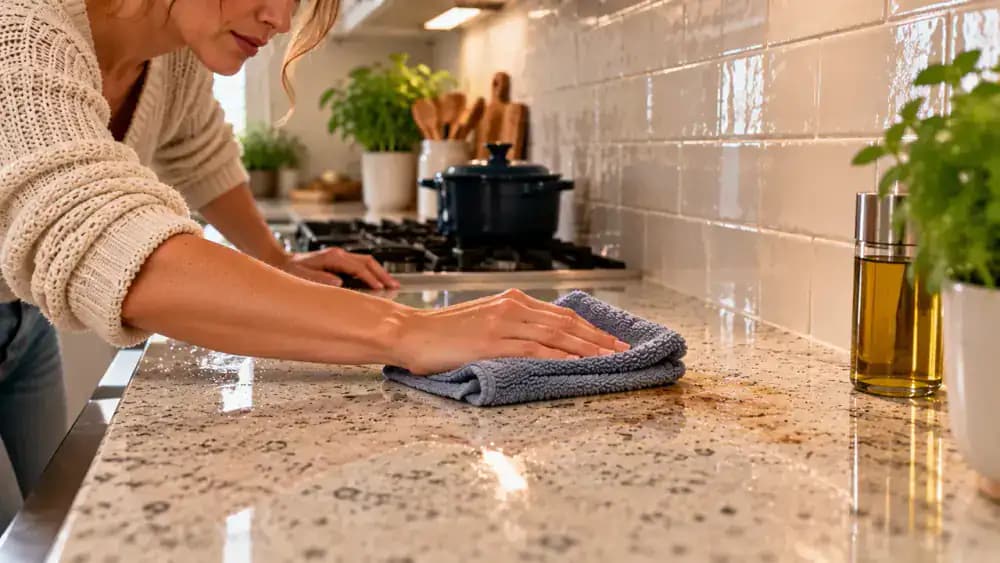
Gently Wipe Away Softened Sticky Residue Without Scraping
Lift the damp microfiber cloth to expose the softened sticky residue near the backsplash. Refold the cloth to reveal a clean, lightly damp section, then wipe from the edge of the residue using short, controlled strokes and minimal pressure. Check the fabric as loosened material transfers onto it. If part of the adhesive remains stuck, stop wiping and cover it with the damp cloth again for additional soaking.
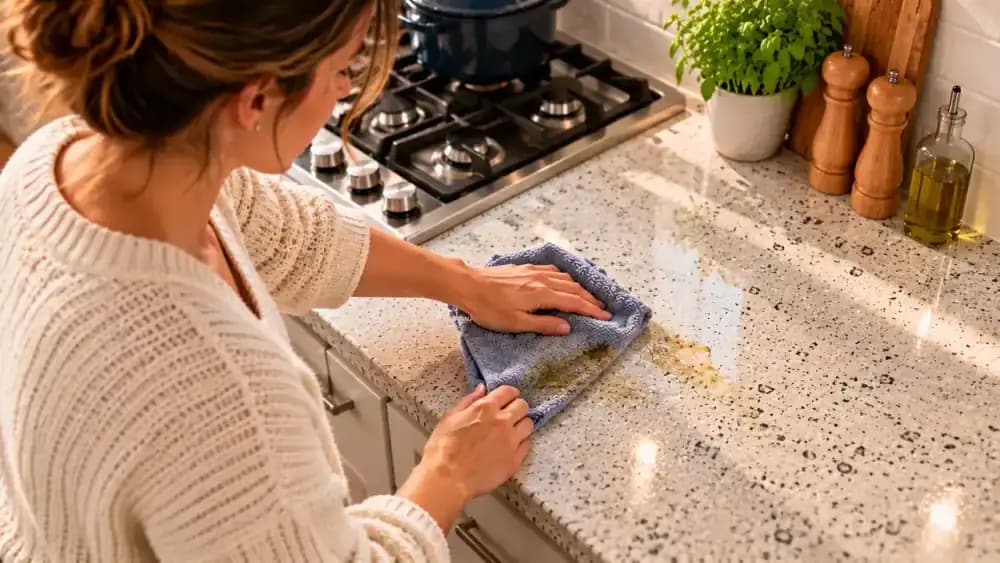
Inspect Remaining Adhesive and Check Approved Removal Methods
Lift the damp microfiber pad after the second soak and gently wipe the softened adhesive with a clean section of cloth. Use short strokes and minimal pressure, then examine the area under angled natural light. If a faint sticky mark remains, stop wiping instead of scraping harder. Review your countertop manufacturer's care instructions for an approved adhesive removal method before applying stronger products or attempting further cleaning.

Rinse and Dry Around Stubborn Adhesive Without Disturbing It
Move the manufacturer's care guide away from the cleaning area, then dampen a fresh microfiber cloth with plain warm water and wring it out thoroughly. Gently wipe the countertop surrounding the remaining adhesive, using short strokes directed away from the sticky patch. Leave the mark untouched until an approved removal method is confirmed. Finish by drying the rinsed area with a separate microfiber cloth, including the narrow section along the backsplash.

Compare Cleaned Quartz Areas Under Consistent Lighting
Examine the dry countertop from the same viewing angle and under lighting similar to its original condition. Check whether greasy fingerprints near the cooktop, dried food marks, and cloudy streaks are less visible. Look across the surface from different positions to identify any remaining haze without rubbing it. Expect a naturally clean appearance, not extra shine. Leave the stubborn adhesive near the backsplash untouched until an approved treatment is confirmed.
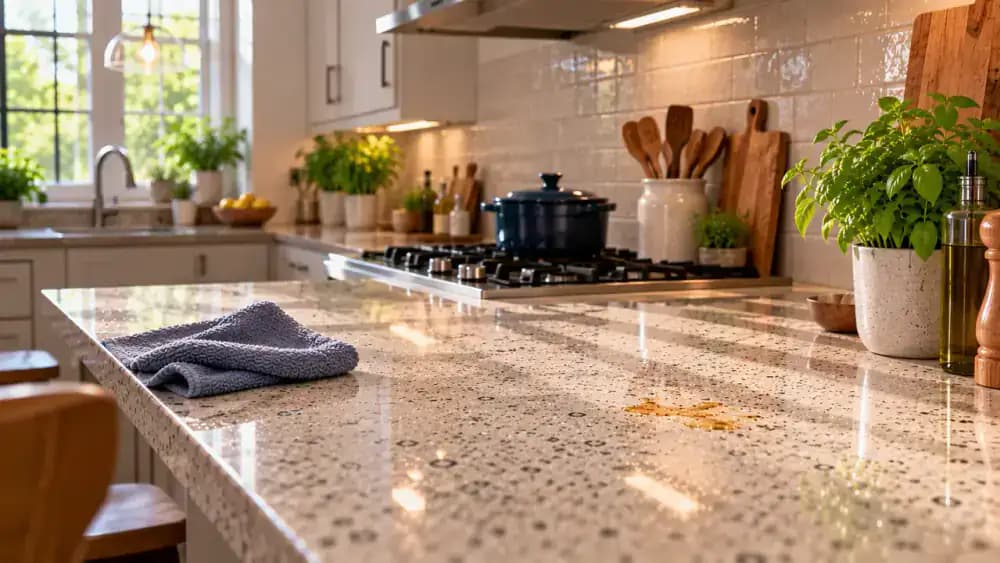
Clean Fresh Spills Immediately to Prevent Stubborn Buildup
When coffee or another drink spills onto your quartz countertop, move nearby items aside and blot the liquid promptly with a clean, dry microfiber cloth. Avoid wiping outward, which can spread the spill. Next, use a separate cloth lightly dampened with clean water to remove remaining traces. Finish by drying the area thoroughly with fresh microfiber. Cleaning spills before they dry helps prevent sticky buildup and reduces future scrubbing.

Protect Quartz Countertops by Cutting Food on a Sturdy Board
Place a sturdy wooden cutting board flat on your clean, dry quartz countertop before preparing vegetables or other ingredients. Check that the board sits securely without sliding, then keep all knife movements within its edges. Slice vegetables directly on the board, never on the quartz itself. After preparing your ingredients, lift the board rather than dragging it across the surface. This simple habit helps prevent scratches and protects your knife blades.

Use Heat-Resistant Trivets to Protect Quartz from Hot Cookware
Place a sturdy, heat-resistant trivet on the quartz countertop before removing hot cookware from the stove or oven. Position it away from the counter's edge and make sure it sits flat. Using a dry oven mitt, carefully lift the hot saucepan and set it directly onto the trivet without touching the quartz. Check that the cookware is stable and centered. Never place hot pans directly on engineered quartz, as concentrated heat can damage the surface.

Choose Soft Microfiber Cloths Instead of Abrasive Scrubbing Pads
Open your cleaning supply cabinet and set aside abrasive powders, steel wool, and rough scouring pads that could damage the quartz finish. Choose clean, soft microfiber cloths and mild dish soap instead. Place these supplies beside the sink, then gently wipe a small section of countertop using minimal pressure. Check your manufacturer's care instructions before selecting other products. If stubborn marks remain, avoid switching to harsher tools or scrubbing more aggressively.

Verify Cleaner Compatibility With Your Quartz Manufacturer
Open your countertop manufacturer's care guide and review its recommended cleaning products before trying anything unfamiliar. Compare those instructions with the ingredients and application directions on the cleaner's label. Set aside products intended for natural stone unless their compatibility with your engineered quartz is confirmed. Choose mild dish soap or another explicitly approved cleaner, along with a soft microfiber cloth. Keep questionable products unopened until you receive reliable manufacturer guidance.

Keep Quartz Countertops Clean With a Simple Daily Routine
After meals, move dishes to the sink and gently collect loose crumbs with a dry microfiber cloth. Dampen a separate cloth with warm water and a little manufacturer-approved mild dish soap, then wipe food smudges using smooth, overlapping strokes. Rinse away soap with a fresh water-dampened cloth and dry the countertop completely. Place used cloths in the laundry and store cleaning supplies nearby to make daily maintenance easier.

Wash Microfiber Cloths Regularly to Avoid Spreading Grease
Separate used microfiber cloths from clean ones after each countertop cleaning session. Check their care labels, then wash them with an appropriate laundry detergent using a compatible washing machine cycle. Skip fabric softener, which can reduce microfiber's cleaning effectiveness. Allow the cloths to dry completely on a clean drying rack before folding them. Store fresh cloths separately from dirty cleaning supplies so they are ready for your next quartz cleanup.

Prevent Water Spots and Soap Haze Around the Kitchen Sink
After washing dishes, inspect the quartz around the faucet base and sink edges for water droplets and soap splashes. Dampen a clean microfiber cloth with plain warm water, wring it out thoroughly, and gently wipe the affected areas. Carefully clean around the faucet and along the sink perimeter without pushing moisture into the joints. Switch to a separate, completely dry microfiber cloth and absorb any remaining water to prevent visible drying marks.

Clean Fresh Cooking Grease Before It Builds Up
Once the cooktop has completely cooled, move nearby items aside and inspect the quartz for fresh oil splatters, greasy fingerprints, and oily rings beneath bottles. Dampen a clean microfiber cloth with manufacturer-approved mild soapy water and gently wipe the affected areas using short, overlapping strokes. Refold the cloth as grease transfers onto it. Rinse with a separate water-dampened cloth, then dry thoroughly, paying attention to the cooktop edges.

Skip Unnecessary Polishes, Waxes, and Surface Coatings
Before applying countertop polish, wax, or sealer, check your engineered quartz manufacturer's care instructions. Most engineered quartz countertops do not require these treatments, and unapproved coatings can leave residue that creates a cloudy appearance. Keep unnecessary products unopened and return them to storage. Instead, use a clean, dry microfiber cloth to gently remove loose dust. Inspect the countertop under natural light and preserve its original finish rather than trying to add extra shine.

Document Persistent Quartz Marks Before Seeking Professional Advice
If a cloudy patch remains after gentle cleaning, photograph it under even, natural light from two different angles. Keep the surrounding quartz visible to show the mark's location and appearance. Write down which products and methods you have already tried, including mild dish soap and approved quartz cleaners. Review your countertop's care guide, then contact the manufacturer or installer with your photos and cleaning history before attempting stronger treatments.

Store Your Quartz Care Instructions Where You Can Find Them
Gather your countertop manufacturer's printed care guide and any notes about previous cleaning treatments. Place the instructions in a protective sleeve inside your household maintenance binder, keeping them easy to locate. Use your smartphone to photograph important pages covering approved cleaners, stain removal, and routine care. Save the images in a dedicated household reference album. Keep your cleaning history nearby so you can quickly review past treatments before trying something new.

Organize Cleaning Supplies for Easy Quartz Countertop Maintenance
Arrange clean microfiber cloths and manufacturer-approved mild dish soap in a dedicated drawer near your quartz countertop. Store cutting boards close to the food preparation area and keep heat-resistant trivets within reach of the cooktop. Move abrasive powders and rough scouring pads into a separate cabinet to prevent accidental use. When you notice a water droplet, blot it promptly with clean microfiber and place the used cloth in the laundry.

Maintain Your Quartz Countertop With Gentle Everyday Care
Blot fresh water droplets with a clean microfiber cloth, then place a sturdy cutting board in your food preparation area and a heat-resistant trivet beside the cooktop. Keep manufacturer-approved mild dish soap and fresh cloths accessible for routine cleaning. Always rinse away soap and dry thoroughly. Leave unresolved adhesive or cloudy marks untouched until you receive appropriate manufacturer guidance. These simple habits help preserve your quartz countertop's natural appearance without abrasive scrubbing.

Greasy fingerprints, dried food, sticky spots, and cloudy streaks can make even a beautiful quartz countertop look worn and neglected. Although engineered quartz is designed to withstand everyday kitchen use, cleaning it the wrong way can compromise its appearance. Abrasive powders, rough scrubbing pads, and certain harsh chemicals may damage the surface or leave it looking dull. Fortunately, most everyday messes don't require specialized products or aggressive scrubbing. A gentle cleaning routine using warm water, mild dish soap, and soft microfiber cloths is often enough to restore a clean, streak-free appearance.
The key is knowing how to handle different types of buildup without damaging the finish. Dried food needs time to soften, greasy cooking film may require repeated gentle wiping, and sticky residue should be loosened gradually rather than scraped forcefully. This guide explains how to tackle each problem, rinse away leftover soap, and dry the countertop to prevent haze. Before starting, always check your countertop manufacturer's care instructions, since cleaning methods suitable for natural stone aren't necessarily appropriate for engineered quartz.
Where people go wrong
Using Abrasive Scrubbers or Harsh Cleaning Products. Abrasive powders, rough scouring pads, and aggressive cleaners can compromise the appearance of engineered quartz, potentially leaving permanent dull spots or surface damage. Use soft microfiber cloths and mild dish soap instead. Always check manufacturer care instructions before applying unfamiliar chemicals or cleaners intended for natural stone.
Scraping Dried Food Before Softening It. Trying to scrape hardened food directly off a quartz countertop can cause scratches or unnecessary surface wear, especially when using metal tools or excessive pressure. First, hold a warm, damp cloth over the residue to soften it. Then gently lift remaining buildup with a nonabrasive plastic scraper at a shallow angle.
Using Too Much Dish Soap and Skipping the Rinse. Adding excessive dish soap may leave a thin film that makes quartz countertops appear cloudy or streaky after cleaning. Mix just a few drops of mild dish soap into 2 cups of warm water. After wiping, remove soap residue with a separate water-dampened microfiber cloth and dry the surface completely.
Attacking Stubborn Grease and Sticky Residue With Strong Solvents. Stubborn cooking grease and adhesive residue can tempt homeowners to reach for powerful solvents or scrub aggressively. These methods may damage the countertop's appearance if the products are incompatible with engineered quartz. Instead, allow mild soapy water to loosen buildup, wipe repeatedly, and use a manufacturer-approved quartz cleaner when necessary.
Questions people ask
Mix a few drops of mild dish soap into 2 cups of warm water. Wipe the countertop gently with a clean microfiber cloth, focusing on fingerprints, food spills, and cooking residue. Follow with a separate cloth dampened with plain water, then dry thoroughly to prevent streaks and soap buildup.
Fixed it?
Get one guide like this every Thursday.