How to Clean Laminate Countertops Without Damaging the Finish
Clean everyday crumbs, grease, and dried food from laminate countertops using mild soap, minimal moisture, and gentle wiping that protects seams, edges, and the surface finish.

What you’ll need
Tap to tick things off before you start.
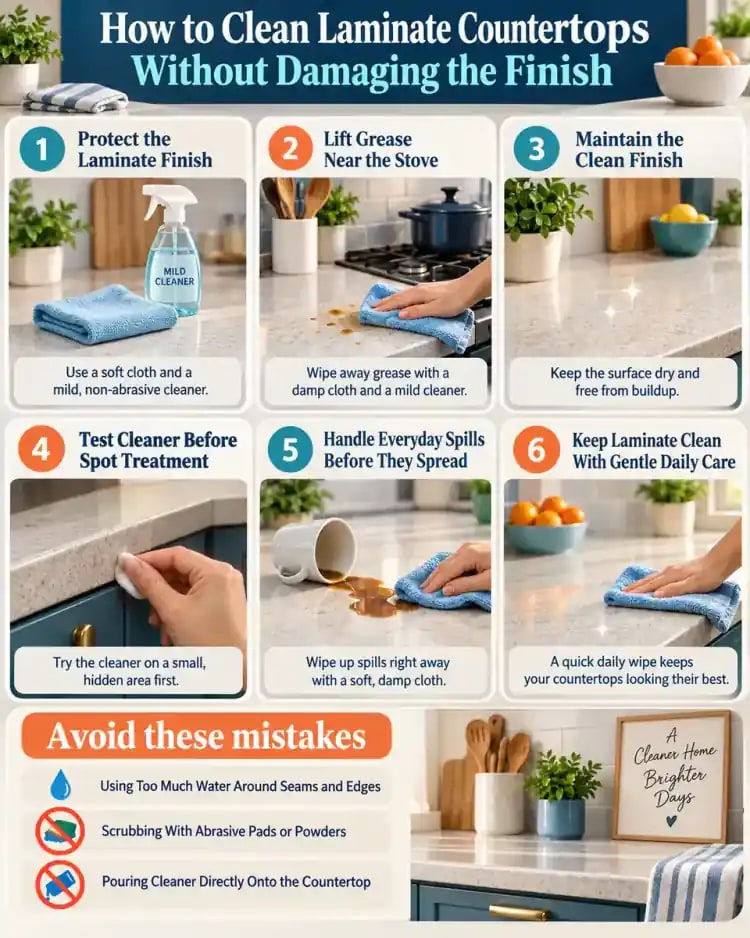
Protect the Laminate Finish
Inspect the countertop before cleaning, paying close attention to seams, exposed edges, and the joint where the backsplash meets the counter. These areas are more vulnerable to moisture damage than the flat surface. Brush away loose crumbs first, then plan to use a soft cloth, mild dish soap, and minimal water. Avoid soaking the counter, especially around joints, and skip abrasive pads or strong cleaners that can dull or scratch the laminate finish.

Clear the Counter Before You Start
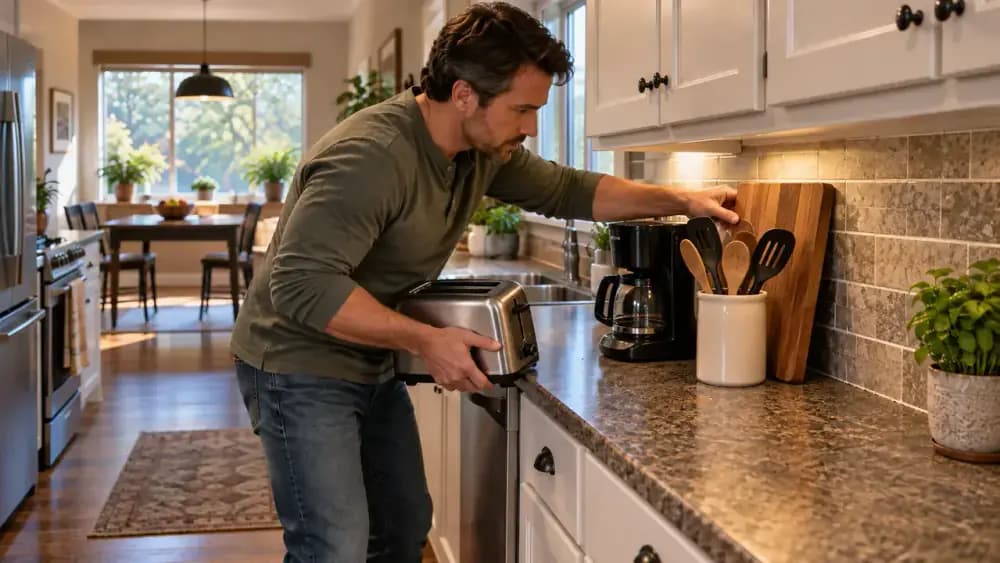
Move small appliances, utensil holders, cutting boards, and other loose items off the laminate countertop before cleaning. Place them on a nearby table or another dry, stable surface so the entire work area is exposed. Pay special attention to items near seams and backsplash joints, where moisture can become trapped. Keeping the counter completely open also makes it easier to wipe evenly without repeatedly shifting appliances during the job.
Remove Crumbs and Grit
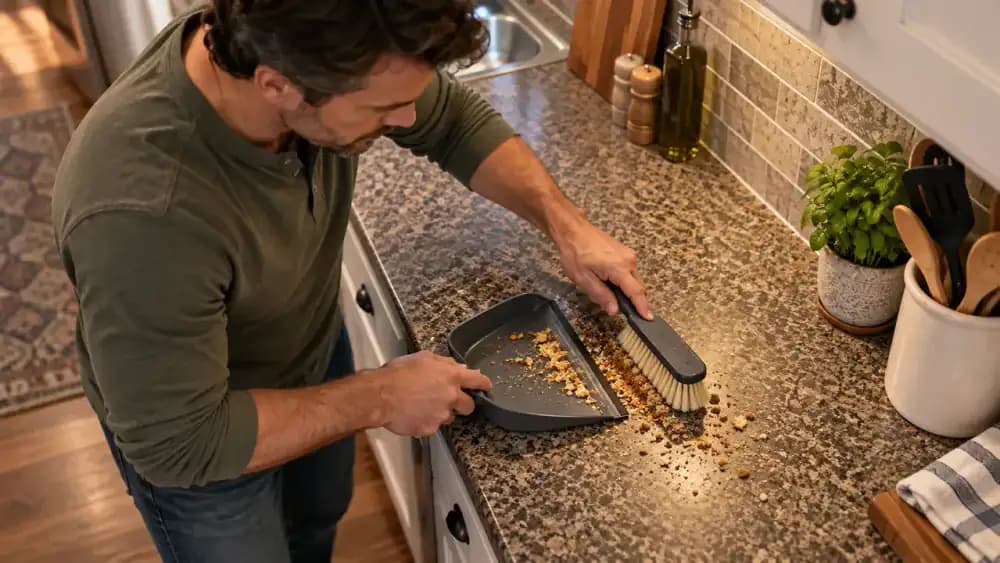
Use a clean, dry microfiber cloth or soft-bristled brush to sweep crumbs, dust, and fine grit away before the countertop gets wet. Start along the backsplash and move toward the front edge so debris stays controlled instead of spreading around. Collect everything in your hand or a small dustpan. Pay extra attention to corners and seams, where gritty particles can hide and later scratch the laminate during wiping.
Prepare a Mild Cleaning Solution
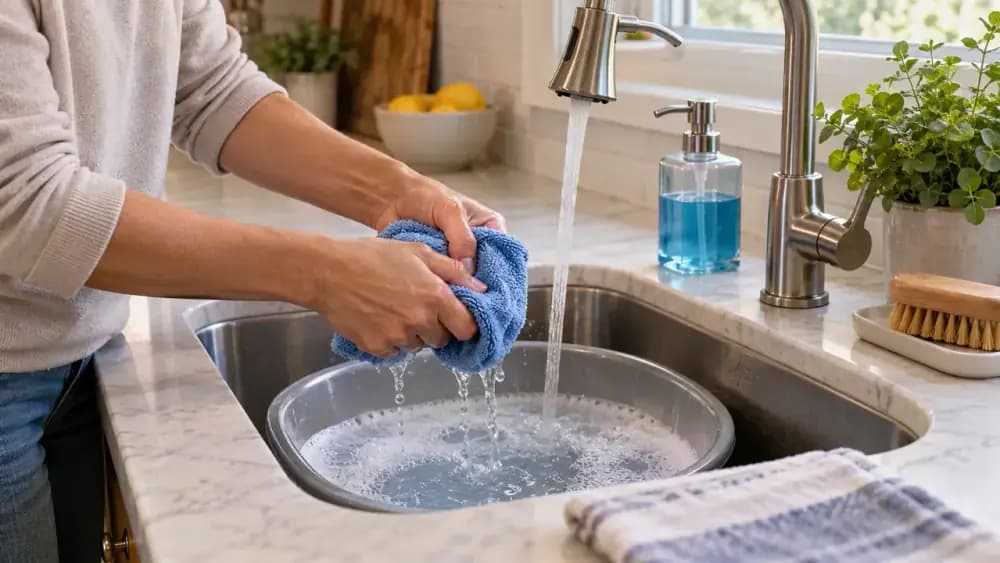
Add a small squirt of mild dish soap to a bowl of warm water, then dip in a clean microfiber cloth. Wring the cloth out firmly over the bowl until it feels damp rather than wet. Using less water helps protect laminate seams and exposed edges from unnecessary moisture. Keep the surrounding counter dry, and re-wring the cloth anytime it begins leaving visible water behind during cleaning.
Wipe One Small Area at a Time
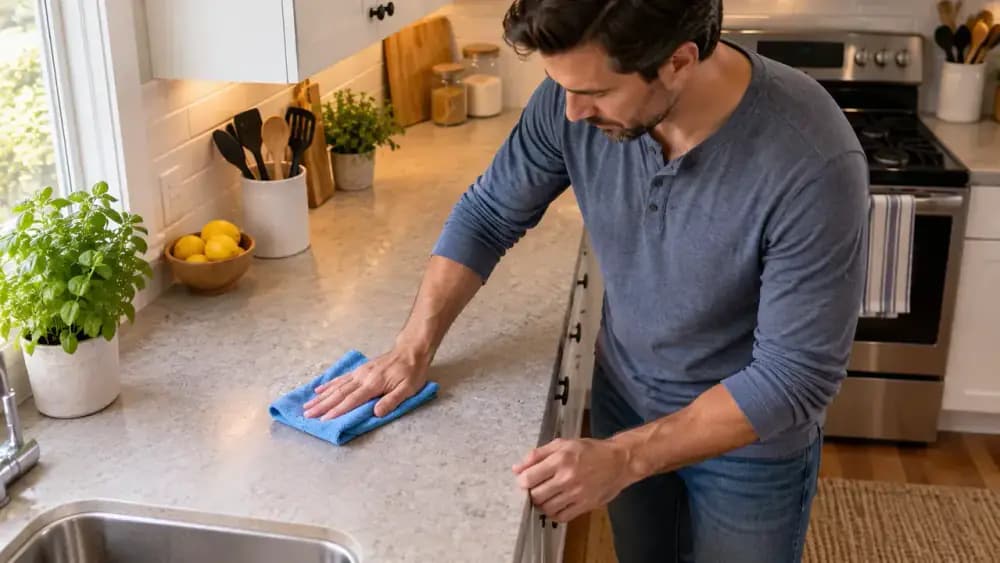
Use a well-wrung microfiber cloth to wipe one clearly defined section with light, even pressure. Make slow, overlapping passes so dried food residue has time to loosen without aggressive scrubbing. Keep the cloth slightly away from seams, backsplash joints, and chipped or exposed edges where moisture can penetrate. Re-wring the cloth whenever it feels too wet, and finish each section before moving to the next area.
Lift Grease Near the Stove
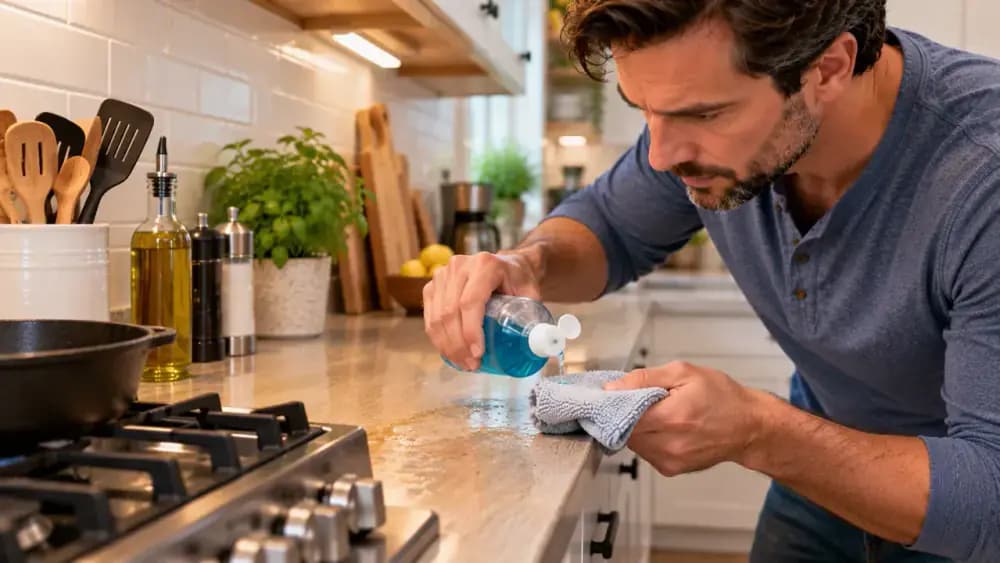
Add a small dab of diluted dish soap to a barely damp microfiber cloth, then wipe the greasy laminate with short, overlapping passes and light pressure. Work gradually instead of soaking the area, and add more soap only if the film remains. Keep the cloth away from countertop seams, exposed edges, and the backsplash joint. For stubborn spots, hold the damp cloth in place for a few seconds before wiping again.
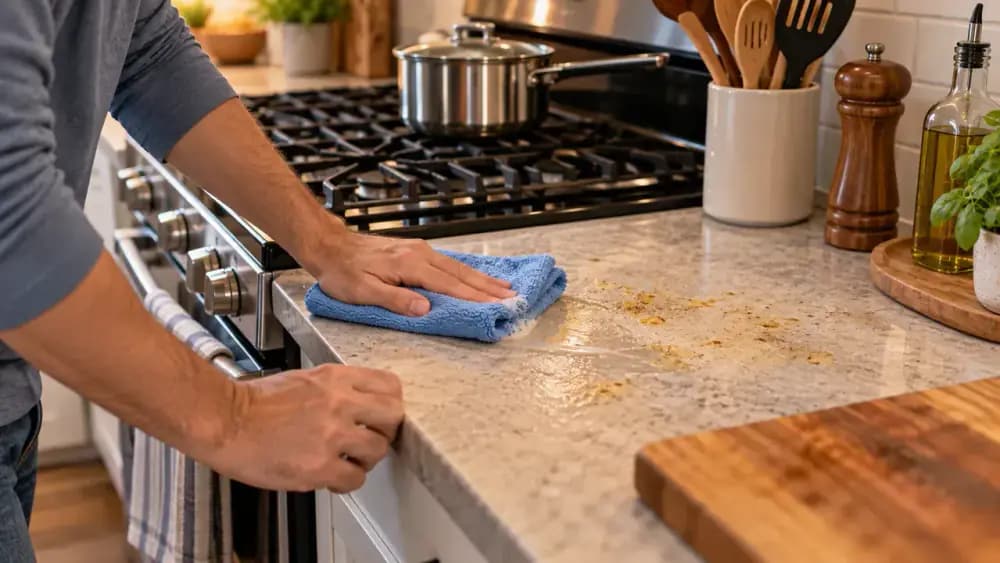
Wipe Away the Remaining Soap Film
Use a second clean microfiber cloth that is only barely damp to remove any soap left after the grease has lifted. Work in light, overlapping passes so you pick up residue without soaking the laminate. Then lower your viewing angle and check for streaks, dull patches, or a tacky feel near the stove. Keep the cloth away from seams and backsplash joints so moisture does not collect where laminate edges are most vulnerable.
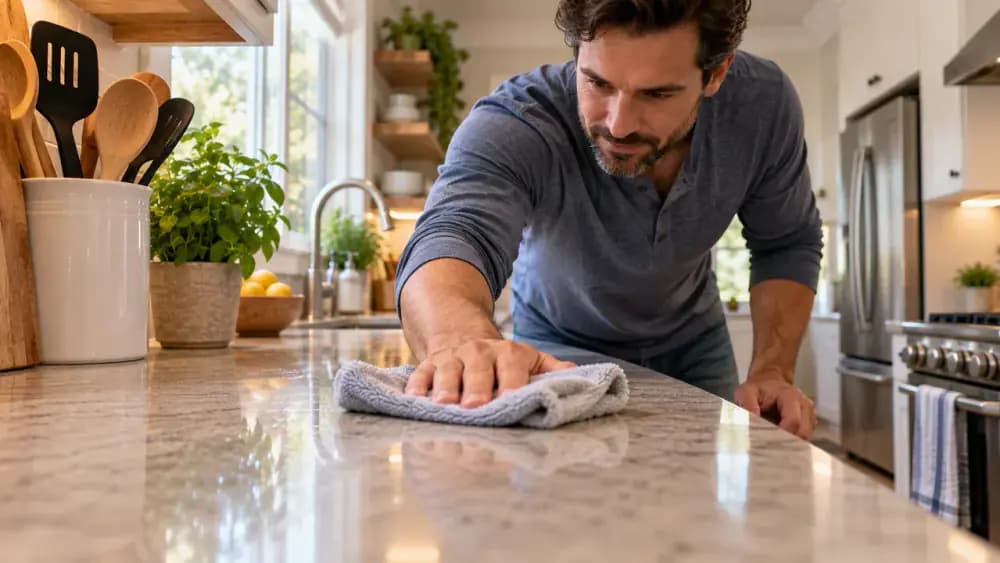
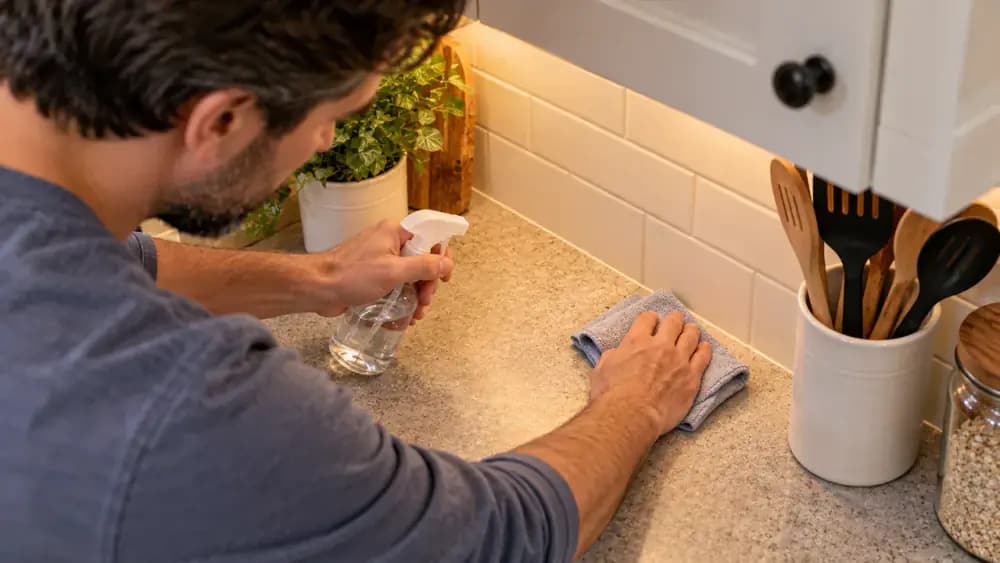
Test the Cleaner in a Hidden Spot First
Apply a small amount of laminate-safe cleaner to a soft microfiber cloth, then gently wipe an inconspicuous back corner of the countertop. Let the test area sit briefly under normal kitchen lighting and check for dullness, discoloration, streaking, or any texture change. If the finish looks unchanged, use the same cleaner and light pressure on the stubborn mark. Avoid abrasive pads, which can permanently scratch or flatten the laminate finish.
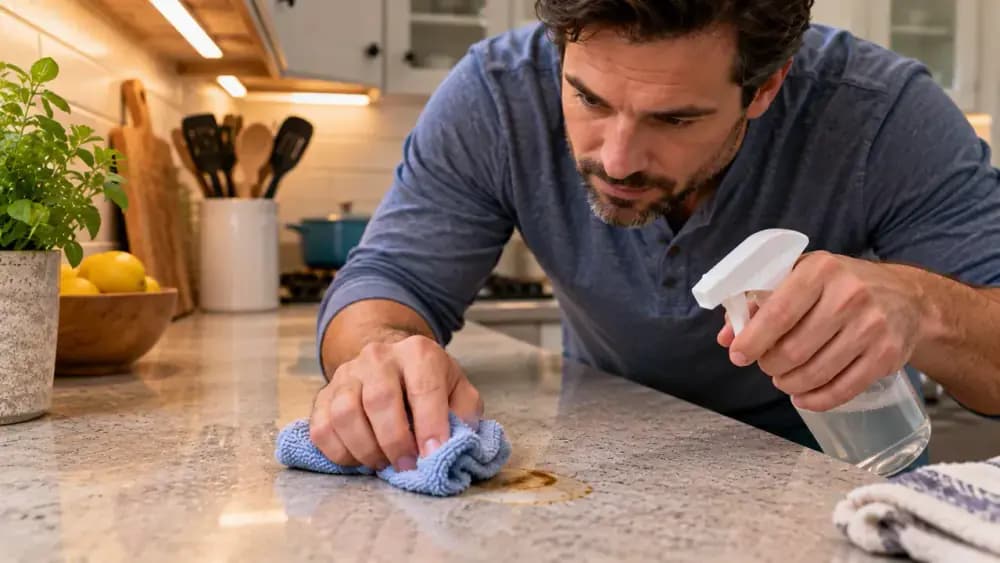
Treat the Stubborn Mark Gently
Apply a small amount of the tested laminate-safe cleaner to a soft microfiber cloth, then work only the stubborn mark with light, repeated passes. Avoid scrubbing hard, flooding the surface, or letting liquid reach seams and the exposed front edge. Give the cleaner a little time to soften the residue, wiping it away gradually. Stop immediately if the laminate begins to look dull, rough, discolored, or noticeably different from the surrounding finish.
Dry Seams and Edges Before You Finish
Switch to a fresh, dry towel and wipe away any moisture left after cleaning the mark. Press the towel firmly into seams, along the front edge, and where the countertop meets the backsplash so water does not remain trapped. Use a corner of the towel to reach narrow joints, then check the surface from an angle for lingering damp spots. Keeping these vulnerable areas dry helps protect laminate edges from swelling or separation over time.
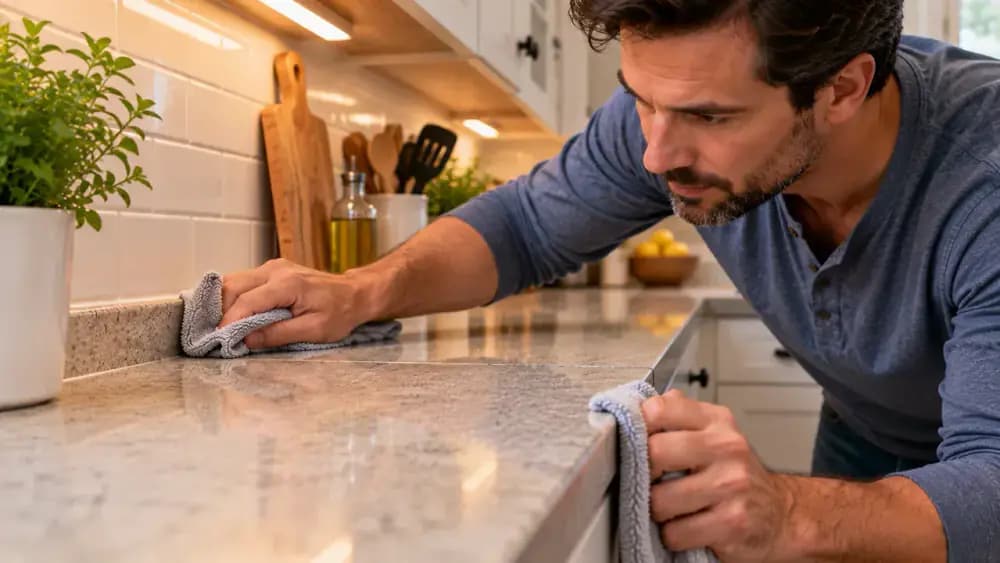
Inspect the Finished Surface
Once the countertop is fully dry, inspect it closely under bright light and run clean fingertips across the surface, seams, and front edge. Check for streaks, tacky residue, trapped moisture, or any area that looks swollen or lifted. If you spot a small soap streak, wipe only that area with a barely damp cloth, then dry it immediately. The finished laminate should feel smooth, dry, and free of greasy film.
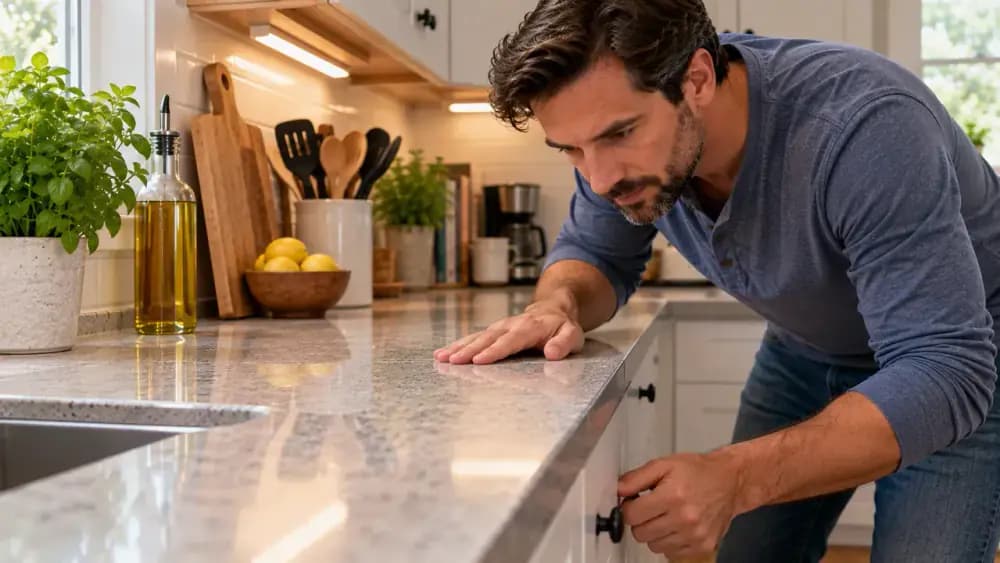
Maintain the Clean Finish
Blot fresh spills right away with a dry towel, then sweep crumbs and grit aside before wiping the surface. For routine cleanup, use a well-wrung microfiber cloth that is only lightly damp, not wet. Keep seams and front edges as dry as possible because moisture can work underneath the laminate over time. A quick daily wipe after cooking helps prevent dried residue, streaks, and unnecessary scrubbing later.
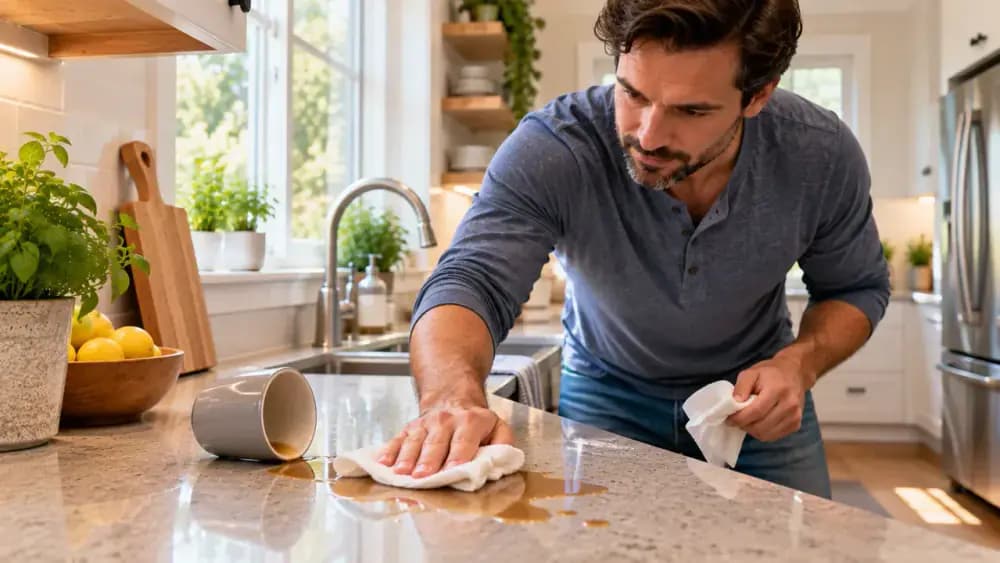
Avoid Common Laminate Cleaning Mistakes
Keep abrasive scrub pads, harsh powders, and unlabeled cleaners away from laminate surfaces, then use a soft microfiber cloth with only a small amount of moisture. Wipe dried spots with light pressure and repeat gentle passes instead of scrubbing harder. Pay special attention to seams and edges, where standing water can seep underneath the surface. If moisture collects near a seam, dry it immediately with a clean towel.
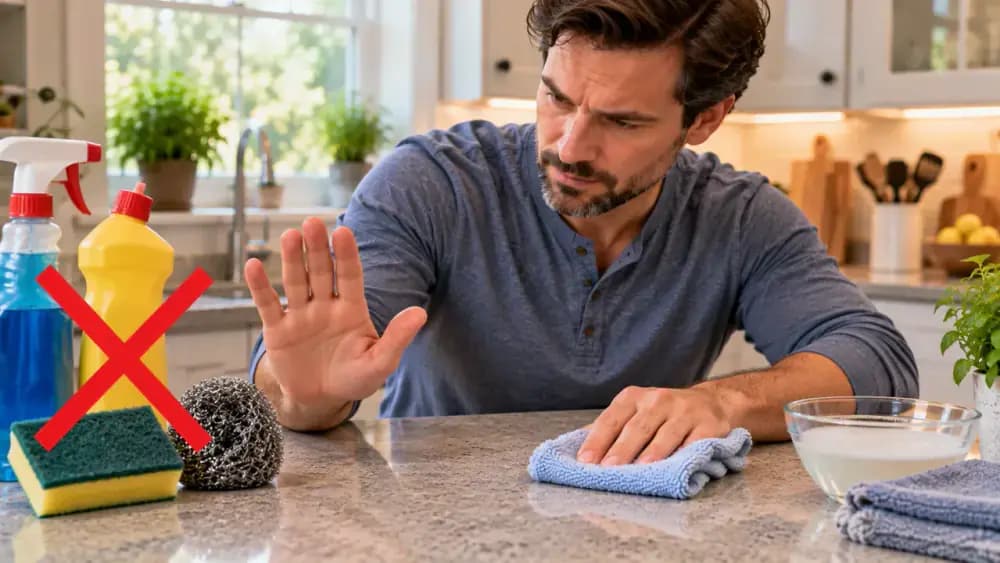
Reset Your Cloth Before Continuing
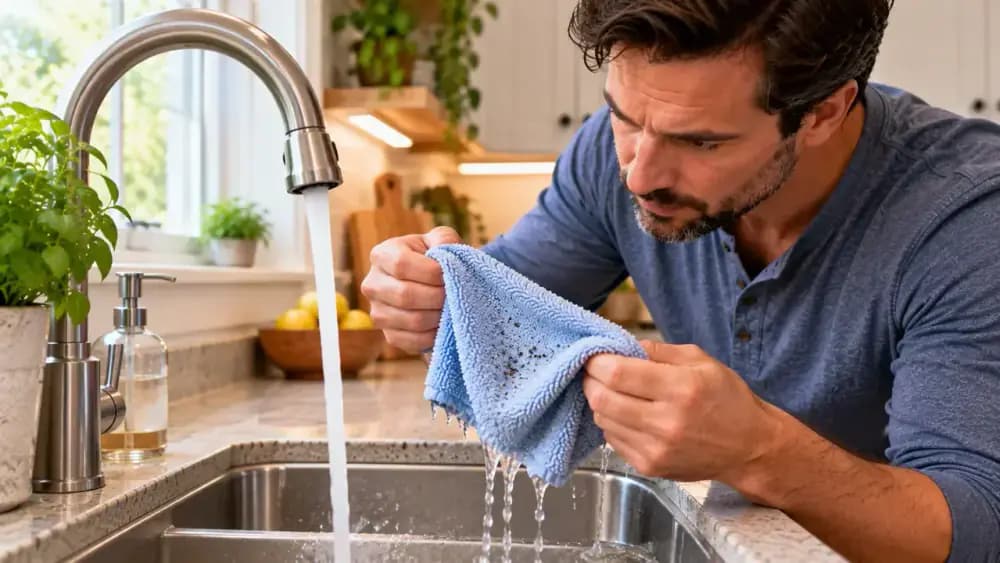
Rinse the microfiber cloth thoroughly under clean running water, then wring it firmly over the sink until it feels only slightly damp and no longer drips. Unfold the cloth and check both sides for crumbs, grit, or other debris that could scratch the surface. Starting again with a clean, controlled cloth helps prevent streaks and keeps excess moisture away from laminate seams, edges, and other vulnerable areas.
Clean the Next Section With Minimal Moisture
Move to the next section with the freshly rinsed, well-wrung microfiber cloth. Wipe using short, overlapping passes and light pressure, keeping the cloth moving so water cannot collect on the laminate. Near a seam or backsplash joint, stop before reaching the edge and switch to a drier corner of the cloth. This lets you clean close to vulnerable joints while reducing the chance of moisture working underneath the surface.
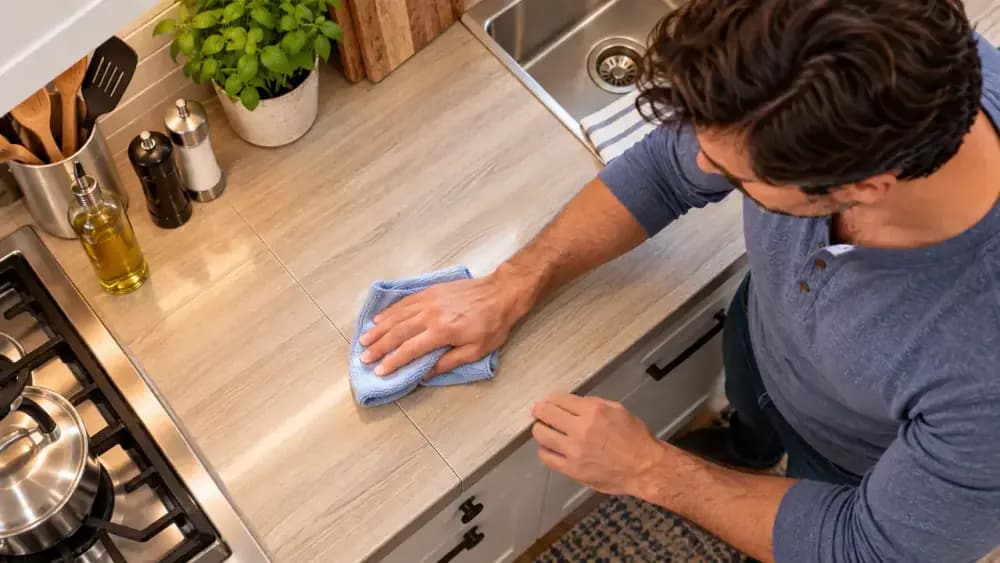
Lift Grease Without Pouring Cleaner on the Counter
Apply a small amount of diluted dish soap to a clean section of your microfiber cloth, then wipe only the greasy film near the stove using light, controlled strokes. Keep working the patch until the residue begins to release without soaking the surface. Avoid pouring cleaner directly onto laminate, especially near seams. For better control, rotate to a fresh section of cloth as grease transfers so you do not spread it back across the counter.
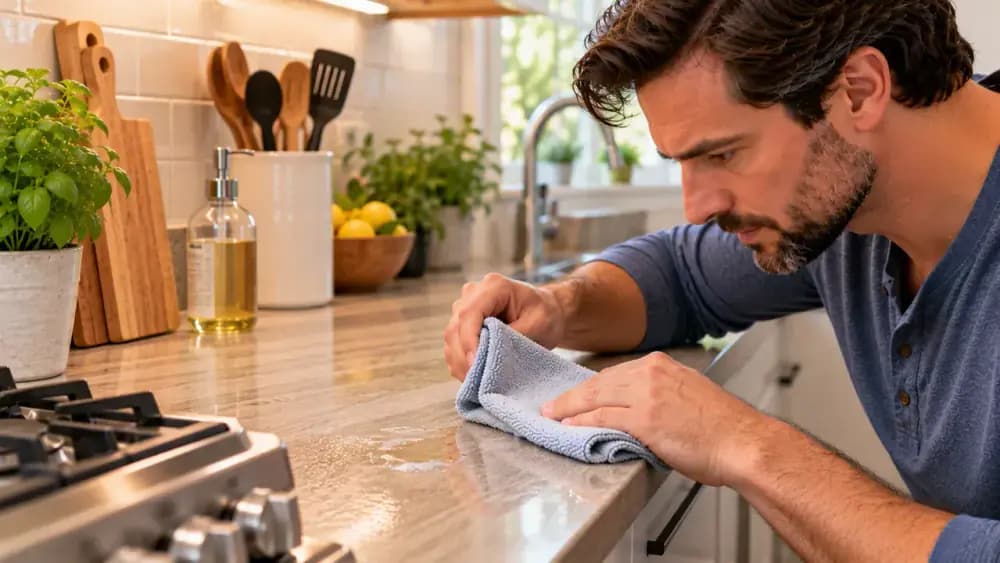
Remove the Last Traces of Soap
Use a second clean microfiber cloth that is barely damp and wipe the treated area with broad, light passes. Fold the cloth to a fresh side whenever it begins picking up visible residue so you do not spread soap back across the surface. Keep moisture to a minimum and leave several inches of dry space around backsplash joints, seams, or damaged edges where water could seep in and collect.
Test Cleaner Before Spot Treatment
Lift a tray or another small countertop item to expose a hidden section of laminate, then place a small amount of laminate-safe cleaner on a soft microfiber cloth. Wipe the concealed area with one or two gentle passes and inspect it under angled light. Check carefully for dulling, discoloration, or any texture change. If the finish looks unchanged after the test, you can move on to treating the remaining visible stain.
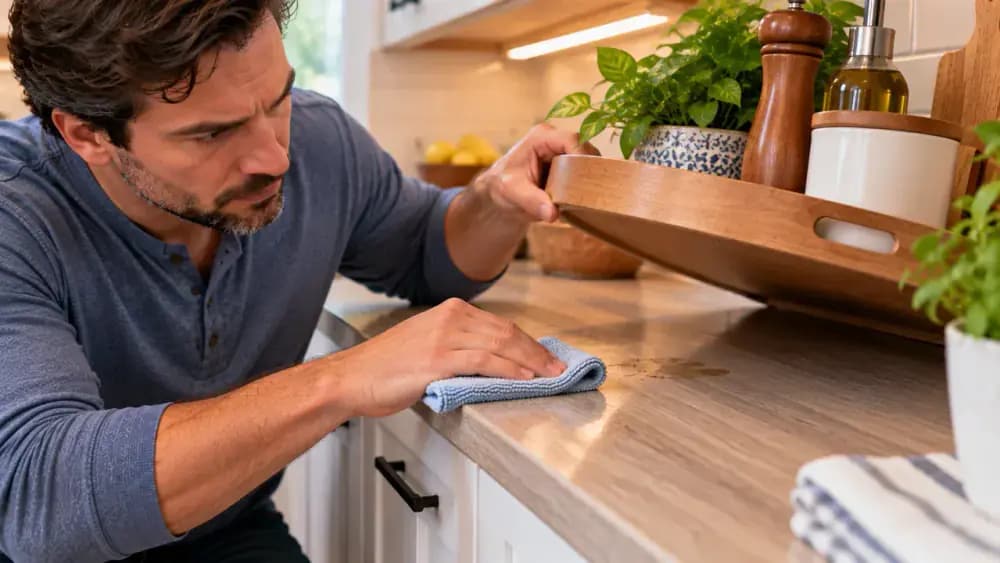
Treat the Visible Mark Gently
Apply a small amount of the previously tested cleaner to a folded microfiber cloth, keeping the fabric only lightly damp. Work directly over the visible mark with gentle repeated passes instead of pressing harder or soaking the surface. As the residue starts to lift, reduce pressure and stop when the mark is gone. Keep nearby seams, joints, and countertop edges completely dry to prevent cleaner from reaching vulnerable laminate areas.
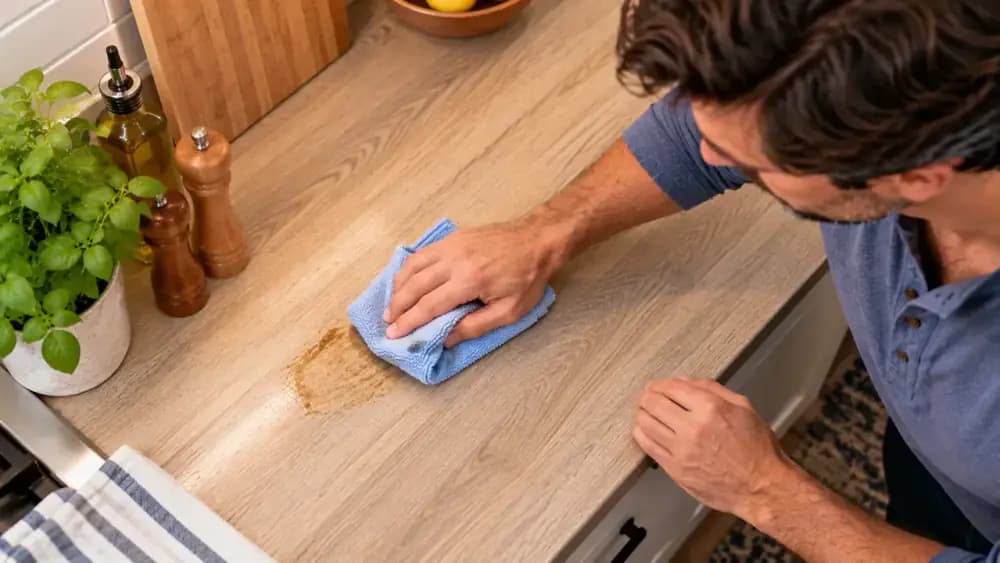
Dry the Treated Spot Completely
Switch to a clean, dry towel as soon as the stain is removed, then blot the treated area and wipe outward until the laminate feels completely dry. Pay extra attention to nearby seams, countertop edges, and backsplash joints, pressing the towel gently into those lines to absorb trapped moisture. Check the surface from a low angle for any remaining sheen, since even a small amount of water can linger along vulnerable joints.
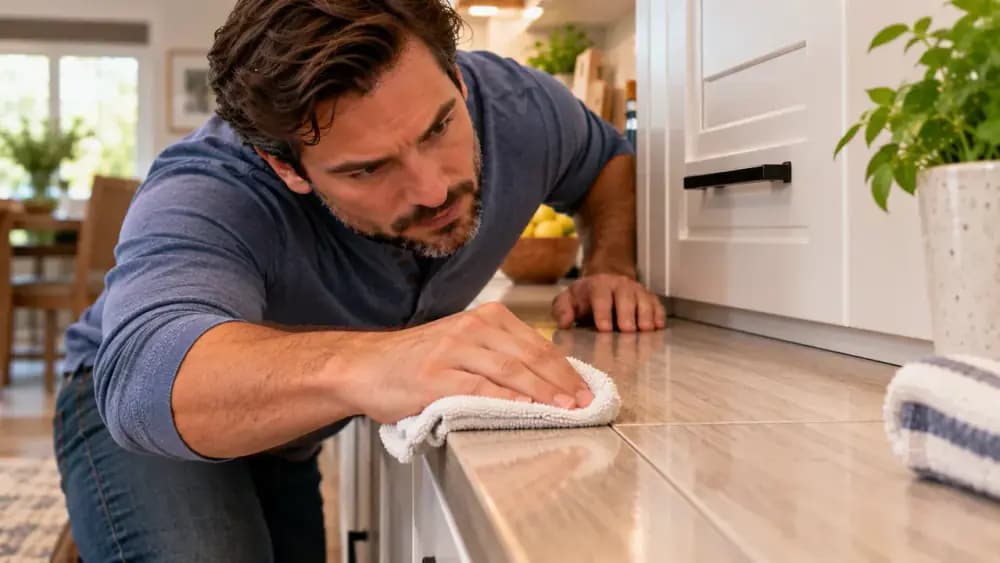
Inspect for Residue and Moisture
Use a bright side light to reveal any remaining haze, moisture, or sticky spots on the laminate surface before finishing the cleanup process. A homeowner checks the counter with clean fingertips and treats small residue areas using a barely damp cloth followed by immediate drying. This final inspection helps confirm the surface is smooth and ready for normal use while preventing hidden moisture from staying near seams or edges.

Return Clean Items to the Counter
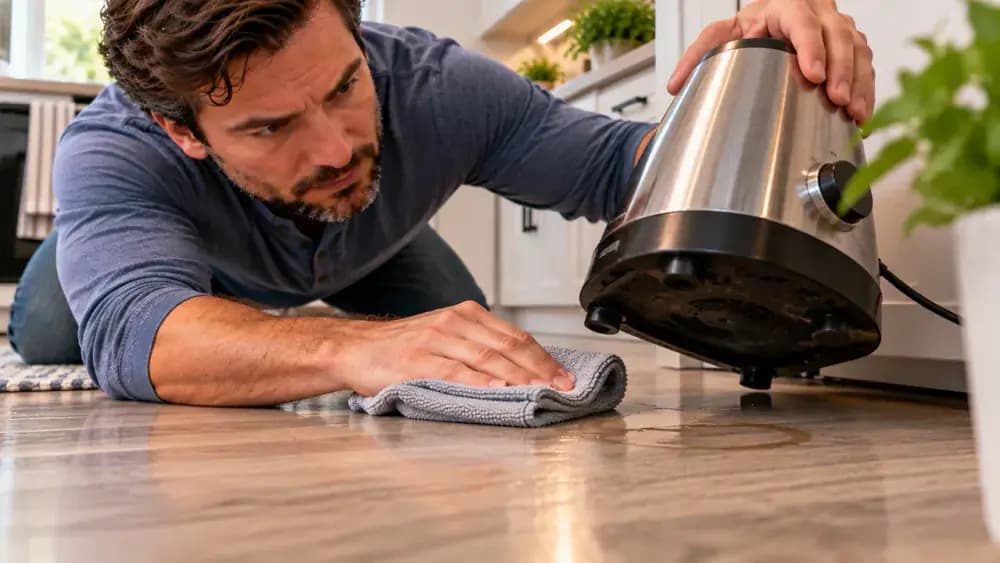
After the counter is dry, place only clean items back on the surface. The homeowner wipes the underside of the toaster and checks the tray for crumbs or hidden moisture before returning them. Keeping space near seams and the backsplash helps spot future spills quickly and prevents damp areas from being ignored. This also makes regular cleaning easier by reducing new grease and crumb buildup
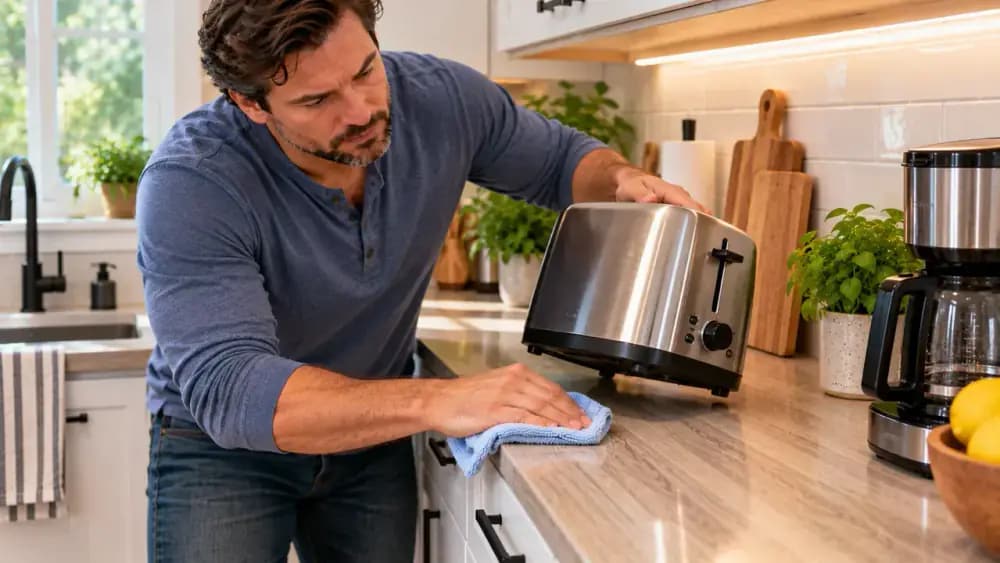
Keep Moisture From Sitting Around Items
After returning items to the counter, a homeowner checks underneath small appliances and containers for trapped moisture before leaving them in place. A clean towel removes a damp ring under a rubber foot, helping protect laminate surfaces from swelling or separation. Check backsplash seams and corners regularly because small wet areas can create problems over time if ignored. Keeping bases dry is a simple habit that helps maintain a cleaner countertop and longer lasting finish
Handle Everyday Spills Before They Spread
When a small drink spill appears on laminate, the homeowner quickly presses a dry absorbent towel over the liquid to prevent spreading toward seams. After removing the moisture, nearby crumbs are cleared away before a gentle wipe with a well-wrung microfiber cloth. This approach limits grit abrasion and helps protect the surface during daily cleanup. Keeping liquids away from edges and seams is especially useful for maintaining laminate counters in good condition.
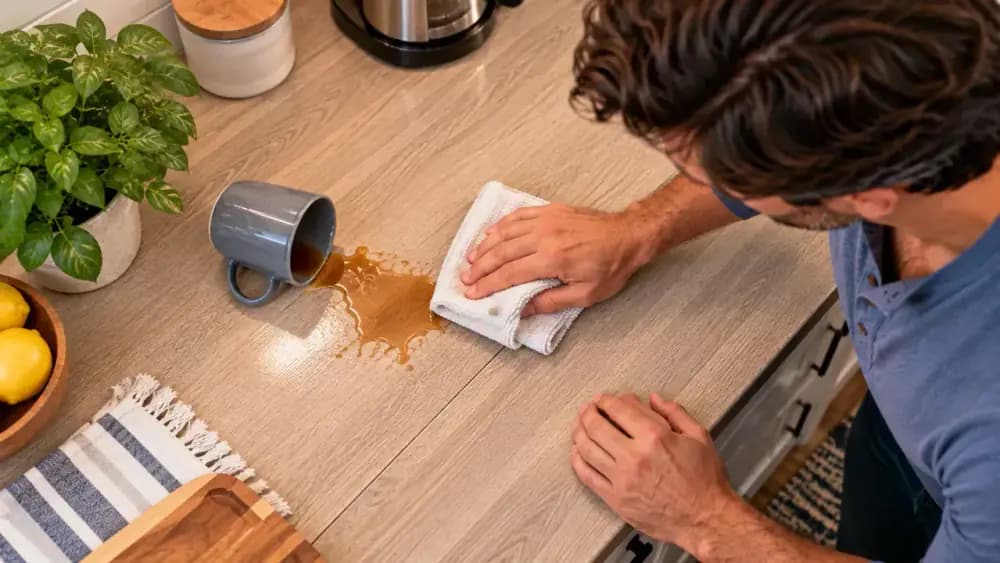
Dry Small Cleanups Right Away
Use a clean cotton towel to remove leftover moisture from the laminate surface, starting in the open area and moving outward toward edges and seams with gentle passes. Press the towel lightly along the front edge and corner joint to keep water away from vulnerable areas. This final drying step helps prevent moisture buildup after spills and keeps the countertop ready for regular daily use while maintaining a clean appearance.
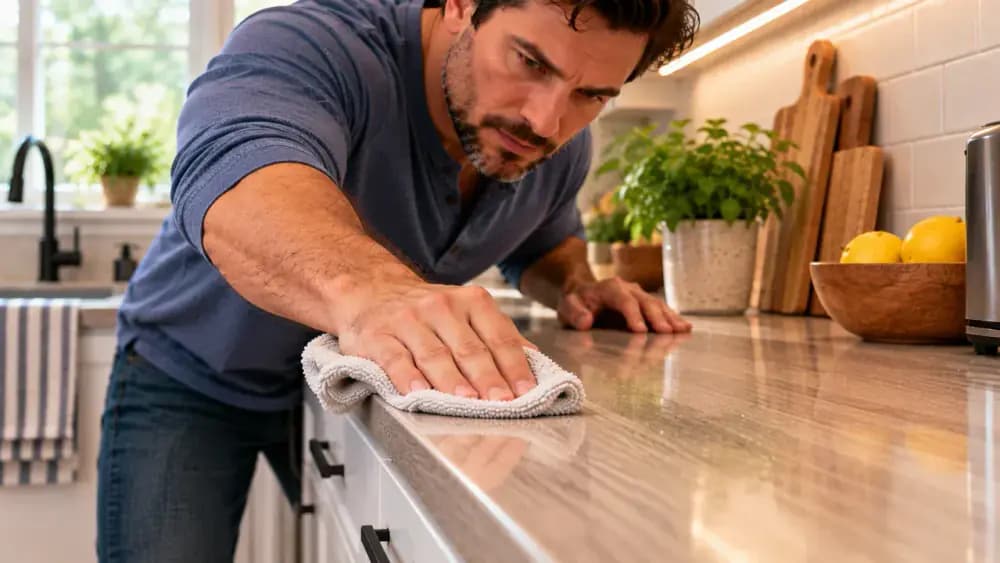
Give Vulnerable Joints a Final Dry Check
Use a dry towel edge to blot around the sink perimeter, then check the backsplash joint and laminate seam with gentle presses visible in this close inspection. Keep moisture from spreading into narrow gaps by lifting the towel after each area and looking for dark spots, raised edges, or damp sections before finishing the countertop. This careful check helps catch problem areas early and keeps surfaces protected during regular cleaning routines.
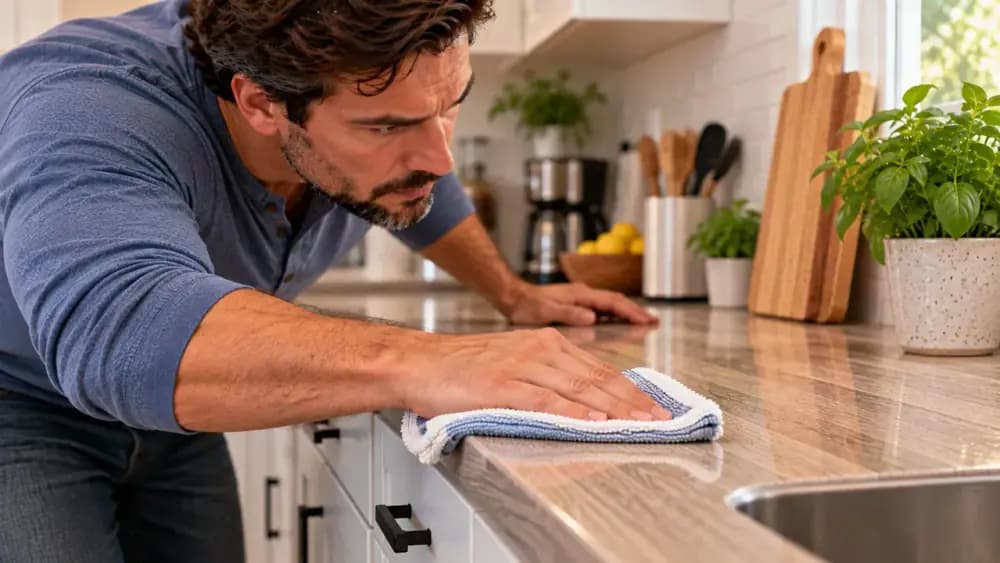
Check the Open Surface for Residue
Inspect the open laminate surface under strong light to spot streaks, haze, or leftover residue before returning the kitchen to normal use. The homeowner checks the countertop area away from seams and edges, then removes a faint patch with a barely damp microfiber cloth. Dry the same spot immediately with a clean towel to prevent moisture marks and keep the surface looking clear and ready for daily activities.
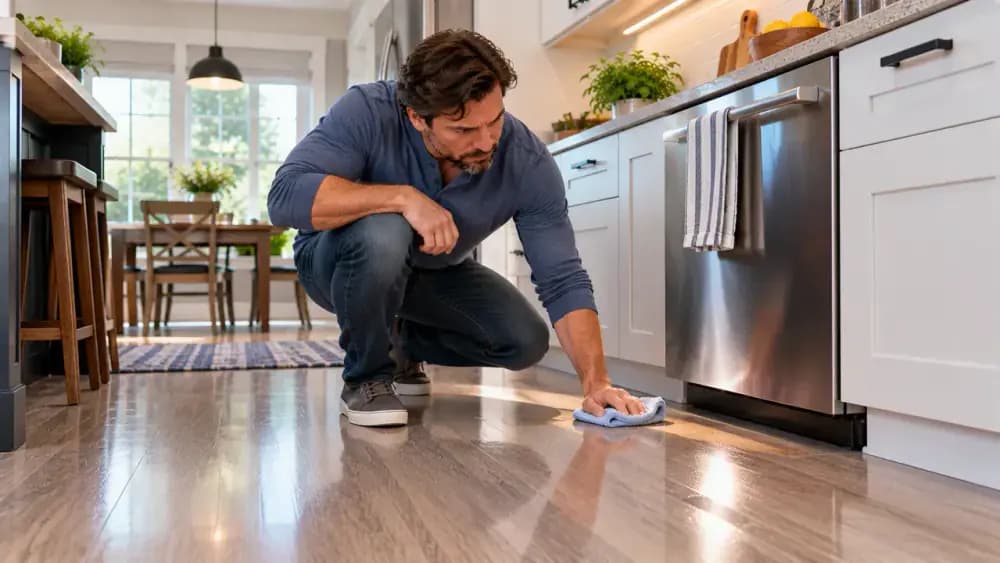
Keep Routine Cleaning Low Moisture
After the laminate surface is clean and dry, maintain it by removing crumbs before wiping and addressing spills quickly. The homeowner uses a dry towel for a small drop and prepares a wrung microfiber cloth for gentle care. Avoid soaking the counter or scrubbing hard, especially near seams and edges, because excess moisture can damage the finish and create dull or swollen areas over time.
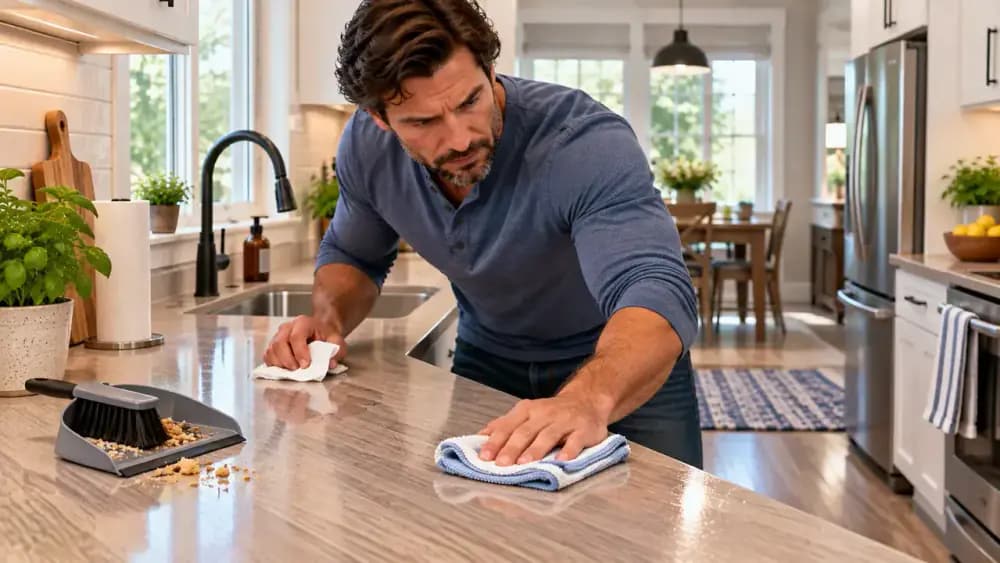
Dry Any Spill That Reaches a Seam
Press a clean towel directly onto the damp seam to absorb moisture without spreading it deeper into the joint. Move to a dry towel section as soon as the fabric becomes wet, then blot outward across the surrounding laminate surface. Continue checking the edge and seam until no moisture remains. Quick drying helps protect the countertop from long exposure to trapped liquid.
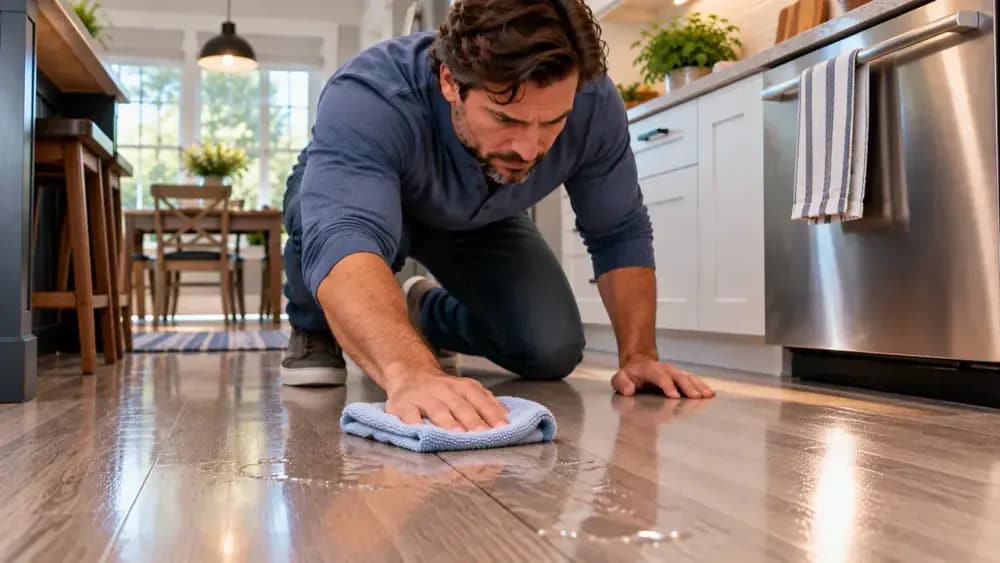
Keep Laminate Clean With Gentle Daily Care
After wiping the surface, the homeowner keeps the countertop protected by removing crumbs quickly and drying small spills right away. The clean kitchen area shows how simple habits reduce wear on laminate finishes during everyday use. Use a soft cloth for routine care and avoid abrasive tools that can dull the surface. Keeping moisture away from edges and seams helps prevent damage while preserving the countertop's appearance for longer periods.
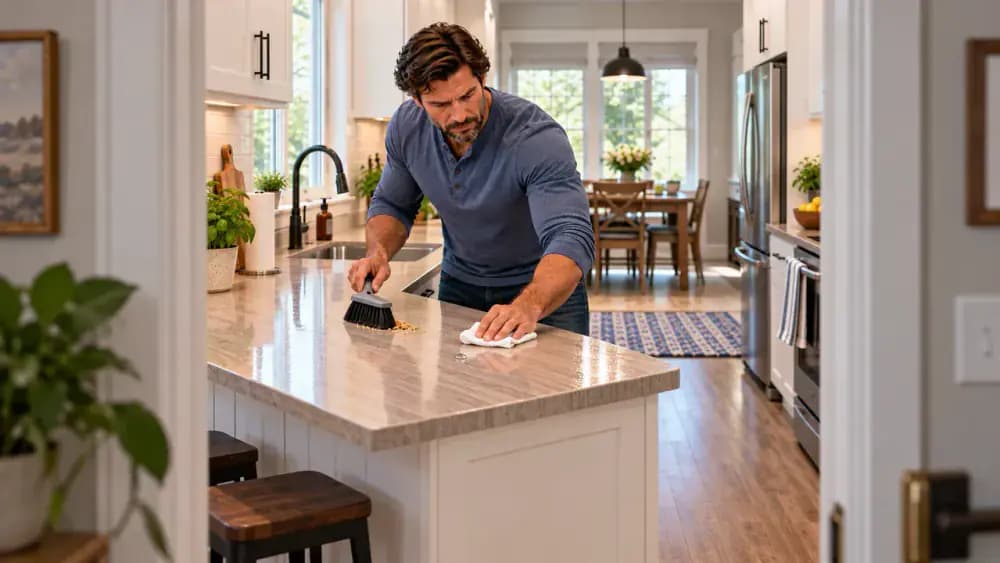
Laminate countertops can handle everyday kitchen messes well, but the finish needs a lighter touch than stone or solid-surface materials. Crumbs, cooking grease, dried food, and sticky residue are usually easy to remove with mild dish soap, warm water, and a soft microfiber cloth. The main goal is to clean the surface without soaking seams, backsplash joints, damaged edges, or any exposed substrate where moisture can cause swelling or separation.
Start by clearing the counter and removing loose crumbs and grit with a dry microfiber cloth or soft brush. That simple step helps prevent scratching once you begin wiping. Use only a lightly damp cloth that has been wrung out well, work in small sections, and apply gentle pressure. For greasy areas, put diluted dish soap on the cloth instead of pouring cleaner directly onto the countertop. Avoid abrasive pads, harsh powders, excess water, and any cleaner that is not approved for laminate surfaces.
Where people go wrong
Using Too Much Water Around Seams and Edges. Soaking the countertop or leaving water pooled near seams, backsplash joints, and damaged edges can let moisture reach the substrate. Use a well-wrung microfiber cloth, clean in small sections, and dry these vulnerable areas promptly instead of treating laminate like a fully waterproof surface.
Scrubbing With Abrasive Pads or Powders. Aggressive scrubbing can dull, scratch, or permanently change the laminate finish. Skip abrasive pads, scouring powders, and excessive pressure. For stubborn marks, test a laminate-safe cleaner in a hidden area first, then use gentle repeated passes with a soft cloth.
Pouring Cleaner Directly Onto the Countertop. Applying cleaner straight to the surface can create overly wet spots and send liquid toward seams or exposed edges. Put a small amount of diluted dish soap or approved laminate cleaner on the cloth instead, then wipe the affected area with controlled moisture.
Skipping the Final Drying Step. Leaving the countertop damp can cause residue, tackiness, and unnecessary moisture around joints. After cleaning, dry the entire surface with a clean towel, paying extra attention to seams and edges, then check for remaining film, swelling, or trapped moisture before replacing countertop items.
Questions people ask
A small amount of mild dish soap mixed with warm water is usually the safest choice for routine cleaning. Dampen a soft microfiber cloth, wring it out well, and wipe with light pressure. Avoid soaking the surface, especially around seams, backsplash joints, damaged edges, or exposed substrate.
Fixed it?
Get one guide like this every Thursday.