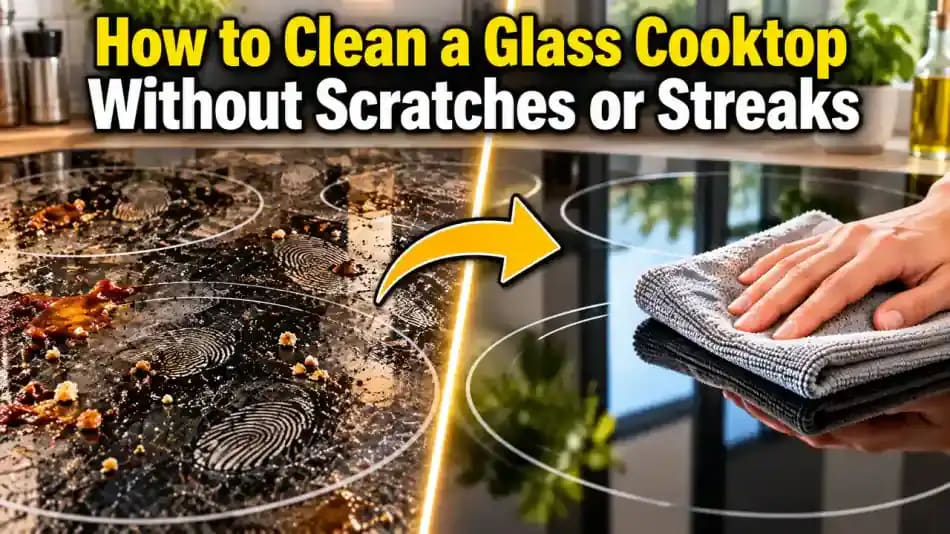
How to Clean a Glass Cooktop Without Scratches or Streaks
Remove grease, fingerprints, cooked-on spills, and cloudy streaks from your glass cooktop without damaging the surface. Learn safe cleaning techniques, how to handle stubborn buildup, and simple habits that keep your cooktop looking spotless.
What you’ll need
Tap to tick things off before you start.
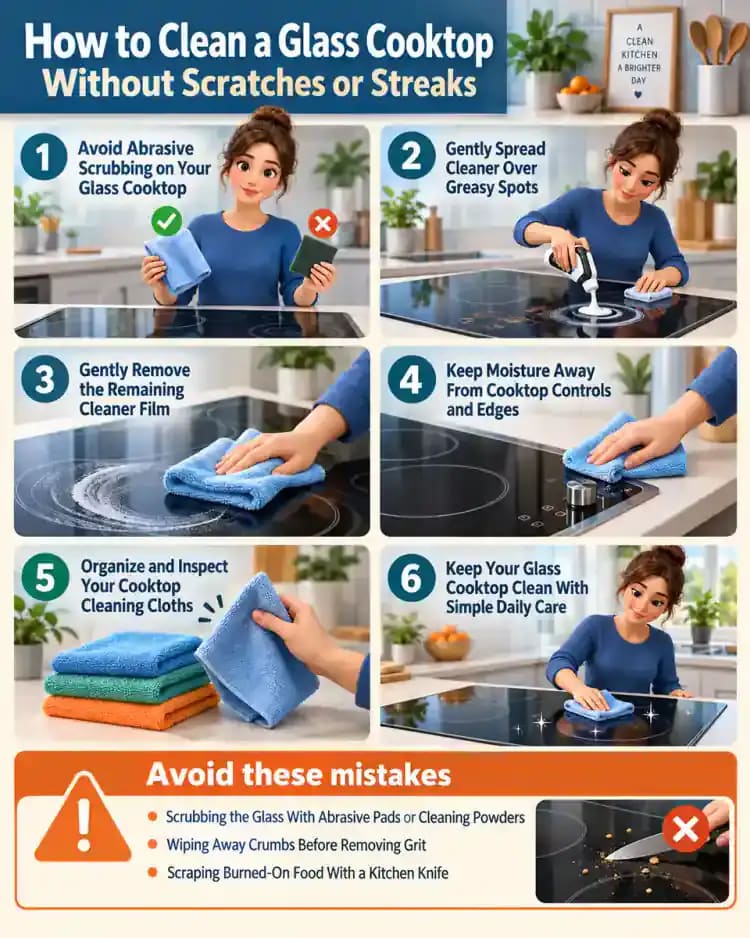
Avoid Abrasive Scrubbing on Your Glass Cooktop
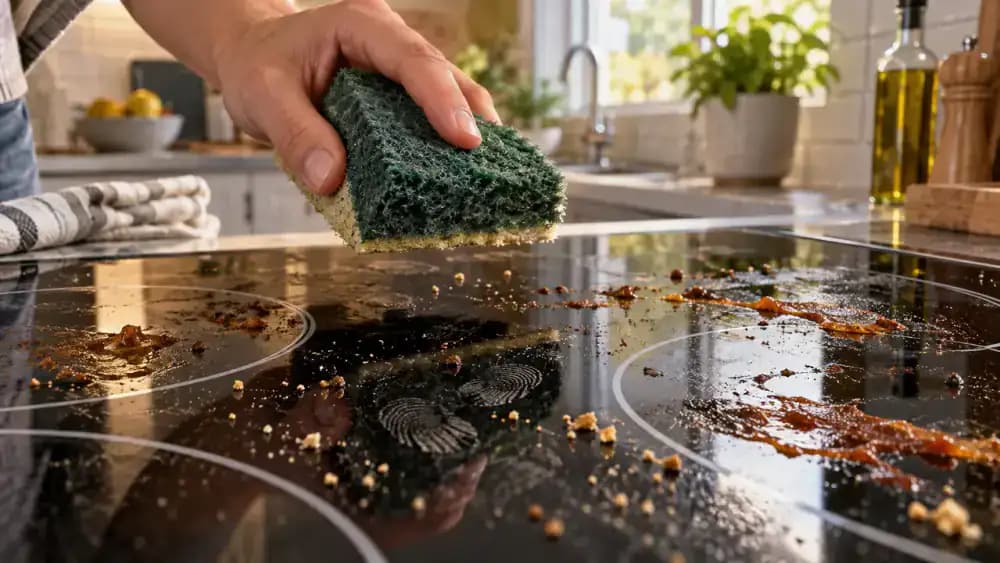
Start by inspecting your glass cooktop for crumbs, dried sauce, greasy fingerprints, and cloudy residue. Even small particles of grit can scratch the surface when rubbed with a rough scouring pad. As shown, keep abrasive sponges away from the glass rather than pressing harder on stubborn stains. Allow the cooktop to cool completely, then gently remove loose debris with a soft, dry microfiber cloth before applying a cleaner specifically recommended for glass-ceramic cooktops.
Start With a Completely Cool Cooktop
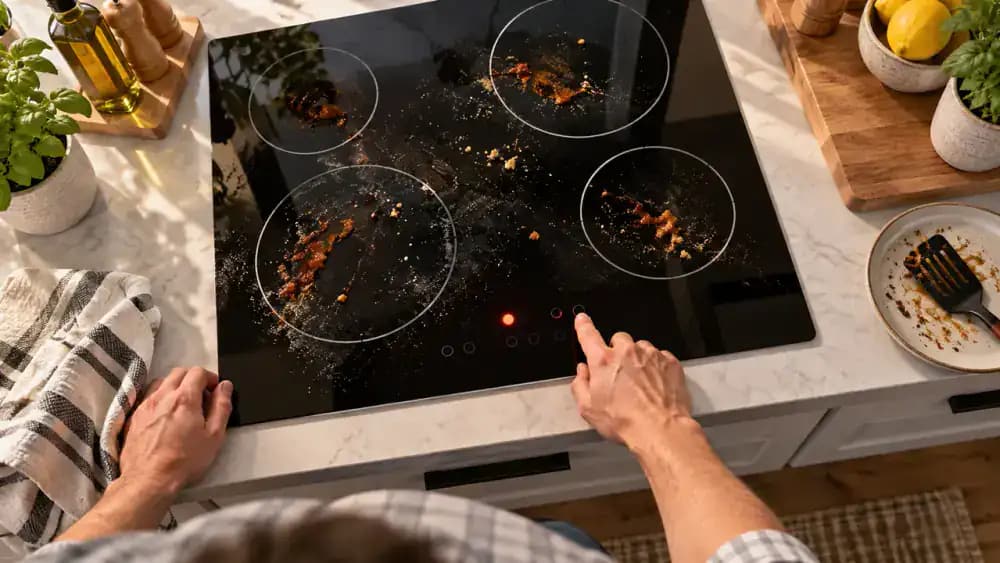
Turn every burner control to the off position before attempting to remove spills from your glass cooktop. A glowing residual-heat indicator means the surface may still be dangerously hot. Even after the light goes out, allow enough time for the glass to cool completely. Follow your manufacturer's cooling instructions rather than relying on appearance. Keep a clean microfiber cloth nearby on the countertop until the surface is safe to touch.
Gather the Right Cleaning Supplies
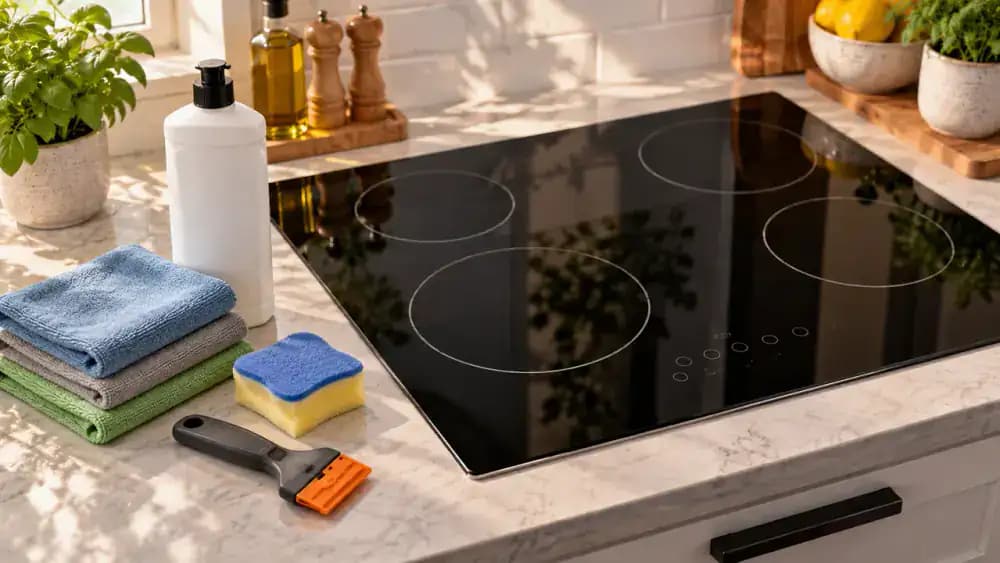
Wait until the glass-ceramic cooktop is completely cool, then arrange two clean microfiber cloths, a soft nonabrasive sponge, and an approved cooktop cleaner on the counter. Check your appliance manual before adding a specialized scraper, and keep its blade covered until needed. Use one cloth for cleaning and the other for final polishing to avoid spreading residue. Never use steel wool, abrasive powders, rough scrubbing pads, or kitchen knives.
Remove Loose Crumbs Before Wiping
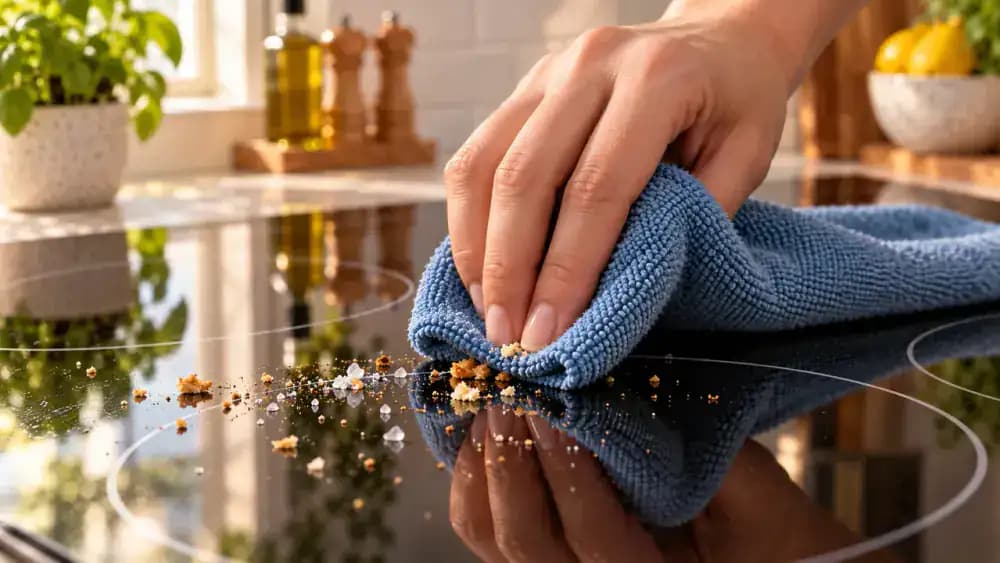
Make sure the glass-ceramic cooktop is completely cool before touching it. Using a clean, dry microfiber cloth, gently dab at salt crystals, toast crumbs, and dried food particles, lifting them straight off the glass. Avoid sweeping debris across the surface because even small, gritty particles can cause scratches. Fold the cloth to expose a fresh section as it collects crumbs. Leave greasy fingerprints and stuck-on residue for the next cleaning step.
Apply a Glass-Safe Cooktop Cleaner
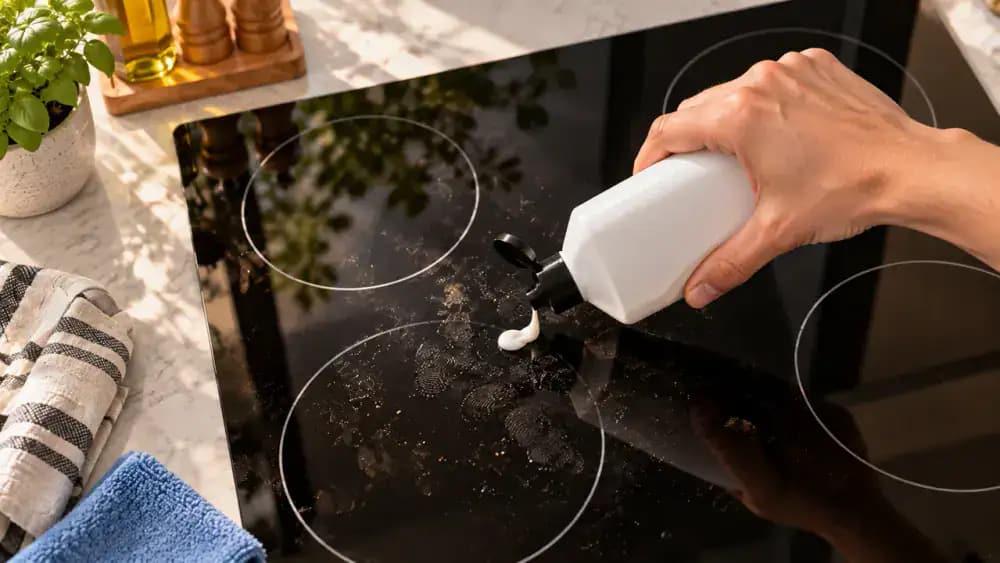
With crumbs removed and the cooktop completely cool, use a cleaning product specifically approved for glass-ceramic surfaces. Follow the manufacturer's directions and dispense a small amount directly onto the greasy fingerprints and light residue near the burner. Avoid pouring excessive cleaner or soaking the glass. Keep a clean, soft microfiber cloth nearby for the next step. Check the product label for any required waiting time before wiping.
Gently Spread Cleaner Over Greasy Spots
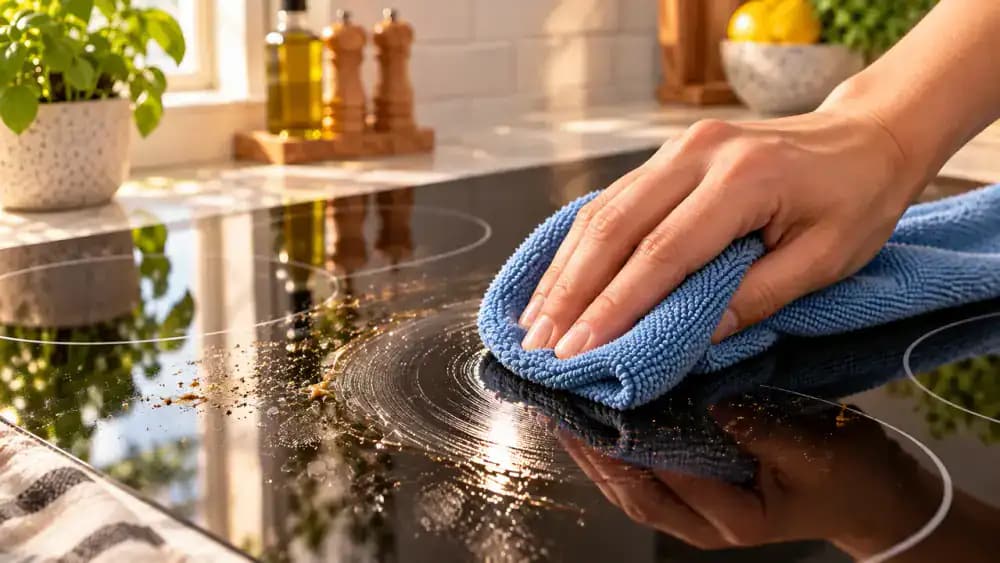
Place a clean, soft microfiber cloth flat against the fully cooled glass-ceramic cooktop where you applied the manufacturer-approved cleaner. Move the cloth in light, overlapping circles to spread a thin, even film across greasy fingerprints and everyday cooking residue. Keep your fingers relaxed and avoid pressing down or scrubbing aggressively. Leave hardened, cooked-on deposits for a separate cleaning step, and never use abrasive pads or rough sponges that could scratch the glass.
Let the Cleaner Soften Stubborn Cooked-On Food
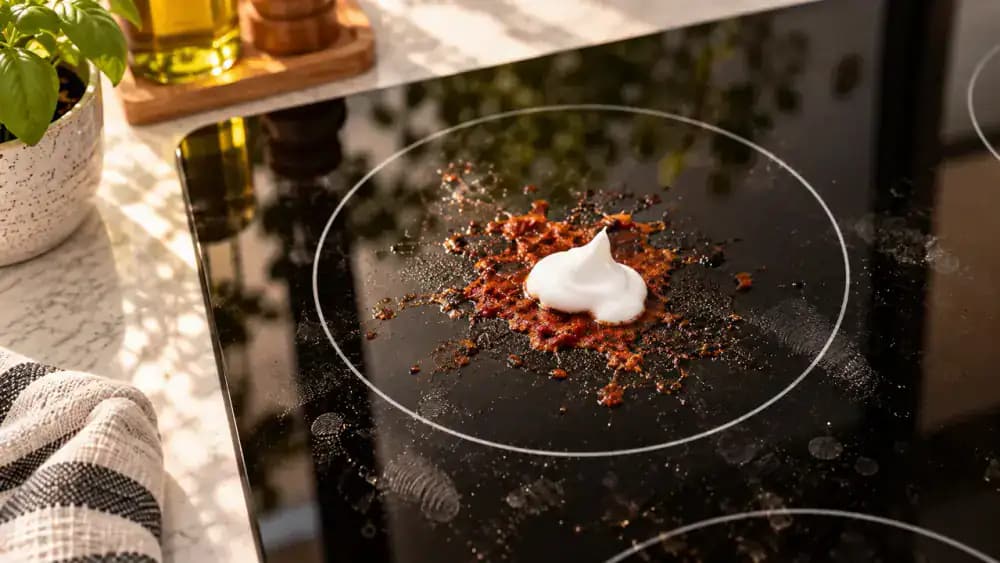
With the glass-ceramic cooktop completely cooled, apply a small amount of manufacturer-approved cleaner directly over the hardened food deposit. Cover the affected spot without spreading cleaner unnecessarily across the surrounding surface. Allow it to remain undisturbed for the contact time specified on the product label. Keep your microfiber cloth nearby, but do not start wiping yet. Avoid scraping or aggressive scrubbing while the cleaner has time to soften the residue.
Gently Lift the Softened Residue
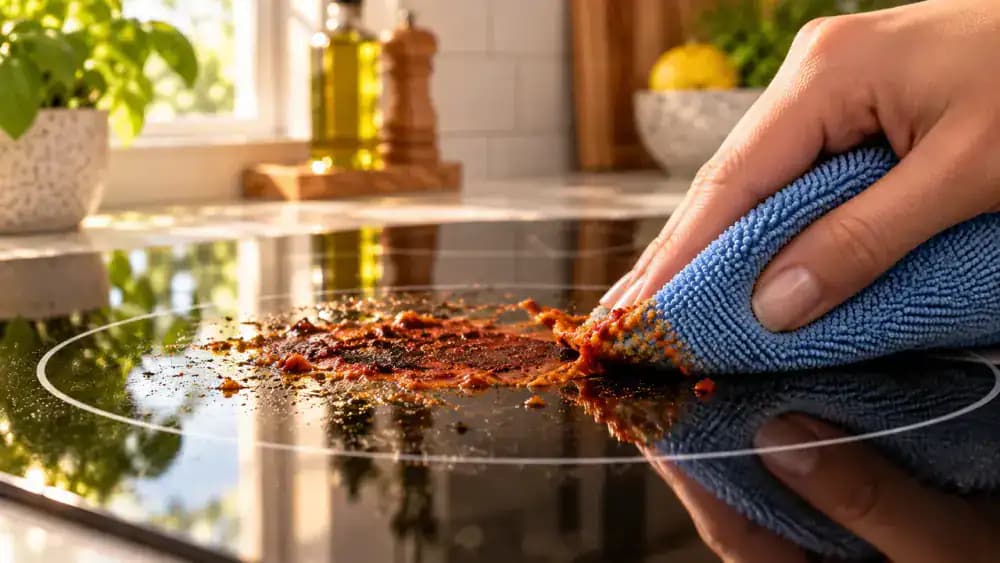
Once the cooktop cleaner has sat for the manufacturer-recommended time, use a fresh microfiber cloth folded into a soft pad. Gently move it along the softened outer edges of the cooked-on tomato sauce, allowing loosened residue to transfer onto the cloth. Keep pressure light and movements controlled to avoid scratching the cooled glass-ceramic surface. If the hardened center remains firmly attached, stop and leave it for a manufacturer-approved removal method.
Check Your Cooktop Manual Before Using a Scraper
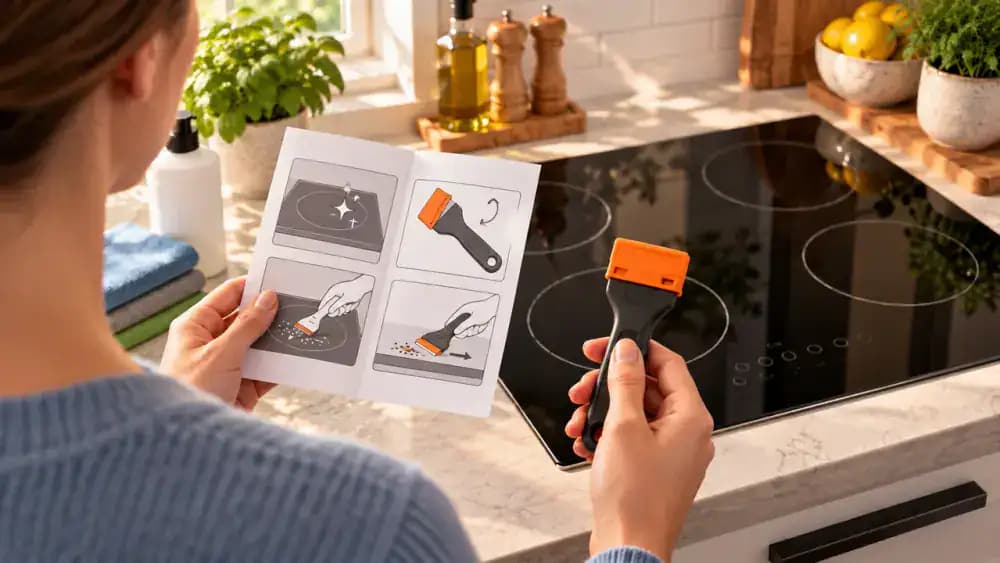
If cooked-on sauce remains stuck to your fully cooled glass-ceramic cooktop, consult your appliance manual before reaching for a scraper. Compare the manufacturer's recommended tool design and operating angle with your purpose-built cooktop scraper. Inspect the blade housing and check that the protective cover is secure. Keep your fingers behind the blade housing and leave the cutting edge covered during preparation. Never substitute a kitchen knife or general-purpose razor blade.
Carefully Lift Stubborn Residue With an Approved Scraper
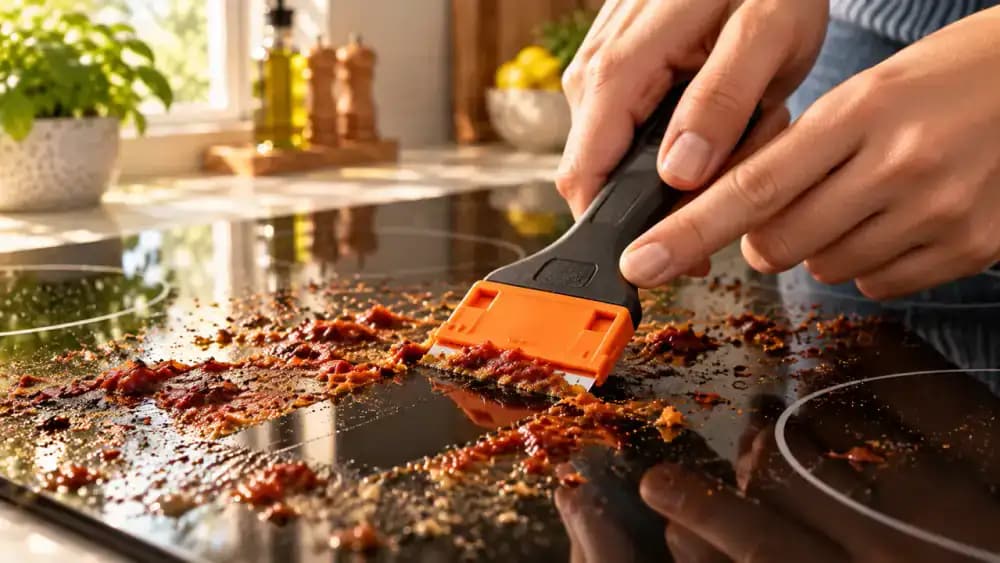
On the fully cooled glass cooktop, carefully remove the scraper's protective cover and set it aside. Hold the approved scraper securely, keeping your fingers behind the blade housing. Position the undamaged blade at the manufacturer's specified angle, then use short, gentle forward strokes to lift the softened tomato sauce. Work on small sections without pressing hard or digging into the glass. Stop immediately if the blade catches or meets resistance.
Safely Remove the Scraper and Collect Loosened Residue
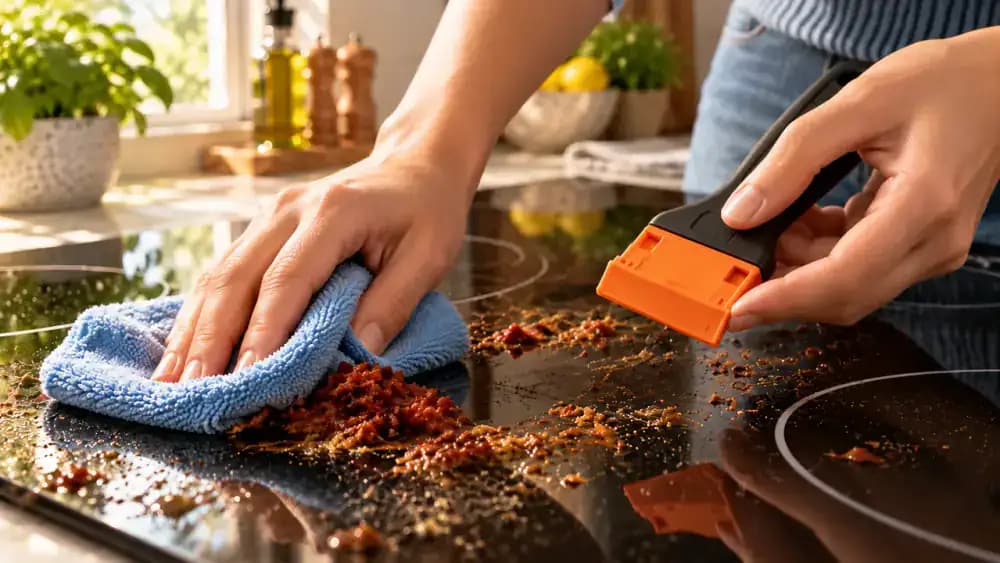
Lift the cooktop scraper straight off the cooled glass without dragging the blade across the surface. Carefully replace its protective cover, keeping your fingers behind the cutting edge, and set it aside. Use a clean, folded microfiber cloth to collect loosened tomato sauce and food particles with short, gentle lifting motions. Fold the dirty section inward to prevent gritty debris from scratching the glass. Inspect the remaining residue before continuing.
Gently Remove the Remaining Cleaner Film
On the fully cooled glass-ceramic cooktop, use a fresh microfiber cloth to lift away the thin, cloudy layer of cleaner. Lightly dampen the cloth with clean water only if the cleaner manufacturer's instructions recommend it. Fold it flat and wipe in smooth, overlapping strokes from the center toward the front edge, using minimal pressure. Check the cloth between passes and refold it to expose a clean section whenever residue builds up.
Buff the Glass With a Fresh, Dry Microfiber Cloth
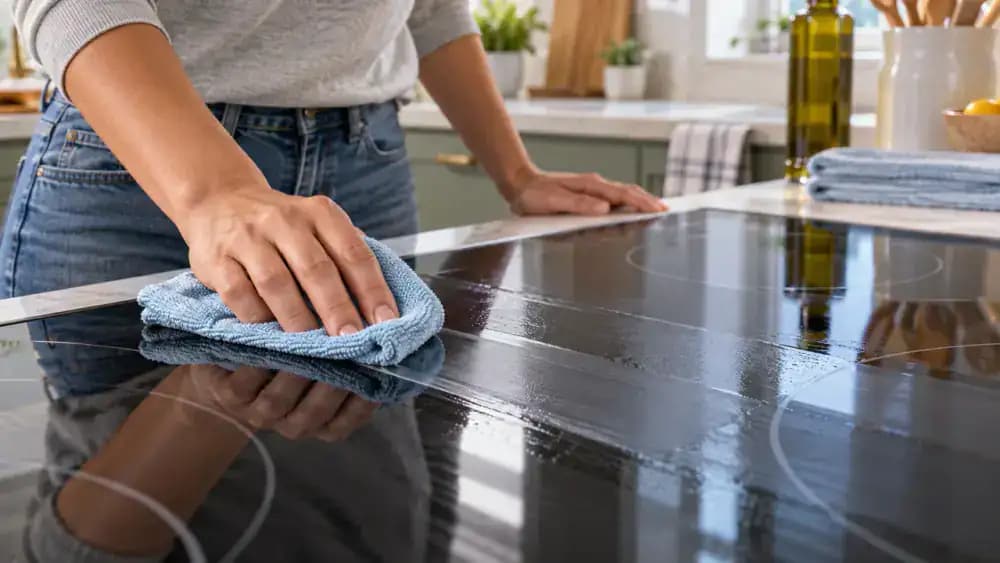
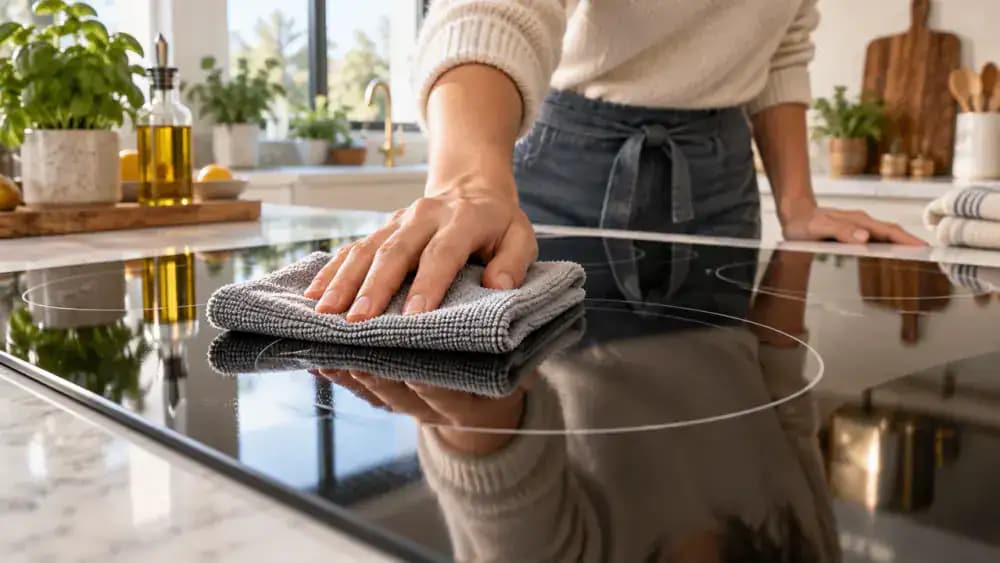
After removing the cleaning residue, fold a fresh, completely dry microfiber cloth into a flat pad. Gently buff the cooled glass cooktop using light, overlapping strokes, working from the front burners toward the back. Keep the cloth flat and avoid pressing hard. Refold it frequently to expose a clean, dry section, especially around burner outlines and edges. This removes lingering moisture and helps minimize streaks without scratching with abrasive materials.
Inspect the Glass Under Angled Light
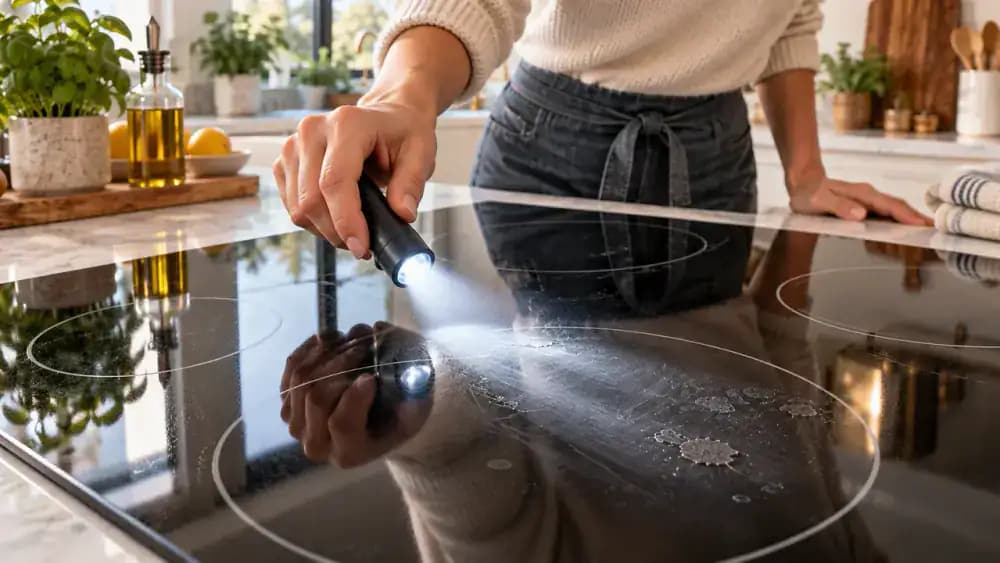
With the cooktop completely cool, hold an adjustable LED lamp above the surface and direct its light diagonally across the glass. Look from a low angle to spot cloudy streaks, leftover cleaner film, or stubborn cooked-on deposits. Slowly reposition the light to examine each burner area. A thin, flat haze usually suggests residue, while a localized raised spot may indicate attached buildup. Identify each mark before attempting additional cleaning.
Correct Remaining Haze Without Scrubbing
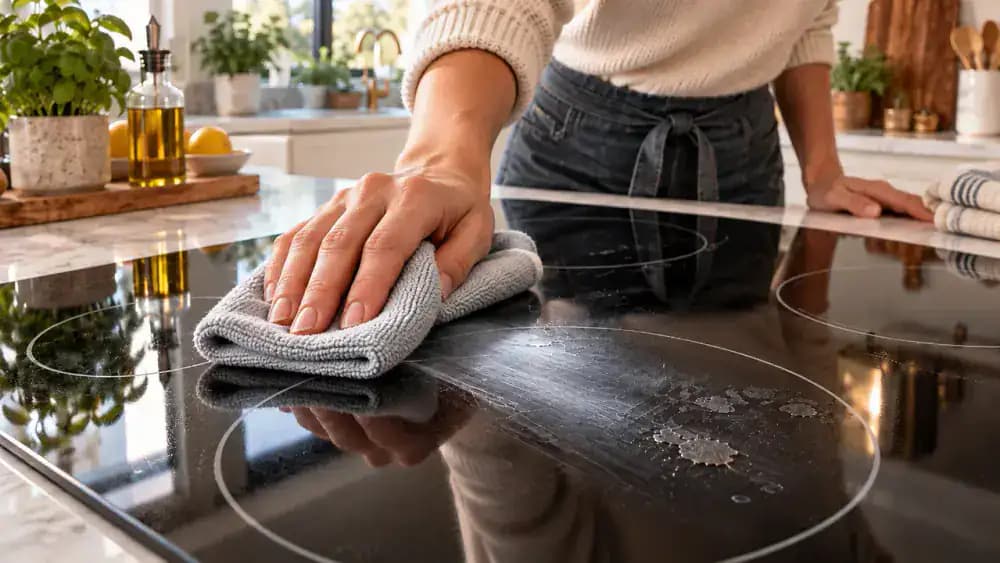
Check the cooled glass-ceramic cooktop under angled light for faint streaks left behind by cleaner. Fold a fresh microfiber cloth into a flat pad and gently wipe the cloudy area using short, overlapping passes. Lightly dampen the cloth only if the cleaner's instructions allow it. Avoid rubbing hardened deposits or applying extra pressure. If residue remains firmly attached, repeat the manufacturer-approved softening process before attempting further removal.
Repeat the Softening Process for Stubborn Residue
Apply a small amount of manufacturer-approved glass-ceramic cleaner to the remaining hardened residue on the fully cooled cooktop. Follow the product label and allow the recommended contact time before gently testing the deposit's outer edge with a fresh microfiber cloth. Use minimal pressure and stop if the material remains firmly attached. Avoid scraping or aggressive rubbing. Consult your appliance manufacturer's cleaning instructions before trying another removal method.
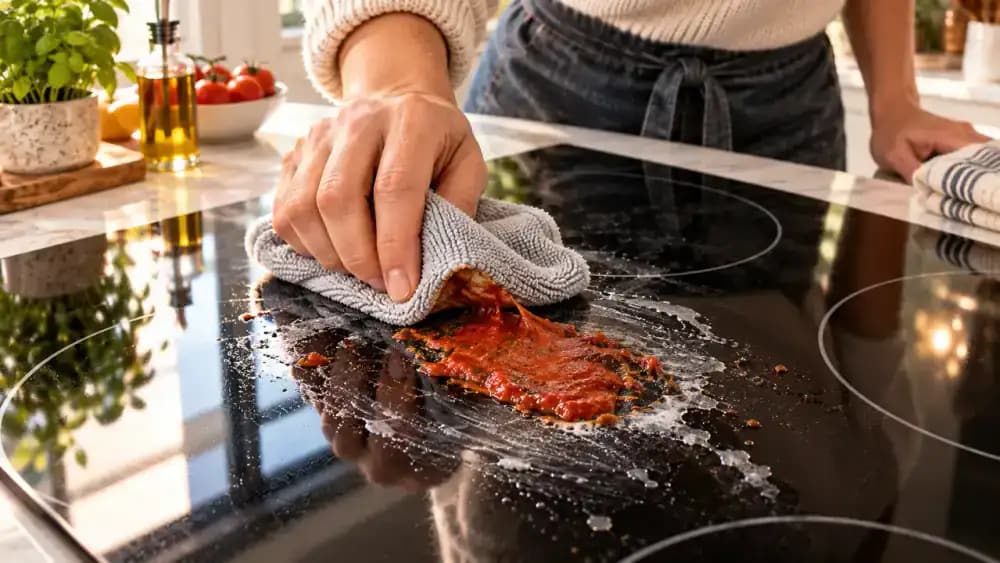
Know When to Stop Cleaning a Stubborn Deposit
If a stubborn food deposit remains after gentle cleaning, set your microfiber cloth aside instead of pressing harder. Check your cooktop manufacturer's instructions for approved treatments or guidance on getting professional help. Once you decide to stop, use a separate clean microfiber cloth to remove any surrounding cleaner residue according to the product directions. Carefully work around the hardened spot without dragging the cloth across it. Avoid risking permanent scratches over one small deposit.
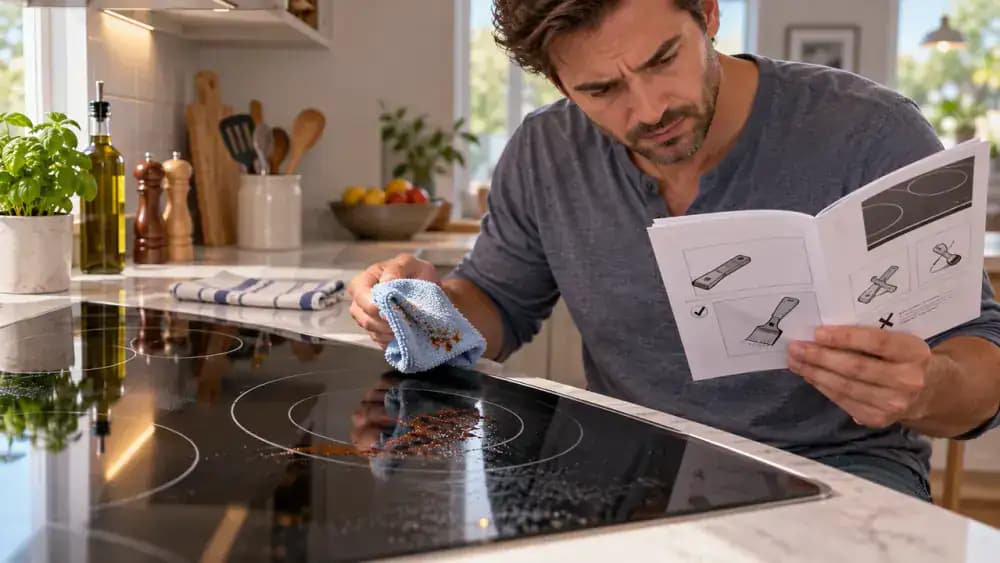
Keep Moisture Away From Cooktop Controls and Edges
Once the cooktop is completely cool, inspect the perimeter and burner controls for leftover cleaner residue. Fold a barely damp microfiber cloth into a narrow pad and gently wipe accessible glass beside the stainless steel trim, following your manufacturer's cleaning instructions. Avoid control openings, seams, and ventilation areas where moisture could enter. Immediately dry the cleaned glass with a separate microfiber cloth using two short passes. Never spray cleaner directly near controls.
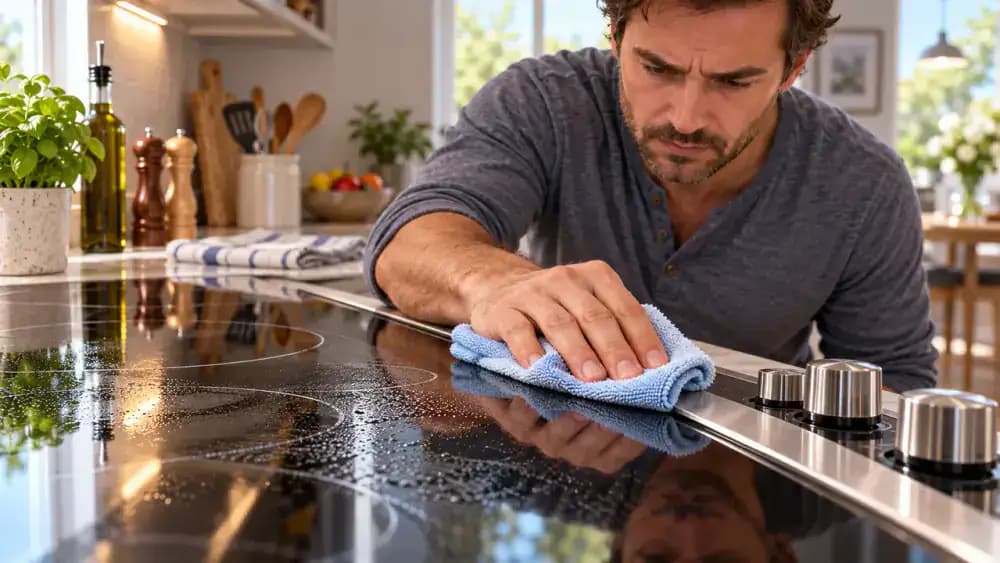
Inspect the Entire Cooktop Before You Finish
Stand slightly to one side of the fully cooled cooktop and examine the glass from a low angle, then shift your position to catch streaks, moisture, or cleaner residue in the reflected light. Check the burner outlines, edges, and controls without touching the surface. If a hardened food deposit remains, do not apply extra pressure or scrape it aggressively. Leave it undisturbed and consult the manufacturer's cleaning instructions before another attempt.
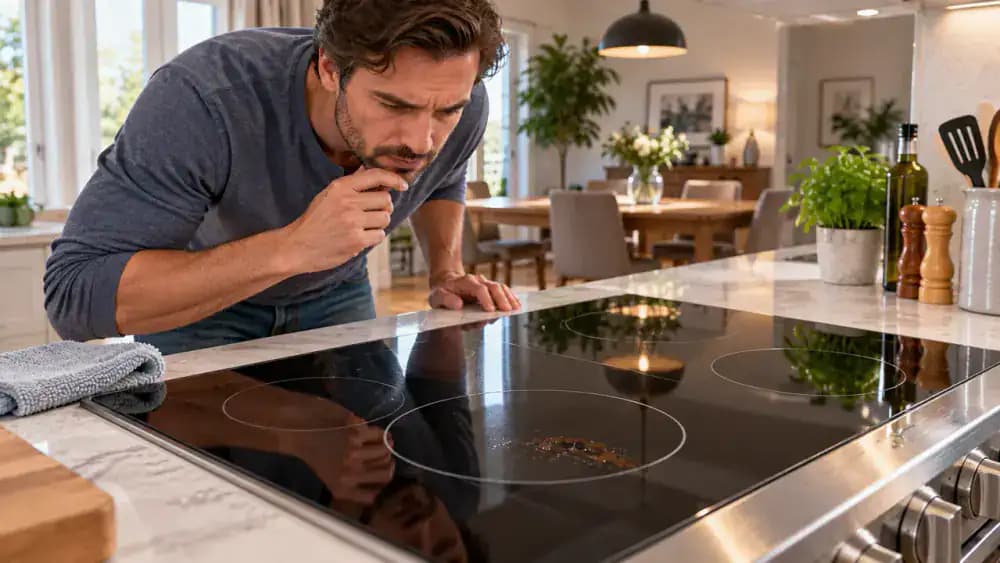
Prevent New Buildup by Wiping Spills After Cooling
After cooking, turn off the burner and lift your saucepan onto a heat-safe trivet instead of sliding it across the glass. Wait until the residual-heat indicator goes out and the cooktop is completely cool, as directed by the manufacturer. Use a fresh, clean microfiber cloth to gently lift the tomato sauce splatter with short, controlled strokes. Avoid dragging gritty particles across the surface. Cleaning small spills regularly helps prevent stubborn buildup.

Clean the Bottoms of Pots and Pans Before Cooking
Turn each pot or pan upside down on a stable countertop and inspect its base for salt crystals, dried food, and greasy residue. Gently remove loose particles with a clean, dry microfiber cloth. For stubborn grease, follow the cookware manufacturer's cleaning instructions, then dry the bottom thoroughly. When the cooktop is completely cool and switched off, lift the cookware directly into position instead of sliding it across the glass to help prevent scratches.

Lift Heavy Cookware Instead of Sliding It
Before repositioning a heavy Dutch oven, make sure the glass cooktop is completely cool and switched off. Grip both side handles firmly, lift the pot straight up until its base clears the glass, and carry it steadily to the next burner. Lower it gently without dragging or twisting. Even clean cookware can scratch glass when pushed across it, so use this lifting technique whenever you move heavy pots or skillets.

Make Regular Cooktop Maintenance a Habit
After every cooking session, switch off the controls and let your glass cooktop cool completely. Inspect the surface for crumbs, greasy fingerprints, and fresh spills. Gently lift loose particles with a clean, dry microfiber cloth before applying manufacturer-approved cleaner to everyday marks. Follow the product directions, wipe with light overlapping strokes, and buff with a fresh cloth section. Leave hardened deposits untouched rather than forcing them loose.

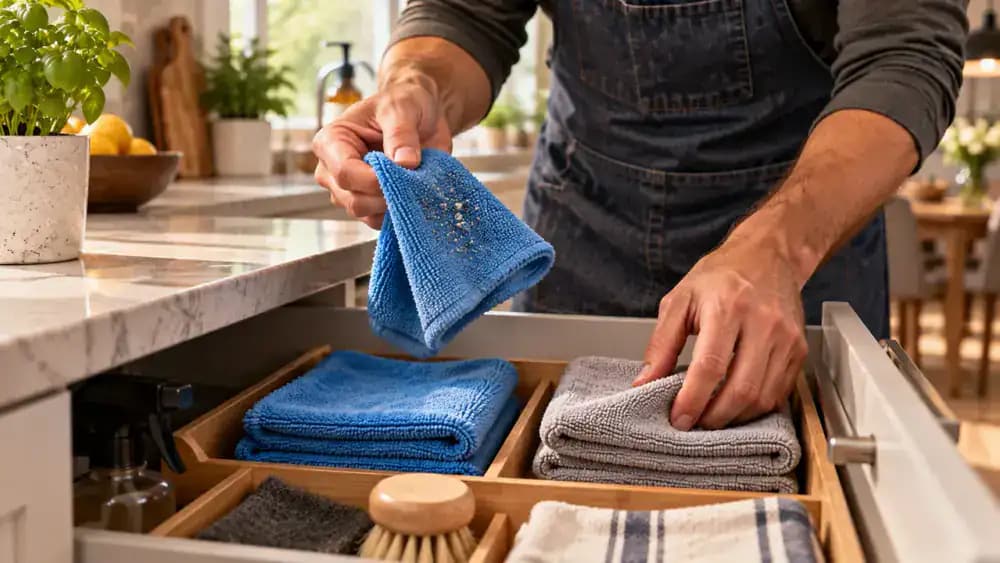
Organize and Inspect Your Cooktop Cleaning Cloths
Store three microfiber cloths in separate drawer compartments: one for loose debris, one for manufacturer-approved glass-ceramic cleaner, and one for dry buffing. Before each use, unfold the cloth and inspect both sides under good lighting. Set aside any cloth containing trapped grit or hardened particles that could scratch the glass. Wash reusable cloths according to their care instructions without fabric softener, and keep cleaner securely stored away from children and food.
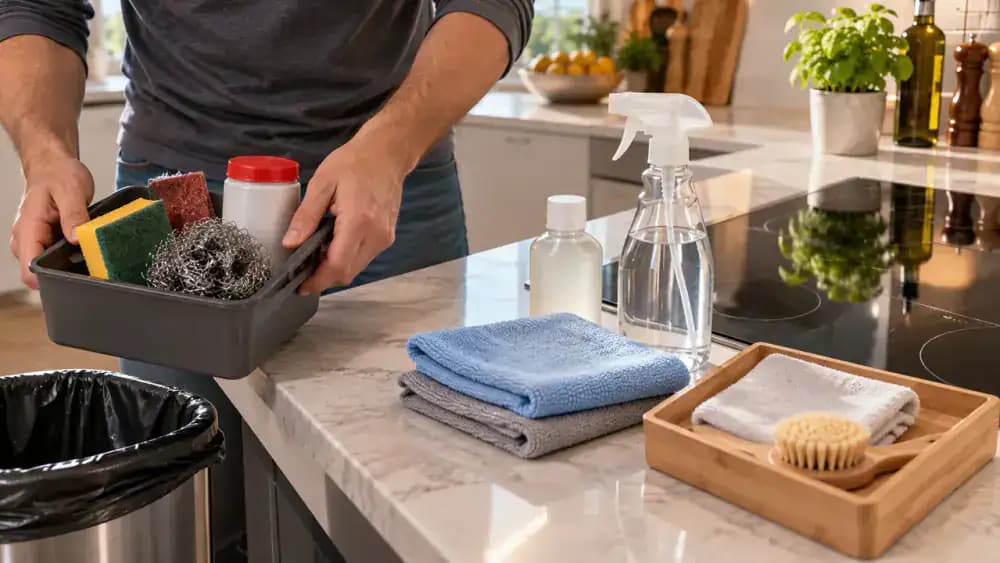
Keep Rough Cleaning Tools Away From the Glass
Place steel wool, rough scouring pads, and abrasive cleaning powders in a separate utility tray, then move them away from your glass cooktop. Keep kitchen knives secured in their block, never with cleaning supplies. On the nearby counter, arrange a clean microfiber cloth, soft nonabrasive sponge, and manufacturer-approved glass-ceramic cleaner on a folded towel. If hardened food residue remains, check your cooktop manufacturer's cleaning instructions rather than improvising with sharp or abrasive tools.
Know When to Stop Cleaning a Stubborn Cooktop Spot
If hardened food residue remains after gentle cleaning with a manufacturer-approved method, resist the temptation to scrub harder. Leave the cooktop switched off and fully cooled while you check the appliance care guide for additional instructions. Look for guidance specific to glass-ceramic surfaces or contact the manufacturer for assistance. Keep abrasive tools away from the stubborn deposit. Leaving a small mark temporarily is better than risking permanent scratches or other surface damage.
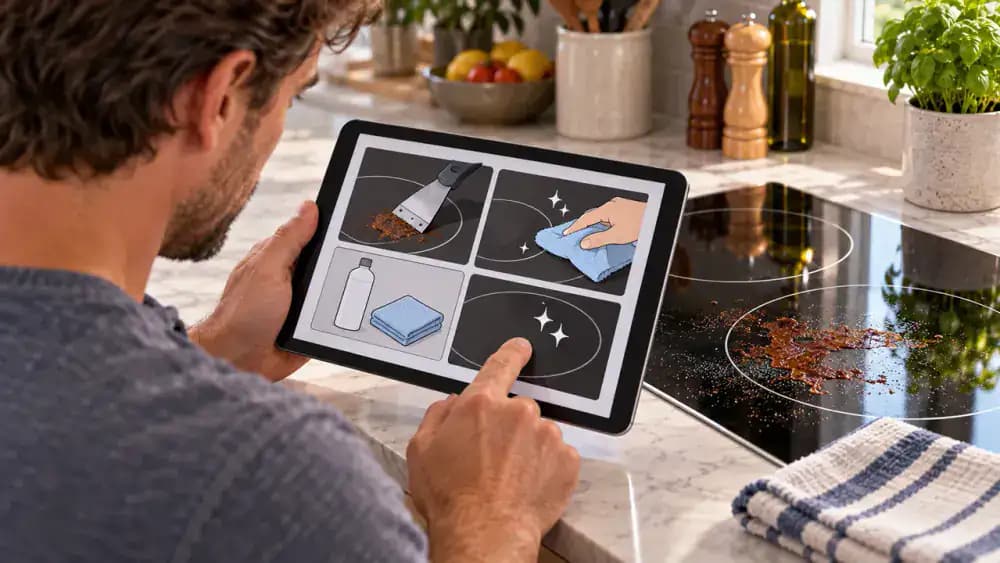
Make Cooktop Care Part of Your Kitchen Routine
After cooking, switch off every burner and move your saucepan to a heat-safe trivet. Leave any fresh splashes alone while the residual-heat indicator is on. Once the glass is fully cool, take a clean microfiber cloth from a nearby shelf and check it for trapped grit. Gently wipe away fresh residue without pressing hard, then fold the soiled section inward and place the cloth in the laundry.

Check Your Cookware Before Every Use
Before placing a pan on your glass-ceramic cooktop, tilt it to inspect the underside for crumbs, dried food, or rough particles. Remove any debris with a clean, dry microfiber cloth, then check that the entire base is smooth, clean, and moisture-free. Lift the pan by its handle and lower it straight onto a clear, cool burner without sliding. Even tiny particles can cause scratches when trapped beneath heavy cookware.

Lift Heavy Cookware Instead of Sliding It Across the Glass
Grip the skillet handle securely and lift the entire pan clear of the cool glass cooktop before moving it to another burner. Keep the base elevated as you carry it across, then lower it gently into position without twisting or dragging. For heavier pots, use both hands with appropriate protection when needed to maintain control. Even clean cookware can create friction, so making this lifting technique a habit helps reduce unnecessary surface wear.

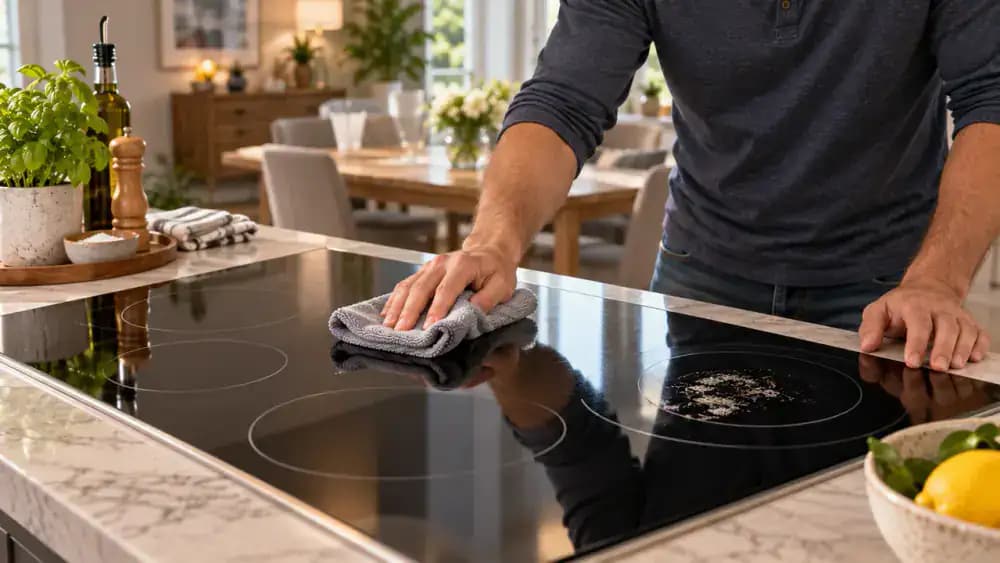
Keep Your Glass Cooktop Clean With Simple Daily Care
Once your glass cooktop is completely cool and switched off, remove loose crumbs with a clean microfiber cloth. Treat small greasy marks with a manufacturer-approved glass-ceramic cleaner, following its directions, then wipe away residue and finish with a fresh, dry cloth. Keep cookware bottoms free of grit and lift pans instead of sliding them. Leave stubborn, hardened deposits untouched rather than forcing them off with aggressive scrubbing.
Greasy fingerprints, dried food splatters, and cloudy streaks can make even a beautiful glass cooktop look dirty and worn. The frustrating part is that wiping harder often makes the problem worse. Unlike an ordinary kitchen countertop, a glass cooktop needs careful cleaning to protect its smooth, glossy finish. Abrasive powders, rough scrubbers, and gritty food particles can leave permanent scratches, while leftover cleaning product can create the very streaks you're trying to remove. Fortunately, restoring a clean, polished appearance doesn't require aggressive scrubbing or expensive equipment.
The secret is using the right products, gentle pressure, and a cleaning sequence that removes buildup without dragging debris across the surface. Before starting, switch off every burner, let the cooktop cool completely unless the manufacturer specifically instructs otherwise, and check its cleaning recommendations. With clean microfiber cloths, a soft sponge, and an approved glass-ceramic cleaner, you can tackle everyday grease, stubborn cooked-on spills, and lingering haze while keeping your cooktop looking its best.
Where people go wrong
Scrubbing the Glass With Abrasive Pads or Cleaning Powders. Glass cooktops may look durable, but abrasive powders, rough sponges, and aggressive scrubbing can leave permanent scratches. Avoid steel wool and other harsh cleaning materials. Instead, use a clean microfiber cloth or soft sponge with a manufacturer-approved glass-ceramic cleaner, applying gentle pressure to remove grease and everyday residue.
Wiping Away Crumbs Before Removing Grit. Dragging crumbs, salt crystals, or other gritty debris across a glass cooktop can scratch its surface. Before applying any cleaner, gently lift loose particles with a dry microfiber cloth. Check around burner outlines and along the edges, where debris often collects unnoticed during everyday cooking.
Scraping Burned-On Food With a Kitchen Knife. Stubborn food deposits can tempt you to reach for a kitchen knife or another sharp household tool. That shortcut risks damaging the glass and causing injury. Let an approved cleaner soften the residue for its recommended contact time. Use a specialized scraper only when the manufacturer permits it, following its handling instructions.
Cleaning a Hot Cooktop and Leaving Behind Cloudy Streaks. Applying cleaner before the cooktop has fully cooled can create unnecessary hazards and may interfere with proper cleaning. Unless the manufacturer specifically instructs otherwise, wait until the entire surface is cool. After cleaning, remove leftover product residue and buff with a separate dry microfiber cloth to prevent visible haze and streaks.
Questions people ask
Turn off all burners and wait until the cooktop is fully cool, unless the manufacturer instructs otherwise. Remove loose crumbs with a dry microfiber cloth before applying an approved glass-ceramic cleaner. Gently wipe with a soft, nonabrasive cloth, avoiding excessive pressure. Finish by buffing with a separate, clean microfiber cloth.
Fixed it?
Get one guide like this every Thursday.