How to Clean Freezer Spills and Light Frost Safely
Learn how to safely clean freezer spills and remove light frost without damaging freezer surfaces. Follow simple steps to protect food, clean shelves and drawers, and prevent future buildup.

What you’ll need
Tap to tick things off before you start.
Protect Frozen Food Before Cleaning
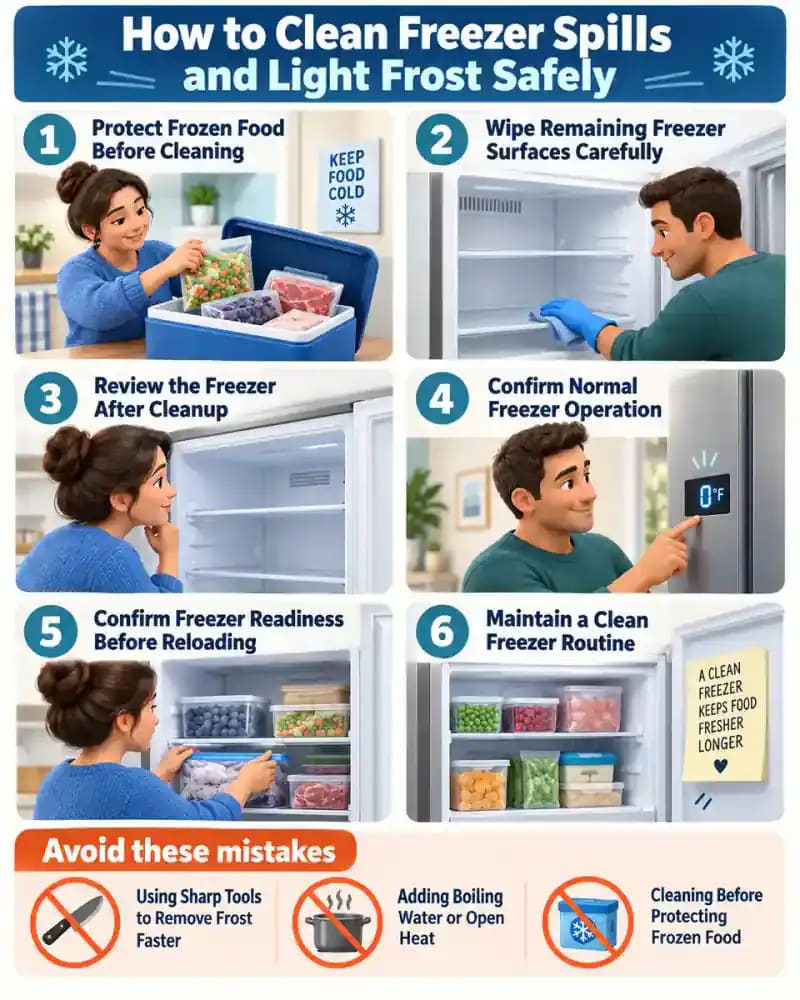
Before handling any freezer mess, move frozen packages into organized groups and place an insulated cooler nearby for temporary storage if needed. The homeowner keeps food protected while creating space around the spill and light frost buildup. Keep items together by category or meal type so they are easier to return later. Avoid forcing frozen items apart because this can damage packaging or create unnecessary messes during cleanup preparation.

Prepare the Freezer Safely Before Cleaning
Reviewing the freezer manual and adjusting the controls helps create a safe starting point before cleaning begins. The homeowner checks the recommended settings and prepares the appliance area without disturbing the frozen interior yet. Confirm the correct power mode for the model, and keep the door closed as much as possible to maintain temperature while gathering cleaning supplies for the next steps during the preparation phase for better results

Loosen Light Frost Without Damaging the Freezer
Place absorbent towels beneath the open freezer compartment and allow light frost to soften naturally before removal begins. Keep the freezer door open as recommended for the defrost process and avoid using knives or metal tools that can scratch surfaces or damage components. Waiting for frost to loosen makes cleanup safer and easier while protecting the appliance. Check the towels regularly and replace them if they become saturated during the process.

Check and Remove Loosened Frost Carefully
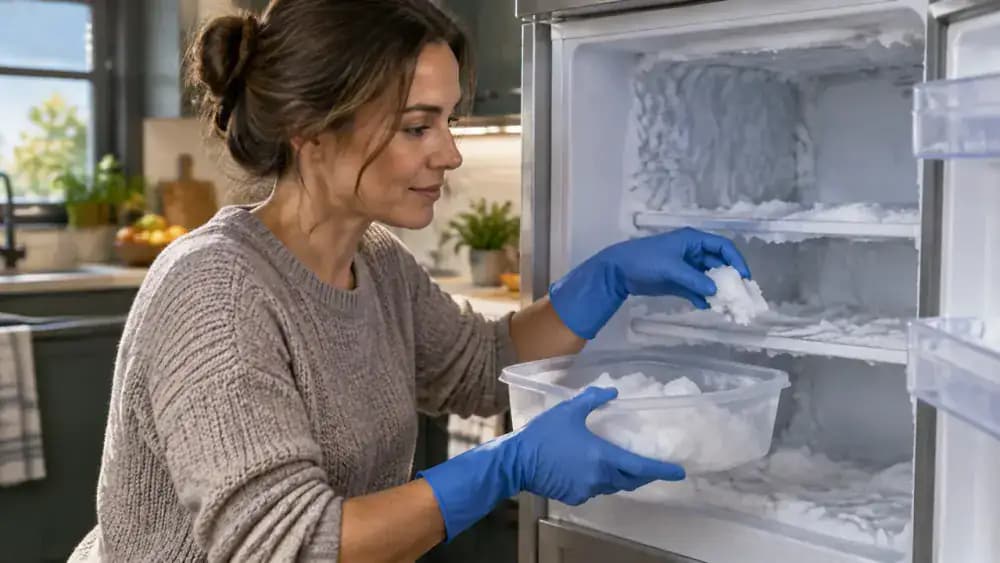
The homeowner gently removes pieces of separated ice from the freezer floor and shelf edges while wearing protective gloves and placing the loose frost into a nearby container. This careful approach avoids pulling on frozen sections that remain attached and helps prevent damage to the freezer interior. Check each area slowly and clear only frost that lifts easily before moving on to the next cleaning step. Keep removed pieces contained to reduce mess during cleanup
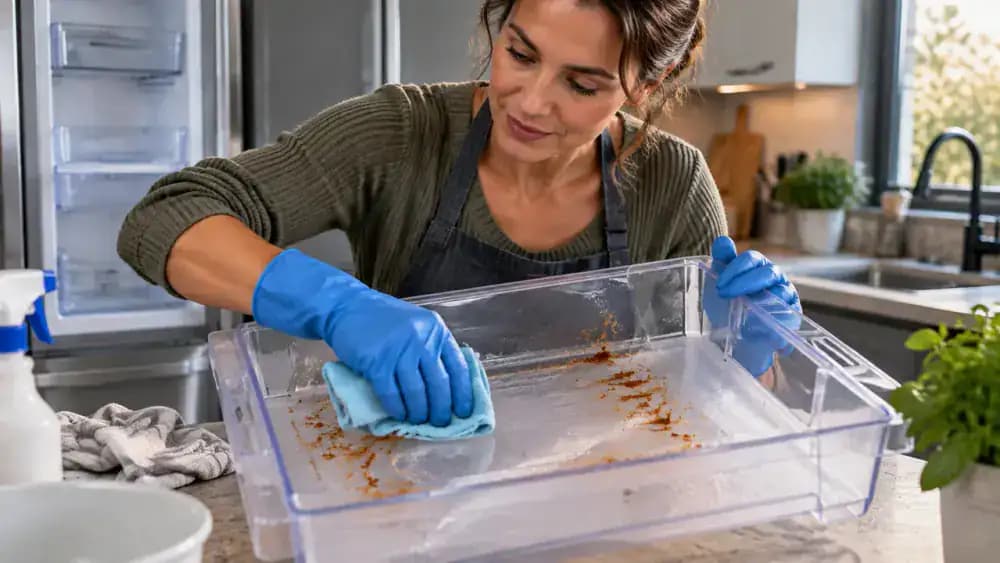
Clean Hardened Freezer Spills Gently
Remove the freezer drawer and gently wipe the hardened spill with a soft cleaning cloth while working around corners and edges. Use light pressure to loosen residue without damaging the surface finish. Clean small sections at a time and check the cloth frequently so debris does not spread. A damp cloth can help soften stubborn marks before another gentle pass. Keep the drawer stable on a flat surface during cleaning.
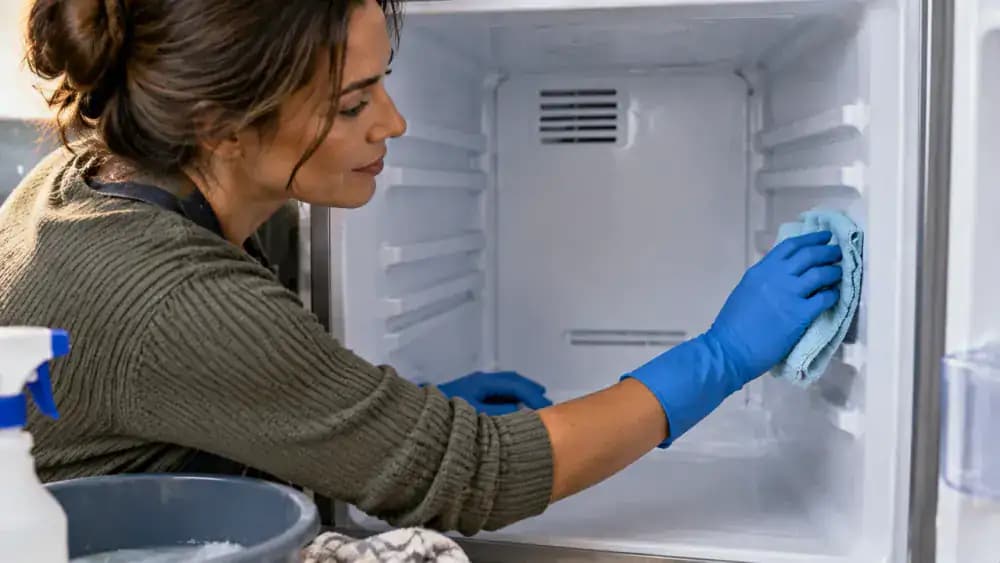
Wipe Remaining Freezer Surfaces Carefully
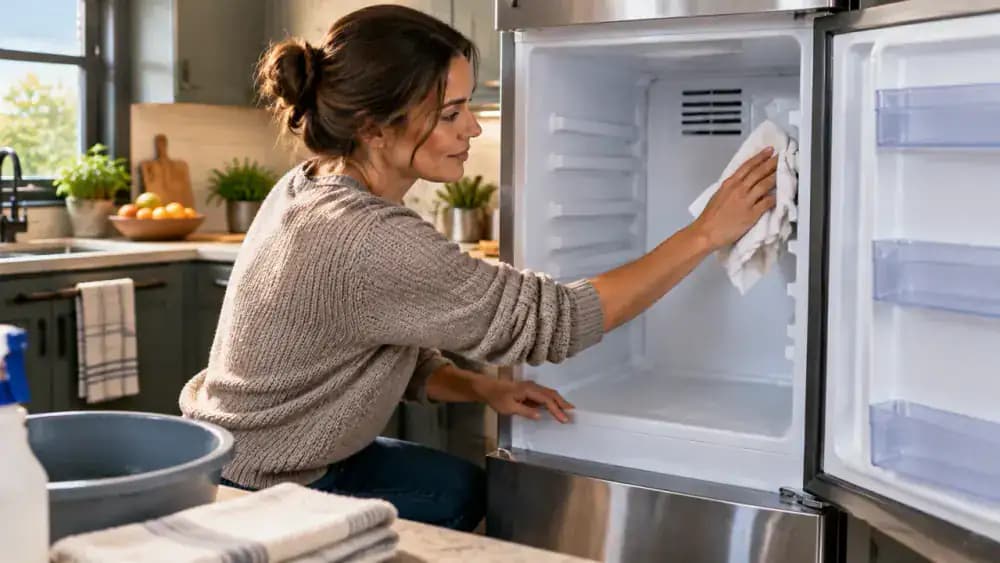
Use a damp cloth to clean the fixed freezer shelf rails and interior corners, removing leftover residue from narrow spaces without forcing any parts. Gently wipe around supports and edges where spills may collect over time. A mild cleaner can help loosen stubborn spots, but avoid rough scrubbing that could damage surfaces. Work slowly through each area and check hidden corners so the freezer interior is left clean and ready for the next maintenance step
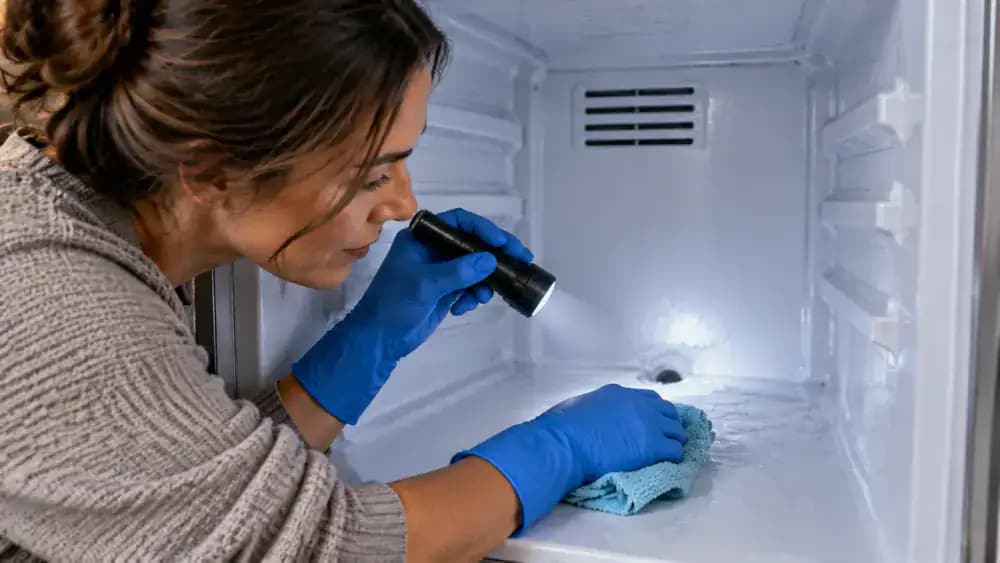
Inspect Drain Openings and Remove Moisture
Use a clean dry cloth to wipe around the freezer drain openings and nearby lower surfaces while checking for moisture or leftover residue. A flashlight helps reveal small damp areas that may be easy to miss during normal cleaning. Avoid pressing debris into the openings, and make sure the inspected area is dry before moving on to the final drying process and restarting the appliance.
Air Dry Interior Surfaces Before Restarting
Leave the freezer door open while checking the interior walls and shelf surfaces for any remaining moisture after cleaning and drying steps. Use a clean dry towel to gently touch damp areas and confirm surfaces are ready before restarting the appliance. This brief air drying period helps prevent trapped moisture and keeps the compartment prepared for normal operation. Make sure corners and shelf edges are also inspected before closing the door.
Restore Power and Confirm Cooling Returns
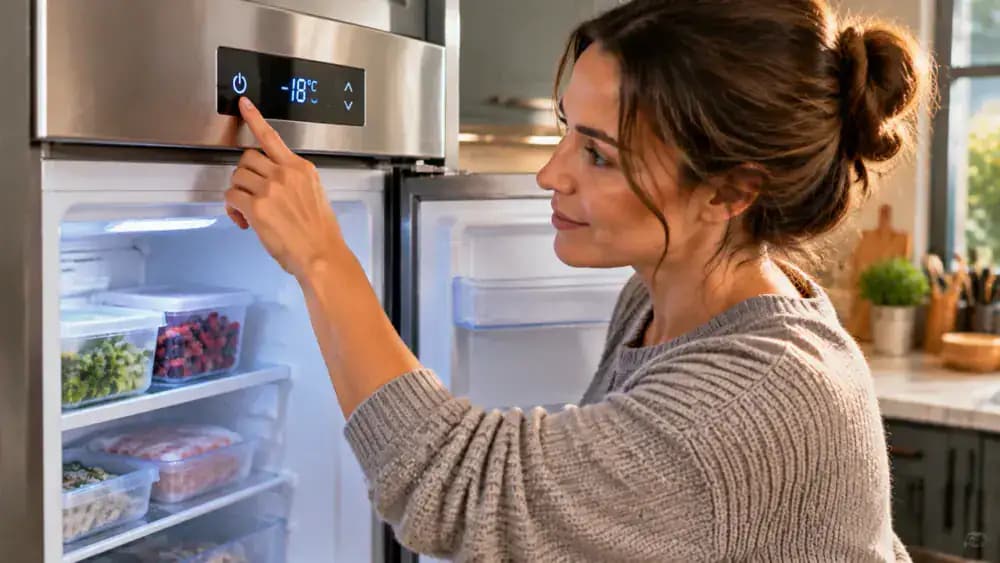
After the freezer interior has dried, the homeowner restores power using the control panel and checks that the unit begins its normal cooling cycle. Wait for the temperature to stabilize before returning stored items inside. Confirm the freezer is cold and operating normally to avoid placing food back too soon. Keep the compartment organized and allow enough time for consistent cooling performance after restart for reliable everyday use and storage.
Reload the Freezer With Proper Airflow
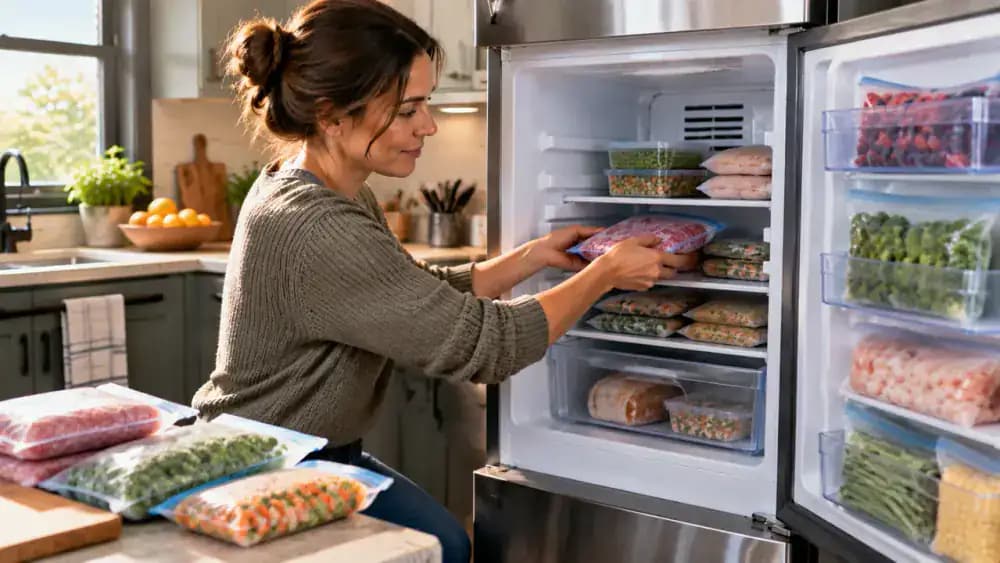
Place frozen packages back into the freezer shelves and drawers while keeping visible gaps between items for better cold circulation. Arrange larger containers without covering vents or blocking airflow paths so the compartment can maintain steady freezing conditions during regular use. Leave enough space around stored food to help air move evenly and make future organization easier when adding or removing packages from the freezer.
Prevent Future Freezer Spills and Frost
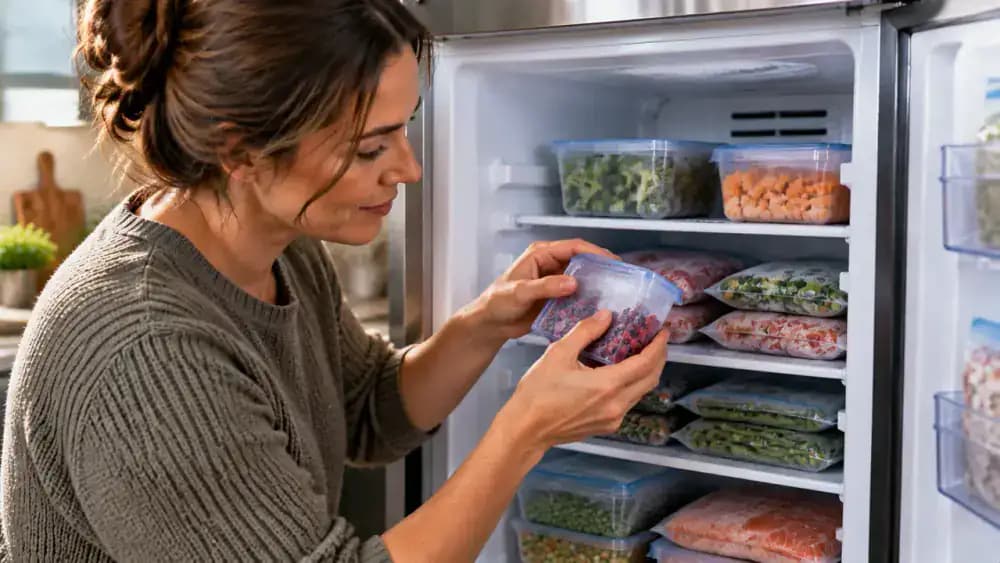
Before closing the freezer door, the homeowner checks containers and frozen packages to confirm lids and seals are secure. This simple habit helps prevent leaks that can create new frost and residue later. Store items in tightly closed containers or sealed bags to reduce future messes and keep the freezer cleaner between maintenance sessions. Regular checks of packaging condition make daily freezer care easier and more reliable over time.
Review the Freezer After Cleanup
Open the freezer drawers and gently move them back and forth while checking that they glide smoothly along the tracks. Inspect the edges and surrounding areas for any signs of new moisture or issues after normal use. This quick check helps identify small problems early and keeps the freezer easier to maintain. Make sure drawers close fully so stored items remain protected during everyday operation and future checks.

Organize the Freezer for Easier Future Use
Place storage bins into separate freezer sections and group similar packaged foods together so everything has a clear location. Keep frequently used items near the front or in easy-to-reach areas to reduce searching time later. A simple organization system helps maintain better airflow around stored items and makes future freezer checks, restocking, and routine upkeep much faster.

Monitor the Freezer After Cleaning
After cleaning, the homeowner briefly checks the freezer's interior to confirm it is operating normally and staying organized. The vents and storage areas are inspected for signs of moisture or repeated frost buildup that may indicate a developing issue. Keeping an eye on the appliance during regular use helps catch changes early and supports better performance. A quick visual check every so often can prevent small problems from becoming larger repairs.
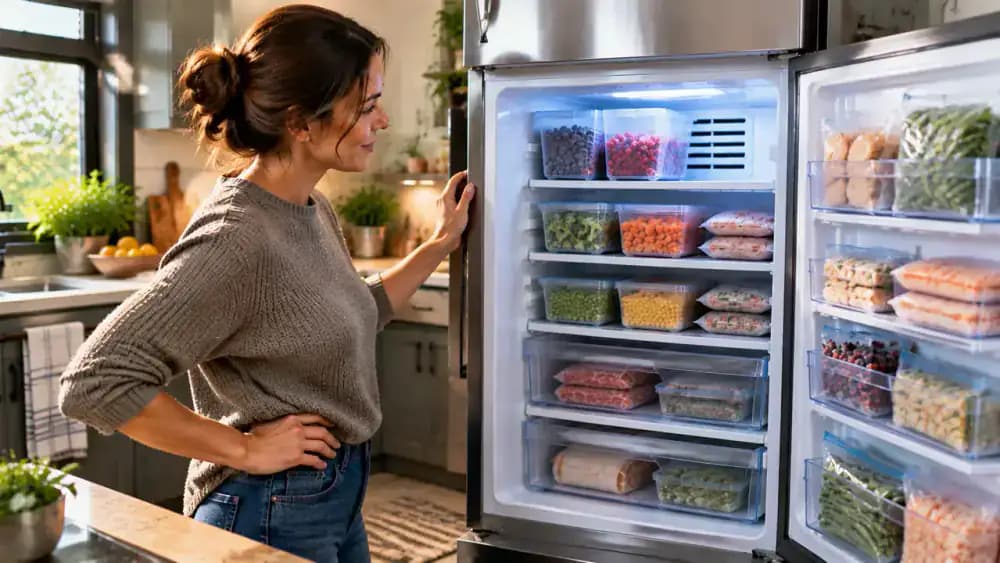
Review the Final Freezer Condition
The homeowner reviews the freezer's finished setup with a checklist while looking over shelves and storage areas for a final quality check. The inspection focuses on clear organization, clean interior surfaces, and enough space around packages for proper airflow. Keeping frequently used items accessible makes future freezer maintenance easier and helps prevent clutter from building up again. A quick monthly review can help identify small issues before they become larger problems
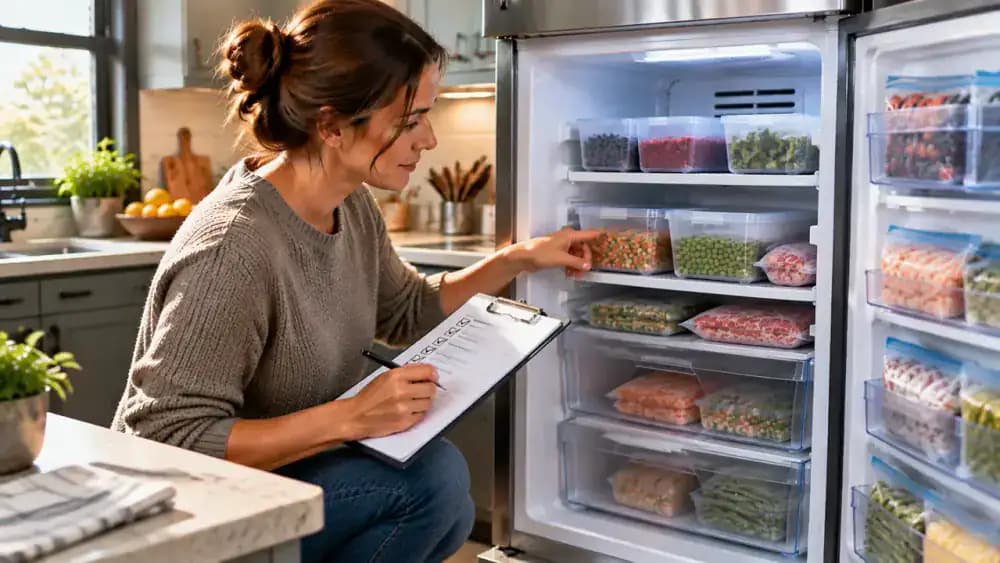
Maintain the Freezer After Cleaning
A homeowner checks the freezer's rubber door gasket and open airflow paths during a regular maintenance routine without moving stored items. This inspection helps identify worn seals or blocked areas before they affect performance. Keep a small weekly reminder to review these spots and leave enough space around food containers so cold air can circulate properly. Simple checks make daily freezer use more reliable and help maintain cleaner storage conditions.

Complete the Final Storage Review
The homeowner checks freezer containers and presses lids closed securely while keeping items clear of airflow openings. This final inspection helps prevent future spills and supports consistent cooling performance. Make sure containers are properly sealed and leave enough open space around vents so cold air can circulate effectively during normal freezer use without creating avoidable frost or storage problems later. A quick check now keeps the appliance organized and easier to maintain every day.
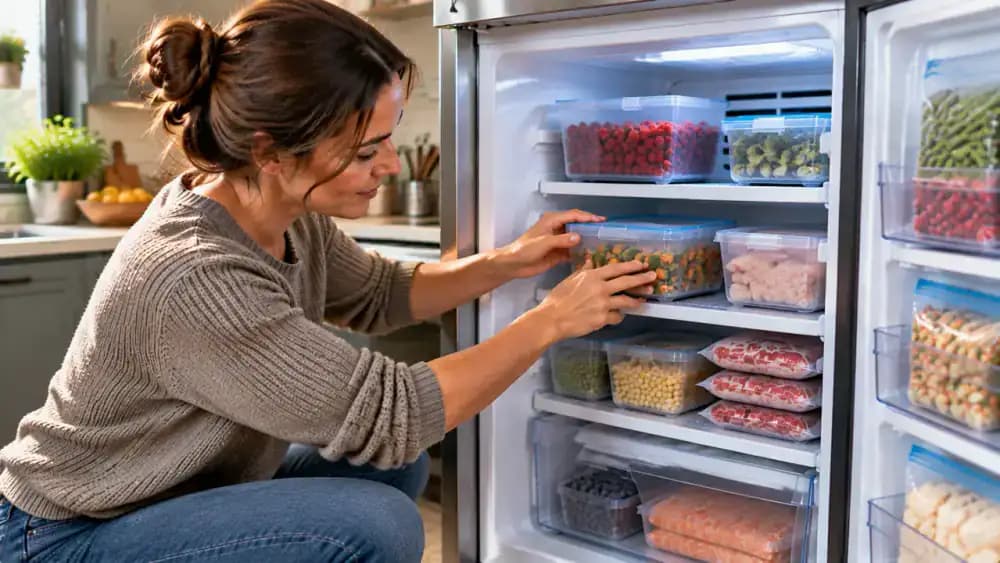
Confirm Normal Freezer Operation
After the cleanup check, the homeowner reviews the freezer temperature display and gently closes the door to verify proper alignment and seal contact. A stable temperature reading helps confirm the appliance is operating normally after maintenance. Keep the door fully closed during regular use and check that the gasket forms a complete seal around the opening to help prevent warm air entry and future frost buildup

Create Simple Freezer Maintenance Habits
Place a small reminder note on the freezer door and keep a simple maintenance schedule nearby to support regular care. This routine helps homeowners remember occasional upkeep tasks that reduce moisture problems over time. Checking the schedule monthly can make freezer care easier and prevent minor issues from being overlooked during normal use. A visible reminder works best when placed somewhere easy to notice near the appliance for consistent follow-through and better long-term performance.
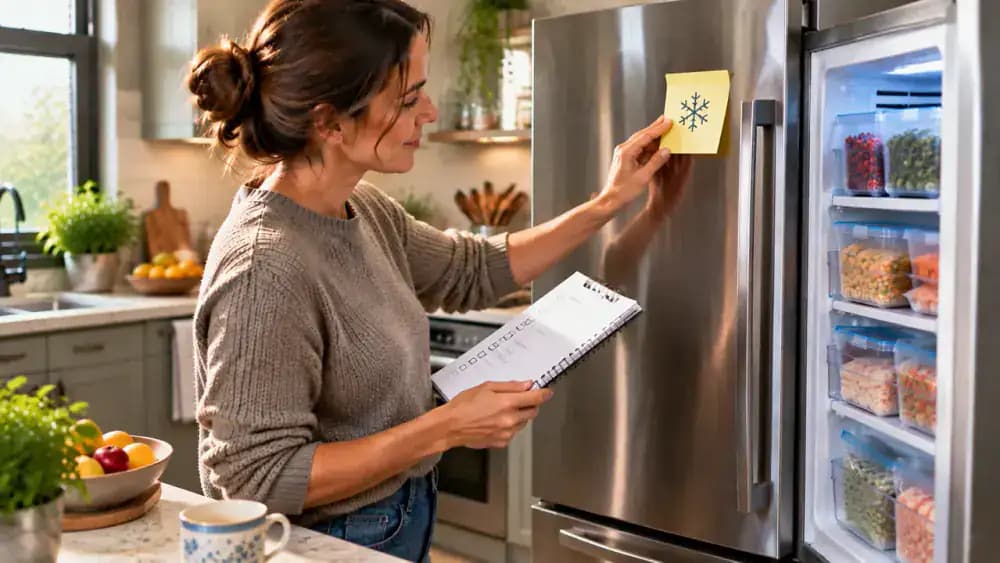
Optimize Freezer Storage Layout
The homeowner adjusts frozen packages inside the freezer section, creating open pathways between groups and keeping circulation areas clear for better airflow. Leaving small gaps around stored items helps cold air move evenly and makes future organization easier. Avoid stacking packages tightly against vents or sensors because blocked areas can reduce temperature consistency. A simple layout with visible spaces also helps notice changes during regular checks and keeps storage manageable over time.
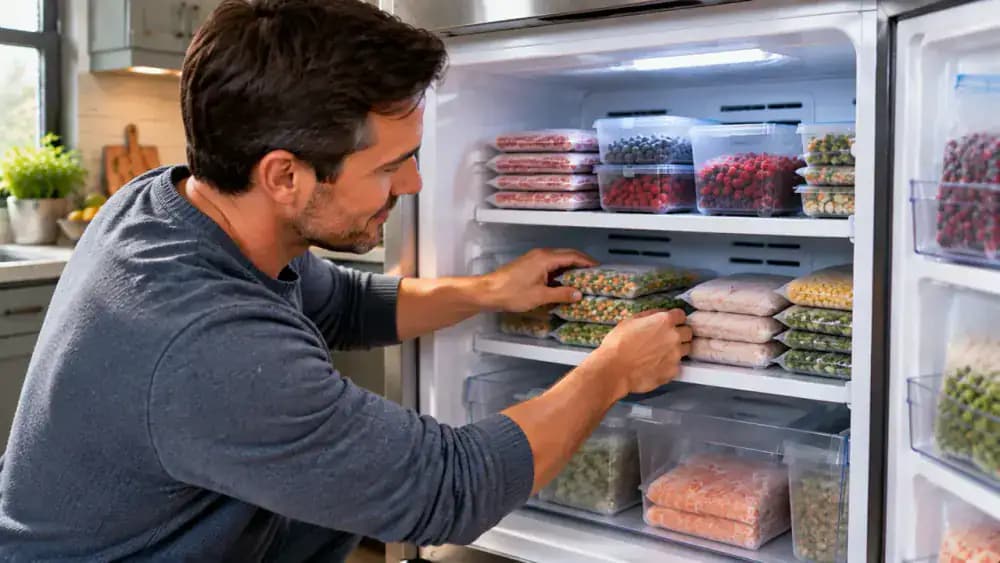
Inspect Freezer Door Seal Condition
With the freezer door open, a homeowner checks the rubber gasket by gently tracing the seal edges and corners with a finger to spot possible gaps, debris, or moisture buildup. Regular inspections help maintain a tight closure and steady cooling performance. Look for cracks or hardened sections during routine checks, because damaged seals may allow warm air inside and contribute to unnecessary frost over time during normal freezer use.
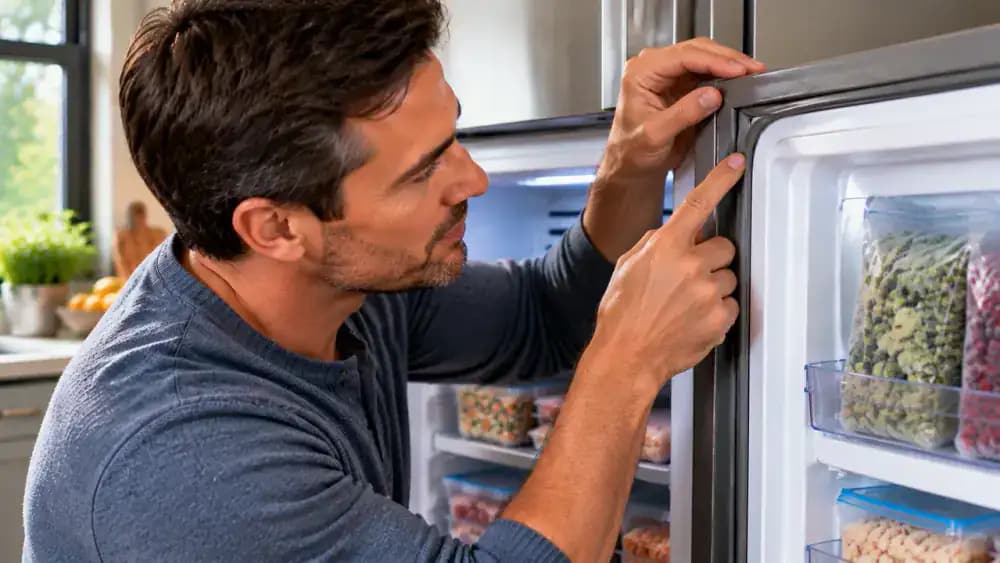
Review Interior Moisture Collection Areas
Use a small flashlight to inspect the empty freezer compartment's upper corners and side edges, checking for areas where moisture may collect along seams and shelf surfaces. This quick visual review helps spot damp locations before they become harder to manage during routine upkeep. Keep the interior clear while checking these areas and pay attention to any unusual moisture buildup that may require additional attention during the next maintenance session.
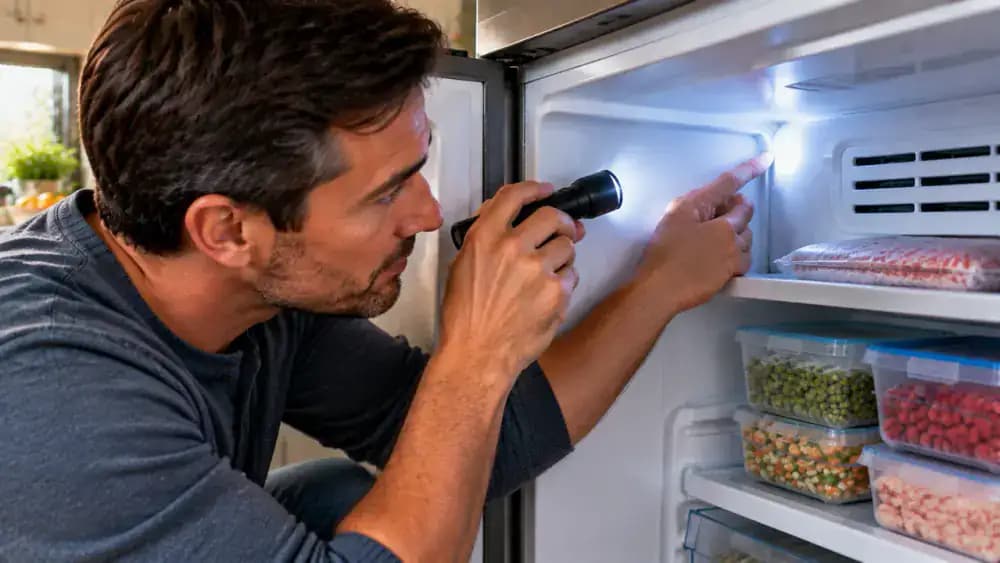
Clear Remaining Interior Debris
With the freezer empty, the homeowner checks each shelf surface and compartment bottom for any remaining loose particles after cleaning. Gloved hands carefully remove small debris pieces while avoiding damage to the interior surfaces. This final inspection helps keep the freezer clean before regular use resumes and prevents tiny residues from collecting over time. Pay attention to corners and edges where small debris can remain hidden during routine cleanup.
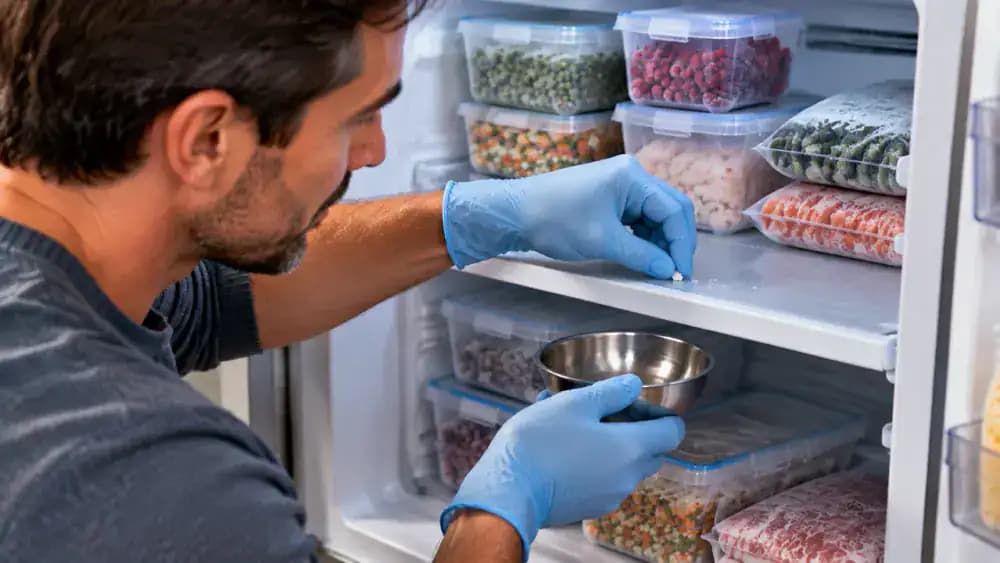
Confirm Freezer Readiness Before Reloading
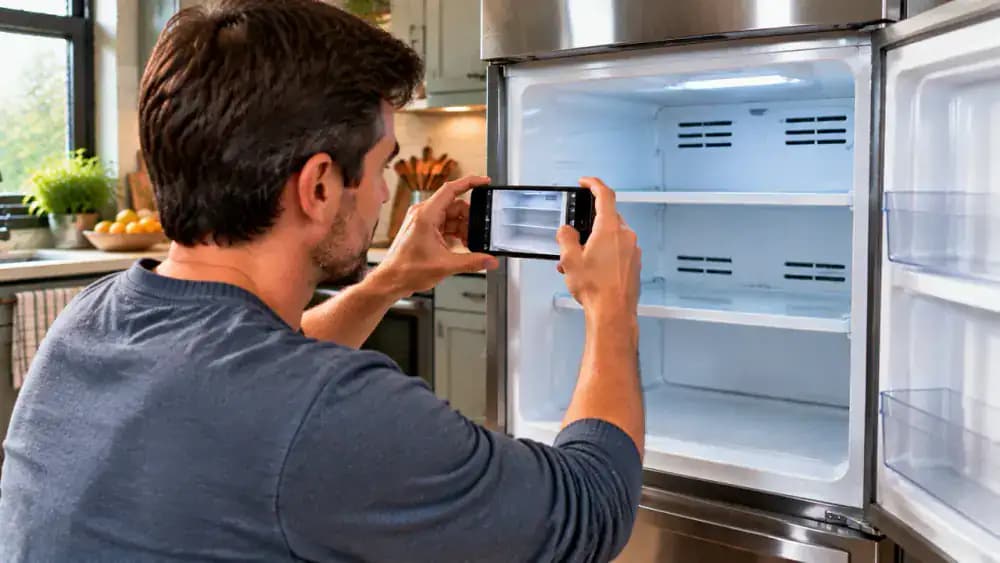
Use a smartphone to capture the empty freezer interior once it is clean and prepared, showing the shelves, compartments, and overall condition before returning items. This reference image creates a simple record of the completed area and makes future organization easier. Keep the photo with your maintenance notes so you can compare the freezer setup after later cleanups and routine care over extended periods of use
Reload Food With Accessible Storage Zones
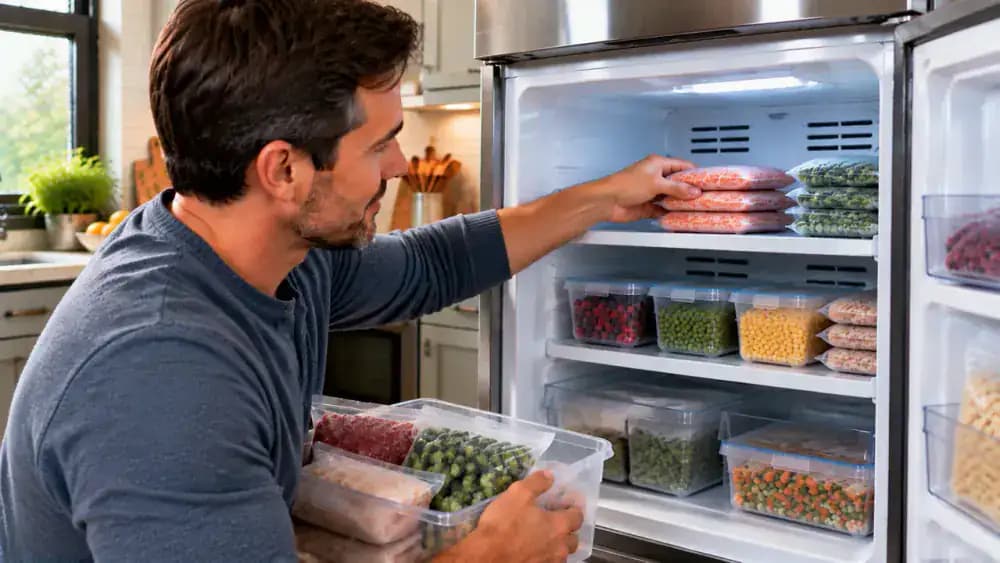
Return frozen items to the freezer by placing commonly used packages in easy-to-reach areas near the front of shelves or door compartments. Keep space around vents and avoid packing drawers too tightly so cold air can circulate properly. Group similar foods together, such as vegetables, meats, and ready-to-eat items, to make future searches faster and help maintain an organized storage system.
Prevent Future Spills With Better Habits
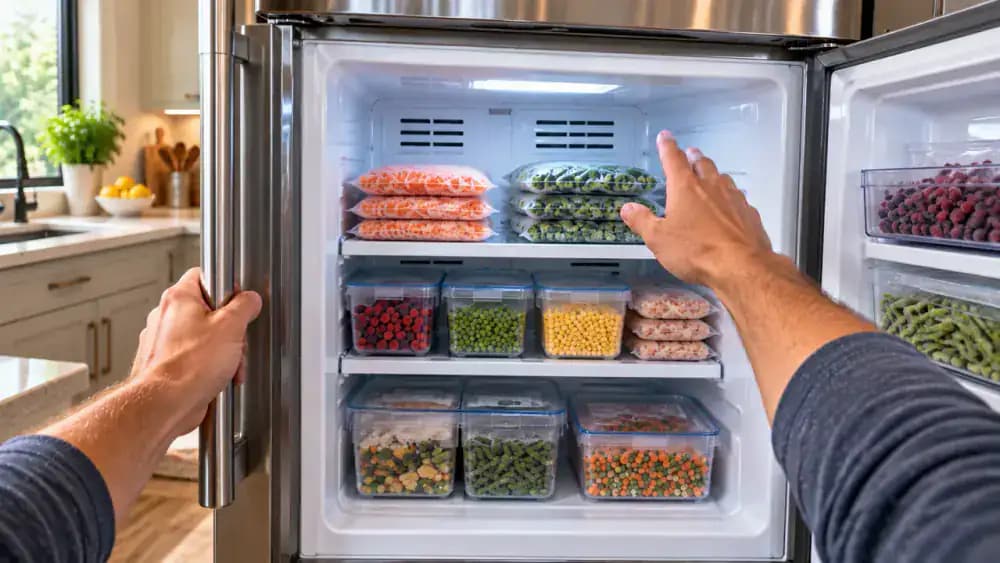
A homeowner checks that frozen packages are sealed properly and wipes their outer surfaces with a clean cloth before storage near the freezer area. This simple routine helps prevent messy leaks by removing loose residue and catching damaged packaging early. Regularly checking dates also keeps items manageable and reduces future cleanup effort over time. For best results use containers or bags when packages need extra protection during freezer storage.

Create a Simple Monthly Freezer Check Routine
Keep a regular record of appliance condition by noting the date during each monthly review and checking the listed items on your maintenance sheet. The homeowner records observations while confirming consistent operation and watching for changes that may need attention later. A quick routine like this helps identify unusual patterns early and supports dependable performance over time. Store the log near the appliance so future checks stay simple and organized.

Observe the Freezer During Normal Use
Open the freezer door and briefly scan the interior surfaces for changes that may appear after cleaning and regular use. Check walls, shelves, and open areas for unusual frost patterns, small spills, or blocked airflow spaces. These quick visual checks help you notice problems early without extra work. A few seconds of inspection each time you use the freezer can help keep the space cleaner and easier to maintain over time.
Set a Future Freezer Care Reminder
Use a smartphone calendar to create a recurring reminder for future freezer care checks while standing near the appliance. This simple schedule helps you remember when to review frost levels and possible spills before they become bigger storage concerns. Set reminders based on your routine and choose a frequency that makes inspections easy to maintain. Keeping this habit active supports cleaner organization and helps protect your freezer from overlooked maintenance issues over time

Maintain a Clean Freezer Routine
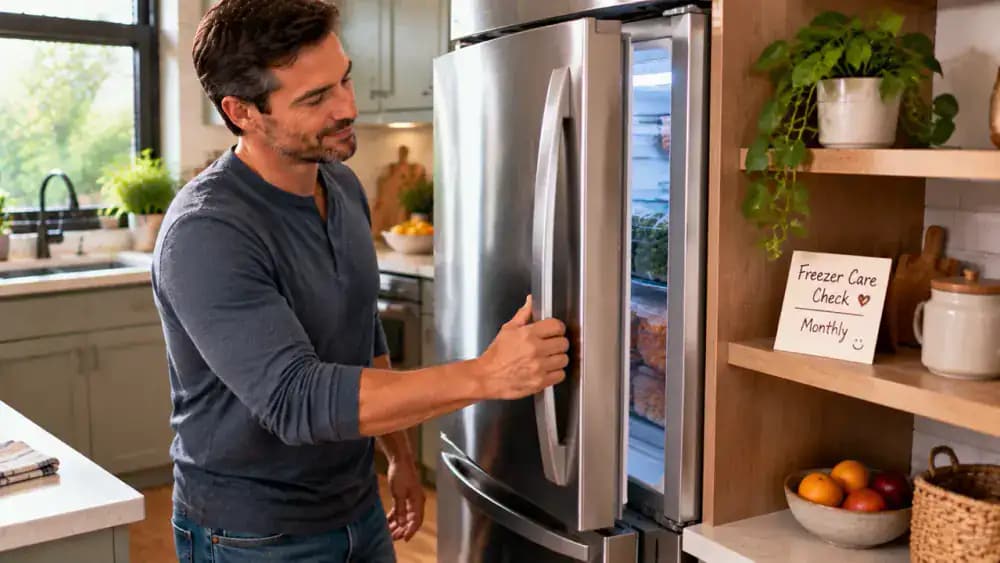
After closing the freezer door, the homeowner keeps the appliance ready with a simple monthly reminder card nearby as part of regular care habits. This routine helps prevent future messes by encouraging quick attention to spills and keeping the freezer area organized. Checking the reminder each month makes it easier to maintain efficiency and avoid buildup returning over time while supporting a clean and accessible kitchen storage space.
A freezer spill can quickly turn into a frustrating cleanup job when food freezes to drawers, shelves become sticky, and light frost starts reducing available space. The good news is that you can restore your freezer with a careful approach that protects the appliance and keeps your food safe. Rushing the process or using the wrong tools can damage interior surfaces, so the safest method starts with preparation and patience.
Before cleaning, organize your frozen items, protect anything that needs to stay cold, and follow your freezer manufacturer's instructions for handling power settings and defrosting. This guide explains how to soften light frost safely, remove spills from freezer surfaces, and dry everything properly before putting food back. You will also learn simple maintenance habits that help prevent future buildup and keep your freezer working efficiently.
Where people go wrong
Using Sharp Tools to Remove Frost Faster. Trying to break apart freezer frost with knives, screwdrivers, or metal tools can scratch surfaces and damage important components. Light frost should be softened gradually using safe methods recommended by the manufacturer instead of forcing ice removal with aggressive techniques.
Adding Boiling Water or Open Heat. Applying boiling water, hair dryers, heaters, or other heat sources may seem like a quick solution, but it can create safety risks and damage freezer parts. Follow proper defrost instructions and allow frost to loosen naturally before cleaning.
Cleaning Before Protecting Frozen Food. Starting a freezer cleanup without first organizing frozen items can lead to unnecessary thawing and food waste. Move food together, use an insulated cooler if needed, and prepare the freezer safely before removing spills or frost.
Restarting the Freezer With Wet Surfaces. Leaving moisture inside the freezer after cleaning can contribute to new frost buildup and reduce efficiency. Inspect shelves, drawers, rails, and interior areas carefully, then make sure surfaces are fully dry before returning food and restarting the appliance.
Questions people ask
Let light frost soften naturally by following the freezer manufacturer's defrost instructions and avoiding rushed methods. Do not use knives, metal tools, boiling water, or open heat to remove ice. Allowing frost to loosen gradually helps protect freezer surfaces, drawers, and internal components from damage.
Fixed it?
Get one guide like this every Thursday.