How to Clean a Dishwasher Filter and Stop Bad Odors
Remove trapped food, grease and grit from your dishwasher filter to reduce odors and help dishes come out cleaner.

What you’ll need
Tap to tick things off before you start.
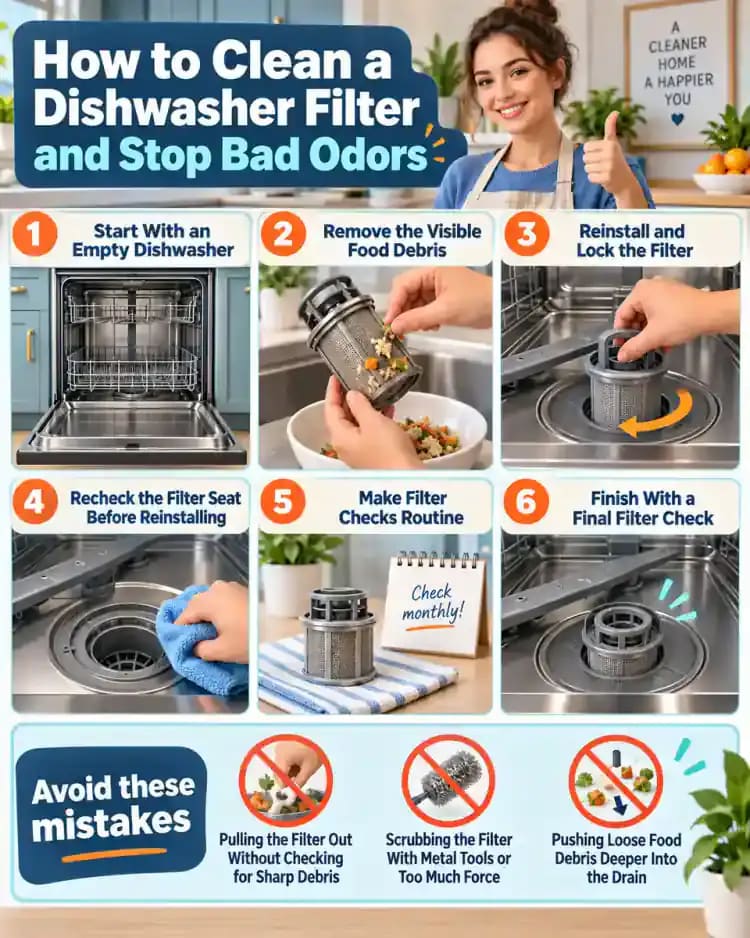
Start With an Empty Dishwasher
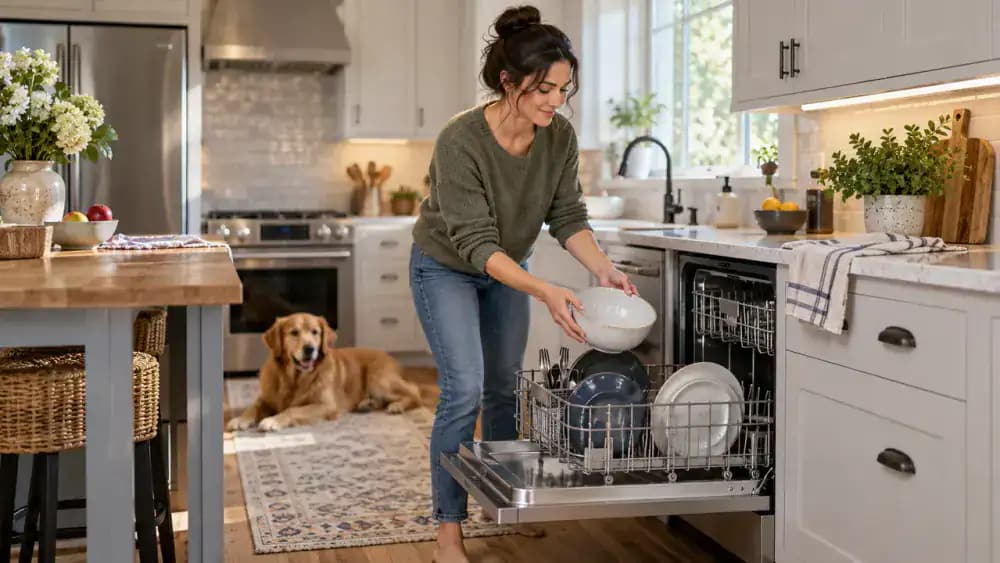
Open the dishwasher and remove every plate, glass, utensil, and loose item before inspecting the filter area. Keeping both racks clear gives you an unobstructed view of the bottom of the tub and prevents dishes from shifting while you work. Pull the lower rack out slowly and set aside anything left inside. A small flashlight can help you spot food debris, greasy buildup, and the filter housing more easily.
Check the Manual and Inspect for Sharp Debris
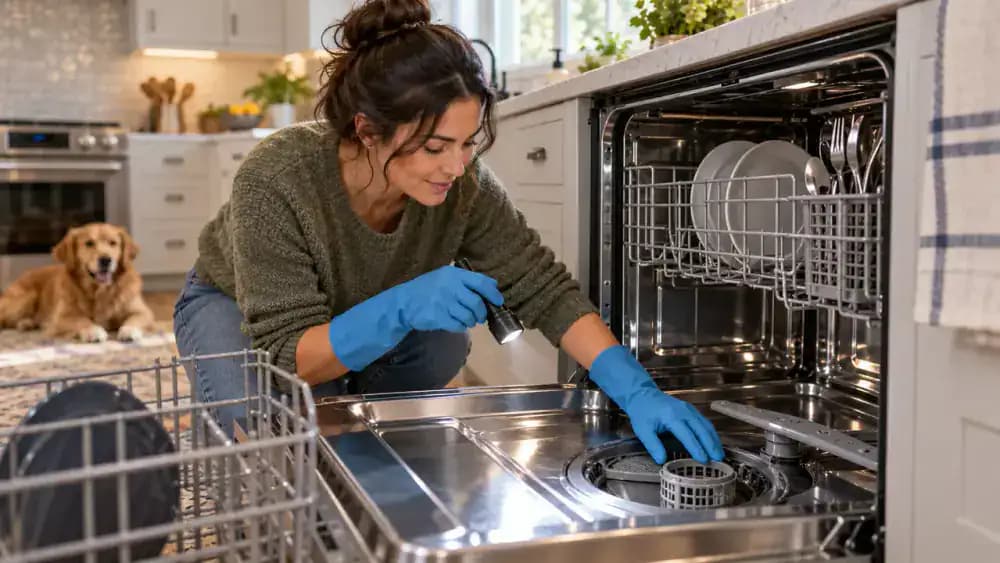
Keep the lower rack in place while you confirm the filter location and shutdown instructions in the owner manual. If the manufacturer says to unplug the dishwasher or switch off the breaker, do that first. Wear protective gloves and use a flashlight to inspect the sump area for broken glass, sharp food fragments, or other debris. Remove visible hazards carefully before moving your hands closer to the filter.
Remove the Lower Rack and Note Filter Position
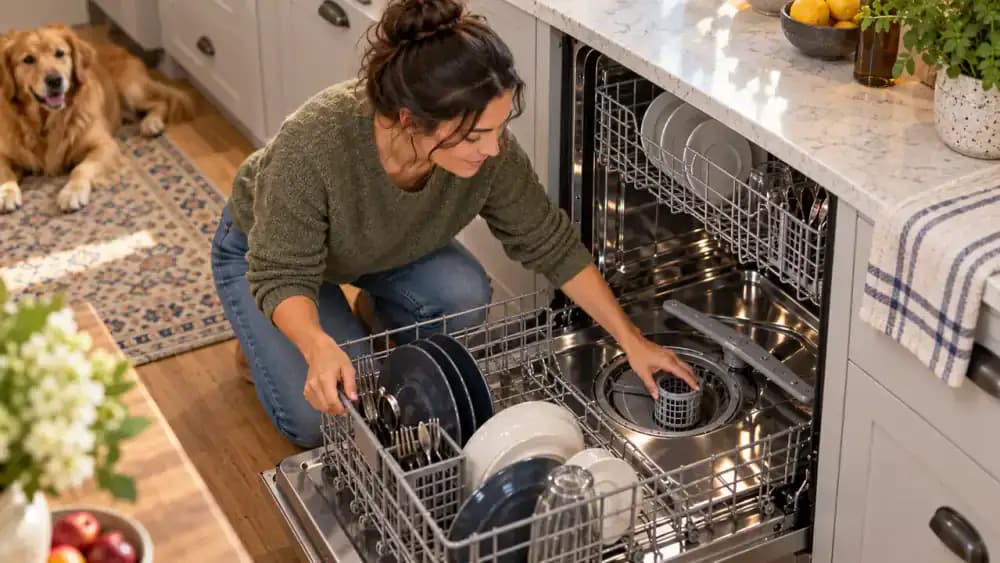
Slide the lower rack completely out of the dishwasher and place it somewhere stable beside the machine. With the bottom of the tub exposed, locate the filter assembly and look closely at how it is positioned. Note any arrows, tabs, handles, or locking marks before touching it. Taking a quick photo with your phone can also help you reinstall the filter in the correct orientation after cleaning.
Unlock the Filter Assembly
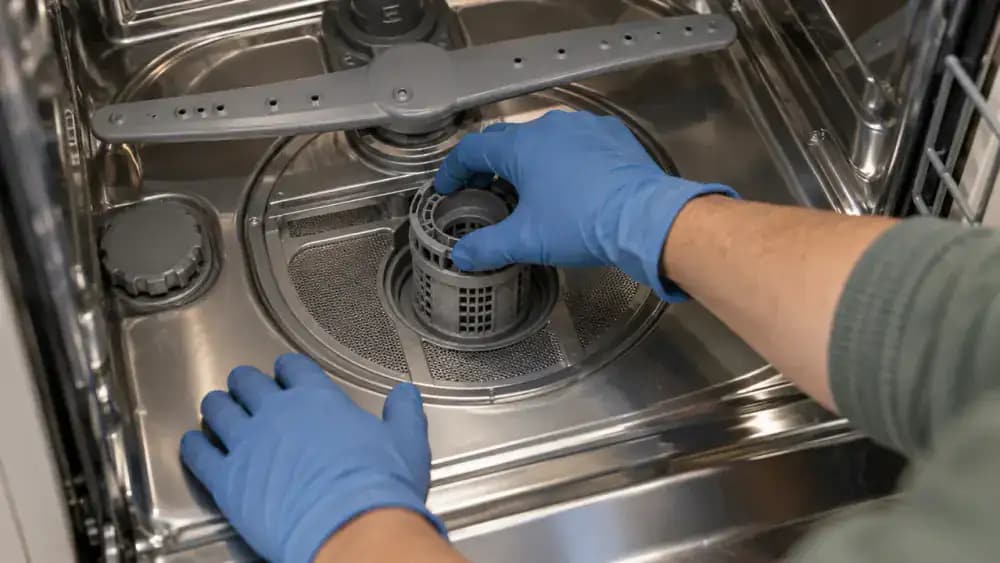
Grip the dishwasher filter by its handle or raised center and rotate it gently in the direction shown by the unlock marking. Many cylindrical filters turn counterclockwise before lifting free, but follow the symbols on your specific model. Stop if the filter does not release with light pressure, since some dishwashers use tabs, clips, or another locking design. Keep your other hand clear of the sump while loosening the filter.
Lift the Filter Out Slowly
Once the filter is unlocked, lift it straight upward while keeping it as level as possible. Support the bottom with your other hand so trapped food particles stay inside instead of falling into the sump or drain opening. If debris starts to loosen, pause and steady the filter before continuing toward the sink. Do not shake, tilt, or flip it inside the dishwasher, since that can scatter residue into harder-to-reach areas.
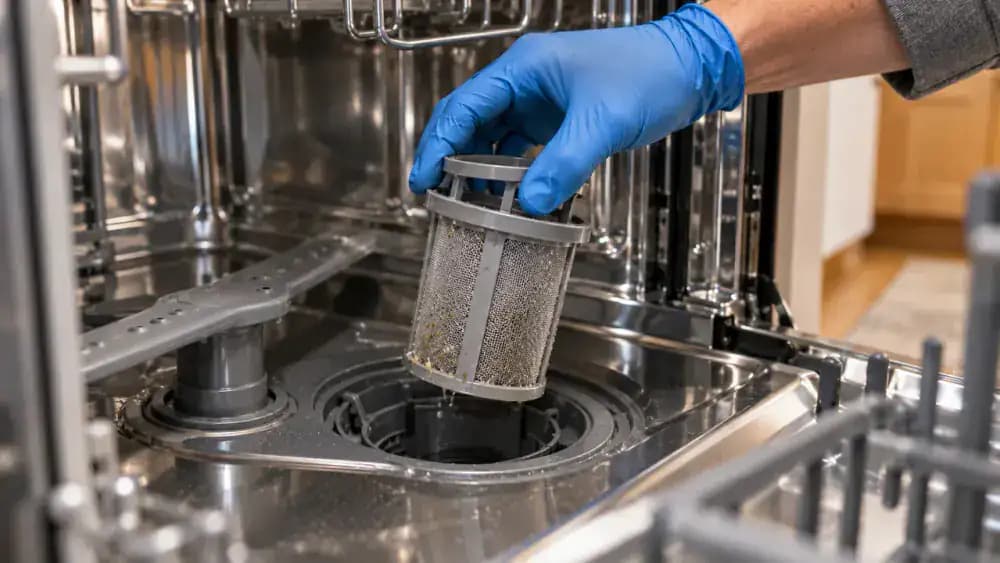
Remove the Visible Food Debris
Hold the removed dishwasher filter over a lined trash can or sink and gently lift away loose food scraps with a folded paper towel or soft brush. Focus on the mesh and plastic frame where particles tend to collect. Avoid pushing debris farther into the openings or scrubbing aggressively. Removing the larger pieces first keeps them out of the drain and makes the next washing step faster, cleaner, and more effective.
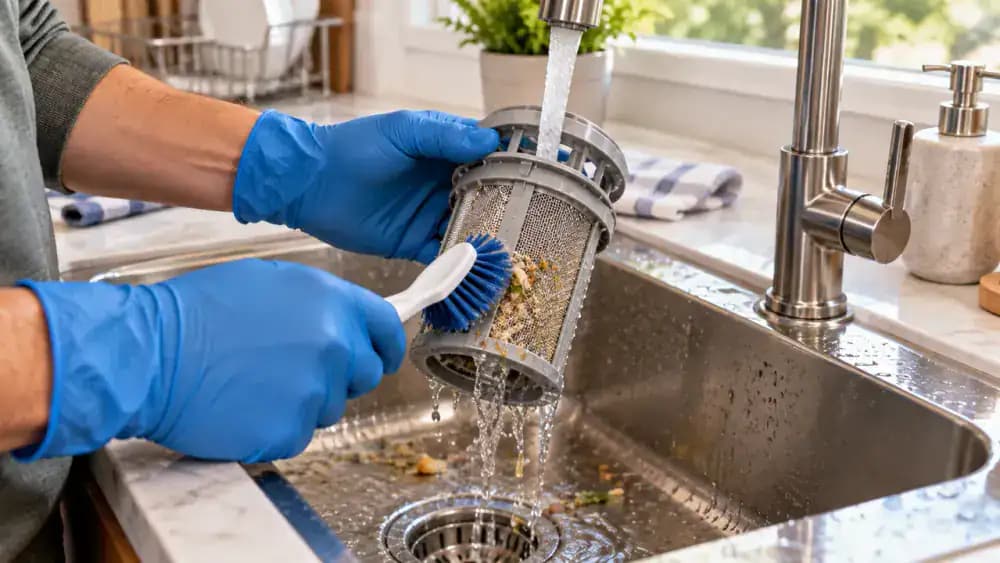
Rinse the Filter With Warm Water
Hold the dishwasher filter under a steady stream of warm running water and rotate it slowly so the water passes through the mesh from several angles. Rinse both sides, letting loosened crumbs and fine particles wash into the drain instead of forcing them deeper into the filter. Keep the water comfortably warm, not scalding. If you still see greasy film clinging to the mesh after rinsing, set the filter aside for a gentle scrub.
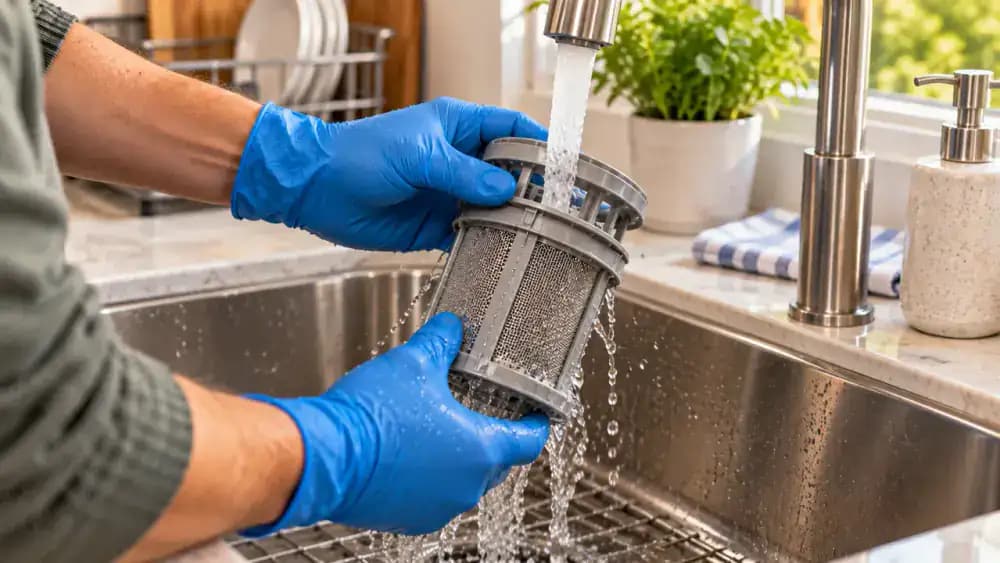
Gently Scrub Greasy Residue
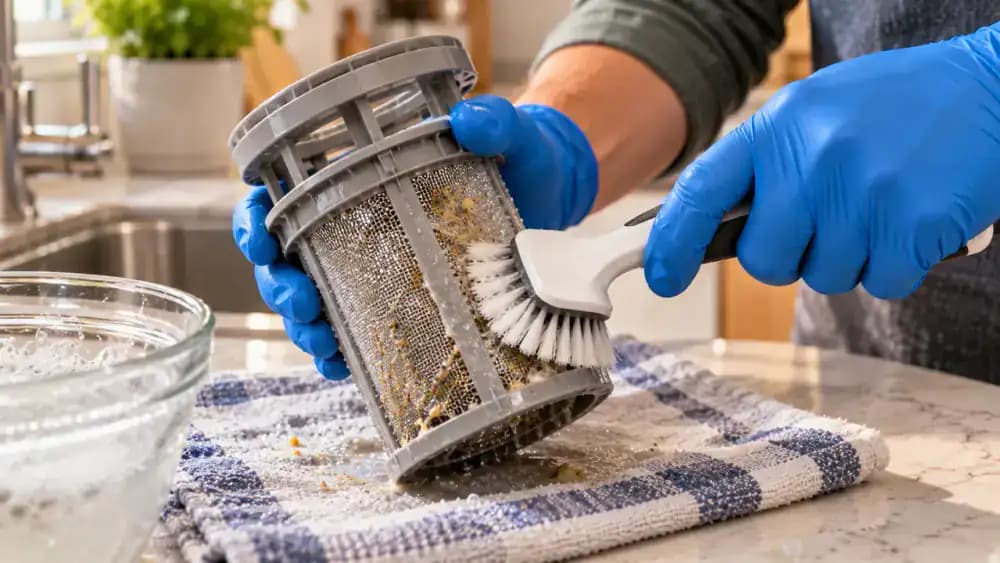
Lay the damp filter flat on a clean towel and add just one small drop of dish soap to any greasy areas. Use a soft nylon brush to scrub lightly across the mesh and plastic frame, then turn the filter over and repeat on the other side. Keep pressure gentle so the screen stays flat and intact. For stubborn film, let the soap sit for about a minute before brushing again.
Wipe the Sump Lip
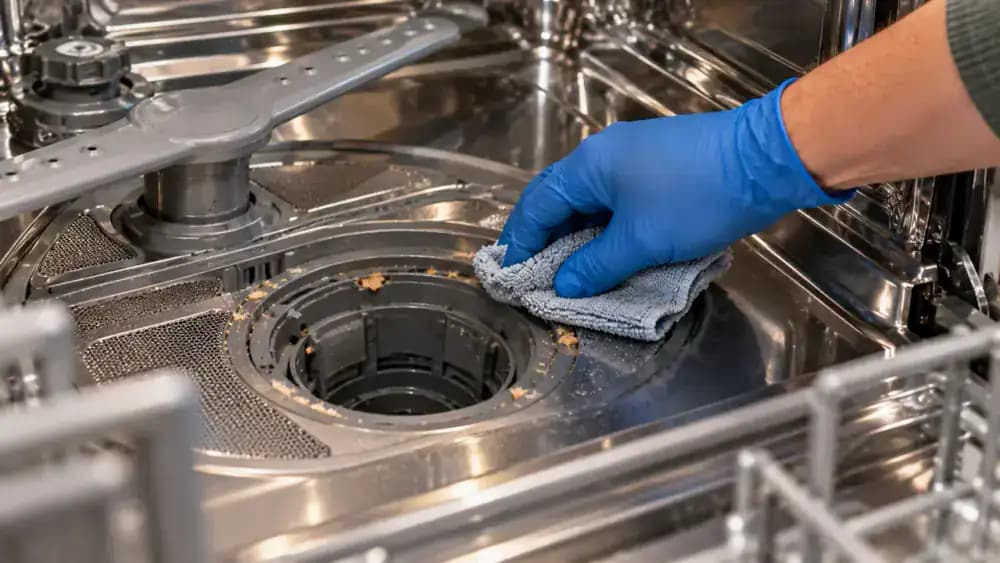
Use a damp microfiber cloth to wipe around the circular sump lip and the stainless steel surface surrounding it. Lift out crumbs, grease, and residue instead of brushing them toward the drain opening. Work slowly around the edge so loosened debris stays on the cloth. Rinse and wring the cloth as needed, then make one final pass to leave the area clean before reinstalling the filter.
Check the Spray Arm Holes
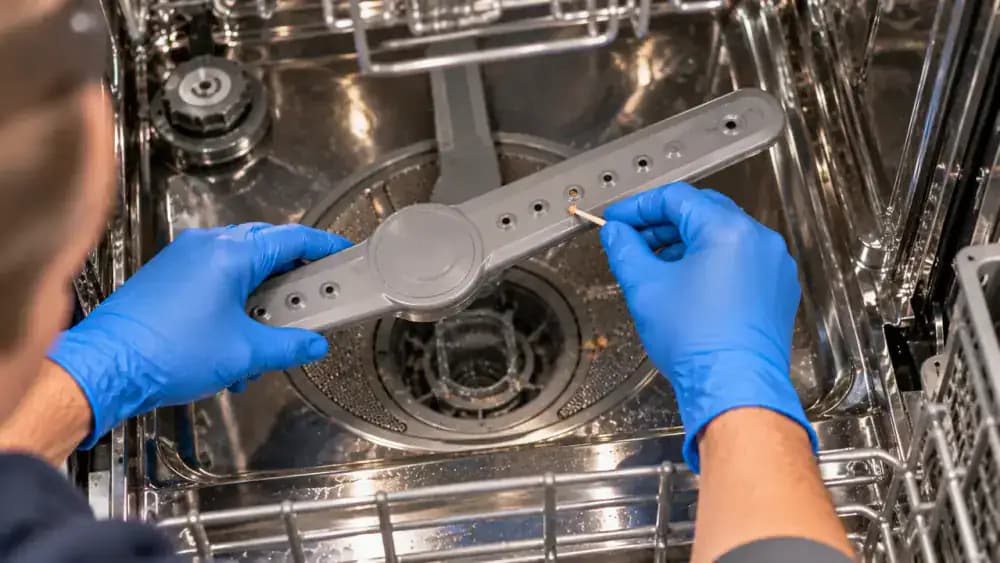
Inspect each opening in the lower spray arm for visible food particles or mineral buildup before reassembly. Steady the arm with one hand, wipe the surface with a damp cloth, and use a soft plastic pick only to lift loose debris near the holes. Do not push tools deep inside the openings. Keeping the holes clear helps the spray arm distribute water evenly across the dishwasher during the next wash cycle.
Wipe the Door Edges and Gasket
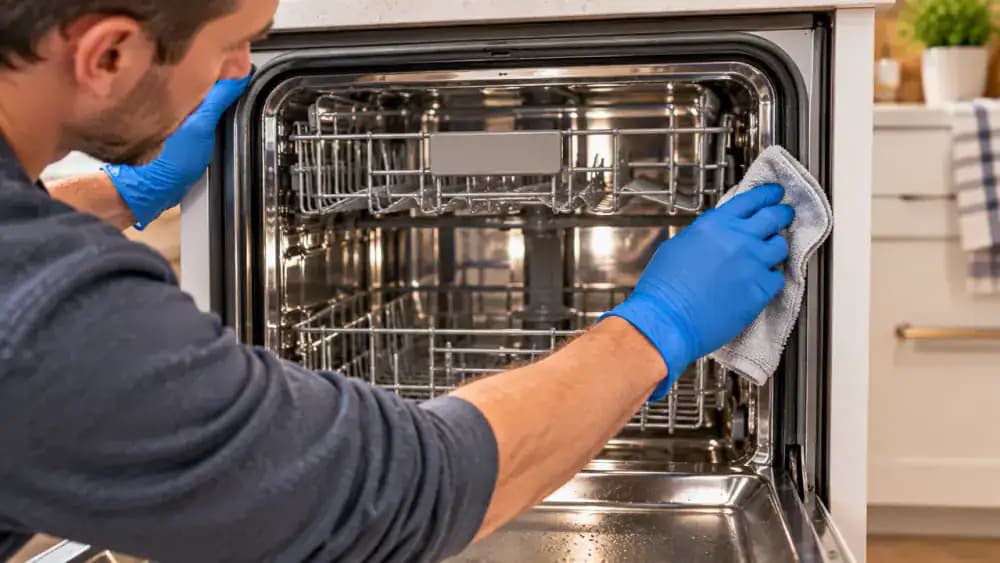
Use a damp microfiber cloth to wipe the lower inner door edge, rubber gasket, and corner seams while the dishwasher is still open. Work gently so the gasket stays seated and does not stretch or pull away from its channel. Remove detergent film, crumbs, and other visible residue before reinstalling the filter and lower rack. Rinse and wring out the cloth as needed so you are not spreading loosened grime around.
Reinstall and Lock the Filter
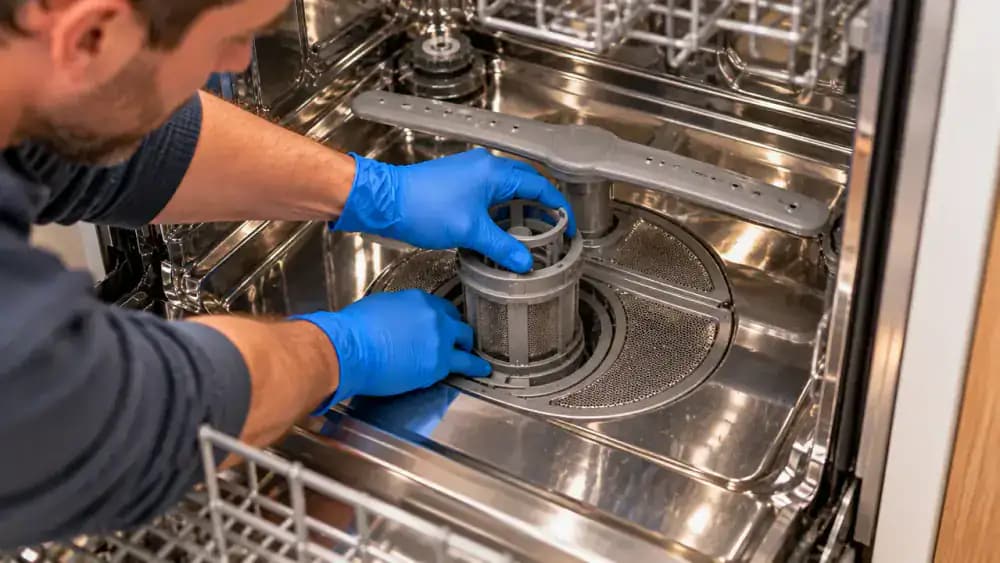
Lower the cleaned filter back into the opening at the bottom of the dishwasher, matching the alignment marks so it sits in the correct position. Rotate the locking handle in the manufacturer-specified direction until the filter feels firmly secured. Before closing the dishwasher, give the filter a gentle upward tug and a slight side-to-side check. It should stay seated without lifting, shifting, or wobbling, which helps prevent debris from bypassing the filter during future wash cycles.
Run a Verification Cycle
Restore power if you disconnected the dishwasher, slide the lower rack fully into place, close the door, and start an empty rinse or cleaning cycle. Stay nearby during the first few minutes to listen for grinding or other unusual sounds and check the floor around the base for leaks. When the cycle finishes, open the door and confirm the stale odor has cleared before returning dishes to the machine.
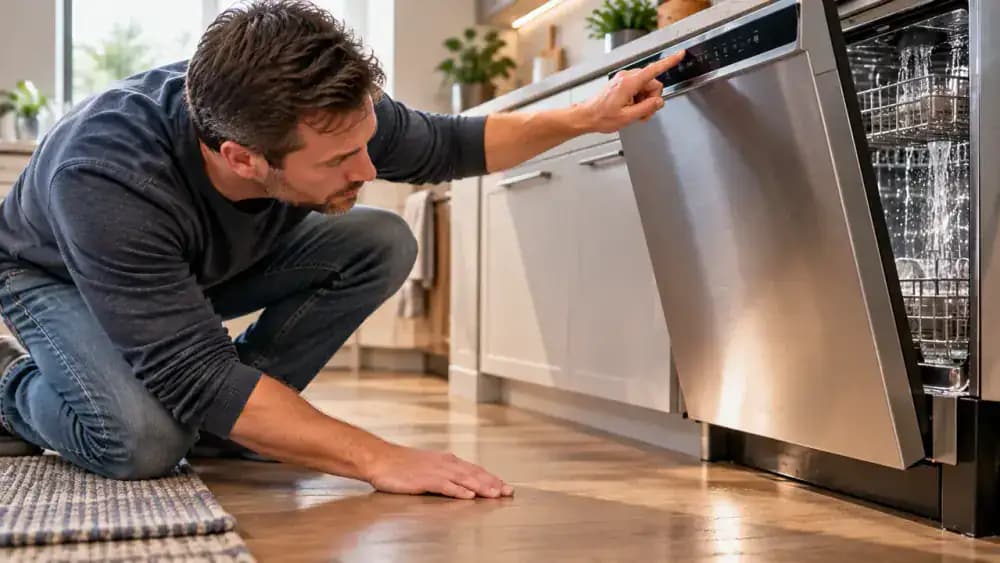
Make Filter Checks Routine
Keep dishwasher filter checks on a simple maintenance schedule so food residue never has time to harden or create odors. Every few weeks, pull out the lower rack and look closely at the secured filter surface for crumbs, grease, or visible buildup. Clean it again whenever debris starts collecting, using the same gentle method as before. Adding a recurring calendar reminder can make this quick inspection easy to remember.
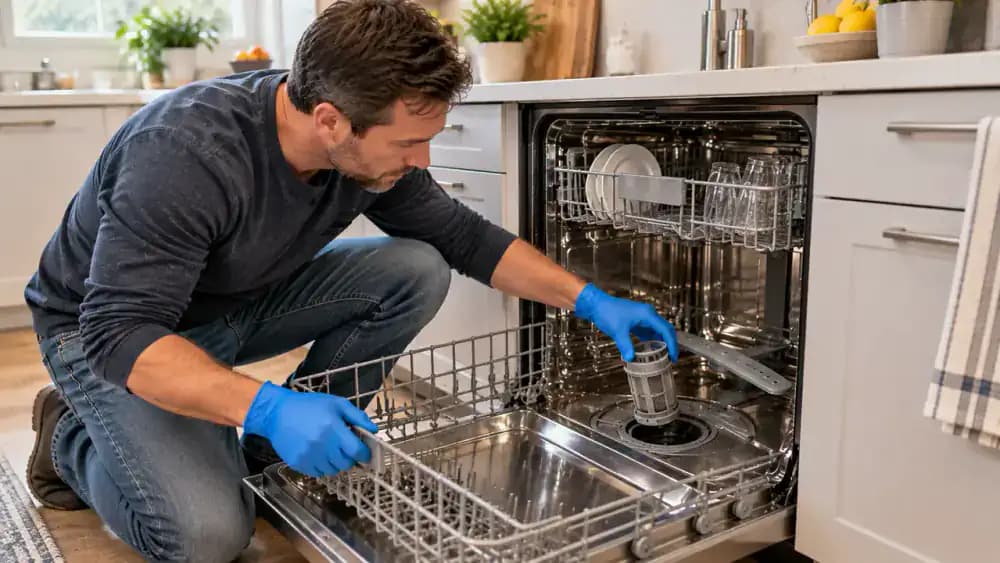
Check Sooner With Heavy Use
For dishwashers running several loads a day, inspect the filter as soon as grit, residue, or odor begins returning. Pull the lower rack partway out and shine a small flashlight across the installed mesh before removing it. Look for fresh food particles collecting on the surface. Catching that buildup early makes cleaning easier and helps prevent cloudy dishes, standing debris, and recurring smells between deeper maintenance sessions.
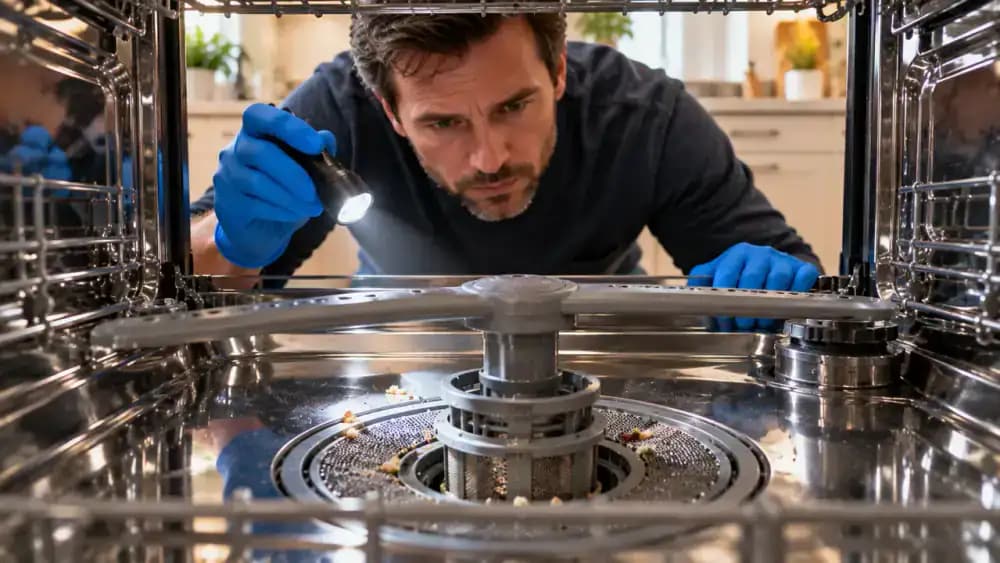
Match Cleaning to the Buildup
Inspect the dishwasher filter closely before deciding how much cleaning it needs. If the mesh has only a light film, rinse it thoroughly under warm running water and reinstall it once clean. For heavier grease or trapped food, add a small amount of dish soap and gently work the debris loose with a soft nylon brush. Using the least aggressive method needed helps protect the filter mesh and keeps routine maintenance faster.
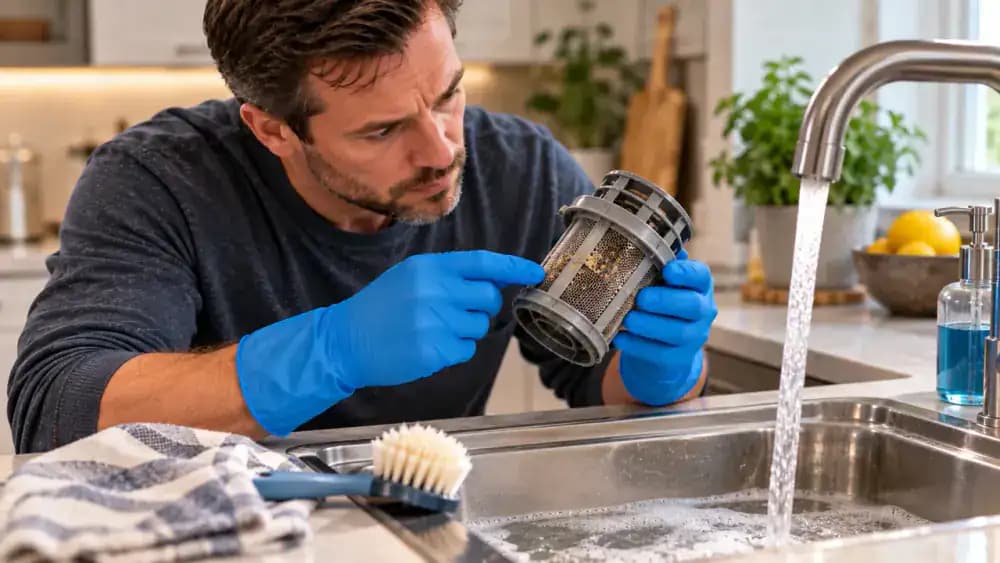
Check the Sump for Lingering Odor
With the clean filter set aside, lean near the open dishwasher and check the sump area for any sour or stale smell. If odor remains, use a damp microfiber cloth to wipe the narrow ring of residue you can safely reach around the filter seat. Work gently so loosened debris does not fall into the drain opening. Keep fingers, cloth corners, and tools out of the drain itself.
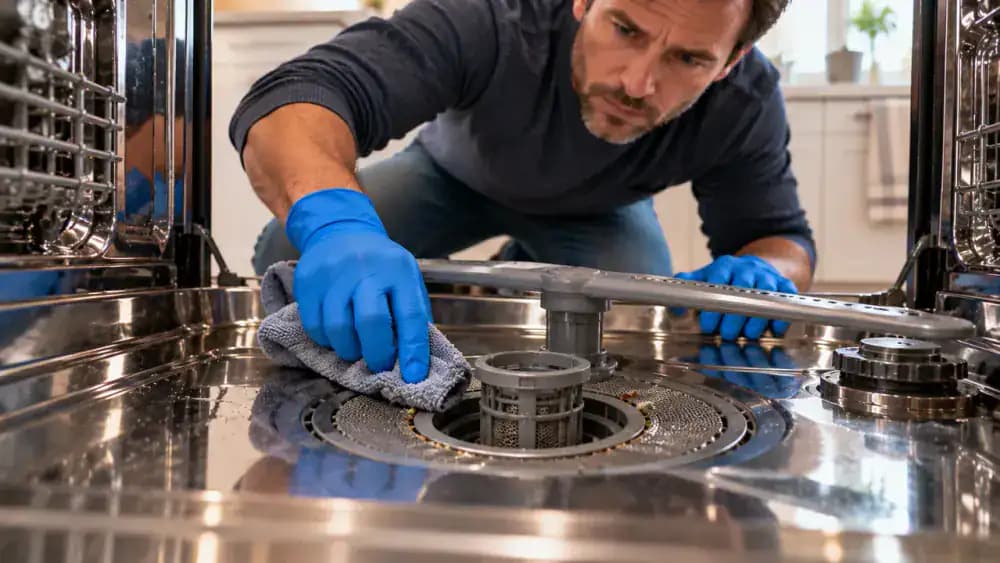
Recheck the Filter Seat Before Reinstalling
Inspect the empty filter recess carefully before putting the filter back in place. Use a small soft brush to sweep crumbs or loose debris away from the locking tabs and onto a damp cloth, then wipe the circular sealing surface clean. Keep debris out of the central drain opening. Run a fingertip around the seat afterward to check for anything gritty, since even a small fragment can prevent the filter from locking evenly.
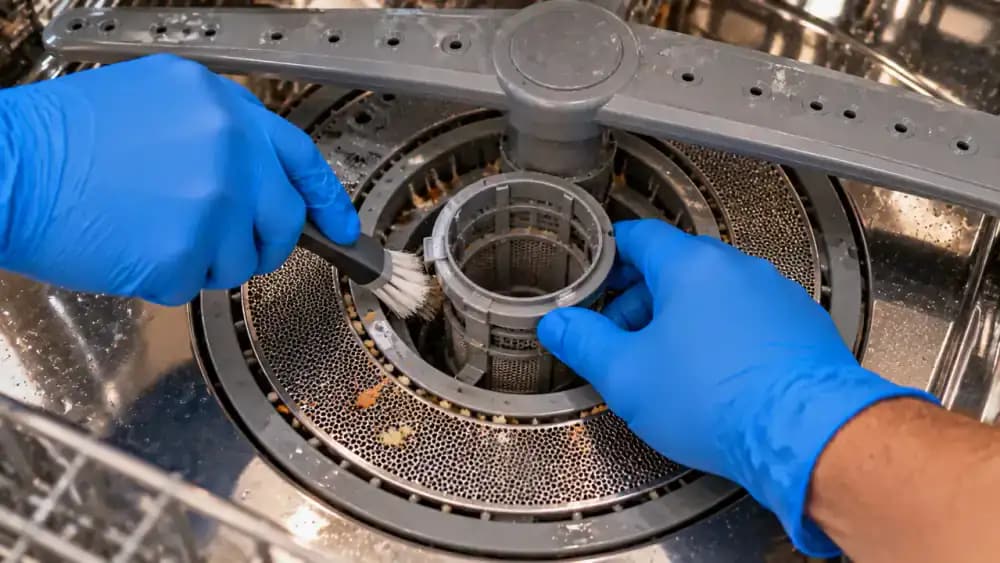
Reinstall and Lock the Filter
Lower the clean filter straight into its opening using the same orientation it had before removal. Line up the molded tabs, arrows, or locking marks, then rotate or secure the handle exactly as required. Gently press around the rim to make sure the filter sits flat without rocking. Before closing the dishwasher, double-check that the filter is fully locked so it cannot shift when water begins circulating.
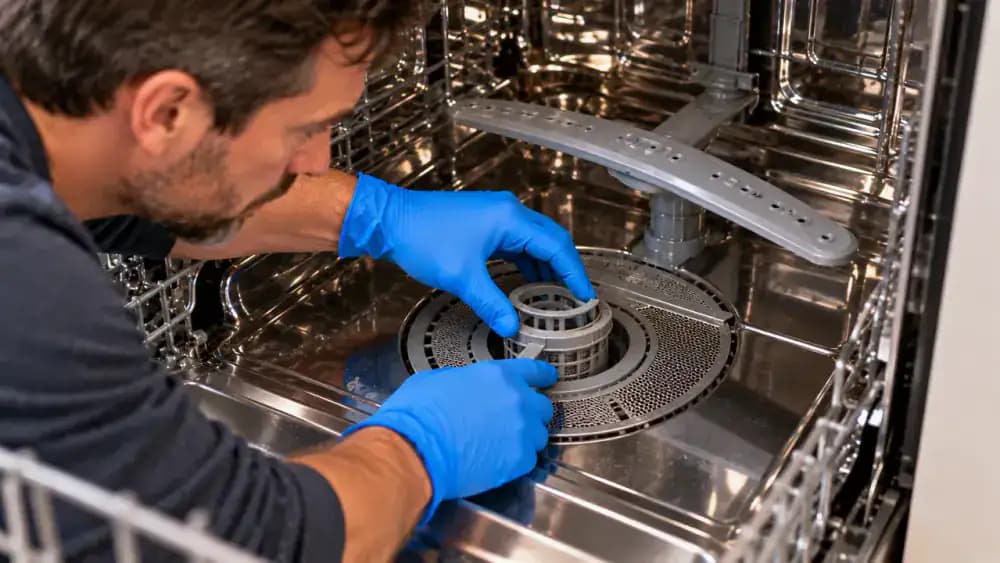
Return the Rack and Restore Power
Slide the lower rack back onto both rails and push it fully inward, checking that it moves smoothly without rubbing or catching near the filter. Look across the bottom of the tub and remove any tools, cloths, packaging, or loose debris you may have left behind. Close the dishwasher door securely, then restore power using the method specified in the owner manual before running the next cycle.
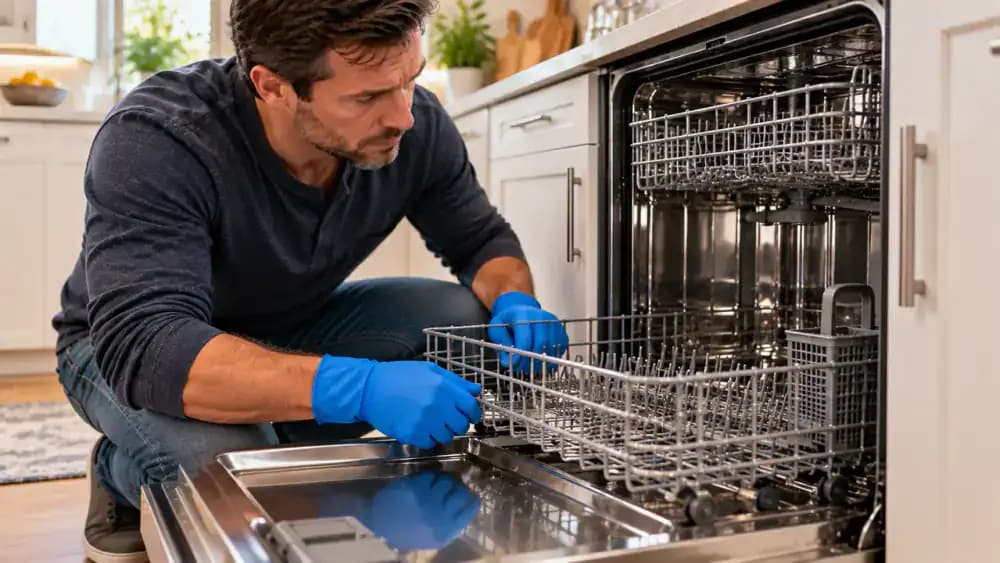
Run a Test Cycle and Check Results
Restore power, make sure the tub is clear, and start a normal rinse or cleaning cycle while staying close for the first few minutes. Listen for grinding, rattling, or other unusual noises, then slide a dry paper towel along the floor beneath the door to spot small leaks quickly. After the cycle finishes, open the dishwasher and check whether the odor has improved. If moisture appears underneath, stop using the machine until the leak is identified.

Know When to Clean the Filter Again
Pull the lower rack forward periodically and inspect the secured filter for fresh crumbs, grease, or other residue. Clean it when buildup becomes noticeable rather than following an unnecessary rigid schedule. If your household runs the dishwasher frequently or loads dishes with more food residue, check the filter more often. A small reusable maintenance card near the detergent can help you remember when you last inspected it and whether cleaning was needed.
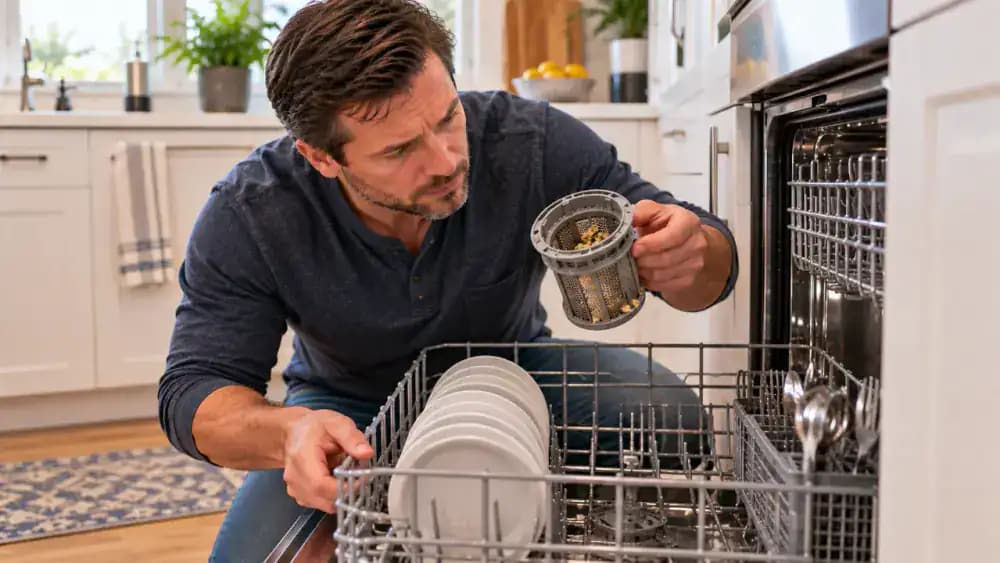
Clean Buildup Before Odors Return
Remove the dishwasher filter as soon as you notice fresh crumbs or light residue instead of waiting for a heavy layer to form. Brush loose debris into a lined trash bin, rinse the filter if needed, and check the surrounding recess for trapped food particles. Before closing the dishwasher, reinstall the filter in its correct position and turn or press it until it locks securely so water can circulate properly during the next cycle.
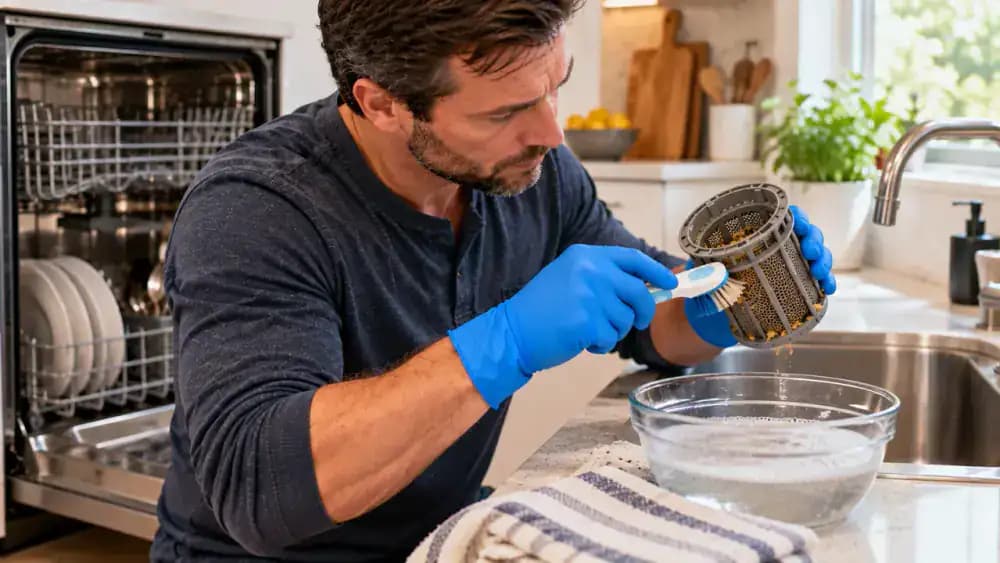
Make Filter Checks Routine
Add a recurring filter check to your kitchen routine so small buildup never becomes a bigger problem. Mark a reminder every few weeks, then remove the lower rack and inspect the secured filter for crumbs, grease, or gritty residue. If you regularly wash heavily soiled cookware, check it more often. Keeping the inspection simple and consistent helps you catch debris early, reduce odors, and avoid residue showing up on otherwise clean dishes.
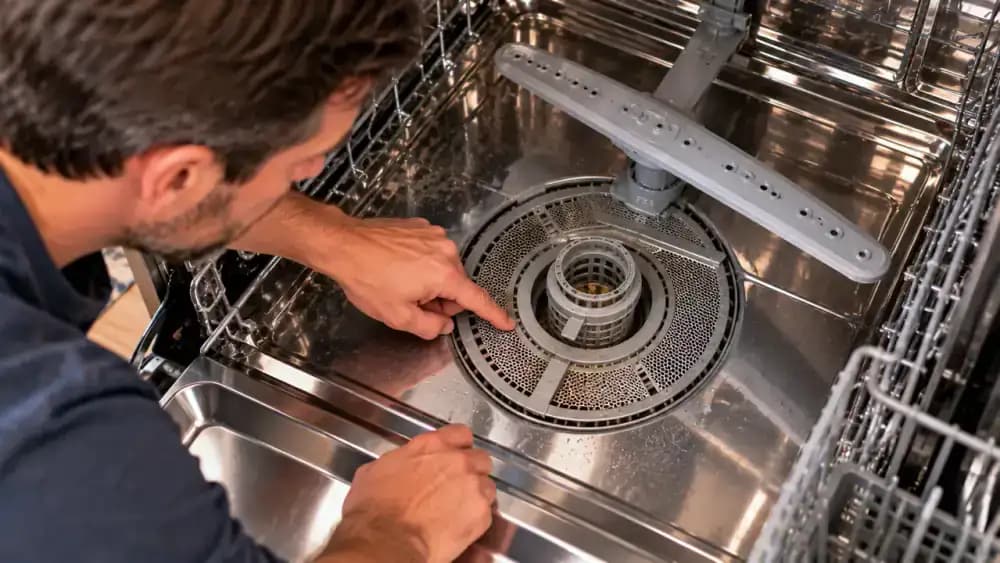
Clean Small Buildup Early
When you notice only a few crumbs or a light film, remove the dishwasher filter before the residue hardens. Hold it over the sink, rinse gently with warm water, and clear loose debris without scraping the filter surface. Return the clean filter to the dishwasher and twist it firmly into the locked position. A quick check every few loads can prevent small buildup from turning into a longer, messier cleaning job.
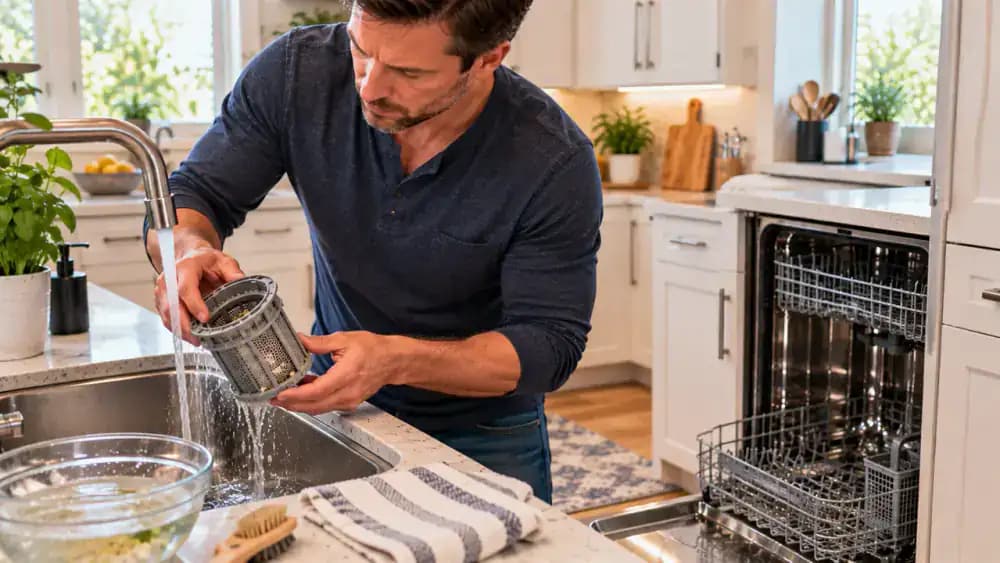
Make a Final Filter Check
Run a fingertip around the installed filter rim to confirm it sits evenly with no visible gaps. Check that the handle lines up with the locked position, then scan the dishwasher tub for any brushes, cloths, or loose debris left behind. Before restarting normal use, gently press the filter once to verify it does not lift or shift. A secure fit helps keep food particles from slipping past the filter during future cycles.
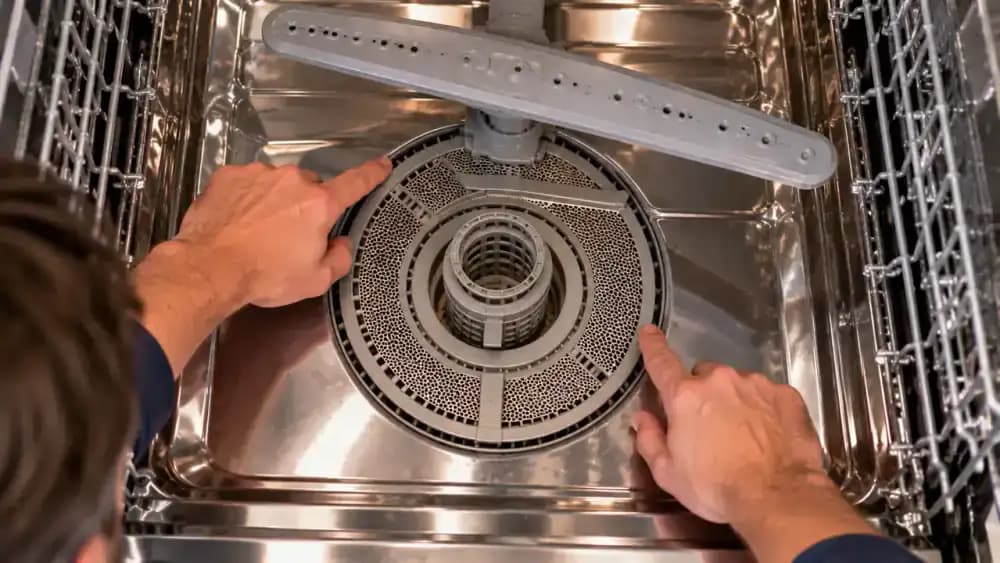
Check Spray Arm Clearance
Before reinstalling the lower rack, gently turn the lower spray arm by hand and make sure it completes a full rotation without touching the filter or catching anywhere inside the tub. Use only light fingertip pressure so you can feel resistance instead of forcing the arm past an obstruction. If it binds, stop and recheck the filter seating and nearby area. A clear rotation helps prevent rattling or scraping during the rinse cycle.
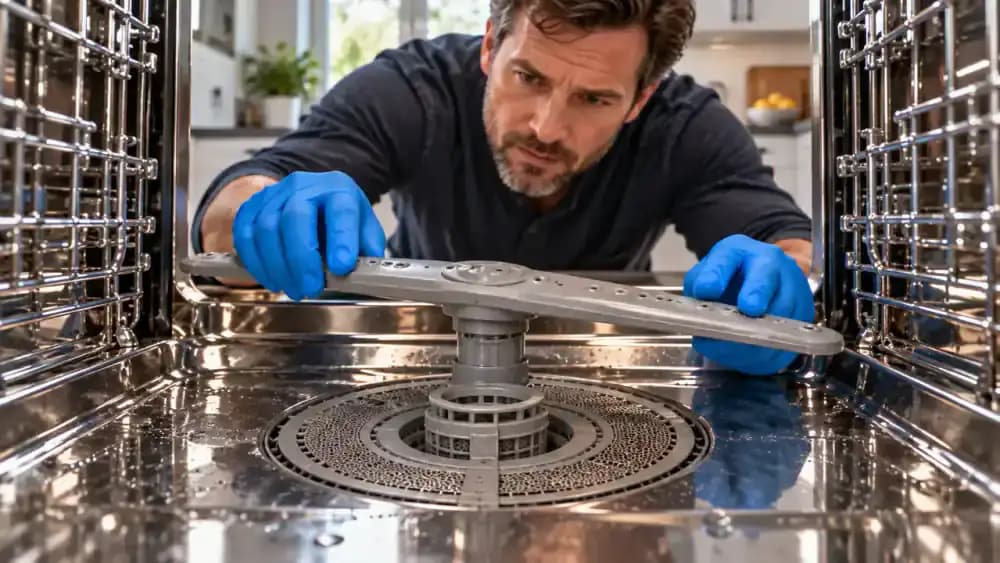
Return the Lower Rack
Guide the empty lower rack onto both rail tracks and slide it inward slowly while watching the space above the lower spray arm. Check that each wheel stays seated and that nothing can hang down far enough to block rotation. Before closing the door, confirm the filter is still locked in place and remove any cloths, brushes, utensils, or tools left in the tub. This leaves the dishwasher ready for a controlled rinse check.
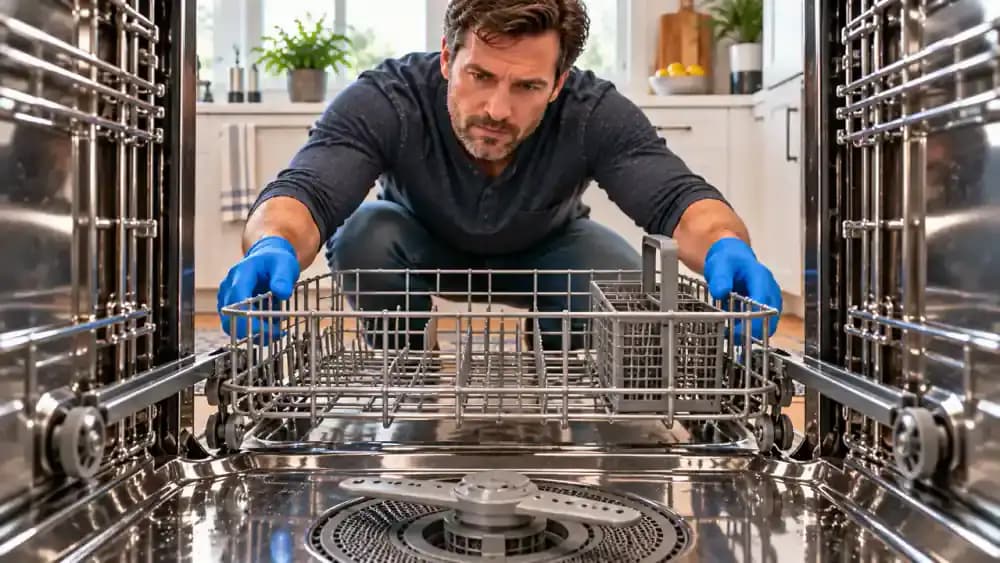
Run a Controlled Rinse Check
Close the empty dishwasher, restore power if you disconnected it, and start a rinse or cleaning cycle. Stay nearby during the first few minutes and listen for grinding, rattling, or other unusual sounds while checking the door seam and surrounding floor for leaks. If everything operates normally, let the cycle finish. Open the door afterward and check for any lingering odor before returning the dishwasher to regular use.

Finish With a Final Filter Check
When the cycle ends, pull the lower rack forward and press lightly around the filter rim to confirm it is still locked flat in place. Check the surrounding tub for fresh food debris, standing moisture, or signs of leaking before closing the dishwasher. If everything looks clean, smells normal, and runs without unusual noise, leave the filter installed. Recheck it whenever visible buildup begins to collect so performance stays consistent.
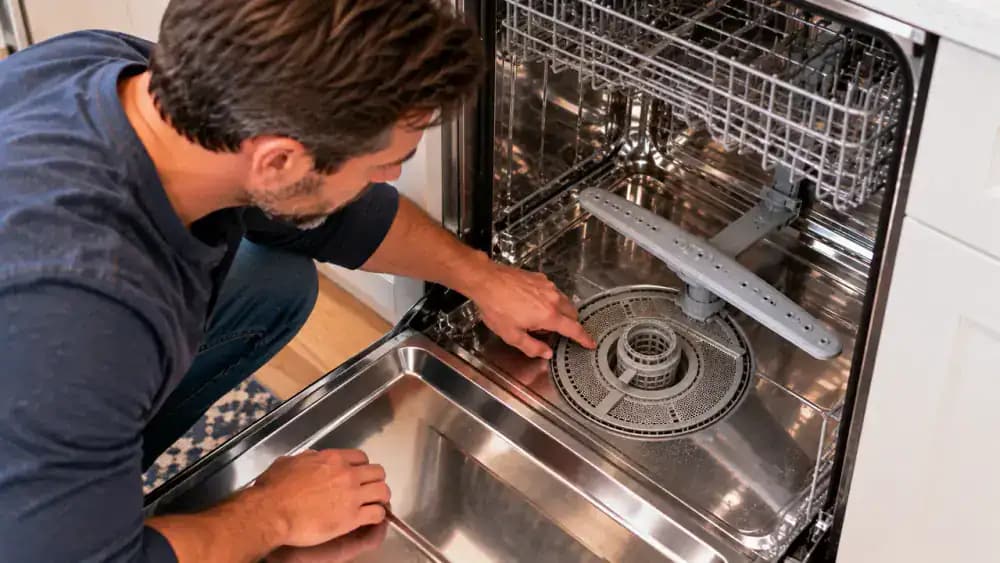
A dishwasher that smells sour or leaves gritty residue on otherwise clean dishes may not need a repair at all. One of the most common causes is a filter packed with trapped food, grease, and detergent residue. Cleaning it is usually a simple maintenance job, but the filter sits low in the machine where broken glass or sharp debris can collect, so a careful approach matters. Check your owner's manual first, especially for filter access instructions and any requirement to disconnect power before reaching into the bottom of the dishwasher.
Once the lower rack is out, you can inspect the filter assembly, remove it without dropping debris deeper into the drain, and clean both the filter and the surrounding sump area. Warm water, a soft nylon brush, and a small amount of dish soap are usually enough for greasy buildup. After cleaning, reinstall the filter in the same orientation and lock it securely. Never run the dishwasher without the filter correctly installed.
Where people go wrong
Pulling the Filter Out Without Checking for Sharp Debris. Reaching into the bottom of the dishwasher without looking first can expose your hands to broken glass or sharp food fragments. Wear gloves, inspect the sump area carefully, and remove any visible hazards before touching or lifting the filter assembly.
Scrubbing the Filter With Metal Tools or Too Much Force. Wire brushes, knives, and aggressive scrubbing can damage fine filter mesh and reduce its ability to trap debris. Rinse with warm water and use a soft nylon brush with a small amount of dish soap for greasy buildup.
Pushing Loose Food Debris Deeper Into the Drain. Lifting the filter quickly or wiping debris toward the drain opening can send food particles deeper into the sump. Remove the filter slowly, collect loose debris first, and wipe surrounding surfaces without forcing material into the drain.
Running the Dishwasher With the Filter Installed Incorrectly. A filter that is loose, reversed, or not fully locked can allow debris to circulate and may cause unusual noise or poor cleaning. Reinstall it in the original orientation, secure it firmly, and never operate the dishwasher without the filter properly locked.
Questions people ask
Inspect the filter regularly and clean it whenever you see food particles, grease, or other debris collecting on it. If your dishwasher starts smelling bad or leaves grit on otherwise clean dishes, check the filter sooner. Regular cleaning helps keep water flowing properly and prevents old food from creating odors.
Fixed it?
Get one guide like this every Thursday.