How to Clean Cutting Board Stains and Odors Safely
Remove stubborn food odors and stains from wood, bamboo, and plastic cutting boards without damaging the surface or creating food-safety risks.

What you’ll need
Tap to tick things off before you start.
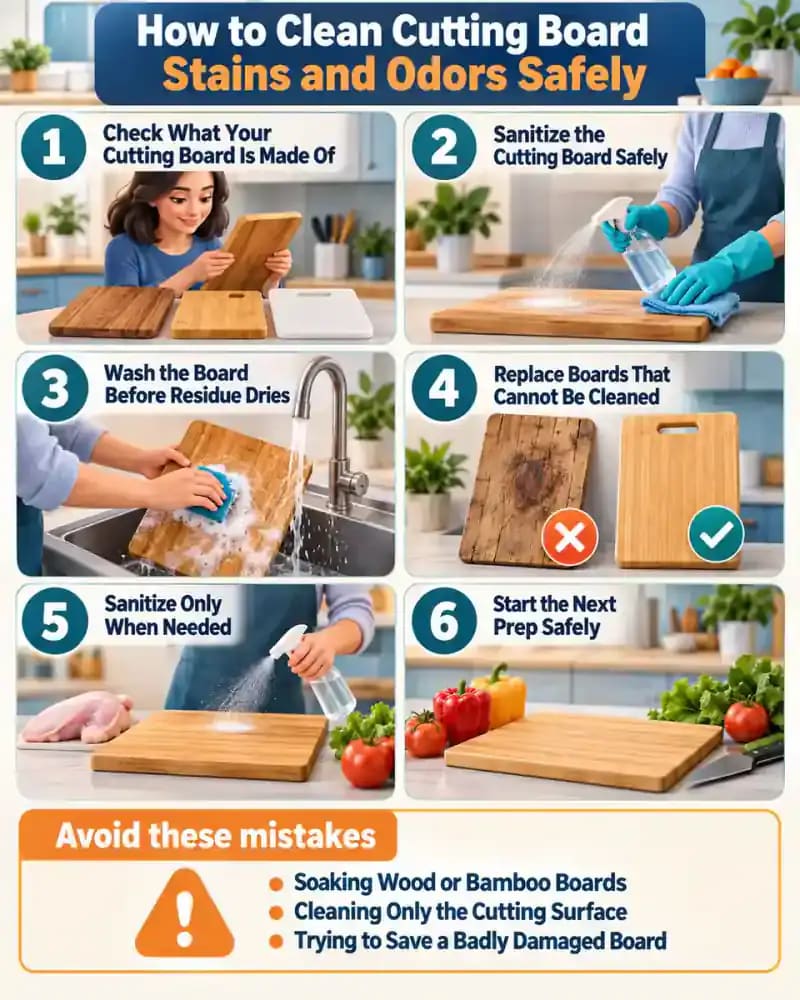
Check What Your Cutting Board Is Made Of
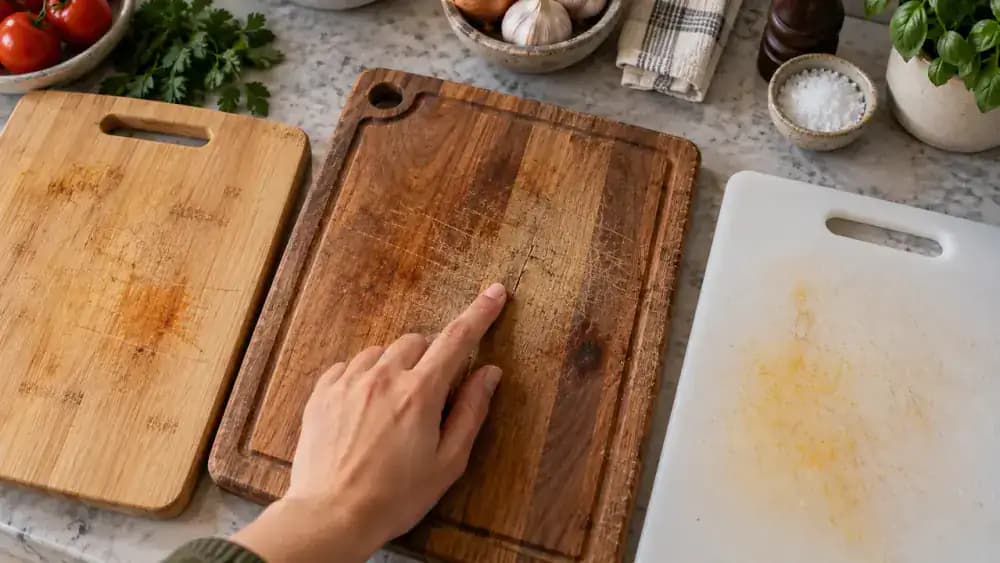
Place your wood, bamboo, and plastic cutting boards side by side and inspect each surface closely. Run your fingers over knife grooves, stained areas, and spots where food odors may linger. Identifying the material first matters because each type tolerates moisture and scrubbing differently. Wood and bamboo can swell or warp if soaked, while plastic usually handles more water. Check for deep cuts too, since badly damaged boards may need replacement.
Set Up Safely Before Washing
Wash your hands first, then scrape leftover food into the trash instead of rinsing scraps into the sink. Keep cutting boards used for raw meat physically separate from boards used for bread, produce, or other ready-to-eat foods to reduce cross-contamination. Place soap and other cleaners nearby but apart from the boards, and never combine household cleaning products. A dedicated sink-side area for raw-food boards can make this separation easier to maintain.

Wash Both Sides Promptly
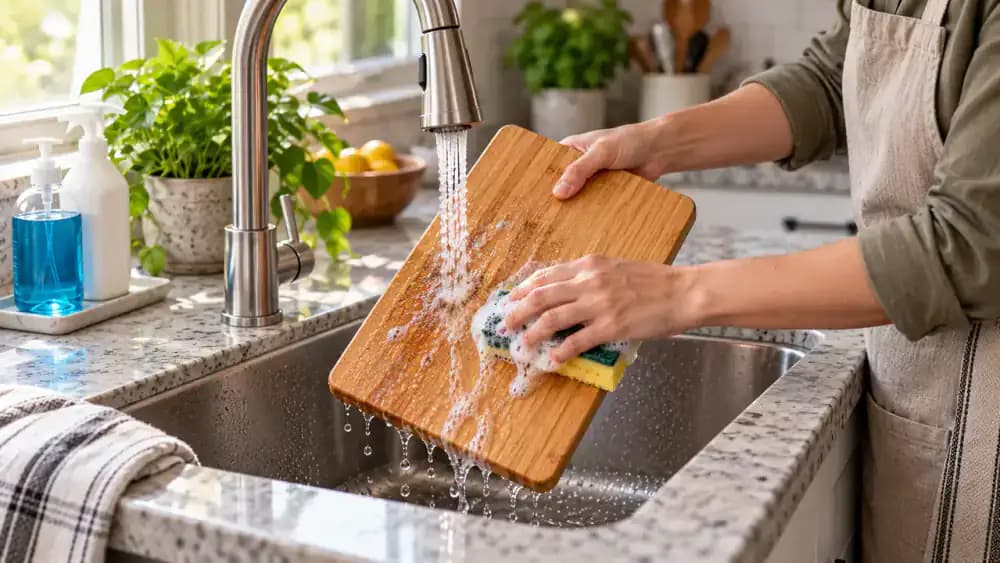
Hold the board upright over the sink and scrub the cutting surface with warm water, dish soap, and a clean brush or sponge. Turn it over to wash the back, then run the brush along each narrow edge before rinsing. Cleaning all sides helps keep moisture exposure more balanced. Rinse plastic thoroughly, but keep rinsing brief for wood or bamboo and never leave either material soaking in the sink.
Treat Lingering Odors With Baking Soda
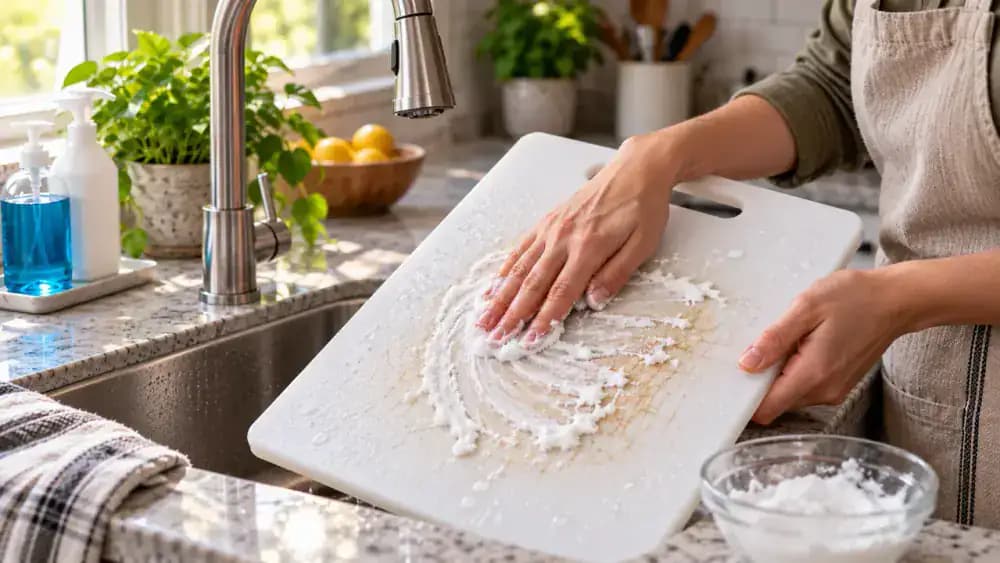
Sprinkle a light, even layer of baking soda over the damp cutting board, then add just enough water to form a thin paste. Gently work it across the surface with a clean sponge or soft brush, paying extra attention to shallow knife marks where odors can cling. Rinse the board under running water when finished. For better control, add water a few drops at a time, and never combine baking soda with other cleaning chemicals.
Treat the Remaining Stain Gently
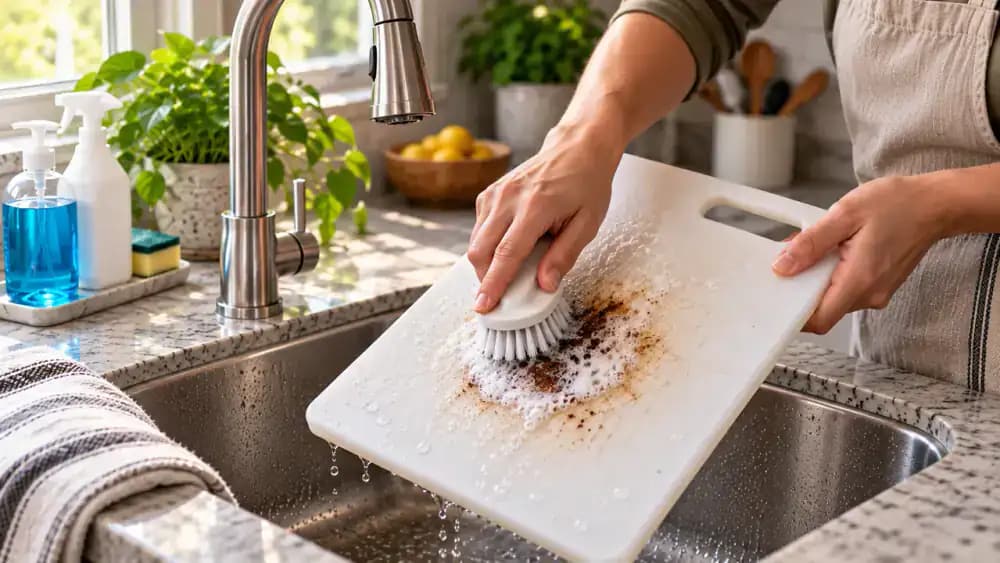
Apply a small drop of dish soap directly to the discolored area, then scrub only that spot with a nonabrasive nylon brush using gentle circular motions. Follow the cutting board manufacturer's cleaning guidance and avoid steel wool or hard scraping, which can create deeper grooves. Rinse the board thoroughly and inspect it under bright light. If discoloration remains inside deep knife cuts, the issue may be surface damage rather than removable residue.
Sanitize the Cutting Board Safely
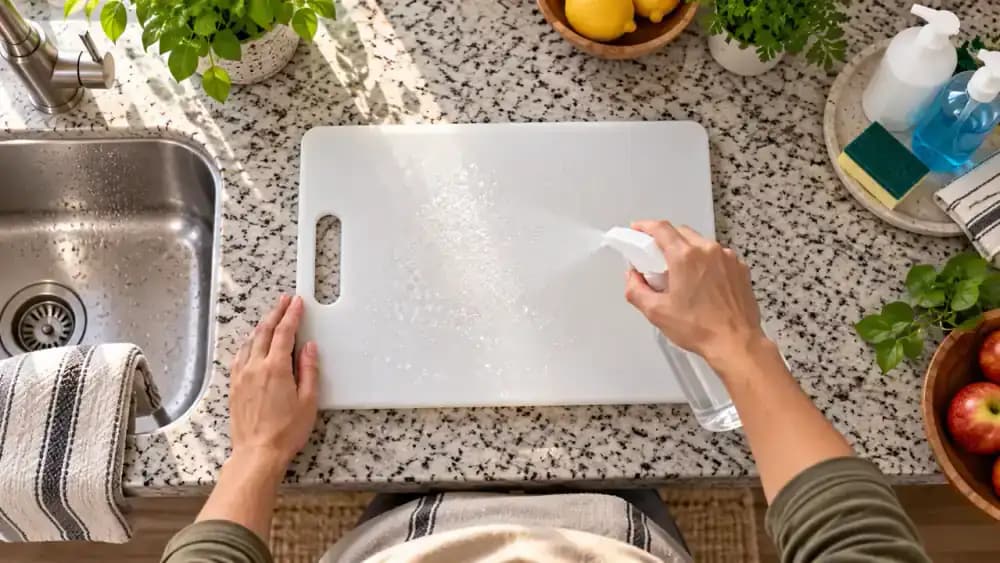
If the cutting board touched raw meat, poultry, or fish, read both the board care guide and sanitizer label before treating the surface. Apply one approved sanitizer evenly, then set a kitchen timer for the full labeled contact time. Rinse afterward only if the directions require it. Keep bleach, sprays, soaps, and other cleaners well away from the board so different cleaning chemicals are never accidentally mixed.
Dry the Board Completely
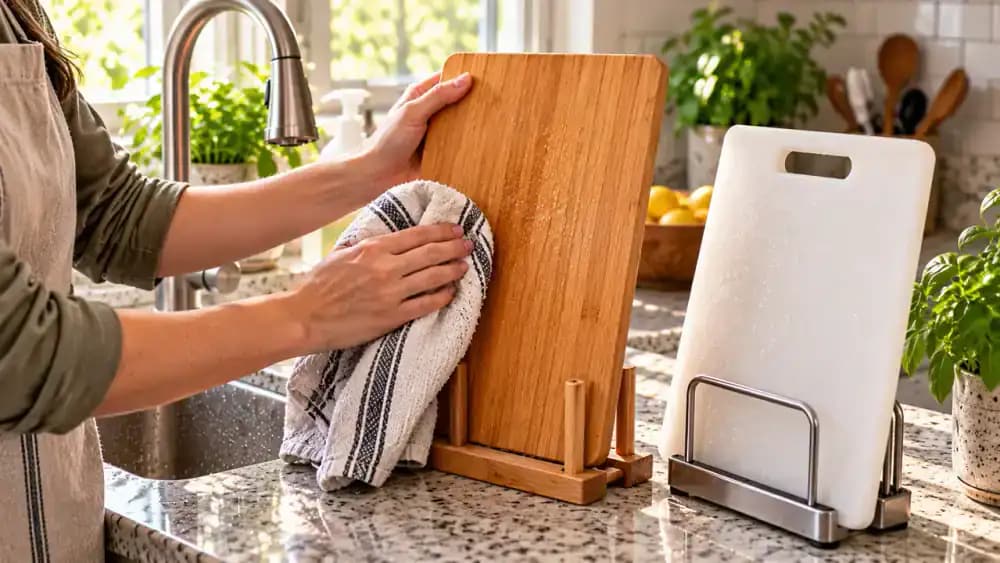
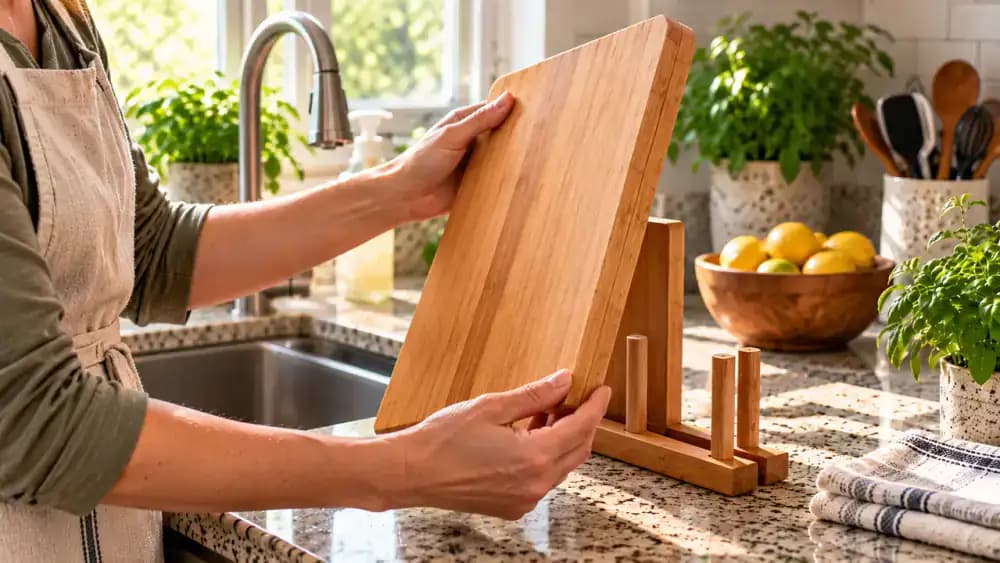
Wipe the wooden or bamboo board with a clean towel to remove visible moisture, then place it upright in a drying rack so air can circulate around both sides. Keep it off wet counters and never leave it sitting in pooled water. Let plastic cutting boards drain separately until completely dry before storing them. Good airflow helps prevent trapped moisture, odors, warping, and the damp conditions that encourage microbial growth.
Inspect for Damage Before Reuse
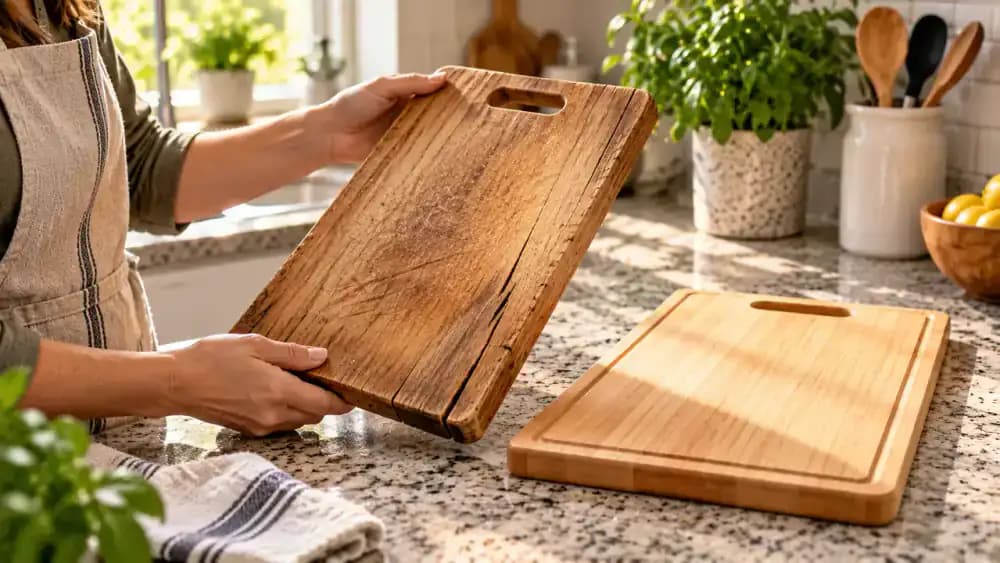
Once the board is completely dry, rotate it under bright light and run your fingertips across the surface and edges. Check for deep knife grooves, cracks, raised wood fibers, warping, or stains trapped below the surface. Damage that holds moisture or debris can make cleaning unreliable. If you find those problems, replace the board rather than sanding it heavily, which can create an uneven surface that is harder to sanitize.
Store the Board Upright and Dry
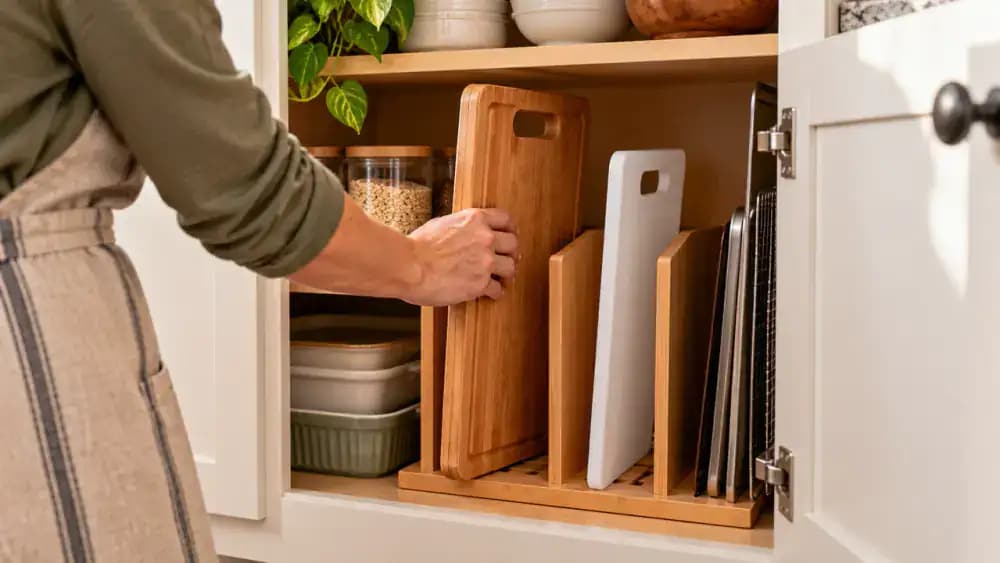
Place the clean cutting board upright or on its edge so air can circulate around both sides and any remaining moisture can escape. Keep wood and bamboo boards in a dry cabinet and never stack them while they are still damp. Store separate boards in their own slots when possible. Before using one again, confirm that it feels completely dry, has no unusual odor, and is still assigned to the correct food type.
Build a Safe Cleaning Routine
Clean your cutting board as soon as you finish using it, before food residue has time to dry onto the surface. Match the cleaning method to the board material, then dry it completely before storage. Keep wood and plastic boards with their appropriate supplies so the routine stays easy. Check each board for persistent odors, deep grooves, warping, or cracks, and replace damaged boards before your next food preparation task.
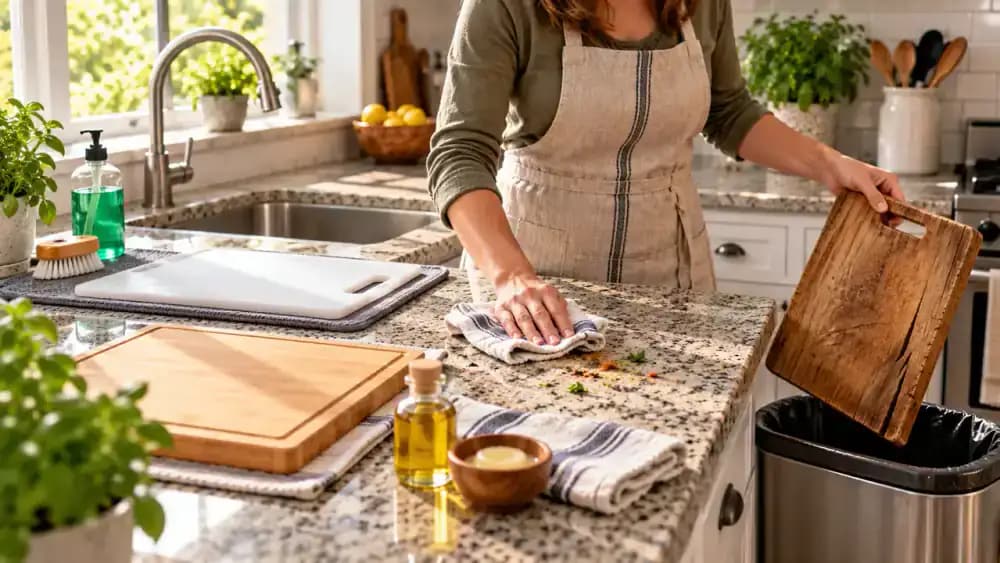
Inspect the Board Before You Start
Before preparing food, choose the cutting board assigned to that specific job and keep raw-meat boards separate from boards used for vegetables, fruit, or bread. Make sure the board is completely dry and sits flat without rocking. Run your fingertips across the surface to check for cracks, deep grooves, or rough damage. If the surface is badly worn, replace the board before using it again to reduce contamination risk.

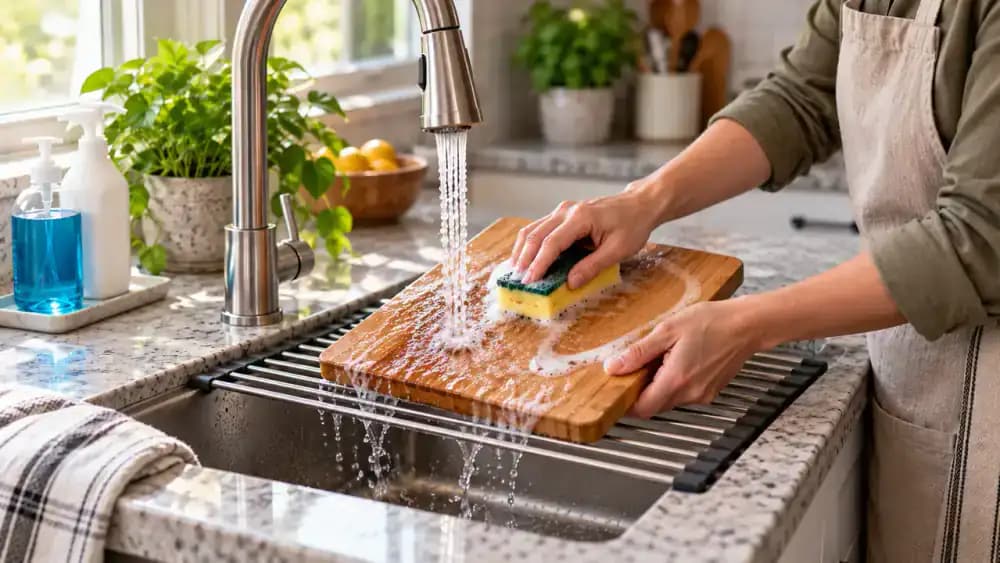
Wash the Board Before Residue Dries
Clean the cutting board soon after use so food juices and residue do not dry into the surface. Scrub the top with warm water, dish soap, and a clean sponge or brush, then flip the board and wash the reverse side and every edge. Rinse both faces thoroughly with warm water. For wood or bamboo boards, keep the board raised over the sink and avoid soaking or leaving it in standing water.
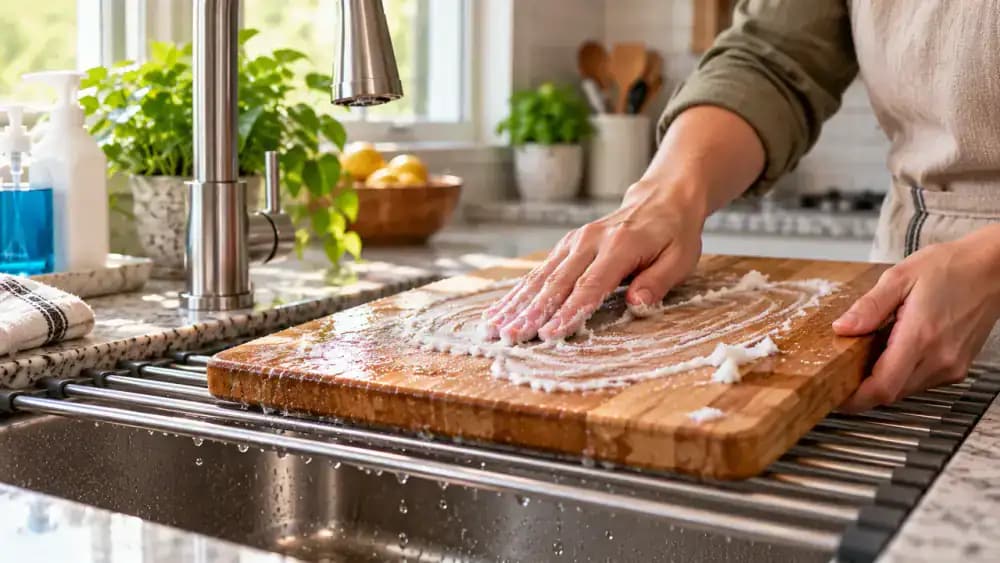
Treat Lingering Odors With Baking Soda
Sprinkle a light layer of baking soda over the damp cutting board, add just enough water to form a loose paste, and spread it gently with a soft dish brush using long strokes. Avoid pressing hard into knife grooves, where moisture and residue can collect. Rinse thoroughly afterward, but keep the rinse brief on wood or bamboo boards. Do not submerge them, since prolonged soaking can encourage warping, cracking, or splitting.
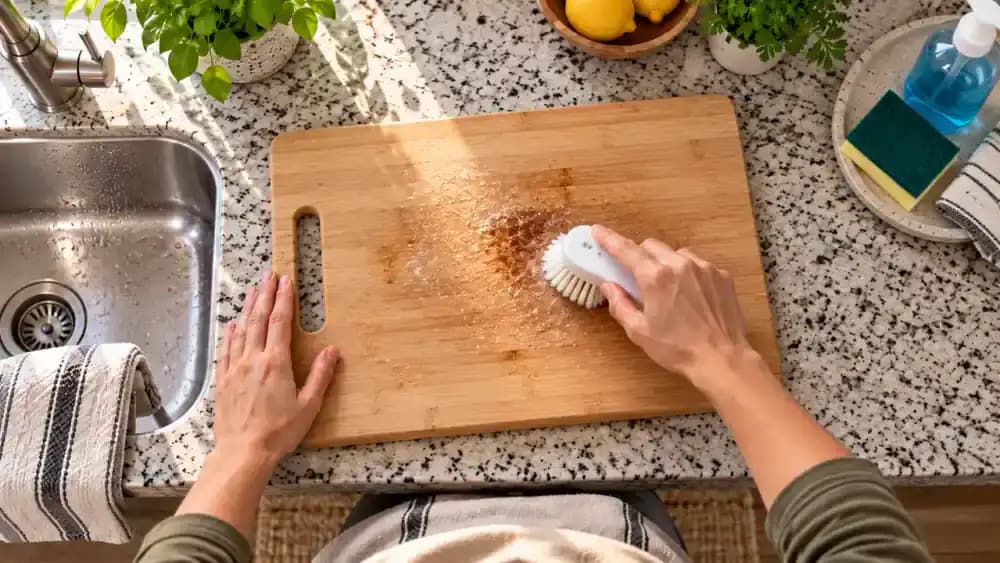
Treat Remaining Stains Gently
Apply a small amount of cleaner approved for bamboo only to the discolored patch, then work it in with a soft nylon brush or nonabrasive sponge using light, short strokes. Avoid steel wool, coarse pads, and hard scraping because scratches can hold food residue and moisture. Once the stain has lifted as much as possible, rinse the treated area thoroughly and wipe away any remaining cleaner before drying the board.
Sanitize the Board After Raw Meat
Check the board's care instructions before sanitizing, then use one food-safe sanitizer only if the material allows it. Spray the entire food-contact surface in overlapping passes so no area is missed, and keep the surface visibly wet for the full contact time listed on the product label. Set a phone timer to avoid guessing. Keep other cleaners stored away, never mix products, and rinse afterward only when the sanitizer directions specifically require it.
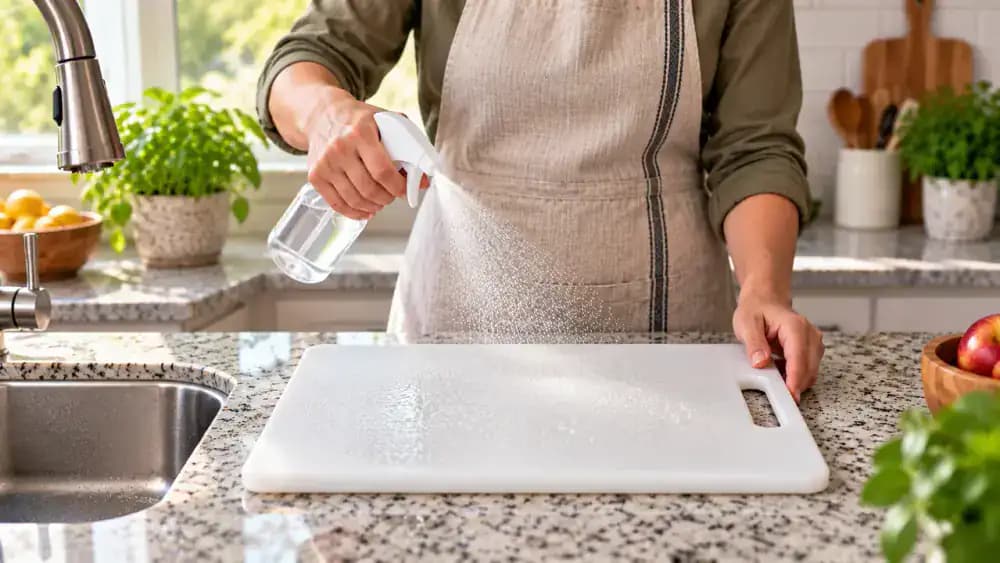
Dry the Board With Both Sides Exposed
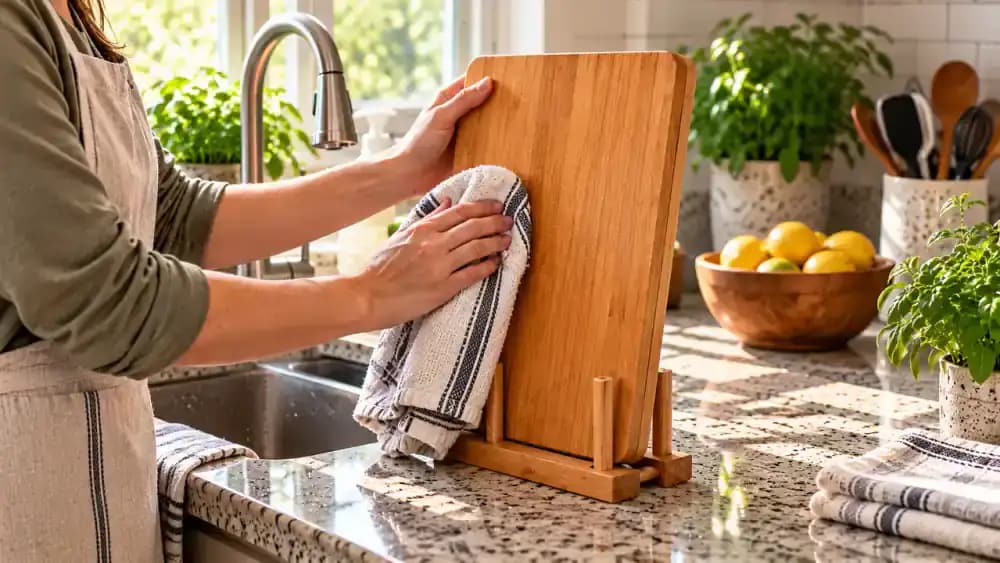
Pat the sanitized bamboo board dry with a clean towel, removing visible droplets from the surface and edges. Then stand it securely on its narrow edge so air can circulate freely around both broad faces. Keep the surrounding countertop dry and avoid placing the board near pooled water. Let it remain upright until completely dry before storing it, since putting away a damp board can trap moisture against the surface.
Check for Damage Before Reuse
Inspect the completely dry cutting board under strong side lighting so deep knife grooves, cracks, lifted edges, and warping are easier to spot. Run a fingertip beside damaged areas without pressing into sharp splinters, then press each corner to check whether the board rocks on a flat surface. Deeply scored plastic or split wood and bamboo can trap food residue. If damaged areas cannot be cleaned reliably, replace the board.
Replace Boards That Cannot Be Cleaned
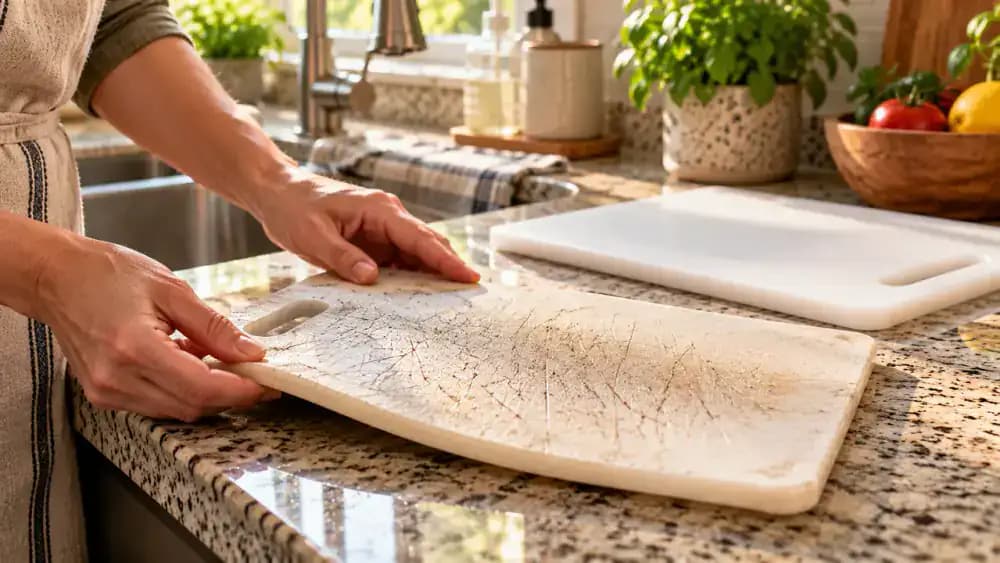
Remove cutting boards with deep cracks, heavy scoring, or warped areas that are difficult to clean thoroughly. Discard the damaged boards instead of continuing to use them after stains or odors disappear. Choose smooth replacements that are easier to wash, rinse, dry, and inspect. Before using each new board, read the care instructions and label boards for separate tasks, such as raw meat and ready-to-eat foods, to reduce cross-contamination.
Keep a Simple Maintenance Routine
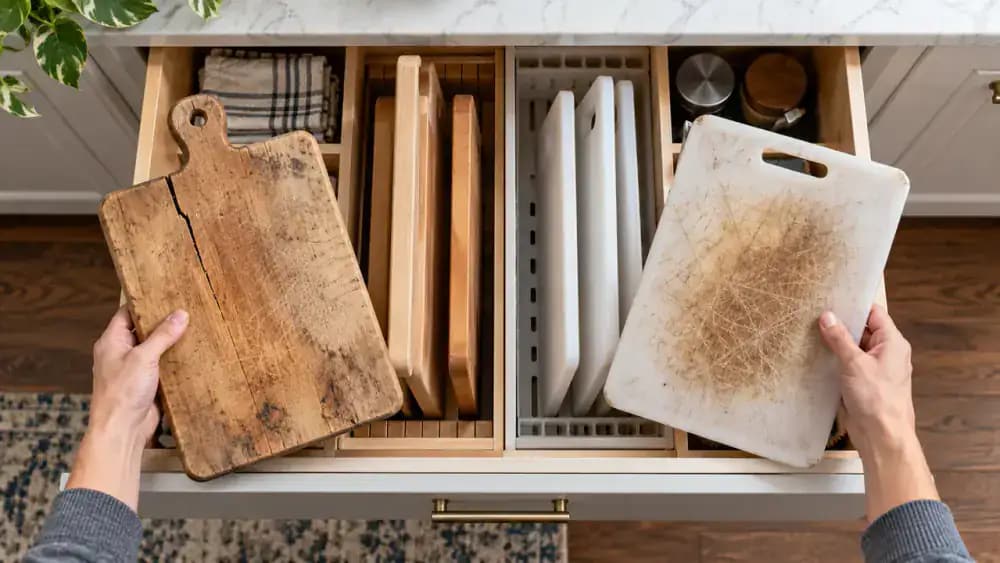
Build the habit around a quick weekly check: remove each dry cutting board from vertical storage, inspect both faces under good light, and run your fingertips along the edges for cracks, deep grooves, or warping. Clean boards promptly after use, rinse them in a way that suits the material, and let them dry completely before storing them upright. A small recurring checklist makes the routine easy to repeat and helps damage get noticed early.
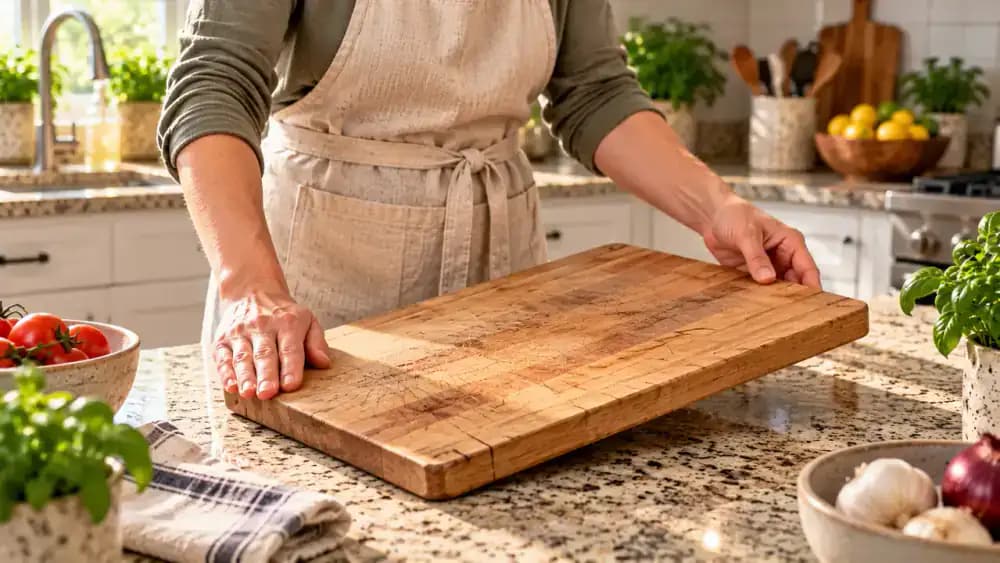
Check the Board Before Every Use
Remove the cutting board from storage only after it is completely dry, then place it on a flat counter and press opposite corners to check for rocking or warping. Rotate the board and inspect the center, edges, and corners for deep cuts, fresh cracks, or residue that will not wash away. If the surface is damaged, unstable, or cannot be cleaned fully, move it to the replacement bin before preparing food.
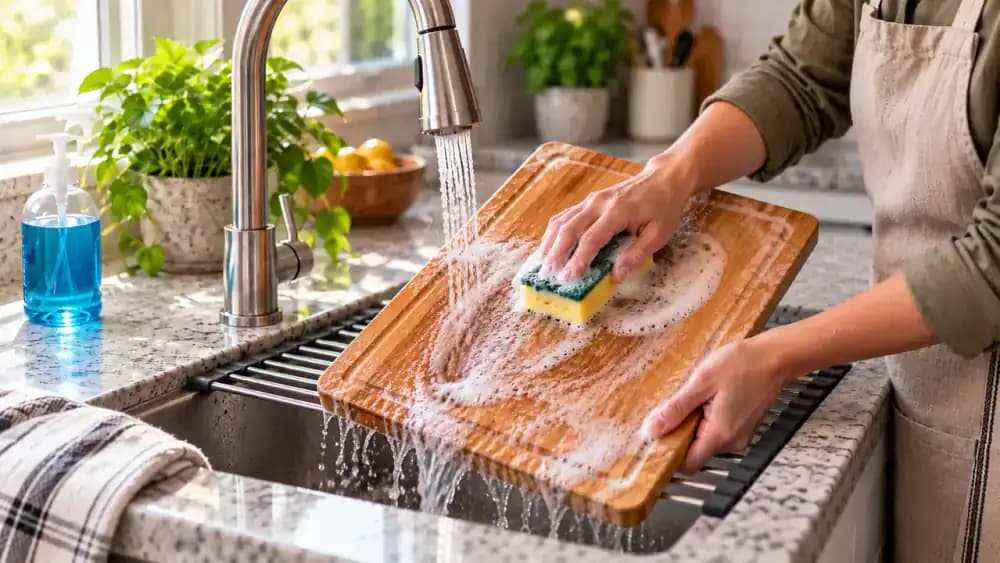
Wash the Board Thoroughly Without Soaking It
Once the cutting board has passed inspection, wash it with warm water, dish soap, and a clean brush or sponge. Scrub the center in overlapping strokes, then clean every edge and the reverse side before giving it a quick rinse. Keep wooden or bamboo boards out of standing water, since prolonged soaking can cause swelling or warping. Dry the board promptly with a clean towel and let it finish air-drying upright.
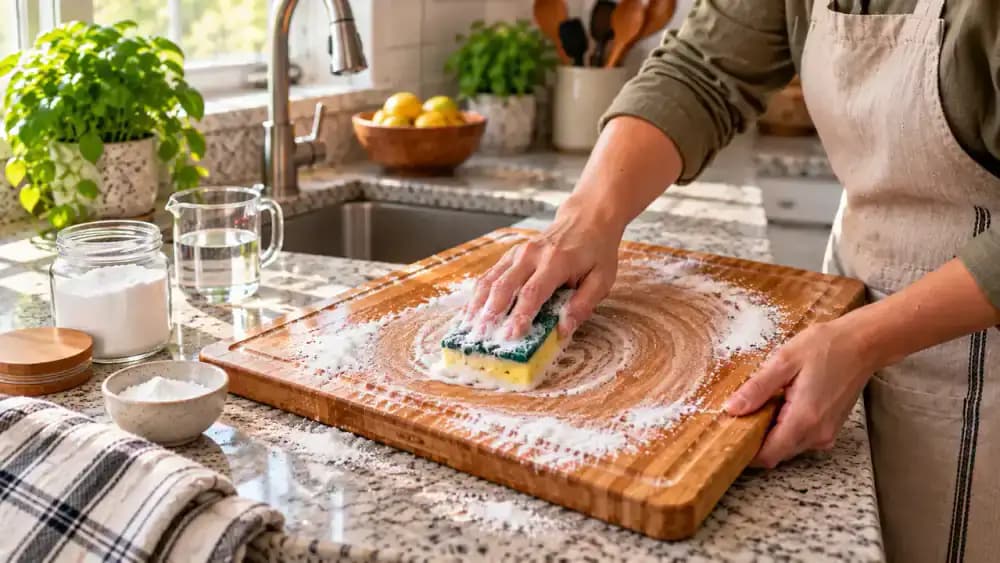
Deodorize Lingering Smells Gently
Sprinkle baking soda evenly over the damp cutting board, add just enough water to form a thin paste, and scrub gently with a soft sponge using broad figure-eight motions. Rinse the board briefly under clean running water, then move it out of the sink so it can drain and dry. Use only a light amount of moisture, especially on wood or bamboo, and never mix baking soda with other cleaning chemicals.
Target Stains Without Damaging the Surface
Apply a small amount of stain treatment approved for maple directly to the remaining dark mark with a soft cotton pad. Use short, light strokes instead of aggressive scrubbing, which can deepen knife grooves and leave more residue behind. Wipe the treated spot with a clean damp cloth, then dry it immediately with a towel. Keep wooden and bamboo boards out of standing water during rinsing and cleanup.
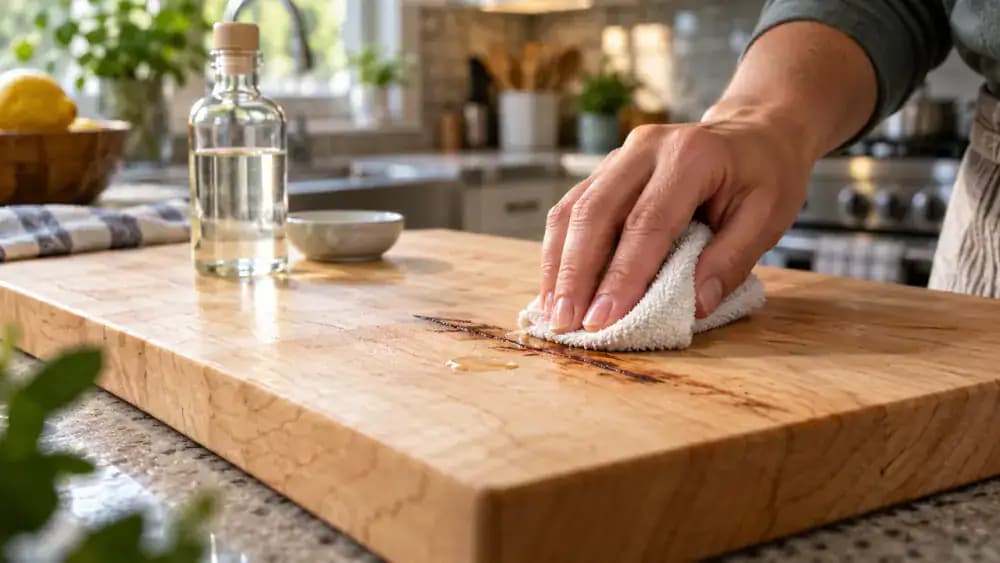
Sanitize Only When Needed
After cleaning the stain, decide whether sanitizing is actually necessary, especially if the board touched raw meat, poultry, or seafood. Compare the board manufacturer's care instructions with current food-safety guidance, then choose one sanitizer approved for that material. Follow the product label exactly, including dilution and contact time. Put all other cleaners away before you begin so nothing can be mixed accidentally while the sanitizer is being used.
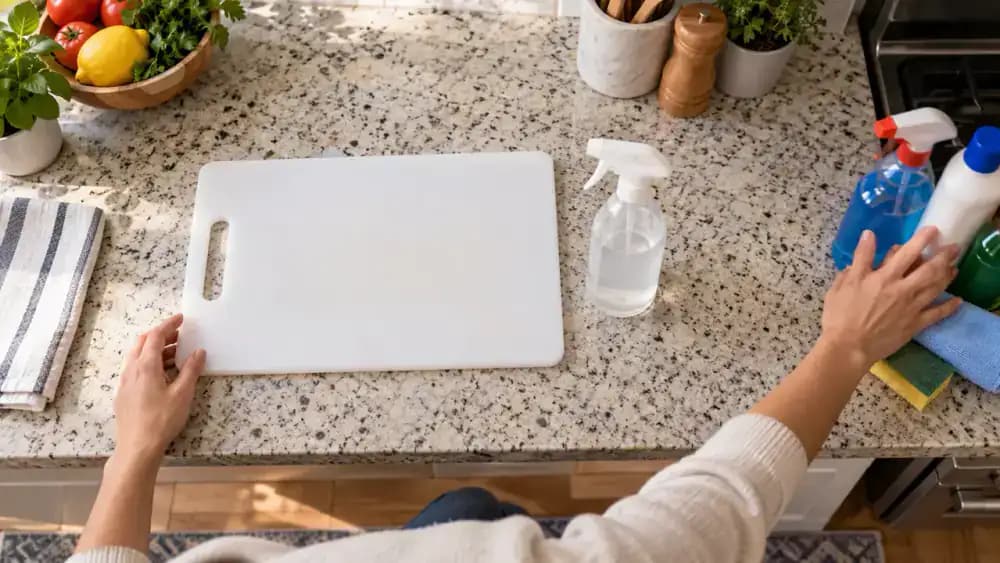
Follow the Sanitizer Contact Time
Apply the approved sanitizer evenly across the cutting board so the entire food-contact surface stays wet without being flooded. Start a timer immediately and leave the sanitizer in place for the full contact time listed on the product label. When the timer ends, check the directions before rinsing. Some sanitizers require a rinse while others do not. Never shorten the waiting period or mix in another cleaner during this step.
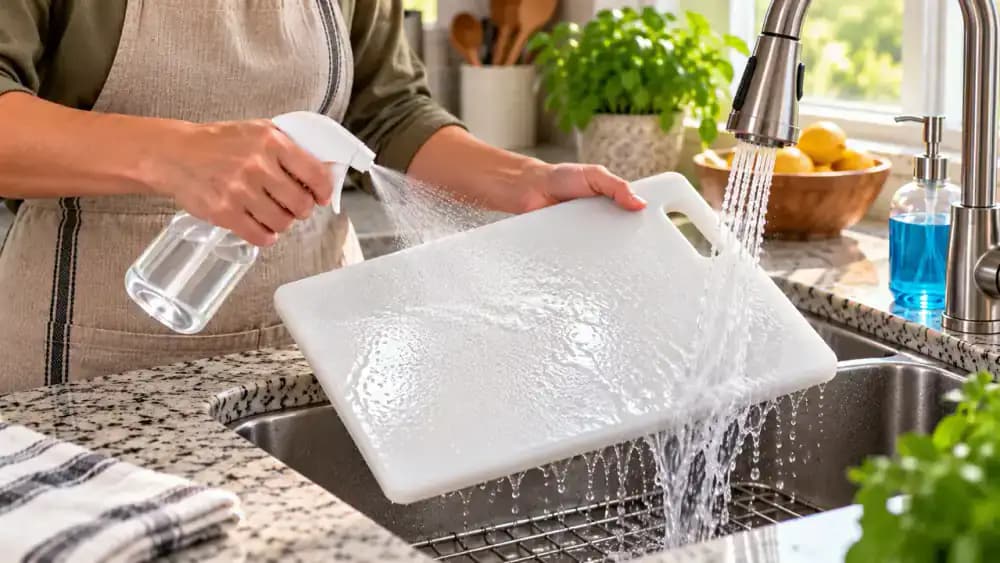
Dry the Cutting Board Before Storage
Shake off any remaining droplets, then wipe the edges and surface with a clean, dry towel. Set the board upright or diagonally on a raised drying rack so air can circulate across both sides. Avoid laying it flat or stacking dishes on top while moisture remains. Before storing it, check the corners and textured areas for damp spots, since trapped moisture can contribute to lingering odors and make later inspection more difficult.
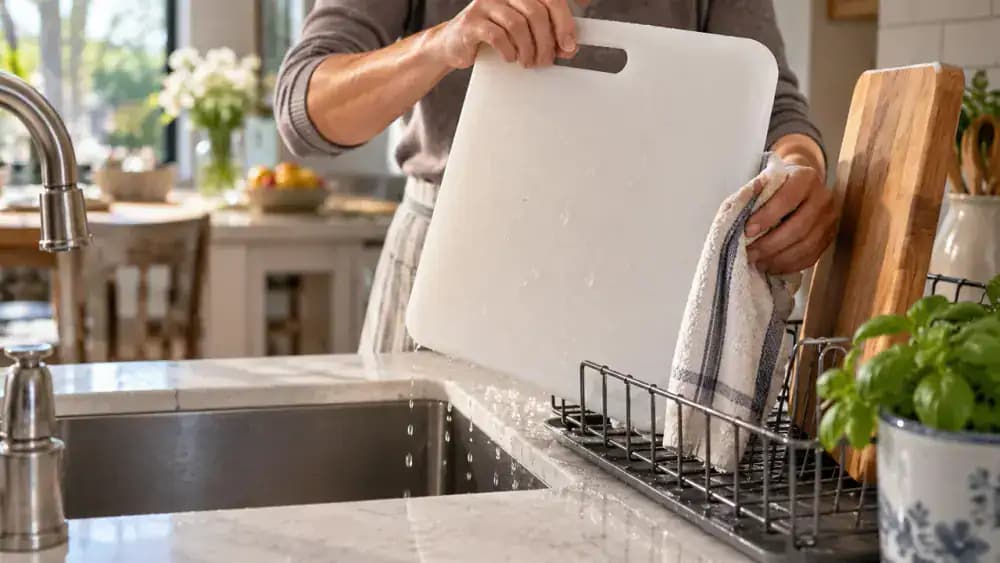
Inspect for Damage Before Storage
Once the cutting board is completely dry, hold it at eye level and inspect the surface, edges, and overall shape. Run your fingers along deep knife grooves, check for chipped or split edges, and look down the board to spot warping. Damage that traps food or prevents even cleaning is a reason to replace the board. Keep damaged boards separate so they are not accidentally returned to kitchen use.
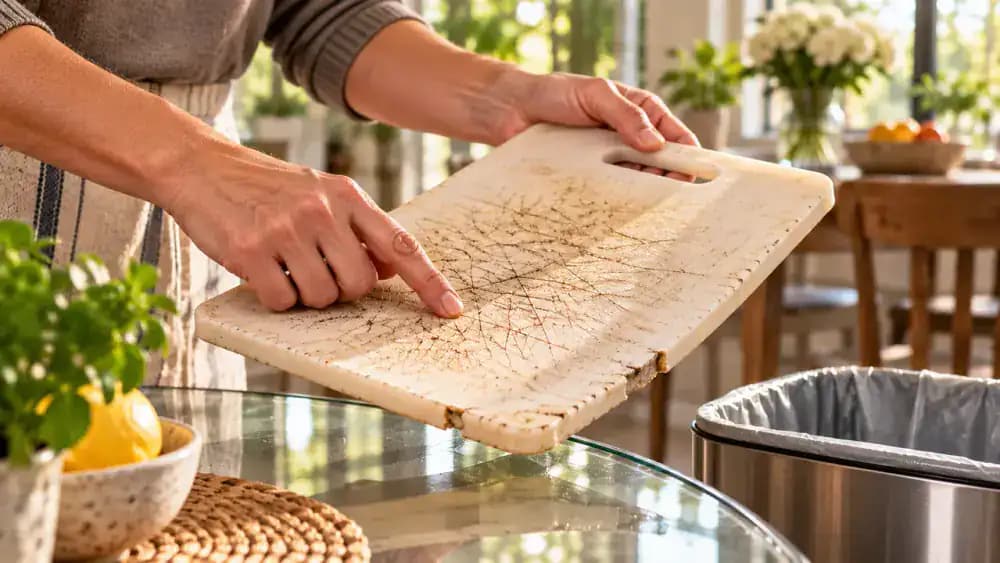
Store Only After a Final Check
Before putting the board away, wipe along the edges and shallow cuts with a clean white cloth to confirm that no moisture or residue remains. Once it is fully dry, place it upright in a ventilated organizer so air can circulate around each surface. Keep a board reserved for raw meat in a separate divided section, with several inches of space between boards to help prevent cross-contact during future meal preparation.
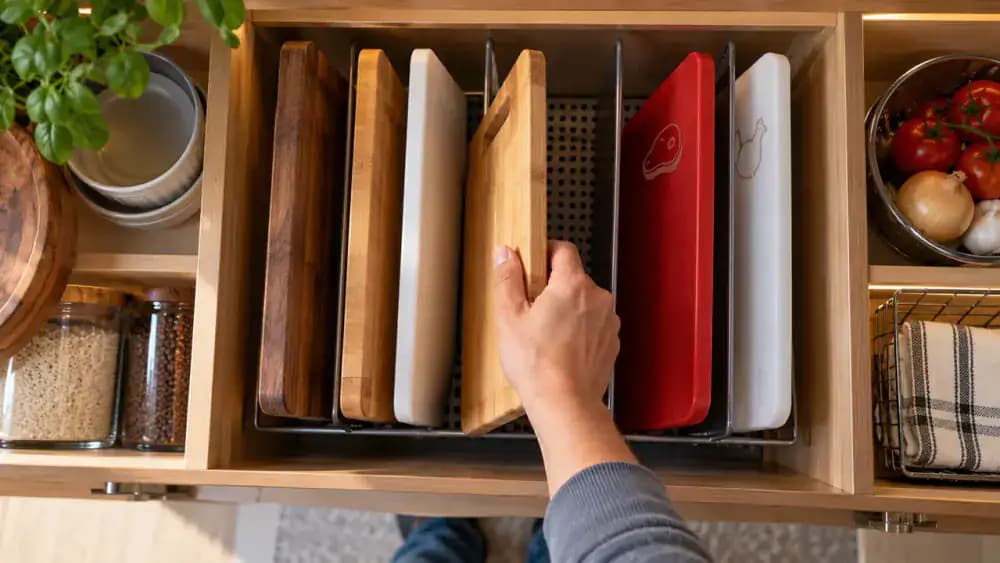
Make Cutting Board Care Automatic
Keep a simple cutting-board checklist near your prep area so the routine becomes part of every use. After preparing food, wash the board promptly, check for lingering odors, dry it completely, and inspect the surface for deep cuts or damage. Store the clean board upright in a ventilated rack instead of flat against a damp surface. A visible replacement reminder also helps prevent worn boards from staying in service too long.
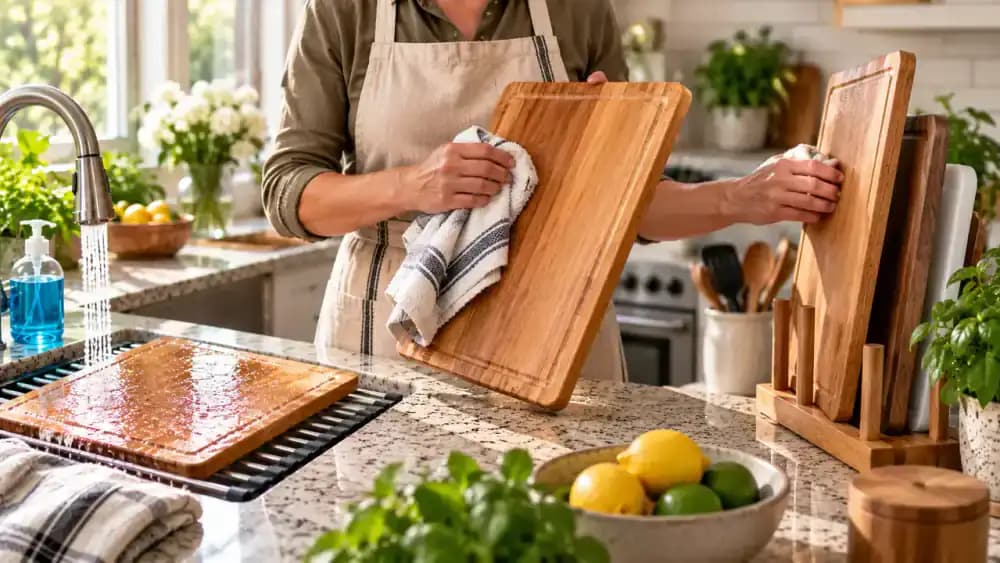
Start the Next Prep Safely
Choose the cutting board that matches the food you are preparing and inspect it before anything touches the surface. Set the clean, completely dry board flat on the counter and check the edges and face for cracks, warping, or deep grooves. Keep raw-protein boards stored separately from boards used for produce or ready-to-eat foods. If damage cannot be cleaned thoroughly, remove that board from service and replace it.

A cutting board can look spotless and still smell like yesterday's onion, garlic, fish, or raw meat. Dark marks can also settle into knife grooves, making the surface seem permanently stained even after a normal wash. The right fix depends on what the board is made from. Wood, bamboo, and plastic handle moisture differently, so using the same aggressive scrubbing or soaking method on every board can damage the surface and make future cleaning harder.
Start by washing your hands, removing food scraps, and keeping boards used for raw meat separate from boards used for ready-to-eat foods. Check the board material before cleaning, and never soak wood or bamboo. For routine cleaning, use warm water, dish soap, and a clean sponge or brush, then scrub the top, bottom, and edges before rinsing. Never combine cleaning chemicals, and replace any board with deep uncleanable grooves, cracks, or warping.
Where people go wrong
Soaking Wood or Bamboo Boards. Leaving a wood or bamboo cutting board submerged in water can cause swelling, warping, cracking, and separation over time. Wash it promptly with warm water and dish soap, rinse it quickly, then stand it upright so air can reach both sides while it dries.
Cleaning Only the Cutting Surface. Scrubbing only the top can leave food residue and moisture along the edges or underside. Clean both sides and all edges with dish soap and a clean sponge or brush. More even moisture exposure also helps reduce the chance of wooden boards warping during repeated washing.
Trying to Save a Badly Damaged Board. Deep knife grooves, cracks, warped areas, and damaged surfaces can become difficult to clean thoroughly. Heavy scrubbing will not necessarily make them safe again. Inspect boards regularly and replace any board with areas that cannot be reliably cleaned before the next food preparation.
Using the Same Board Without Cross-Contamination Controls. Using a board that held raw meat for ready-to-eat foods without proper cleaning can transfer harmful contamination. Keep raw-meat boards separate when possible, wash hands, remove scraps promptly, and follow current food-safety guidance and manufacturer instructions whenever sanitizing the board is necessary.
Questions people ask
Wash the board first with warm water, dish soap, and a clean sponge or brush. If the odor remains, make a light paste with baking soda and a small amount of water, gently scrub the surface, then rinse thoroughly. Avoid soaking wood or bamboo, and dry the board completely afterward.
Fixed it?
Get one guide like this every Thursday.