Car Lease-End Options: Should You Return, Trade In, or Buy Your Car?
Your car lease is ending, but returning the keys may not be your best financial move. Learn how to compare lease buyout costs, trade-in equity, mileage penalties, disposition fees, and vehicle value before deciding.
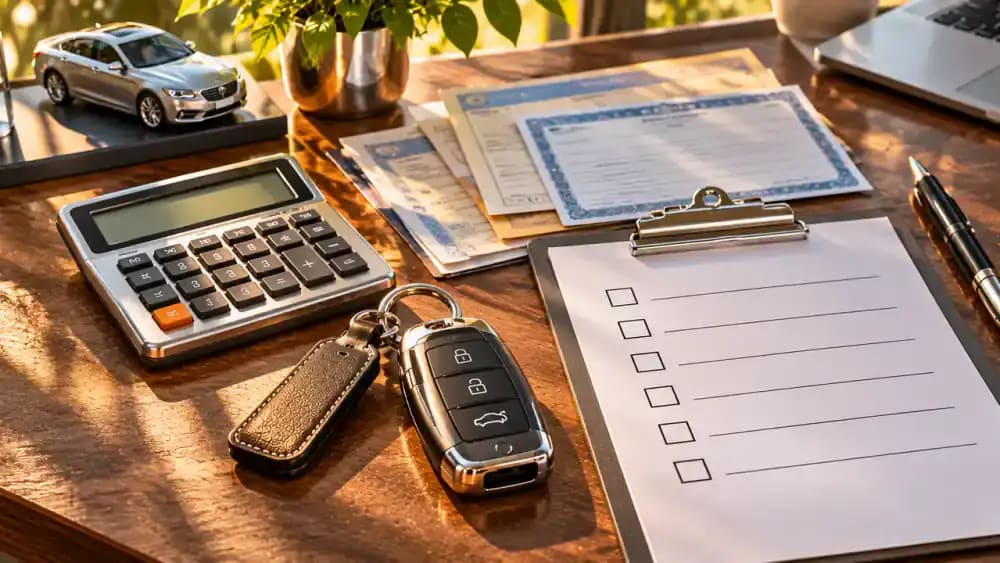
What you’ll need
Tap to tick things off before you start.
Understand What Happens When Your Car Lease Ends
Most consumer auto leases are closed-end agreements, meaning the leasing company owns the vehicle throughout the contract. When the lease expires, you generally must return the car or exercise a purchase option if your agreement provides one. Some leasing companies also permit extensions or dealership buyouts. The Consumer Financial Protection Bureau explains that leasing differs from ownership because monthly payments primarily cover vehicle use rather than building ownership. Understanding these basic choices helps establish your next steps.
Review Your Lease Agreement Before Making a Decision
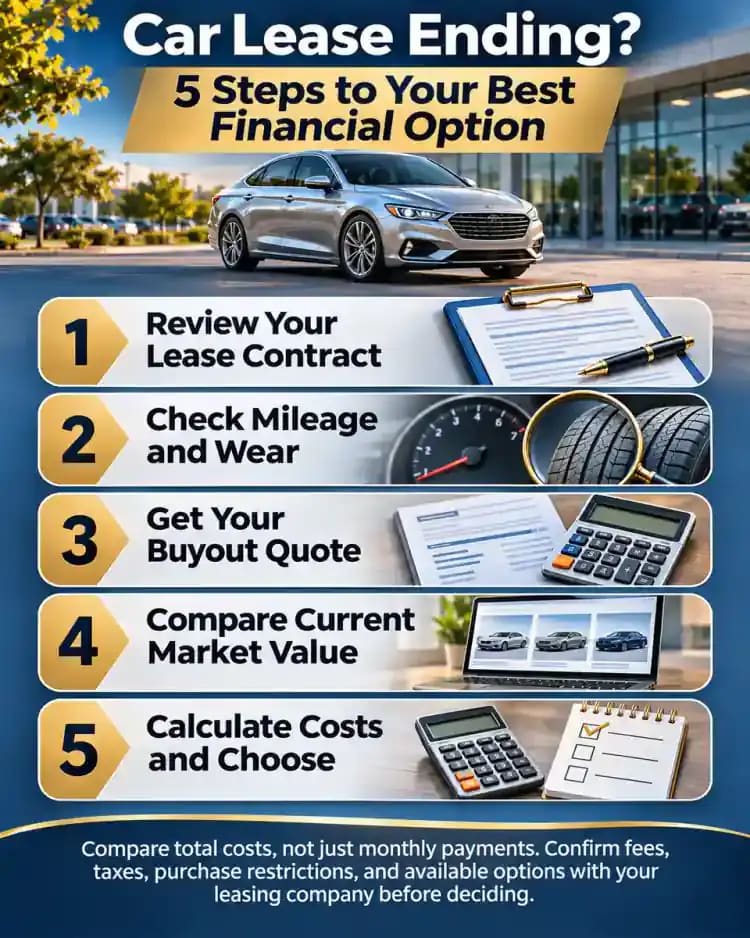
Locate your original lease agreement and identify the scheduled termination date, purchase-option language, required notices, and vehicle return procedures. Check whether you must contact the leasing company before expiration and whether specific dealerships are authorized to process returns. Look for provisions addressing outstanding payments, early termination, and late returns. Record important deadlines in a calendar. Because lease contracts vary considerably, verbal dealership explanations should not replace the written terms governing your agreement.

Understand Residual Value and Your Lease Buyout Price
Residual value is the vehicle's estimated worth at the scheduled end of its lease, established when the agreement begins. It helps determine how much depreciation your lease payments cover. A purchase option commonly specifies a fixed buyout price based on that residual value, although contractual structures differ. For example, a vehicle with a $22,000 residual value might have a $22,000 purchase-option price before applicable fees and taxes. Always distinguish the stated purchase price from the complete ownership transaction cost.
Find Out What Your Leased Car Is Worth Today
Estimate your vehicle's current market value using comparable listings and valuation services such as Kelley Blue Book or Edmunds. Match the exact model year, trim, mileage, equipment, and condition. Advertised retail prices are not necessarily amounts a dealership will pay, so obtain actual purchase offers when possible. If a realistic offer exceeds the applicable lease payoff, potential positive equity may exist. If the payoff is higher, the vehicle has negative equity relative to that offer.

Calculate the True Cost of Returning Your Leased Car
Returning a leased vehicle does not automatically eliminate remaining financial obligations. Your final statement may include unpaid installments, a contractual disposition fee, applicable taxes, and other authorized return expenses. The Federal Reserve's vehicle leasing guidance identifies disposition charges among potential end-of-lease costs. Request an itemized estimate before surrendering the vehicle. After the leasing company processes the return, review the final settlement statement carefully and retain proof of payment for any remaining balance.

Check Excess Mileage and Vehicle Wear Charges
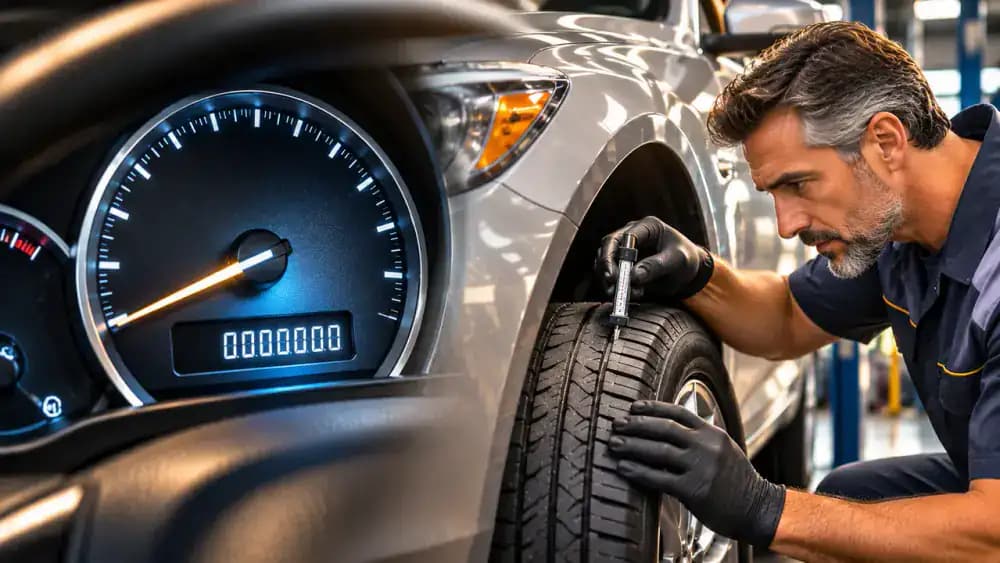
Many leases specify annual mileage allowances around 10,000 to 15,000 miles, with additional charges when you exceed the contracted total. Multiply excess miles by your agreement's per-mile rate to estimate the penalty. Separately, compare vehicle condition against the leasing company's wear standards. Deep scratches, damaged glass, or excessively worn tires may trigger charges. Schedule any available pre-return inspection, photograph the vehicle, and compare potential assessments with independent repair estimates before arranging repairs.

Decide Whether Buying Out Your Lease Makes Financial Sense
A lease buyout converts your leased vehicle into one you own, provided your agreement permits purchasing it. Calculate the full acquisition cost, including the purchase price, applicable taxes, title fees, and financing expenses. Then consider expected maintenance, insurance, remaining warranty coverage, and the vehicle's mechanical condition. Keeping a familiar car can offer convenience, but convenience alone does not establish financial value. Compare the complete ownership expense against the cost of obtaining a comparable replacement vehicle.
Explore Trading In Your Leased Car for Positive Equity
Some dealerships can purchase leased vehicles directly from the leasing company, potentially allowing positive equity to support another vehicle transaction. However, manufacturers and leasing companies may restrict third-party buyouts or establish different dealer payoff amounts. Confirm eligibility before requesting offers. For example, an authorized $25,000 dealership offer against a $22,000 applicable payoff could produce $3,000 in gross equity before transaction expenses. Request written documentation showing how any remaining equity is credited or paid.

Consider Extending Your Lease When You Need More Time
A lease extension may allow you to keep driving your current vehicle while postponing the final decision. Availability depends on the leasing company's policies and your account status. Ask whether the extension changes monthly payments, mileage allowances, purchase-option calculations, or insurance requirements. Confirm whether existing warranty coverage continues throughout the additional period. Extensions may help when replacement vehicles are unavailable or financing arrangements remain unresolved, but additional payments can increase the overall cost of transportation.

Compare Every Option and Make Your Final Lease-End Decision
Create a comparison showing the expected cash required, future payments, and financial benefits associated with each available option. Use written return estimates, official buyout quotes, and verified dealership offers rather than assumptions. Account for differences in future transportation needs and the length of each financial commitment. Check quote expiration dates and confirm required procedures directly with the leasing company. The strongest choice balances total cost, affordability, contract limitations, and practical transportation needs instead of monthly payments alone.
Know Your Rights Under Federal and State Leasing Laws
Federal consumer leasing protections, including Regulation M, require certain disclosures about vehicle lease costs and obligations. The Consumer Financial Protection Bureau provides educational resources explaining leasing terms and consumer responsibilities. State laws may establish additional requirements concerning inspections, contract enforcement, and disputed charges. Protections vary by jurisdiction and circumstances. If a charge appears inconsistent with your agreement, request a written explanation. Your state attorney general, consumer protection agency, or qualified attorney may provide further assistance.

Request an Official Lease-End Statement
Contact your leasing company's customer service department and request an official written lease-end statement. Ask for the current payoff amount, remaining scheduled payments, unpaid charges, applicable purchase fees, and any required transaction instructions. Confirm whether the quoted figure applies to you or an authorized dealership, since amounts may differ. Pay particular attention to the quote's expiration date and accepted payment methods. Retain the statement so any later discrepancies can be checked against documented figures.

Understand How Depreciation Affects Your Lease
Depreciation represents the decline in a vehicle's value over time. Leasing companies estimate this decline when establishing lease terms, using factors such as vehicle type, projected mileage, and expected resale demand. Actual depreciation can differ because of market conditions, reliability concerns, or changing consumer preferences. For example, unexpectedly strong used-car demand may support higher resale values than originally projected. Understanding this difference helps explain why a leased vehicle's actual value can diverge significantly from its initial forecast.
Check Whether Your Buyout Price Is Fixed
Lease purchase options may specify a predetermined dollar amount or establish a method for calculating the purchase price at expiration. A fixed amount generally remains unchanged despite fluctuations in vehicle market value. Other agreements may reference fair market value or additional contractual conditions. Locate the purchase-option provision and identify the exact pricing language. If the calculation is unclear, request written clarification from the leasing company. Do not assume an advertised residual value automatically equals the final payable amount.

Understand How Residual Value Affects Monthly Payments
A higher projected residual value generally reduces the depreciation portion of a lease payment because less vehicle value is expected to be consumed during the contract. For example, increasing projected residual value from $20,000 to $23,000 reduces calculated depreciation by $3,000 over the lease term, before other payment factors. However, a higher residual value can also raise a fixed contractual purchase price. Leasing companies generally establish residual values using their own valuation policies rather than freely negotiating them.

Recognize When Your Leased Car Has Positive Equity
Positive lease equity may exist when a realistic purchase offer exceeds the applicable vehicle payoff and transaction expenses. Suppose an authorized dealership offers $28,000 and the leasing company's applicable payoff is $24,000. The initial difference is $4,000. If eligible transaction expenses total $500, potential net equity becomes $3,500. Actual results depend on purchase restrictions and applicable charges. Request firm written offers rather than relying solely on online valuations or advertised retail prices.

Understand the Risks of Negative Lease Equity
Negative equity occurs when the applicable buyout amount exceeds what a buyer is willing to pay for the vehicle. For example, a $26,000 payoff against a $22,000 purchase offer creates a $4,000 shortfall before additional expenses. Rolling that shortfall into another vehicle loan increases the amount financed and can raise total interest costs. Importantly, negative market equity does not automatically become a payment obligation when a compliant closed-end lease is returned.

Explore Auto Loan Financing for a Lease Buyout
A lease buyout can sometimes be financed through a bank, credit union, or other eligible auto lender. Compare annual percentage rates, available loan terms, origination charges, and total repayment amounts. For illustration, financing $20,000 at 7% APR over 48 months produces a payment of approximately $479 before other costs. Longer terms may reduce monthly payments while increasing total interest. Cash purchases avoid loan interest but require greater immediate liquidity and reduce available savings.

Check for Lease-End Fee Waivers and Incentives
Some leasing companies offer loyalty programs that waive disposition fees when customers lease or purchase another qualifying vehicle. Manufacturers may also provide promotional credits or limited-time incentives, although eligibility requirements vary. Ask whether an advertised benefit applies to your existing contract and whether it requires a specific replacement vehicle or transaction date. Obtain the conditions in writing. A waived fee may provide savings, but promotional benefits should be evaluated independently from the replacement vehicle's overall price.
Complete Your Vehicle Return Without Surprises
Schedule the return with an authorized location and confirm its procedures before arriving. Remove personal belongings, clear saved navigation addresses, and bring all required keys, manuals, charging equipment, and accessories. Photograph the vehicle's exterior, interior, and odometer at handover. Obtain a dated return receipt identifying the vehicle and recorded mileage. After the leasing company completes its processing, review the final account statement for accuracy. Keep inspection records and payment confirmations until the account is resolved.

Calculate Excess Mileage Charges Before Returning Your Car
Start with your lease's total mileage allowance, not just its annual estimate. Subtract that allowance from the expected odometer reading at return, then multiply any excess miles by the contractual rate. For example, driving 39,000 miles on a 36,000-mile allowance creates 3,000 excess miles. At $0.25 per mile, the estimated charge is $750. The Federal Reserve identifies excess mileage as a potential lease-end expense. Verify your actual rate and any applicable exceptions.
Understand What Counts as Excessive Wear and Tear
Normal wear generally includes minor deterioration expected from ordinary vehicle use. Excessive wear involves damage beyond the leasing company's contractual standards, potentially including deep scratches, substantial dents, cracked glass, damaged upholstery, or tires below specified tread requirements. Standards differ among leasing companies, so a small scratch accepted under one contract might be chargeable under another. Review the official condition guide and pay attention to measurable thresholds, excluded damage, and required replacement specifications.

Prepare Your Vehicle to Meet Return Standards
Before the scheduled condition assessment, clean the vehicle thoroughly and remove personal belongings. Check that required accessories, floor mats, charging cables, spare equipment, and original keys are present. Address overdue maintenance when required by the agreement. For visible damage, compare independent repair estimates with the leasing company's published standards before paying for repairs. Cosmetic work is not automatically worthwhile, especially when its cost exceeds the likely assessment. Keep maintenance records and repair receipts available.

Challenge Unfair Lease-End Damage Assessments
If a damage assessment appears incorrect, request an itemized explanation identifying each charge and the applicable contractual standard. Compare the inspection report with dated photographs, maintenance records, and any earlier condition documentation. Ask the leasing company about its formal dispute procedure and whether a reassessment is available. Submit supporting evidence in writing and retain copies of all communications. State consumer protection agencies may offer additional information about applicable inspection rules and complaint procedures.
When Buying Your Leased Car Helps Avoid Return Penalties
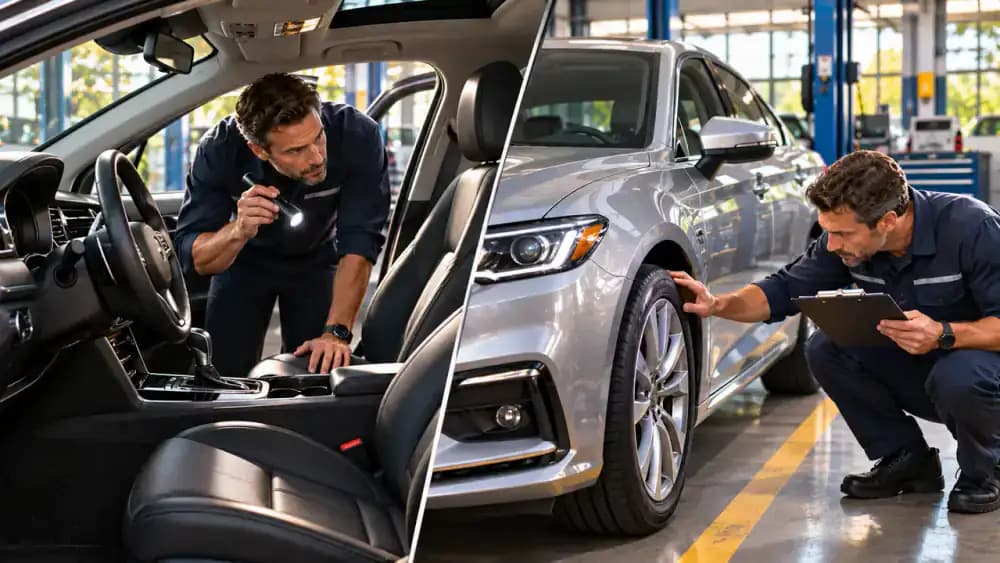
Purchasing a leased vehicle generally avoids return-related excess mileage and wear charges because the vehicle is not surrendered. Consider a hypothetical $1,200 mileage penalty and $800 damage assessment, totaling $2,000 in potential return expenses. Avoiding those charges may make a buyout more attractive, but the purchase could still cost more than the vehicle is worth. Compare the complete acquisition expense, future maintenance needs, and expected resale value before treating avoided penalties as savings.

Negotiate a Better Deal When Trading In Your Lease
Obtain competing written purchase offers from dealerships authorized to acquire your leased vehicle. Ask each dealer to identify the applicable payoff amount, transaction fees, and resulting equity separately from the price of your replacement car. Negotiating these figures independently makes it easier to spot unfavorable adjustments. Confirm that the leasing company permits the proposed transaction before signing. If positive equity exists, verify exactly how the dealer will apply or distribute it.
Understand the Costs of a Short-Term Lease Extension
A short-term extension may preserve transportation while delaying the final transaction, but its financial terms deserve careful review. Ask whether monthly payments remain unchanged, additional mileage is granted, and the eventual purchase price changes. Confirm whether manufacturer warranty coverage, maintenance benefits, and insurance requirements continue throughout the extension. Some agreements require additional payments without proportionally reducing the buyout amount. Request written extension terms showing the complete cost and revised expiration date.

Ask Your Leasing Company These Questions Before Deciding
Contact the leasing company directly and request clear answers to several essential questions. Is purchasing the vehicle permitted, and what is the exact payoff? Which return fees apply, and are inspections required? Can an outside dealership purchase the vehicle? Are extensions available, and what deadlines govern each option? Ask whether quoted amounts include taxes or administrative charges. Record the representative's responses and request written confirmation of important terms before proceeding with any transaction.

Compare Lease-End Decisions Using Realistic Cost Scenarios
Consider a hypothetical vehicle with a $21,000 buyout price and a $23,000 authorized dealership offer. Returning it might involve $400 in disposition charges and $600 in other assessed fees, totaling $1,000. Purchasing could require $21,000 plus applicable taxes and purchase expenses. An authorized dealer buyout might generate $2,000 in gross equity before fees. These figures illustrate different outcomes, not guaranteed savings. Compare immediate cash flows alongside future transportation expenses for each scenario.

Your Final Car Lease-End Decision Checklist
Before committing, confirm that every figure comes from a current written quote or your lease agreement. Verify expiration dates, applicable fees, purchase restrictions, and required transaction documents. Check that your preferred option fits both immediate cash needs and longer-term transportation costs. Preserve copies of offers, agreements, inspection records, and payment confirmations. The Consumer Financial Protection Bureau emphasizes understanding leasing obligations before making financial commitments. A documented decision process reduces uncertainty and helps prevent expensive last-minute surprises.

Your car lease is almost over, and the dealership wants to know what you plan to do next. Should you return the vehicle, trade it in for something newer, or buy the car you already know and trust? The wrong decision could cost you hundreds or even thousands of dollars in avoidable expenses.
The good news is that you have options. Most closed-end auto leases allow you to return the vehicle or purchase it under the terms of your agreement. Some leasing companies also offer extensions, while certain contracts permit a dealership to purchase your leased vehicle. Each option has different financial consequences, and the best choice depends on your contract, your vehicle's current value, and your future transportation needs.
Start with two numbers: your lease-end purchase price and your car's current market value. If your vehicle is worth more than the total amount required to purchase it, you may have positive equity worth exploring. If it is worth less, returning it could be more economical, particularly if you have stayed within your mileage allowance and maintained the vehicle properly.
But the purchase price is only part of the equation. Disposition fees, excess mileage penalties, vehicle damage charges, sales tax, financing costs, and dealer restrictions can significantly change your calculations.
This guide walks you through the practical steps needed to compare your car lease-end options. You will learn what to check in your agreement, which costs to calculate, and how to avoid common mistakes before making a final decision.
Where people go wrong
Assuming Returning the Car Is Free. Many drivers assume their financial obligations end when they hand over the keys. However, disposition fees, excess mileage penalties, unpaid charges, and excessive wear assessments may still apply. Request an itemized estimate before scheduling your vehicle return.
Confusing Residual Value With Current Market Value. Your contract's residual value is not necessarily what the vehicle is worth today. Comparing these figures without accounting for purchase fees, taxes, and transaction costs can create misleading expectations about potential equity or savings.
Ignoring Excess Mileage Until the Final Inspection. Driving beyond your contracted mileage allowance can trigger substantial per-mile charges when returning a leased vehicle. Check your odometer well before expiration, calculate your likely overage, and compare the return penalties against available purchase options.
Buying the Vehicle Just to Avoid Return Fees. Avoiding disposition fees and mileage penalties sounds attractive, but a buyout can still be financially unfavorable. Compare the complete purchase cost, including taxes and financing, against market value before deciding that ownership is the cheaper alternative.
Assuming Any Dealership Can Buy Your Lease. Some leasing companies restrict third-party buyouts or charge dealers different purchase prices. Before negotiating a trade-in, confirm the leasing company's current rules and obtain a written payoff figure that applies to the specific transaction.
Skipping the Pre-Return Vehicle Inspection. Returning your vehicle without checking its condition can result in unexpected damage assessments. Review the lessor's wear standards, document existing damage, and request any available pre-return inspection. Compare repair estimates with potential charges before authorizing work.
Focusing Only on the Next Monthly Payment. A lower payment on a new lease or longer auto loan does not automatically mean a better deal. Compare total payments, interest, fees, equity adjustments, and future ownership costs rather than judging affordability by monthly payment alone.
Waiting Until the Lease Expires to Compare Options. Last-minute decisions can reduce your negotiating flexibility and leave insufficient time for inspections, financing, or dealer offers. Start evaluating your options several weeks before expiration and verify the leasing company's deadlines for each available transaction.
Questions people ask
Most closed-end vehicle leases allow you to return the car or purchase it if your contract includes a purchase option. You may also qualify for a lease extension or arrange a dealership trade-in, depending on the leasing company's policies. Compare the total financial consequences before choosing.
Fixed it?
Get one guide like this every Thursday.