How to Create a Better Interactive Play Routine for Your Cat
Build a safer, more satisfying cat play routine by following the natural hunting sequence of stalking, chasing, capturing, eating, and resting.
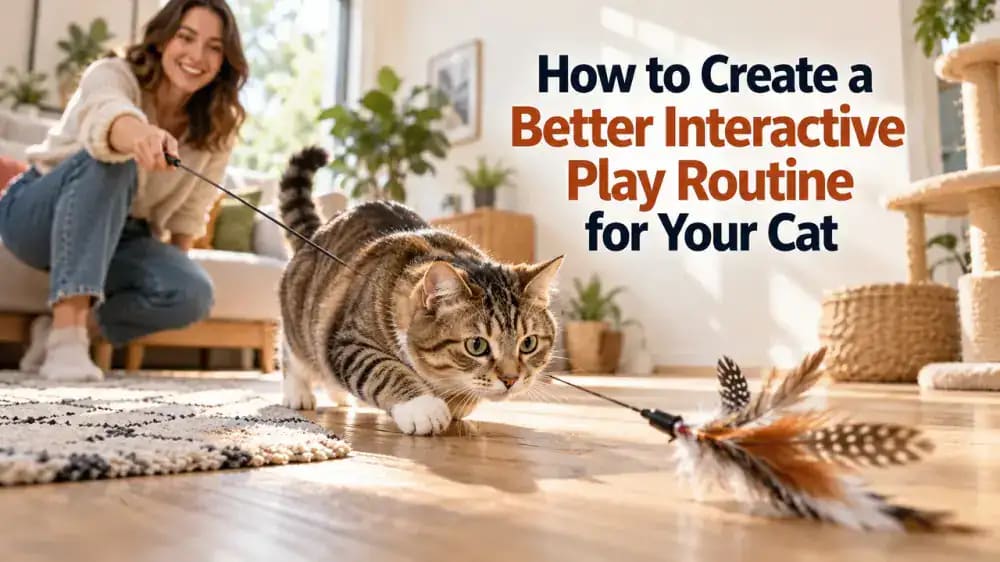
What you’ll need
Tap to tick things off before you start.
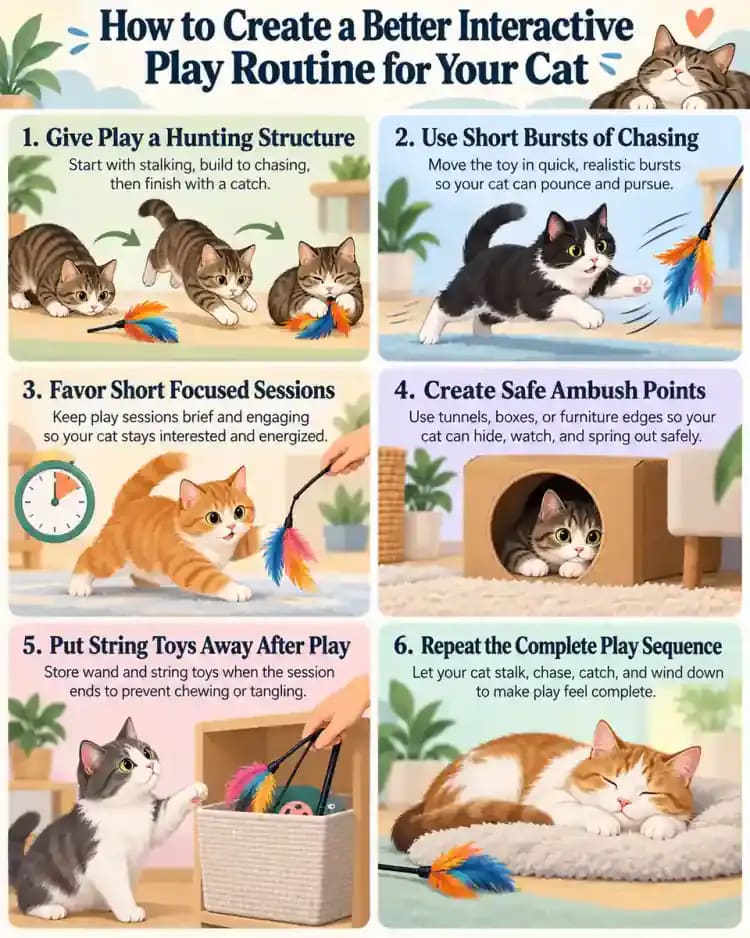
Give Play a Hunting Structure
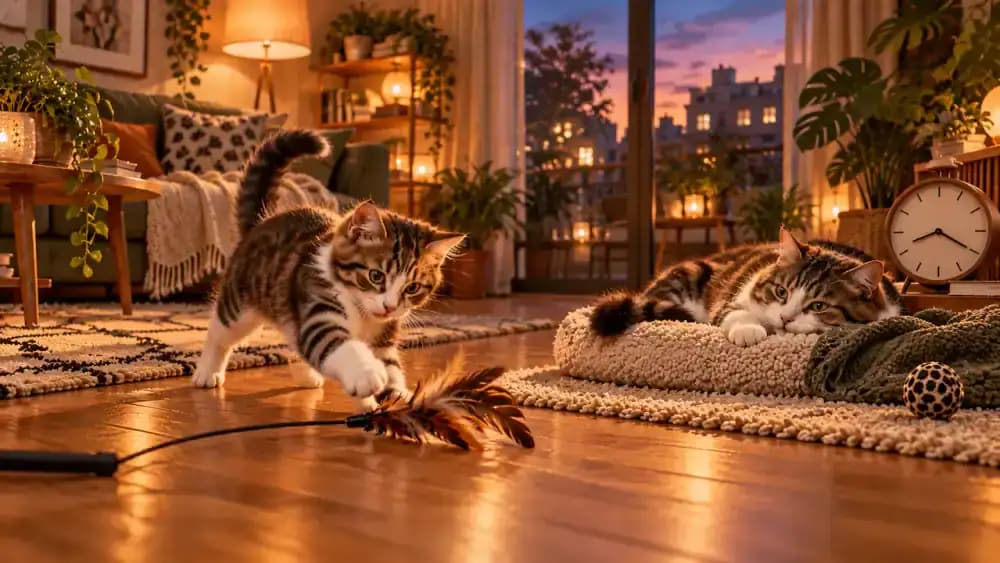
Interactive play works best when it resembles a recognizable hunt rather than random movement. Give your cat opportunities to notice the target, stalk it, chase it, pounce, and capture it. The objective is not to exhaust your cat. It is to satisfy natural behavior through predictable, enjoyable indoor activity.
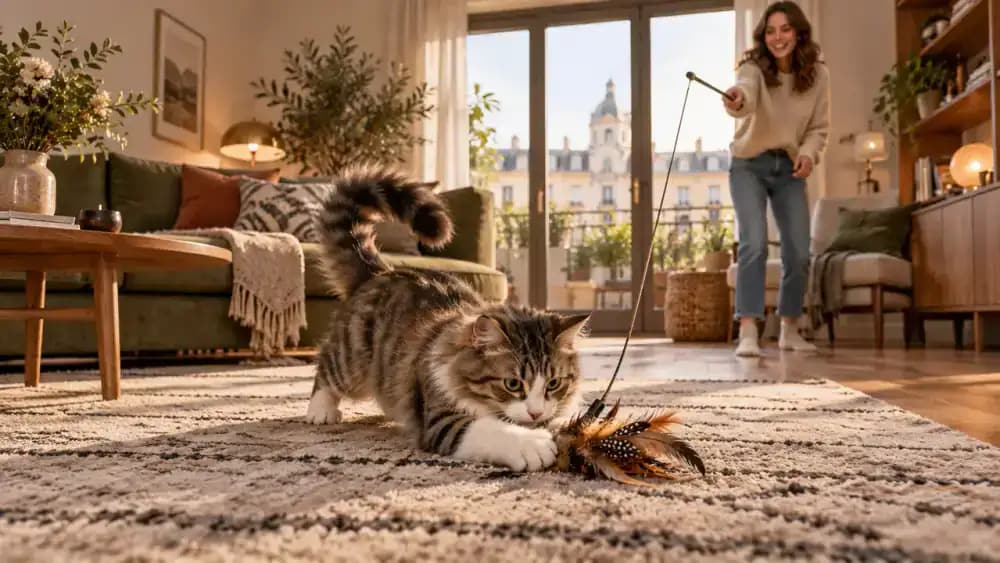
Observe How Your Cat Already Hunts
Watch your cat before deciding how every session should work. Some cats prefer mouse-like targets creeping along the floor, while others respond to fluttering movement. Notice hiding, ambushing, short bursts, and preferred distances. Those behaviors tell you far more about useful play choices than simply buying more toys.
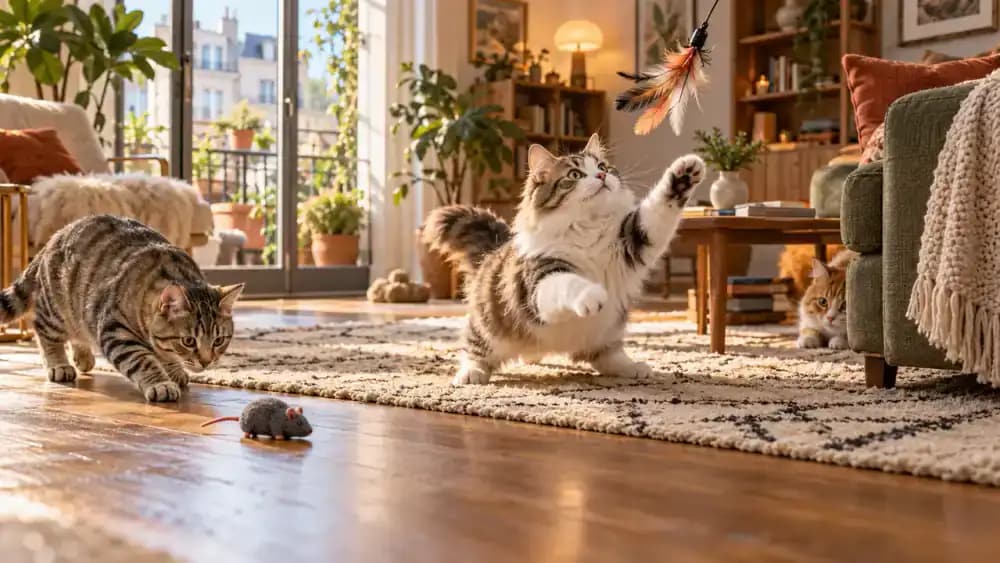
Choose Toys You Can Control
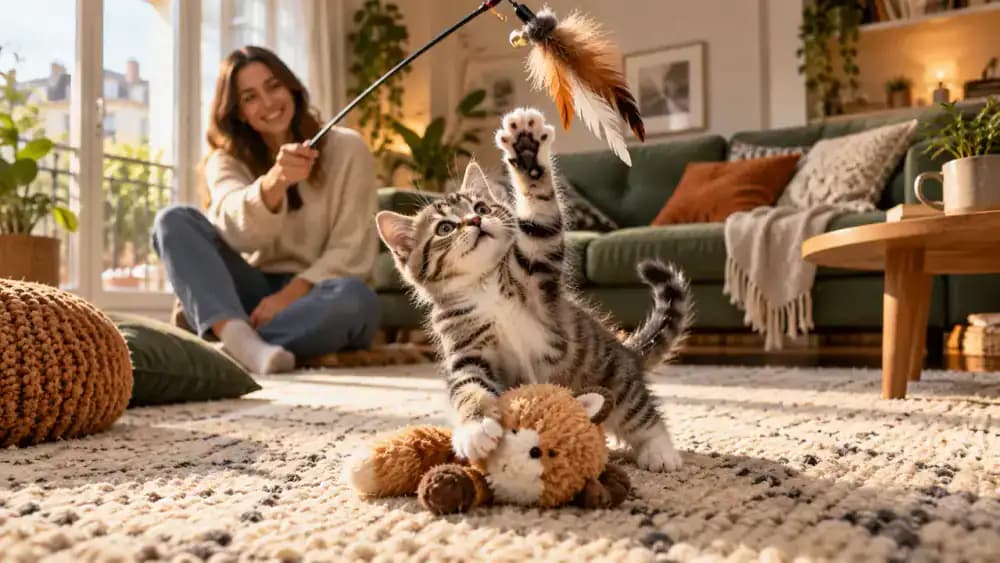
Use interactive toys such as wand toys, fishing-rod toys, cat-safe ribbons, or sturdy supervised attachments. They let you control direction and speed while keeping the moving target away from your hands. Avoid training your cat to treat fingers as prey, and supervise interactive toys while they are being used.
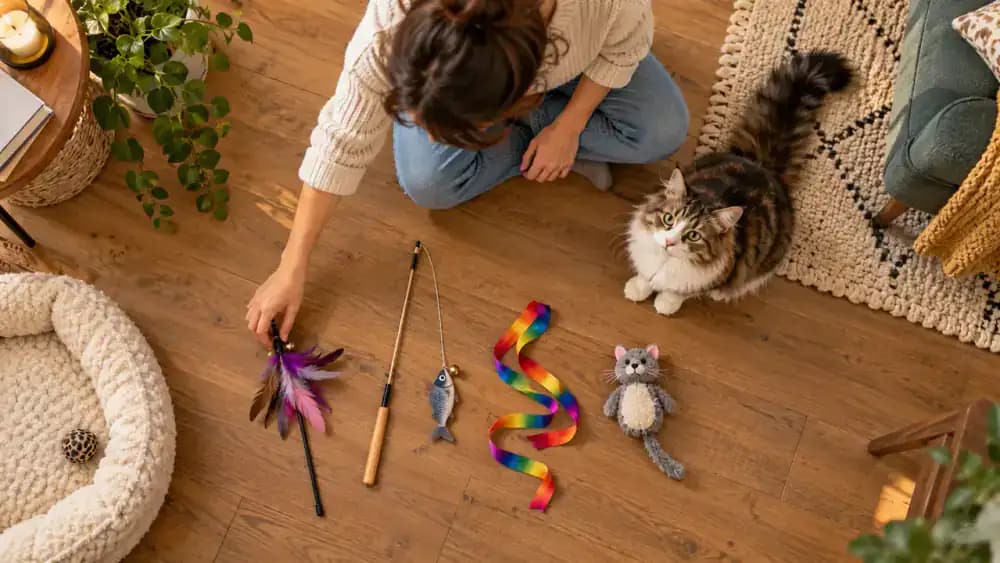
Move the Toy Like Prey
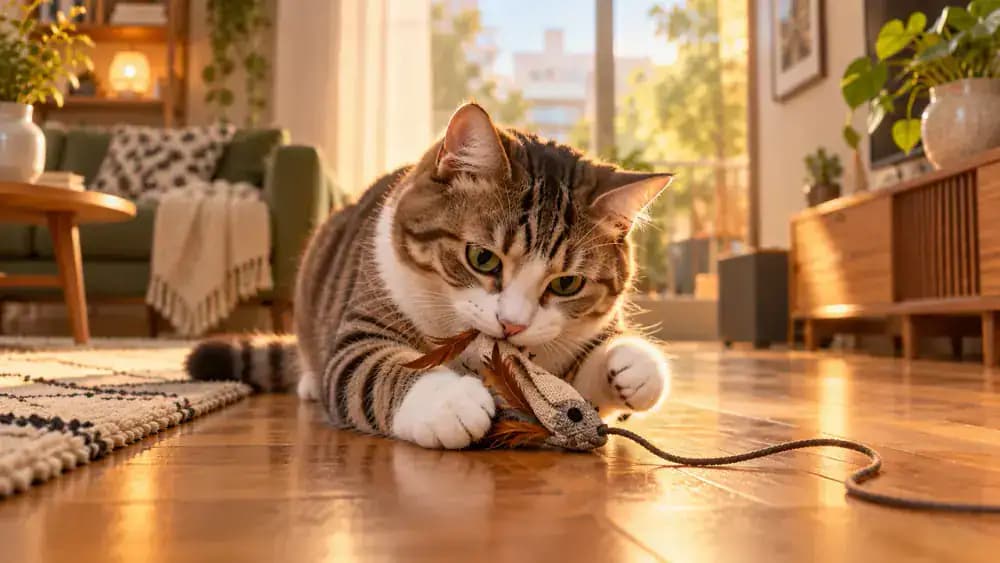
Pull the toy away from your cat rather than repeatedly pushing it toward the face. Let it travel across the floor, curve around furniture, disappear briefly behind something safe, and reappear. Movement that seems to escape gives your cat a reason to stalk and pursue instead of simply swatting.
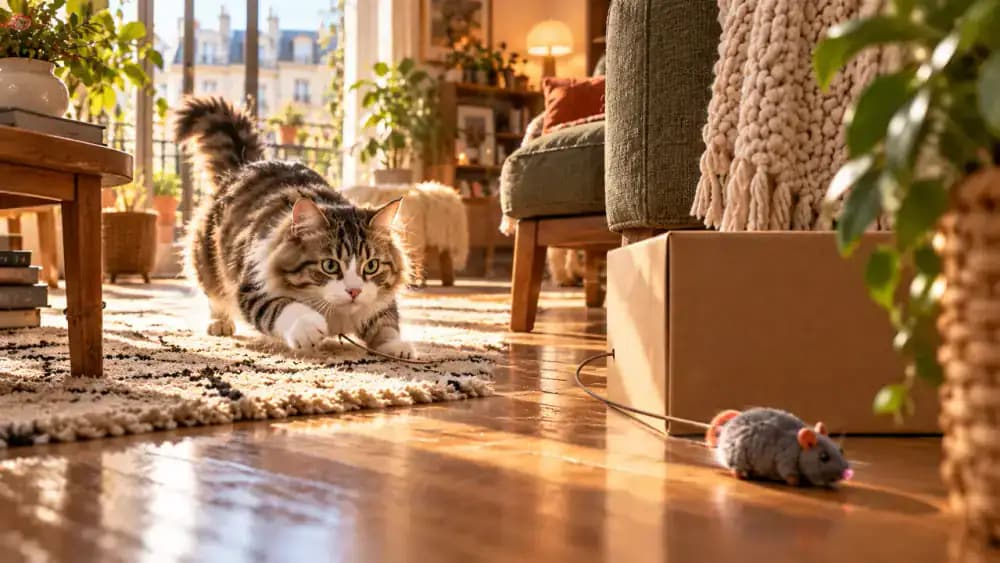
Start Slowly With Stalking
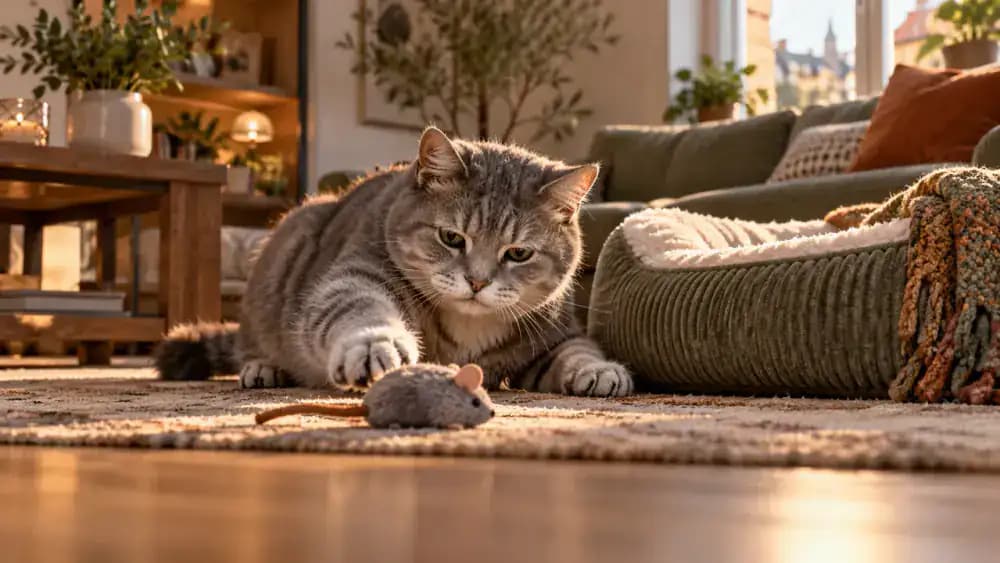
Do not begin every session with frantic movement. Twitch the toy near a rug edge, chair leg, or cardboard box, then pause. Give your cat enough time to watch, crouch, shift weight, and prepare. The quiet stalking phase can be just as important as the chase that follows.
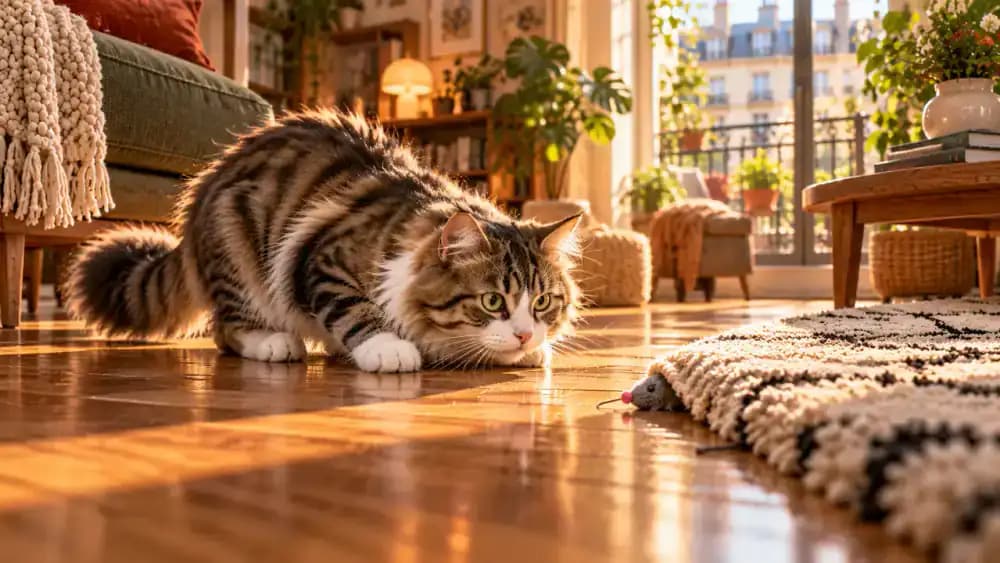
Use Short Bursts of Chasing
Once your cat commits to the game, increase the speed for a brief chase. Sweep the toy across open space, change direction, and then slow it again. Continuous sprinting is unnecessary for many cats. Adjust the pace according to age, mobility, fitness, enthusiasm, and the response you see.
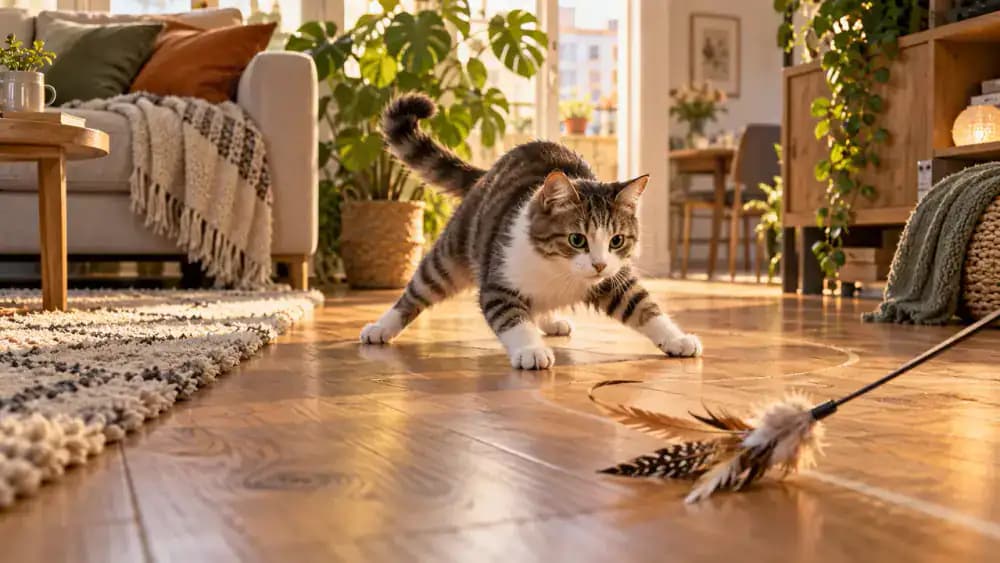
Make Pouncing Possible
Do not create an unwinnable game. Regularly slow the target enough for your cat to pounce and pin it. A cat that can never reach the toy may become frustrated, overstimulated, or simply lose interest. Successful captures keep the hunting sequence rewarding and give the activity a clear purpose.
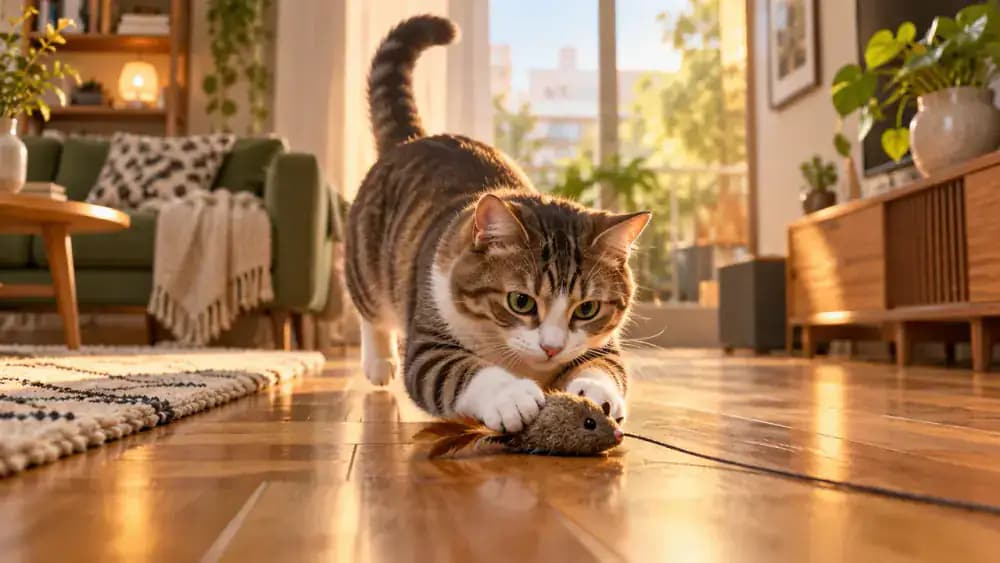
Let Your Cat Hold the Capture
When your cat catches the attachment, resist the urge to yank it away immediately. Leave the line loose for a few seconds while your cat holds, bites, kicks, or repositions the toy. If the cat releases it and remains interested, gently restart the movement and continue the game.
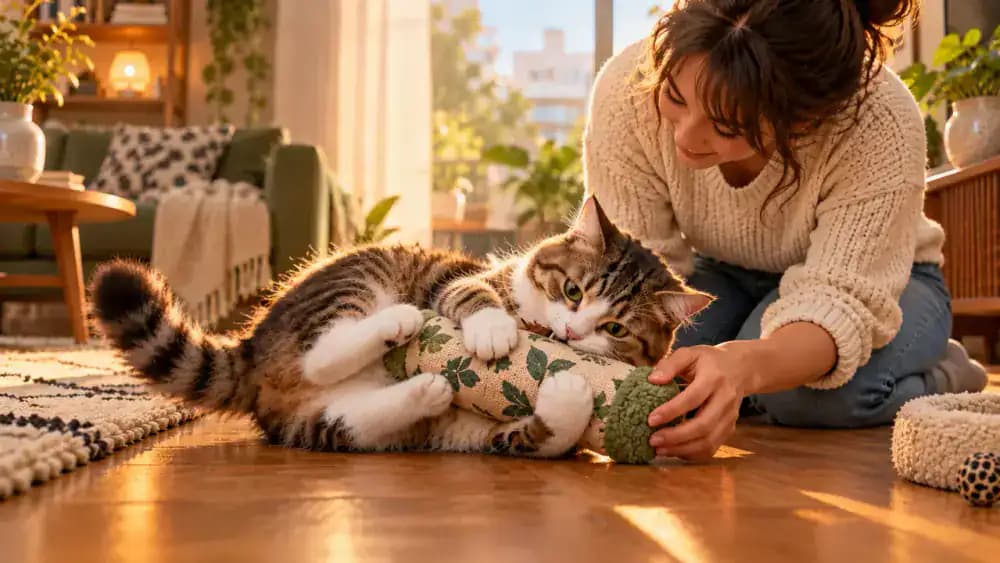
Offer a Kicker for Wrestling
Cats that grab with their front paws and kick with their back legs may enjoy a sturdy kicker toy after the chase. Choose one they can hold comfortably. Check the seams and fabric regularly, and remove it if stuffing, strings, or loose components become exposed during vigorous wrestling.
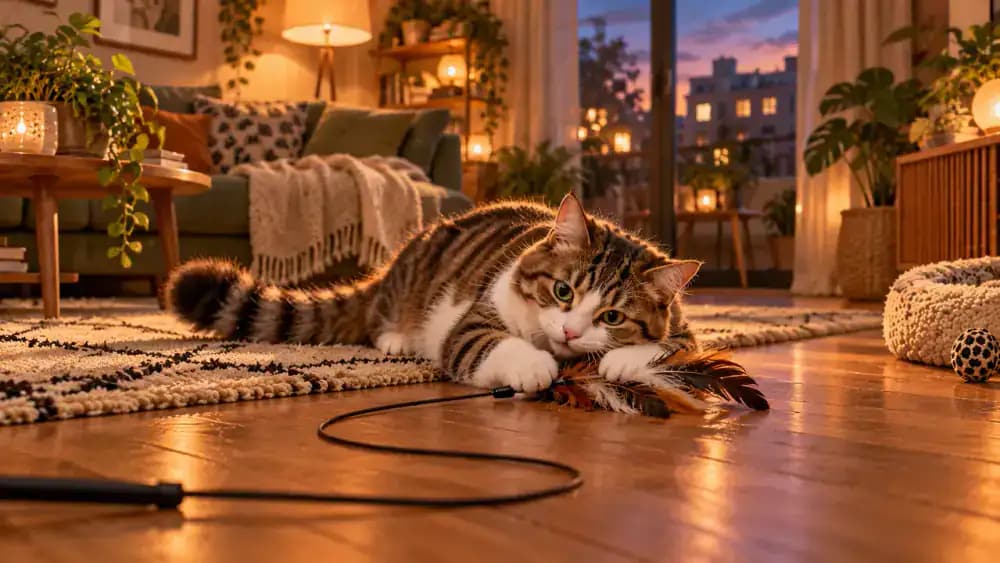
Finish the Chase With Success
Try not to end the main chase while your cat is still intensely pursuing an unreachable target. Gradually slow the movement, offer one final opportunity to pounce, and let the cat hold the toy. A successful final capture creates a clearer transition from active hunting into calmer behavior.
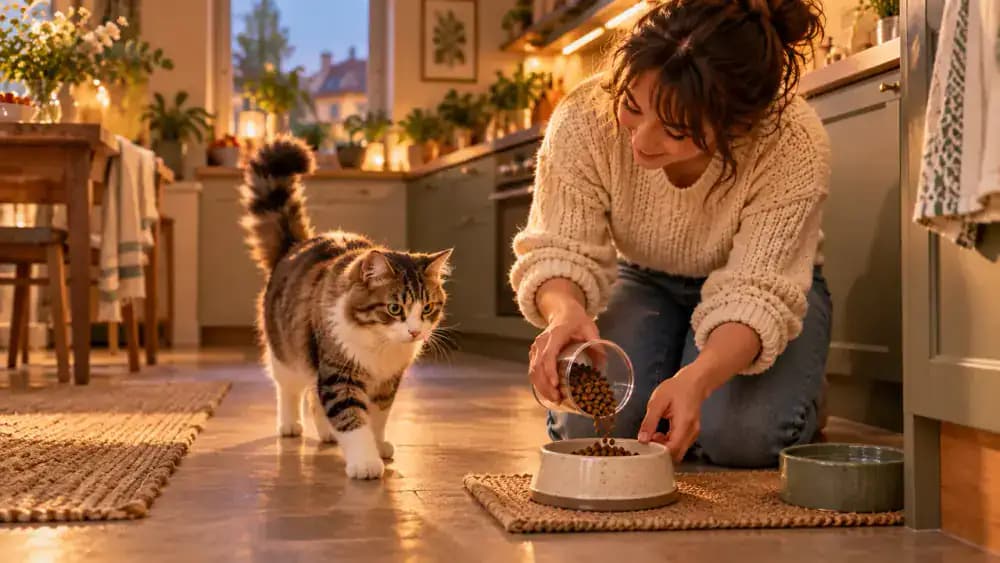
Follow Play With Planned Food
For some cats, a small portion of their regular meal or a few planned treats after play creates a satisfying transition from hunting to eating. You do not need to add unnecessary calories. Reserve part of the normal daily food allowance, especially when play happens shortly before mealtime.
Favor Short Focused Sessions
Interactive play does not need to continue for half an hour to be useful. Several focused minutes may work well when repeated consistently. Younger cats may want greater frequency or duration, while older cats may prefer slower movement, more pauses, and shorter bursts. Prioritize engagement instead of elapsed time.
Spread Play Across the Day
If your schedule allows, consider two or three smaller play opportunities rather than one very long session. Before breakfast, after you return home, or before an evening meal can all work. Consistency is helpful, but do not force activity simply because the clock says it is playtime.

Prepare a Safe Play Area
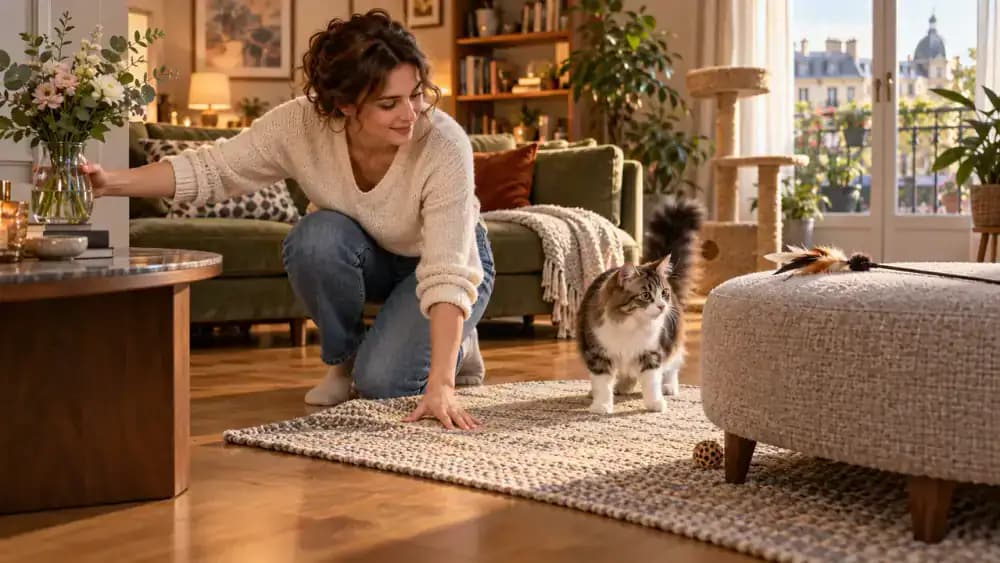
Choose an area where your cat can accelerate, turn, and land without sliding into sharp furniture or unstable objects. Move fragile items first and use rugs for traction on slick flooring. If jumping is part of the game, favor low stable surfaces instead of awkward or dramatic leaps.
Rotate Different Toy Categories
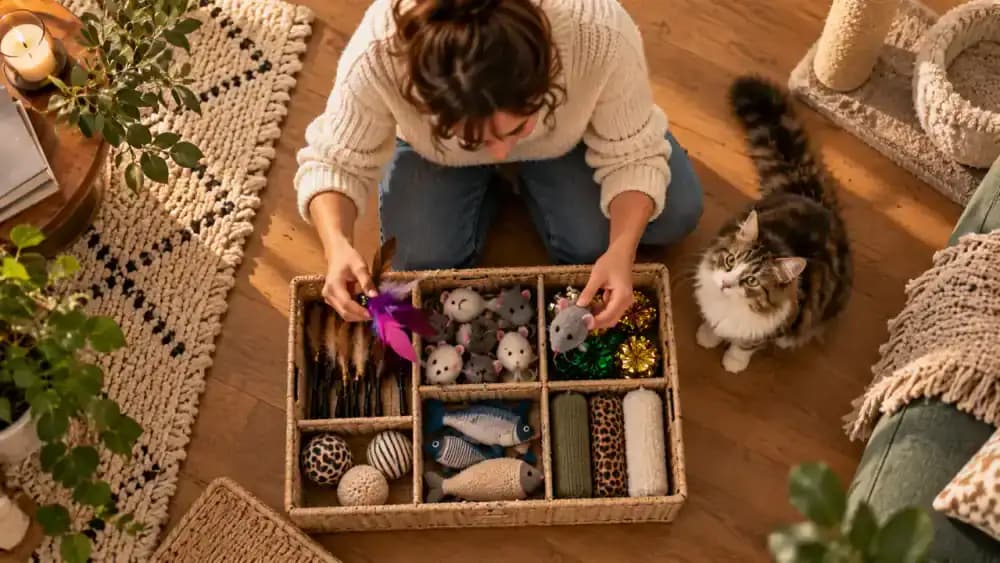
Keep only a few interactive choices in circulation and rotate categories every few days. Mouse-like lures, feathers, fabric strips, crinkle toys, and kickers create different experiences. A familiar toy may become interesting again after being stored out of sight for a while instead of remaining permanent background clutter.
Protect the Value of Favorite Toys
Your cat's favorite toy does not have to appear in every session. Save especially exciting options for selected occasions and use simpler toys at other times. If the favorite suddenly stops producing interest, put it away for a while. Limited access can help preserve the novelty that made it valuable.

Change the Movement, Not Just the Toy
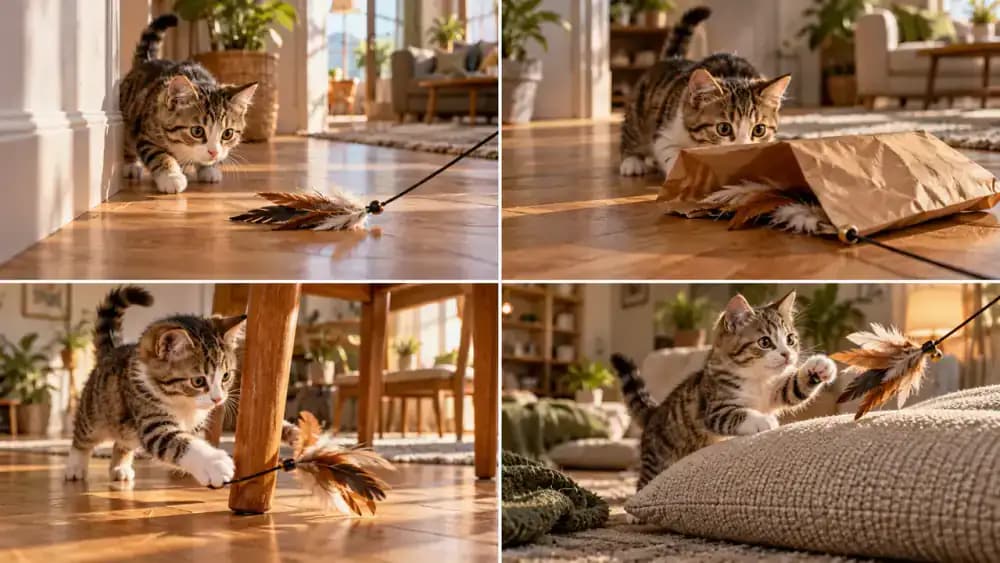
The same toy can feel different when its behavior changes. Let it creep beside a wall, dart beneath an open paper bag, circle a chair, stay close to the floor, or make an occasional low hop. Use the patterns your cat responds to instead of depending entirely on new equipment.
Create Safe Ambush Points
Cardboard boxes, tunnels, open carriers, and safe furniture gaps can provide useful cover. Move the toy past the opening and allow your cat to decide when to strike. Ambush opportunities give cats more control over the interaction and can help cautious cats participate without being exposed in open space.
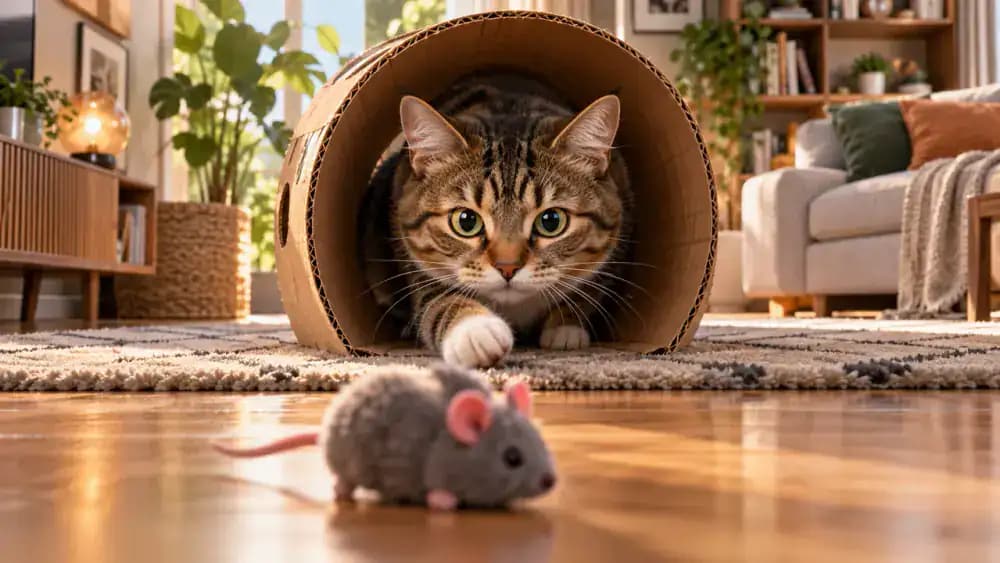
Do Not Force Participation
A cat that watches without chasing may still be engaged in part of the hunting process. Do not poke the toy into the cat's face or repeatedly touch the body with it. Give your cat space, slow the movement, change locations, or simply try again later without turning play into pressure.
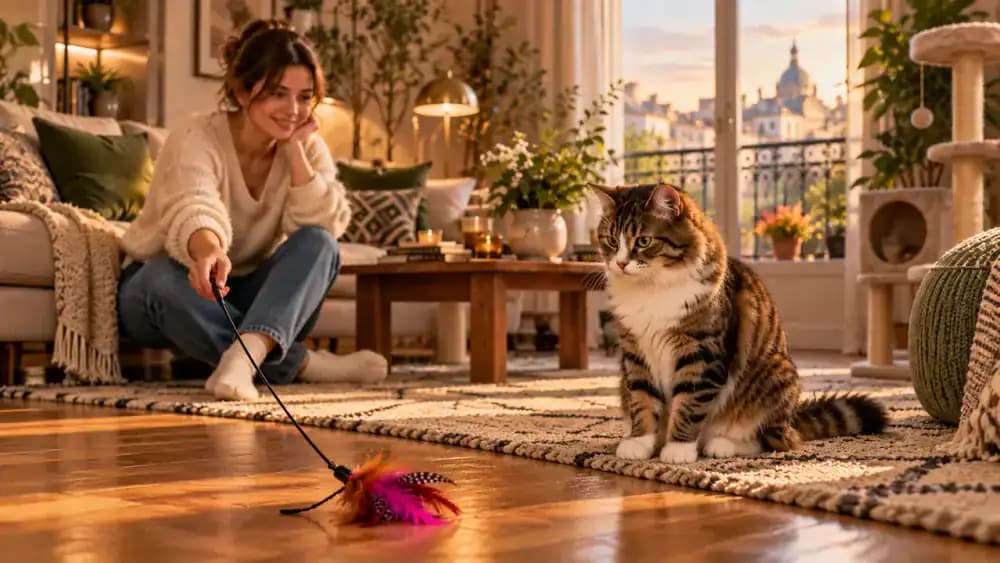
Recognize When the Session Should Stop
Reduce the intensity or stop if your cat becomes unsteady, hides, turns irritable, stops tracking the toy, walks away, or begins panting. Play should never become an endurance challenge. Breathing should settle quickly afterward, and sudden major changes in normal activity or stamina deserve veterinary guidance.
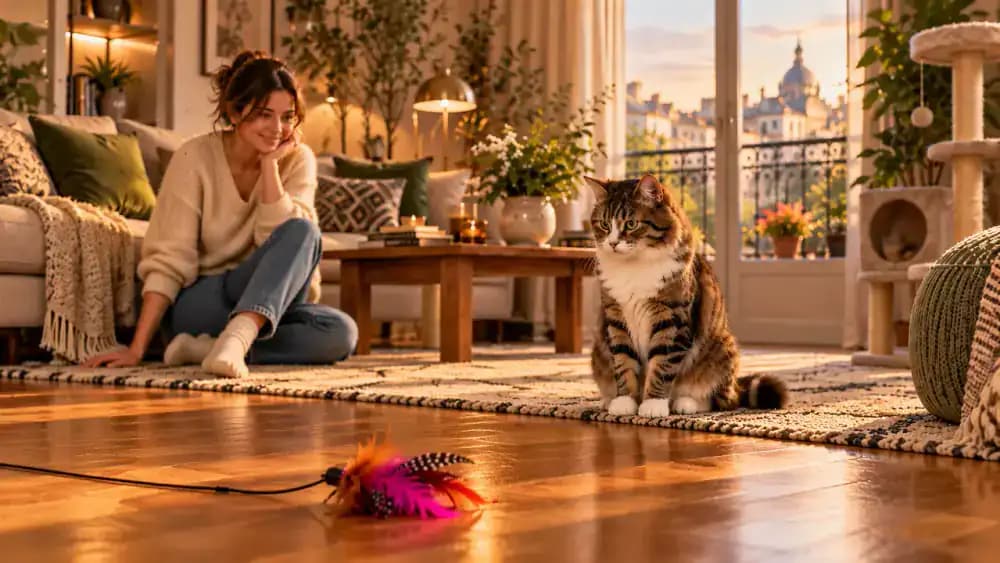
Modify Play for Senior Cats
Older cats can still enjoy interactive play, but they may benefit from slower targets, shorter distances, fewer jumps, and stable surfaces. Encourage gentle stalking and easy ground-level pounces. If your cat has arthritis, heart disease, breathing problems, or another known condition, ask your veterinarian about suitable activity.
Give Kittens Safe Boundaries
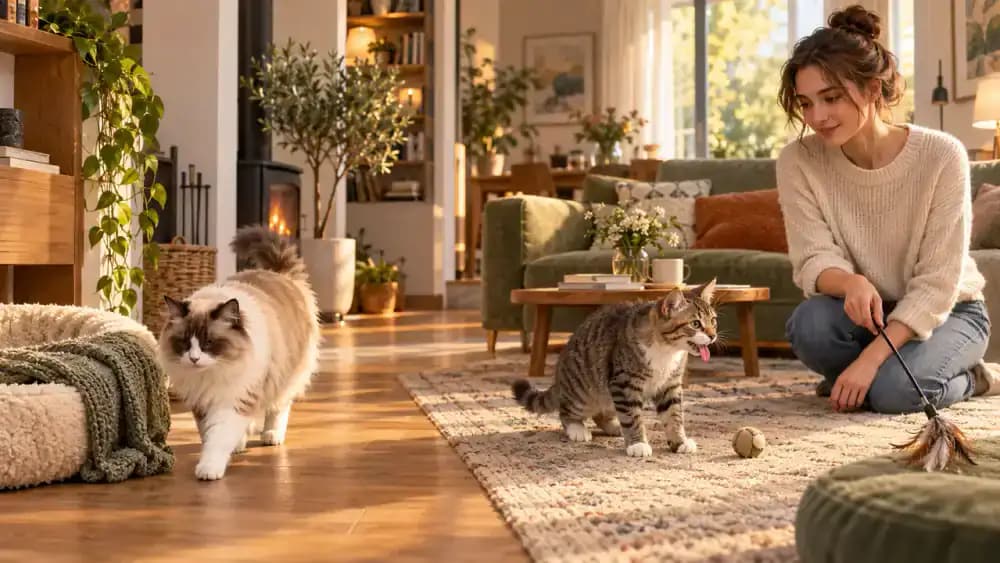
Kittens may have intense energy, so direct that energy toward toys instead of hands. Use interactive equipment that keeps claws and teeth away from skin, provide frequent short sessions, and allow adequate rest. Closely supervise string-based toys and consistently redirect rough play toward appropriate objects rather than fingers.
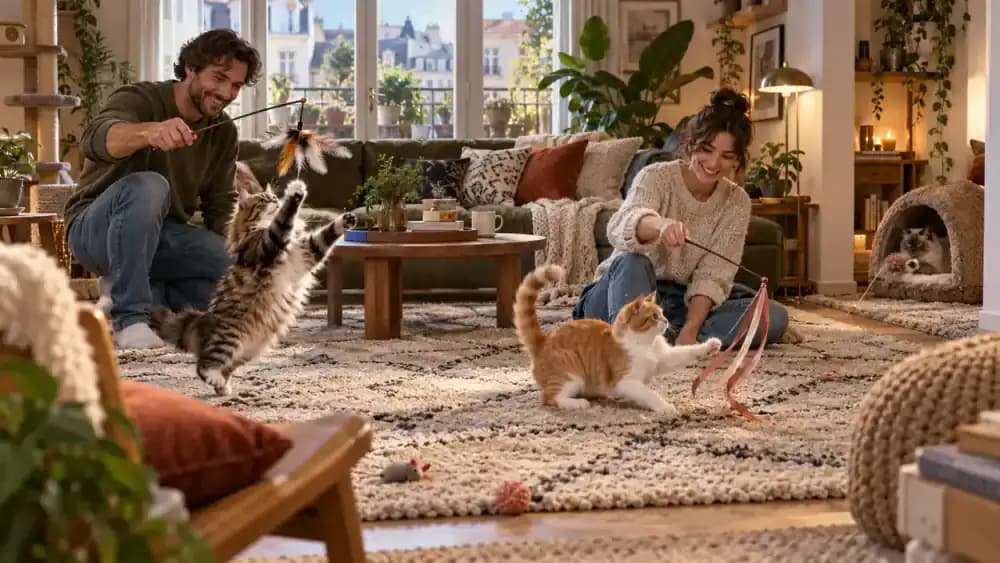
Prevent Competition in Multi-Cat Homes
One confident cat may monopolize the toy while another watches from the edge. Give cats individual opportunities when necessary or use separate toys with enough space between them. Watch for blocking, tension, or one cat stalking another after the session. Enrichment should not create new competition between housemates.
Put String Toys Away After Play
Store wand strings, ribbons, elastic cords, and feather attachments in a closed drawer or container when supervised play ends. Loose materials can be chewed, swallowed, or become tangled around a cat. If you suspect string has been swallowed, contact a veterinarian promptly rather than trying to pull it out.
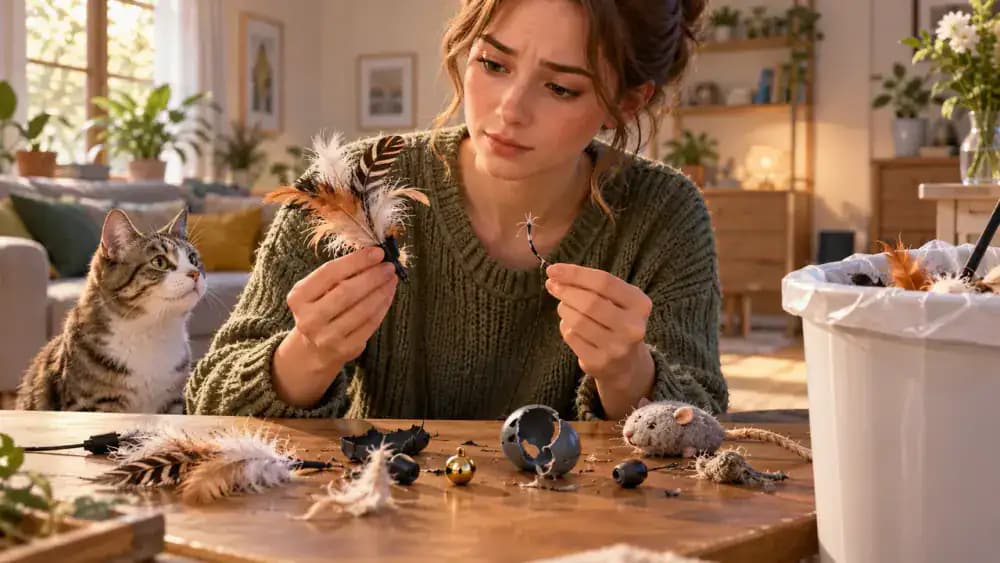
Inspect Every Toy for Damage
Before play, take a few seconds to look for loose feathers, exposed wire, cracked plastic, torn fabric, detached bells, or weakened connections. Cats can dismantle attachments surprisingly quickly during capture. Replace damaged components before the next session instead of waiting until a small defect becomes a swallowing or injury hazard.
Combine Active Play With Puzzle Feeding
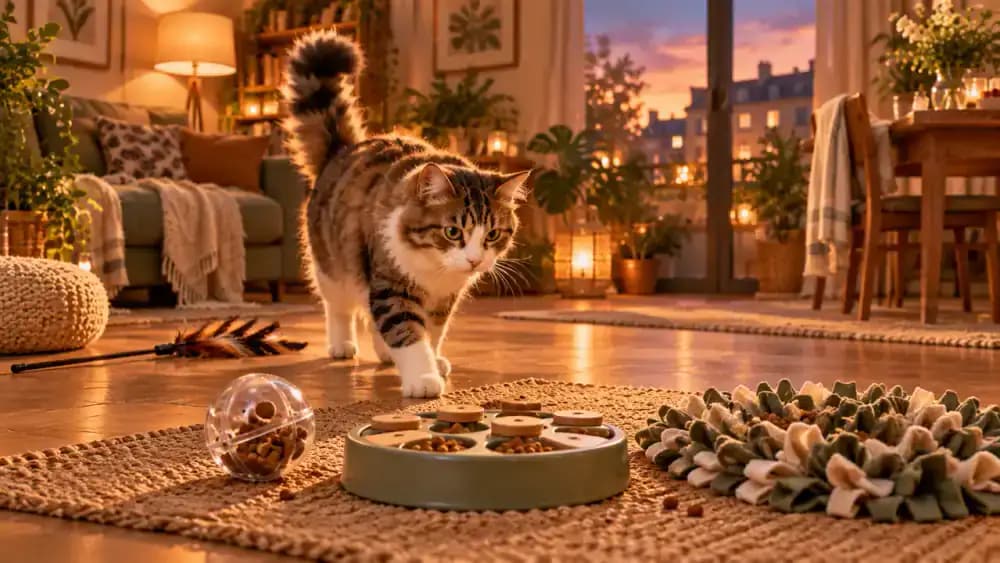
Interactive play and food puzzles provide different forms of enrichment and can complement each other. After active hunting play, place part of the normal meal in a simple puzzle feeder, treat ball, or search setup. Begin with an easy challenge and increase difficulty only when your cat understands the activity.
Notice Which Patterns Work Best
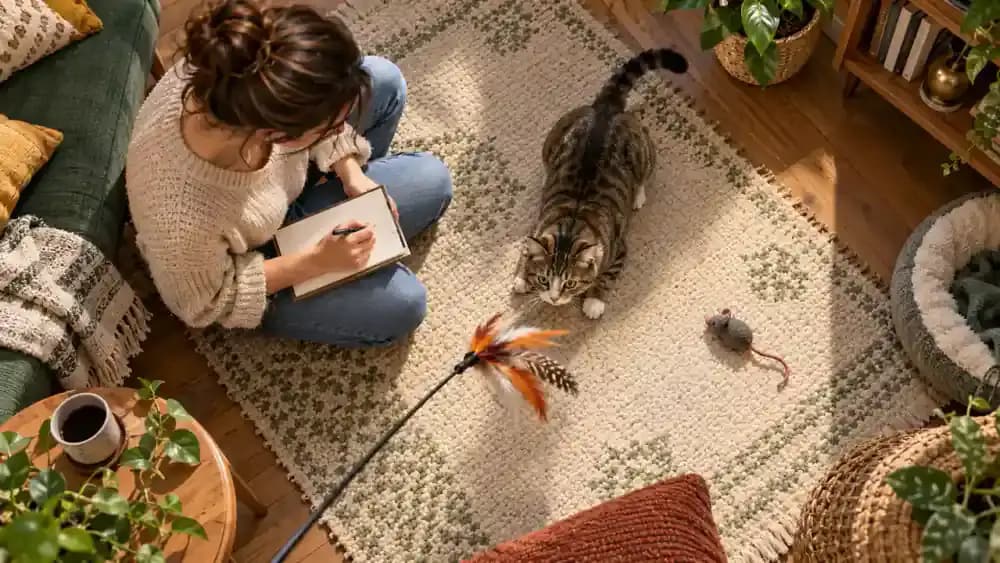
You do not need detailed records, but pay attention to repeated patterns. Notice which toys produce stalking, which movements trigger chasing, when your cat seems most interested, and which sessions end calmly. After several days, those observations can help you build a routine around your cat instead of a generic formula.
Build a Flexible Weekly Rotation
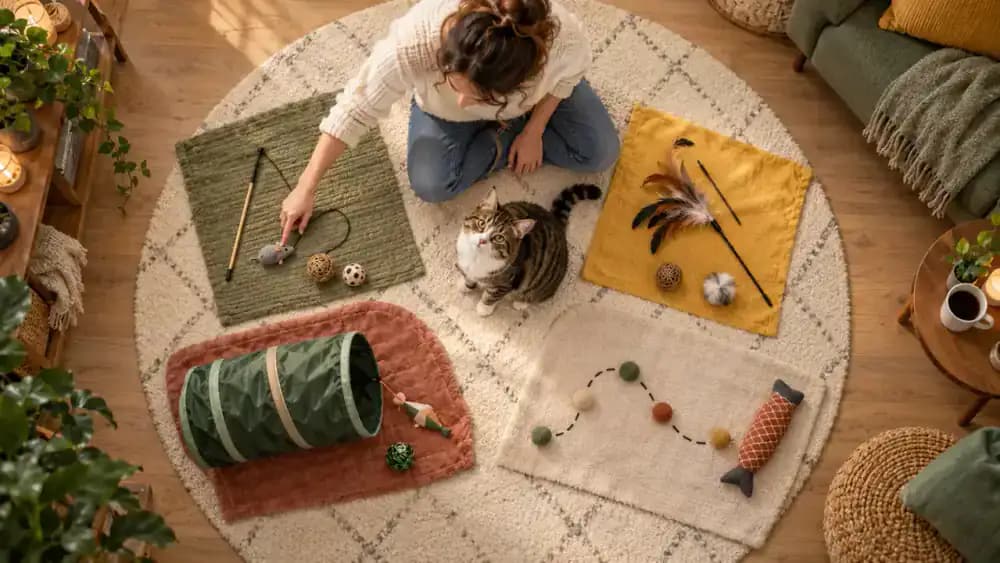
Create enough structure to encourage variety without making the schedule rigid. You might use a mouse-style wand Monday, feathers Tuesday, a tunnel and fabric strip Wednesday, and a floor chase with a kicker Thursday. Reuse favorite categories later while changing movement patterns, locations, or combinations to maintain interest.
Let the Environment Settle Afterward
Following the final capture and optional food, lower the activity level and put unsafe toys away. Give your cat space to groom, observe, or rest. The goal is a satisfied cat rather than a frantic one. A calm finish can be especially useful when interactive play happens before your bedtime.

Repeat the Complete Play Sequence
Use a simple formula you can repeat and personalize: observe, invite, stalk, chase, capture, finish, and rotate. Keep the activity short, safe, and responsive to the cat in front of you. Once play resembles a recognizable hunting sequence, it becomes structured enrichment rather than random exercise with a moving toy.
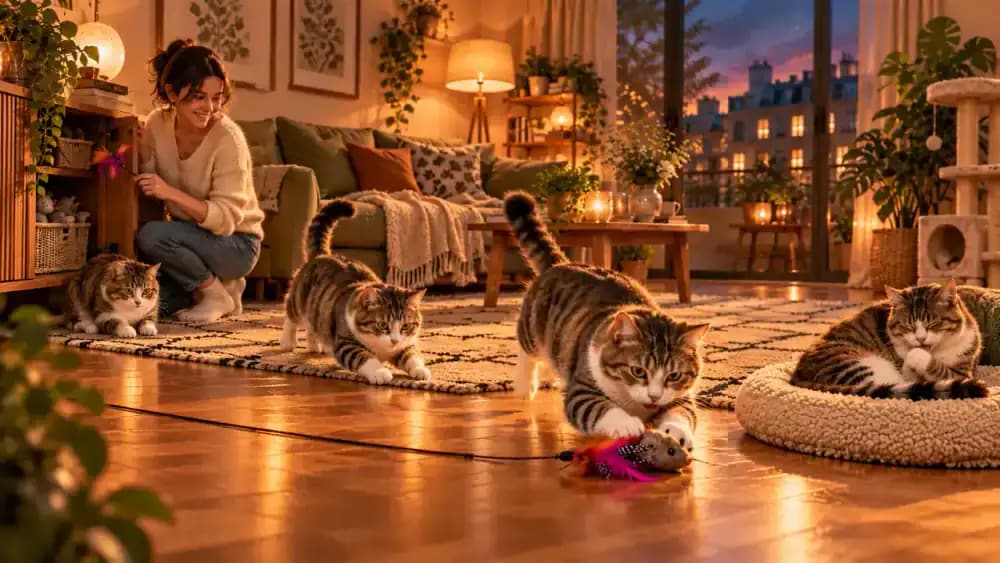
Interactive play can do much more than give an indoor cat something to do. The most effective sessions imitate parts of a natural hunting sequence while keeping the environment controlled and safe. Instead of waving a toy randomly until your cat gets tired, you can create opportunities to watch, stalk, chase, capture, wrestle, eat, and settle. The routine should respond to the individual cat rather than forcing every cat into the same schedule or intensity. Use the steps below to build a repeatable play pattern that stays interesting without turning play into an endurance test.
Where people go wrong
Making the Toy Impossible to Catch. Constantly pulling the target away can create frustration. Slow it regularly so your cat can pounce, hold, and complete the capture.
Starting at Maximum Speed. Frantic movement skips the stalking phase. Begin with subtle motion and pauses before adding a short chase.
Using Hands as Prey. Encouraging attacks on fingers can teach unwanted play habits. Keep teeth and claws directed toward appropriate toys.
Forcing a Disinterested Cat. Watching without chasing is not necessarily failure. Give your cat space instead of pushing the toy into its face or body.
Leaving String Toys Unattended. Wand strings, ribbons, and elastic materials should be stored securely after supervised play.
Ignoring Toy Damage. Loose feathers, wire, bells, torn fabric, and cracked connectors should be addressed before another play session.
Questions people ask
There is no universal duration. Many cats respond well to several focused minutes at a time, with the pace and length adjusted to age, mobility, energy, and interest.
Fixed it?
Get one guide like this every Thursday.