How to Choose the Right Location for Your Cat's Litter Box
Discover where to put your cat's litter box for comfort, privacy, and easy access. Learn which locations to avoid, how to accommodate multiple cats, and how to create a setup your cat feels comfortable using.

What you’ll need
Tap to tick things off before you start.
Why Your Cat Avoids a Clean Litter Box
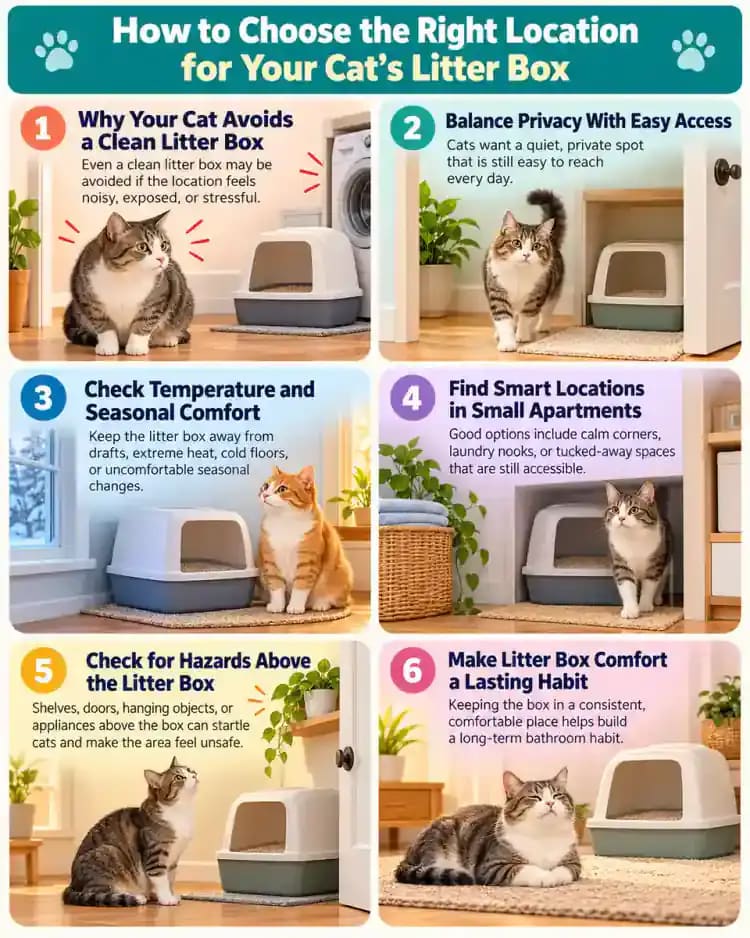
Watch how your cat approaches its freshly cleaned litter box. If it pauses, looks around, or walks away, consider whether the location feels uncomfortable or unsafe. Fresh litter alone may not encourage use. Before replacing the box or switching litter brands, observe nearby activity, potential disturbances, and anything that might make your cat hesitant.
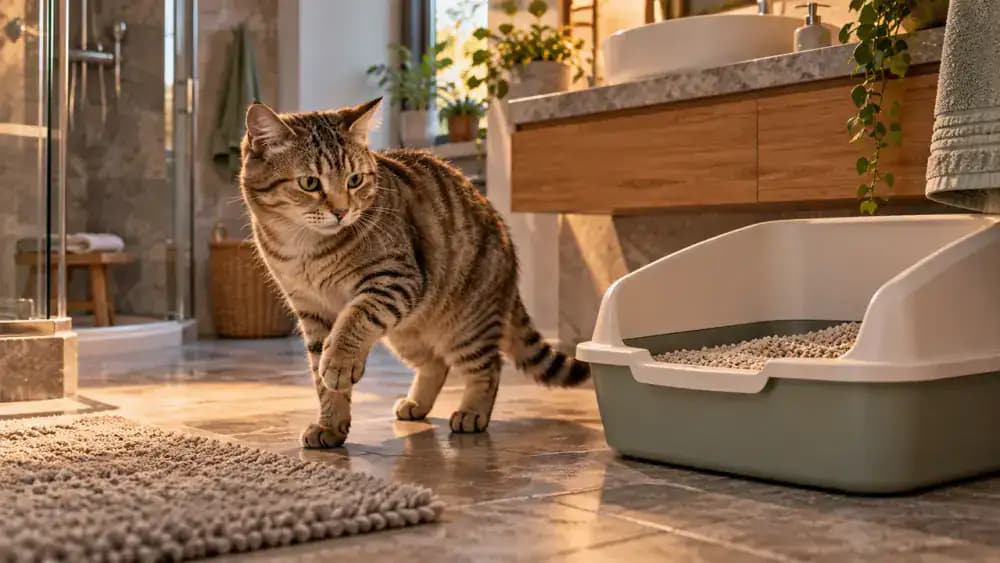
Keep the Litter Box Away From Sudden Noises
Listen for sudden noises around your cat's litter box throughout the day. Washing machines, dryers, slamming doors, and other appliances can startle a cat during bathroom time. Check whether these disturbances occur regularly, especially when household equipment runs. Whenever possible, choose a quieter location away from unpredictable sounds and vibrations.
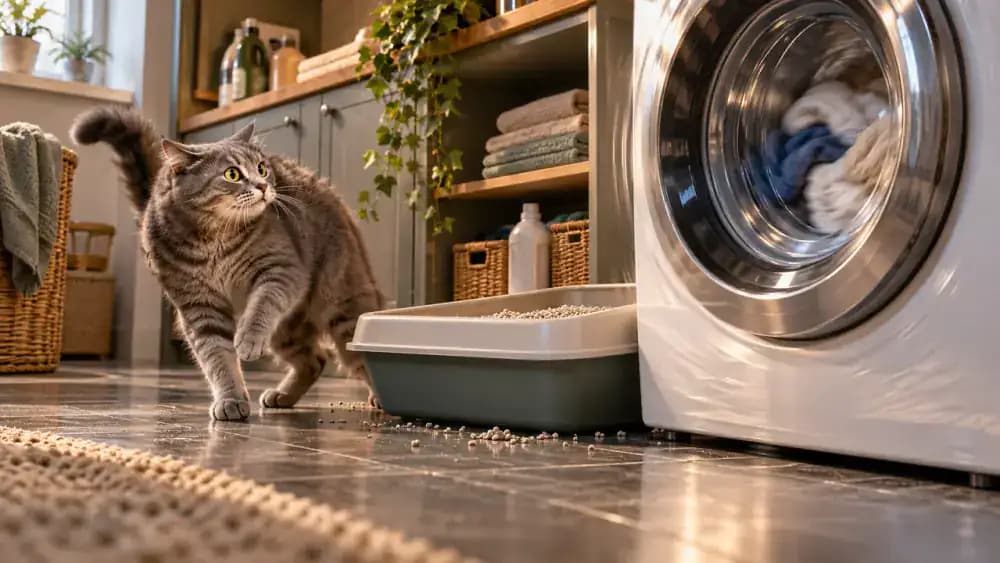
Avoid Busy Hallways and Heavy Foot Traffic
Observe how frequently people pass through the area surrounding your cat's litter box. Busy hallways, entryways, and family gathering spaces can interrupt your cat while digging or eliminating. Choose a quieter room or corner away from regular foot traffic, but keep the location easy to reach throughout the day and night.

Separate Litter Boxes From Food and Clutter
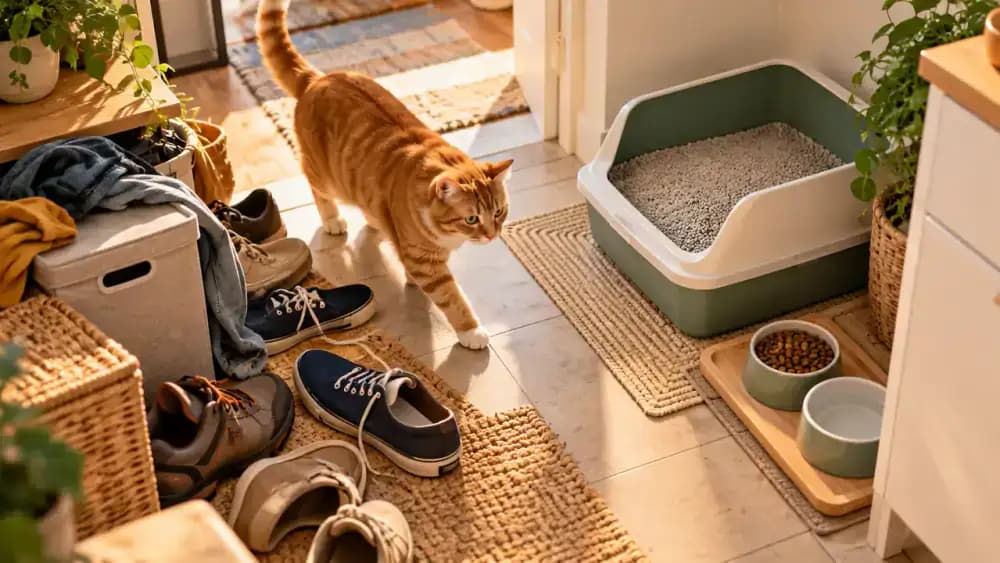
Check whether food bowls, water dishes, shoes, or stored supplies crowd the litter box. Cats generally prefer their bathroom area separate from feeding stations, and clutter can make access difficult. Move food and water to another suitable location, remove obstacles, and leave enough open floor space for your cat to approach comfortably.
Give Your Cat a Clear Escape Route
Examine whether your cat can enter and leave the litter box without feeling trapped. Avoid wedging it between tall cabinets or placing it where another pet could block the only exit. Position the box beside a wall with generous open space around the entrance, allowing your cat to notice approaching activity and leave comfortably.
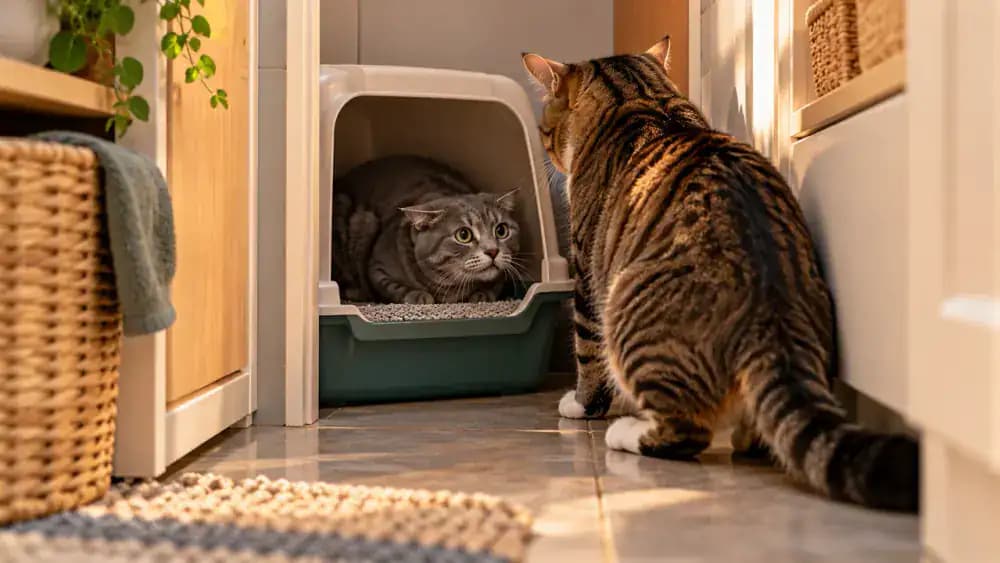
Balance Privacy With Easy Access
Choose a litter box location that offers some privacy without making access difficult. Avoid closets with doors that might close and cabinets with narrow entrances or poor ventilation. Covered boxes work for some cats but can feel restrictive to others. A partially sheltered alcove with an open entrance often provides a comfortable balance.
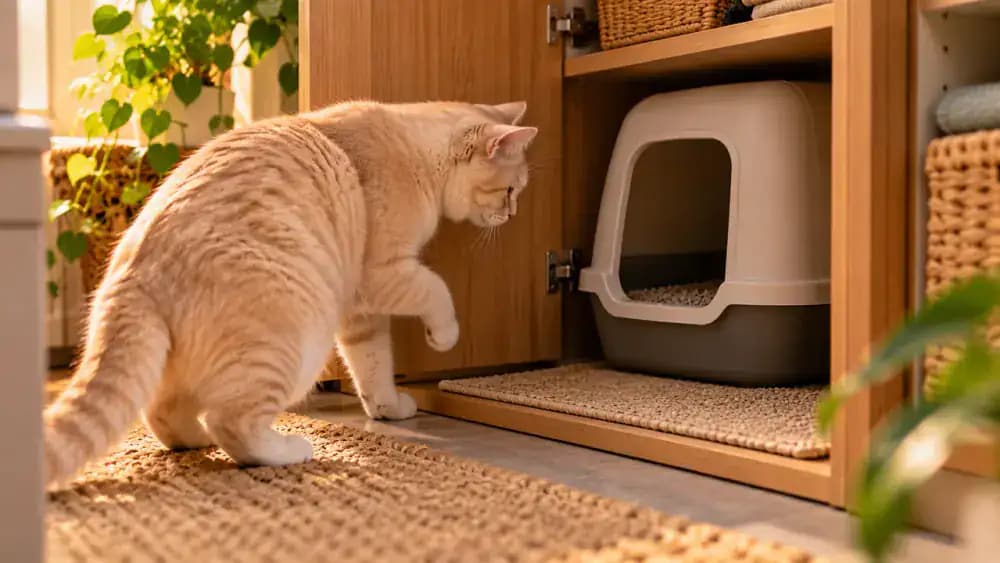
Choose a Consistently Accessible Location
Select a quiet, well-ventilated area your cat can access at any time. Check that doors stay open, flooring is level, and the litter box remains stable during use. Leave enough space for your cat to enter, turn around, and exit comfortably. Consider daily household routines to ensure the location stays practical even during busy periods.
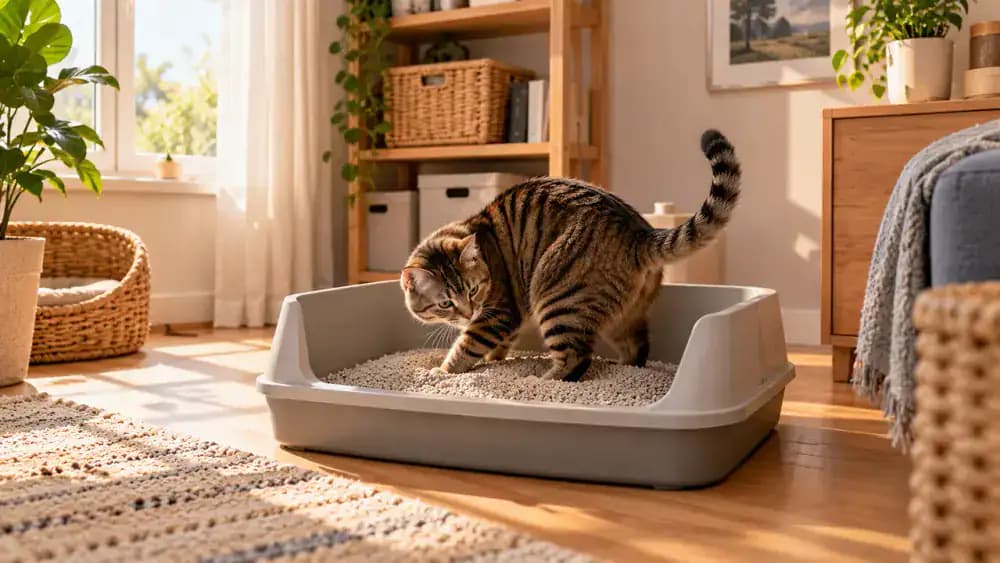
Adapt the Location to Your Cat's Needs
Adjust litter box placement to your cat's age, mobility, and daily habits. Keep shallow, easy-entry trays near areas kittens frequently use. For senior cats, avoid stairs and choose low-entry boxes in convenient locations. In multi-story homes, provide at least one accessible box on each floor. Observe your cat's preferences and adjust placement accordingly.

Provide Enough Boxes for Multiple Cats
For multi-cat households, start with one litter box per cat plus one extra. Three cats, for example, should have four boxes available. Distribute them among separate rooms rather than placing every tray together. This arrangement offers alternative routes and reduces opportunities for one cat to block another's access. Monitor interactions and adjust locations when necessary.

Protect the Litter Box From Dogs
Keep your cat's litter box somewhere household dogs cannot investigate or interrupt bathroom visits. A secure pet gate with a cat-sized opening can create a protected area while preserving easy access. Check that your cat can pass through comfortably and that the dog cannot reach the tray. Avoid barriers that could trap or frighten your cat.
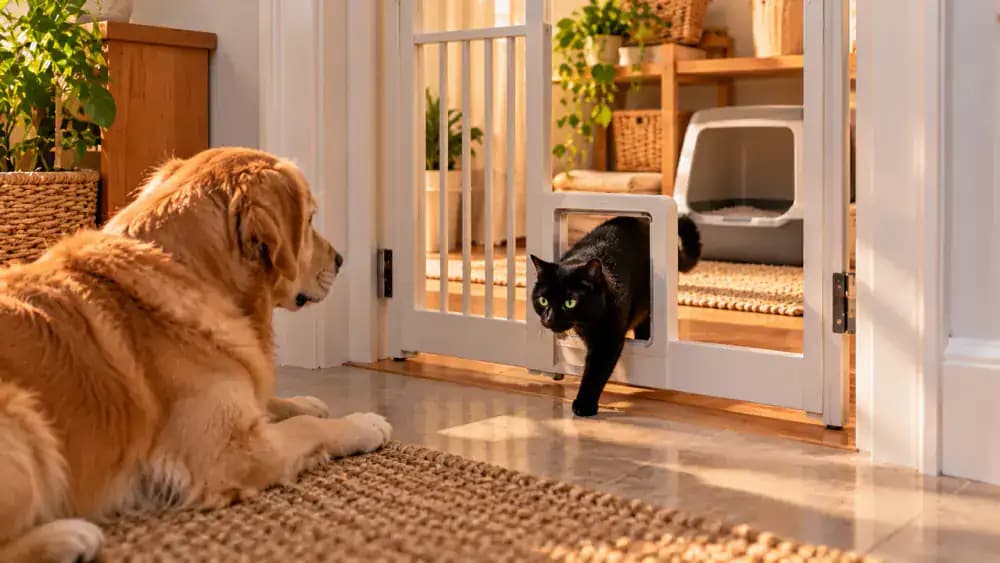
Keep Young Children Away From the Litter Area
Place your cat's litter box away from children's play areas to prevent interruptions and unwanted contact with litter. Toddlers should not be able to reach the tray without supervision. Consider installing a secure gate with a cat-sized opening, ensuring your cat can enter comfortably while adults retain convenient access for regular cleaning and maintenance.

Check Temperature and Seasonal Comfort
Check the temperature around your cat's litter box during different seasons and times of day. Unheated porches can become uncomfortably cold, while enclosed sunrooms may overheat during summer. Use a thermometer to identify significant temperature changes and watch for drafts near doors or windows. Choose an indoor location with comfortable, relatively consistent conditions year-round.

Avoid Strong Fragrances Around the Box
Remove strong fragrances from the area surrounding your cat's litter box. Plug-in air fresheners, scented sprays, and heavily perfumed cleaners can make the space unpleasant for sensitive feline noses. Keep chemical products securely stored away from pets, and clean nearby surfaces with appropriate unscented products. A well-ventilated, fragrance-free location is a better starting point.
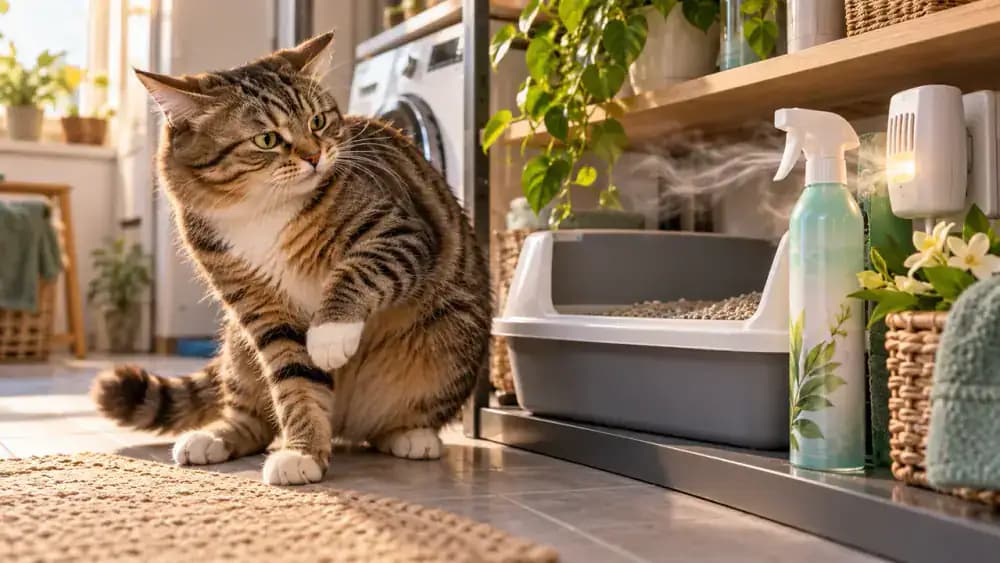
Make Nighttime Access Comfortable
Walk the route to your cat's litter box after dark to identify obstacles, closed doors, or difficult stairways. Keep hallways clear and maintain a predictable path throughout the night. If your cat has trouble navigating dim spaces, add a gentle night-light near the route. Senior cats may benefit from an additional accessible box on their main floor.
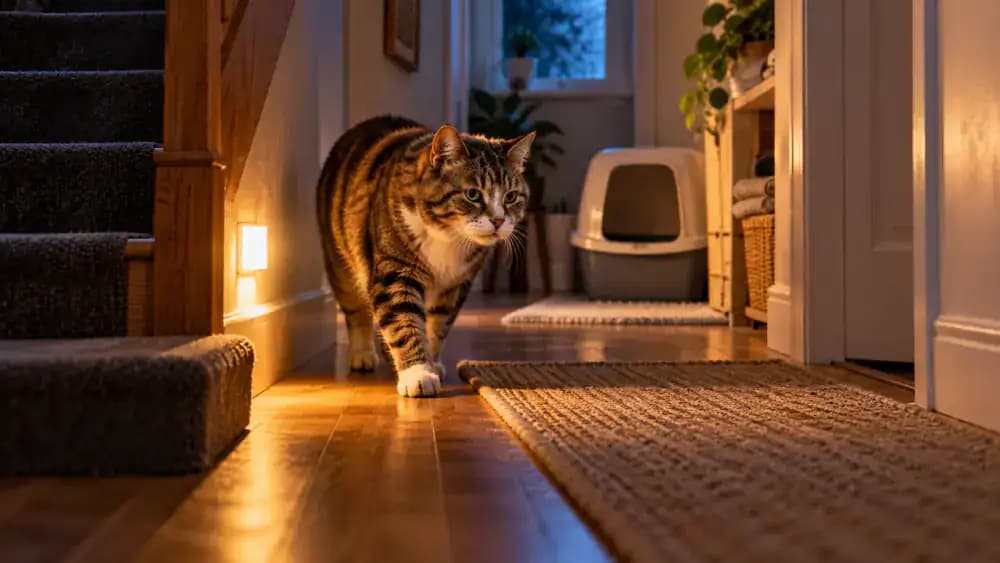
Introduce a New Location Gradually
Introduce a new litter box location without immediately removing your cat's familiar setup. Place a second box in the preferred spot, fill it with familiar litter, and allow your cat to investigate naturally. Keep both boxes clean and observe usage over several days. Once the new location is used consistently, consider whether removing the original box is appropriate.
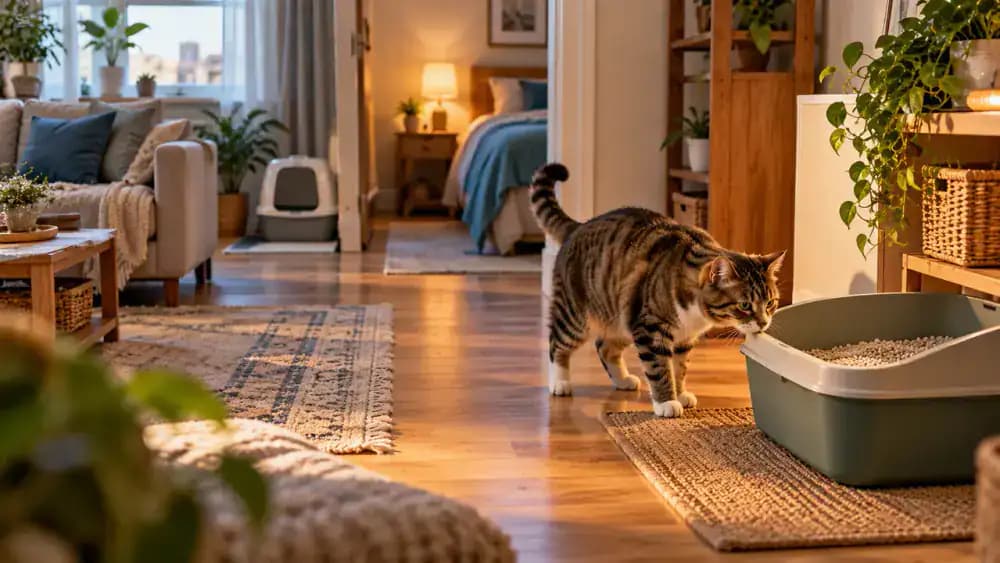
Monitor Results and Recognize Health Problems
Watch how your cat responds to the new litter box location, noting relaxed approaches, consistent use, or renewed hesitation. Scoop regularly and reassess placement when household routines change. Sudden litter box avoidance or signs of discomfort require veterinary attention. Repeated straining or unsuccessful attempts to urinate warrant immediate veterinary care, regardless of placement.

Leave Room for Easy Cleaning
Allow enough space around the litter box for comfortable scooping, lifting, and floor cleaning. Avoid squeezing the tray beneath crowded shelves or between heavy furniture that makes maintenance difficult. Test whether you can remove the entire box without spilling litter or shifting objects. An accessible cleaning area encourages consistent upkeep and helps maintain a comfortable environment.
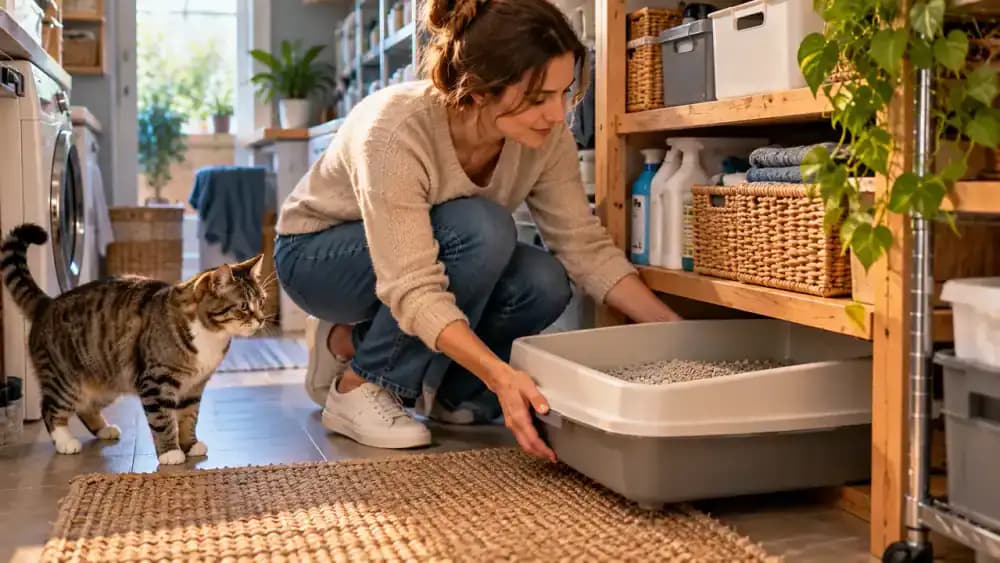
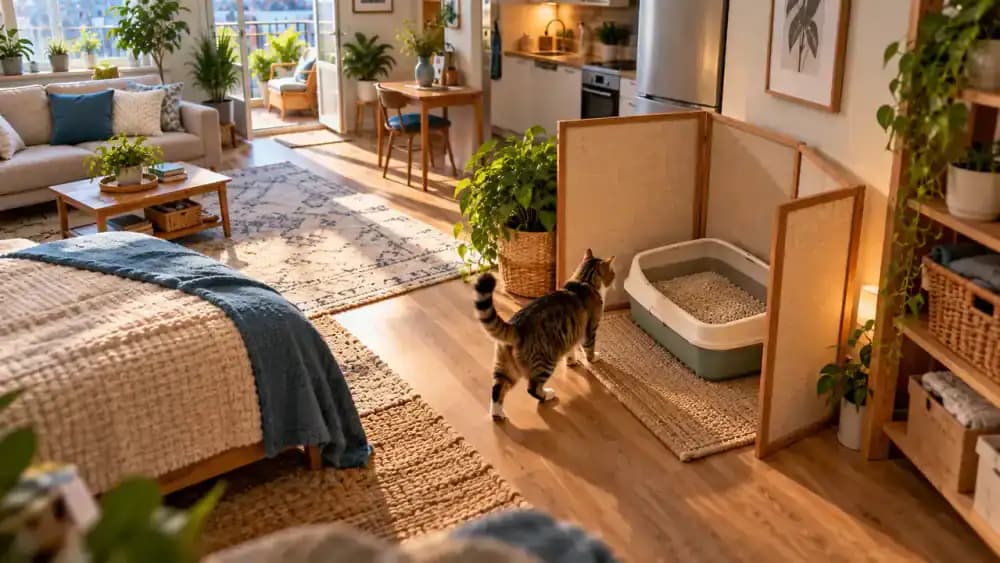
Find Smart Locations in Small Apartments
In a small apartment, look for a quiet wall or low-traffic corner rather than placing the litter box in the center of daily activity. A lightweight decorative screen can provide partial privacy without enclosing the space. Keep the entrance wide and unobstructed, maintain adequate ventilation, and ensure your cat can access the box whenever needed.
Be Careful With Hidden Litter Box Furniture
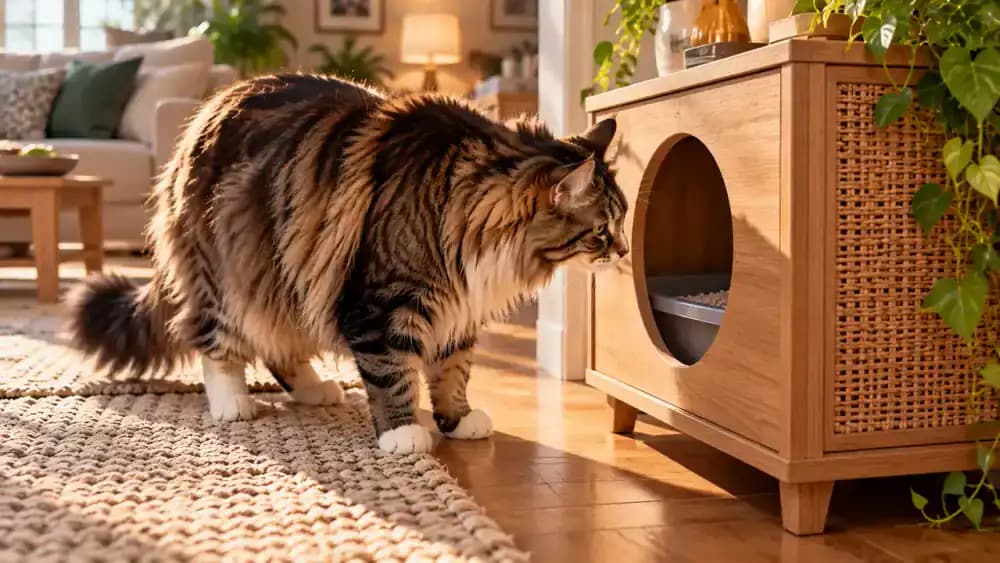
Inspect decorative litter box cabinets before choosing one for your home. Measure the entrance and interior to ensure your cat can enter, turn around, and exit without squeezing through tight spaces. Check ventilation and confirm the tray is easy to remove for cleaning. If your cat hesitates at the opening, consider a larger or uncovered alternative.
Keep the Surrounding Space Consistent
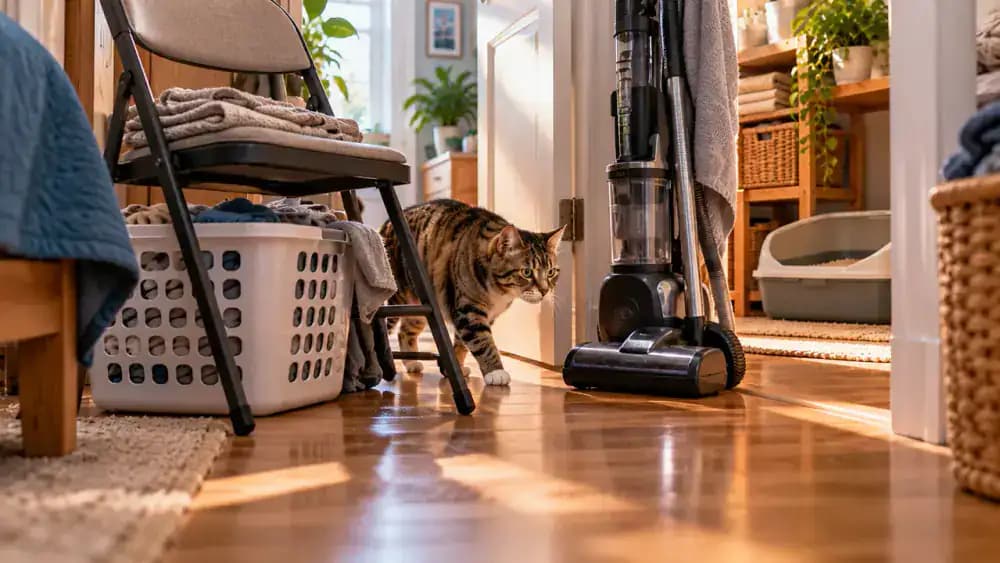
Keep the area around your cat's litter box free from objects that could suddenly block access. Laundry baskets, folding chairs, and vacuum cleaners can turn a familiar route into an obstacle course. Establish a clear zone around the entrance and encourage household members to maintain it. Check the pathway regularly, especially after cleaning or rearranging furniture.
Respect Your Cat's Favorite Locations
Pay attention if your cat repeatedly visits a particular quiet corner or seems to prefer one area over another. That preference may reflect comfort, accessibility, or fewer disturbances. If the location is safe and practical, try placing an additional litter box nearby. Observe whether your cat uses it willingly before making further changes to the setup.

Test the Route From Your Cat's Perspective
Walk from your cat's favorite resting areas to each proposed litter box location. Look for closed doors, narrow passages, awkward turns, or furniture that could make access difficult. Compare routes at floor level and consider how household activity changes throughout the day. Favor a direct, predictable path that your cat can use without unnecessary obstacles.
Create a Litter Box Location Your Cat Trusts
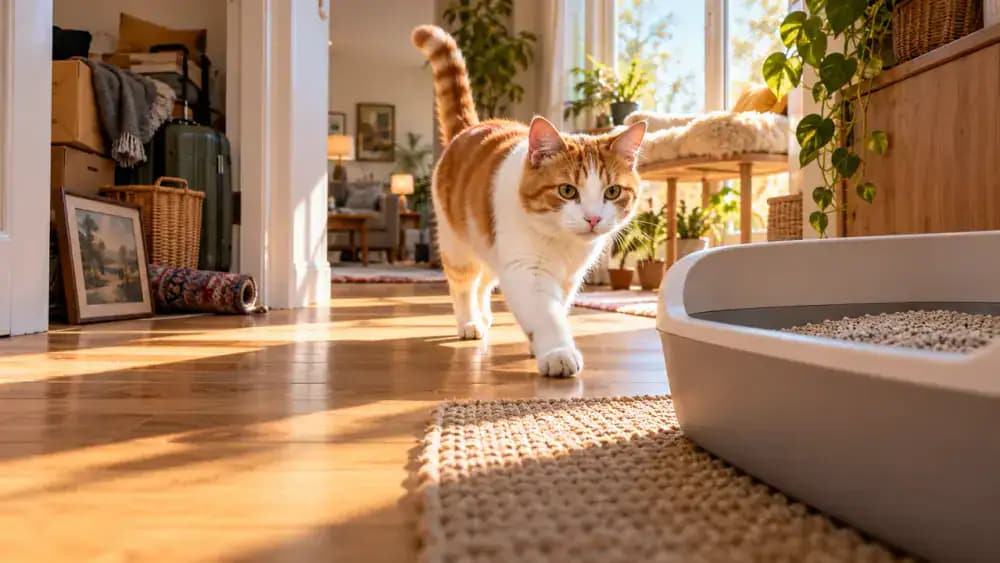
Review your chosen litter box location for quiet surroundings, easy access, adequate ventilation, comfortable temperatures, and clear entry and exit space. Keep the box clean and its surroundings consistent. Watch whether your cat approaches and uses it comfortably, making adjustments when needed. A dependable setup supports relaxed bathroom habits and a more comfortable home.
Check for Hazards Above the Litter Box
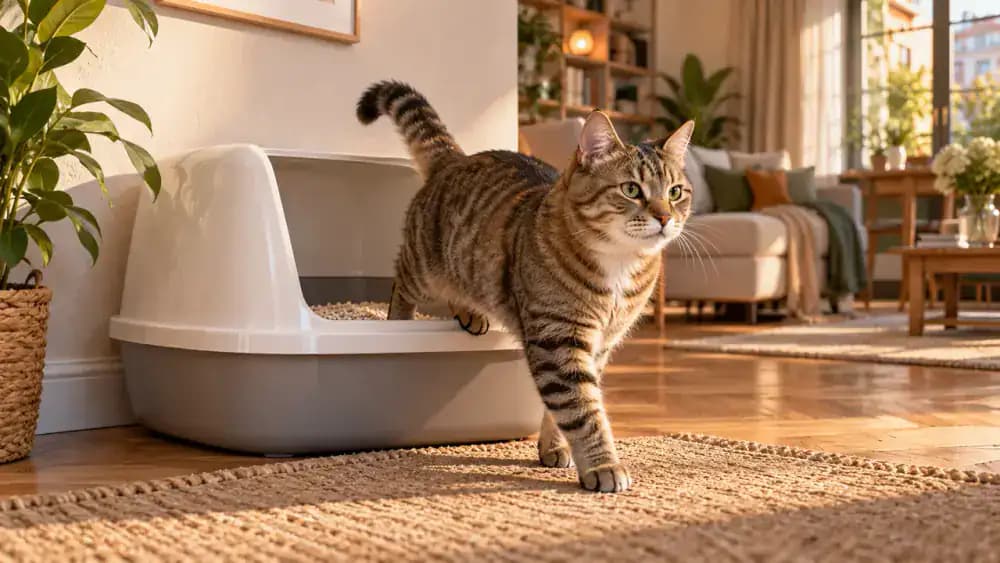
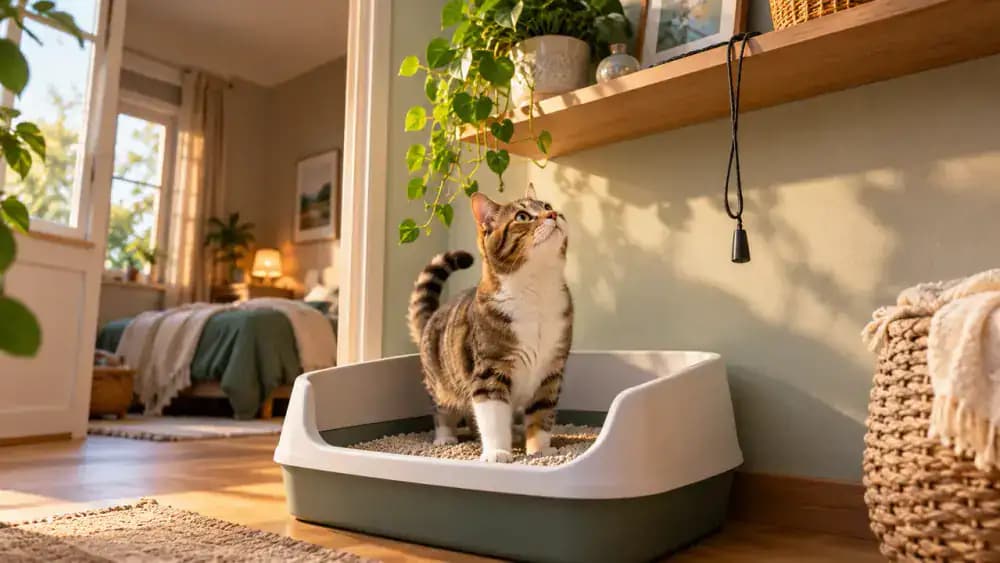
Inspect the wall and ceiling area above your cat's litter box for objects that could fall or cause injury. Remove loose decorations, secure unstable shelves, and keep dangling cords out of reach. Avoid storing heavy items directly overhead. Check nearby fixtures periodically to maintain a safe, predictable environment where your cat can move without unexpected hazards.
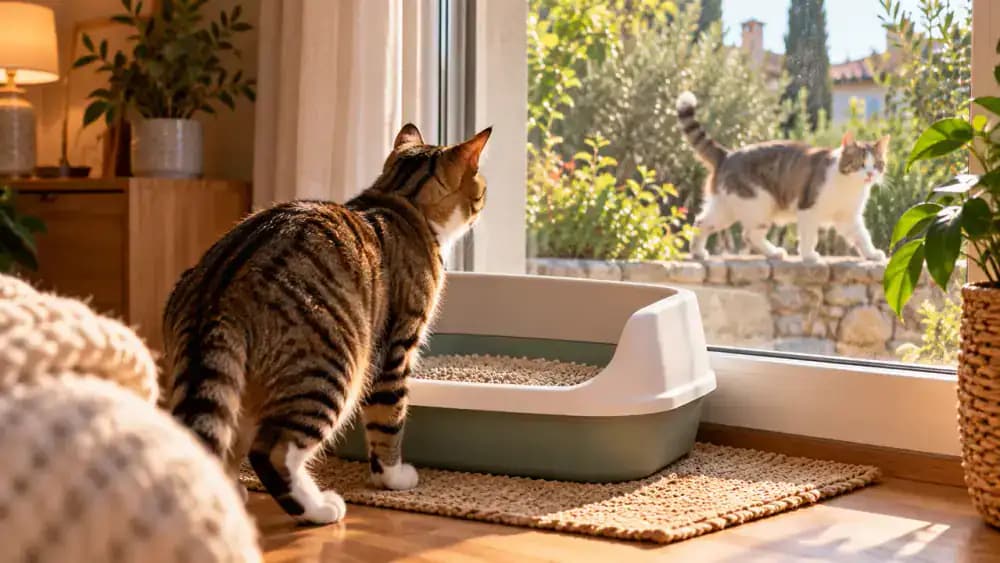
Consider Outdoor Distractions Near Windows
Check whether your cat's litter box sits beside a window overlooking busy outdoor areas. Unfamiliar cats or other animals passing outside may distract or unsettle your cat during bathroom visits. If your cat frequently freezes, stares, or retreats, move the box farther from the window or add a translucent blind to reduce visual disturbances.
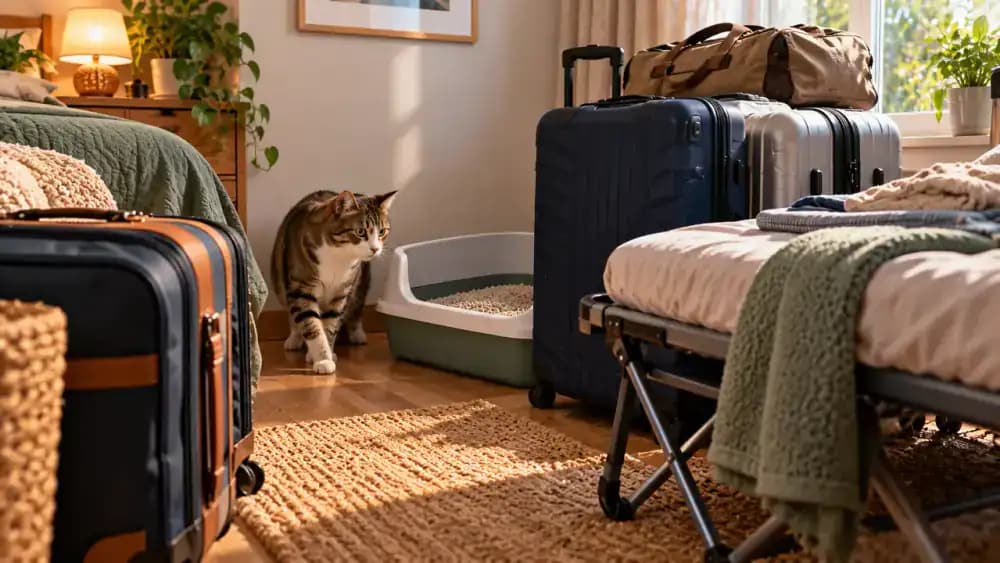
Prepare for Guests and Special Occasions
Before hosting overnight guests or celebrations, check whether temporary furniture, suitcases, and increased activity could disrupt your cat's litter box access. Keep the usual location available whenever possible, and provide an additional box in a quieter area if needed. Introduce the alternative before guests arrive so your cat can explore it without pressure.
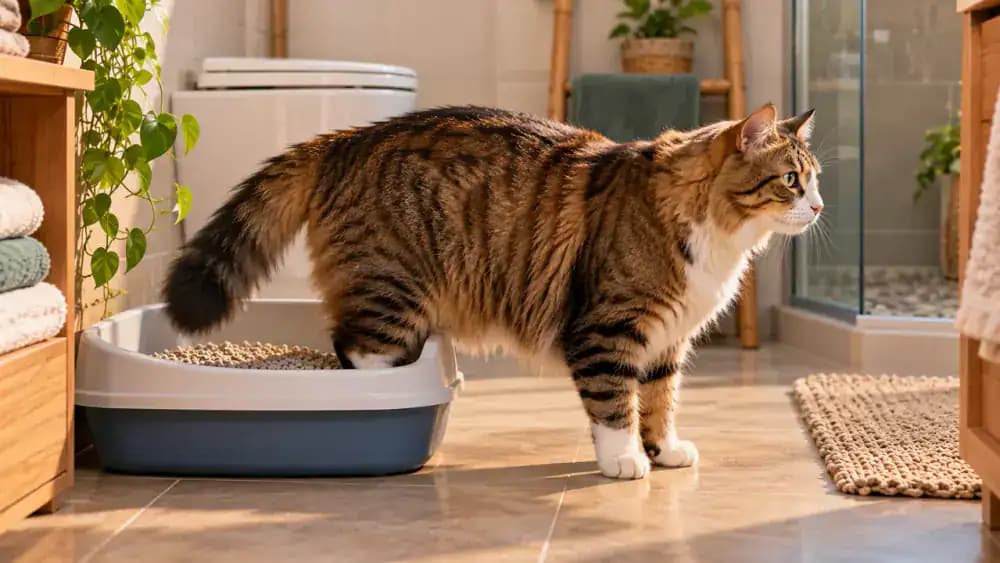
Understand Accidents Near the Litter Box
If your cat eliminates beside the litter box, examine its size, entrance position, and surrounding clearance. A cramped tray may leave part of your cat's body outside, even when it enters normally. Try a larger box with sufficient turning space and an accessible entrance. Contact your veterinarian about persistent accidents or accompanying signs of discomfort.
Rebuild Confidence After a Bad Experience
If your cat becomes hesitant after a frightening experience near its litter box, avoid forcing it back into that location. Offer a second clean box in a quiet, accessible area and allow your cat to investigate voluntarily. Keep interactions calm, provide gentle encouragement, and never punish avoidance or accidents. Predictable, comfortable experiences may gradually restore confidence.
Create a Family Litter Box Routine
Discuss litter box responsibilities with everyone in your household. Agree on daily scooping, cleaning schedules, supply storage, and which doors must remain open for your cat. Use a simple refrigerator checklist to assign tasks and prevent missed maintenance. Remind family members to keep pathways clear and avoid disturbing your cat during bathroom visits.

Make Litter Box Comfort a Lasting Habit
Reevaluate your cat's litter box location as your pet ages, furniture moves, or household routines change. Maintain a quiet, clean, accessible space with comfortable temperatures and an unobstructed exit. Notice whether your cat continues using the box confidently, and make small adjustments when necessary. Consistent attention helps preserve comfortable bathroom habits throughout your cat's life.
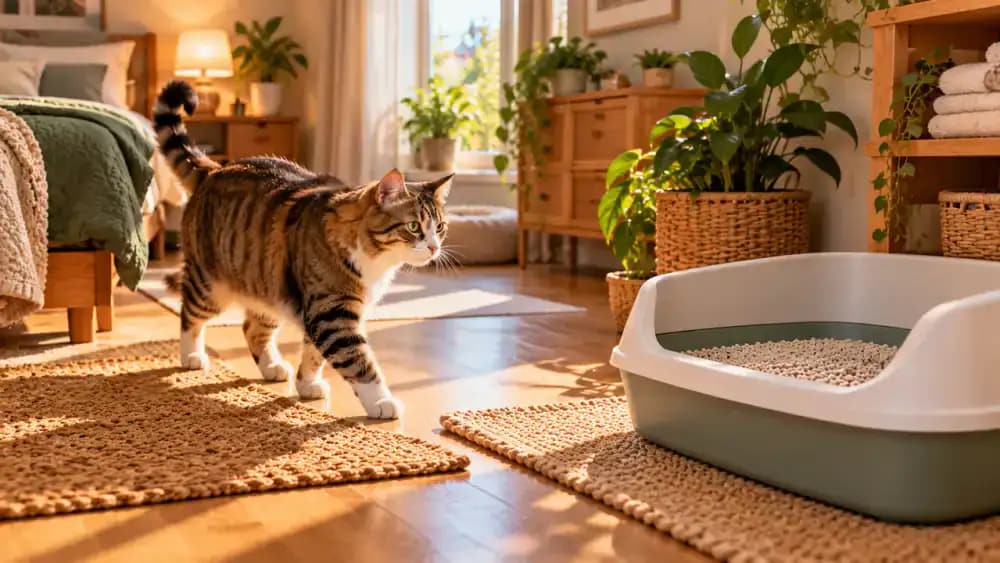
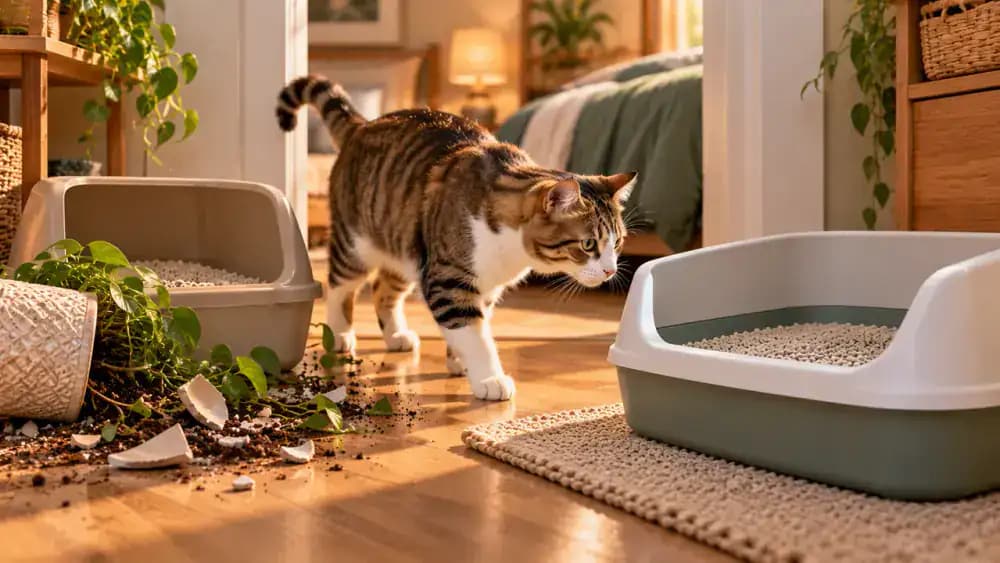
Your cat approaches a freshly cleaned litter box, pauses at the entrance, looks around, and walks away. The litter is fresh, the box is spotless, and everything seems perfect. So why won't your cat use it?
The answer might have nothing to do with cleanliness. The location of your cat's litter box can be just as important as what's inside it. Cats generally prefer a bathroom spot that feels safe, predictable, and easy to access. A box next to a noisy washing machine, in a busy hallway, or behind a door that sometimes closes can make an otherwise perfectly good setup unappealing.
Finding the best location for a cat litter box means balancing privacy with security. Your cat should have enough room to enter, turn around, and leave comfortably without feeling trapped or interrupted. Temperature, lighting, ventilation, and the presence of children or other pets also deserve attention.
Whether you're welcoming a kitten, helping an older cat navigate your home, or managing several cats, thoughtful litter box placement can make everyday life easier for everyone.
This guide covers where to put a litter box, which locations to avoid, how to introduce a new spot gradually, and what to watch for afterward. The goal is simple: a comfortable, accessible bathroom your cat can use with confidence.
Where people go wrong
Placing the Box Next to Loud Appliances. Laundry rooms seem convenient because they're easy to clean, but washing machines, dryers, and HVAC equipment can start suddenly and produce startling vibrations. A cat interrupted during bathroom time may become reluctant to return. If a laundry room is your only practical option, position the box away from machinery and provide another quiet location when possible.
Choosing a Busy Hallway or High-Traffic Room. A litter box beside the front door, in a narrow hallway, or near a children's play area may expose your cat to frequent interruptions. Cats often appreciate some separation from household activity while retaining awareness of their surroundings. Look for a quieter corner with sufficient clearance, and make sure family members won't regularly disturb the cat while it's using the box.
Hiding the Box in a Closet or Enclosed Cabinet. Concealing a litter box inside furniture can improve a room's appearance, but narrow entrances, poor airflow, darkness, and limited escape options may make the space uncomfortable. Doors can also close accidentally and block access. If you use an enclosed cabinet or closet, provide reliable ventilation, a generous opening, and enough interior space for easy movement.
Putting the Litter Box Beside Food and Water. Cats generally prefer their bathroom area to be separate from places where they eat and drink. Placing litter immediately beside food bowls may discourage use of the box or create an unpleasant feeding environment. Keep these resources in distinct areas whenever your home's layout allows. Avoid positioning litter boxes near food preparation surfaces as well.
Ignoring Escape Routes and Other Pets. A quiet corner isn't necessarily safe if another cat or a curious dog can block its only exit. Cats may hesitate to use a box when they feel vulnerable to being cornered or interrupted. Provide a clear approach and departure route, avoid tight dead ends, and observe whether household pets interfere with access.
Keeping Every Litter Box in One Location. Placing several litter boxes directly beside one another may seem efficient, but it doesn't provide separate access if one cat guards the area. In multi-cat homes, distribute boxes across different rooms or floors when practical. A commonly recommended starting point is one box per cat plus one extra, adjusted to individual behavior and household needs.
Moving the Box Abruptly Without Monitoring Your Cat. Suddenly relocating a familiar litter box can confuse a cat, especially when the replacement spot is far away or difficult to find. Introduce a new location gradually by adding another box while keeping the original available. Watch which location your cat prefers before removing the old box, and avoid changing litter type at the same time.
Questions people ask
The best location is usually a quiet, well-ventilated, easily accessible area away from food, water, and sudden household disturbances. Choose somewhere your cat can approach comfortably, move around freely, and leave without feeling cornered. A spare bathroom, quiet corner, or consistently accessible room may work well. The ideal spot ultimately depends on your cat's preferences and your home's layout.
Fixed it?
Get one guide like this every Thursday.